The Big Picture
Forget waiting 45 minutes for a tow truck to charge you $150 for a five-second fix. Your dead battery isn't a mystery; it's a simple voltage drop, often after just 3-5 days of sitting unused. Or maybe you're running short trips under 20 minutes, which ain't enough for your alternator to fully recharge that lead-acid brick. Either way, you're stranded. Source: Car-ku
I've seen batteries toast themselves because some idiot left their dash cam hardwired to a constant 12V source, pulling 200mA overnight. That's a slow, agonizing death for a 60Ah battery. You're looking at a completely discharged battery in just over a week. Then you're clicking away in the morning, wondering why your starter motor won't even groan.
Camping out in the boonies means no friendly neighbor with jumper cables. You're on your own. That's why a portable jump starter isn't some luxury gadget; it's a piece of essential recovery gear. It's the difference between a minor inconvenience and a full-blown survival situation.
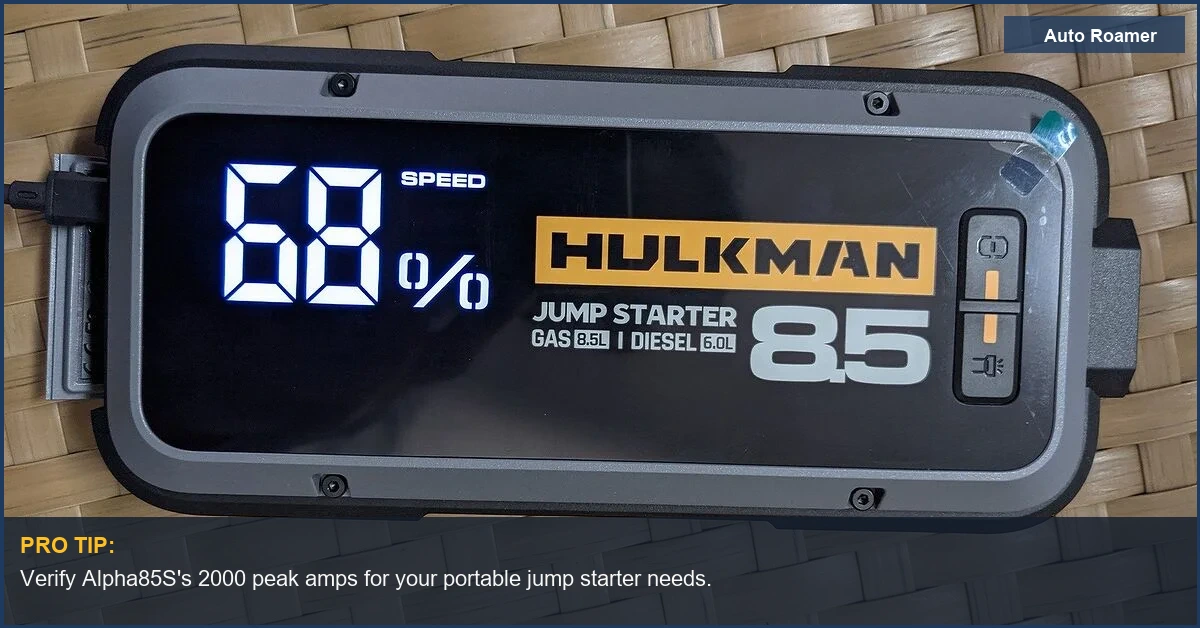
These aren't your grandpa's bulky lead-acid bricks anymore. Modern lithium-ion units are compact, light, and pack a serious punch. They'll spin over an 8.0L gas engine or a 6.0L diesel without breaking a sweat, usually in under 60 seconds. Source: TopFirearmReviews No calls, no cables, just turn the key and go. It's a tool that pays for itself the first time you use it, easily. Trust me, roadside assistance ain't cheap.
Key Features to Consider
Getting Your Rig Fired Up: What Matters
When you're picking a portable jump starter, don't get suckered by marketing fluff. I care about raw electrical capability and mechanical robustness. Here's what actually matters, laid out like a wiring diagram.
| Feature | Why It Matters (Dirtbag Engineer's Take) |
|---|---|
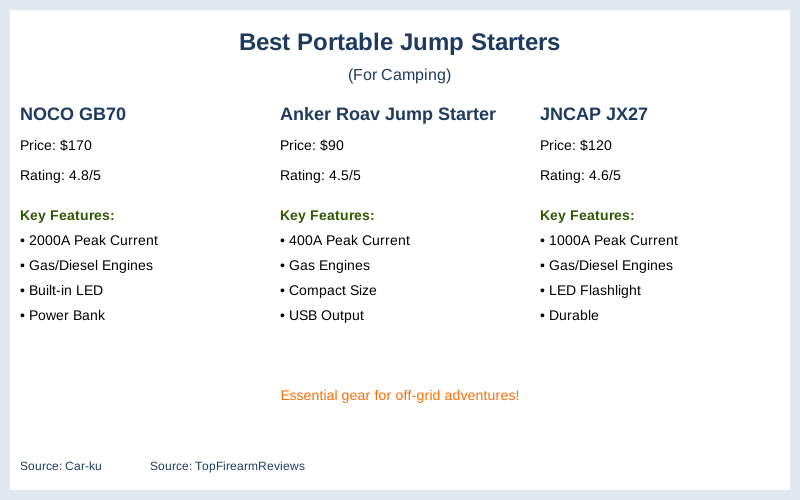
| Peak Amperage (A) | This is the instantaneous current burst needed to overcome the rotational inertia and compression resistance of your engine's crankshaft. Too low, and your starter motor just clicks. For a typical V6, you're looking at 1000A minimum. Diesels or big V8s? You'll need 2000A or more. Source: Autoweek |
| Battery Capacity (Wh or mAh) | This dictates how many jump starts you get before recharging. A higher Wh rating means more stored energy. Don't confuse this with peak amps. A unit might have high peak amps but low capacity, meaning one shot and it's done. Think of it as fuel in the tank for repeated cranking cycles. |
| Cable Gauge & Length | Thin cables mean higher resistance, which translates to voltage drop and less current reaching your starter. Look for thick gauge wire. Shorter cables are better for minimizing resistance, but longer ones (like the 24-inch cables on some Clore units) give you more flexibility for awkward battery placements. Source: Car and Driver |
| Built-in Protections | Reverse polarity, over-current, over-voltage. These aren't luxuries; they prevent you from frying your ECU or the jump starter itself. A cheap unit with no protection is a ticking time bomb for your vehicle's sensitive electronics. It's cheap insurance against a $1500 repair bill. |
| Durability & IP Rating | If you're camping, this thing is getting knocked around, covered in dirt, and potentially rained on. An IP65 rating means it's dust-tight and can handle low-pressure water jets. Anything less is just asking for a short circuit when the condensation hits. Source: Car-ku |
| Additional Features | USB ports for charging phones, LED flashlights. These are nice, but secondary. Your priority is starting the engine. If it can also charge your dying phone, great. If not, who cares? It's not a power station, it's a jump starter. |
Don't get distracted by a fancy digital display if the guts are garbage. Focus on the raw numbers for amps and capacity.
Our Top Picks
The Real Power Players: My Top Picks
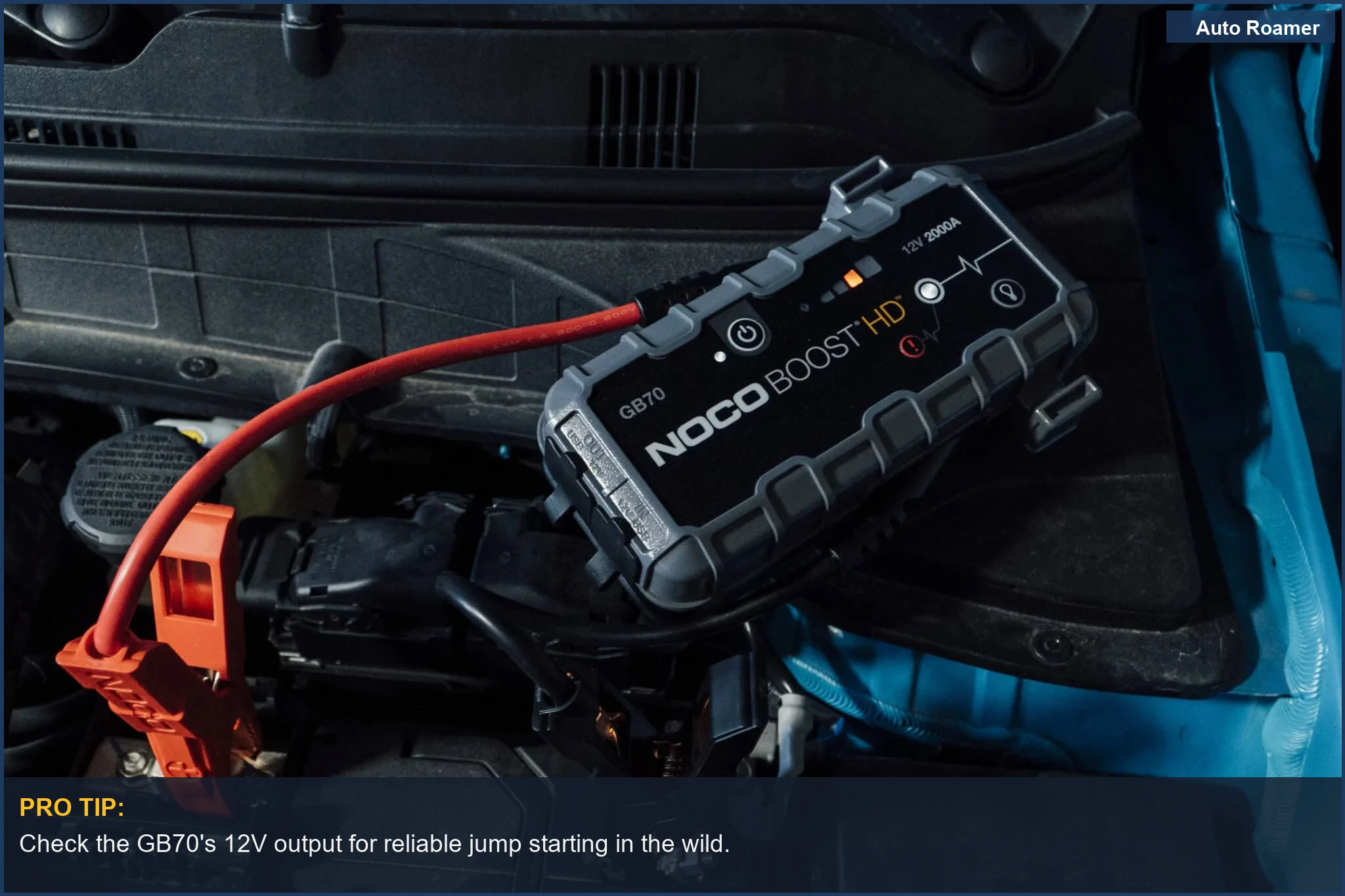
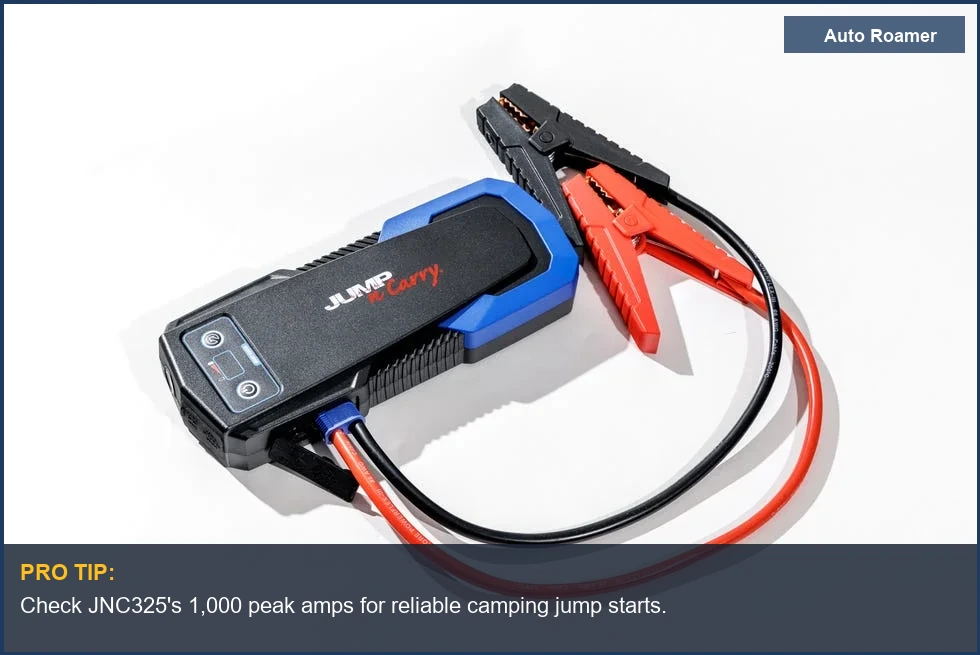
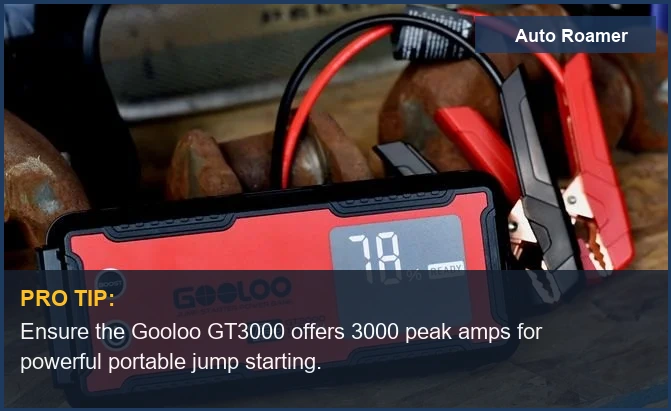
I've seen enough dead batteries and fried electronics to know what actually works. These are the units that deliver on their specs, without the fluff. Forget the marketing, these are the ones I'd trust when I'm 20 miles from pavement. NOCO Boost HD GB70 (~$200)Budget vs Premium Options
Cheap vs. Proper Tools: You Get What You Pay For
When it comes to jump starters, the price tag often directly correlates with the quality of the internal components and the mechanical robustness. Don't expect a $50 unit to perform like a $200 one. That's just physics and economics.Source: Car Magazine
| Characteristic | Budget Option (e.g., NEXPOW G17) | Premium Option (e.g., NOCO Boost HD) |
|---|---|---|
| Peak Amperage & Engine Size | Often claims high amps but struggles with larger engines. Might get one start from a 6.0L gas, but don't expect repeated attempts. The internal resistance of cheaper cells limits sustained output. | Delivers consistent peak amperage for large V8s and diesels. Designed to handle multiple starts on tough engines. The cell chemistry and internal buss bars are spec'd for higher current density. Source: TopFirearmReviews |
| Battery Longevity & Cycle Life | Uses cheaper lithium-ion cells with fewer charge cycles. Expect capacity degradation after 1-2 years of moderate use. Thermal cycling during discharge is harder on these cells. | Higher quality cells with better thermal management and more charge cycles. Designed for 3-5+ years of reliable service. Less prone to voltage sag under load. |
| Cable & Clamp Quality | Thinner gauge wire, flimsy plastic clamps. Poor spring tension leads to a weak mechanical bond and arcing, increasing contact resistance and heat. This directly reduces effective current delivery. | Thicker, low-resistance cables and robust, insulated clamps with strong spring tension. Ensures maximum current transfer and minimizes voltage drop at the connection. Less risk of spark erosion. |
| Safety Features | Basic reverse polarity protection, if any. Might lack over-current or short-circuit protection, risking damage to the vehicle's ECU or the jump starter itself. A gamble. | Comprehensive protection suite: reverse polarity, spark-proof, over-current, over-voltage, over-charge, over-discharge. Essential for preventing electrical system damage and ensuring user safety. Source: TechGearLab |
| Durability & Weatherproofing | Cheap plastic housing, no formal IP rating. Susceptible to impact damage and moisture ingress. Not built for the dirt, dust, and dampness of camping. | Ruggedized casing, often with an IP65 or higher rating. Designed to withstand drops, dust, and splashes. The mechanical stress tolerance is significantly higher. |
You're not just buying peak amps; you're buying the material science and engineering that goes into delivering those amps reliably, repeatedly, and safely. Skimp here, and you'll regret it when you're 50 miles from cell service.
Setup and Installation Tips
Getting It Wired: Setup and Connection
Connecting a jump starter isn't rocket science, but there's a sequence to prevent sparks and fried electronics. Follow these steps, or you'll be replacing more than just a dead battery. Source: YouTube
- Power Down Everything: Turn off your vehicle's ignition, lights, radio, and anything else drawing power. You want zero parasitic draw messing with the electrical handshake.
- Identify Terminals: Locate your vehicle's battery. The positive terminal (+) is usually red and larger. The negative terminal (-) is black and smaller. Don't mix these up. Seriously, don't.
- Connect Red Clamp to Positive (+): Attach the red (positive) clamp of the jump starter to your vehicle's positive battery terminal. Ensure a solid mechanical bond with maximum surface area contact. Wobbly clamps mean poor current flow and arcing.
- Connect Black Clamp to Chassis Ground (-): Attach the black (negative) clamp to a clean, unpainted metal part of your engine block or chassis. This provides a good ground path. Avoid direct connection to the negative battery terminal if possible, as it minimizes spark risk near the battery's outgassing hydrogen. Source: CNET
- Activate Jump Starter: Turn on your portable jump starter. Many have an 'on' button or a 'boost' mode. Wait for the indicator lights to confirm it's ready.
- Start Vehicle: Attempt to start your vehicle. Crank for no more than 5-7 seconds. If it doesn't start immediately, wait 30-60 seconds to let the jump starter cool down and recharge its internal capacitors before trying again. Repeated, prolonged cranking generates excessive heat in both the jump starter and your vehicle's starter motor, leading to thermal stress and potential failure.
- Disconnect Black Clamp First: Once the engine is running, disconnect the black (negative) clamp from the chassis ground. This minimizes the chance of a short circuit if the positive clamp accidentally brushes metal.
- Disconnect Red Clamp Last: Finally, remove the red (positive) clamp from the battery terminal. Stow your jump starter safely. Congratulations, you just saved yourself a tow bill.
Care and Maintenance Tips
Keep It Alive: Care and Feeding for Your Jump Starter
These things aren't set-it-and-forget-it tools. Proper maintenance ensures it'll actually work when you need it, instead of being a paperweight. Your $150 investment needs about 10 minutes of attention a month.
- Charge Regularly: Lithium-ion batteries degrade if left fully discharged or fully charged for extended periods. Aim to keep it between 50-80% charge for long-term storage. Check the charge level every 30 days and top it off. A fully discharged lithium battery can suffer permanent capacity loss due to cell imbalance. Source: Reddit
- Store in a Stable Environment: Extreme temperatures are the enemy of battery chemistry. Don't leave it baking in a 120 degrees F car trunk all summer or freezing at 0 degrees F in winter. Keep it in a cool, dry place. Thermal cycling accelerates degradation of the electrolyte and electrodes.
- Inspect Cables and Clamps: Before and after each use, check the cables for cracks, frayed insulation, or exposed wire. Look at the clamps for corrosion, bent jaws, or weakened spring tension. A poor mechanical bond means high resistance, heat, and a failed jump. Replace if damaged; a faulty cable is a fire hazard.
- Clean Terminals: If you see any corrosion (white or blue powdery residue) on the jump starter's connection points or the clamps, clean it off with a wire brush. Corrosion is an insulator, increasing electrical resistance and preventing proper current flow. Use a baking soda and water paste for battery terminals, rinse, and dry.
- Avoid Over-Discharge: Don't use your jump starter to power accessories for extended periods until it's completely dead. Most units have low-voltage cutoffs, but pushing it frequently reduces the overall cycle life of the battery cells. It's a jump starter, not a portable power bank for your entire campsite. Use it for its primary function.