First, the Basics
The dealer wanted $120 to jump start my neighbor's 2017 F-150 last winter. It sat for two weeks, 12V battery dropped to 9.8V open circuit, not enough juice to crank the starter solenoid. They called a tow truck, which is basically an ambulance for dead batteries. Absolute waste of money. Car and Driver explains it.
Portable jump starters are cheap insurance against that kind of stupidity. You don't need another vehicle, no need to untangle corroded jumper cables, no risk of frying an ECU because some yahoo hooked them up backwards. Just clamp, press a button, and crank. Done.
I've seen too many breakdowns caused by a simple voltage sag. Modern cars with their parasitic draws and sensitive electronics don't tolerate a weak battery like old carbureted beasts did. The body control module throws codes, the transmission locks up, all because the starter couldn't pull its 300 amps for 3 seconds.
This isn't just about convenience. It's about preventing cascading electrical failures from low voltage. A weak crank can stress the starter motor, the alternator, and even cause voltage spikes when the system finally tries to catch up. A fresh, instant surge of current prevents that entire chain of events. Autoweek backs this up with their testing.
Quick Verdict
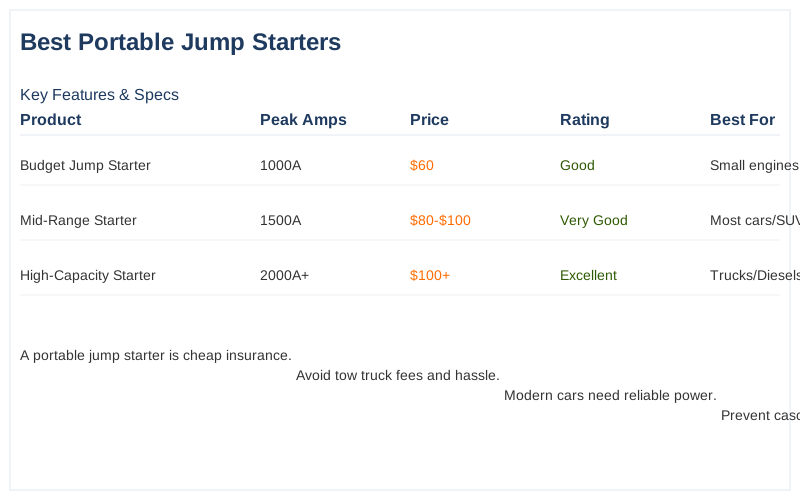
- The cheap ones are fine for small engines: If you're driving a 4-cylinder sedan, a 1000A peak unit for ~$60 will probably get you unstuck. Just don't expect it to crank a cold diesel. Road & Track tested some budget options.
- Amperage matters, but so does internal resistance: Don't just look at the peak amps on the label. A unit claiming 2000A might have higher internal resistance and deliver less actual cranking power than a 1500A unit with better cells. It's about sustained current delivery, not just a marketing number.
- Lithium is king for portability: Lead-acid jump packs are heavy, bulky, and lose charge faster. Modern lithium units are tiny, hold a charge for months, and pack a serious punch. The weight-to-power ratio is night and day. This YouTube review explains the difference.
- Safety features are not optional: Reverse polarity protection, spark-proof clamps - these aren't luxuries. One wrong move with a traditional jumper cable can fry an ECU, a $1500 mistake on some vehicles. The built-in protection is worth the extra ten bucks.
- Charge it regularly, or it's a paperweight: The best jump starter in the world is useless if it's dead. Make it a habit to top it off every 3-4 months, especially before winter. Thermal cycling degrades battery life, so keep it out of direct sun and extreme cold when stored.
- Don't rely solely on it for major electrical issues: A jump starter fixes a dead battery. It won't fix a bad alternator, a corroded starter motor, or a dead short. If your car dies immediately after a jump, you've got bigger problems than a flat battery.
What to Look For
Peak Amps is a marketing number, like horsepower at the crank vs. at the wheels. Cranking Amps (or Cold Cranking Amps, CCA, for lead-acid) is what matters. It's the sustained current the unit can deliver for 30 seconds at 0 degrees F. Most lithium units don't list CCA, so look for a reputable brand's real-world test results. CARKU discusses this distinction.
Battery Capacity (Wh or mAh)
This tells you how many jumps you'll get or how many times you can charge your phone. A 15,000 mAh (or 55 Wh) unit is decent for multiple jumps on a 4-cylinder. A 20,000 mAh (74 Wh) or higher is better for larger engines or if you need to charge devices for extended periods.
Safety Features
Reverse polarity protection, spark-proof clamps, short-circuit protection. These aren't just buzzwords; they prevent you from destroying your car's electronics or fusing the clamps together. Cheap units often skimp here. Reddit users often mention safety features.
Cable Gauge and Clamp Quality
Thicker cables (lower gauge number) mean less voltage drop and more current delivered to the battery. Shoddy clamps with weak spring tension or thin metal will arc and overheat, losing efficiency. Look for solid copper or heavily tinned copper clamps, not flimsy stamped steel.
The mechanical bond of the clamp to the battery terminal is critical for circuit integrity. Weak clamps mean high resistance, which means heat. Heat means more resistance, and eventually, failure to deliver enough current. It's basic physics, people.
Size and Weight
If it's too big to store in your glovebox or under a seat, you'll leave it in the garage. A compact unit you actually carry is better than a monster that stays home. Consider the form factor and how it fits into your vehicle's existing storage.
Extra Features (USB ports, LED light, Air Compressor)
USB ports are handy for charging phones. An LED light is useful for nighttime operations. Some units include an air compressor, which adds weight and bulk but is useful for slow leaks. Just remember, every extra feature is another potential failure point or parasitic draw on the internal battery.
Storage Temperature Range
Lithium batteries don't like extreme cold or heat. Check the spec sheet for the recommended operating and storage temperature. Leaving a jump starter in a trunk that hits 140 degrees F in summer or 0 degrees F in winter will accelerate battery degradation. Thermal cycling is the enemy of battery life.
Our Top Picks for Reliable Performance
Here are the units I'd trust to get me out of a bind, based on their specs and what I've seen in the field. AutoGuide has similar recommendations.
NOCO Boost X GBX45 (~$150)
Capacity: 1250A peak, 40Wh lithium-ion. Pros: Compact, excellent safety features, USB-C fast charging. Cons: Pricey for its peak current. Best-for: Everyday vehicles up to 6.5L gas/4.0L diesel, reliable compact option. Car and Driver also reviewed NOCO.
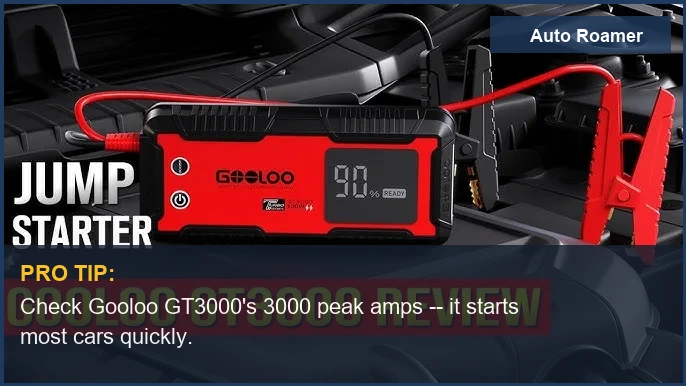
Gooloo GT3000 (~$100)
Capacity: 3000A peak, 99.2Wh. Pros: High peak current for the price, good capacity, decent build quality. Cons: Clamps feel a bit lighter duty than NOCO. Best-for: Larger SUVs, trucks, and those wanting more power without breaking the bank.
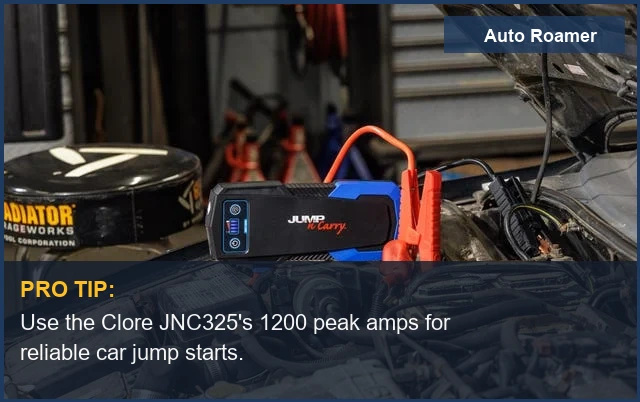
Clore Automotive JNC325 (~$120)
Capacity: 1000A peak, 24Wh. Pros: Extremely rugged, simple operation, built for shop environments. Cons: Lower capacity, no fancy features. Best-for: Mechanics, heavy users, or anyone prioritizing sheer durability over bells and whistles. This thing is over-engineered for survival.
NEXPOW G17 2000A Battery Starter (~$70)
Capacity: 2000A peak, 59.2Wh. Pros: Excellent value for the peak current, includes USB ports and LED light. Cons: Longevity can be a hit or miss based on forum chatter. Best-for: Budget-conscious buyers needing solid power for most passenger vehicles.
Battery Tender 2000 AMP (~$130)
Capacity: 2000A peak, 60Wh. Pros: Reliable brand in battery maintenance, good safety features, decent power. Cons: Not as compact as some competitors. Best-for: General reliability and brand trust, especially if you already use Battery Tender products for other vehicles.
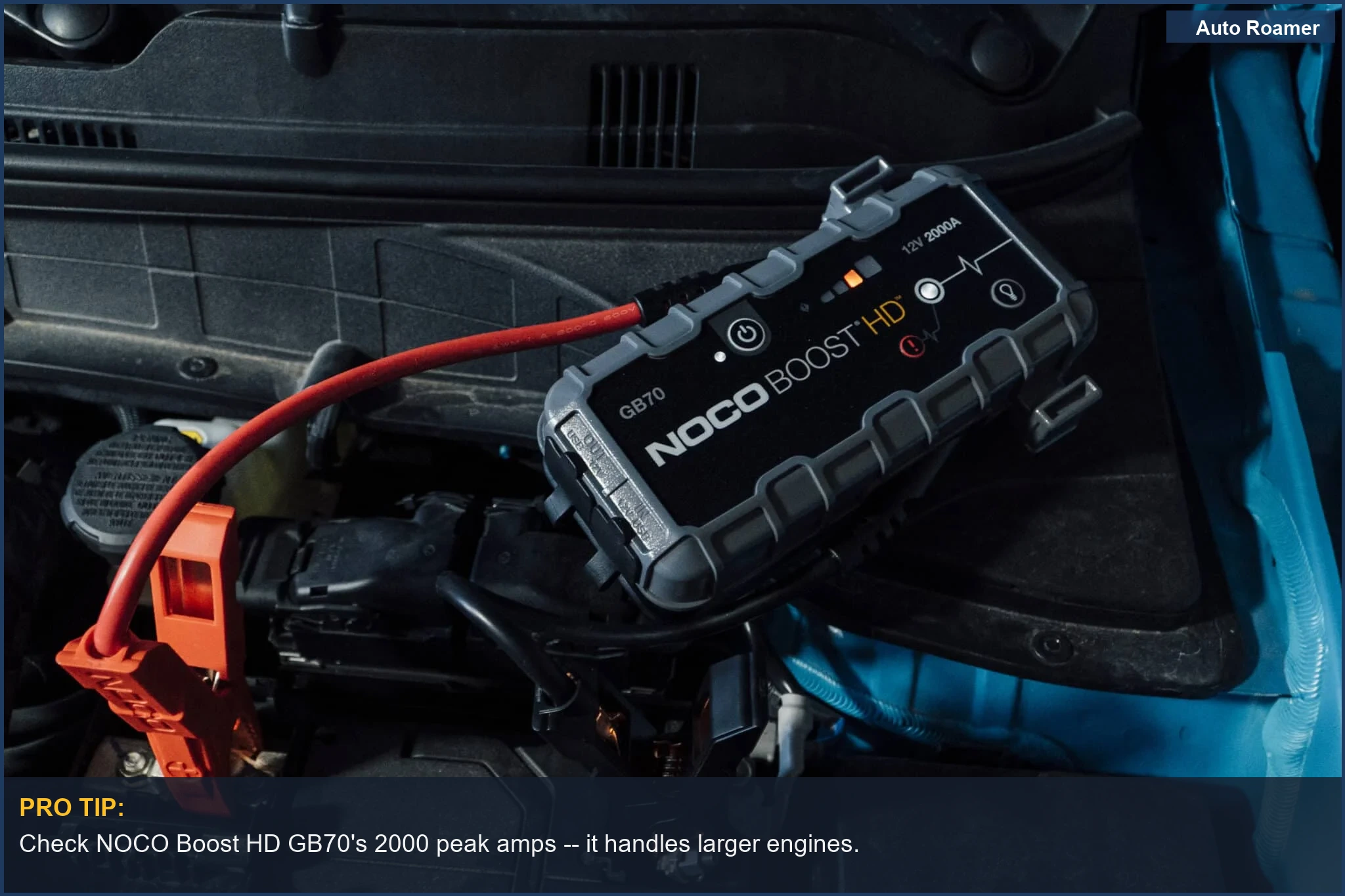
NOCO Boost HD GB70 (~$200)
Capacity: 2000A peak, 59.2Wh. Pros: Very robust, excellent clamp quality, handles larger engines. Cons: Higher price point. Best-for: Heavy-duty trucks, larger diesels, or those who want absolute confidence in cranking power. This is the big brother of the GB40.
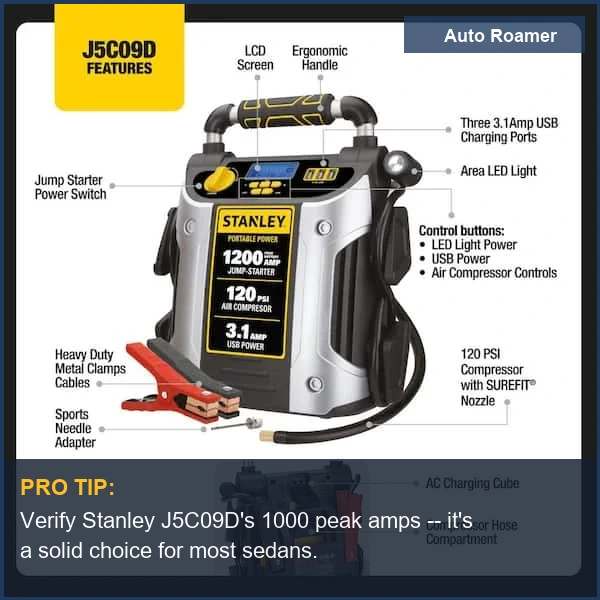
Stanley J5C09D (~$100)
Capacity: 1000A peak, lead-acid. Pros: Includes an air compressor, AC outlet, and USB ports. Cons: Heavy (18 lbs), slower charging, lead-acid battery means shorter shelf life. Best-for: Those who need an all-in-one emergency power station and don't mind the bulk. Just don't expect it to fit in your glovebox.
Head-to-Head Comparison
When you're looking at these things, it's not just the marketing numbers. It's about the physics of getting enough current into a dead battery to make it crank. YouTube comparisons are often useful.
| Feature | NOCO Boost X GBX45 | Gooloo GT3000 | Clore JNC325 |
|---|---|---|---|
| Peak Amps (Advertised) | 1250A | 3000A | 1000A |
| Battery Type | Lithium-ion | Lithium-ion | Lithium-ion |
| Engine Compatibility (Gas) | Up to 6.5L | Up to 8.0L | Up to 5.0L |
| Engine Compatibility (Diesel) | Up to 4.0L | Up to 6.0L | Up to 3.0L |
| Weight | 2.4 lbs | 2.8 lbs | 3.5 lbs |
| Charge Time (0-100%) | ~2.5 hours (USB-C) | ~4 hours (USB-C) | ~3 hours (wall charger) |
| Clamps | Heavy-duty, spark-proof | Decent, spark-proof | Industrial-grade, robust |
| Durability | Excellent | Good | Exceptional |
| Price Point | Premium | Mid-range | Mid-range |
The NOCO, despite lower advertised peak amps, often feels like it delivers more consistent power due to superior internal components and lower internal resistance. The Gooloo gives you more raw power for your dollar, but the long-term reliability of its internal battery cells can be a gamble. Project Farm videos show some interesting results.
The Clore JNC325 isn't flashy, but it's built like a tank. It's the kind of tool that'll still be working when the plastic fantastic units have outgassed their magic smoke. It prioritizes mechanical stress tolerance over sleek design.
Budget vs Premium: Where Your Money Actually Goes
You can get a jump starter for $50 or $300. The difference isn't just a brand name. It's in the underlying circuit integrity and material science. Top Firearm Reviews breaks down some differences.
| Feature | Budget (~$50-80) | Premium (~$150-300) |
|---|---|---|
| Battery Cell Quality | Generic, higher internal resistance, faster degradation. | Tier 1 cells (e.g., LG, Samsung), lower internal resistance, longer cycle life. |
| Peak Current Delivery | Often inflated claims, inconsistent under load, higher voltage sag. | Accurate ratings, consistent power delivery, minimal voltage sag. |
| Clamps & Cables | Thin wire gauge, flimsy plastic clamps, weak spring tension, higher resistance. | Thicker copper cable, robust metal clamps, strong spring for better contact. |
| Safety Features | Minimal, sometimes unreliable reverse polarity protection, cheap fuses. | Multi-stage protection, robust circuitry, thermal management, redundant fuses. |
| Enclosure Durability | Thin ABS plastic, prone to cracking with thermal cycling or impact. | Thick, impact-resistant polycarbonate or rubberized housing. |
| Charging Speed | Slow (5V/2A via micro-USB), no fast-charging protocols. | Fast (USB-C PD), intelligent charging algorithms to preserve battery health. |
| Shelf Life | Loses charge faster, internal battery degrades quicker if not used. | Holds charge for 6-12 months, minimal self-discharge. |
A $50 unit might crank your car once or twice, then die after a year of sitting in the trunk. The internal resistance of cheap cells and low-gauge cables means more heat generated during a jump, leading to accelerated degradation of the battery and controller board.
A premium unit invests in better battery chemistry, more robust power MOSFETs, and better thermal pathways to dissipate heat. This means it can deliver rated current more consistently and for a longer operational life. You're paying for reliability and extended duty cycles, not just a fancier label. It's the difference between a tool and a toy.
The Bottom Line
- Buy for your engine size, not just peak amps: A 4-cylinder Civic doesn't need 3000A, but a 7.3L diesel F-250 does. Match the tool to the job. Over-spec'ing is fine, but don't waste money on power you won't use. Tooltroopers suggests matching to vehicle type.
- Prioritize safety features: Reverse polarity protection and spark-proof clamps are non-negotiable. A momentary short circuit can send a 1000A pulse through your hand or your car's delicate ECU. Don't cheap out on preventing that.
- Keep it charged, religiously: A dead jump starter is just dead weight. Top it off every three months. Consider a unit with a low self-discharge rate if you're prone to forgetting.
- Consider roadside assistance as backup: A jump starter handles a dead battery. It won't fix a blown tire, a broken serpentine belt, or a fuel pump failure. A $60/year AAA membership is cheap insurance for problems a jump starter can't solve.
- Don't trust generic brands with impossible claims: If a no-name brand claims 5000A peak for $40, it's lying. The physics of battery discharge and internal resistance don't allow for that kind of performance at that price point. Stick to reputable brands with consistent reviews.