The Short Version
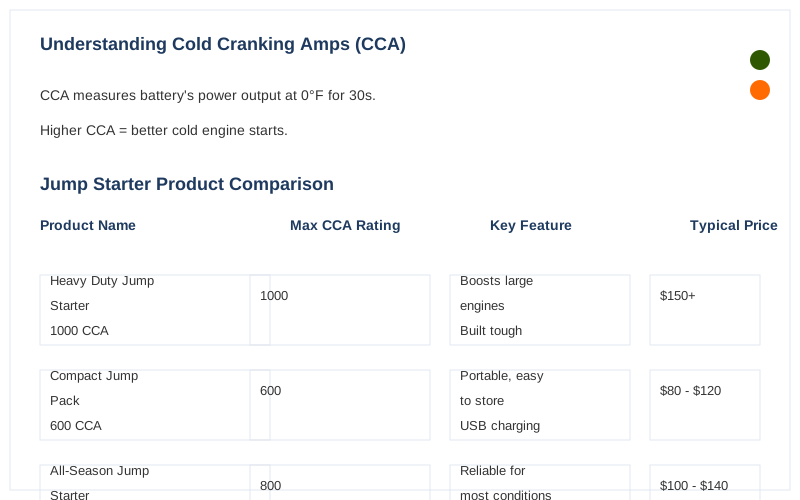
Cold cranking amps, or CCA, is basically the superpower your car battery needs to fire up the engine when it's colder than a penguin's picnic. Think of it as the battery's ability to push out a ton of juice for about 30 seconds at 0 degrees Fahrenheit. This isn't just some fancy number; it's the difference between your car roaring to life or just making sad clicking noises on a frosty morning.
When I first learned about this, I was stuck in a parking lot in upstate New York, and my battery was about as useful as a screen door on a submarine. This rating tells you if it can handle the real cold. It's a crucial spec for jump starters too, so you don't end up stranded.
The Core Answer
So, what exactly are these Cold Cranking Amps (CCA)? It's a measurement of how much current, or amps, a car battery can deliver for 30 seconds at a frigid 0 degrees Fahrenheit, while still maintaining at least 7.2 volts. This tells you how well it can start your engine when it's brutally cold outside. If a battery has a high CCA rating, it means it's got more grunt to get that engine turning over in the winter chill.
I learned this the hard way one December in Vermont when my old battery just gave up the ghost. It was a rookie mistake not checking my battery's CCA before the first big freeze. An 800 CCA battery, for example, is supposed to be able to push out 800 amps for that 30-second window at 0 degrees Fahrenheit.
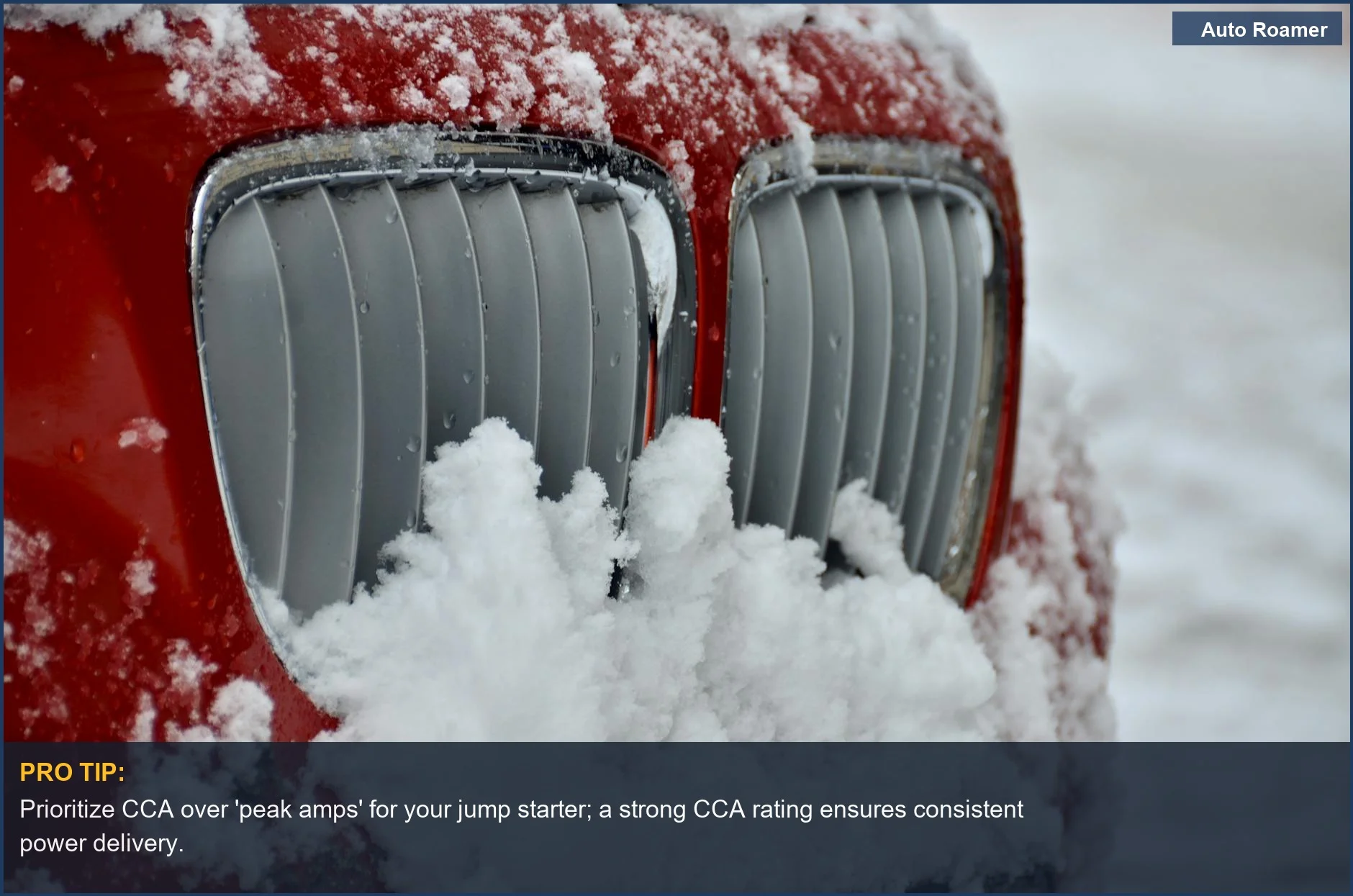
This is different from 'Peak Amps', which is like a quick burst of power that might happen for a fraction of a second. Peak amps sound impressive, but they aren't what keeps your engine cranking. Peak amps are more about the absolute maximum the device can spit out initially. For jump starters, you'll see both numbers, but the CCA is the one that matters for actually getting a dead car started in the cold.
It's the real deal for cold weather performance. Don't let fancy 'Peak Amp' numbers fool you; they're like the flashy marketing jargon that doesn't always translate to real-world reliability when you're stuck in the snow. The honest version is, you need enough CCA to match your car's needs, especially if you live somewhere that gets truly cold. My first jump starter had a super high peak amp rating but barely enough CCA to turn over my little sedan.
What a waste of $70. Cranking Amps (CA) are similar but tested at a warmer 32 degrees Fahrenheit. So, CCA is the king for winter, CA is for slightly less brutal conditions, and peak amps are more of a marketing gimmick for emergencies. It's the difference between a battery that can actually do the job in the cold versus one that just claims it can.
When I finally upgraded, I looked specifically for a jump starter with a CCA rating that my car manufacturer recommended, and game-time, it made all the difference. Seriously, the $50 version with decent CCA is better than the $150 one with just high peak amps. It's about the sustained power, not just the initial jolt.
Why This Matters for Your Setup
This whole CCA thing might sound like engine nerd stuff, but it's actually super practical for anyone who camps or travels in their vehicle, especially when the temperature drops. Here's why it matters for your setup:
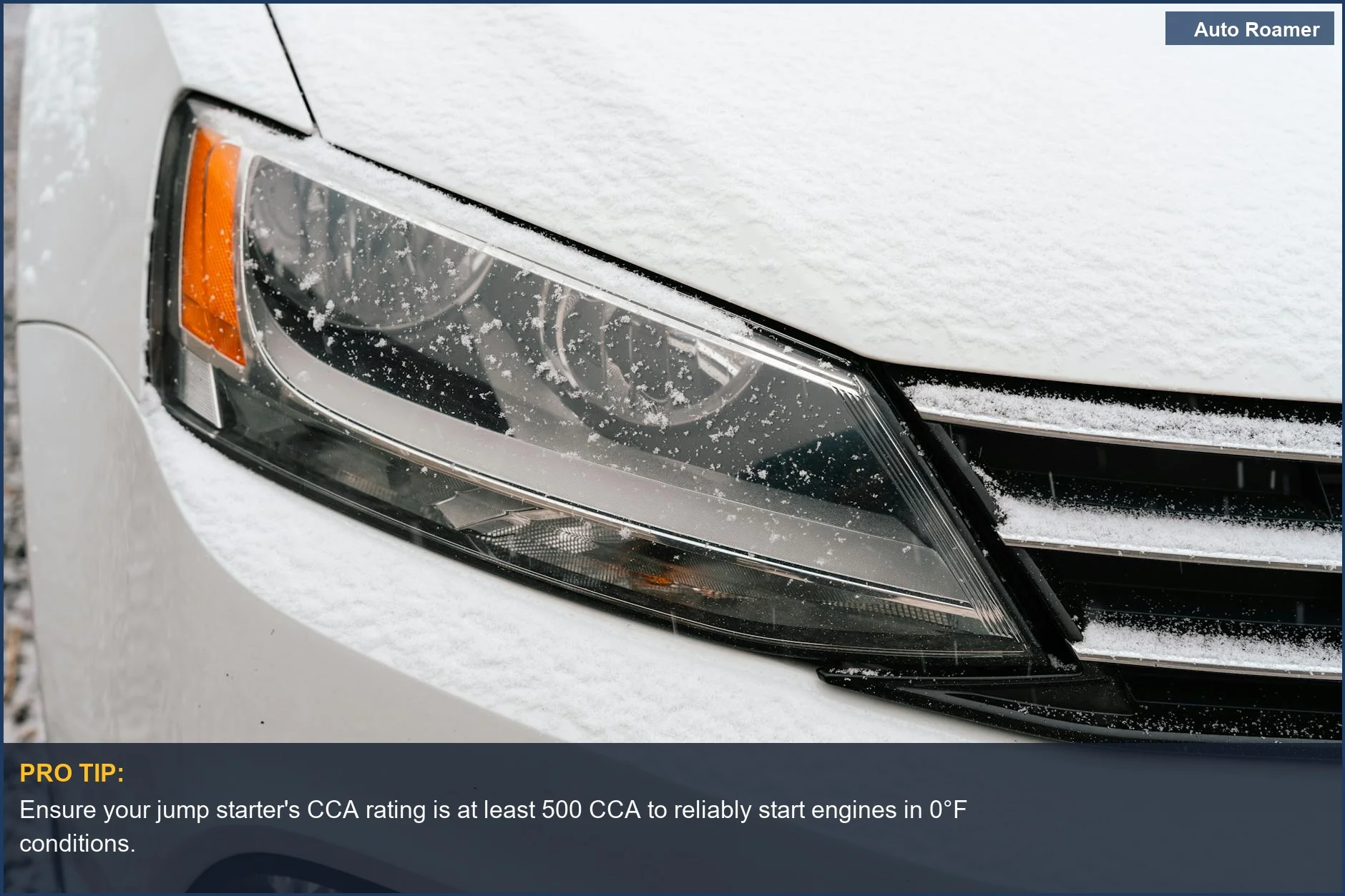
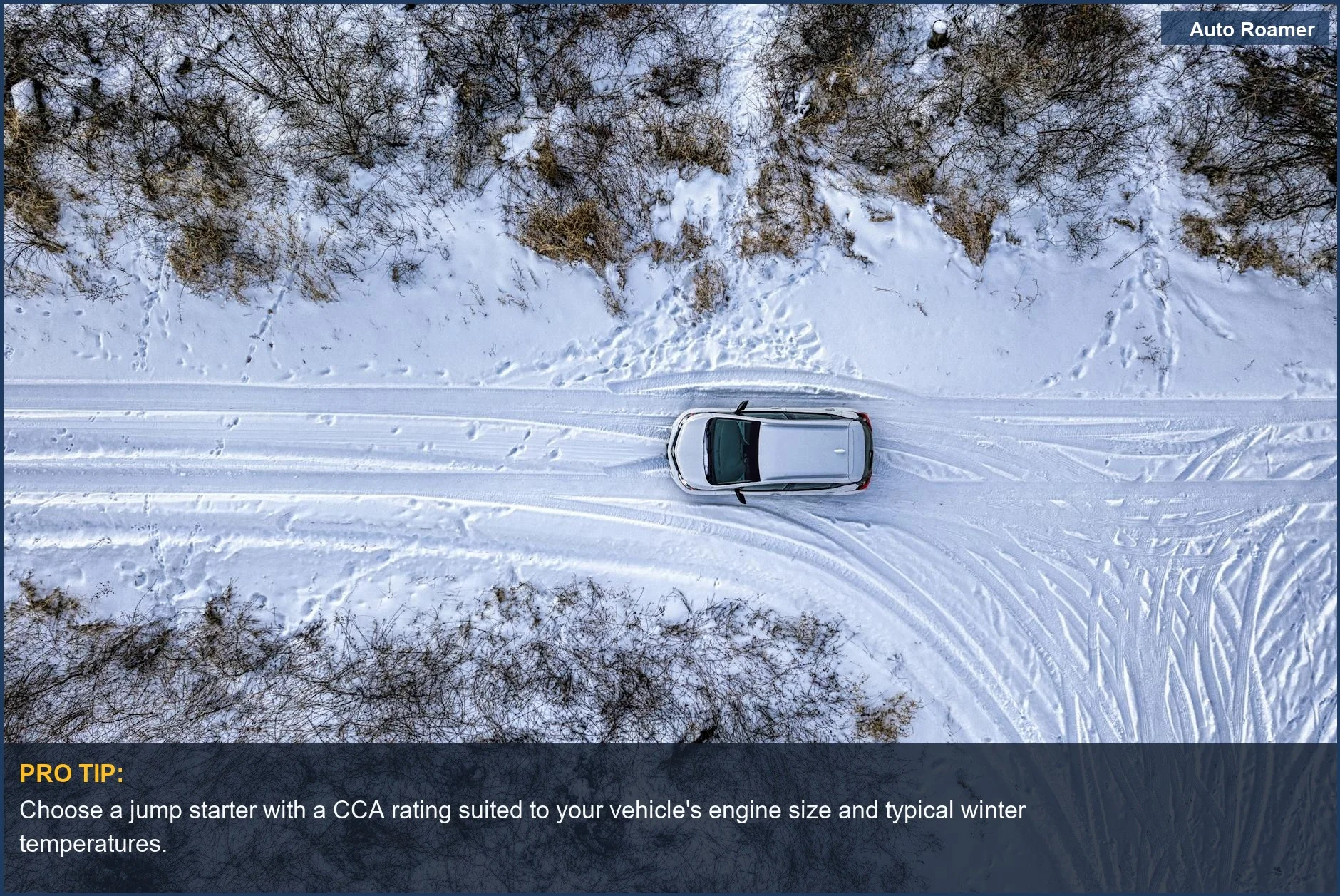
- Your car's battery is rated in CCA for a reason. Manufacturers put a specific CCA rating in your car because that's what the engine needs to turn over reliably, especially in the cold. If you're buying a jump starter, you need one that can at least meet that requirement. My old Subaru Outback needed about 500 CCA, and my first jump starter barely hit 300. Stuck in a blizzard, I learned that lesson. The higher the CCA rating, the more starting power the battery has.
- When you're looking at jump starters, don't get blinded by the 'Peak Amps'. That's like looking at the top speed of a sports car when you just need to get up a steep hill. You need sustained power, and that's what CCA gives you. I saw a jump starter advertised with 2000 peak amps, but its CCA was only 400. My truck needs 700 CCA. Talk about false advertising.
- If you plan on car camping in the shoulder seasons or winter, a jump starter with a solid CCA rating is more important than a fancy flashlight on it. You might be miles from anywhere, and a dead battery is more than an inconvenience; it's a safety issue. I always keep a jump starter with at least 1000 CCA in my trunk, just for peace of mind.
- Knowing your vehicle's CCA requirement is key. You can usually find this information in your owner's manual or sometimes on a sticker under the hood. Then, you can shop for a jump starter that meets or exceeds that number. It's not rocket science, but it is physics.
Making the Right Choice
Making the right choice for your jump starter comes down to understanding what CCA really means. It's not just a number; it's your ticket to getting your car started when it's freezing outside. Don't fall for the marketing hype of ridiculously high 'peak amps' if the CCA is weak. Think about where and when you'll be camping or driving. If it gets cold, CCA is your best friend.
I learned this when my car died at 10 degrees F in a state park and my $80 jump starter was about as useful as a chocolate teapot. Cold cranking amps measure the current a battery delivers in cold temperatures. So, for that $50 version of a jump starter, make sure the CCA is sufficient for your vehicle. It's the most important spec for reliability when you need it most.
You don't want to be the person shivering in the dark, waiting for a tow truck because you bought a gadget that looked cool but couldn't deliver the power. My second jump starter cost $90 and had 1200 CCA, and it's saved my bacon more times than I can count.