
Will a Wireless Charging Car Phone Holder Drain My Car Battery?
A wireless charging car phone holder might seem like a modern convenience, but the question of whether it can silently drain your car's battery is a valid one. It's not like leaving your headlights on for three hours, but it's more than just a passive piece of plastic.
A wireless charging car phone holder might seem like a modern convenience, but the question of whether it can silently drain your car's battery is a valid one. It's not like leaving your headlights on for three hours, which could easily kill a battery overnight, but it's more than just a passive piece of plastic. Anything plugged into your car's 12v system, even when the car is off, can technically draw power. This is true for most accessories, from dash cams to USB chargers, and wireless chargers are no exception. Even a small parasitic draw, like 50-100 milliamps, over several days or weeks could potentially impact a car battery, especially an older one. While a single wireless charger typically draws less than a dollar's worth of electricity per month in standby, the cumulative effect matters.
The real question is how much power they draw and if it's enough to matter.
The Core Answer
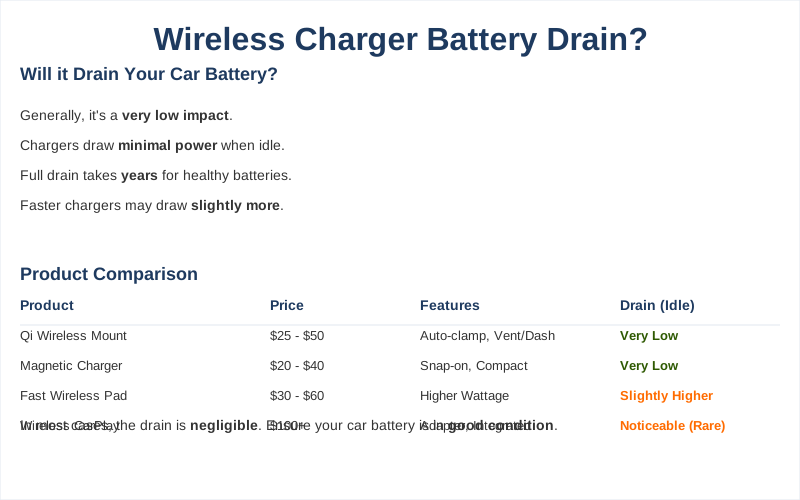
So, will that fancy wireless charging mount kill your battery? The honest version is: it's unlikely to be a major problem for most people, but it's not zero impact. Think of it like a tiny, constant drip. That charger, even when it's not actively charging your phone, still has electronics humming away, waiting for a device. This draw is usually very, very slow. So slow, in fact, that it might take years for an unused charger to fully drain a healthy car battery. It's not like leaving your dome light on overnight, which would leave you stranded in 20 minutes. This is more of a long game. The real move here is understanding the power consumption. Chargers that provide higher voltage and current, often the faster ones, can draw a bit more power even when idle than their less powerful counterparts. It's not a massive difference, but it's there. I've seen forum posts from people who swear their wireless CarPlay adapter was draining their 12v battery after leaving it plugged in. That's a slightly different beast, often involving more complex electronics, but it highlights how anything drawing power can eventually be an issue. The efficiency of the wireless charging itself also plays a role. Older or cheaper chargers might not transfer power as effectively, meaning more energy is wasted as heat, and potentially a slightly higher idle draw than a more efficient unit. If your car battery is already on its last legs, or you regularly park it for weeks at a time without driving, then this tiny drain could be the straw that breaks the camel's back. But for most weekend warriors who drive their cars every few days, it's probably not something to lose sleep over. The physics don't lie: there's a draw, but the magnitude is usually negligible for typical use. It's the same principle as anything plugged into your cigarette lighter adapter - it's drawing power. The key is the amount. A phone charger is like a leaky faucet; a dome light is like a burst pipe.
The Bottom Line
Here's the bottom line: a wireless charging car phone holder will draw a small amount of power from your car battery when it's plugged in and the car is off. This draw is usually minimal, on the order of milliamps. For a healthy battery and regular driving habits, this is unlikely to cause any noticeable issues or leave you stranded. Think of it as a very slow leak. However, if you have an older battery, park your car for extended periods (weeks at a time), or are already experiencing battery problems, it's something to be aware of. It's not a deal-breaker, but it's a factor. If you're really concerned, the easiest fix is to simply unplug the charger when you're not using it, especially for longer parking durations. It takes two seconds and eliminates the drain entirely.
Frequently Asked Questions
If I unplug the charger, does that save me a ton of money on gas?
Do I need some fancy gadget to tell me how much power my wireless charger is using?
What if I leave my wireless charger plugged in and my car battery dies anyway?
Could leaving a wireless charger plugged in permanently damage my car's battery?
I heard wireless charging uses way more electricity than a USB charger. Is that why it drains the battery faster?
🏅 Looking for Gear Recommendations?
Check out our tested gear guides for products that work with this setup: