
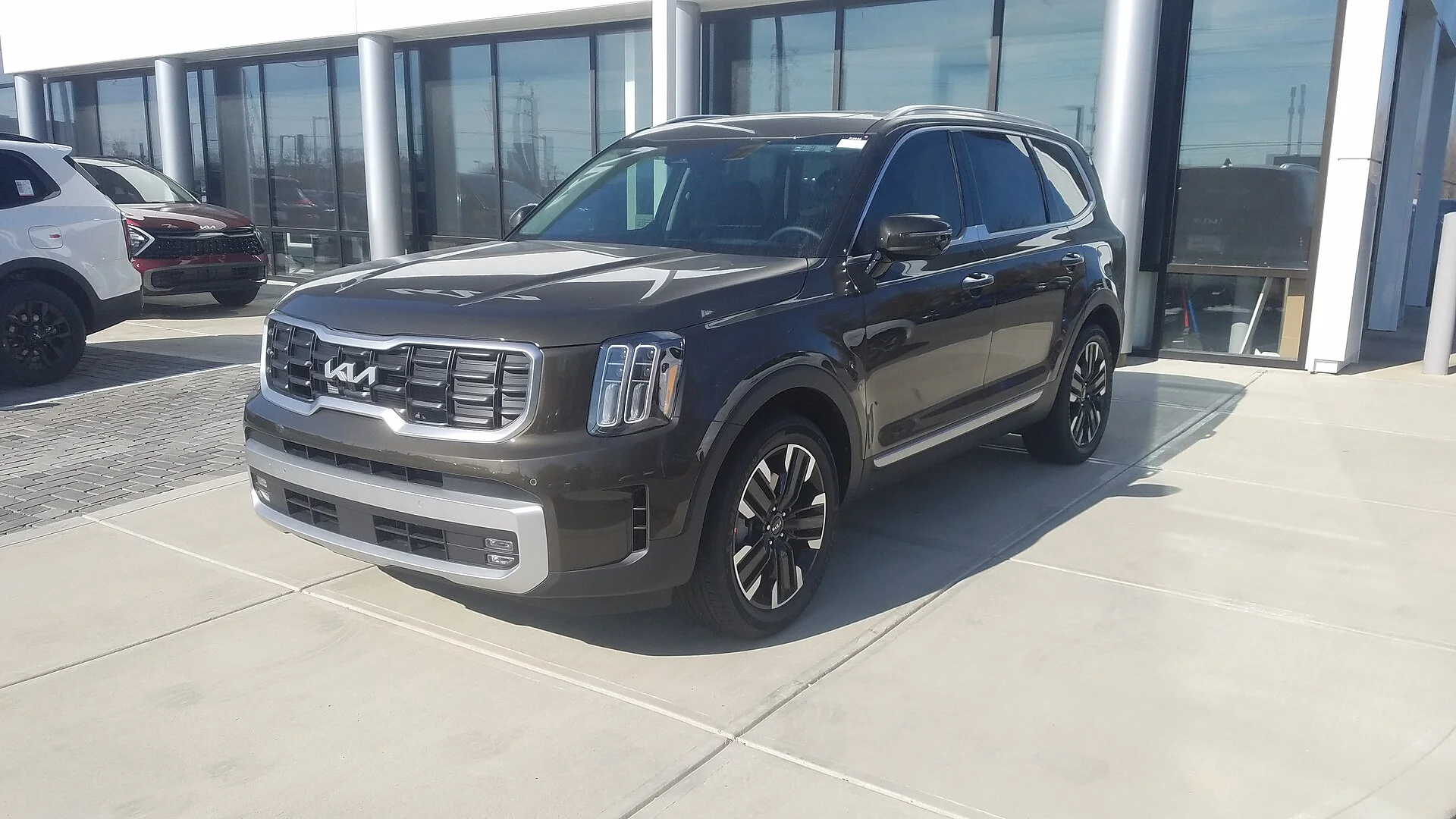
The Short Answer: Yes, but Know Which Number Is Real
Here is the false economy nobody mentions up front: the Kia Telluride owner's manual lists a roof load limit of 220 lbs, and people plan around that number, but the factory crossbars are rated to only 165 lbs. So yes, a kayak fits on a Telluride, and easily, but the number that actually governs your setup is 165, not 220, until you spend money to change it.
For a single boat that gap does not matter, because kayaks are light. A typical recreational kayak is 10 ft long and weighs about 35 to 50 lbs, and even a heavy touring hull runs 65 to 70 lbs. Add J-cradles at roughly 10 to 15 lbs and you are far under 165 lbs, let alone 220.
Where the distinction earns its keep is when you stack loads or eye a rooftop tent later. This guide runs both numbers honestly, shows where the Telluride's long roof is a genuine advantage, and names the one upgrade worth paying for if you want to use the full 220 lb roof.
220 lb Roof, 165 lb Bars: The Number That Governs
Start with the two ratings, because confusing them is how people overload a rack. The Telluride owner's manual states a roof load limit of 220 lbs, evenly distributed. That is the dynamic limit, the load a moving vehicle can carry, and it is the roof structure's rating. It is genuinely generous for the class.
But the roof structure is not what your kayak sits on. Kia's factory crossbars, sold for the 2020 to 2025 model years, are rated to a load limit of 165 lbs, evenly distributed. Because the load passes through the bars, the factory crossbars become the practical limiting factor at 165 lbs even though the roof itself is rated to 220 lbs dynamic. You cannot use capacity your bars are not rated to carry.
That 165 lb bar rating, like the 220 lb roof rating, has to include the crossbars and the kayak carrier, not just the boat. For one kayak that is a non-issue. The reason to understand it is the moment you want more, a heavier load or two boats plus gear, when the difference between 165 and 220 is exactly the margin you were counting on and do not actually have.
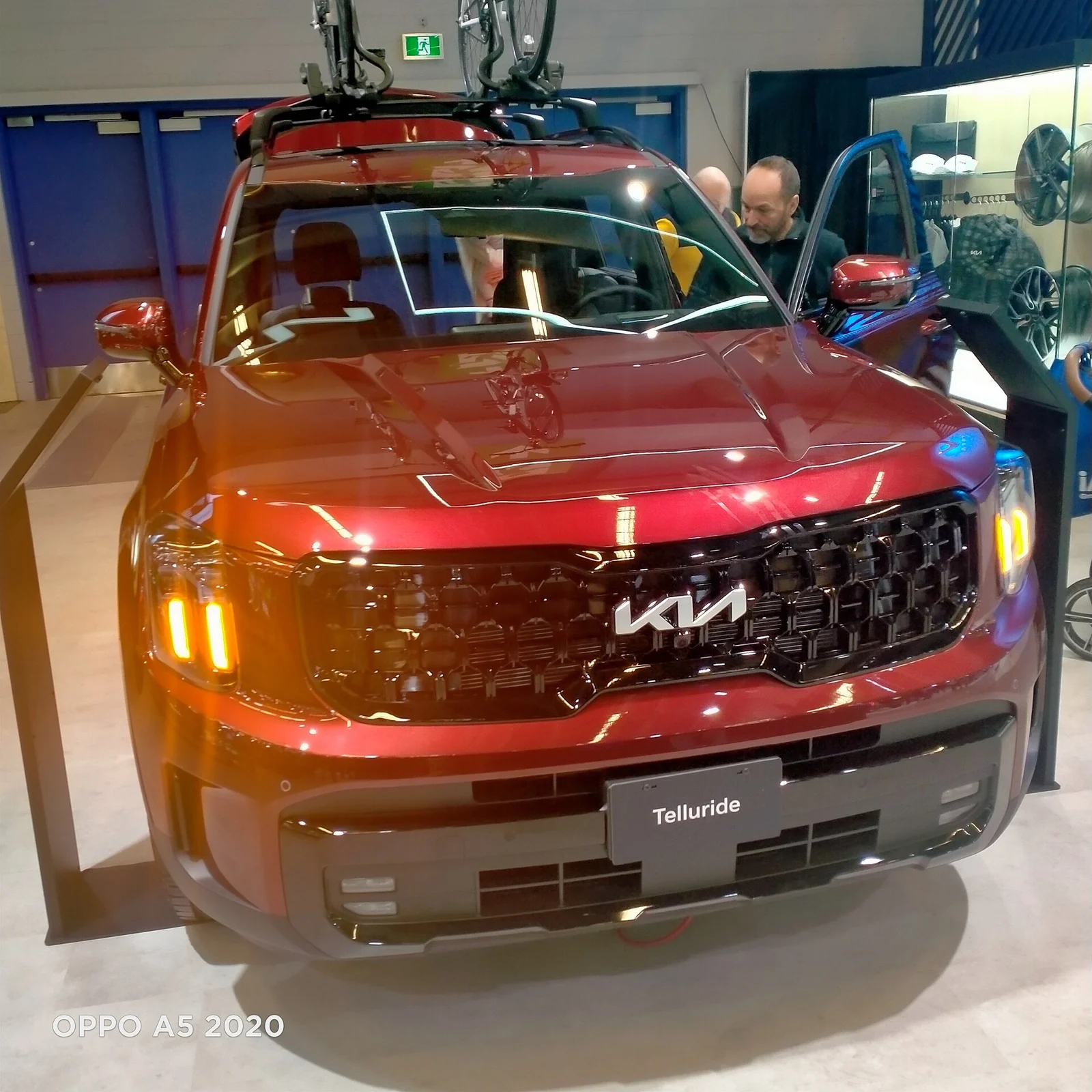
Where the Telluride Earns Its Keep: A Long Roof
Now the good news, and it is real. The Telluride is a large three-row SUV with a generous roof length, which gives more front-to-rear crossbar spread than a compact SUV. That wider spread improves stability for 12-to-14-foot kayaks, the exact boats that pivot and wander on a short-spread compact roof.
An aftermarket installation sheet indicates a front-to-rear crossbar spacing of about 31.5 inches on the Telluride. That is meaningfully wider than the short spread on a typical compact crossover, and on a long boat that extra spread is the difference between a hull that tracks straight and one that tries to twist in a crosswind. Length on the roof is a value feature you already paid for, and it is one of the clearest advantages a big three-row SUV holds over a smaller vehicle for anyone hauling boats.
It means the Telluride handles a big touring kayak with less fuss than a smaller SUV, and it does so without you buying anything extra to gain stability. You still want bow and stern lines on a long boat, but the starting point is better. This is the Telluride giving you real capability for free, which is the opposite of the 165-versus-220 catch.
Kayak Weights: You Are Nowhere Near the Limit
Let me put the weight worry to bed with actual numbers. A typical recreational kayak is 10 ft long and weighs about 35 to 50 lbs. A 12 ft sit-inside recreational kayak typically weighs about 45 to 55 lbs. A touring kayak, 12 to 14 ft long and 24 to 28 inches wide, weighs about 65 to 70 lbs in plastic or 40 to 55 lbs in composite.
The heaviest common single boat is a 12 ft sit-on-top fishing kayak at 75 to 90 lbs empty. Even that, plus J-cradles at roughly 10 to 15 lbs, is far below the 165 lb factory-crossbar limit and nowhere near the 220 lb roof limit. So for one boat, weight is not the constraint. Full stop.
It is worth seeing why the weight margin is so comfortable. A kayak is a long, hollow shell, so it is bulky without being heavy, which is the opposite of the mental picture people carry when they read a roof-load number and get nervous. The rating exists for dense loads like a fully packed cargo box, not for a plastic hull, so the number that scares buyers is aimed at a different problem entirely.
This is why the budget lens matters: you do not need to spend a dime upgrading bars to carry one kayak. The factory 165 lb bars are more than enough for any single boat, and paying for stronger bars to haul one kayak is money spent on capacity you will never use. Save the upgrade for when you actually need it.
Two Kayaks: Still Fine on Factory Bars
Two boats is where the numbers start to matter, and the Telluride still comes out ahead. By weight, two kayaks are entirely feasible on factory bars: two 55 lb boats plus carriers come to about 140 lbs, which stays under the 165 lb crossbar rating and well under the 220 lb roof rating. You do not need to upgrade the bars just to carry two.
The Telluride's long roof helps here too. The wider crossbar spread and the large roof footprint give two hulls more room to sit without crowding, whether flat in saddles or on edge in J-cradles and stackers. On a compact SUV two full-size boats fight for width; on the Telluride they have room to spread out.
There is a loading angle too. A Telluride sits tall, so a heavy fishing kayak is a real overhead lift, and two boats means twice the lifting. That is an argument for lighter composite hulls or a loading roller, not for stronger bars, since the weight is never the roof's problem. Plan the lift, not the rating.
So the honest two-boat answer is a clean yes on the equipment you already own, provided your carriers fit two hulls sensibly. That is the value story: the Telluride does the two-kayak job on stock bars, so the only thing you are buying is the cradles, not a whole new rack system. That is where the money should go.
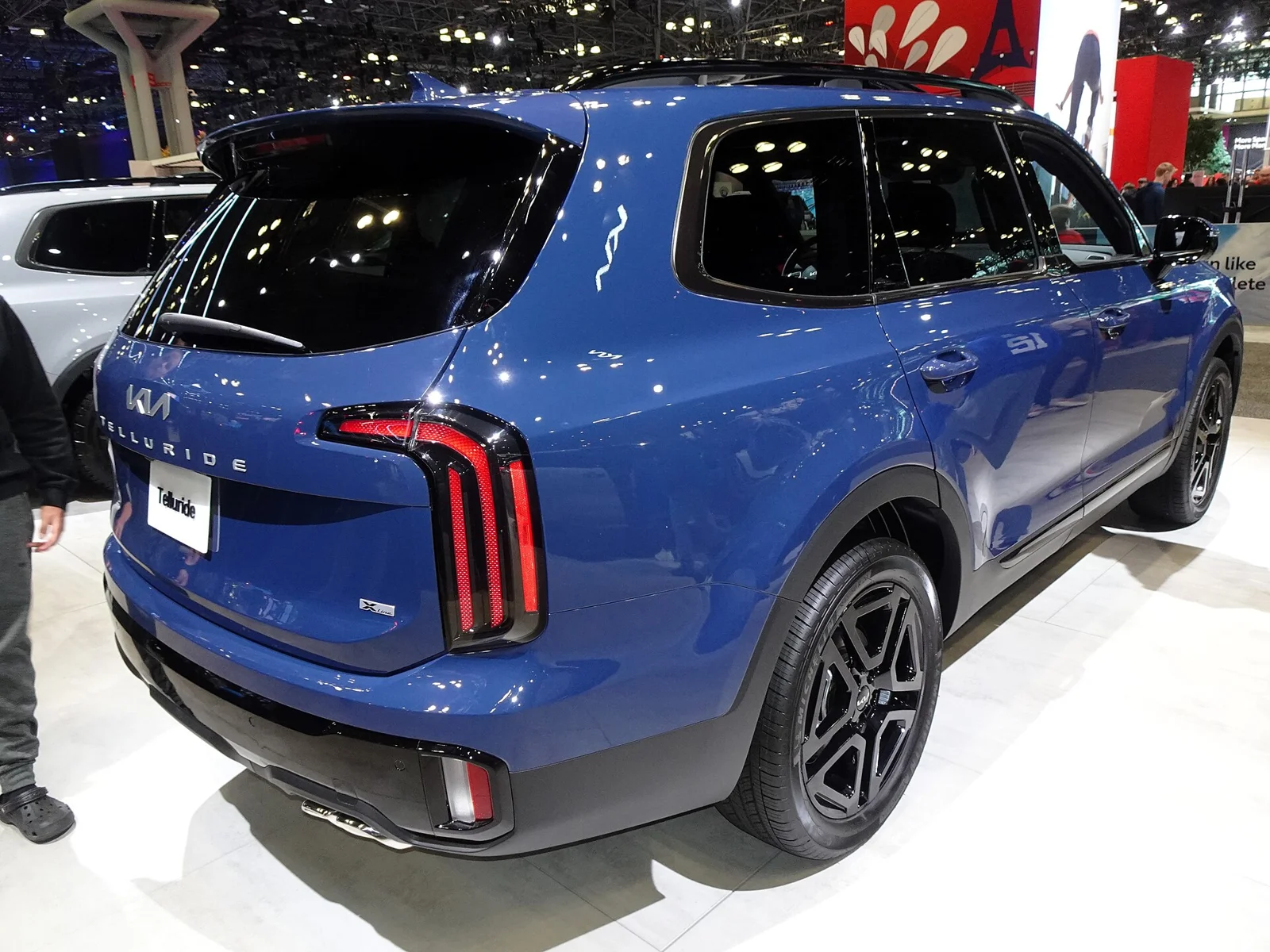
When Is the Bar Upgrade Actually Worth It?
Here is the one place spending more genuinely pays off, and it is not for kayaks. Aftermarket crossbars rated at or above 165 lbs are needed to safely approach the 220 lb roof capacity, because the OEM bars cap the system at 165 lbs. If your goal is a heavy static load like a rooftop tent, or a fully loaded cargo box plus gear, the factory bars leave 55 lbs of roof capacity on the table.
For that use case, stronger bars are not an upsell, they are the thing that unlocks the capability you paid for when you bought a 220 lb-rated roof. Spending on bars to reach the full 220 lbs makes sense when the load is heavy and static; spending on bars to carry one 50 lb kayak does not.
There is a sequencing point worth making, because it saves people from buying twice. If you know a rooftop tent or a heavy loaded box is in your future, buy the stronger bars once, up front, and they carry the kayak in the meantime. If kayaks are all you will ever haul, skip the upgrade entirely. The mistake is buying stock bars for a boat, then buying premium bars a year later for a tent, and paying for two rack systems when one would have done.
That is the whole budget calculation in a sentence: match the bar rating to the heaviest load you actually carry, not to the roof's headline number and not to the lightest thing you own. For kayaks, stock bars win. For heavy tents and loaded boxes, the upgrade is where your money does real work.
Rails and Trims: Check Before You Buy
Before you buy any carrier, confirm what your Telluride's roof actually is, because it varies by trim and it is easy to get wrong. Factory OEM crossbars mount to the factory side rails and are offered for the 2020 to 2025 model years, but they do not fit the X-Line or X-Pro trims, which use a different roof setup.
Rail type is the other trap. Base and mainstream trims are described by some aftermarket makers as having flush side rails, while the X-Line and X-Pro trims have raised roof rails, and at least one major rack retailer lists the Telluride with raised side rails. Sources genuinely conflict here, so the only safe move is to look at your own vehicle and confirm whether the rails are flush or raised before ordering.
Get this right and you buy one carrier that fits. Get it wrong and you pay twice, which is the exact false economy this whole guide is about. The roughly 31.5-inch factory spread also comes from an aftermarket install sheet rather than a Kia spec, so verify it on your car if you are planning around a long boat.
What Kia Does Not Publish
A value buyer reads the gaps, because that is where overpaying or overloading hides. First, Kia does not publish a separate static roof load limit for the Telluride; only the 220 lb dynamic figure appears in the manual. So if you are planning a parked rooftop tent, there is no official higher static number to lean on, and you should plan conservatively around the bar rating.
Second, the exact factory crossbar spread is not published by Kia. The roughly 31.5-inch figure comes from an aftermarket installation sheet and varies by rail and crossbar system, so treat it as a planning value and measure your own bars if stability on a long boat matters.
Third, as noted, sources disagree on whether base-trim rails are flush or raised. None of these gaps changes the easy yes for a single kayak, but each one matters the moment you push toward heavier or longer loads. When the brochure goes quiet, that is exactly when a buyer should measure rather than assume.
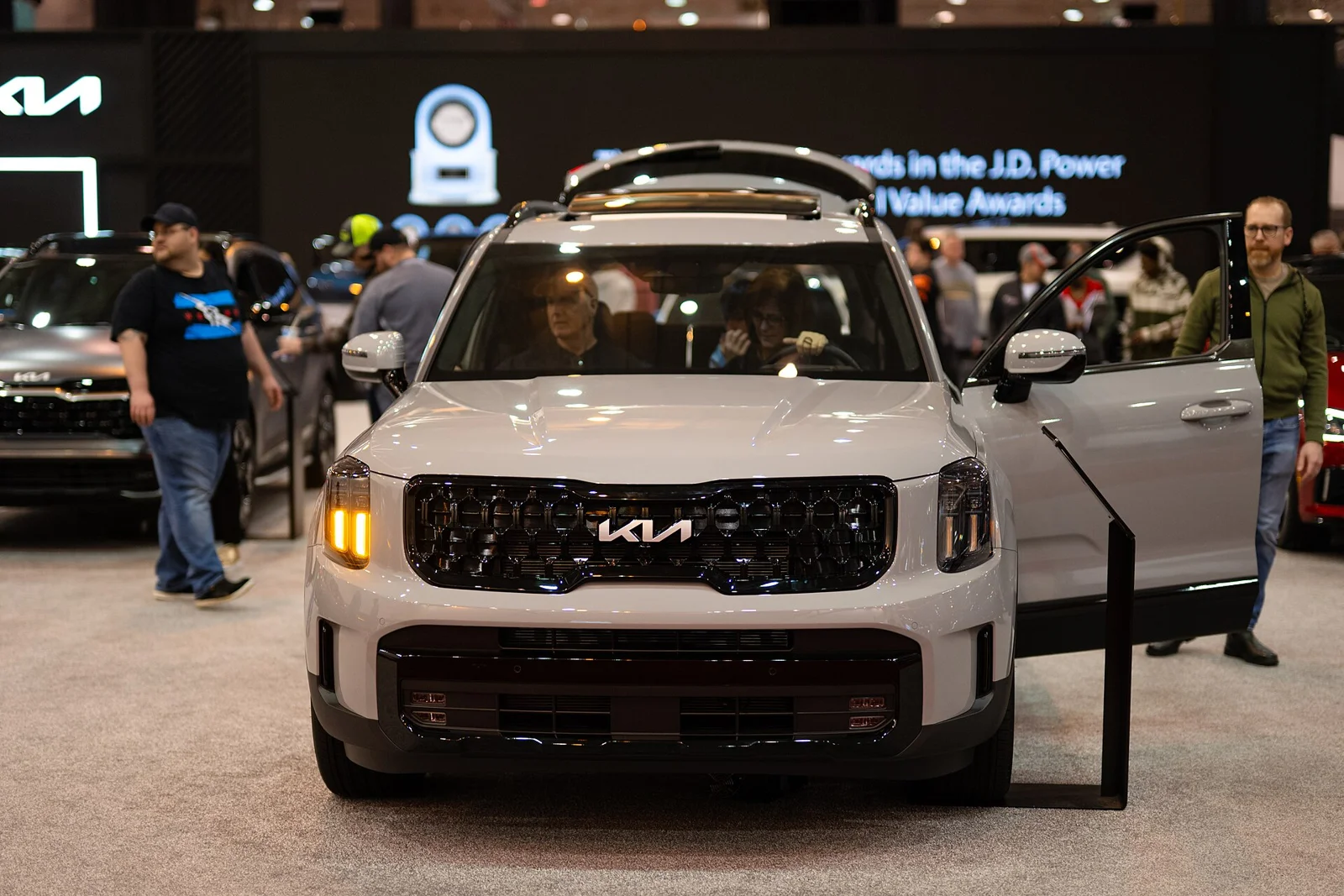
Setting It Up Right
The clean Telluride setup plays to its strengths. Mount factory or fit-verified crossbars to your rails, center the boat over both bars using the roughly 31.5-inch spread, and strap the hull at each bar. On a 12-to-14-foot kayak, add bow and stern tie-downs to the tow points and bumpers even with the wider spread, because length still creates leverage.
For carriers, a set of J-style kayak cradles is the standard match, and stackers if you carry two boats on edge. You do not need premium high-capacity bars for one or two kayaks, so put the money into good cradles and solid straps instead of chasing the 220 lb number you will not use.
For the full picture, the Telluride roof rack weight capacity guide details the 220 lb roof and 165 lb bar ratings, while the Telluride rooftop tent fit guide covers the heavy static load where the bar upgrade actually pays off. For the trip itself, see the Telluride car camping guide and the right Telluride camping gear.
The Verdict: An Easy Yes, Once You Read the Fine Print
Will a kayak fit on a Kia Telluride? Yes, and it is one of the better SUVs in the class for it, because the long roof gives a roughly 31.5-inch crossbar spread that carries a 12-to-14-foot boat with real stability. For one kayak, or even two, the factory 165 lb bars are more than enough and you need to buy nothing but cradles and a good set of straps.
The fine print is the 220-versus-165 gap. The roof is rated 220 lbs dynamic, but the factory bars cap the system at 165 lbs, so do not plan a heavy load around the 220 number until you have upgraded the bars to match. For kayaks that gap never bites at all; for rooftop tents and loaded boxes it is the whole game.
Spend where it counts. Good cradles and tie-downs for a kayak, stronger bars only when a heavy static load makes the full 220 lbs worth reaching. Match the rating to the real load, not the headline, and the Telluride carries your boat safely without a dollar wasted on capacity you were never going to use.