
Setting the Scene
The backseat of your car isn't a nursery; it's a high-traffic hazard zone. A spilled juice box transforms into a permanent upholstery stain in 35 minutes flat. A single rogue grape juice spill can lead to a $200 detailing bill. You've got to understand the enemy: your car's interior is a sponge, and every spill is a biohazard countdown. Forget the 'enriching experiences' - I care about not pulling over again. You can watch a pro detailer tackle a permanent stain and wonder why car seat stains keep coming back, or you can arm yourself with knowledge. This isn't about tidiness; it's about logistic survival and preventing a total interior hazmat event. New products like those mentioned in What's NEW in Car Care Products So Far in 2026? can help, but prevention is always cheaper than extraction.
The Short Answer
Fabric fibers, whether cloth or recycled plastic blends, are porous. They wick liquid deep into the padding beneath. Think of it like a coffee filter - it's built to pull liquid through. That 12-ounce soda isn't just sitting on the surface; it's saturating layers. This wicking action is why a small surface stain can turn into a massive, spreading splotch that seems to grow over time, even after you've blotted the top layer. It's called 'wicking' and any detailer has experienced it with cloth seats.
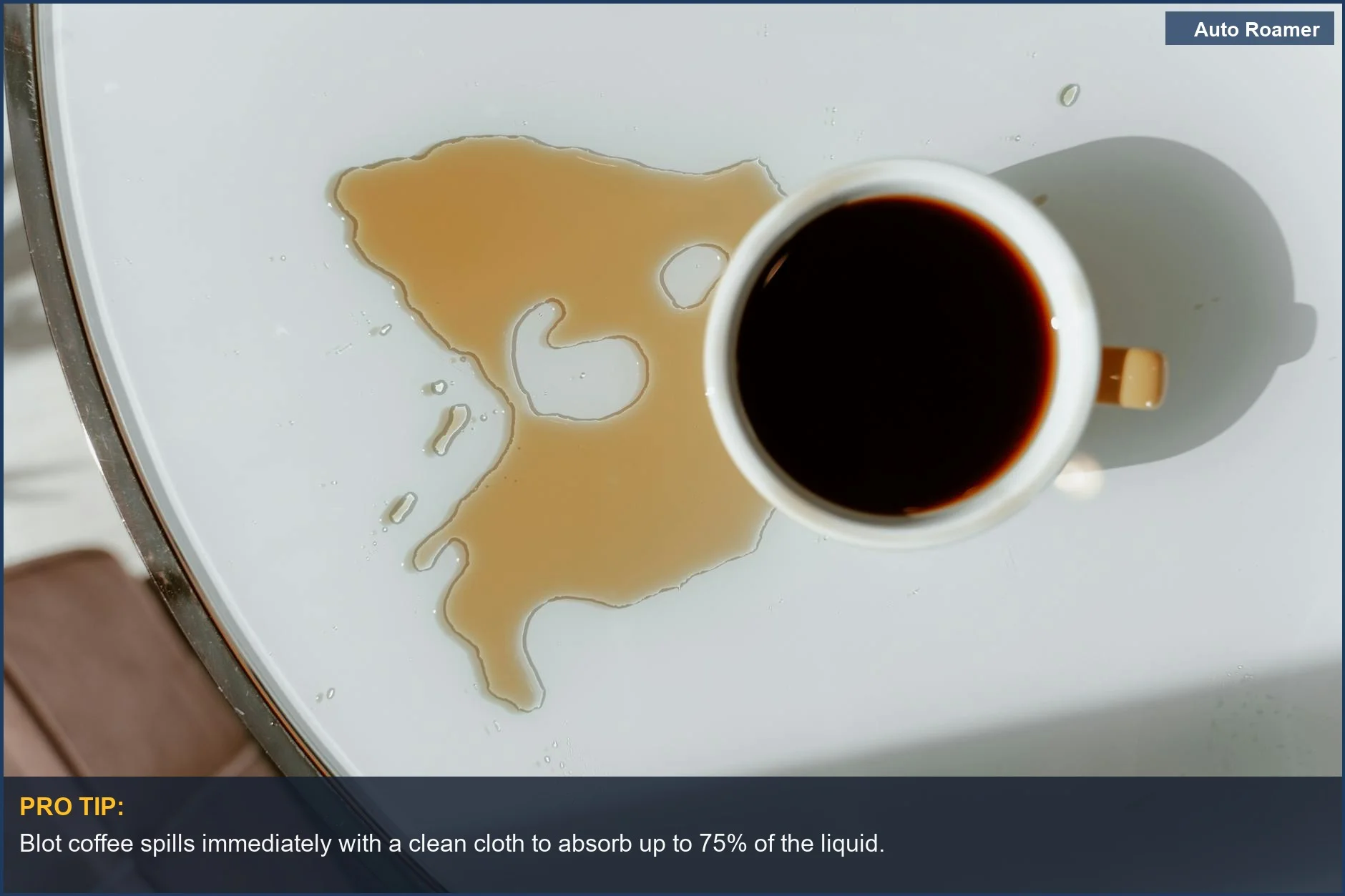
Then there's the chemistry. Organic stains - coffee, juice, milk, vomit - contain sugars, acids, and proteins. These aren't just colors; they're active compounds. Left on warm, porous surfaces, these compounds begin to bond with the fabric dyes and fibers. The heat inside a parked car, easily hitting 140 degrees F on a sunny day, accelerates this reaction. What starts as a liquid spill quickly becomes a semi-solid, then a permanent chemical alteration. Organic stains like coffee or juice can react with the fibers, causing a chemical change that permanently sets the stain.
It's not just the visible liquid, either. The residue - sugars, salts, minerals - dries and becomes a magnet for dirt and dust. This creates a 'ghost stain' that reappears even after cleaning because the sticky residue attracts new grime. Interior detailing goes beyond cleaning now, precisely because these hidden contaminants are the real enemy. This isn't about scrubbing harder; it's about understanding the half-life of a spill. You have a narrow window for extraction before molecular bonds form and the stain becomes a permanent part of your vehicle's history.
The Reality Check
You think all car seats are created equal? Think again. The materials vary wildly, and so does their resistance to biohazard infiltration. Knowing your specific vehicle's vulnerabilities is tactical intelligence. Here's a breakdown of common failure points and their associated costs.
| Component | How It Fails | Symptoms | Fix Cost |
|---|---|---|---|
| Standard Cloth Upholstery (e.g., Toyota Corolla 2018) | High absorbency, low fiber density. Spills wick deep into foam padding within 15 minutes. | Dark, spreading liquid marks. Dries to a stiff, discolored patch. Odor retention. | $150-$250 for professional extraction; $400-$700 for seat re-upholstery. |
| Recycled Plastic/Blended Fabrics (e.g., BMW i3, some RAV4 models) | Fibers can leach chemicals when wet, causing 'water stains' even from plain water. High wicking. | Random brownish or yellowish stains appearing after any liquid contact. Spreading perimeter. This can happen in an older BMW i3. | $200-$400 for specialized chemical treatment; often requires full seat replacement at $800+. |
| Perforated Leather/Vinyl (e.g., Honda CR-V EX-L 2020) | Perforations allow liquids to penetrate foam beneath. Surface is resistant, but holes are critical weak points. | Liquid pooling in perforations, then disappearing. Dries to a sticky residue that attracts dirt, causing dark spots. | $100-$300 for detailing; $600-$1200 for panel replacement if foam is compromised. |
| Carpeted Floor Mats (e.g., Ford F-150 XLT 2022) | Dense pile traps solids and liquids. High surface area for bonding. Road grime compounds stains. | Mud, grease, food mashed deep into fibers. Becomes hard, matted, and discolored. | $50-$100 for deep cleaning per mat; $80-$150 for new OEM floor mats. |
| Seatbelts (universal) | Woven nylon absorbs oils, sweat, and liquids. Difficult to clean due to retraction mechanism. | Dark greasy streaks, stiffness, unpleasant odor. Seatbelts in the back are also acquiring a brown stain where they connect to the seat. | $30-$50 per belt for spot treatment; $150-$300 for professional extraction; $200-$500 for replacement. |
Understanding these vulnerabilities is your first step. A $12 waterproof seat cover for a cloth seat is not an accessory; it's a hazmat barrier. Ignoring it means you're gambling with hundreds of dollars in damage. The science is simple: porous materials absorb, heat accelerates, and organic compounds bond. Your job is to interrupt that chain of events.
The speed at which messes become permanent is alarming. Standard cloth upholstery, like that found in a 2018 Toyota Corolla, boasts high absorbency and low fiber density. This means spills don't just sit on top; they wick deep into the foam padding, often within a mere 15 minutes. Professional detailers note how quickly stains set. The result is dark, spreading liquid marks that dry into stiff, discolored patches, notoriously retaining odors.
Even seemingly resilient materials like the recycled plastic or blended fabrics used in some BMW i3s or RAV4 models present unique challenges. These fibers can actually leach chemicals when wet, creating 'water stains' even from plain water. This phenomenon is known as wicking, where liquid is drawn up through the material, leaving behind unsightly marks. This wicking effect is a common frustration for detailers.
Perforated leather or vinyl, common in trims like the Honda CR-V EX-L, offers surface resistance but creates critical weak points at every perforation. These tiny holes act as direct conduits for liquids, allowing them to penetrate the foam beneath. While the surface might wipe clean, the liquid trapped in the foam can dry into a sticky residue that attracts dirt, leading to dark, stubborn spots.
Even the humble carpeted floor mats in a vehicle like a Ford F-150 XLT are prime real estate for stain development. Their dense pile traps both solids and liquids, offering a high surface area for contaminants to bond. When combined with road grime, these mats quickly become hard, matted, and discolored.
Don't forget the often-overlooked seatbelts. The woven nylon material is a sponge for oils, sweat, and liquids, and cleaning them is complicated by their retraction mechanism. This absorption leads to dark, greasy streaks, stiffness, and an unpleasant odor. Re-wetting a deep stain can bring it back to the surface, making thorough cleaning essential.
Car detailing in 2026 is increasingly focused on smart protection and advanced technology to combat these issues. Protecting your interior from contaminants like road grime and body oils is crucial. Organic stains, such as coffee or juice, can react with the fibers, causing a chemical change that permanently alters the material. This chemical reaction is a key reason why some stains are so difficult to remove.
The science behind stain permanence is straightforward: porous materials absorb liquids, heat accelerates the bonding process, and organic compounds chemically alter the fibers. Your mission, should you choose to accept it, is to interrupt this rapid chain of events. Implementing preventative measures, like a simple waterproof seat cover, isn't an optional extra; it's a vital defense against permanent damage and costly repairs.
How to Handle This
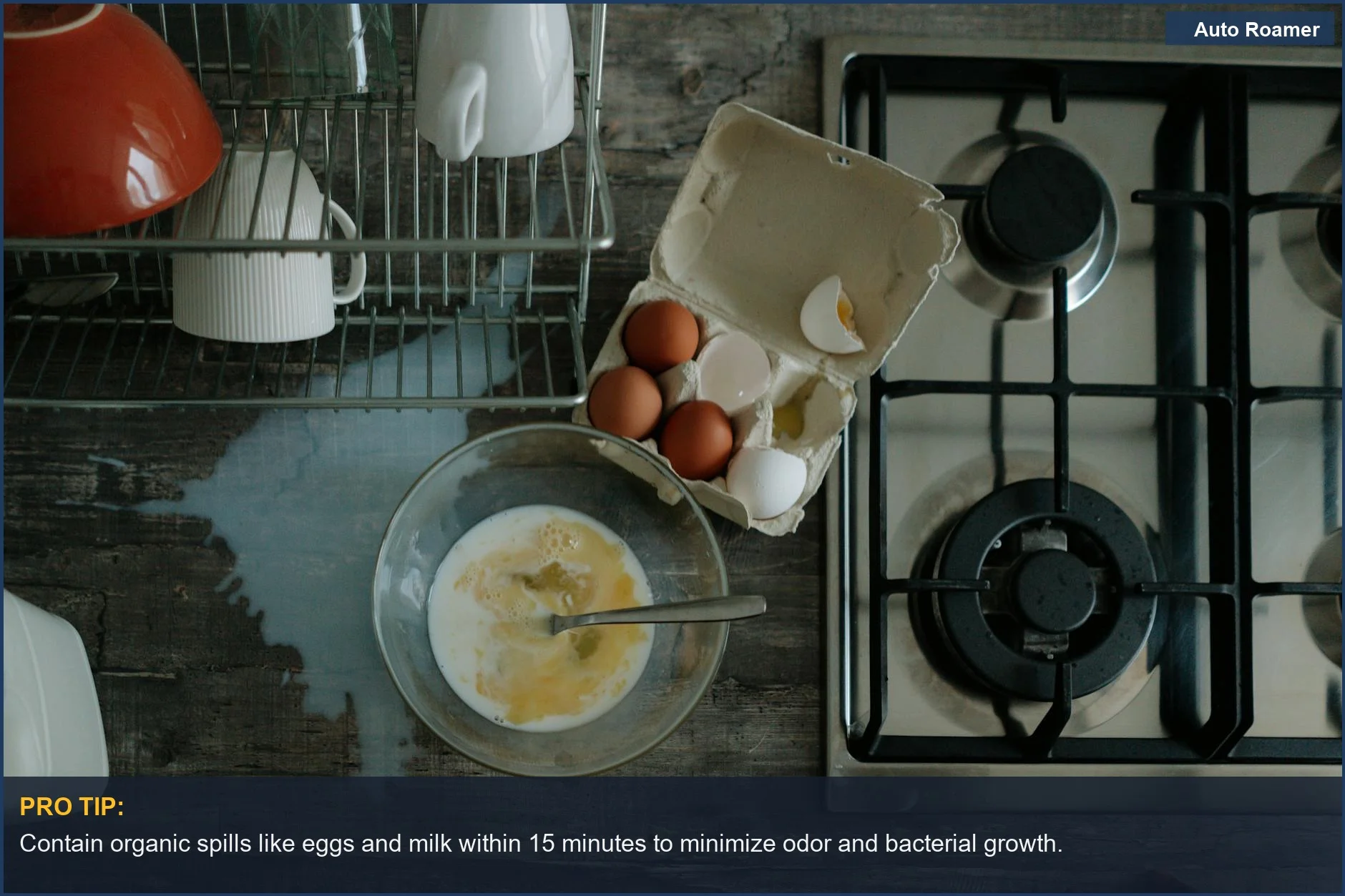
When the inevitable happens - because it will happen - you need an extraction protocol, not a wish and a prayer. This isn't about 'cleaning'; it's about containing, neutralizing, and extracting the biohazard before it sets permanently. You have a 30-minute window, max, for most organic spills before they start bonding. Here's your field-tested procedure.
- Immediate Containment (0-5 minutes): Your tactical load-out needs to be within arm's reach. Keep a gallon ziplock bag in each door pocket, pre-loaded with a small roll of paper towels, a spray bottle of 50/50 water/white vinegar solution, and a microfiber cloth. The second a spill occurs, blot, do not rub. Press firmly with paper towels to absorb as much liquid as possible. Use your body weight. Replace towels until they come up mostly dry. This is critical for preventing wicking into the foam below. For solid biohazards, use a plastic bag to scoop and seal immediately. You're not cleaning; you're removing bulk contamination.
- Neutralize & Loosen (5-15 minutes): Once the bulk is gone, lightly mist the affected area with your 50/50 vinegar solution. Vinegar is a weak acid that helps break down sugars and proteins without damaging most upholstery. For tougher stains like coffee, the tannins in coffee can leave behind brown stains that need immediate attention. Let it sit for 2-3 minutes. This isn't a soak; it's a surface treatment. The goal is to re-liquefy any setting residue. For grease or oil, a small squirt of dish soap in water works better, but rinse thoroughly.
- Extraction & Rinse (15-25 minutes): Now, the real work. Place a clean microfiber cloth over the treated area. Press down hard. Stand on it if you have to. The goal is to transfer the dissolved stain from the seat fabric to the cloth. Repeat with clean sections of the cloth until no more color transfers. Then, lightly mist with plain water and repeat the blotting. This 'rinse' step is crucial to remove any lingering residue that would otherwise attract dirt and cause a ghost stain. Most vehicles get dirty so quickly because the paint and interior aren't properly protected, and that includes lingering residues.
- Air Dry & Monitor (25-30 minutes and beyond): Leave windows cracked if possible to air dry. Do not apply heat, as this can set residual stains. Once dry, inspect the area. If a faint ring or shadow appears (wicking from deeper in the foam), repeat steps 2 and 3. Sometimes, the stain is deeper than you think, and it will 'wick' back up as it dries. This is a common issue that detailers experience with cloth seats. Your sanity-saver here is patience and persistence. This isn't a one-and-done; it's a multi-stage extraction protocol. Without this tactical approach, you're looking at a $180 detailing bill.
What This Looks Like in Practice
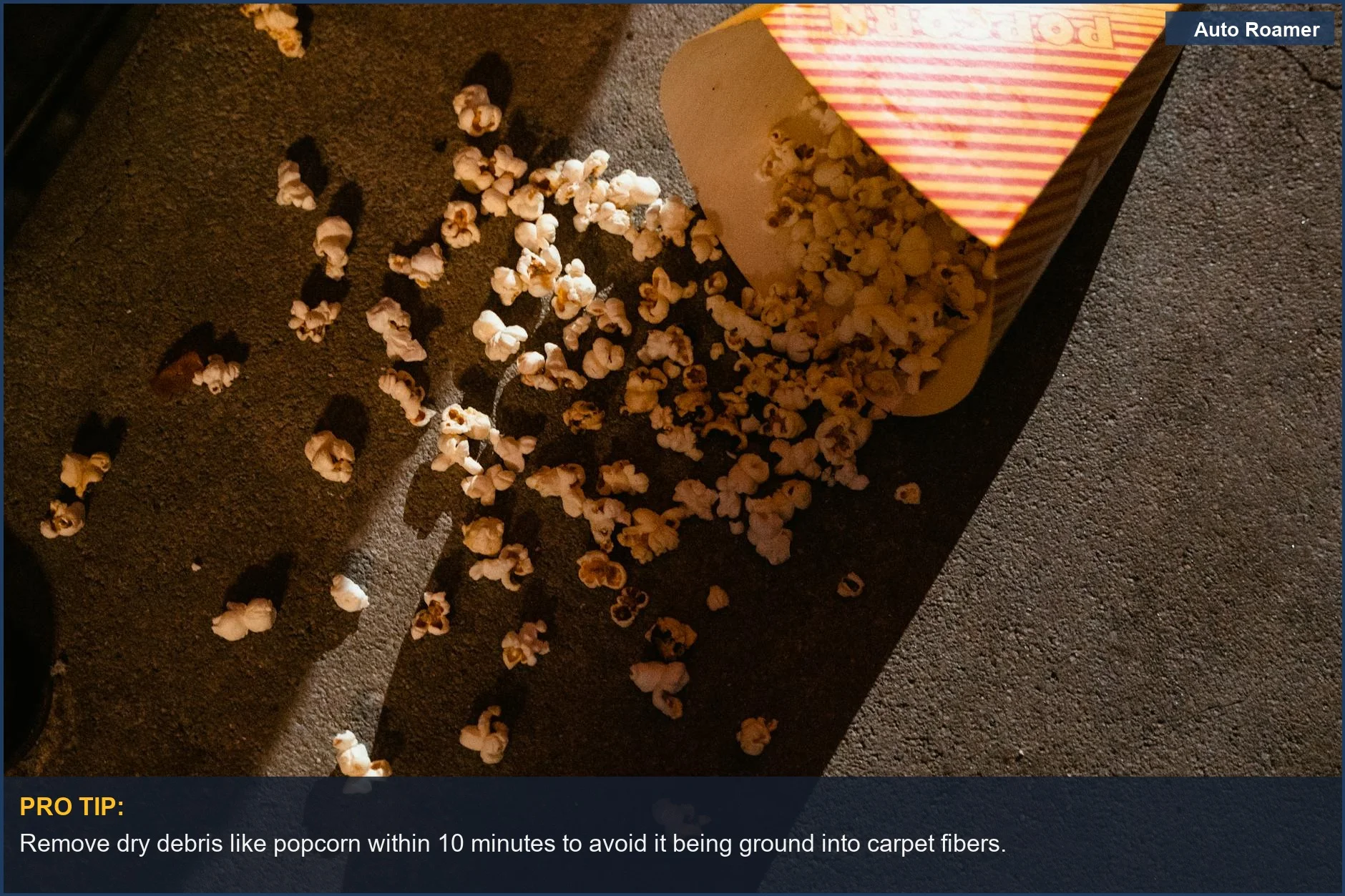
You think you're safe? Think again. Every trip, every passenger, every snack is a potential biohazard event. Here's what real-world containment failures look like and the metrics that matter for your survival.
- Scenario 1: The Exploding Juice Box (2-year-old in car seat)
- Threat Level: High - Sugars and dyes bond rapidly.
- Half-Life: 10 minutes until permanent bonding on cloth upholstery.
- Contamination Zone: 1.5 square feet of rear seat, plus car seat straps.
- Extraction Time: 25 minutes of active blotting and neutralizing with vinegar solution. 45 minutes of air drying with windows cracked.
- Consequence of Failure: $200 detailing charge, or $80 for a new car seat cover and permanent staining on the vehicle seat.
- Scenario 2: The Rogue Coffee Spill (Monday commute, driver's seat)
- Threat Level: Extreme - Hot, acidic, rich in tannins. Accelerated bonding.
- Half-Life: 7 minutes on hot leather, 12 minutes on cloth.
- Contamination Zone: 0.8 square feet, impacting driver comfort and resale value.
- Extraction Time: 20 minutes of alternating blotting and mild detergent application. Requires immediate action. Coffee stains on your car seats? Been there, spilled that.
- Consequence of Failure: Permanent dark stain, sour odor, reduced resale value by $150-$300. Professional steam extraction needed, minimum $100.
- Scenario 3: The Muddy Dog Incident (Post-hike adventure, cargo area)
- Threat Level: Moderate - Primarily particulate matter, but can become abrasive with water.
- Half-Life: 45 minutes for mud to dry and embed into carpet fibers. 20 minutes if wet mud is ground in.
- Contamination Zone: Entire cargo liner, rear seatbacks, and lower door panels.
- Extraction Time: 15 minutes to vacuum loose dirt, 30 minutes to scrub and extract embedded mud. Requires a heavy-duty shop vac.
- Consequence of Failure: Permanent dirt discoloration, matted carpet fibers, dog odor retention. Mud, especially if it contains abrasive particles, can scratch and damage surfaces.
- Scenario 4: The 'I'm Not Feeling Well' Vomit Event (Road trip, backseat)
- Threat Level: Critical - Highly acidic, contains digestive enzymes, and strong odor.
- Half-Life: 5 minutes until acid starts etching fibers, 15 minutes until odor permeates foam.
- Contamination Zone: 2 square feet of seat, plus floor mat and potentially seatbelt.
- Extraction Time: 40 minutes of immediate solid removal, heavy duty enzyme cleaner, and extensive blotting. Requires full hazmat protocol.
- Consequence of Failure: Permanent etching, pervasive odor requiring ozone treatment ($150-$300), and potential seat replacement ($500+). This is a total loss scenario if not handled immediately.
Mistakes That Cost People
People make mistakes, and in the chaos of a car mess, those mistakes become permanent, expensive lessons. Your car's interior isn't forgiving. Avoid these common blunders that turn a minor incident into a full-blown hazmat situation.
| Mistake | Why It Fails | Diagnostic Symptoms | Cost of Error |
|---|---|---|---|
| Rubbing, Not Blotting | Forces the spill deeper into the fabric and foam, spreading the stain laterally. Damages fibers. | Stain appears larger than original spill. Fabric looks fuzzy or worn. | $100-$200 for professional deep extraction; potential irreversible fiber damage. |
| Using the Wrong Cleaner | Harsh chemicals can bleach fabric, leave sticky residues, or set certain stains permanently. Many household cleaners are too aggressive. | Bleached spots, sticky film that attracts dirt, stain reappears darker after cleaning. Stains inside your car aren't just annoying, they can be exacerbated by incorrect cleaning. | $150-$300 for color correction or re-dyeing; often requires seat panel replacement. |
| Over-Saturating the Area | Pushes the stain deeper into the foam padding, making it impossible to extract without professional equipment. Creates 'wicking' issues. | Stain reappears after drying, often with a darker ring around the edges. Musty odor develops. Why Car Seat Stains Keep Coming Back is often due to over-saturation. | $200-$400 for professional hot water extraction; mold growth can require full seat replacement. |
| Ignoring the Spill for 'Later' | Allows organic compounds to bond with fibers, sugars to caramelize with heat, and odors to permeate. | Permanent dark stain, hardened residue, pervasive foul odor. | $180-$500 for detailing and odor removal; often irreversible damage. |
| Not Rinsing the Area Properly | Leaves behind cleaning product residue or dissolved stain particles that attract new dirt, causing ghost stains or rapid re-soiling. | Area looks clean initially, but darkens again within days or weeks. Sticky feel. | $100-$150 for repeat detailing; continuous cycle of cleaning. |
| Applying Heat to Dry | High heat (e.g., hair dryer, parking in direct sun) bakes the stain into the fabric, making it virtually impossible to remove. | Stain becomes darker, harder, and chemically bonded to the fibers. | Irreversible damage, requiring seat panel or full seat replacement ($500-$1200). Most People Ruin Seats Doing This by applying heat. |
Every one of these mistakes is a tactical failure. You're not just 'cleaning'; you're performing a delicate extraction under time pressure. Understanding these pitfalls is as critical as having the right load-out. Without this knowledge, you're just throwing money at a problem you're actively making worse.
Key Takeaways
The interior of your car is a battlefield, not a living room. Every spill is a potential biohazard, and without a solid containment and extraction protocol, you're guaranteeing permanent damage and costly repairs. My field experience has taught me that foresight and a small tactical load-out are worth hundreds of dollars in avoided detailing bills. The half-life of a spill is short; your reaction time must be shorter.
- Act Fast: You have a 10-30 minute window before most organic spills begin to bond permanently with your upholstery. Speed is your primary weapon.
- Equip Your Vehicle: A basic load-out of paper towels, a 50/50 vinegar solution, and microfiber cloths in sealed ziplocks is non-negotiable. This costs less than $15 and fits in any door pocket.
- Blot, Don't Rub: Rubbing spreads the stain and grinds it deeper. Blotting lifts the contaminant out of the fibers.
- Neutralize & Extract: Use appropriate, mild cleaners to break down the stain, then extract thoroughly. Rinse with plain water to remove residues.
- Air Dry, No Heat: Heat sets stains. Allow the area to air dry naturally, or with cracked windows.
- Preventative Measures: Waterproof seat covers, especially for high-risk zones like car seats or cargo areas, are cheap insurance. This isn't about luxury; it's about logistic survival. Don't let your car's interior become a permanent monument to your unpreparedness. You can learn How To Shampoo Car Seats With Extractor, but prevention is always superior.