Car Accessories

Weight Limits and Installation Considerations for Truck Canopies

Casey - The Weekend Warrior
5 min read
Includes Video

My first truck canopy was a $1,200 gamble on a used Leer for my old Tacoma. I just wanted a dry place for my camping gear, but what I got was a lesson in weight distribution. Turns out, these fiberglass shells aren't just decorative.

My first truck canopy was a $1,200 gamble on a used Leer for my old Tacoma. I just wanted a dry place for my camping gear, but what I got was a lesson in weight distribution. Turns out, these fiberglass shells aren't just decorative. They have a weight limit, and ignoring it can mess with your truck's handling, especially if you're trying to haul more than just sleeping bags.

Most truck canopies weigh between 100 and 300 pounds, and that's before you add anything to the roof rack. This weight can push your vehicle over its Gross Vehicle Weight Rating (GVWR) faster than you think.

The Core Answer

The Real Deal on Shell Weight

The honest version is that your truck canopy isn't just a fancy lid for your truck bed; it's a structural component that adds a significant amount of weight. Most fiberglass or aluminum canopies tip the scales somewhere between 100 and 300 pounds, depending on the material and how it's built. A typical fiberglass shell can weigh anywhere from 120 to 185 pounds, while aluminum models are often lighter. My first shell, a used Leer, probably weighed around 250 pounds, and I had no clue. What nobody tells beginners is that this weight directly impacts your truck's payload capacity. Your truck has a maximum Gross Vehicle Weight Rating (GVWR), which is the total safe weight of the truck and its cargo. Adding a 200-pound canopy means you have 200 pounds less capacity for passengers, gear, and anything else you might haul. Adding a canopy might push your vehicle over its weight limit, which is a rookie mistake I almost made trying to load my truck for a weekend trip to Moab. Then there's the roof rack. Most manufacturers rate their roof racks for both dynamic (while driving) and static (while parked) weight. For example, a Thule system on a Leer cap might handle 400 pounds static. My buddy Dave, who is way smarter than me about this stuff, told me his ARE cap's roof rack has a dynamic limit of around 200 pounds. That's enough for a rooftop tent, but you have to be mindful of how you load it. Dynamic load capacity is around 200 lbs, and static is around 500 lbs for some models. It sounds like a lot, but remember, that's for the rack, not the entire canopy's structural integrity. When I first got my shell, I immediately slapped a heavy-duty roof rack on it and started piling on gear. I didn't even think about the weight of the rack itself, which can be 50 pounds or more. The real move is to check the manufacturer's specs for both the canopy and the rack. For instance, aluminum canopies usually have a roof weight capacity of around 50 to 150 pounds. That's not much if you're thinking of a full expedition setup. Leer caps are good for up to 600lbs static, which is pretty beefy, but again, always verify.

To maximize your truck canopy's potential, consider how it aligns with your camping needs in our article on choosing the right size.
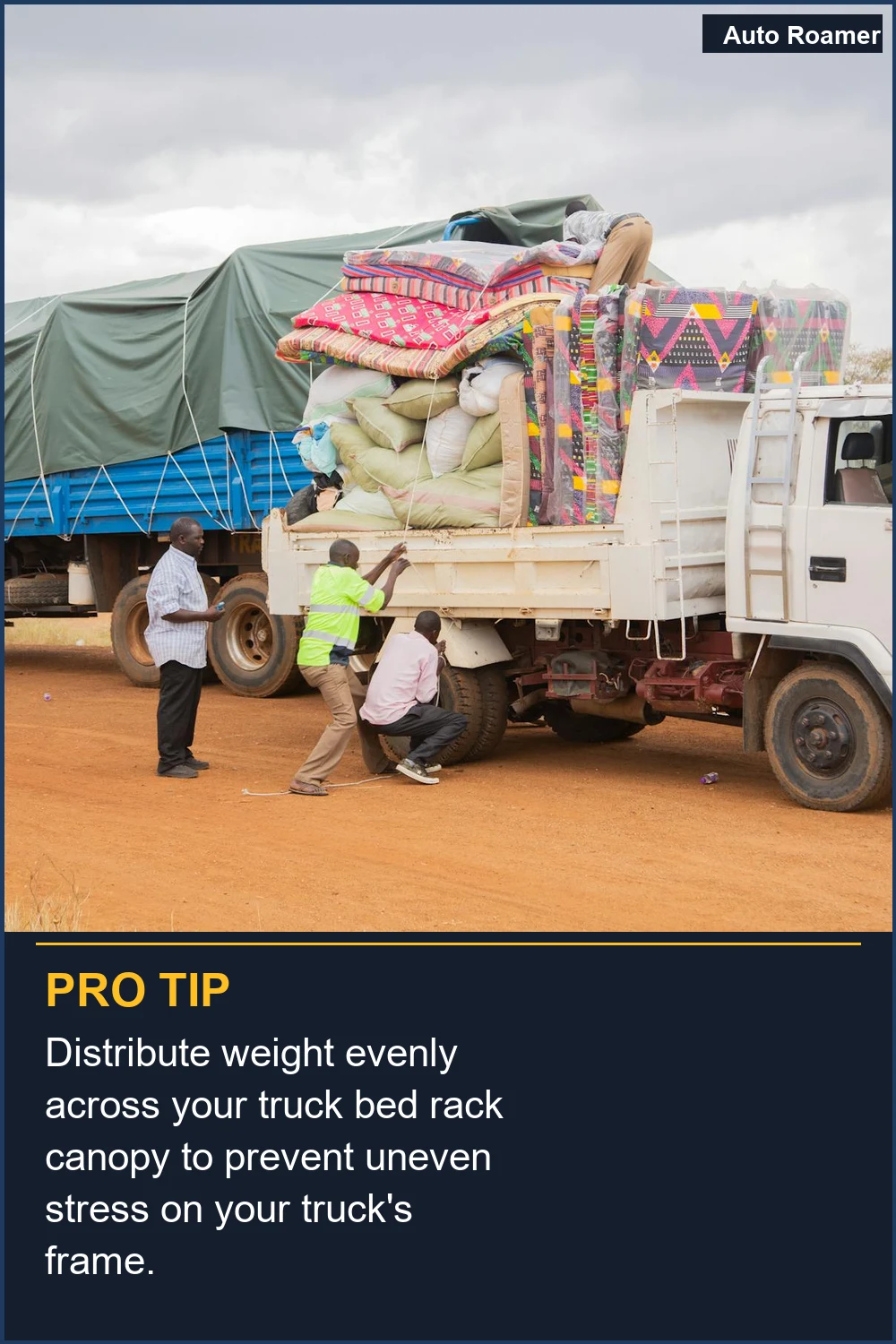
Distribute weight evenly across your truck bed rack canopy to prevent uneven stress on your truck's frame.
When considering installing a camper shell, remember that even lightweight models add considerable weight. This truck bed rack canopy setup is being loaded with supplies, highlighting the need to account for total weight. | Photo by Speak Media Uganda

Why This Matters for Your Setup

  • Payload Capacity: Your truck has a maximum payload - the total weight it can safely carry. A 250-pound canopy eats into that capacity. If your truck's payload is 1,500 pounds, and you add a 250-pound canopy, you now only have 1,250 pounds for passengers and gear. This weight can push your vehicle over its limit. I learned this the hard way on a trip to the Sierras when my truck felt sluggish going uphill.
  • Roof Rack Limits: Don't just assume any rack can hold anything. Manufacturers specify dynamic (driving) and static (parked) weight limits. A dynamic limit of 200 pounds means you can't be cruising down the highway with a 300-pound rooftop tent on top. Dynamic load capacity is around 200 lbs for many. You can't just eyeball it.
  • Structural Integrity: Piling too much weight on the roof, especially unevenly, can stress the canopy's structure. I've seen hairline cracks form on fiberglass shells from overloaded awnings. Aluminum canopies usually have a roof weight capacity of around 50 to 150 pounds, so they're less forgiving for heavy loads.
  • Fuel Economy: While not directly a weight limit issue, a heavier shell and roof rack configuration will slightly decrease your fuel efficiency. It's not a huge difference, but every bit counts on long trips. It's a minor annoyance, not a safety issue, but still worth noting.
  • Understanding your truck's payload can help you choose the right types of truck canopies for camping.
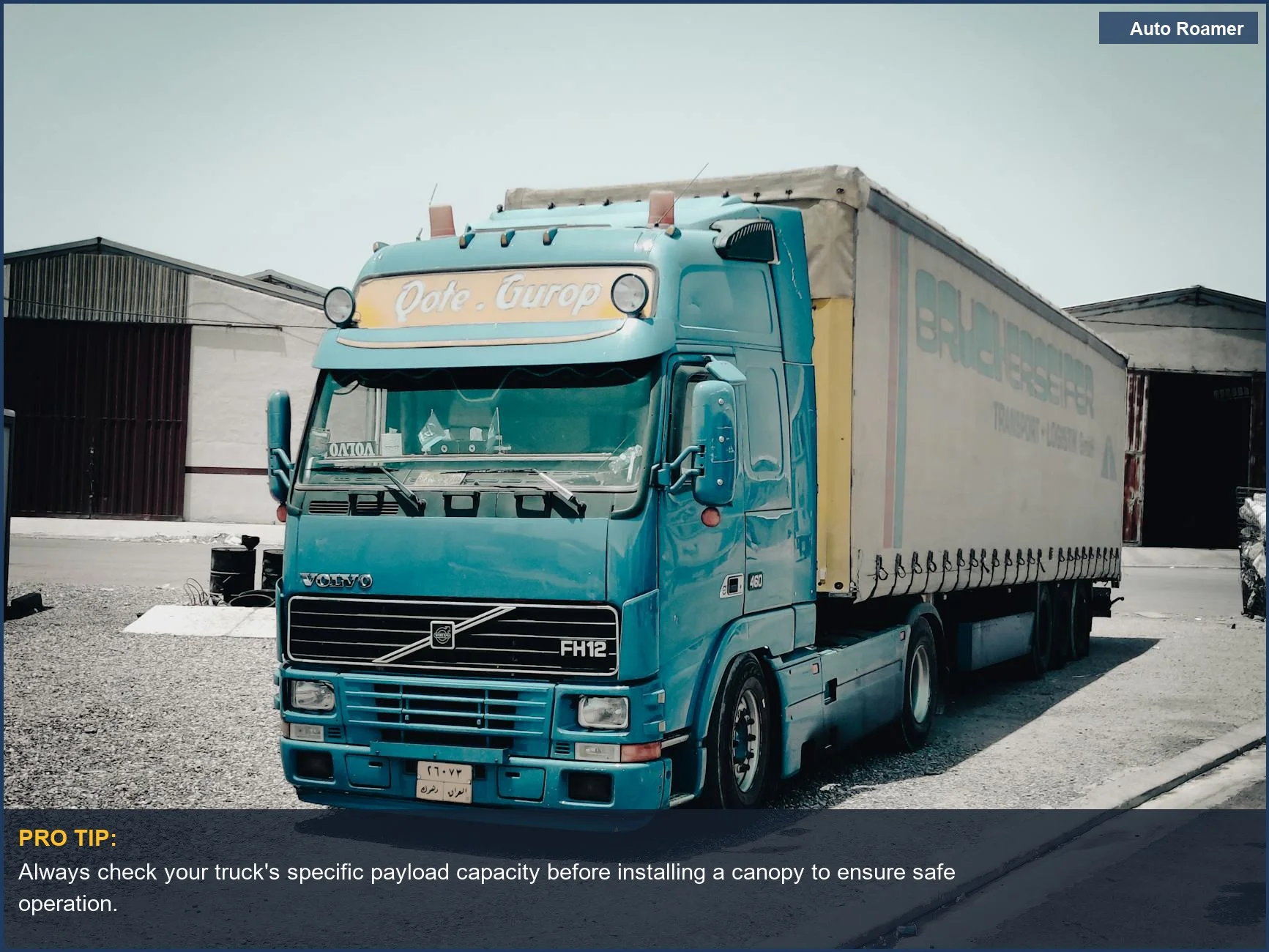
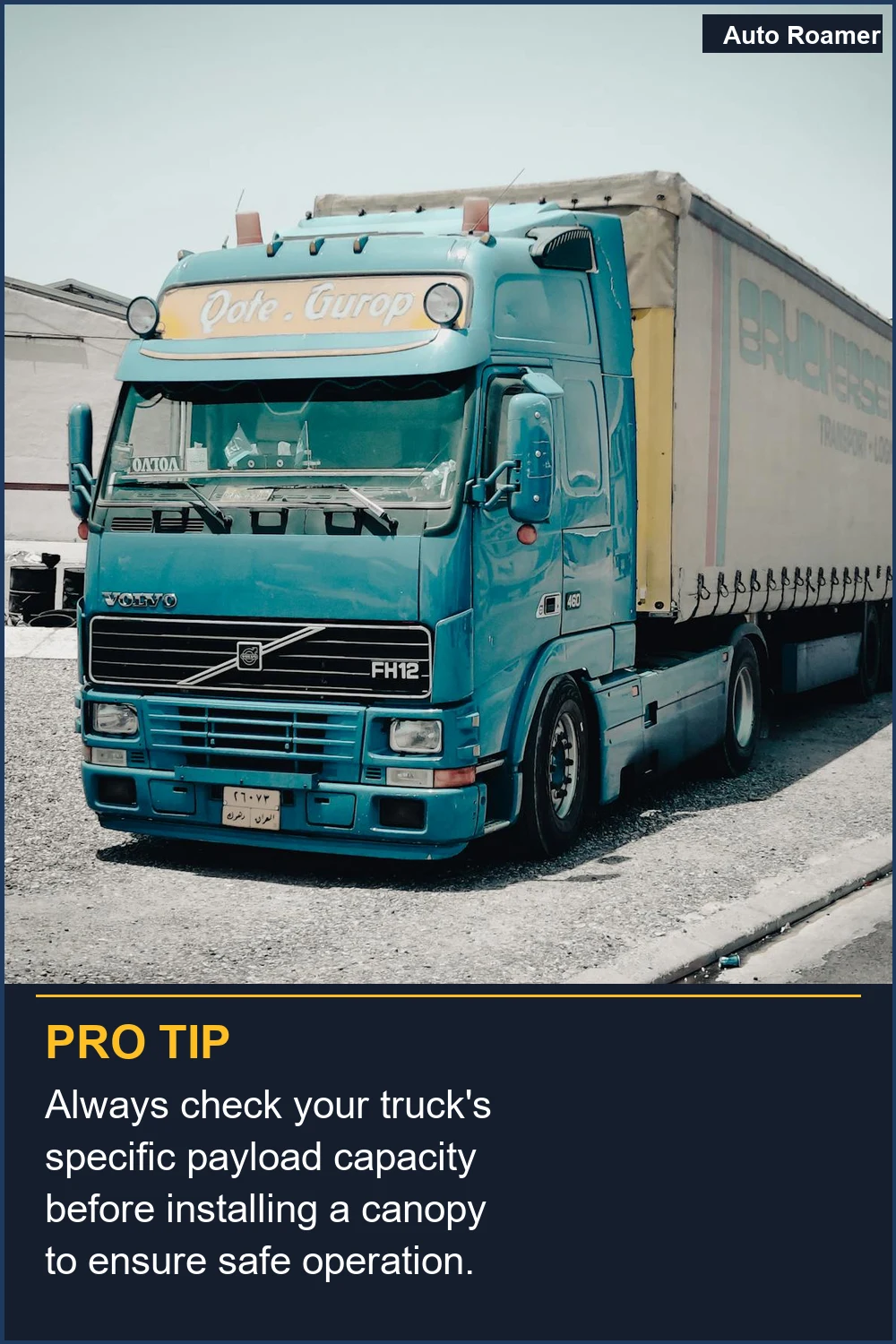
    Always check your truck's specific payload capacity before installing a canopy to ensure safe operation.
    Understanding your truck's payload capacity is crucial when calculating the truck canopy weight limit. This Volvo truck reminds us of the importance of adhering to these figures. | Photo by Esmihel Muhammed

    Making the Right Choice

    Making the Smart Choice
  • Know Your Numbers: Always find out the weight of your canopy and the weight limits for your truck's payload and your roof rack. Don't guess. Most truck canopies weigh between 100 and 300 pounds. That's a lot of weight before you even add gear.
  • Prioritize Your Needs: If you plan on carrying heavy items like a rooftop tent or a rack full of gear, invest in a canopy and rack system designed for that load. Don't cheap out. Leer caps are good for up to 600lbs static, but that's static. Driving is different.
  • Consult the Experts: If you're unsure, ask the dealer or manufacturer. They can tell you what your specific model can handle. It's better to ask than to find out the hard way that your shell is bowing like a sad trombone. A.R.E. truck caps range from 120 to 185 pounds.
  • Think About Balance: Distribute weight as evenly as possible, especially on the roof rack. Avoid overloading one side. This keeps your truck handling predictably, which is always game-time.
  • To enhance your truck's versatility, consider learning how to set up a comfortable truck bed tent.
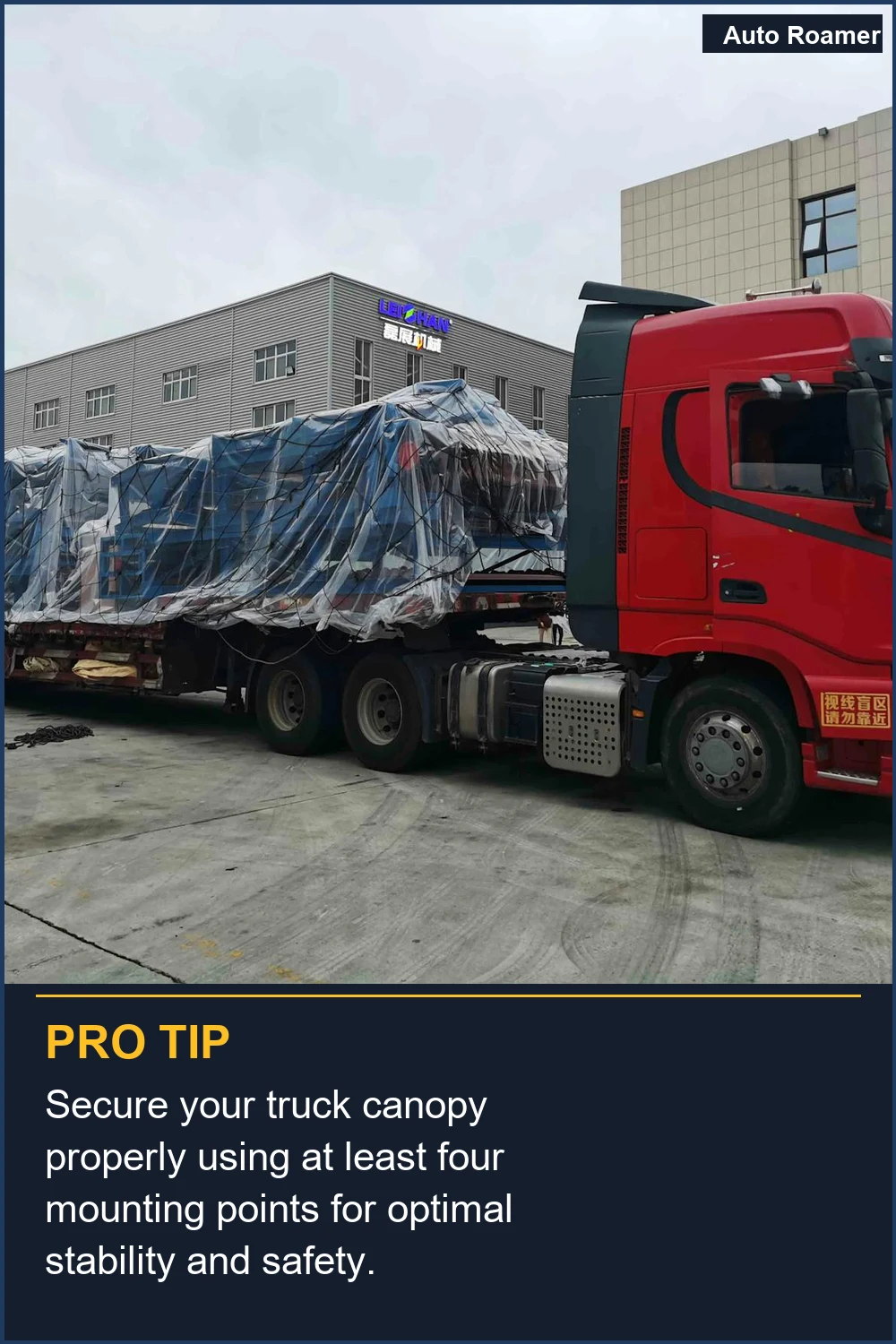
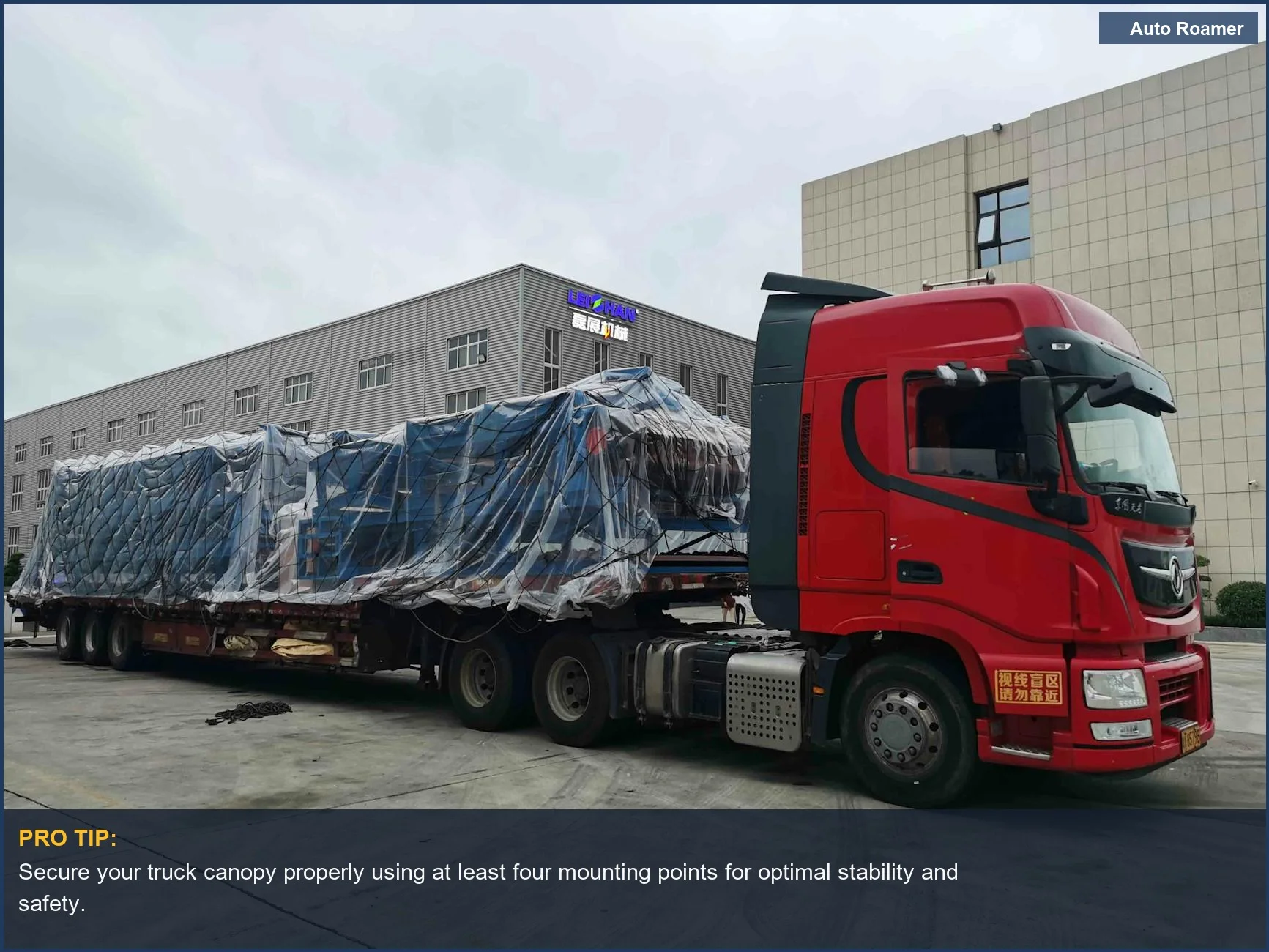
    Secure your truck canopy properly using at least four mounting points for optimal stability and safety.
    This red truck with a substantial covered load showcases the importance of proper installation for any truck canopy. Knowing the weight limits helps make the smart choice. | Photo by Yanqing Xu

    Frequently Asked Questions

    If I buy a used canopy, how do I know if it's still structurally sound to handle weight?
    That's a smart question, and honestly, it's tough to tell without taking it apart. Look for visible cracks, especially around mounting points or the roof rack rails. If it looks warped or has been in a major accident, walk away. A new, basic aluminum shell can cost around $1,000, so a cheap used one that fails could end up costing you more in repairs or damaged gear.
    Do I really need to buy a specific torque wrench to install my canopy? I have a regular socket set.
    For installing the actual canopy to the truck bed rails, a regular socket set is usually fine. The manufacturers don't typically specify torque values that require a special wrench. However, if you're installing a roof rack system, some of those do have specific torque settings. It’s usually not a super critical number, but if you overtighten, you can strip bolts or crack the fiberglass. Stick to snug, not 'I'm trying to Hulk-smash this thing.'
    What if I accidentally overload my canopy's roof rack and it cracks? Can I fix it?
    Oh man, that's the nightmare scenario. If it's a fiberglass shell and you get a crack, you can often repair it with a fiberglass repair kit, which might cost you around $50-$100 for materials. But if the damage is severe or compromises the structural integrity, you might be looking at a whole new canopy, which is easily $1,000+. It’s much cheaper to just not overload it in the first place.
    Can putting too much weight on my canopy permanently damage my truck's frame?
    It's unlikely to damage the actual truck frame unless you're talking about consistently exceeding your truck's GVWR by a massive amount for a very long time. What's more likely is you'll damage the canopy itself, the roof rack, or the truck bed rails. Chronic overloading can put excessive stress on your suspension and drivetrain, leading to premature wear, but it's not like your frame is going to snap in half from one overloaded camping trip.
    I heard you can just bolt anything to a truck canopy roof rack. Is that true?
    That's a myth that could cost you. While truck canopy roof racks are designed to hold gear, they have specific weight limits, both when the vehicle is moving and when it's parked. You can't just strap a fully loaded industrial generator up there and expect it to be fine. Always check the dynamic and static load ratings for both the rack and the canopy itself. Brilliant engineering doesn't mean it's indestructible.

    🏅 Looking for Gear Recommendations?

    Check out our tested gear guides for products that work with this setup:

    C

    Casey - The Weekend Warrior

    Weekend car camper and road trip enthusiast. Focuses on practical, budget-friendly solutions for families and first-time campers.

    Sources

    Related Articles