
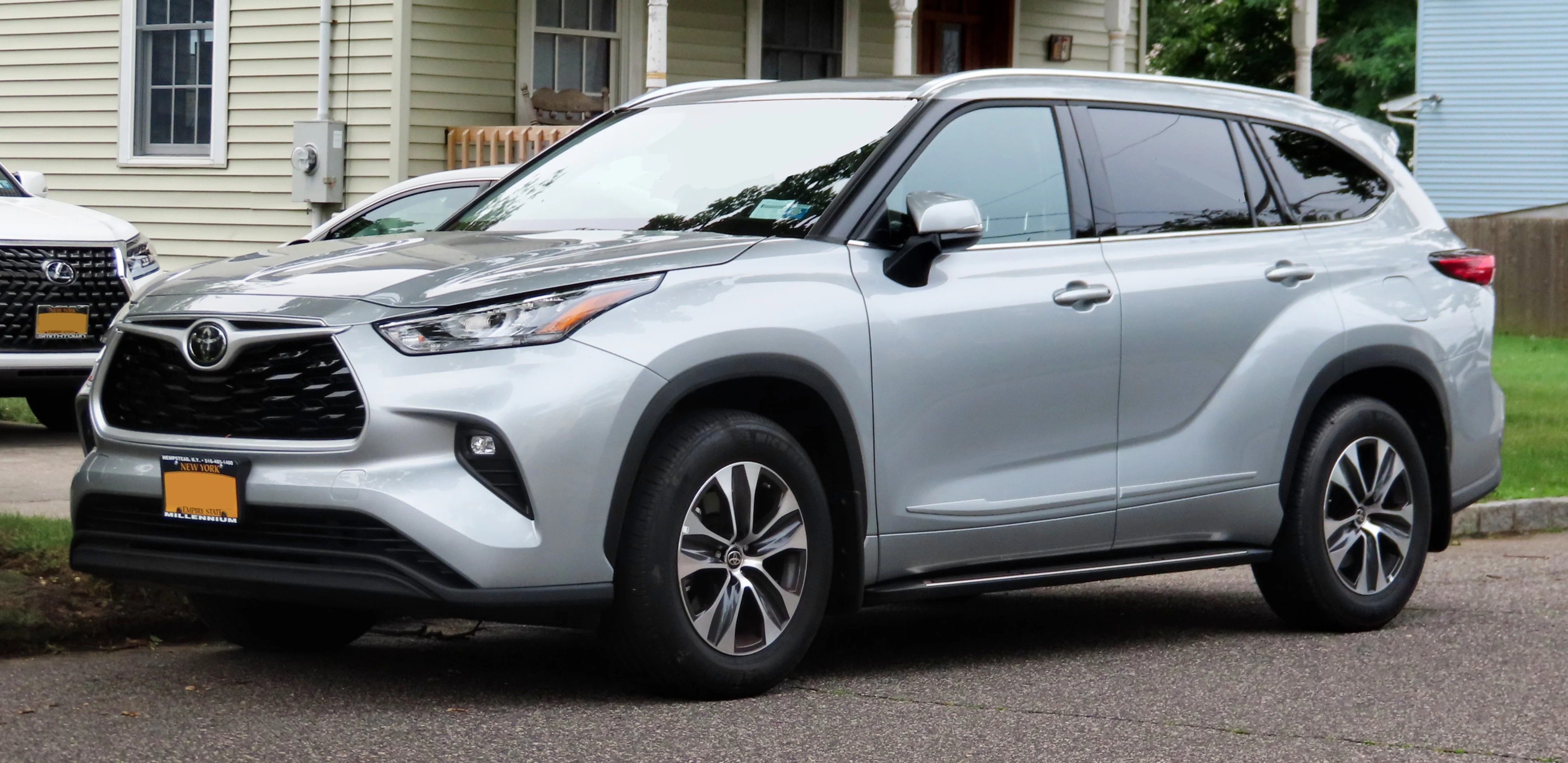
How Many 12V Outlets the Highlander Actually Has
The Toyota Highlander's owner's manual quick-reference lists three 12V DC outlet locations — front (instrument panel), the center console box, and a rear location — alongside a separate 120V AC outlet on equipped trims, per the Toyota Highlander owner's manual.
That is the manufacturer's own count, but it is not the only number floating around. A separate summary of the same vehicle describes just two 12V outlets, in the instrument panel and center console, according to a service-shop breakdown of Highlander electrical outlets.
That gap matters if you are trying to plan where a fridge, fan, or phone charger will actually plug in before a trip. The honest answer is that outlet count and placement shift by model year, trim, and whether the vehicle is gas or hybrid — which is why this piece works outlet-by-outlet instead of quoting one flat number.
For car campers specifically, the practical question is rarely "how many outlets exist" — it's "which ones stay live long enough to run a fridge, and which one can push a laptop-charging appliance." Both questions have documented, sourced answers, and both get worse if you guess instead of checking the fuse box and the manual for your specific trim.
The rest of this guide breaks the Highlander's power system into the pieces that matter for running camp gear: outlet locations, the amperage each one can actually handle, what stays powered with the key out, the hybrid-only household outlet, USB charging, and the fuse map that protects all of it. Every number below traces to a specific source, because guessing at a fuse rating is how camp fridges and factory wiring both get damaged.
It also matters which generation you're looking at. The facts sourced here come from fourth-generation Highlander material (roughly the 2020–2024 model years) plus current fuse-box and forum documentation; Toyota's separate, larger Grand Highlander model is a different vehicle with its own outlet layout and is intentionally excluded from the numbers below, since mixing the two would misrepresent both.
Two more distinctions run through every section that follows: gas versus hybrid powertrain, and trim level. The hybrid drivetrain unlocks a household-style AC outlet the gas Highlander does not get, and trim level decides whether that outlet — and even some 12V sockets — show up at all. Treat every number in this guide as tied to a specific trim and powertrain rather than "the Highlander" as one flat spec sheet.
The Front, Console, and Rear 12V Sockets — What Each One Can Handle
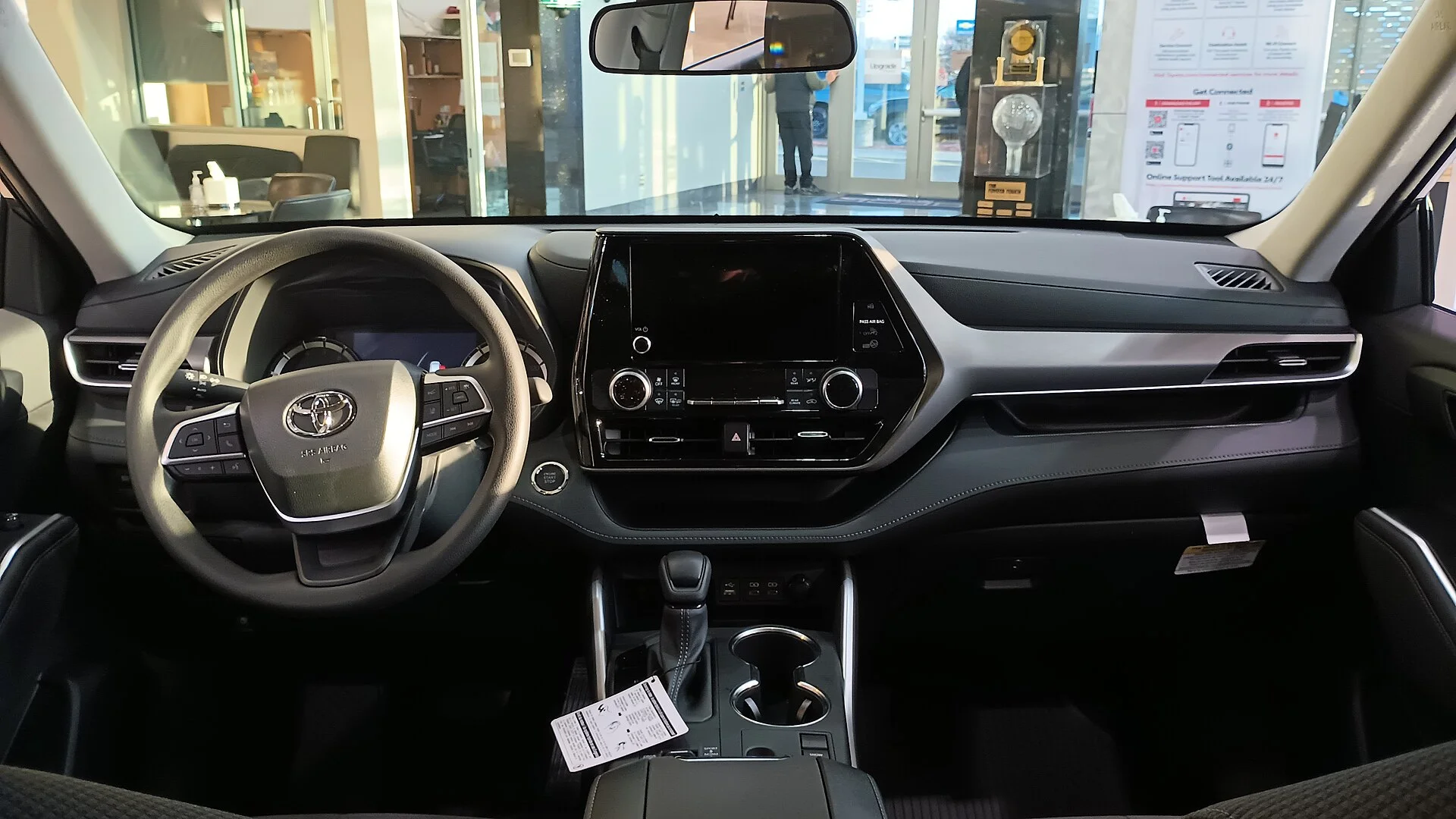
Start with the outlet you'll use the most: the front instrument-panel socket. It sits in the same general area as a traditional cigarette lighter and is the outlet most owners reach for to run a phone charger, tire inflator, or a car-camping fan.
The load limit is explicit in the owner's manual: "Do not use an accessory that uses more than 12V 10A," per the Toyota Highlander owner's manual power outlet section. That 10A ceiling applies to whatever you plug in, regardless of what the fuse behind it is rated for — a distinction that trips up a lot of owners.
The console-box outlet works the same way electrically but sits inside the center console storage bin, which makes it a common spot to route and hide a fridge cord out of sight rather than leaving it dangling across the front seats. A third location, described in the quick-reference guide as a rear socket, extends power toward the second row.
- Front instrument panel — general-purpose, most accessible, 10A device limit per the manual.
- Center console box — same 10A limit, better for hiding cords during a fridge run.
- Rear location — listed in the manufacturer quick-reference as a third 12V DC outlet.
None of these sockets are rated for continuous heavy draw the way a dedicated auxiliary battery system would be. The manual's own maintenance guidance backs that up: it instructs owners to close the power outlet lids when the outlets aren't in use and warns that foreign objects or liquids entering the sockets can cause a short circuit, per the same owner's manual power outlet page.
That 10A figure is worth sitting with before you buy gear. A 10A ceiling is a real constraint for high-draw accessories like an electric cooler compressor on startup surge, or a space heater — both of which should be checked against their own rated draw, not assumed to fit just because the plug is the right shape.
The manual doesn't specify a different limit for the rear or console-box sockets versus the front one, so the same 10A ceiling is the safe assumption across all three locations until a specific fuse diagram for your model year says otherwise.
The Fuse Map: 15A Circuits, a 10A Device Limit, and What That Gap Means
The 10A device limit in the owner's manual is not the same number as the fuse protecting the circuit — and that distinction is the single most useful thing to know before you wire anything to a Highlander's 12V system.
According to a published 2023 Toyota Highlander fuse box diagram, the power outlet circuits are protected by two separate 15A MINI fuses: fuse #38 in engine fuse panel No. 1, labeled "(P/OUTLET NO.2) Cigar lighter / power outlet," and fuse #22 in the interior fuse panel, labeled "(P/OUTLET NO.1) Cigar lighter / power outlet."
So the circuit itself is fused at 15A, but the manual still tells you not to plug in anything drawing more than 10A. Those two numbers are not meant to match — the higher fuse rating is headroom for the wiring and connector, not an invitation to run a 15A-rated accessory, while the 10A figure protects the socket and connector from overheating during normal use.
Treat the fuse rating as the wiring's safety ceiling and the manual's device limit as YOUR ceiling. They are different numbers for different reasons, and the lower one always governs what you should plug in.
Fuse layout also splits the outlets across two separate panels, which matters for troubleshooting. If one 12V socket stops working, the fault is isolated to whichever fuse panel feeds that specific "P/OUTLET" circuit — engine-bay panel No. 1 for one, the interior panel for the other — rather than a single shared fuse for the whole vehicle.
If a socket that used to work suddenly goes dead, a blown fuse is the first thing to check before assuming the outlet itself failed — a separate electrical-outlet troubleshooting summary flags a blown fuse as the typical cause of a dead socket. A dead 12V outlet is usually a simple fix once you've located the right fuse.
Always match the replacement fuse's amperage exactly to what's printed on the fuse itself or the box cover diagram — that guidance is repeated across multiple published Highlander fuse-box references, not just the 2023 model year, because swapping in a higher-rated fuse defeats the protection the wiring was designed around.
Ignition Off vs ACC vs ON: What Actually Keeps Power Flowing
Whether a Highlander's 12V outlets stay live depends entirely on the engine start/stop switch position, and the exact requirement differs by whether the vehicle has Toyota's Smart Key system.
On Highlanders without Smart Key, the owner's manual states the engine switch must be in the "ACC" or "ON" position for the 12V outlets to work. On Smart Key-equipped Highlanders, the requirement is described as accessory mode or ignition-on mode — functionally the same two-stage behavior, just triggered by the push-button switch instead of a physical key turn.
What that means in practice: the outlets do not stay powered with the vehicle fully off. There is no documented "always-hot" 12V socket in the standard Highlander lineup in the sources reviewed here — ACC or ON is the floor, and simply having the doors unlocked or the vehicle in "off" won't run a fridge.
- Engine off / no key or fob presence — outlets are not powered.
- ACC mode — outlets powered, engine not running, accessories draw straight off the 12V battery.
- ON / ignition-on mode — outlets powered, whether or not the engine is actively running.
That ACC-mode behavior is exactly what makes overnight fridge use a battery-management question rather than a "just leave it plugged in" question. Running an accessory in ACC mode with the engine off pulls directly from the same 12V battery that starts the vehicle, and the manual's own guidance is to avoid using the power outlets longer than necessary when the engine isn't running, specifically to protect against battery drain.
Forum reports back this up from the owner side: one Highlander Hybrid thread describes concern that "having devices on all the time would result in a battery drain occurring continuously," according to a ToyotaNation discussion on running a fridge off the Highlander Hybrid's 12V battery.
The takeaway for camp gear: if you need power for hours without the engine running, ACC mode is available, but it is borrowing from the same battery the vehicle needs to restart — not a separate reserve. Nothing in the sourced material describes a factory ignition-off "always on" 12V circuit on the standard Highlander.
The 120V Household Outlet: Hybrid-Only, 1500W Inverter, 100W Per Outlet
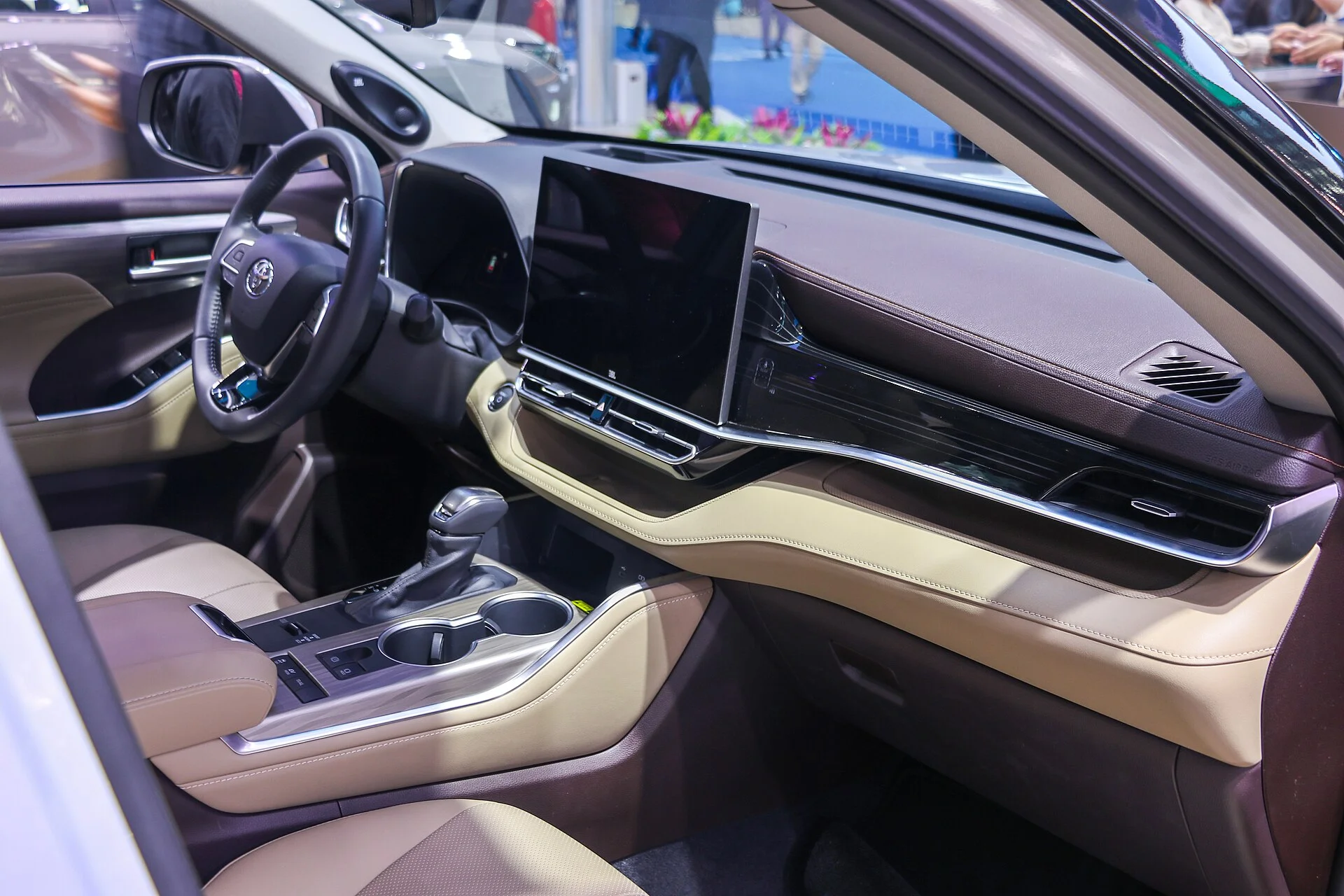
The Highlander Hybrid offers something the gas Highlander does not: a genuine 120V household-style AC outlet, powered by an onboard inverter rather than a simple DC socket.
The load limit is explicit in the owner's manual: "Do not use a 120VAC appliance that requires more than 100W," and the engine start/stop switch must be in ignition-on mode to use it, per the Highlander owner's manual power outlet section. Exceed that and the vehicle protects itself automatically — the manual states that "if a 120VAC appliance that consumes more than 100W is used, the protection circuit will cut the power supply."
On the hybrid specifically, that 100W outlet is fed by a larger 1500W inverter, and the hybrid gets two 120V outlets rather than one — positioned at the bottom rear of the center console and in the cargo/luggage area — standard on the Bronze Edition, Limited, and Platinum hybrid grades, according to a Highlander 120V-outlet breakdown.
That's an important nuance: the inverter driving the system is rated well above 1000W, but each individual outlet is still governed by the same 100W per-outlet ceiling from the manual. A bigger inverter behind the wall doesn't raise what any single outlet is allowed to push through it.
The dual 120V outlets and their larger inverter are described as a feature unique to the hybrid powertrain — the standard gas Highlander does not get this setup, per the same source.
That makes the 120V outlet a hybrid-trim decision point, not a Highlander-wide feature. If a household-style outlet for a laptop charger, a small light, or a low-draw appliance matters to your camp setup, the sourced material points to it being standard specifically on hybrid Bronze Edition, Limited, and Platinum grades — not confirmed as available on the gas-only lineup in these sources.
Even on the hybrid, the manual's warning about incompatible loads still applies: some 120V devices with high initial peak wattage, or precision equipment needing very stable power, can malfunction on this outlet even while drawing under the rated 100W. A 100W-rated coffee maker or heating element with a startup spike is a common way this shows up.
Practically, that 100W ceiling rules out anything with a heating element or compressor-driven startup surge — think phone/laptop chargers, small fans, and LED lighting rather than appliances that draw hard on power-up.
USB Ports: Locations, Count, and the USB-A to USB-C Switch
USB charging in the Highlander has changed connector type across recent model years, which matters if you're buying camp gear (fans, light strings, power banks) that expects a specific cable end.
Owner reports describe 2020 and 2021 Highlander models using USB-A type ports, while the 2022 model year switched to USB-C type ports, per a ToyotaNation thread comparing 2022 Highlander USB-C ports to the 2020-21 USB-A setup.
On the layout side, the same discussion describes the 2022 Highlander Platinum's dash as including one USB port for connecting a phone (the data/media port) plus two additional USB charging-only ports positioned beside it, all in that one dash cluster, not counting any second-row ports.
- 2020–2021 Highlander — USB-A connector type, per owner reports.
- 2022+ Highlander — switched to USB-C connector type.
- Dash cluster (2022 Platinum) — one media/phone USB port plus two charging-only USB ports alongside it.
That connector switch is the kind of detail that's easy to miss when packing a camp power bank or a USB fan bought for a different vehicle. A USB-A cable that worked fine charging a phone in a 2021 Highlander may not physically fit a 2022-or-newer dash port without an adapter.
None of the sourced material in this piece specifies a USB port count or connector type for second-row or cargo-area USB charging on the Highlander — the confirmed detail is specifically the front dash cluster. If your camp setup depends on rear-seat USB charging, that's worth confirming against your own trim's window sticker or the owner's manual for your specific model year rather than assuming it matches the front.
For most car-camping accessory needs — phone charging, a USB fan, a headlamp — USB ports are a lower-stakes power source than the 12V or 120V outlets discussed elsewhere in this guide, since they're purpose-built for low-draw charging rather than running appliances, and they don't carry the same 10A/100W ceiling language from the owner's manual.
That also makes USB the more forgiving option for overnight use. A USB power bank or a small USB fan pulls a fraction of what a 12V fridge draws, so the battery-drain caution that applies to the accessory sockets carries far less weight here — though it is still a real vehicle-battery draw, not a free resource, if left running for many hours with the engine off.
Given the connector switch between model years, the practical move before a trip is simple: check your specific Highlander's dash ports against your cable ends rather than assuming, and pack a short USB-A-to-USB-C adapter as insurance if you're borrowing or renting a Highlander of an unknown model year.
For a clean powered add-on that does not splice the factory harness, an add-a-fuse tap kit is the standard hardware — shop add-a-fuse tap kits on Amazon.
Trim-by-Trim: Why the Cargo Area Is the Big Inconsistency
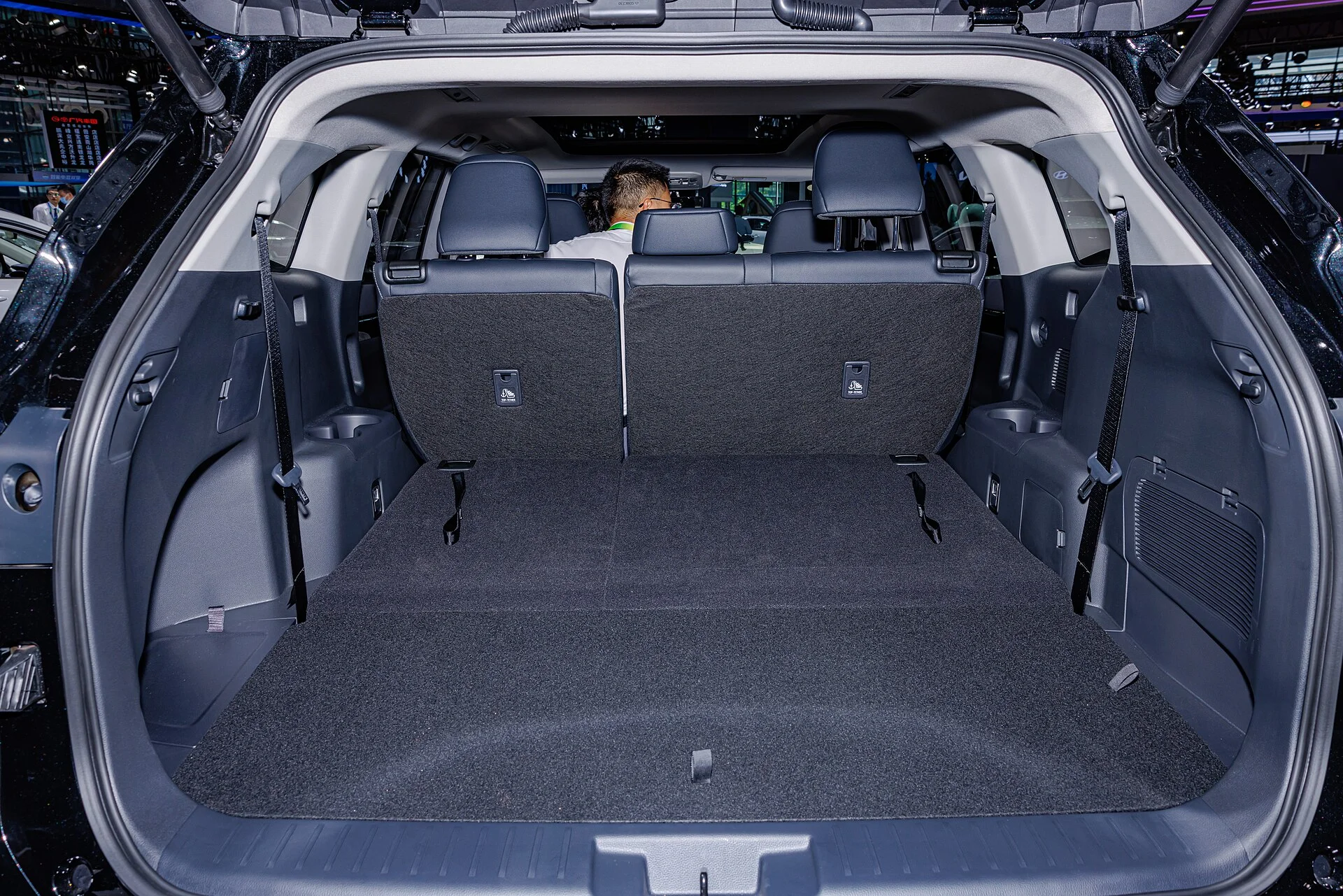
Trim level is where the Highlander's power-outlet story gets genuinely inconsistent, and the cargo area is the clearest example.
Multiple owner reports agree: there is no factory 12V outlet in the cargo area of a Limited or Platinum Highlander, despite an earlier generation of the vehicle having had one back there, per a ToyotaNation thread on the missing rear cargo outlet. A 2020 Highlander Hybrid LE is reported to have no power outlet in the trunk area either, and owners of a 2022 Highlander Hybrid Limited describe being surprised at the same gap — no factory 12V outlet in the rear cargo space, according to the same discussion.
That's a meaningful planning detail if your camp setup assumes you can plug a fridge in directly at the back of the vehicle. Based on the sourced material here, that assumption does not hold for LE, XLE, Limited, or Platinum gas and hybrid trims reviewed — the confirmed 12V locations are front, console, and the manual's "rear" listing, which forum owners interpret as second-row rather than cargo-area.
If cargo-area power is a dealbreaker for your build, verify it against your own trim's window sticker before buying gear that assumes a plug back there — the forum consensus is that it's absent on current-generation trims, not a given.
The hybrid's 120V outlets are the trim exception worth remembering from the previous section: those ARE positioned in the cargo/luggage area on Bronze Edition, Limited, and Platinum hybrid grades specifically — so a hybrid Limited or Platinum owner does get cargo-area power, just as a 120V AC outlet rather than a 12V DC socket.
That distinction — no factory 12V in the cargo area, but a 120V outlet there on hybrid Limited/Platinum — means your fridge's plug type determines whether cargo-area power exists for you at all. A 12V-only cooler has no factory cargo outlet to use on any trim reviewed here; a fridge or appliance that ships with a household AC plug can use the hybrid's cargo 120V outlet, within its 100W ceiling.
If you're weighing cargo space itself alongside power access, it's worth checking how the Highlander's cargo area is actually laid out before assuming both space and power line up the way you need for a sleep-and-power setup.
Running a 12V Fridge Without Killing the Starting Battery
Running a 12V fridge off a Highlander for a weekend is routine; running one continuously overnight without a plan is how owners end up with a dead battery in a parking lot.
The core constraint is the 10A device limit from the owner's manual discussed earlier — most 12V compressor fridges draw well under that during steady-state cooling, but the real risk isn't the outlet's rating, it's the source battery. In ACC mode, a fridge plugged into any of the Highlander's 12V outlets draws straight from the same starting battery used to crank the engine, per the owner's manual's own battery-drain warning.
On hybrid Highlanders, that concern is sharper. Forum discussion of the Highlander Hybrid's small 12V battery describes it as intended to "run the vehicle computers and lighting," with the poster's concern being that "having devices on all the time would result in a battery drain occurring continuously," per the ToyotaNation thread on fridge power draw from the hybrid's 12V battery.
- Engine running — the alternator (or hybrid system) is actively replenishing what the fridge draws; lowest risk.
- ACC mode, engine off, short duration — draws from the 12V battery directly; the manual advises against extended use this way.
- ACC mode, engine off, overnight — the scenario owners and the manual both flag as a real drain risk.
The workaround owners describe isn't running the fridge harder or smarter on the factory socket — it's not relying on the vehicle's own 12V battery for overnight draw at all. Forum advice for continuous fridge use points toward a separate small 12V AGM battery, charged independently, specifically to avoid touching the vehicle's starting battery, per the same ToyotaNation discussion.
A camp fridge and a vehicle's starting battery have opposite jobs: one wants to discharge slowly over hours, the other needs a hard, single burst of current on demand. Asking one battery to do both is the setup that ends in a jump-start.
None of the sourced material here describes a factory "deep cycle" or auxiliary battery option built into the Highlander for this purpose — the accessory 12V outlets tap the same starting battery whether the load is a phone charger or a fridge compressor cycling all night. If you've already worked out whether the Highlander works for sleeping in, pairing that plan with a fridge means planning battery capacity the same way you'd plan cargo space — as a real constraint, not an afterthought.
Wiring an Add-On Outlet: Fuse Taps, Relays, and the Cargo Retrofit
Some owners skip the factory-outlet limitations entirely and wire in their own 12V socket, most often to solve the missing cargo-area outlet covered earlier.
One documented route uses genuine Toyota parts rather than a generic aftermarket socket: owners have wired in the factory socket and cover, part numbers 85530-AE010 (socket) and 85535-AE020-B2 (cover), to add a cargo-area outlet that doesn't exist from the factory on current trims, per a ToyotaNation thread on adding a rear cargo power outlet.
The electrical connection side generally goes one of two ways, according to forum installers. The simpler method uses a fuse tap: a small device that plugs into an existing fuse slot, keeping the original fuse in place in one socket while adding a second fuse for the new accessory circuit, drawing off the same bus that already feeds the rest of the fuse box, per a ToyotaNation discussion on tapping the Highlander's fuse box.
- Fuse tap method — plugs into an existing fuse slot; simplest, but shares circuit load with whatever else is on that fuse.
- Relay method — a relay's coil is wired to an accessory fuse that's only hot with the engine on, switching a separate, more heavily fused circuit for the new outlet.
The relay approach is described as capable of handling more current: installers report a relay-switched circuit can be fused up to 20–30A, provided the added wiring is at least 14-gauge copper, per the same forum discussion. That headroom matters for anything drawing more than the light phone-charger loads a simple fuse tap is meant for.
Installers also warn that adding even a 10A fuse tap onto a factory circuit already fused at 10–15A, fed by the thin gauge wire typical of factory harnesses, risks overloading and damaging that harness — the fuse tap doesn't add capacity, it just borrows from what's already allocated.
That warning connects directly back to the fuse map covered earlier in this guide: the Highlander's factory "P/OUTLET" circuits are already running at their designed 15A fuse limit with a 10A device ceiling on top. Tapping into that same circuit for a second accessory means sharing that headroom, not adding new capacity — which is exactly why the relay method, wired to its own dedicated fuse, is the approach forum installers recommend for anything beyond a low-draw add-on.
None of this is Toyota-documented factory guidance — it's owner-sourced installation experience, and it should be treated that way. Anyone wiring in an add-on outlet is working outside the owner's manual's tested configuration, and the standard cautions about matching fuse ratings and gauge apply with extra weight when the circuit wasn't designed for the added load in the first place.