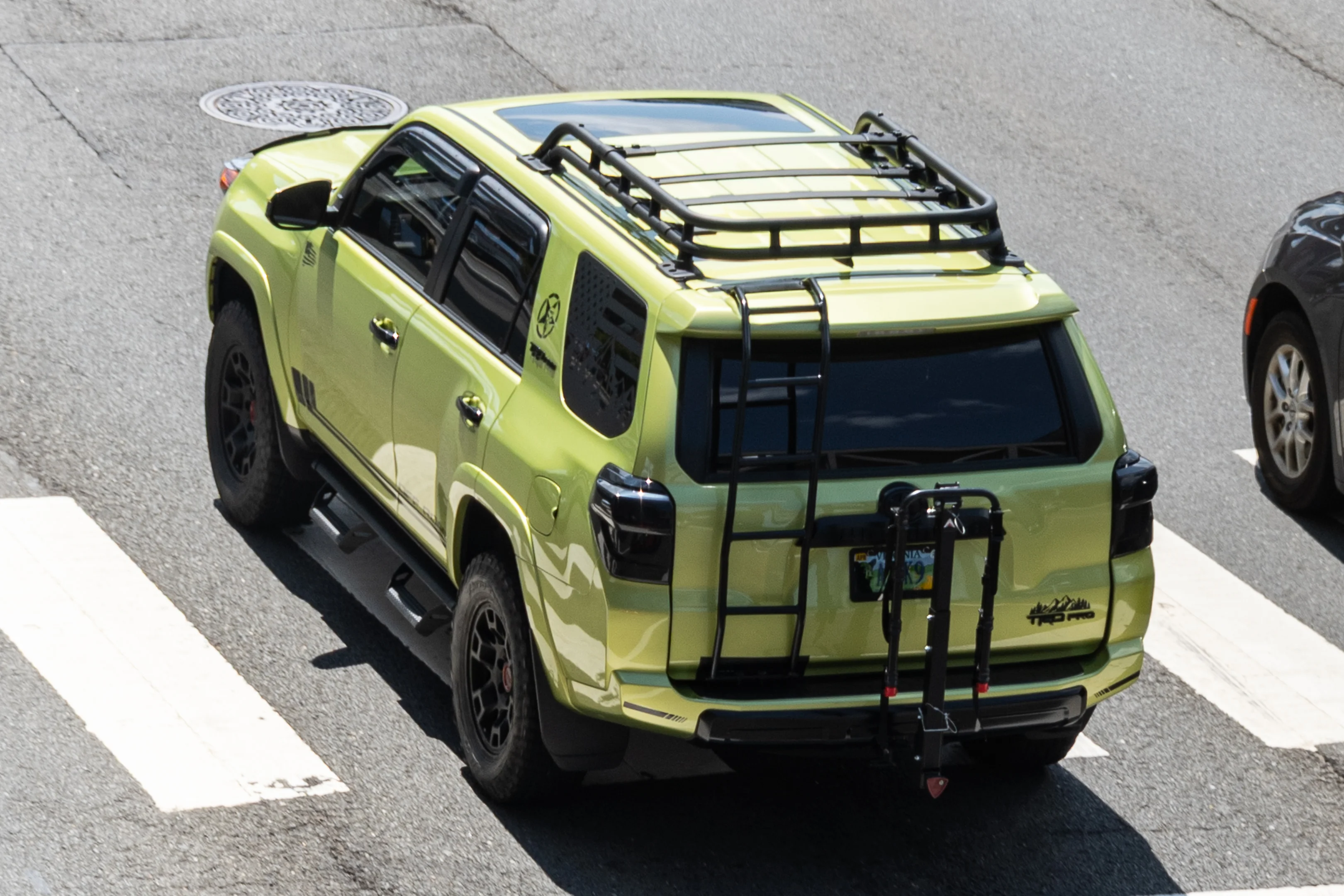
The overland darling wears the weakest number on its roof
Here is the fact that stops most 4Runner build threads cold: the SUV the overland crowd treats as the default choice ships with the weakest factory roof rating of the mainstream bunch. The 5th-generation Toyota 4Runner (2010-2024) is rated for just 120 lb (54 kg) of dynamic roof load, and that number comes straight from the owner's manual - not a forum guess, not a vendor's marketing sheet. I went looking for a hidden reserve of strength behind that figure and found the opposite: it is the real ceiling Toyota is willing to print.
When I open something up to judge how it is built, I care about the number the manufacturer will actually stand behind, because that is the one that reflects the structure underneath. On the 4Runner, that number is low - low enough that it changes what you can honestly bolt to the roof. A single modern hardshell rooftop tent can weigh as much as, or more than, the entire factory dynamic rating. That is not a rounding problem. That is the whole reason this article exists.
And it sets up the thing nobody explains when they hand you a capacity number: the reason serious 4Runner owners barely talk about the factory rail rating at all. They do not spend their energy squeezing a tent under 120 lb. They bolt a flat aluminum rack to the roof structure - the pinch welds and mounting points in the sheet metal - and leave the factory rails out of the load path entirely. That single move is the part they hoped you'd never have to think about, and it is where this whole story turns.
So this is not a page that shrugs and says 'roughly a couple hundred pounds, you'll be fine.' It is a page that separates the one Toyota-verified number from the pile of forum figures orbiting it, tier-labels every spec so you know exactly how much to trust it, and then shows why the aftermarket answer is built the way it is. If you are planning a rooftop tent, a cargo box, or a spare-and-a-shovel setup, the difference between the factory rails and a structural rack is the difference between what Toyota will underwrite and what will actually hold your gear.
What does the owner's manual actually print?
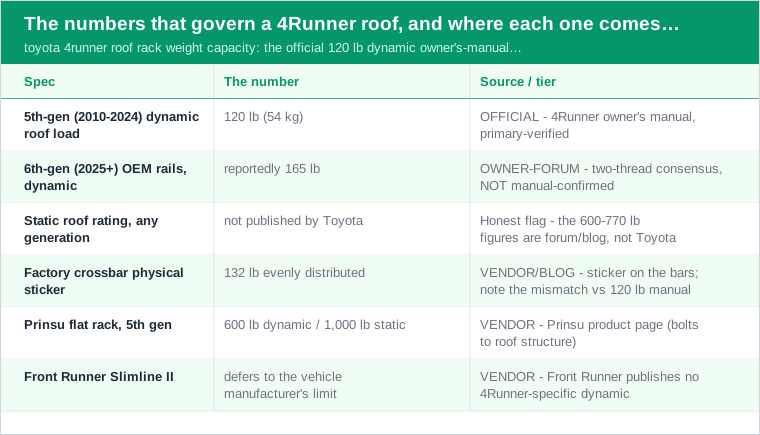
Start with the primary source, because almost nobody does. Pop open the 5th-gen 4Runner owner's manual and find the roof-luggage section, and the wording is blunt: 'Do not exceed 120 lb. (54 kg) cargo weight on the roof luggage carrier.' That is the verbatim text, primary-verified against the 2021 owner's-manual PDF [tier: OFFICIAL]. There is no asterisk, no 'under ideal conditions,' no second higher figure hiding a page later. One hundred and twenty pounds is the limit Toyota commits to in writing.
The word doing the quiet work in that sentence is carrier. The 120 lb rating is for the factory roof rails and crossbars - the components Toyota engineered, tested, and is willing to warranty. It is a statement about that hardware and the way it clamps to the roof, not a hard claim about the maximum the sheet metal underneath could ever theoretically survive. That distinction is the seed of the entire flat-rack argument, and we will pull on it in a moment.
It also matters that this is a dynamic figure - the weight the manual permits while the vehicle is moving, cornering, braking, and hitting bumps. That is the demanding, load-transferring, real-world condition, and it is the number that governs how you can drive with gear up top. When I read a spec like this, I want to know what state the vehicle is in when the number applies, because a rating that only holds while parked is a very different promise than one that holds at 70 mph on a washboard forest road. Toyota's 120 lb is the moving number.
If you take nothing else from this section, take this: the only roof figure on the entire 4Runner that carries the manufacturer's full weight is 120 lb dynamic on the factory carrier [tier: OFFICIAL]. Every other number you are about to read - the 6th-gen figure, the static estimates, the crossbar sticker - sits at a lower tier of trust. Keeping that hierarchy straight is the whole discipline here.
Dynamic versus static: the two ratings that get quietly conflated
Before we go further, the two words that cause more roof confusion than any others: dynamic and static. Dynamic is the load allowed while the vehicle is in motion - the stressful case, with the mass shifting under braking and cornering and shock loads over ruts. Static is the load allowed while parked, with the vehicle dead still. Static is always the larger number, because a parked roof does not have to fight inertia.
Here is the rule of thumb the rack industry uses, and it is worth attributing carefully: rack makers like Thule commonly cite static capacity as roughly three times the dynamic rating [tier: VENDOR - Thule guidance]. That is a rack-maker heuristic, not a law of physics and absolutely not a Toyota figure. I am flagging it so you can sanity-check the wild static numbers floating around forums, not so you can multiply Toyota's 120 lb and quote the result as gospel.
Why does the distinction matter so much for a rooftop tent? Because a tent lives in both states, and the dangerous number is the small one. When you and a partner are asleep in a rooftop tent, the roof is under a static load - fine. But the moment you drive down the trail to your campsite with the tent closed and mounted, you are back under the dynamic limit, and that is where the 120 lb ceiling bites. People fixate on 'can the roof hold two sleeping adults' (static) when the harder question is 'can it carry the tent's own weight while I drive there' (dynamic).
This is exactly the kind of specification sleight-of-hand I watch for. A vendor or a forum post can quote an impressive static number, let you assume it is the everyday limit, and never say the word dynamic out loud. Once you know the two ratings are different animals - and that the driving number is the small, governing one - the whole capacity conversation gets a lot more honest. For the tent-specific version of this trap, the rooftop-tent weight-limits explainer walks through how the two ratings apply across a night and a drive.
Why 120 pounds is the number that actually constrains you
Let's make the 120 lb dynamic rating concrete, because in the abstract it sounds like plenty and in practice it is not. A hard-shell rooftop tent - the clamshell and wedge designs that dominate 4Runner builds - commonly weighs somewhere between roughly 100 and 160 pounds empty, before a single person climbs in. Set even a lighter hardshell against Toyota's 120 lb dynamic ceiling [tier: OFFICIAL] and you can see the problem immediately: the tent alone can equal or exceed the entire factory rating, with nothing left over and the whole margin gone.
That is the sentence that reframes everything. On the 4Runner, the tent is not 'part of the load' - on the factory rails, the tent can be the entire allowable load, or more. Add a mattress, bedding, a ladder, and the roof rack hardware itself, and a stock-rail build blows past the printed dynamic number before anyone gets in. This is not a knock on the 4Runner's toughness as a vehicle; it is a plain reading of the one number Toyota stands behind.
Now compare it to the reputation. The 4Runner is the overland-forum darling, the truck people point to as the tent-hauling default. And yet its official dynamic roof number is the weakest of the mainstream overland SUVs. That gap - beloved platform, low factory number - is the tension the entire aftermarket exists to resolve. The vehicle is capable; the factory carrier is the weak link, and it is a link you can replace.
So when someone in a thread says '120 pounds, that can't be right, this thing is built like a tank,' they are conflating the truck with the rack. The chassis and roof structure are stout. The factory rails and crossbars that clamp to them are rated conservatively for what they are: light-duty luggage carriers. The number is right. The instinct to distrust it is what sends people looking for the real answer - and the real answer is bolted to the roof structure, not the rails.
Where does the 6th-gen 165 lb figure come from?
If you are shopping the new 2025-and-up sixth-generation 4Runner, you have probably seen a better number quoted: 165 lb dynamic for the OEM rails. It would be a meaningful bump over the 5th-gen's 120 lb, and I wanted it to be true. But I have to label it honestly: that 165 lb figure is owner-forum consensus, not a manual-confirmed number [tier: OWNER-FORUM]. It shows up as agreement across a couple of enthusiast threads, and when one owner asked a dealer directly, the dealer could not actually state the roof rating.
That last detail is the tell. When the people selling the truck cannot cite the number, and the number is living entirely in forum posts quoting each other, you are looking at community consensus, not documentation. It might well turn out to be correct once the manuals and spec sheets are fully parsed - forum consensus is often right - but 'probably right' and 'primary-verified' are different tiers, and I will not launder one into the other by dropping the qualifier.
Here is how to treat a 6th-gen today: plan around the known-good 5th-gen discipline (assume the factory rails are a light-duty carrier) until you can read your truck's manual and confirm the 165 lb dynamic figure in Toyota's own words. If the manual prints it, wonderful - promote it to OFFICIAL and enjoy the extra margin. Until then, it stays flagged as forum-unconfirmed, and it does not change the structural argument one bit.
Because notice what even the optimistic number does not do: 165 lb dynamic still would not comfortably carry a heavy hardshell tent plus occupants under motion. A higher factory rail rating is a nicer starting point, but it does not repeal the reason flat racks exist. Whether the factory number is 120 or 165, a serious rooftop-tent build still routes the load into the roof structure through a dedicated rack - the newer truck just gives you a little more headroom for a cargo box or lighter gear on the stock rails.
The crossbar sticker mismatch: 132 lb versus the manual's 120 lb
Here is a small thing that tells you a lot, and it is exactly what you find when you look closely instead of trusting the summary. There is a physical sticker on the factory crossbars that reads 132 lb evenly distributed [tier: VENDOR/BLOG - the sticker on the bars]. The owner's manual says 120 lb [tier: OFFICIAL]. Those two numbers do not match, and the mismatch is the interesting part.
Twelve pounds is not a rounding artifact between kilograms and pounds - 120 lb is 54 kg on the nose, and 132 lb is a different figure entirely. So the vehicle is quietly presenting an owner with two official-looking limits that disagree: one on the component you are loading, one in the book you are supposed to have read. When I find a mismatch like this, I do not average the two. I default to the more conservative, higher-authority source.
- The manual outranks the sticker. The 120 lb owner's-manual figure is the primary, warrantable statement; treat it as the governing number and let the 132 lb sticker be a curiosity, not a permission slip for the extra weight.
- 'Evenly distributed' is doing quiet work. The sticker's 132 lb assumes the load is spread perfectly across both bars - a condition you rarely meet with a real, concentrated tent or box, which loads specific points harder.
- Two numbers means one habit: go low. When a system gives you conflicting limits, the safe read is the smaller one, full stop.
The reason I dwell on twelve pounds is not the twelve pounds. It is what the discrepancy reveals about how loosely these numbers get treated even by the manufacturer's own labeling. If the sticker and the manual can disagree, you can be certain the forum figures downstream of them are looser still - which is exactly why the tier labels on this page matter. Trust the source, not the confidence of whoever repeated it.
How a flat rack routes the load into the roof structure, not the rails
Now the part the whole article has been building toward, and the reason a 120 lb factory number does not doom the 4Runner as a tent platform. Aftermarket flat racks - the low-profile aluminum platforms you see on nearly every built 4Runner - do not clamp onto the factory rails. They bolt directly to the roof structure, into dedicated mounting points at the pinch welds along the edges of the roof. The load path is completely different, and that is the entire trick.
Think about what that changes mechanically. The factory rails are a light carrier that clamps to the roof; the flat rack's feet tie into the structural sheet metal and framing that the rails merely sit on top of. By spreading the load across many mounting points fixed to the structure itself, a flat rack takes the factory carrier - the rated-at-120-lb weak link - out of the load path entirely. You are no longer testing the rails; you are testing the roof.
That is why the published flat-rack numbers are multiples of the factory figure rather than small improvements on it. They are not making stronger crossbars; they are bypassing the crossbar concept and mounting to the vehicle's bones. When I judge a part by how it is built, this is the kind of design decision I respect: it does not fight the weak component, it removes it from the equation. The tinkerer's version of the fix is always 'reroute the load,' not 'hope the weak link holds.'
One honest caveat, because a flat rack is not magic. Bolting to the roof structure raises the real-world ceiling dramatically, but it also puts the responsibility for a sound install on you or your installer - the pinch-weld mounts have to be done right, and the roof structure, not the rack's advertised number, is the true limit. A rack rated for 600 lb static does not mean the 4Runner's roof will happily hold 600 lb static; it means the rack is not the limiting factor anymore. That is a better place to be, but it is not an infinite one. The broader logic of matching rack, roof, and load lives in the SUV roof-rack weight-limits guide.
Prinsu, Front Runner, iKamper: what the vendors actually publish
So how much more does a structural rack claim? Let's read the vendor pages directly and tier-label as we go, because the honesty varies wildly brand to brand. Prinsu publishes, for its 5th-gen (2010-2024) 4Runner rack, 600 lb dynamic and 1,000 lb static [tier: VENDOR - Prinsu product page]. For the 6th-gen, the Prinsu Pro is listed at 700 lb dynamic / 1,200 lb static [tier: VENDOR]. Set the 600 lb dynamic against Toyota's 120 lb factory rail figure and you see the five-fold gap the structural mounting buys you.
Front Runner takes the most interesting position, and I genuinely respect it. For its Slimline II platform, Front Runner publishes no 4Runner-specific dynamic rating and instead explicitly defers to the vehicle manufacturer's roof-load limit [tier: VENDOR - Front Runner support]. In other words, the rack maker points you straight back at Toyota's number rather than printing an impressive figure of its own. That is the citable honesty point of this whole topic: a vendor telling you the vehicle, not the rack, is the constraint.
Then there is iKamper, which is where I have to raise a flag. If you cite the iKamper Raconteur rack, know that its own page is internally inconsistent - the prose says 350 lb while the spec table says 400 lb, alongside a 1,000 lb static figure [tier: VENDOR - flag]. I am not calling anyone dishonest; product pages get edited by different hands. But a page that disagrees with itself is a page you quote with the inconsistency attached, not one you paper over by picking the number you like.
A couple of figures I am deliberately not printing as fact, for the same discipline: a circulating '5th-gen rated 300 lb' claim, because the forum poster who posted it admitted they had no source; and a Rhino-Rack Pioneer 175/700 figure for the 4Runner, which I hold at lower confidence than the Prinsu and Front Runner pages. Leaving unsourced numbers out is not timidity - it is the point. A spec you cannot attribute is a spec you shouldn't trust your gear to.
The pattern across every honest vendor: the flat rack is not the limit. Prinsu quotes multiples of the factory number because it mounts to the structure; Front Runner just points you back at Toyota's rating. Either way, the message is the same - once you go structural, the roof itself, not the rack, is what you're really loading.
Can a stock 4Runner really carry a rooftop tent?
Time for the question everyone actually arrives with, answered honestly. Can you mount a rooftop tent on the factory rails of a stock 4Runner? The manufacturer-backed answer is: not within the printed limit. With the 5th-gen's 120 lb dynamic rating [tier: OFFICIAL], a hardshell tent alone can equal or exceed the entire factory number before you add people, bedding, or the rack hardware. By the book, a hardshell RTT on stock rails is over the line.
Now the messy real-world truth, because I will not pretend it away: owners do run tents on stock rails, and some report tens of thousands of miles doing it [tier: OWNER-FORUM anecdote]. Those stories are real. They are also anecdotal risk-taking, not evidence the practice is within spec - a sample of drivers who did not have a failure is not a rating. And notably, tent makers themselves advise against exceeding the vehicle's dynamic limit; the people who build the tents are not endorsing the workaround.
Here is how I hold both truths at once. 'People get away with it' and 'it is over the manufacturer's rating' are both true, and only one of them is a plan you'd want your family asleep on top of at highway speed. A lighter softshell tent narrows the gap and a 6th-gen's higher (if still forum-unconfirmed) rating narrows it further, but the clean, defensible build routes the tent load into the roof structure through a flat rack. That is precisely why Prinsu and Front Runner racks are near-universal on 4Runner RTT builds - not fashion, but a direct response to the weakest factory number in the class.
If you are weighing tents against this constraint, the best rooftop tents for SUVs roundup is where to compare weights before you commit, and the rooftop-tent install guide covers mounting a tent to a rack the right way. Match the tent's weight to a structural rack first; choose the fabric and features second.
What I'd bolt on before I trusted the roof with a tent
If this were my build, the order of operations would follow the load path, not the wish list. First the structural rack, because it is the component that makes every downstream decision safe; then the tent matched to that rack's honest capacity; then the comfort gear. Skipping straight to 'which tent looks coolest' is how people end up with a 150 lb hardshell sitting on a 120 lb-rated factory carrier and a nagging feeling every time they hit a bump.
There is also a quieter decision worth making up front: how much of your sleeping and power setup lives inside the vehicle rather than on the roof. Every pound you keep off the roof is a pound you are not spending against a dynamic limit, whether that limit is the factory rail number or a flat rack's. The tinkerer's instinct is to load low and central, and on a 4Runner that instinct pays off directly in roof-margin.
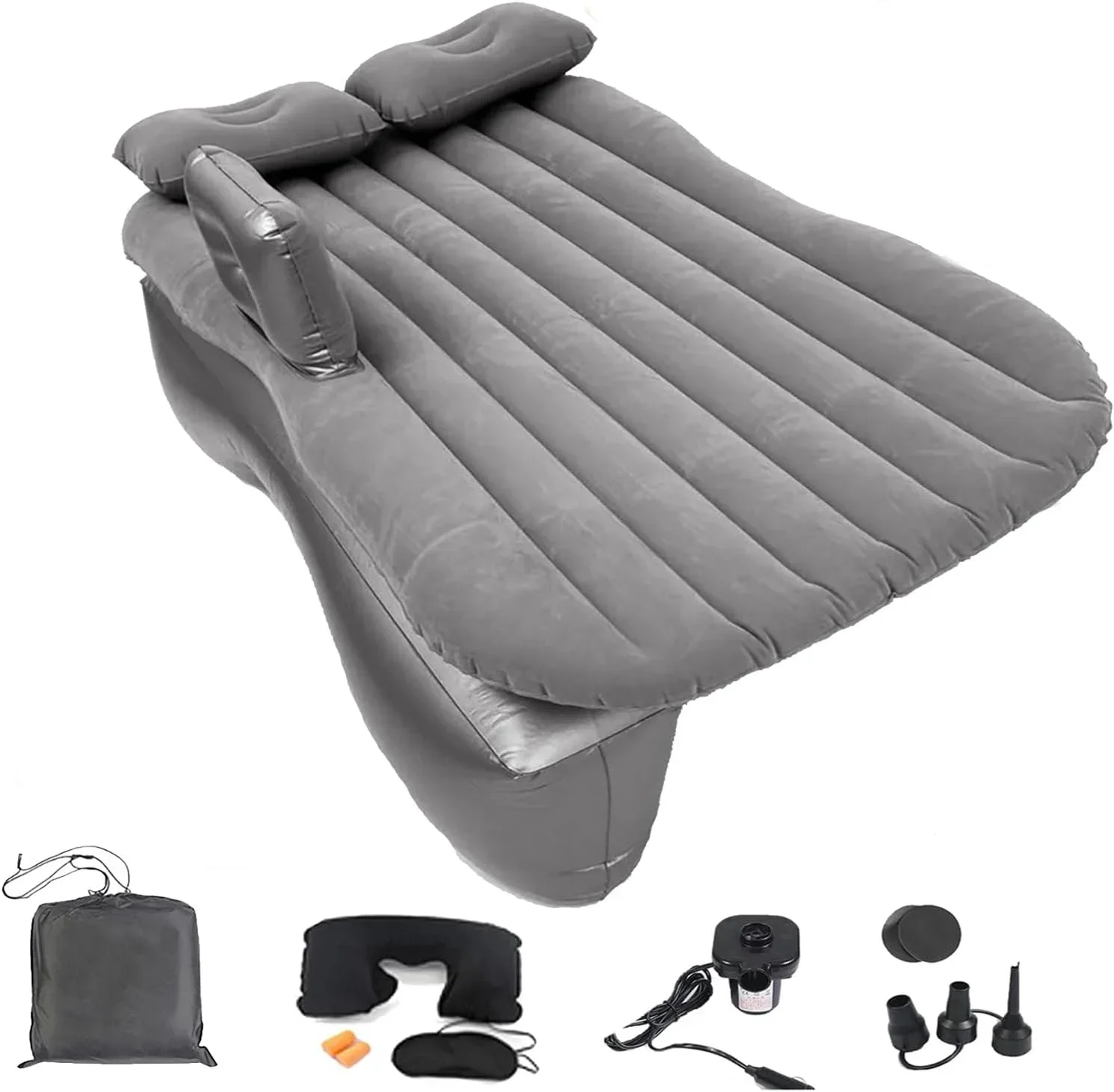
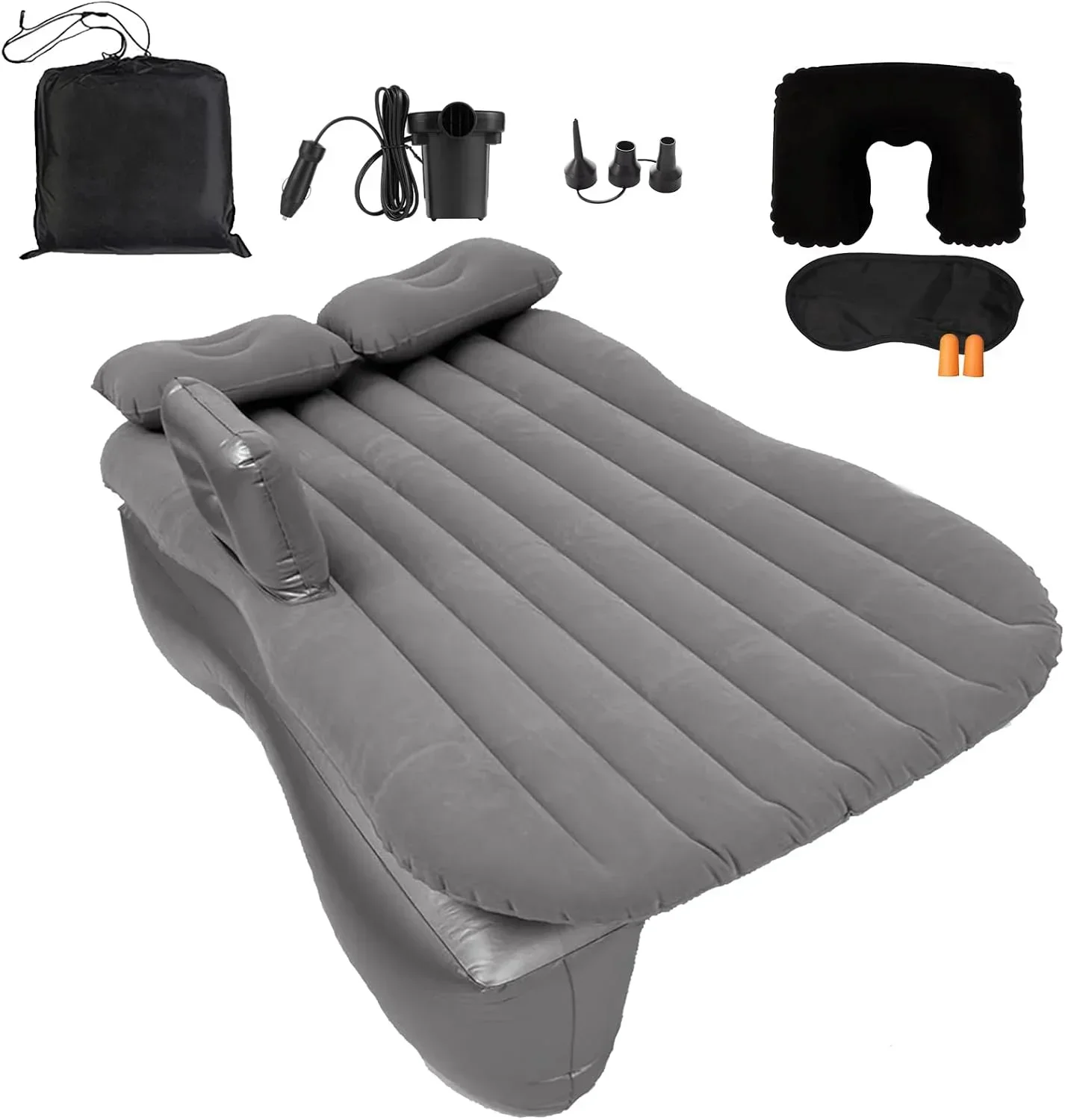
That is why plenty of 4Runner owners keep the actual bed inside the cabin. An Onirii SUV air mattress rides in the cargo area and levels the folded rear seats into a real sleeping platform in one inflate - no roof load at all - which is a genuinely useful option on the very platform whose roof rating is the weakest in the class. If the roof number makes you nervous, sleeping inside sidesteps it entirely, and the 4Runner car-camping setup guide lays out the in-cabin approach in full.
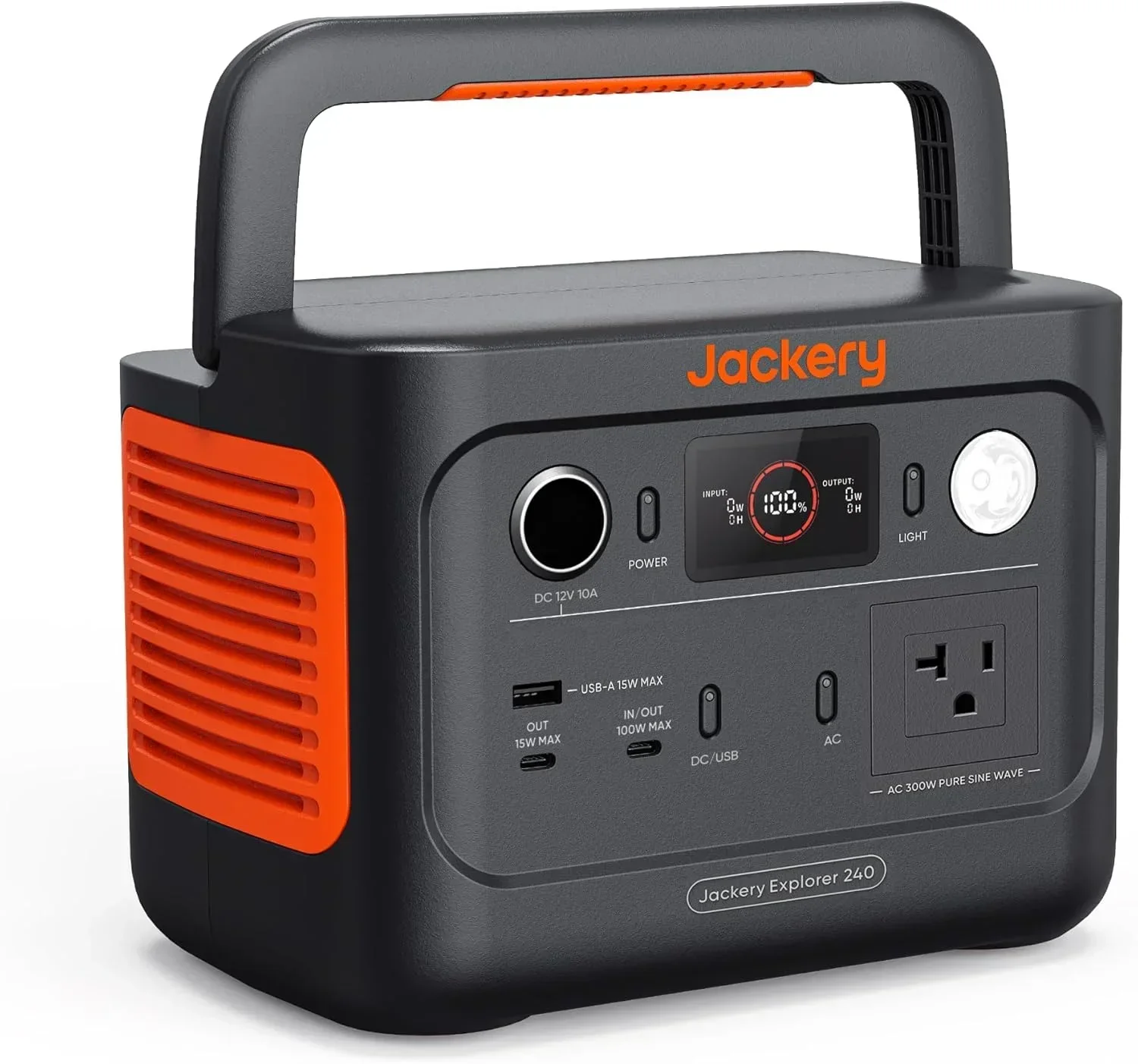
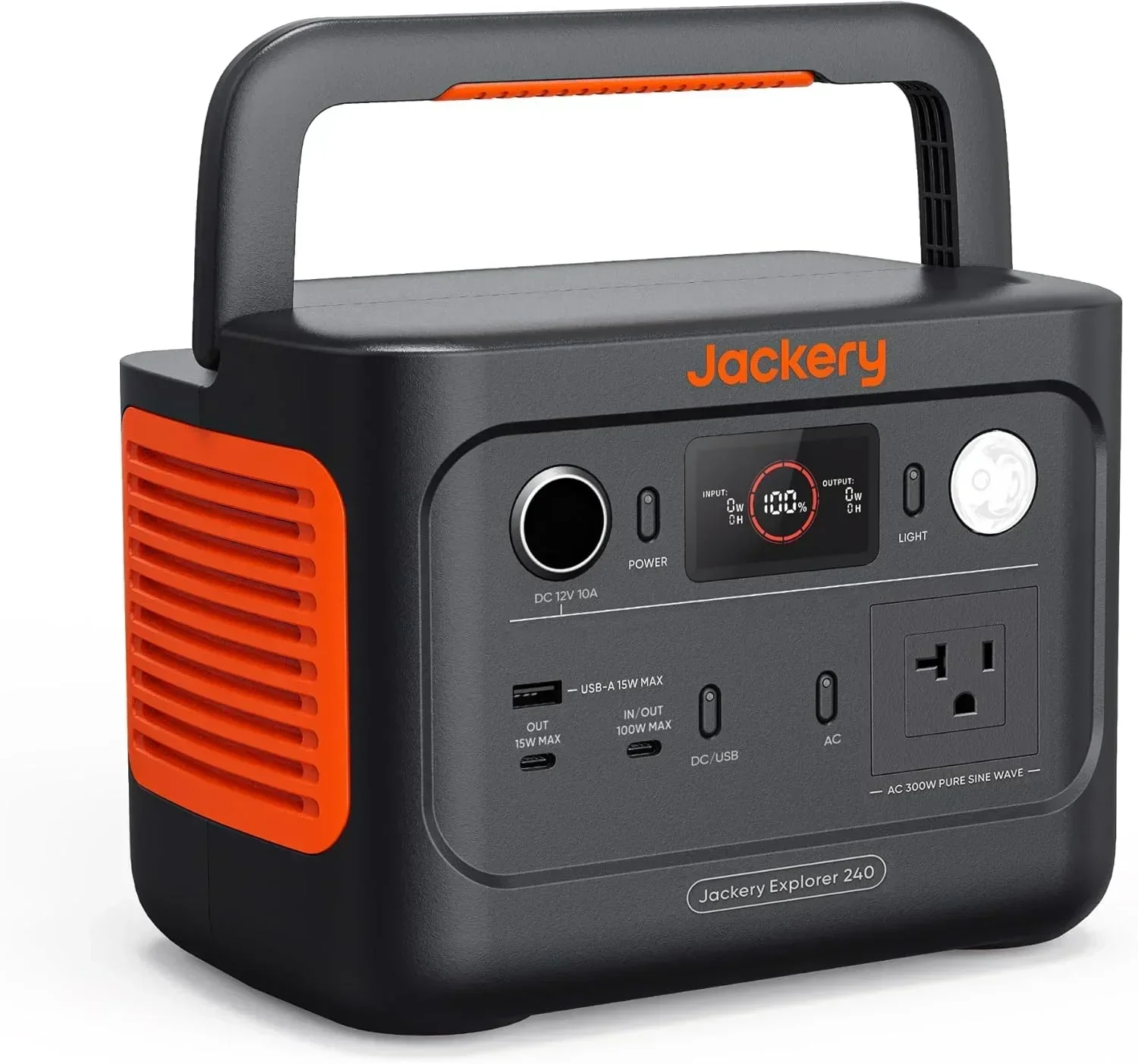
Power is the other thing I'd sort before a long trip, and again the point is to keep weight off the roof and out of the engine's idle time. A Jackery Explorer 240 v2 power station lives inside the cabin, runs a fan, a light, and phone charging through the night, and tops back up off the 12V socket as you drive - so your comfort load never touches the roof rating at all. Structure first, tent second, everything-else-inside third: that is the build that respects the number Toyota actually printed.
The build-quality bottom line for a 4Runner roof
Put the tiers back in order and the whole picture snaps into focus. The one number Toyota stands behind is 120 lb dynamic on the 5th-gen factory carrier [tier: OFFICIAL, primary-verified]. The 6th-gen's 165 lb is a hopeful forum figure, not manual-confirmed [tier: OWNER-FORUM]. Toyota publishes no static rating at all, so the 600-770 lb static numbers you see quoted are forum and blog estimates, never Toyota's word [honest flag]. And the factory crossbar sticker's 132 lb disagrees with the manual's 120 lb, so you default to the lower, higher-authority figure.
Against that, the aftermarket answer is coherent and honest where it counts. Prinsu's 600 lb dynamic / 1,000 lb static [tier: VENDOR] is a multiple of the factory number precisely because the rack bolts to the roof structure and leaves the rated-light factory rails out of the load path. Front Runner won't even print a rack-specific dynamic figure and defers to Toyota's limit [tier: VENDOR] - the most honest position on the board. And if you lean on iKamper's numbers, carry its own 350-versus-400 lb inconsistency along with them [tier: VENDOR, flagged].
The overland favorite has the weakest factory roof number of the mainstream SUVs - 120 lb dynamic - and that is not a flaw to hide but the exact reason the fix is so standardized. You don't strengthen the factory rails; you bolt a flat rack to the roof structure and route the load past them.
So the real 4Runner roof-capacity answer is a two-parter, and anyone who gives you only the first half is selling you short. Stock, the honest ceiling is 120 lb dynamic, which a hardshell tent can eat by itself. Built, with a structural flat rack, the roof structure - not a light-duty carrier - becomes the limit, and that is why the racks exist. Read the tier on every number before you trust your gear to it, match your tent to a structural rack rather than the factory rails, and the platform's low factory figure stops being a problem and becomes the reason your build is done right.