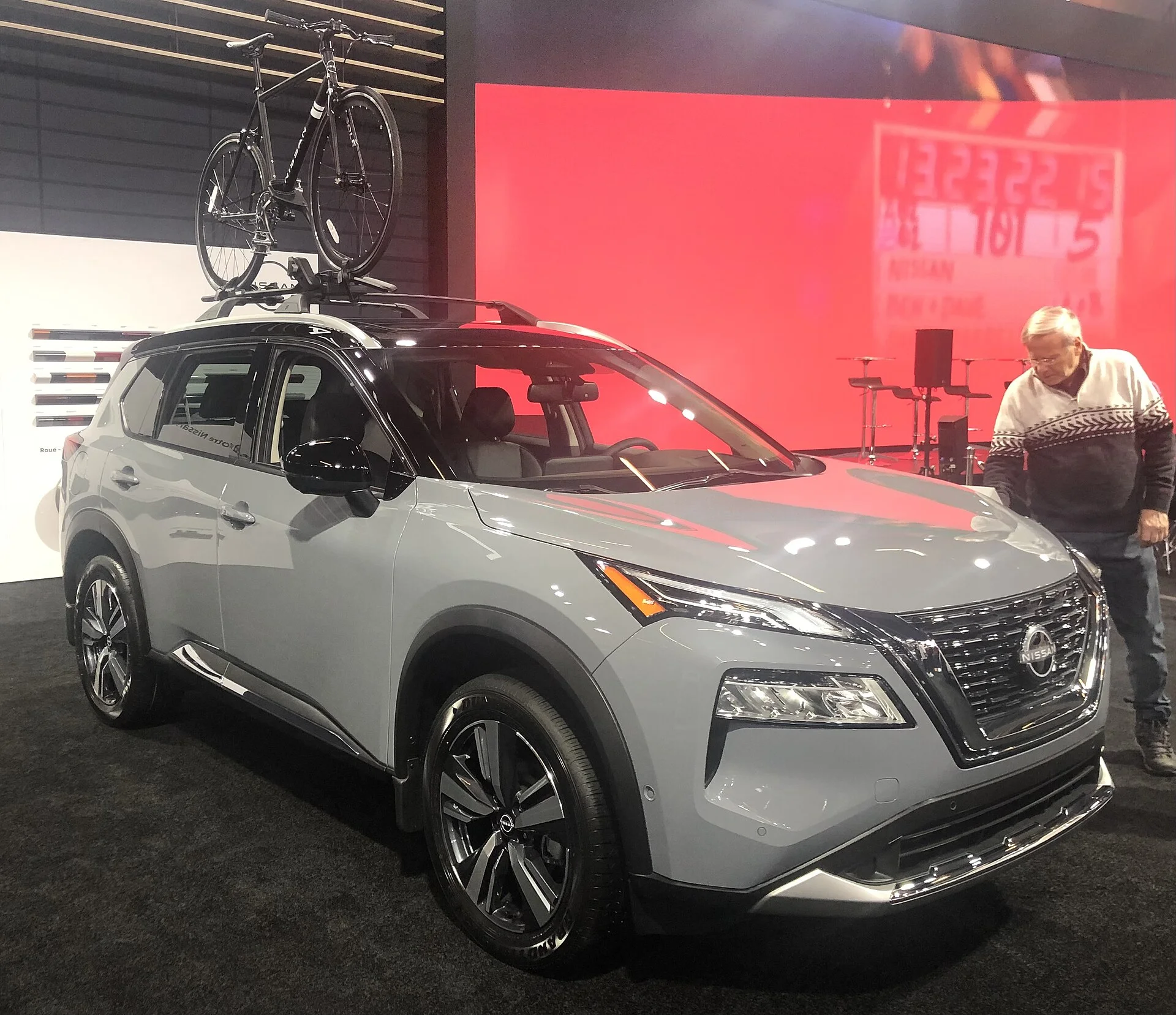
Two compacts, two completely different camping philosophies
This is a closer fight than the badges suggest, and it comes down to a philosophy split I love as a garage guy: the Subaru Forester gives you raw, well-documented space and lets you build the bed; the Nissan Rogue gives you a clever factory floor that builds part of the bed for you. One rewards effort, the other saves it. Which is 'better' depends entirely on whether you enjoy a weekend platform project or want to skip it.
Both are best-selling compact crossovers on nearly identical footprints, both sleep one adult comfortably, and both are honest budget-camping platforms. But they solve the two hardest problems in a compact - the seat-fold step and the narrow width - in opposite ways. The Forester answers with width and published numbers; the Rogue answers with its Divide-N-Hide adjustable floor. Let me run it in rounds, because that is how this one actually scores.
Fair warning up front on data honesty: Subaru publishes real cargo dimensions; Nissan publishes almost none for the Rogue, so half of the Rogue's numbers are owner-measured and labeled that way. I will not pretend an owner's tape measure is a factory spec - and where the Rogue's figure is unverified, I say so.
Round 1 - Length: a near tie, but only one number is official
Length decides whether you sleep straight, so start here. The Forester's folded flat-load length is 69.9 inches (5th gen) or 70.7 inches (6th gen), straight from Subaru's spec sheet. The Rogue is owner-measured at roughly 72 inches folded - nominally a hair longer, but Nissan publishes no official length, so that figure comes from owners' tape measures, not a brochure.
So this round is a near tie with an asterisk: the Rogue is reportedly about two inches longer, but the Forester's number is the one you can trust to a spec sheet. For a 5'10" sleeper both are right at the limit; for six feet and up, both push you slightly diagonal.
The practical read: neither compact is a generous stretch-out car - that is what a longer wagon or midsize SUV is for. Within this pair, call length even, lean on the Forester's published cargo dimensions if you want certainty, and measure your own Rogue before trusting the ~72. Round 1 is a draw.
Round 2 - Width: the Forester's clear win
Here is where the Forester lands a real punch, and it is the number most people never check: width between the wheel arches. The Forester is an official 43.3 inches; the Rogue is owner-measured at roughly 38 to 40 inches - the narrowest between-arch pinch in this class. That three-to-five-inch gap is the difference between a comfortable one-person bed and a tight one.
Why width matters more than campers expect:
- Elbow and shoulder room: at 43.3 inches you are not wedged between the arches; at ~38 you feel them.
- Pad fit: a standard twin pad is 38 inches - it fits the Forester with margin and fills the Rogue arch-to-arch with none.
- Two slim sleepers: neither is a true two-person bed, but the Forester's width at least makes it possible in a pinch; the Rogue really is a solo car.
As the guy who measures before buying, width is the Forester advantage I'd weight most heavily for anyone over average build, because you cannot platform your way to more width - it is fixed by the body. Round 2 goes clearly to the Forester.
Round 3 - The flat bed: the Rogue's genuine trick
Now the Rogue's headline feature, and it is a real one, not marketing fluff: the Divide-N-Hide adjustable floor. It is a dual-panel cargo floor that rides in tracks and sets in an upper or lower position. Set the panels to the UPPER position and the cargo floor rises to sit nearly level with the folded seatbacks - Edmunds describes the result as 'a perfectly flat load space when the rear seats are dropped.'
That is the Rogue's one clear win over the Forester: it bridges the seat-fold STEP for you, from the factory, with no build. On the Forester you level that same step yourself with a platform or topper. For a no-DIY camper, the Rogue hands you most of a flat bed out of the box.
The honest caveat, because I promised: the raised floor bridges the step but does not fully erase the seatbacks' mild recline, so you still want a pad on top - it is the closest-to-flat factory bed in the class, not a dead-flat one. Still, if the thing you dread is a weekend platform project, the Rogue's Divide-N-Hide is worth real money to you, and its sleeping walkthrough shows how to set it. Round 3 is the Rogue's.
Round 4 - Sit-up room and interior comfort: Forester
Round 4 is about the space above the bed, and the Forester's boxy roofline wins it going away. The Forester's cargo area is about 34.9 inches tall in base trim (per Subaru's spec sheet), while the Rogue publishes no interior cargo-headroom figure at all, and owners describe it as a lie-flat-only space you cannot sit upright in.
What the Forester's extra height buys the person who lives in the back:
- Sitting up at the hatch to cook, change, or read without hunching - the Rogue's sloped-roof tail does not allow it.
- A taller gear layer stacked beside or under the sleeping surface.
- More air over your face on a cold, condensation-prone night.
Same moonroof caveat I'd give any Forester shopper applies here: the panoramic glass roof cuts that height to about 32.4 inches, so the height-winning Forester is specifically the base, moonroof-delete trim. But even so, the Rogue has no answer on vertical room - it is a flatter, lower space by design. Round 4 to the Forester.
Round 5 - Power and the 120V myth: a tie
Last round, and it ends even because both leave you buying the same thing. Neither the Forester nor the 2021-2025 Rogue has a factory 120-volt household outlet. The Forester offers standard 12V sockets (including a cargo-area outlet, 120W max) plus an optional dealer 110V/100-watt accessory outlet; the Rogue offers 12V (120W/10A) plus USB, and nothing household.
One myth to kill before it costs you a bad buy: you may see a 'pair of 120V, 1500-watt outlets' attached to the Rogue name. Those belong to the 2026 Nissan Rogue Plug-in Hybrid - a different model - not the 2021-2025 gas Rogue this comparison covers. Do not buy a gas Rogue expecting camp power; it does not have it.
The budget-wrench takeaway: both cars make you bring a portable power station, so power is a wash between them. Charge the station off the 12V cargo socket between camps and run your fridge, fan, and lights off it - the same setup in either crossover.
Because power is identical, it does not break the tie - it just means the $150-to-$300 station is a fixed cost of camping in either one. Budget for it regardless of which you choose. Round 5 is a draw.
The scorecard: who wins, and for whom
Tally the rounds: the Forester takes width and sit-up height, the Rogue takes the factory-flat floor, and length and power are draws. That is not a blowout - it is a genuine split, which is why the buyer, not the car, decides this one:
- Take the Rogue if you hate DIY: the Divide-N-Hide gives you most of a flat bed with zero building. For the minimalist solo camper who wants to fold, pad, and sleep, it is the lower-effort answer.
- Take the Forester if you want space and certainty: more width, real sit-up height (base trim), and published numbers you can plan a build around. For anyone over average build or anyone who enjoys a proper platform, it is the roomier, better-documented car.
Cross-shopping the wider compact field is worth it too - our Rogue vs Tucson comparison pits the Rogue against another popular compact if you're still deciding. But between these two, the philosophy split is the whole decision.
The DIY reality: what each one needs before night one
Whichever you pick, a garage guy will tell you the same thing: budget the small kit before the trip, because both are compact crossovers that camp great once outfitted and rough if you wing it. The core buys are identical:
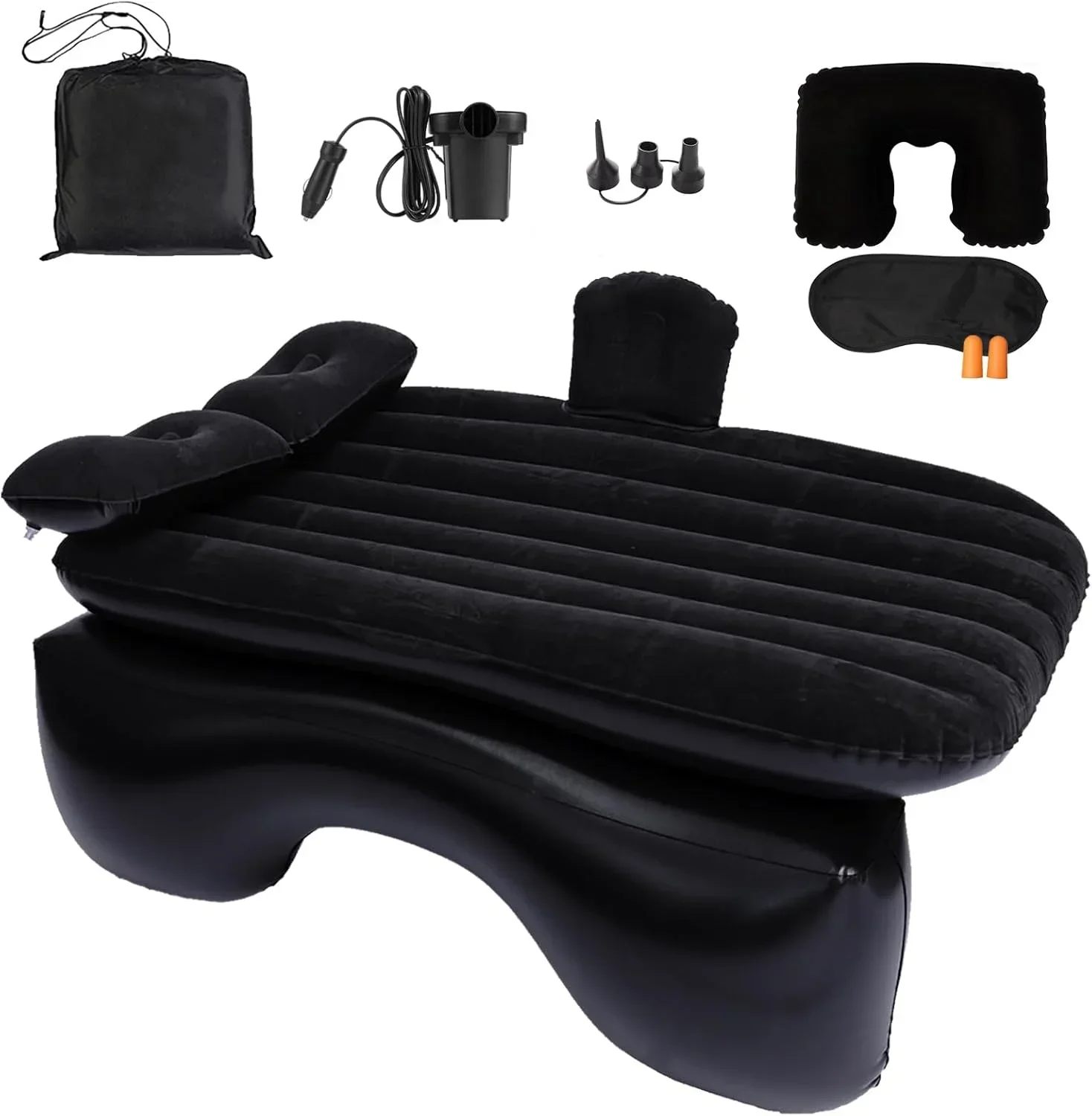
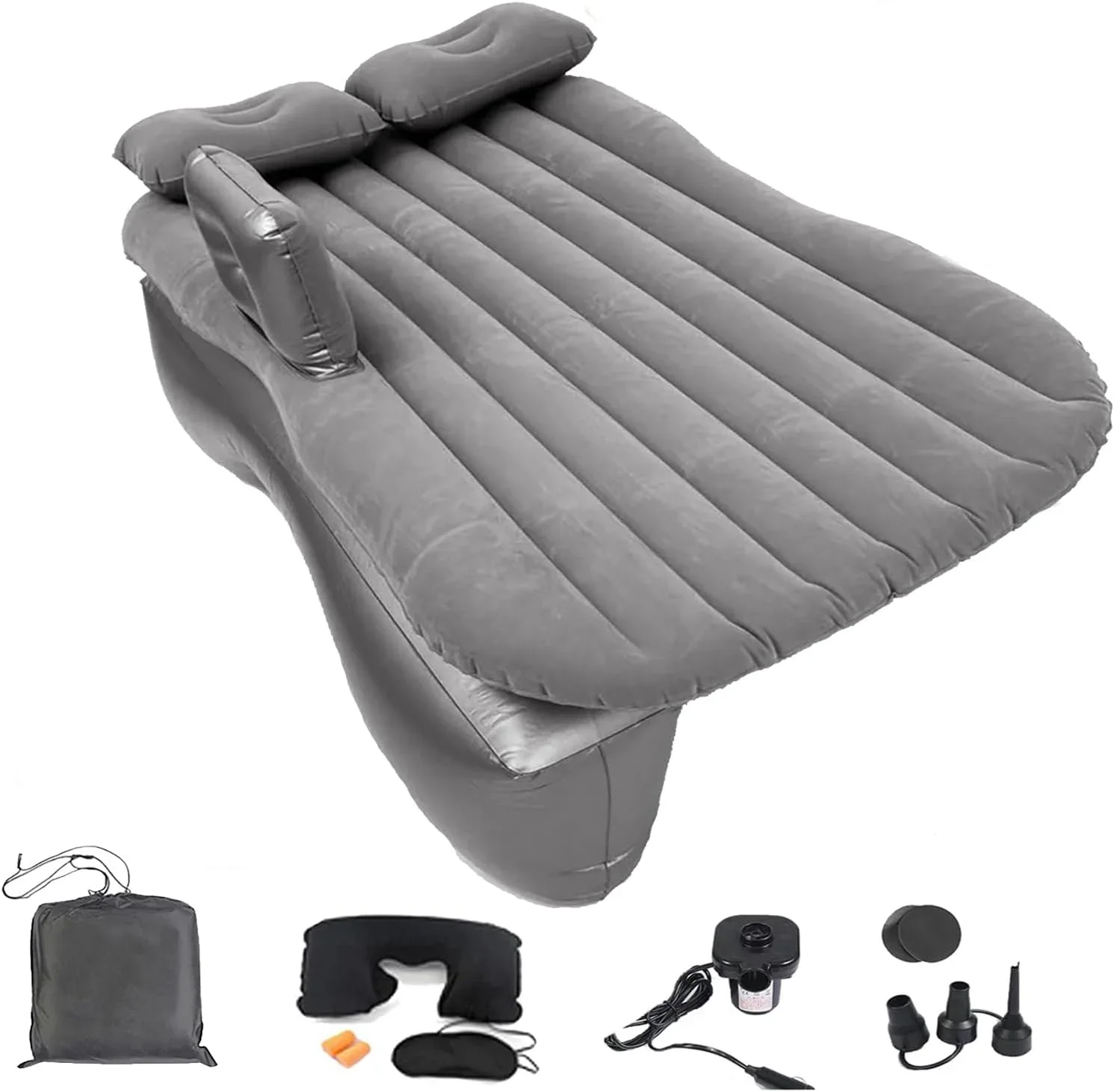
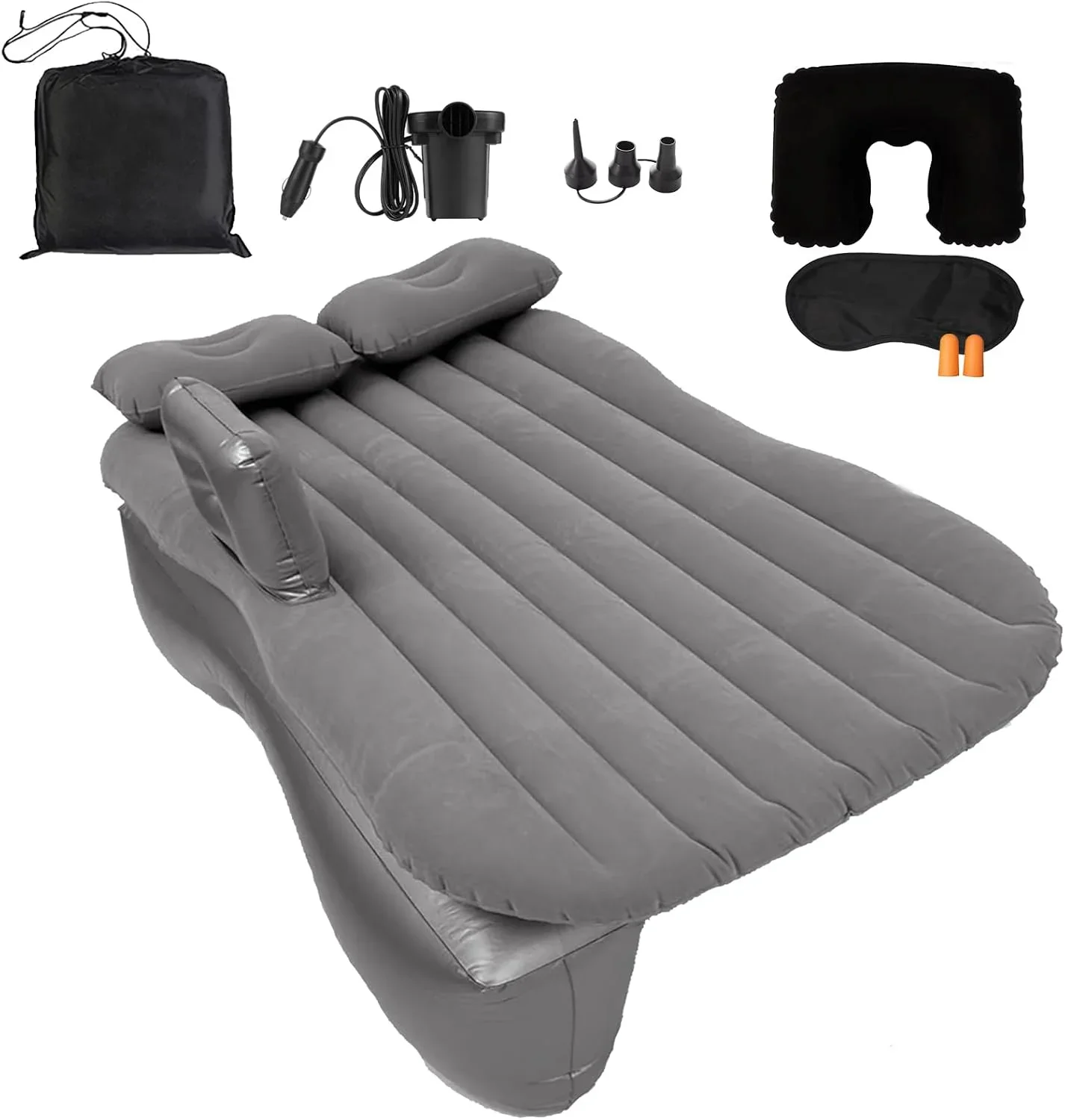
- A quality pad: both cars have a mild seatback recline even in their best configuration - the Rogue's raised floor and the Forester's platform both still want a topper like the Onirii SUV air mattress. Our SUV air-mattress guide sizes it for either narrow floor.
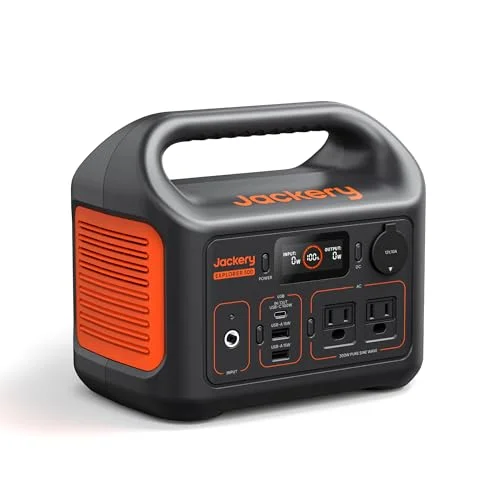
- A power station: the fixed cost above, since neither has 120V - a compact unit like the Jackery Explorer 300 runs a fridge, fan, and lights off the 12V socket.
- Window covers and screens: privacy plus cross-flow ventilation, cut once to your glass.
The difference in effort is real: the Forester adds a platform build to that list (to level its step), while the Rogue's Divide-N-Hide subtracts it. If your time is worth more than a Saturday in the garage, price that into the decision - it is the one place the Rogue quietly saves you money and labor the spec sheet never shows.
Beyond the bed: how each drives the rest of the year
You sleep in the thing a few dozen nights a year and drive it the other three hundred, so the daily character matters as much as the cargo bay - and here the two compacts have real personalities a budget shopper should weigh. The Subaru Forester leads with standard symmetrical all-wheel drive on every trim and a genuinely higher, more upright seating position with big glass, which makes it the easier car to see out of and the more confident one on a snowy trailhead approach. That AWD-standard identity is the whole reason a lot of campers cross-shop it in the first place.
The Nissan Rogue answers with a quieter, more car-like ride, a plusher interior at the upper trims, and available - not standard - all-wheel drive. For a paved-road commuter who camps at established sites, the Rogue often feels the more refined daily companion; for someone whose camping starts where the pavement ends, the Forester's standard traction and clearance are worth more than cabin polish.
Fuel and running costs land close enough that neither wins decisively, but the maintenance shapes differ: Subaru's boxer engine and full-time AWD ask for disciplined tire rotation and matched-set replacement, while the Rogue's front-drive-biased setup is the simpler, cheaper baseline to keep healthy. Neither is a money pit; they just reward slightly different owners.
The budget-wrench synthesis: if your year includes real weather, dirt roads, or a need to see out of a tall greenhouse, the Forester's standard capability earns its keep every day, not just at camp. If your year is mostly highway miles to weekend sites and you value a hushed, comfortable cabin, the Rogue is the nicer place to spend those three hundred driving days - and its trick floor still gives you the easy bed when the weekend comes. Match the car to the 300 days, not just the 30 nights.
The trim traps that quietly change the answer
Both of these compacts hide a trim-level gotcha that can flip the comparison, and a budget shopper should know them before signing anything. On the Rogue, the headline 36.5 cubic feet behind the rear seats is an SL-or-Platinum number; the base S and SV give you about 31.6, because the Divide-N-Hide floor is configured differently down the range. So the cargo-space win you read about belongs to the pricier Rogue, and the cheap one is noticeably tighter.
The Forester's trap is the panoramic moonroof. It cuts cargo height from about 34.9 inches to 32.4 and folded volume from roughly 74 cubic feet to 69 - and on the redesigned 2025-and-up Forester it is standard on nearly every trim except base. So the sit-up-height advantage that makes the Forester worth choosing lives specifically in the stripped, moonroof-delete base trim. Load up the options and you have quietly bought back the Rogue's flatter, lower profile at a higher price.
The budget-wrench read: shop the configurations, not the nameplates. A base Forester and a top Rogue are almost opposite cars for camping - the base Forester is the tall, wide, headroom pick; the loaded Rogue is the flat-floor, roomier-behind-the-seats pick. Match the trim to the trait you actually want, or you will pay more for the version that cancels the reason you chose it.
One more money note, since a wrench thinks in resale too: both nameplates hold value well, but the base Forester's simplicity and the Subaru all-weather reputation tend to keep it liquid on the used market, while a loaded Rogue depreciates like most mainstream crossovers. If you buy the trim that actually camps well, you also tend to buy the one that sells well later - a rare case where the smart camping choice and the smart money choice point the same direction.
The verdict: effort saved vs space gained
Boil it down and the choice is clean. The Nissan Rogue's Divide-N-Hide floor is the closest thing to a factory-flat bed in the compact class - it bridges the seat step for you, and that is a genuine, effort-saving win. The Subaru Forester wins on the fundamentals - about 3-5 inches more width between the arches, real sit-up height in base trim, and dimensions Subaru actually publishes.
Buy the Rogue if you want the flattest bed with the least DIY. Buy the base Forester if you want more room, more headroom, and numbers you can trust. Both need a pad and a power station; only the Forester also wants a platform - and only the Rogue saves you from building one.
My budget-wrench call: if you genuinely will not build a platform, the Rogue's trick floor is worth choosing for - a flat bed you skip the work on beats a wider bed you never finish. But if you value space and documented specs and don't mind a Saturday project, the Forester is the roomier, more honest camping platform. Match it to your appetite for DIY and either compact will sleep you well.