
For a camper, the parking mode matters more than the megapixels
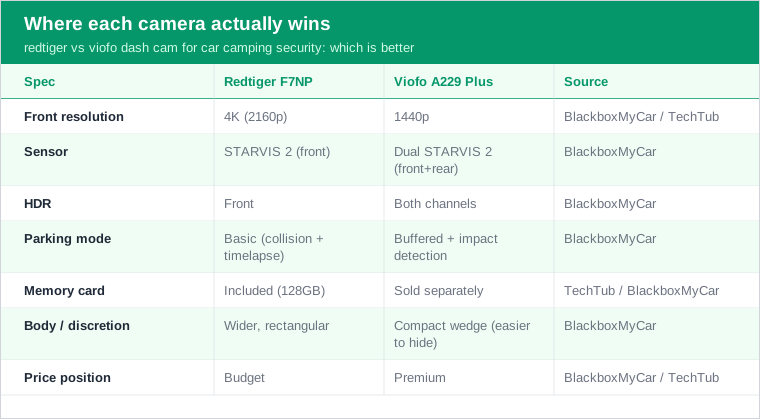
Before we compare a single spec, let me reframe what a dash cam is FOR when you camp. The Redtiger F7NP shoots 4K up front and includes a 128GB card; the Viofo A229 Plus shoots 1440p on two STARVIS 2 HDR channels and adds buffered parking mode, per BlackboxMyCar's head-to-head - and it's that LAST spec that decides this comparison. On the road a dash cam records your drive; at a trailhead, parked overnight while you sleep, it becomes a security camera, and that job is governed almost entirely by one feature that has nothing to do with resolution: parking mode. A camera that shoots gorgeous 4K but can't reliably capture an overnight break-in or hit-and-run is the wrong tool for a camper.
That's the lens I'm judging the Redtiger F7NP and the Viofo A229 Plus through - not 'which has the biggest number on the box,' but 'which actually protects a parked camp.' And on that question the two split in a genuinely interesting way. The Redtiger F7NP wins the value and sharpness fight; the Viofo A229 Plus wins the protection-while-parked fight. Which one you want depends on whether you're optimizing for your budget or your peace of mind.
Below I'll walk the spec split, then the parking-mode difference that decides camping security, then night vision, power and hardwiring for overnight use, and finally who should buy which. All figures are drawn from published head-to-head reviews, cited as we go.
The spec split: Redtiger's 4K vs Viofo's dual-HDR
Start with what each camera captures. The Redtiger F7NP records 4K (2160p) on the front camera - about 33% more pixel detail than the Viofo A229 Plus's 1440p front, which means measurably sharper license plates and faces on the front channel, per BlackboxMyCar. On raw front resolution, the Redtiger wins.
But the Viofo answers with sensor quality across BOTH channels:
- Redtiger F7NP: 4K front with a STARVIS 2 sensor and 170-degree lens - the sharpness champion up front.
- Viofo A229 Plus: DUAL STARVIS 2 sensors (front AND rear) with HDR on both channels, per BlackboxMyCar - the front is 'only' 1440p but the rear camera and low-light balancing are stronger.
- What it means: the Redtiger reads a plate sharper in good light up front; the Viofo holds detail better in high-contrast and low-light scenes on both cameras - which is most overnight scenes.
So 'which is sharper' has no single answer: the Redtiger for daylight front detail, the Viofo for balanced low-light performance front and rear. For a camper parked in the dark, that second quality matters more - which is a theme you'll see repeat.
The feature that decides camping security: buffered parking mode
This is the round that matters most for a camper, and it's a clear Viofo win. Both cameras have 'parking mode,' but they are not the same thing. The Viofo A229 Plus offers BUFFERED parking mode with impact detection - it continuously buffers video, so when something hits your parked camper it saves the seconds BEFORE the impact too, per BlackboxMyCar. The Redtiger F7NP's parking mode is basic: collision detection and timelapse only, with no buffered recording, per the same review.
The difference is everything for catching a culprit. Basic collision-triggered recording starts AT the impact - it often misses the approach and the plate. Buffered parking mode saves the moments leading UP to the hit, which is where the evidence lives. For overnight camp security, buffered is the feature to want.
Concretely, at a parked trailhead overnight:
- Viofo (buffered + impact): a bump or break-in attempt captures the lead-up - the person, the plate, the approach - not just the moment of contact.
- Redtiger (basic): collision detection and timelapse cover a lot, but without a buffer you can miss the crucial seconds before an event.
If overnight security is your main reason for buying, this round alone can justify the Viofo. It's the reason our parking-mode dash cam guide weights buffered recording so heavily.
Night vision at a dark trailhead
Campsites are dark, so low-light performance is a camping-specific priority most buyers underweight. Here the Viofo's dual STARVIS 2 sensors with HDR on both channels give it the edge: it intelligently balances blown-out highlights and dark shadows in high-contrast scenes - a streetlight against a dark lot, headlights against a black trailhead - per BlackboxMyCar. The Redtiger's 4K front is sharp, but the Viofo's low-light balancing across both cameras is the stronger overnight tool.
Why this matters for a parked camp:
- High-contrast scenes: the Viofo's dual HDR keeps a plate readable when a bright light sits next to deep shadow - common at night.
- Rear coverage: the Viofo's stronger rear sensor matters because overnight threats often approach from behind a parked vehicle.
- Redtiger's case: in evenly-lit conditions its 4K front still resolves more fine detail - it's not weak, just less balanced in the dark.
For the specific job of watching a dark, parked camp, the Viofo's night performance is the better fit. In daylight driving, the gap narrows and the Redtiger's resolution shines.
A note on how to read night-vision claims in general: sensor generation and HDR processing beat raw resolution after dark. More pixels on a small sensor can actually mean LESS light per pixel, which is why a 1440p camera with newer STARVIS 2 silicon and dual-channel HDR can out-record a 4K unit in the dark. Judge night footage samples, not spec-sheet resolution.
One practical test worth doing the first week you own either camera: park where you'd actually camp - under trees, away from streetlights - and review a full night of parking-mode footage. You're checking two things: whether faces and plates are readable at the distances that matter (roughly one car length, about 15 ft), and whether the camera's motion or impact triggers actually fired on the events you can see. That one review tells you more about YOUR security coverage than any comparison chart, and it's the habit that catches a mis-aimed lens or a dead card before the night it matters.
Powering it overnight: hardwiring for parking mode
One practical note that applies to BOTH: parking mode only works while the camera has power after the engine is off, which for overnight camping means a hardwire kit to a fused circuit or a dedicated dash-cam battery - not the always-on 12V socket, which either won't stay live or will drain your starter battery. This is a setup decision, not a Redtiger-vs-Viofo difference, but it's the step that makes either camera's parking mode real.
The overnight-power essentials for either camera:
- Hardwire kit: wires the cam to a fused circuit with low-voltage cutoff so parking mode runs without killing your battery.
- Dedicated dash-cam battery: the safest option for multi-night camping - it isolates the cam from the vehicle battery you need to start in the morning.
- Card matters: the Redtiger includes a 128GB card; the Viofo needs one bought separately - factor that into the true cost and buy a high-endurance card either way.
Our overnight camping-security dash cam guide covers the hardwiring and battery setup that makes parking mode dependable for either model. One camping-specific warning that applies to both: cold nights sag a vehicle battery's resting voltage, so set the hardwire kit's low-voltage cutoff conservatively in winter - a cutoff that never trips in July can end parking mode within 1 hour on a freezing night, and the camera quietly stops guarding exactly when the campground is emptiest. A dedicated dash-cam battery sidesteps the problem entirely on multi-night trips.
Three nights, three verdicts: how the choice plays out
Specs argue in the abstract; nights decide in the field. So walk the two cameras through the three overnight situations a vehicle camper actually faces, and watch how the pick shifts with the setting.
Night one - a paid campground with neighbors. You are parked for 8 hours or more among other campers, and the threat level is low: the realistic risks are a door ding from the next site over or a wandering opportunist checking handles. The Redtiger's basic collision-plus-timelapse parking mode covers this fine - a bump triggers a clip, and the timelapse gives you a record of the night. At a campground, the value pick loses nothing.
Night two - a gray-area urban street or rest stop. Now the threat is a window check or a break-in attempt, and the evidence that matters is the APPROACH - the person walking up, looking in, testing the handle before anything registers as an impact. This is precisely what buffered parking mode exists for, and where the Viofo pulls decisively ahead: it saves the seconds before the trigger, per BlackboxMyCar, while a collision-triggered camera may record nothing until it's too late. Our guide to choosing a parking-mode dash cam goes deeper on this exact trade-off.
Night three - a remote trailhead, no witnesses. The stakes are highest and the light is worst. Here the Viofo's dual STARVIS 2 HDR earns its premium twice over - balanced night footage on BOTH channels in the high-contrast dark, plus the buffered lead-up if someone tampers with an obviously-loaded vehicle. If your camping regularly ends at night three, the premium camera is the honest recommendation; if it ends at night one, save the money.
Mounting, WiFi, and living with each camera between trips
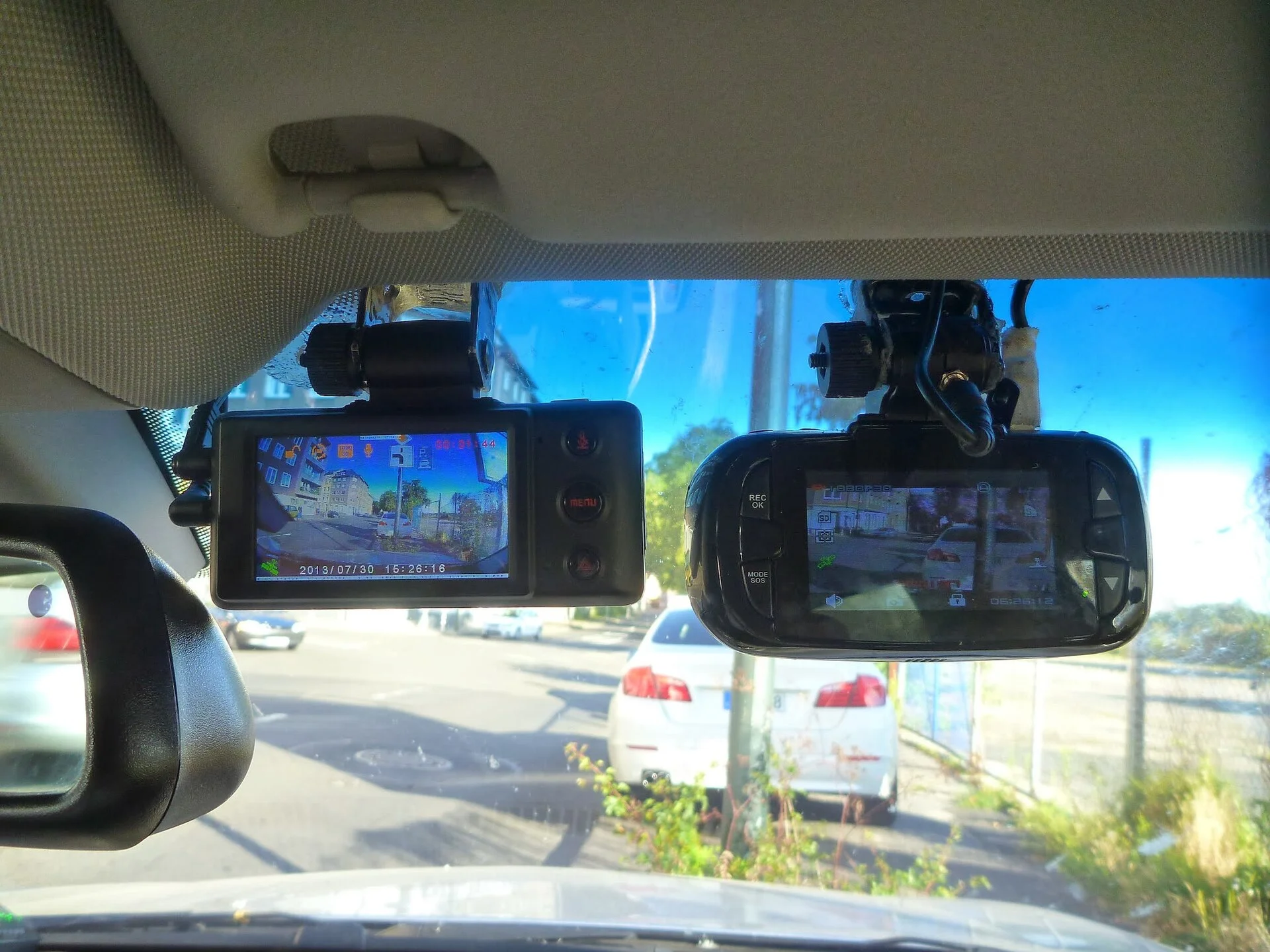
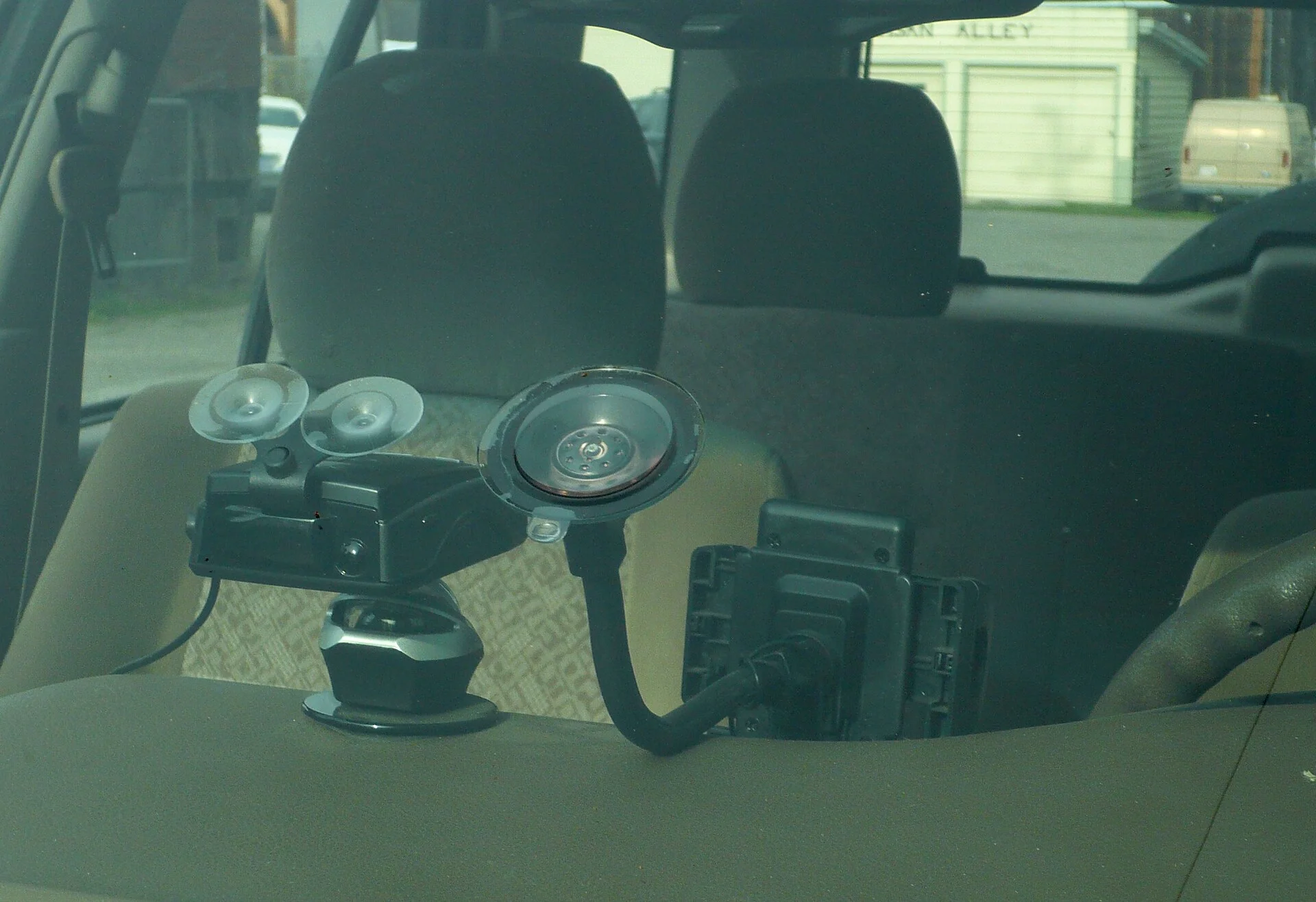
Security is the headline, but you also live with these cameras every day, and the daily-use differences are real. Start with the body: the Viofo A229 Plus is a compact wedge that tucks up behind the mirror and attaches with a low-profile adhesive mount, while the Redtiger F7NP is a wider, rectangular unit on a suction mount with a short arm that some drivers find a little distracting in the windshield, per BlackboxMyCar's comparison. For a camper this is more than aesthetics - a discreet camera draws less attention to a parked, loaded vehicle at a trailhead, and the wedge shape is genuinely easier to hide.
Then there's getting your footage off the camera, which matters the morning after an incident. The Redtiger runs 5.8GHz WiFi with claimed transfer speeds around 20MB/s, per its maker's listing - fast enough to pull a night's parking clips to your phone at the campsite without removing the card. The Viofo pairs 5GHz WiFi with voice control and notably precise GPS, per its listing, so you can trigger clip saves hands-free on the drive in and trust the speed-and-location stamp if footage ever becomes evidence.
None of these daily-use points overturns the security verdict, but they shade it: the Viofo is the more discreet, more polished unit to own, while the Redtiger counters with fast transfers and a simpler screen-based interface. If two cameras protect your camp equally well, buy the one you'll actually enjoy using - here, they protect it differently, so treat this section as the tiebreaker, not the decider.
The complete-kit math: cards, filters, and hardwire kits
The sticker on the box is not the cost of the working system, and the two brands package very differently - worth understanding before you compare them at all. The Redtiger F7NP ships with a 128GB memory card included, per TechTub and the maker's listing; the Viofo A229 Plus includes no card, so a high-endurance microSD is a required separate purchase before the camera records a single frame.
Count the whole kit: camera + card + hardwire kit (or battery) + optional CPL filter. That total - not the camera alone - is what an overnight camping-security setup actually costs, and it narrows the gap between a budget camera and a premium one.
The full-kit checklist for either camera:
- Memory card: included with the Redtiger; separate for the Viofo. Either way, choose a high-endurance card rated for continuous dash-cam rewriting - a standard card dies young under parking-mode duty.
- Hardwire kit: required for real overnight parking mode on both. Both makers sell OBD or fuse-tap kits with low-voltage cutoff - our hardwire kit guide for extended camping walks the install.
- CPL filter: both brands offer circular-polarizer bundles that cut windshield glare and dashboard reflections - a cheap image-quality upgrade that matters most in bright trailhead sun.
- Rear-camera cable routing: both are dual-channel; budget an hour to route the rear cable cleanly along the headliner.
Kitted out, the Redtiger stays the value pick - the included card is a genuine saving - and the Viofo stays the premium one. But the gap shrinks once both carry the same hardwire kit and the Viofo's card is added, which is exactly why the decision should rest on parking mode and night vision, not the box price.
The verdict: Redtiger for value, Viofo for camp security
Judged as a camping-security tool, the split is clean. The Viofo A229 Plus is the better OVERNIGHT PROTECTOR - buffered parking mode that captures the lead-up to an incident, dual STARVIS 2 HDR for balanced night vision front and rear, and a compact, discreet body that's easy to hide. If protecting a parked camp is why you're buying, it's the pick.
Buy the Viofo A229 Plus if overnight camp security is the priority - buffered parking mode and dual-sensor night vision are the features that actually protect a parked vehicle. Buy the Redtiger F7NP if value and daylight front sharpness matter most - 4K front detail and an included card at a much friendlier price.
The Redtiger F7NP is not a bad camera - it's a genuinely good value with the sharpest front image here and a card in the box, and for a driver who mostly wants road recording it's the smarter spend. But for the specific job this page is about - a dash cam that guards your camper while you sleep at a dark trailhead - the Viofo's buffered parking mode and balanced night vision make it the safer choice. Match the camera to the job, and either one earns its mount.