Car Accessories

How to Choose the Right Suction Power for Your Portable Car Vacuum

Casey - The Weekend Warrior
6 min read
Includes Video

When you're looking at a portable car vacuum, the biggest number thrown around is often the suction power. It's usually measured in Pascals (Pa) or Air Watts (AW), and frankly, it's the most confusing part for anyone just trying to clean out their car without buying a whole industrial setup.

When you're looking at a portable car vacuum, the biggest number thrown around is often the suction power. It's usually measured in Pascals (Pa) or Air Watts (AW), and frankly, it's the most confusing part for anyone just trying to clean out their car without buying a whole industrial setup. It's the first spec that hits you, and frankly, it's the one that matters most for actually picking up dirt.

My first car vacuum had a pathetic suction rating, and it was like trying to suck up sand with a straw. I learned real fast that not all power is created equal, and you need to know what you're looking at. This guide breaks it down, but let's talk about what you actually need. It's not about getting the biggest number, it's about getting the right number for your car.

You don't need a vacuum that could suck the paint off your fenders, you just need one that can handle stale goldfish crackers and that weird dust that collects on your dash. The real move is finding that sweet spot. Most sources agree, and I've found it to be true in the field: there's a range that works for most people.
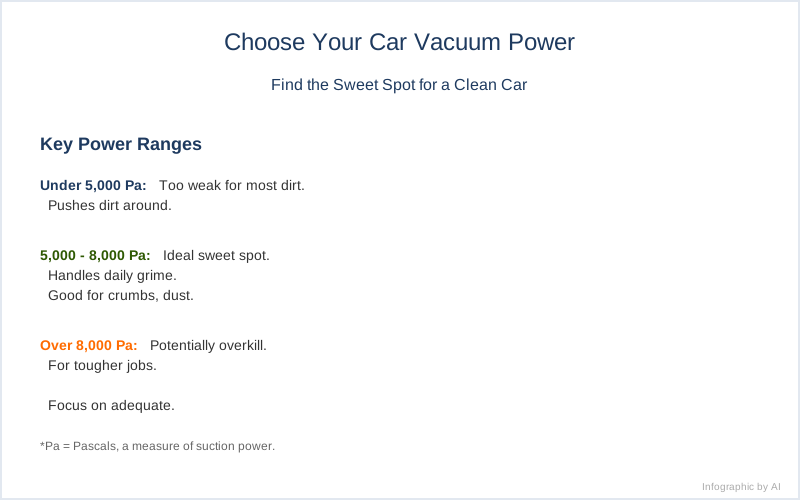
How to Choose the Right Suction Power for Your Portable Car Vacuum — Key Specifications Compared
Key specifications for How to Choose the Right Suction Power for Your Portable Car Vacuum

The Core Answer

The core answer to what suction power you actually need boils down to this: for 90% of the dirt you'll encounter in your car, something in the 5,000 Pa to 8,000 Pa range is your game-time decision. That's enough juice to handle the daily grind - think crumbs, dry dirt, and that fine dust that seems to materialize out of nowhere. I learned this the hard way at a state park in Colorado; my car looked like a toddler had a snack convention in it. My first vacuum, with its measly 3,000 Pa, just pushed the dirt around. It was frustrating, like trying to sweep with a feather. This range is the sweet spot because it balances effectiveness with portability and battery life on those cordless models. You don't need a beast that drains your battery in 10 minutes. Air Watts (AW) are another metric, and they combine suction and airflow. For handheld car vacuums, you're generally looking at 30-50 AW. It's a more complete picture, but most manufacturers still lead with Pa because it's easier to grasp. Just know that if a vacuum is listed in AW, you're looking for a solid number there too. My second vacuum was rated around 40 AW, and it was a night-and-day difference. It could actually pull debris out of the car mats instead of just tickling them. Higher suction, like 12,000 Pa or more, is really for extreme cases. I'm talking about deeply embedded pet hair that's woven itself into the fabric, or thick mud that's dried like concrete. For my old dog's shedding season, I might have considered that, but for regular car upkeep? It's overkill. You're paying for power you'll likely never use, and it probably means a heavier unit or a shorter battery life. Some folks even recommend a small wet/dry vac for cars, which often have higher Pa ratings, but for pure portability and convenience, a dedicated handheld is usually the way to go. Don't get caught up in the highest number; focus on what's practical for your everyday car mess. My trunk was full of gear on my first few trips, and I learned that simpler is always better. The same applies here. A vacuum that's easy to grab and use for 5 minutes is far more valuable than a monster you dread pulling out. The honest version is that most of the time, you're dealing with surface-level stuff, and a moderate amount of suction is all you need to get it done. Even mains-powered vacuums often hover around 1200 Pa, so for a portable unit, 5000-8000 Pa is genuinely significant. Remember, physics doesn't care about your brand loyalty, only the force you apply.
To ensure you're getting the most efficient clean, understanding suction power options is essential.
Aim for 5,000 to 8,000 Pa for effective cleaning of common car debris like crumbs and dust.
A close look at a car's air vent highlights the need for sufficient portable car vacuum suction power to tackle fine dust and everyday messes effectively. | Photo by Diana ✨

Why This Matters for Your Setup

  • Crumb Control: My first car camping trip involved a family of squirrels deciding my Subaru Outback was their personal buffet. I had chips, granola bar wrappers, and enough loose change to fund a small nation. My original vacuum just spread the crumbs around. The real move is a vacuum with at least 5,000 Pa to actually suck that stuff up. Anything less feels like you're just rearranging the mess.
  • Pet Hair Purgatory: If you've got pets, you know the struggle. Their hair weaves itself into the fabric like it's part of the car's original upholstery. For that, you need something with a bit more oomph, ideally pushing towards 8,000 Pa or higher, or a dedicated pet hair attachment. My friend's golden retriever shed enough to knit a sweater on every trip, and her vacuum just couldn't keep up until she upgraded. Higher suction is key here.
  • Dust Bunnies on Steroids: That fine dust on your dashboard and in the air vents can be surprisingly stubborn. It's not just fluff; it's a mix of road grime and who-knows-what. A decent 5,000 Pa vacuum can handle it, but if you want it gone in one pass, aim higher. I swear, my car's dashboard attracts dust like a magnet. This range is generally sufficient for routine cleaning.
  • Battery vs. Power: It's a constant trade-off. More suction power often means a bigger, hungrier motor, which drains the battery faster. My first cordless vacuum had amazing suction but died after about 7 minutes. Now, I look for that 5,000-8,000 Pa range, and I can usually get a solid 15-20 minutes out of it, which is plenty for a quick clean. You need to balance how much power you get with how long you can actually use it.
  • To enhance your cleaning efficiency, understanding how to choose the right suction power is essential.
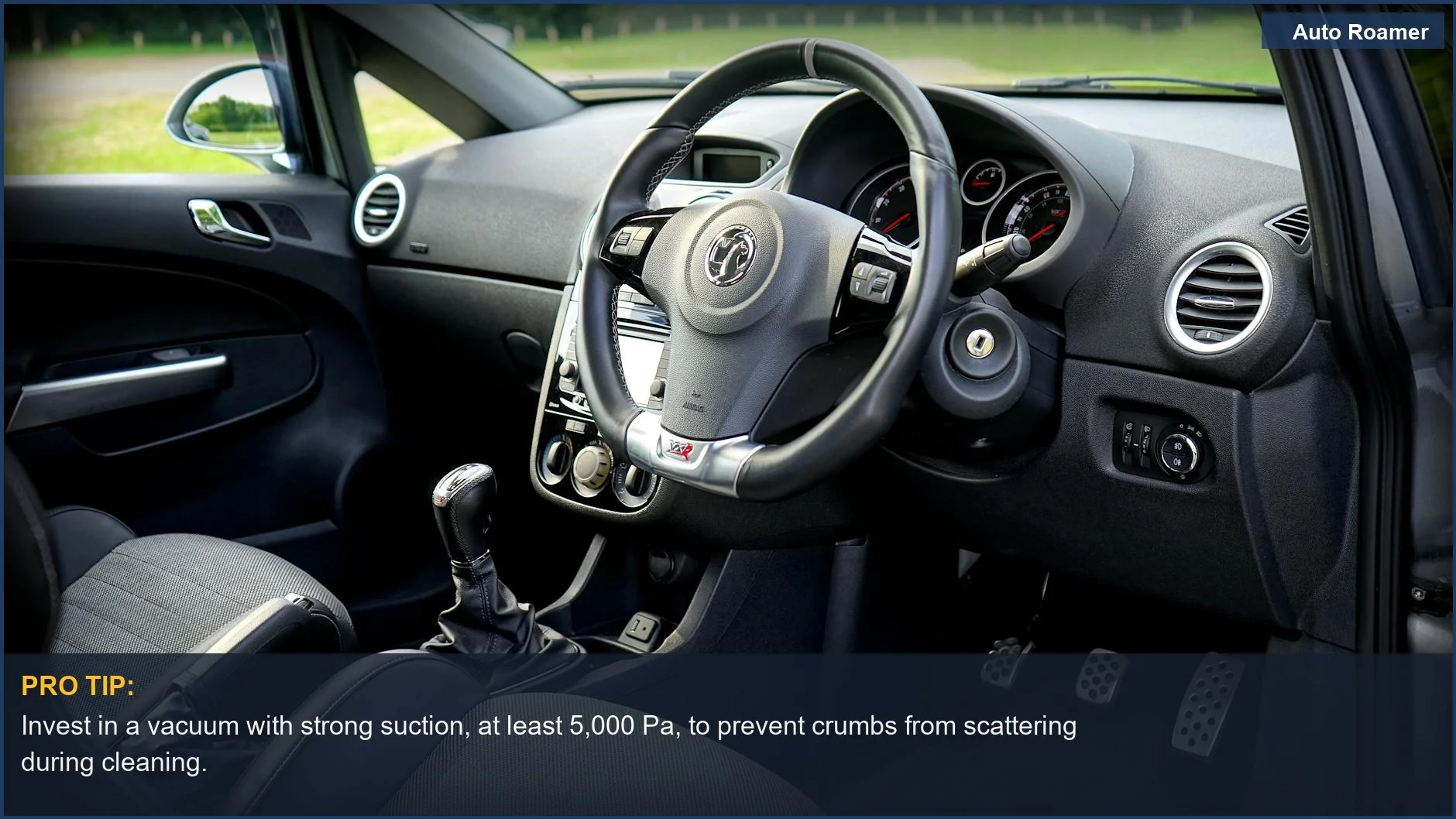
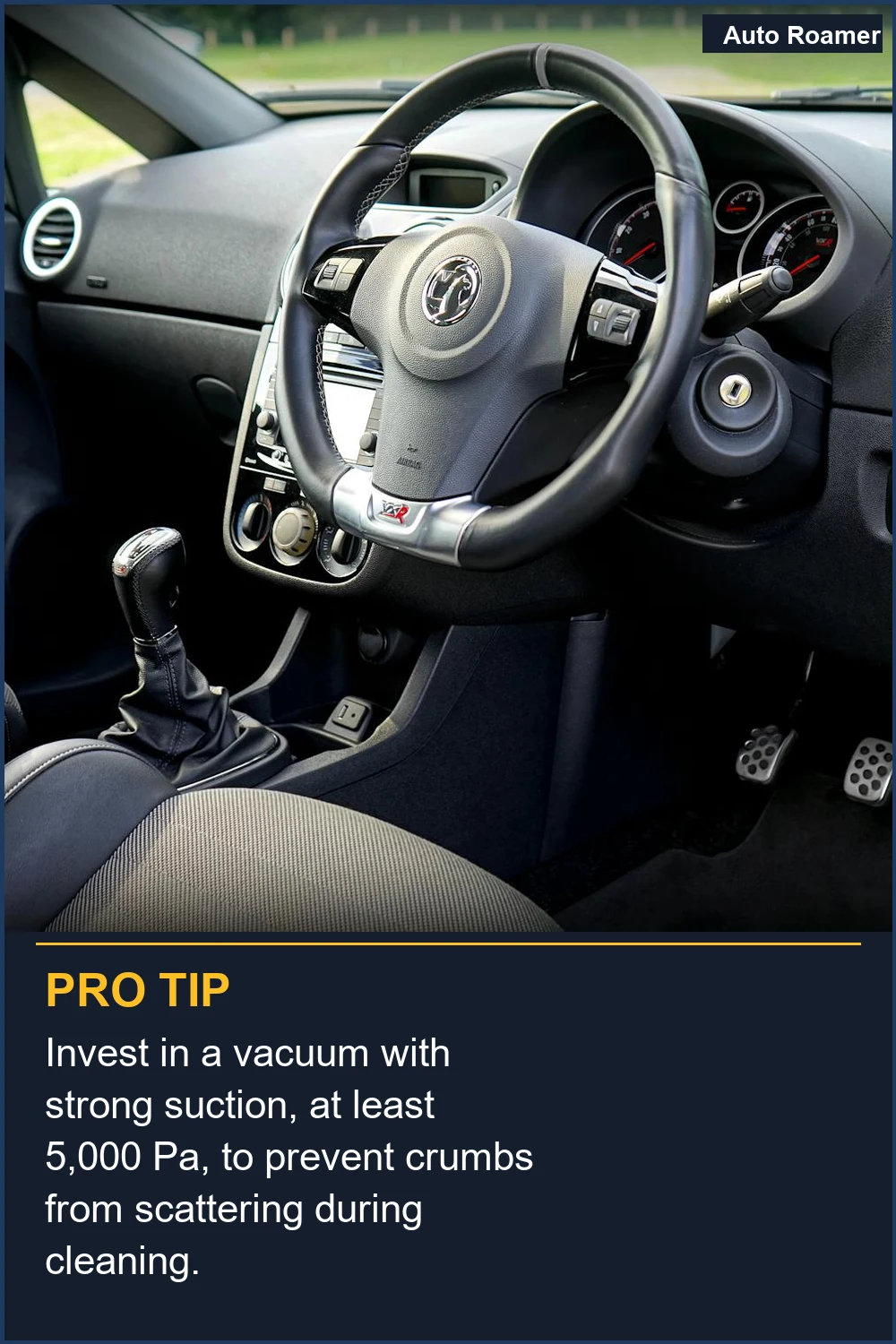
    Invest in a vacuum with strong suction, at least 5,000 Pa, to prevent crumbs from scattering during cleaning.
    The intricate details of a modern car's steering wheel and dashboard show why choosing the right portable car vacuum features is crucial for tackling stubborn messes. | Photo by Mike Bird

    Making the Right Choice

  • The 5k-8k Pa Sweet Spot: For most people, this is where you'll find the best balance of cleaning power and usability. My own experience confirms this; anything less felt like a rookie mistake, and anything more was usually overkill. This range is practical for everyday messes.
  • Don't Get Fooled by Fancy Numbers: Higher Pa or AW numbers don't automatically mean a better vacuum. Sometimes, a well-designed vacuum with moderate suction can outperform a poorly designed one with a huge number. Focus on the overall design and your specific needs. My second vacuum had slightly lower AW than a friend's, but it was way more effective because of its nozzle design. Understand the metrics, but don't be a slave to them.
  • Consider Your Car's 'Disaster Level': Are you dealing with light dust and a few crumbs, or is your car a constant battleground of pet hair and dried mud? Be honest with yourself. If it's the latter, you might need to push towards the higher end of the recommended range or look for specific attachments. Routine cleaning is different from deep-dive detritus removal.
  • Portability is Key: Remember, it's a portable car vacuum. If it's too heavy or bulky, you won't use it. The power rating needs to be balanced with how easy it is to maneuver into tight spaces and how long the battery lasts. My first attempt at a powerful vacuum was a behemoth that I dreaded pulling out of the trunk. Watch out for those trade-offs.
  • To further refine your decision, understanding the nuances of choosing a cordless vacuum can be invaluable.
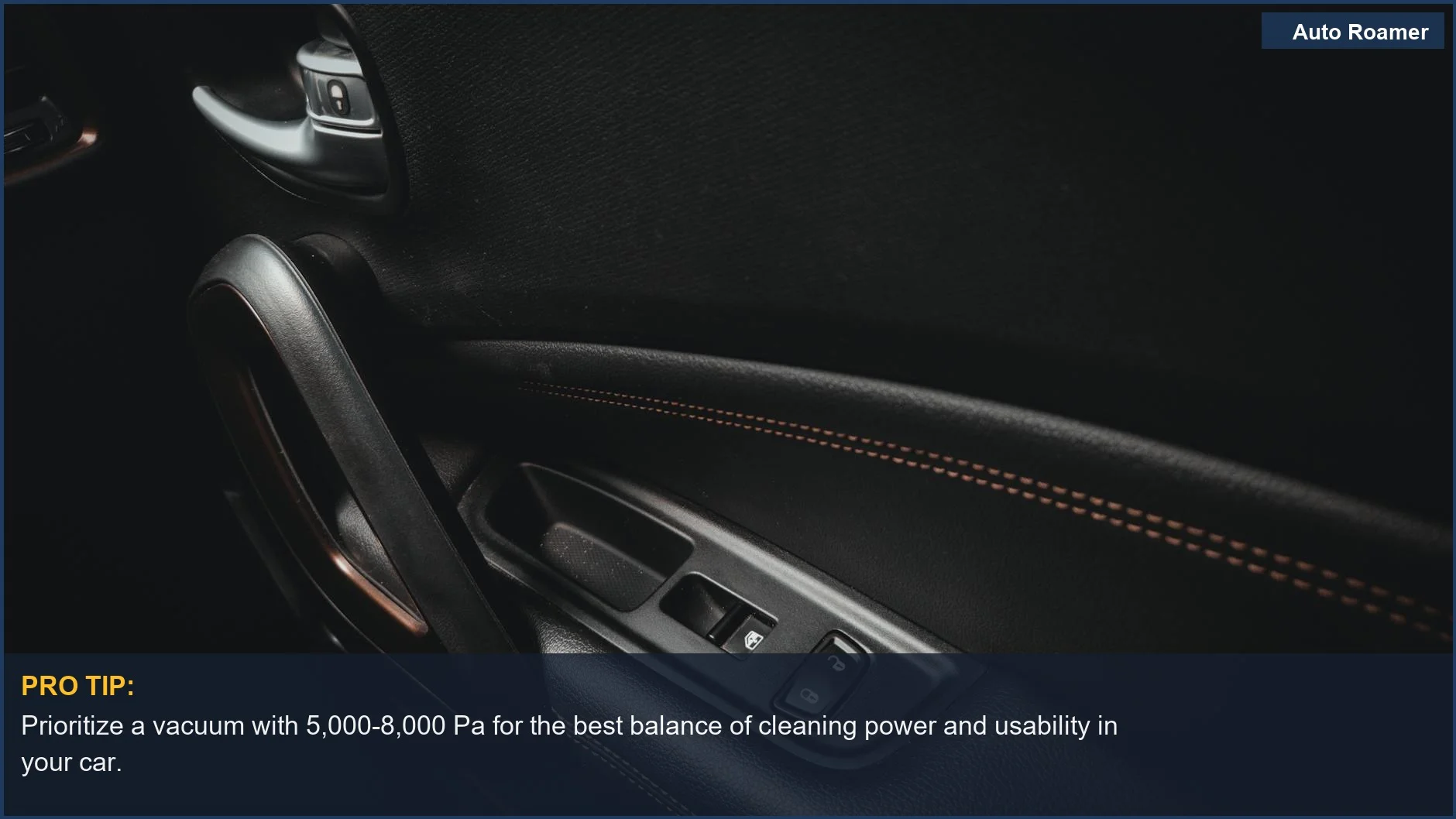
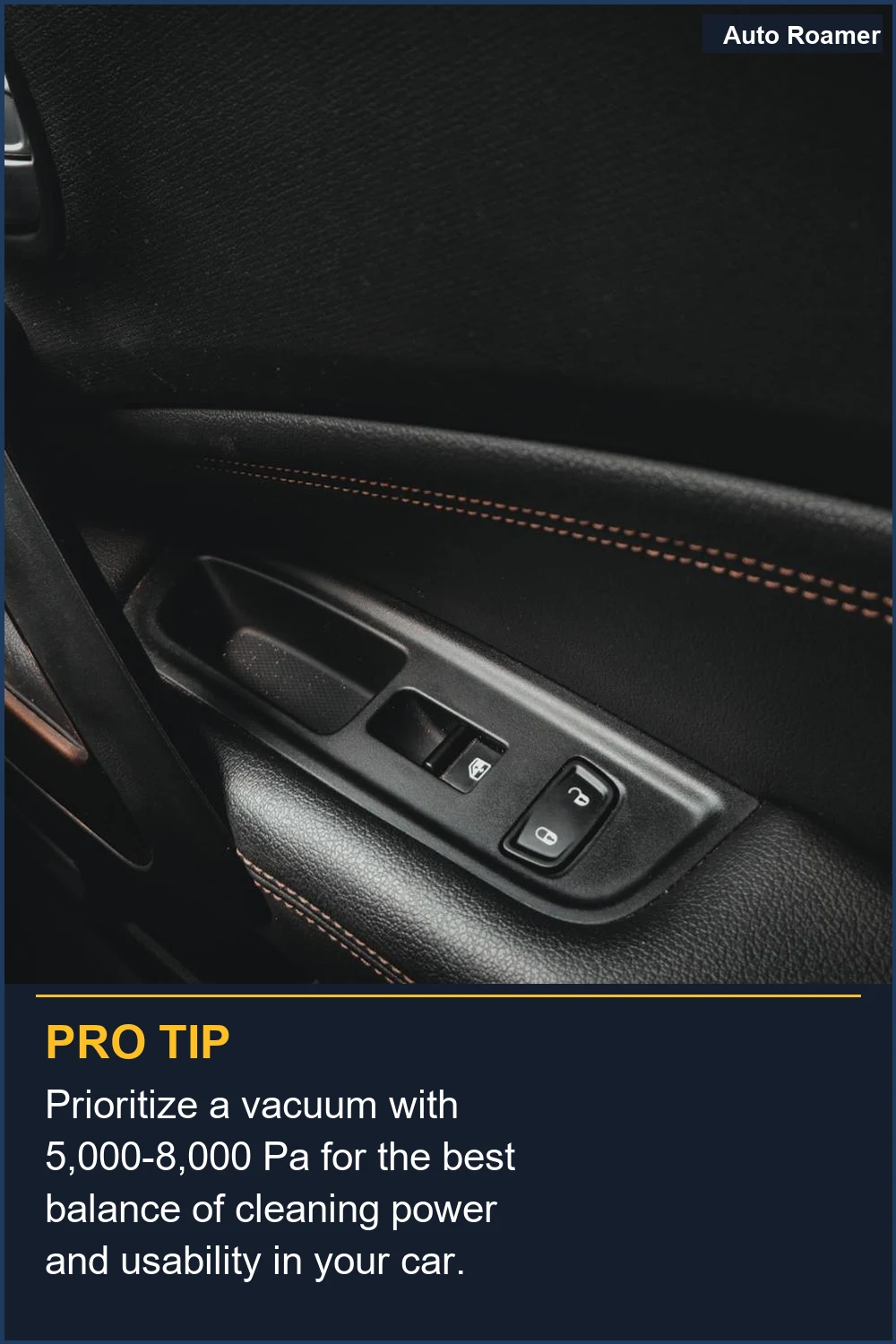
    Prioritize a vacuum with 5,000-8,000 Pa for the best balance of cleaning power and usability in your car.
    Examining a car door's handle and stitching reveals the effectiveness of strong car vacuum suction power for achieving a thorough clean on various surfaces. | Photo by Ivett M

    Frequently Asked Questions

    If I buy a cheap, no-name car vacuum for $20 that claims 15,000 Pa, will it be better than a $70 one that only claims 8,000 Pa?
    Honestly, probably not. That $20 vacuum is likely using inflated numbers or a different, less useful measurement. My first car vacuum was a $30 impulse buy, and its 'high' suction rating was pure fiction. It couldn't even pick up a single Cheerio. Stick to reputable brands and the recommended 5,000-8,000 Pa range; it's a more reliable indicator than a flashy, unbelievable number on a no-name product. People online often discuss how misleading some advertised specs can be.
    Do I really need to worry about the 'Air Watts' (AW) or just stick to Pascals (Pa)?
    For most handheld car vacuums, the Pa rating is what you'll see most often and it's usually enough to get a decent idea. If you see AW, it's a more comprehensive measure that includes airflow, which is also important. Think of Pa as the 'oomph' and AW as the 'oomph plus how much stuff it moves.' For typical car cleaning, focusing on a Pa rating between 5,000-8,000 should be fine. AW is a more accurate measure, but Pa is easier to compare for handhelds.
    What if my car vacuum with 8,000 Pa still can't pick up stubborn pet hair?
    Even with good suction, the nozzle design and the type of brush head make a huge difference, especially for embedded pet hair. If your vacuum has interchangeable heads, try a different one, maybe one designed specifically for pet hair. Sometimes, you might need to use a brush or grooming tool to loosen the hair first, then vacuum. My old Subaru had seats that seemed to eat dog hair; I found that a stiff brush followed by vacuuming worked best. Attachments are often key.
    Can using a vacuum with too much suction power damage my car's interior fabric?
    It's unlikely to cause permanent damage unless you're using a commercial-grade industrial vacuum not designed for car interiors. However, excessively high suction on very delicate or old fabrics could potentially snag or fray them over time, especially if you're dragging the nozzle aggressively. For typical portable car vacuums in the 5,000-8,000 Pa range, you're generally safe. This level is designed for car interiors.
    I heard you don't need much suction power if you just use a damp cloth to wipe down surfaces first. Is that true?
    That's a common misconception, and frankly, it's a lazy approach. Wiping with a damp cloth might get surface dust, but it often just smears grime around and can leave streaks, especially on dashboards and screens. A vacuum with decent suction (think 5,000 Pa+) is essential for actually lifting dirt, debris, and fine particles out of crevices and off fabric. My first attempt at cleaning my car involved a lot of damp rags, and it looked worse than when I started. Routine cleaning tasks are best handled by a vacuum.

    🏅 Looking for Gear Recommendations?

    Check out our tested gear guides for products that work with this setup:

    C

    Casey - The Weekend Warrior

    Weekend car camper and road trip enthusiast. Focuses on practical, budget-friendly solutions for families and first-time campers.

    Sources

    Related Articles