
Car Accessories

Portable Air Compressor Power Sources: 12V vs. Battery Powered

Casey - The Weekend Warrior
4 min read
Includes Video

A portable air compressor is that little lifesaver for car camping, letting you air up tires after a bumpy dirt road or inflate a mattress without huffing and puffing for an hour. The big question for first-timers is how to power the darn thing: do you plug it into your car's cigarette lighter, or do you go with a battery-powered unit?

A portable air compressor is that little lifesaver for car camping, letting you air up tires after a bumpy dirt road or inflate a mattress without huffing and puffing for an hour. The big question for first-timers is how to power the darn thing: do you plug it into your car's cigarette lighter, or do you go with a battery-powered unit? It sounds simple, but the differences can seriously change your game-time experience.

Choosing between these two power sources is less about fancy specs and more about what actually happens when you're miles from anywhere and realize your tire's flatter than a week-old soda.

The Core Answer

The core difference between a 12V compressor and a battery-powered one boils down to where the juice comes from. A 12V unit plugs right into your car's accessory port, the same place you'd plug in a phone charger or dashcam - often called the cigarette lighter port. This means as long as your car is running or has a charged battery, you have pretty much endless power. My first trip to Big Meadows in Shenandoah, I used a cheap 12V compressor to fill my air mattress. Took forever, and I kept worrying if I was draining the car battery. The real move is to have your engine running, which I learned after about 20 minutes of anxious idling.
To help you decide which option is best for your needs, explore powering your portable air compressor.
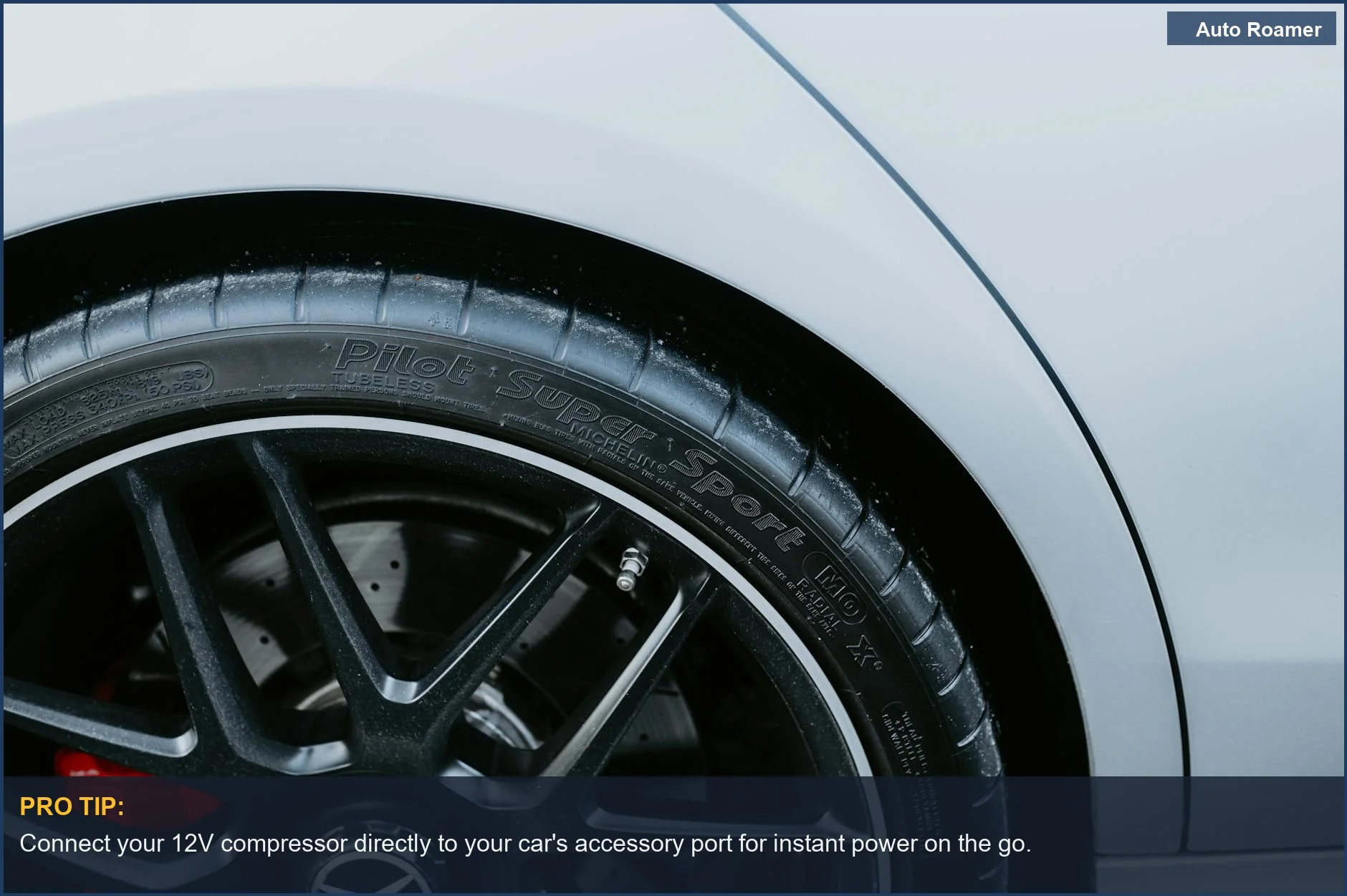
Connect your 12V compressor directly to your car's accessory port for instant power on the go.
This detailed view of a car tire highlights where your 12V compressor plugs in. Ensure your vehicle's accessory port can handle the power draw. | Photo by Luke Miller

Why This Matters for Your Setup

Why this matters for your setup is all about where you're going and what you're doing. If you're just doing quick top-ups at a campground with easy car access, a 12V unit is probably fine. But if you're venturing further out, say, exploring dirt tracks in Moab, a battery-powered compressor gives you freedom. I learned this the hard way when a slow leak developed on a trail in Colorado. My 12V compressor was useless because I couldn't run the car indefinitely. The honest version: you need to consider battery life versus continuous power. Here's the breakdown:
  • 12V Compressors: These are the workhorses that rely on your vehicle's electrical system. They're great for sustained use as long as the engine is on, meaning you don't have to worry about running out of power mid-inflation. However, they tether you to your car, which can be a pain if you need to air up away from the vehicle or if you're worried about draining your battery.
  • I've seen folks leave their car running for 30 minutes straight to fill up four tires after a rough trail - not exactly eco-friendly. They are often cheaper upfront, too, which is a big win for the beginner budget.
  • Battery-Powered Compressors: These run on their own rechargeable batteries, offering ultimate portability. You can use them anywhere, anytime, without even needing your car. This is a huge plus for airing up a sleeping pad at the campsite or fixing a slow leak miles down a trail. The downside is battery life. I once tried to inflate a full-size truck tire from nearly zero with a battery unit, and it died halfway through.
  • It took forever and completely drained the battery - a rookie mistake. Newer, higher-voltage models are much better, but you're paying for that convenience, often double or triple the cost of a basic 12V unit.
    To enhance your camping experience, consider the differences in powering your portable tire inflator.
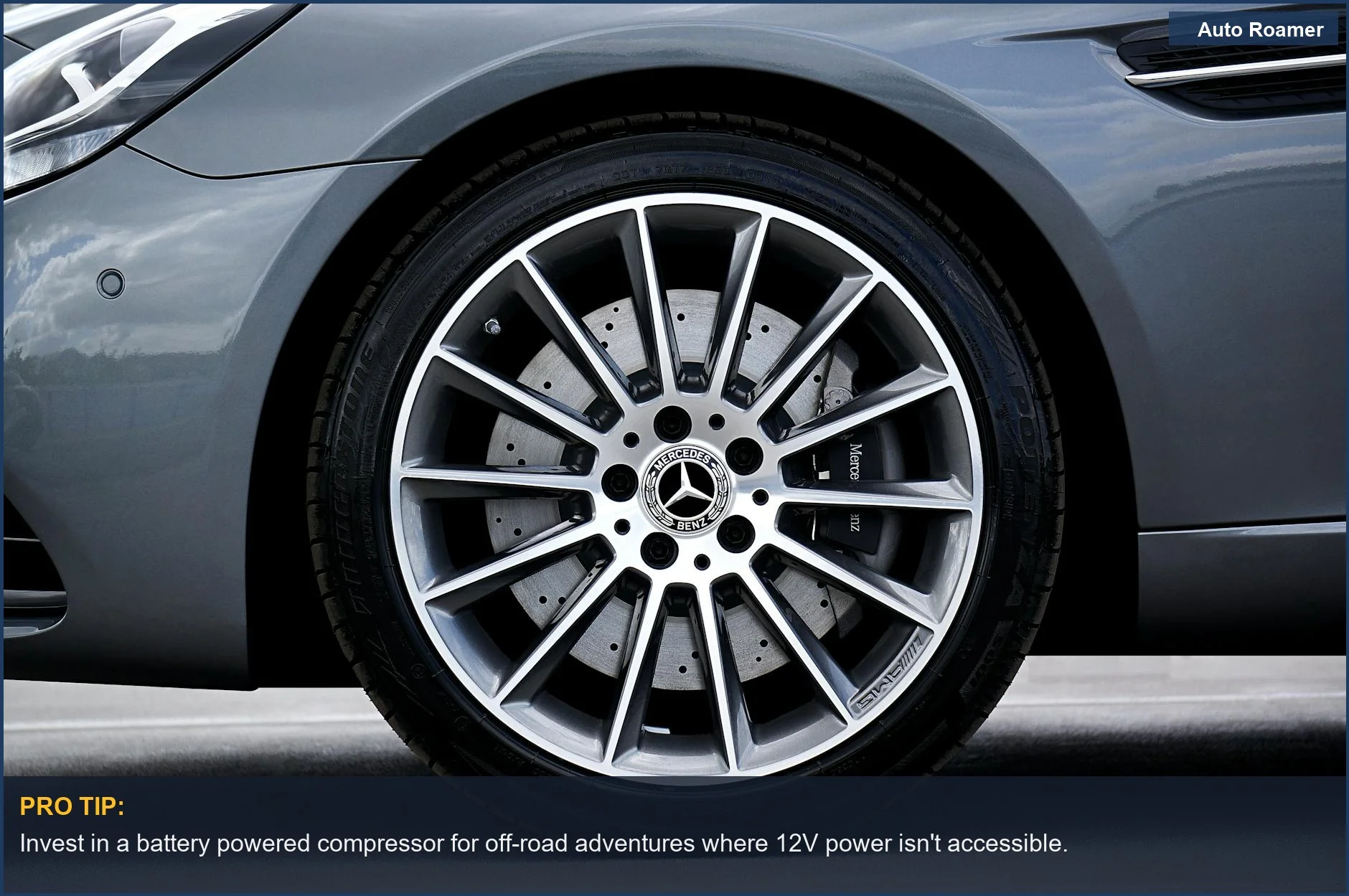
    Invest in a battery powered compressor for off-road adventures where 12V power isn't accessible.
    A premium car tire like this Mercedes-Benz wheel demands reliable inflation. Explore off-road with a battery powered compressor for ultimate freedom. | Photo by Mike Bird

    Making the Right Choice

    Making the right choice between a 12V and a battery-powered air compressor really depends on your camping style. Don't overthink it for your first few trips. The $50 version that plugs into your car will get the job done. Here's the real deal:
  • If you're mostly sticking to established campgrounds and just need to top off tires or inflate a small air mattress, a 12V compressor is your budget-friendly friend. It's reliable as long as your car is running. My first 12V unit cost me $30 and lasted me two years.
  • If you plan on serious off-roading, dispersed camping, or just want the convenience of airing up anywhere without worrying about your car's battery, a battery-powered unit is the way to go. Just make sure to check the battery capacity and inflation speed for your needs. The freedom is worth the extra cash if you value it. These can also double as power banks for your phone in a pinch, which is a nice bonus.
  • To ensure you have the right gear, consider our insights on the best car camping air compressor 12V.
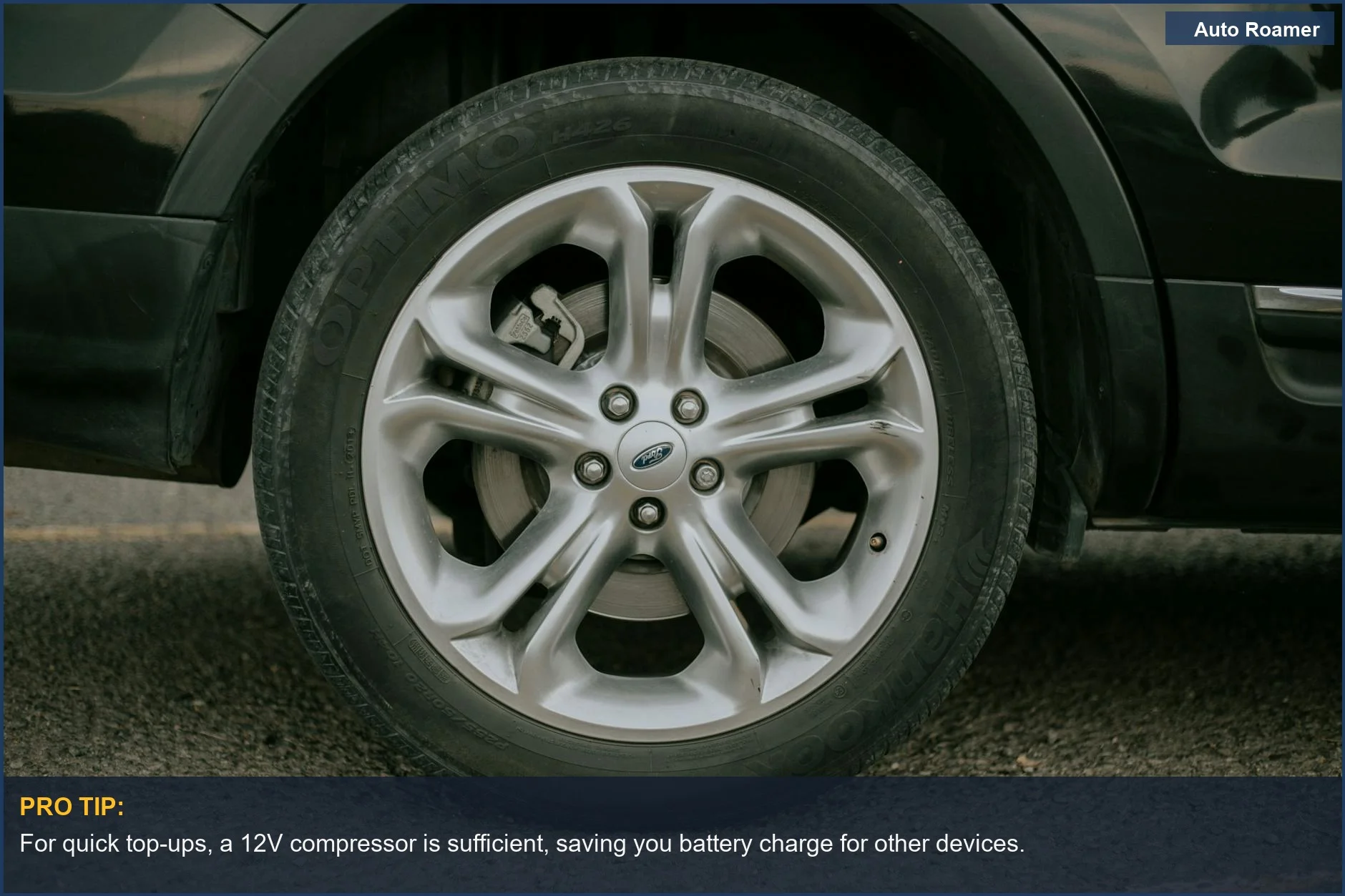
    For quick top-ups, a 12V compressor is sufficient, saving you battery charge for other devices.
    This close-up of a car tire on asphalt shows a common scenario. A 12V compressor is perfect for quick inflation needs at campgrounds. | Photo by Amar Preciado

    Frequently Asked Questions

    How much more does a battery-powered compressor cost compared to getting my tires filled at a gas station?
    You can find a decent 12V compressor for around $30-$50. A good battery-powered one will set you back $100-$200, sometimes more. Getting all four tires filled at a shop might cost you $10-$20, but that’s a one-time fix. If you need to do it regularly, buying your own compressor pays for itself pretty fast. My $40 12V unit paid for itself after about 5 tire fills compared to paying someone else.
    Do I really need to worry about the air compressor’s PSI rating for car camping?
    For car camping and inflating standard car tires or air mattresses, no. Most 12V compressors handle up to 100-150 PSI, which is more than enough. Battery-powered ones often have similar or slightly higher ratings. You’re not trying to run pneumatic tools; you just need to get your tires back to a safe pressure or inflate your sleeping pad. The key is the CFM (cubic feet per minute) which determines speed, not just max pressure.
    What if my battery-powered compressor dies halfway through filling a tire?
    That’s a classic rookie mistake if you haven’t checked the battery level first. If it happens, and you have a 12V compressor with you, you can plug that into your car. If you only have the dead battery unit, you’re stuck until you can recharge it or get to a power source. It’s why having a backup, even a cheap 12V one, is a good idea for longer trips. I’ve seen people use hand pumps in a pinch, but that’s a workout.
    Can using a 12V compressor too much damage my car’s electrical system?
    For typical tire inflation, not really. Your car’s accessory port is designed to handle that kind of load. However, if you were trying to run a high-draw tool for an extended period, you could potentially blow a fuse or, in rare cases, overload the wiring. My mechanic friend told me that most modern cars have pretty robust systems, but it’s still wise to ensure your engine is running when using a compressor to provide ample power and avoid straining the battery. Don't try to power a welder off your cigarette lighter, though.
    Myth: Battery-powered compressors are always slower than 12V models.
    That used to be true, but it’s not anymore. While basic 12V compressors are cheap and reliable, higher-end battery units, especially those with 18V or 20V systems, can be incredibly fast. I’ve seen some battery models inflate a car tire from 20 PSI to 35 PSI in under a minute. It really comes down to the motor quality and battery power, not just the power source. My 18V unit blows my old 12V one out of the water for speed.
    C

    Casey - The Weekend Warrior

    Weekend car camper and road trip enthusiast. Focuses on practical, budget-friendly solutions for families and first-time campers.

    Sources

    Related Articles