
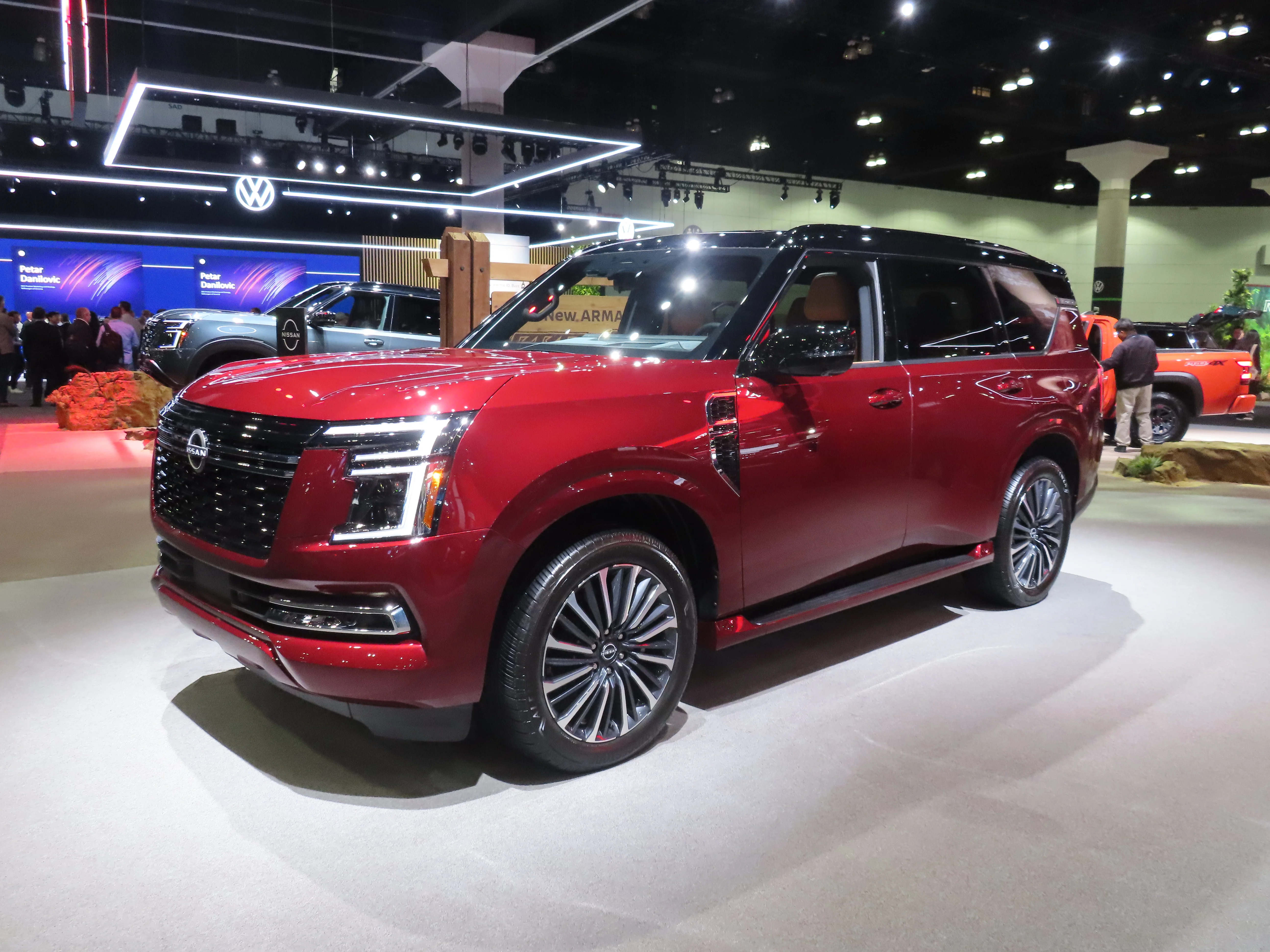
The number that matters: a ~90-inch flat floor
Start with the measurement that decides everything, because on a full-size SUV the sleeping question answers itself. Fold the second and third rows and the flat load floor stretches roughly 90 inches - about 7.5 feet - long enough for a 6-to-6.1-foot adult to lie fully stretched out with room to spare, per owner measurements in the ClubArmada forum. A 72-to-74-inch adult lies flat with 16-plus inches left over, which is the margin that lets a taller person angle a pillow or stash a bag by the feet without pulling their knees up. This is a full-size, body-on-frame SUV, so unlike a midsize crossover, the flat run is genuinely long enough for one or two adults head-to-toe.
That single number is why this full-size Nissan is a serious camping platform and not a compromise. Where a midsize SUV forces a shorter sleeper to curl or sleep diagonally, the load bay here just fits. It is worth being precise about where the number comes from: Nissan does not publish an official max flat-cargo length, so the ~90-inch figure is owner- and dealer-reported rather than a factory spec. It squares with the vehicle's geometry and with the fact that mattress makers sell full-size-fit pads cut for this exact cargo bay, but treat it as a measured real-world number, not a warranty promise.
The rest of this guide is the supporting data, and it is organized so you can plan a build off measured numbers instead of hope:
- Exact cargo volumes for both generations, spec versus real-world.
- The mattress size that fits between the wheel wells, and the width ceiling that kills a queen.
- Headroom, exterior length, and how the space lives when you sit up.
- The one second-row option that changes whether your floor is flat.
- Towing, rooftop tents, and the climate playbook for a big sealed cabin.
Cargo volume, both generations, side by side
This full-size Nissan split into two distinct generations, and the cargo numbers changed, so know which one you're shopping. The all-new 2025+ generation carries 20.4 cubic feet behind the third row, 56.3 behind the second, and 97.1 with both rear rows folded flat, per Newton Nissan. The 2021-2024 generation holds 16.5, 49.9, and 95.4 cubic feet across the same three configurations, per Mossy Nissan - a bit tighter behind the seats but nearly identical at max fold.
Read those three numbers as three different trips. The behind-the-third-row figure (20.4 vs 16.5 cu ft) is your everyday, everyone-aboard load - groceries, a cooler, a duffel each - and it is where the newer generation gained the most usable room. The middle figure (56.3 vs 49.9 cu ft, third row folded) is the four-person road-trip layout, plenty for two passengers plus a week of gear. The max figure (97.1 vs 95.4 cu ft) is the sleeping and hauling configuration - both rows down, the whole flat floor open. Practically, the two generations diverge most when the seats are up and converge when they are down, so a buyer focused purely on sleeping two adults is choosing between near-identical bays, while a buyer who hauls with the seats occupied gains real space by going new.
For context on why the number is this big, the 2025+ interior totals about 167.6 cubic feet of combined passenger-plus-cargo volume with the moonroof, per Boucher / Waukesha Nissan - a reminder that this is a genuine full-size box, not a tall crossover. That is the structural reason a smaller crossover cannot match the flat sleeping floor no matter how cleverly its seats fold.
Real-world cubic feet versus the SAE spec sheet
One honesty note a mechanic learns to add: spec-sheet cubic feet and real usable space aren't the same, and the gap here is wide enough to change how much you pack. Cars.com's own real-world measurements came in far more conservative than Nissan's SAE figures - 10.4 cubic feet behind the third row and 24 behind the second, versus the manufacturer's 16.5 and 49.9 on the 2021-2024 generation. That is not a defect or a contradiction; it is a normal methodology gap.
SAE volume is computed by filling the space with standardized blocks and counting every cranny, including the odd triangular voids by the hinges and the space above the seatbacks that you cannot actually stack a box into. A measured, box-it-yourself number ignores the space you cannot use. Both numbers are true; they answer different questions:
- Use the SAE number to compare one vehicle against another - it is the apples-to-apples figure every manufacturer reports.
- Use the real-world number to plan what you actually carry - it is closer to how many bins and coolers fit behind the seats.
- For sleeping, ignore both. The flat floor length (~90 in) and the width between the wheel wells decide the bed, not the cubic-foot rating at all.
The takeaway for gear planning is simple: trust the lower, real-world figure and you won't overpack for space that isn't really there. A collapsible organizer strapped into the deep behind-the-third-row well keeps the everyday load corralled in exactly the space the measured number describes.
The mattress that fits: full-size, not queen
Width is where a full-size SUV still has limits, and the mattress choice follows the wheel wells. A full-size mattress (54 x 75 inches) is the practical maximum that fits the flat cargo run; a twin (38 x 75 in) fits easily with side room to spare, per the fitment data. That's a big step up from a midsize SUV - this full-size Nissan genuinely sleeps two adults side-by-side on a full-size pad, which is the layout most couples actually want over the head-to-toe compromise.
Don't force a queen. At 60 inches wide it's wider than the space between the wheel arches, so it won't sit flat on the floor - it'll ride up the wheel humps and leave you on a tilt. Some owners squeeze one in by resting an edge on the folded seats, but that trades a level bed for a sloped one. Full-size is the honest ceiling for a level two-person bed.
The gear market knows this. Mattress makers sell fitment-specific inflatable pads (AirBedz-style truck and SUV mattresses, listed via etrailer, and model-cut pads like the ZBZLN) that are shaped to fill the rear cargo area including the space between the wheel wells. Those shaped pads are worth the money over a generic rectangle precisely because they use the odd floor plan instead of fighting it. A few buying rules keep you level:
- Measure your specific model year's flat width and length before you buy - the two generations differ slightly and the seat type matters more than the year.
- Prefer a pad with side flaps or a shaped edge on captain's-chair trims, so it bridges the console gap instead of sinking into it.
- Match the pad to the floor, not the floor to the pad - a purpose-cut full-size fitment beats an oversized universal every time.
Laying out a bed for two adults
With a ~90-inch flat run and a full-size width, there are two real sleeping layouts, and which one you choose changes how you pack. Side-by-side puts two adults across the width on a 54-inch full-size pad, heads toward the tailgate or the front - the layout that feels most like a bed at home and keeps both sleepers' feet off the wheel humps. Head-to-toe runs two sleepers lengthwise down the ~7.5-foot floor, which frees up width for gear along one side but means one person's feet end up near the other's head.
For most couples the side-by-side full-size layout is the winner, and the full-size body is what makes it possible where a smaller crossover cannot. The trade-offs break down cleanly:
- Side-by-side (full-size pad): most comfortable, feels like a real bed, but leaves little floor width for gear - stash it in the footwells and the deep rear well instead.
- Head-to-toe (two narrow pads): opens a gear channel down one side and suits mismatched sleep schedules, at the cost of a less bed-like feel.
- One adult plus a dog or a kid: the easiest of all - a full-size pad leaves genuine room to spare, and the leftover floor becomes a nightstand for water, headlamp, and phone.
Whichever layout you pick, plan the gear first. Because the flat floor is the whole point, anything that lives on it at night has to move at bedtime, so the discipline is to keep the sleep zone empty and push storage into the footwells, the behind-the-third-row well, and a roof box if you run one.
The captain's-chair catch that changes your bed
Here's the option that quietly decides how good your sleeping floor is, and it's the kind of thing you only notice at mile 300 when your hip finds the gap. Trims with second-row captain's chairs - the Platinum among them - leave a center-console gap between the two folded buckets, per Mossy Nissan's configuration breakdown, so the folded floor has a slot down the middle instead of a continuous surface. A bench second row folds flatter and gives you an unbroken platform.
If you're buying this three-row family SUV partly to camp in it, this is worth checking on the specific truck before you sign, because the difference is invisible on a spec sheet and obvious the first night out. It is not a dealbreaker - the fix is cheap and known:
- A thick full-size pad simply bridges the console gap the way it bridges any uneven floor - a 3-to-4-inch self-inflating pad or a deep air mattress erases it.
- A pad with side flaps or bolsters (the FBSPORT-style universal is built for exactly this) fills the slot rather than sagging into it.
- A simple plywood sleep platform spans the whole floor and turns any trim into a flat deck, at the cost of headroom and weight.
But a bench second row starts you closer to flat and saves you a leveling layer. When two configurations sleep differently, the cheaper fix is choosing the right one up front rather than engineering around the wrong one later.
Headroom, length, and living in the space
Sleeping flat is only half of comfort; sitting up to change clothes or cook is the other half, and the full-size body helps. The 2025+ generation offers 41.6 inches of front headroom without a moonroof (40.8 with one), 40.0 inches in the second row, and 36.2 in the third, per Newton Nissan - generous space that makes the interior livable, not just sleepable. Front legroom is a stretch-out 43.8 inches, with 39.2 in the second row and 32.9 in the third, per Group 1 Nissan Round Rock. The older 2021-2024 generation is close, at 39.8 inches of front headroom per Cars.com - a bit lower up top but still full-size roomy.
Shoulder room tells the two-adult story best: 64.2 inches up front and 63.7 in the second row on the 2025+ generation, per Group 1 Nissan. That width is why two people can sit up and dress without a shoulder-bumping negotiation, and it is the same width that carries down to the sleeping floor. The exterior size is the trade-off you accept for that room:
- 2025+ generation: 209.7 inches long, 79.9 wide excluding mirrors (83.3 with them), about 76.9 tall.
- 2021-2024 generation: 208.9 inches long, 79.9 wide, 75.8 tall on a 121.1-inch wheelbase, per Cars.com.
That's a big vehicle to park at a crowded trailhead and a thirsty one to drive there - the honest cost of a 90-inch bed. But once you're stopped, the payoff is a room you can actually move around in, which after a few nights out is the difference between enjoying a trip and enduring it.
Putting a tent on the roof
Sleeping inside is the headline, but the roof is a real second option on a vehicle this size, and it changes the math for a family. As a full-size, body-on-frame SUV with a heavy GVWR and available roof rails or crossbars, this platform handles a hard- or soft-shell rooftop tent well when parked, where the load is static. That means two adults can sleep up top while the ~90-inch cargo floor below stays free for a kid, a dog, or gear - effectively two bedrooms out of one vehicle.
The one number to verify yourself is the dynamic roof-load rating for your specific crossbars, which governs how much weight the roof carries while driving - it is far lower than the static parked capacity that holds the tent plus sleepers at night. Confirm it before you drive with a tent mounted, because a heavy hard-shell can exceed a modest dynamic limit even though the parked structure easily supports two people.
The case for going up on the roof rather than sleeping inside comes down to how you travel:
- Choose the rooftop tent when you want the whole interior free for gear or a third sleeper, or when the ground is wet, sloped, or buggy.
- Choose sleeping inside when you value setup speed, stealth, and not climbing a ladder at 2 a.m. - and when weather makes a sealed cabin the warmer option.
- Run both on the same trip: tent for the parents, flat floor for the kids, which is the layout the full-size footprint uniquely enables.
Towing and hauling: the full-size advantage
The other half of a full-size SUV's camping case is what it pulls, and here the numbers are unambiguous. This full-size Nissan tows up to 8,500 pounds across both the 2021-2024 and the all-new 2025+ generations, per Cars.com - enough for a substantial travel trailer, a boat, or a loaded utility trailer on top of everything you're sleeping on inside.
The powertrain changed between generations but the rating did not. The 2021-2024 trucks pull with a 5.6-liter V8; the 2025+ generation switched to a twin-turbo 3.5-liter V6 making 425 horsepower, which does the pulling with more low-end torque and less drama than you'd expect from the old V8 while holding the same 8,500-pound ceiling. For a camper, that combination is the real pitch: sleep two adults flat in the back and tow a trailer, or carry a rooftop tent and a full gear load without straining.
For a buyer weighing a full-size SUV against a midsize one purely for camping, the tow rating plus the 90-inch floor is the case for spending up - it is capability a smaller crossover simply can't match. If your trips never involve a trailer and never two adults sleeping flat, that capability is money spent on headroom you won't use; if they do, it is the whole reason to buy big.
The combo trip: a trailer outside and a bed inside
The most underrated thing a full-size platform does is let you tow and sleep on the same trip without choosing between them, and the numbers back it. With an 8,500-pound tow rating and a ~90-inch flat floor, a single vehicle can pull a boat or a utility trailer to the lake and still be a two-adult bedroom when you get there - no separate tow rig, no unhitching to reach your bed.
That opens trip types a midsize SUV rules out:
- Boat-and-camp: tow the boat trailer, sleep in the cargo bay at a lakeside site, launch at dawn without moving your bed.
- Toy-hauler weekend: pull dirt bikes or a small utility trailer of gear, then fold the seats and sleep in the SUV rather than pitching a tent in the dark.
- Overflow hauling: put the bulky, dirty gear - firewood, kayaks, a generator - on an open trailer and keep the interior clean for sleeping.
The discipline that makes it work is weight awareness. Tongue weight from the trailer, passengers, and a loaded cargo floor all draw on the same payload budget, so a heavy trailer plus a full interior plus a roof box can add up faster than the tow number alone suggests. Load the trailer to carry the mass and keep the interior to sleeping gear, and the combo trip stays well inside the vehicle's limits.

Cold nights and hot days in a big sealed cabin
A big cabin fogs up and swings temperature just like a small one - it just takes a little longer - so the overnight climate playbook matters as much as the mattress. Two people breathing all night in a closed cabin will coat every window with condensation by dawn unless air moves, and the fix is cross-ventilation: crack windows on opposite sides and fit bug screens or magnetic mesh so you can vent without inviting mosquitoes.
Cold and heat pull in opposite directions, and the big glass area of a three-row SUV makes both more noticeable:
- Cold nights: insulate under your pad first - the steel floor is the heat sink that steals warmth before the air does. A closed-cell foam layer or an insulated pad under the air mattress does more than a heavier sleeping bag.
- Cold nights, part two: cover the windows. Reflective panels cut the radiant heat loss through all that glass and add privacy; in a full-size cabin that is a lot of surface to seal.
- Hot days: park in shade, vent early and late, and run a low-draw 12V fan to keep air moving - a sealed metal box heats fast in sun regardless of size.
The full-size footprint helps here in one concrete way: there is room to store the extra insulation, screens, and reflective panels in the footwells and still sleep two flat, where a smaller crossover would force a choice between climate gear and bed space.
Power and keeping gear out of the bed
For camp power, treat this SUV like any gas vehicle: its 12V sockets run off the battery only with the ignition in accessory, so anything that draws through the night - a 12V fridge, string lights, a fan - belongs on a separate portable power station, keeping the starting battery untouched for morning. Running the fridge off the vehicle battery overnight is the classic way a camping trip turns into a jump-start.
The other half of a comfortable night is keeping gear off the sleeping floor. Because the flat floor is the whole point, storage has to live everywhere except the bed:
- A collapsible cargo organizer strapped to an anchor point holds the camp kitchen and tools in the deep behind-the-third-row well, then folds flat when you need the full sleep length.
- Footwells swallow the power station, water, and a shoe bin without touching the sleeping surface.
- A roof box or the trailer takes the bulky overflow, so the interior stays a bedroom, not a storage unit.
None of this is exotic; it's the same discipline that keeps a road trip from turning into a recovery job, and in a vehicle this size you have the room to do it right.
The verdict: a genuine two-adult basecamp
Add the numbers up and the full-size case makes itself cleanly. The ~90-inch flat floor (per ClubArmada owners) sleeps two adults side-by-side on a full-size mattress, both generations clear 95 cubic feet of max cargo (per Newton and Mossy Nissan), it tows 8,500 pounds across both generations, and the roof takes a rooftop tent on top of all that. For campers who've outgrown a midsize SUV's one-person bay, that's the step up that solves the width, the length, and the towing problem at once.
Buy it for two-adult camping, trailer towing, or the combo of both; go in knowing the costs - it's long to park, thirsty to drive, and a captain's-chair second row leaves a center gap you'll want to level. Choose a bench second row if the truck will double as a bed, and match a full-size pad to your model year's flat width.
It's more vehicle than a weekend solo camper needs, and the fuel and parking are real. But if your trips run to two people, a trailer, and a pile of gear, the measured advantages here - length, width, and tow rating - are exactly the ones a smaller crossover can't fake. Pick the bench if you can, insulate under the pad, keep the power on a station and the gear in the footwells, and you've got a basecamp that sleeps two and pulls the rest.