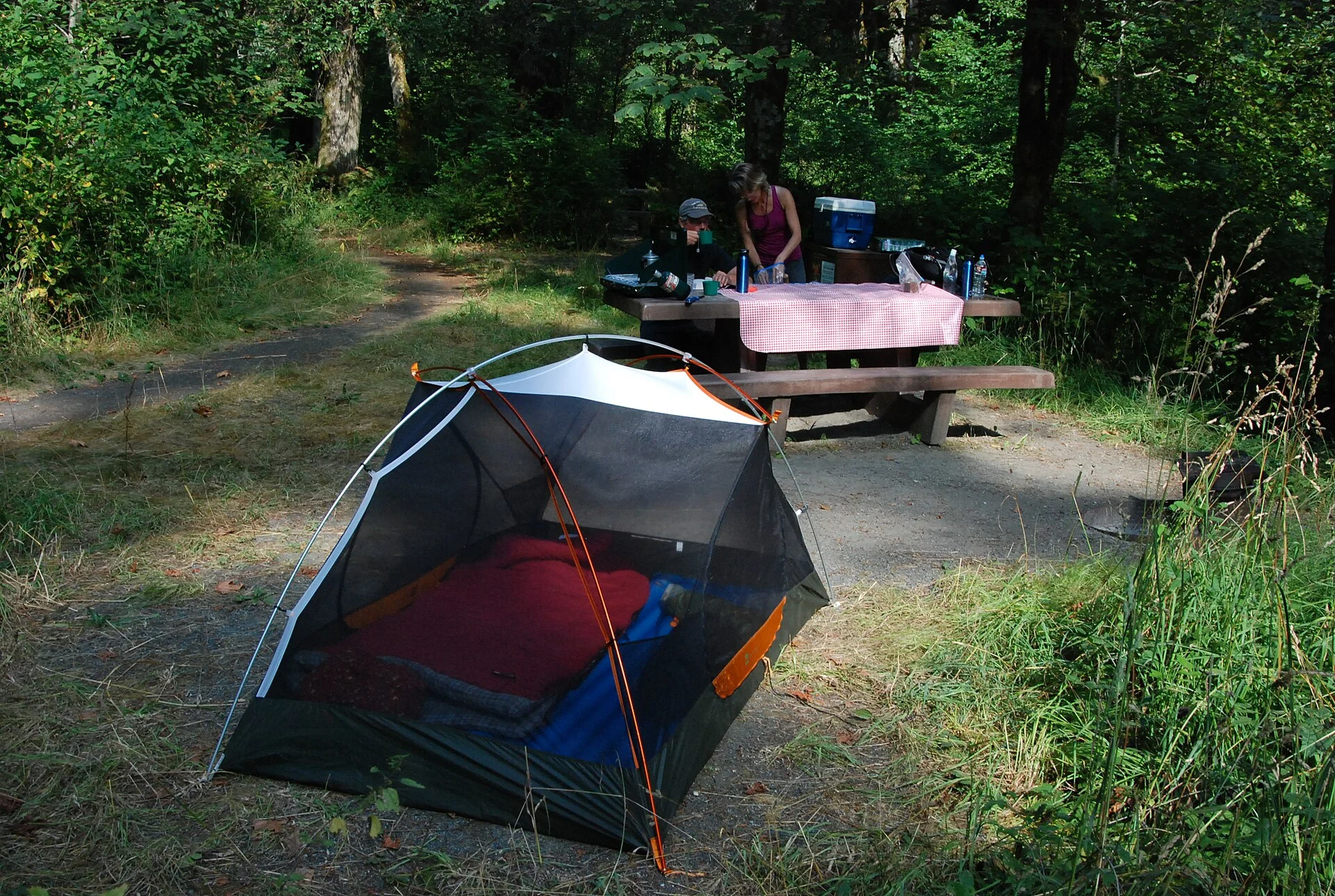
The honest verdict: the one you carry vs the one that lasts
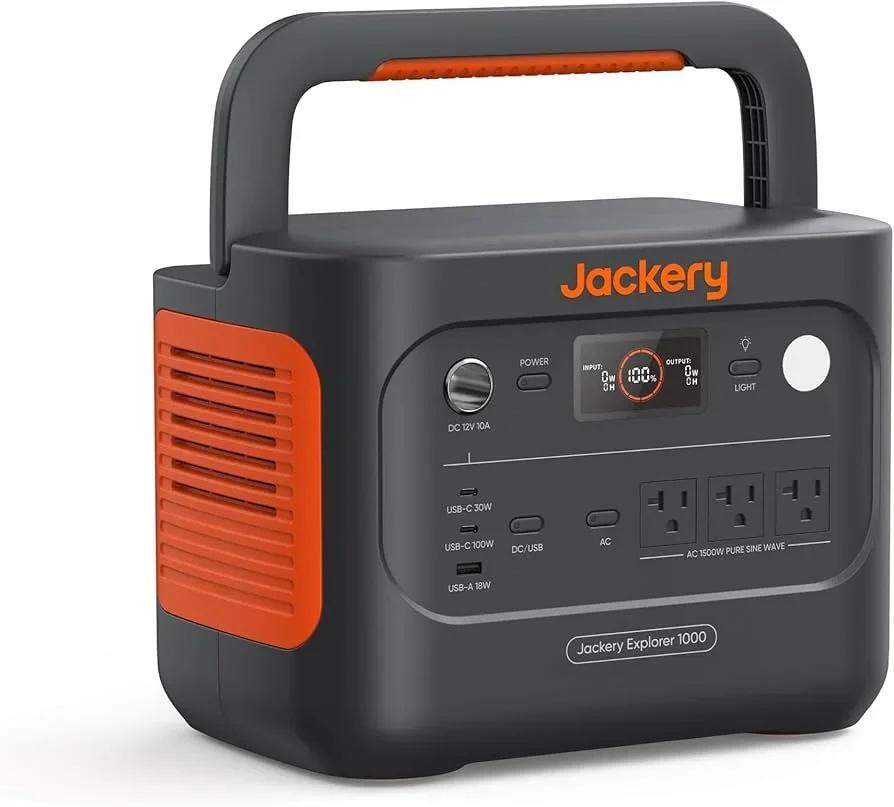
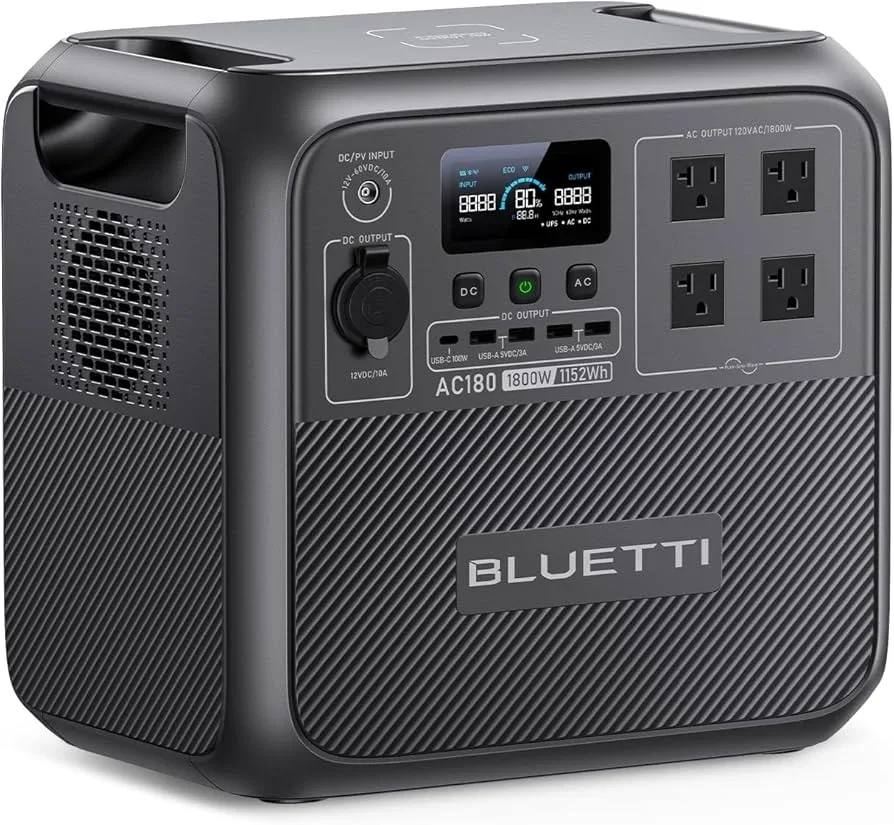
These two 1kWh power stations solve the same problem - keep a fridge cold and your phones alive for a weekend off-grid - but they make opposite trades, and the right answer depends on how you camp. The Jackery Explorer 1000 v2 holds 1070Wh in a LiFePO4 pack and weighs 23.8 pounds, per Jackery and The Solar Lab. The Bluetti AC180 holds 1152Wh, pushes 1800 watts, and weighs 35.3 pounds, per Bluetti's spec page. That 11.5-pound gap is the whole story.
For most car campers I hand people the Jackery. Not because it is bigger - it isn't - but because it is the one they actually pick up and carry from the tailgate to the picnic table at the end of a long day. The Bluetti wins on paper: more battery, more watts, more outlets. If you run a 1500-watt kettle or an induction burner, or you park once and never move the unit, that paper advantage becomes a real one. Below I take weight, capacity, output, charge speed, outlets, and solar one at a time so you can match the station to your own camping.
One framing that saves people money: a car-camping power station is not a home backup battery, and buying it like one leads you to the wrong unit. At home you want maximum watt-hours in a box that never moves. In a campsite you want a battery you will actually carry to where the fridge and the phones are, that refills fast at a powered site, and that runs your specific appliances without tripping. Both of these clear the runtime bar for a weekend; the real question is which one fits the handling and the loads of your trips. Keep that lens on as we go, because it flips the 'bigger is better' instinct that the spec sheet rewards.
Weight and pack-down: the Jackery's whole case
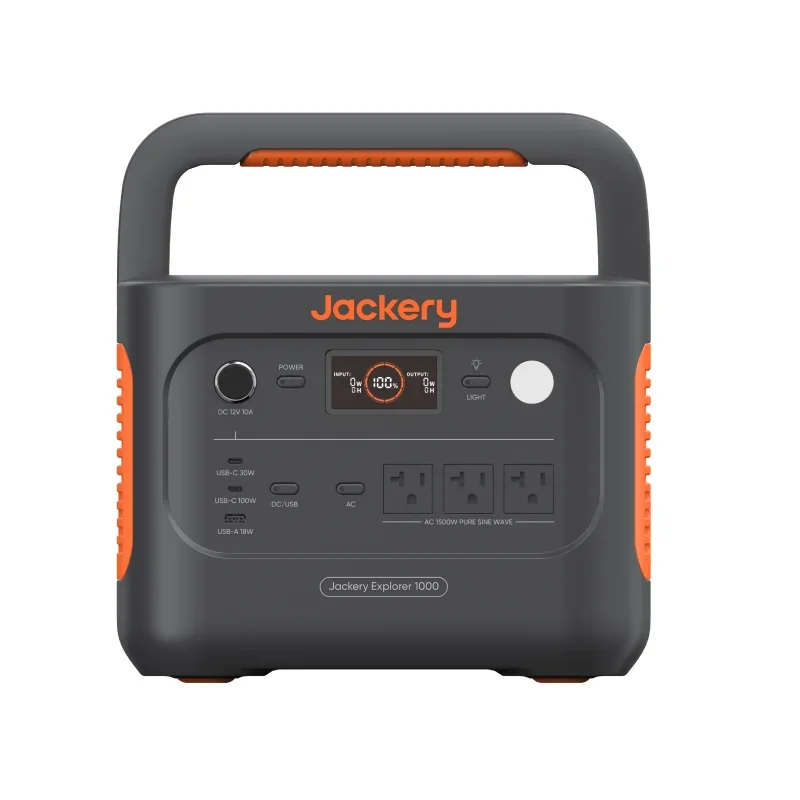
Weight is where a car-camping power station earns or loses its keep, because you handle it far more than you notice its wattage. The Jackery Explorer 1000 v2 weighs 23.8 pounds with a foldable flush handle, per The Solar Lab, which is genuinely light for a 1kWh LiFePO4 station. The Bluetti AC180 is 35.3 pounds, per Bluetti - not a back-breaker, but 11.5 pounds is a full extra gallon-and-a-half of water you notice every time you move it.
The lightest power station you own is the one you take out of the car. A heavy unit stays bolted to the cargo floor; a light one comes to the campfire.
How that plays out in the field:
- Solo car camper who repositions gear: the Jackery's 23.8 pounds is the difference between using it and leaving it in the trunk.
- Base-camp couple who set up once: the Bluetti's weight barely matters - you lift it twice a trip.
- Roof-box or top-shelf storage: lifting 35 pounds overhead is a real ask; 24 pounds is manageable for most people.
There is a design reason the Jackery lands so light. Its 1070Wh pack is built around the newer, denser LiFePO4 cells Jackery moved to for the v2, and the case trims the bulk down to a shape that stows behind a seat. The Bluetti spends its extra weight on a bigger 1152Wh bank, a beefier 1800-watt inverter, and the metal to run a true UPS - all real capability, but capability you carry. Neither approach is wrong; they are aimed at different owners. If you tent-camp from a small car and shuffle gear constantly, the Jackery's portability compounds across a weekend. If your rig is a wagon or SUV where the station lives in a fixed spot and you plug into it, the Bluetti's weight is a number on a page you never feel again after loading day.
Capacity and real runtime: 1070Wh vs 1152Wh
On paper the Bluetti holds more - 1152Wh to the Jackery's 1070Wh, both LiFePO4 - but 82Wh is about eight percent, which is less than the day-to-day swing you get from ambient temperature. In practice both run the same overnight loads. A typical 12V compressor fridge pulls 30 to 50 amp-hours a day, and either station carries a fridge plus a fan plus device charging through a night with margin to spare.
What each 1kWh of capacity realistically covers at a campsite:
- A 12V fridge overnight (~30-50Ah): both do it comfortably, then some.
- Phones, headlamps, a fan, a string of lights: a couple of days on either.
- A CPAP without the humidifier/heater: a full night on both, often two.
The honest read: capacity is a near-tie, and the Bluetti's edge here is too small to decide the purchase. If you need meaningfully more than 1kWh, neither fixes that - you step up to a bigger unit or, in the EcoFlow world, an expandable one. Our Jackery 1000 v2 vs EcoFlow Delta 2 comparison covers the expandable route.
Both use lithium iron phosphate (LiFePO4) chemistry, which is the right call for camping and the reason either will outlast the vehicle you carry it in. LiFePO4 cells take thousands of cycles - Jackery rates the 1000 v2 at 4,000 cycles to 70 percent, and Bluetti rates the AC180 at 3,500-plus to 80 percent - so charging one every weekend for years barely dents it. It also tolerates heat and cold better than the older NMC chemistry, which matters in a car that bakes in the sun and chills overnight. In other words, the capacity numbers are nearly tied and the chemistry is the same grade, so neither one is quietly the 'cheaper battery' - you are choosing on weight and watts, not on how long the pack will last.
AC output: where the Bluetti pulls ahead
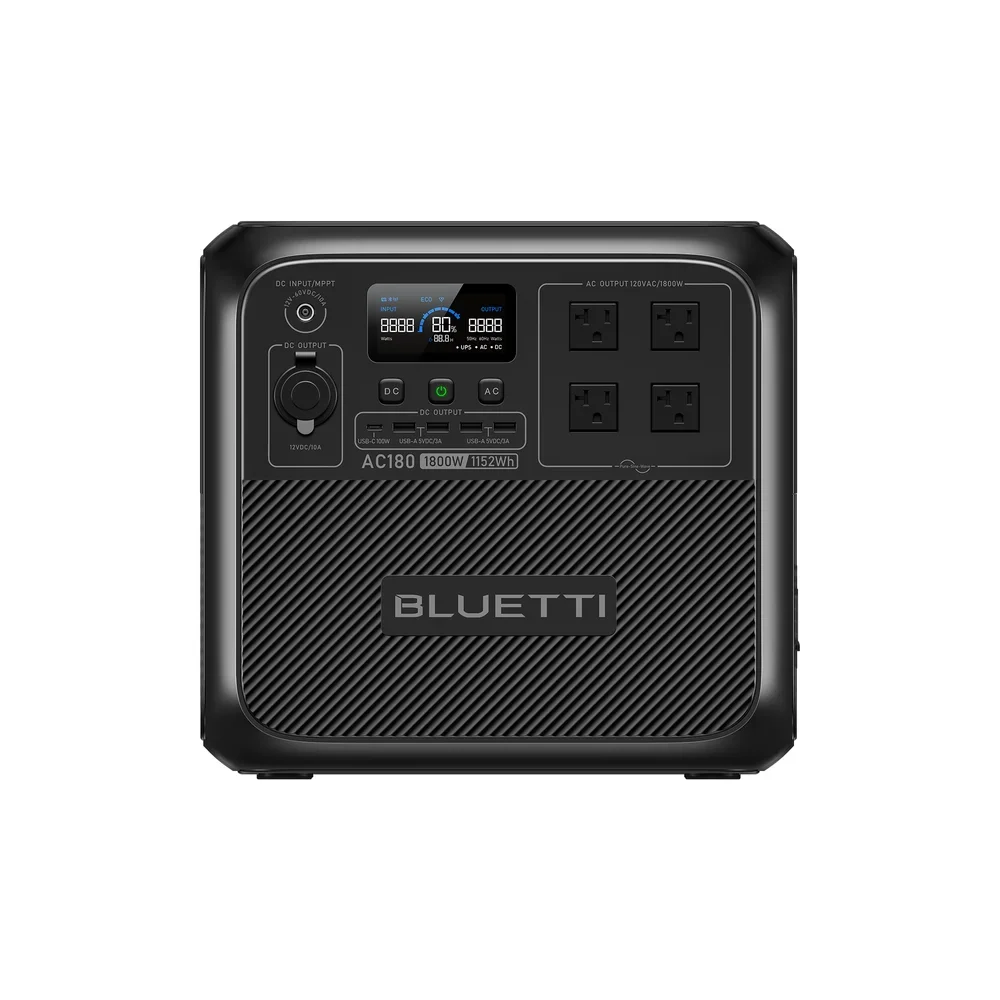
Output is the Bluetti's clearest win and the reason to buy it. The AC180 is rated for 1800 watts continuous with a 2700-watt surge across four 120V outlets, per Bluetti. The Jackery Explorer 1000 v2 is rated for 1500 watts with a 2200-watt surge across three outlets, per The Solar Lab. That 300-watt gap is the line between what each will run.
Where the extra 300 watts matters for camp cooking and gear:
- Electric kettle or single induction burner (1500-1800W): the Bluetti runs the demanding ones the Jackery may trip; test your exact appliance.
- Small microwave, hair dryer, coffee maker: the Bluetti has more headroom before the surge limit.
- Fridge, fan, lights, laptops, drone batteries: both handle these all day - none come close to 1500 watts.
If your camp power is fridge-and-charging, the Jackery's 1500 watts is plenty and the output gap never shows up. If you cook on electricity, the Bluetti AC180 is the safer bet.
Charge speed: both fast, and it's close
Recharge speed decides how quickly you are back to full at a powered site or off the drive between camps, and both of these are fast. The Bluetti AC180 hits 0 to 80 percent in 45 minutes and full in roughly 1.3 to 1.8 hours on 1440W turbo input, per Bluetti. The Jackery Explorer 1000 v2 reaches full in about an hour in its emergency mode at 1200W input, per The Solar Lab. Call it a wash for planning purposes.
The practical takeaways:
- Powered campsite or wall outlet: either is back to full inside a coffee break.
- Topping up on the drive: both accept 12V car charging, though that is far slower than wall - plan an hour or two of driving for a partial top-up, not a full refill. Our guide to charging a power station while driving has the real numbers.
- Fast turnaround between overnights: the Bluetti's 45-minute 80 percent is marginally handier if you only get a short shore-power window.
Worth a caution on fast charging: pushing either unit at its top input rate runs the internal fans and warms the pack, so if you charge overnight in a quiet tent you may prefer a slower, quieter setting on both. That is a livability note, not a knock - both let you dial the input down. The takeaway for a buyer is that recharge speed is not a deciding factor here the way weight and output are; you will be back to full fast enough on either whenever you reach a wall outlet, and both are held to the same real-world limit off a 12V car socket, which is slow for any 1kWh station.
Outlets, ports, and everyday livability
The little stuff - how many things you can plug in and how the unit behaves - adds up over a weekend. The Bluetti AC180 gives you four AC outlets, a 100W USB-C, two USB-A, a regulated 12V car port, a 15W wireless charging pad on top, and a true UPS with 20-millisecond switchover, per Bluetti. The Jackery Explorer 1000 v2 runs three AC outlets, dual USB-C (one 100W), USB-A, and a 12V DC port, per The Solar Lab.
What that means around camp:
- More simultaneous plugs: the Bluetti's fourth AC outlet and wireless pad matter when four people are charging at once.
- Fast device charging: both offer 100W USB-C, so laptops and phones top up quickly on either.
- Screen and controls: both show clear input/output wattage so you can watch your fridge's real draw and plan your night.
The UPS is the one livability feature worth understanding, because it is the Bluetti's quiet extra. With a 20-millisecond switchover, the AC180 can sit between wall power and a sensitive device and keep it running through a blip - useful if you power a CPAP at a site with unreliable shore power, so a brief outage does not wake you. The Jackery has no true UPS, which is a non-issue for a fridge or a fan but worth knowing if medical gear is on your list. On the other side, the Jackery's simpler layout is easier to live with in the dark - fewer ports to hunt for, a cleaner front face - and its dual 100W USB-C means two laptops or fast-charging phones at once without touching an AC outlet. Small things, but you handle them every night of a trip.
Solar and multi-day off-grid use
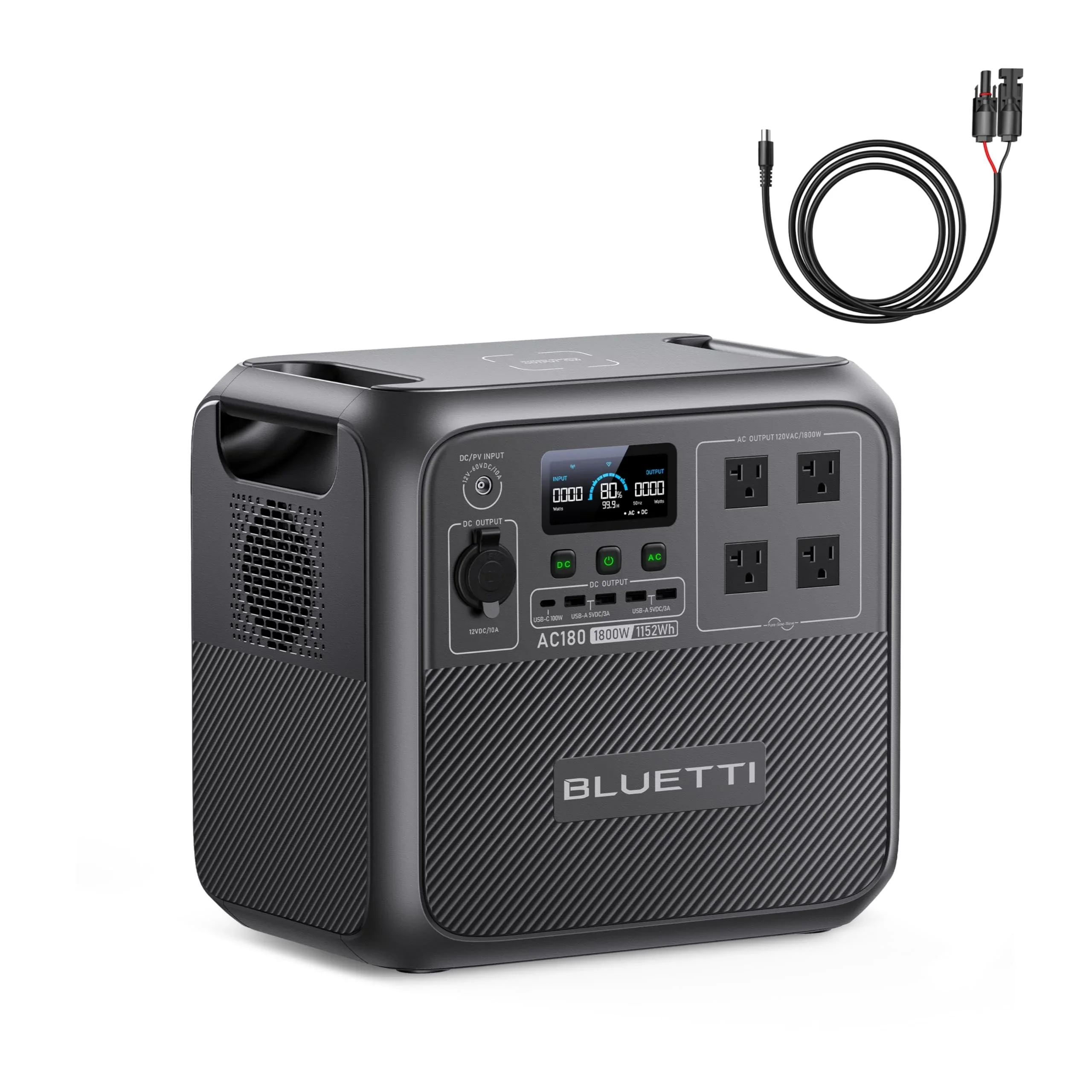
If you stay out past a single overnight, solar is how you keep either station alive without a wall. The Bluetti AC180 accepts up to 500 watts of solar input, per Bluetti; the Jackery Explorer 1000 v2 tops out around 400 watts, per The Solar Lab. Neither is a huge solar array, but both replenish a fridge's daily draw with a 100-to-200-watt portable panel in a sunny afternoon.
Realistic multi-day planning for car camping:
- Two to three nights, fridge plus charging: a 100-200W panel on either station offsets the daily draw and keeps you topped up.
- The Bluetti's 500W ceiling lets a bigger panel refill faster on short winter days, a small but real edge.
- Pair it right: our best solar panels for car camping guide matches panels to each station's input.
One realistic expectation to set: solar is a trickle that offsets your draw, not a fast refill. On a bright day a 200-watt panel might return a few hundred watt-hours into either station - enough to cancel out a fridge's daily appetite and keep you level, but not enough to take a drained pack back to full while you also run loads. Plan solar as the thing that stretches a weekend into a long weekend, and lean on wall power for the real recharge. On that job the two are close, with the Bluetti's higher 500-watt ceiling giving it a slight edge only if you carry a larger panel array.
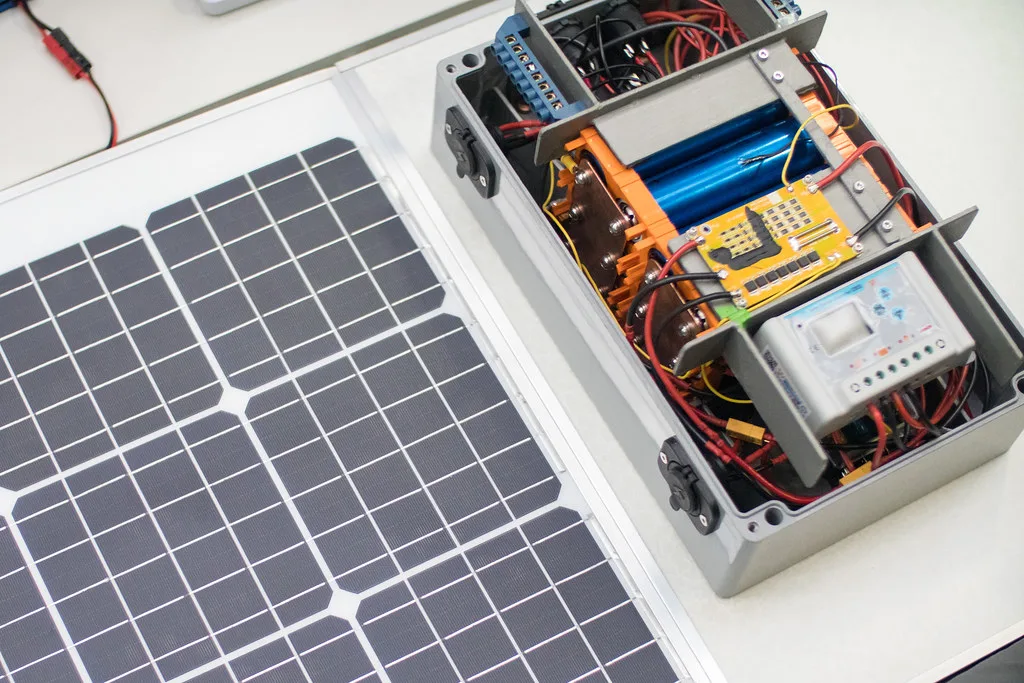
A realistic weekend of power with each one
Put the specs into a real trip and the two units feel more alike than the sheet suggests. Picture two nights at a forest site: a 12V fridge running around the clock, a fan for a few hours, phones and a camera battery each night, and a string of lights after dark. Both the Jackery and the Bluetti start the weekend full, run the fridge without stress, and end Sunday with charge to spare - the fridge is only pulling 30 to 50 amp-hours a day against a 1kWh bank.
The difference shows up at the edges. If someone wants coffee from an electric kettle Saturday morning, the Bluetti's 1800 watts runs it and the Jackery's 1500 might not. If you break camp and move the unit three times, the Jackery's 24 pounds is the one that doesn't wear you down. Choose the trade that matches your weekend, not the bigger number. For the wider field, our best portable power stations for car camping ranks both against the rest.
Which to buy: match the station to how you camp
Both of these are excellent 1kWh LiFePO4 power stations that will run a car-camping weekend without drama. The decision is not which is better; it is which trade fits you, and it comes down to weight against output.
Buy the Jackery Explorer 1000 v2 if you value carrying 24 pounds instead of 35 and your loads are a fridge, fans, and charging. Buy the Bluetti AC180 if you run 1800-watt appliances, want the fourth outlet and a UPS, and set up once.
My default for a person who camps out of a car and moves their gear is the Jackery - the weight you save is a benefit you feel every single day, and the capacity and charge speed are close enough that you rarely miss the Bluetti's edge. Flip that only if electric cooking or maximum outlets is on your list. Either way, match your real appliances' wattage against the 1500-versus-1800-watt line before you buy, and you will not be surprised at the campsite.
Whichever you choose, size the rest of your setup around it: a fridge with a low-voltage cutoff, a panel that suits its solar input, and a plan for where the unit lives in the vehicle. Get those right and both of these stations disappear into the background of a good trip, which is exactly what a power station should do.