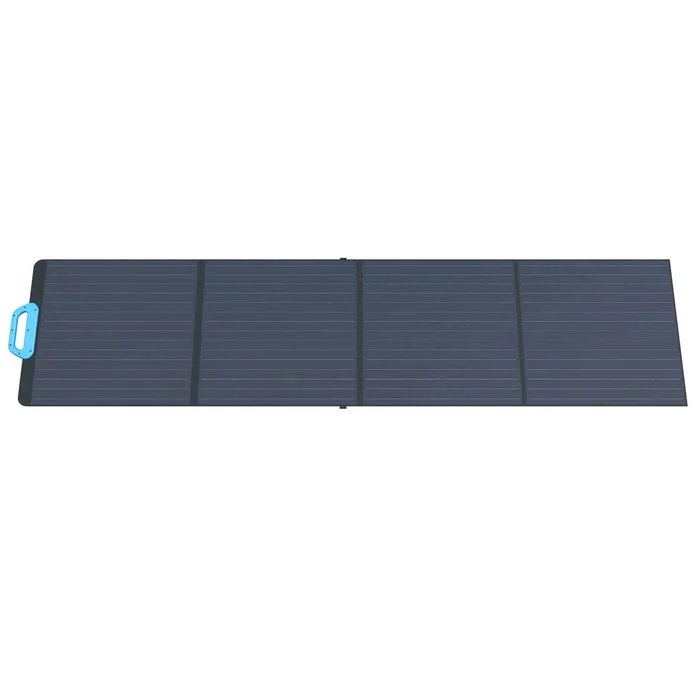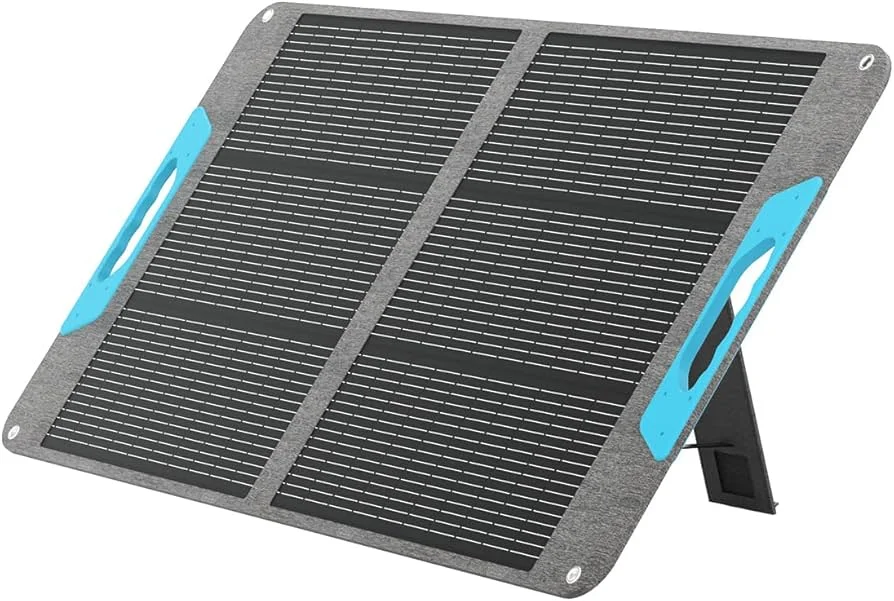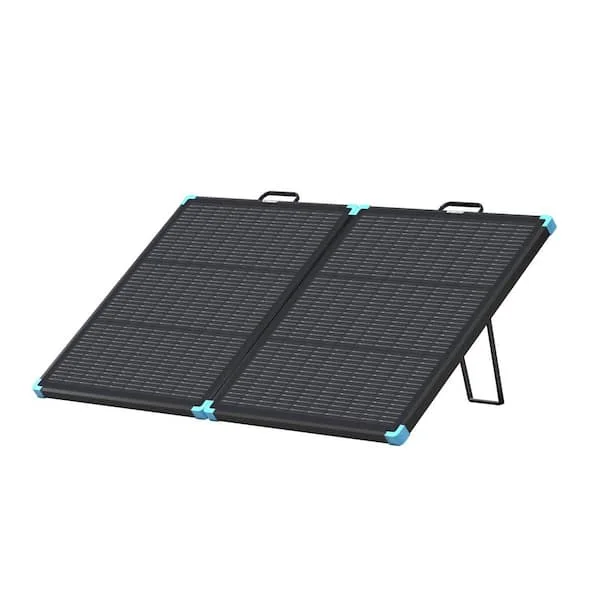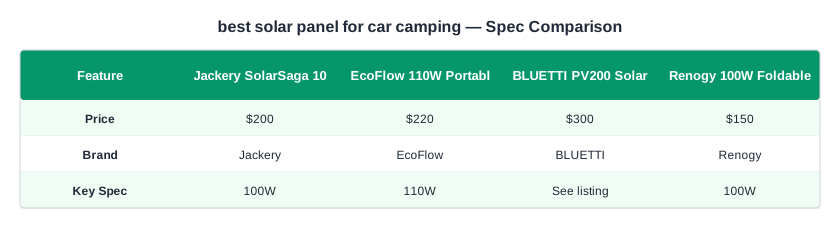
The quick picks at a glance
Short on time? Start here — the best portable solar panels for car camping, compared on the specs that matter, then one line on each below.
| Panel | Watts | Weight (approx) | Best for | Price band |
|---|---|---|---|---|
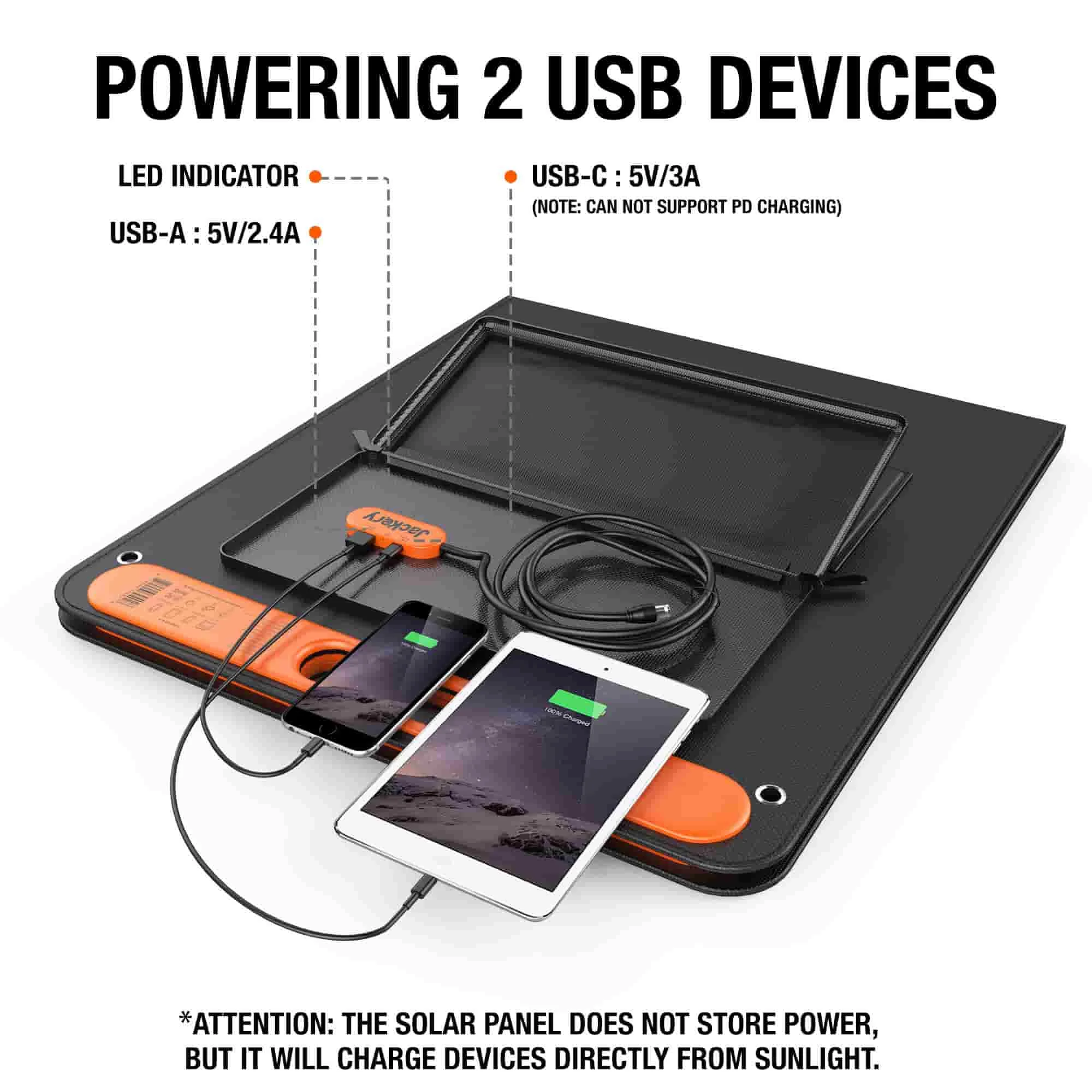
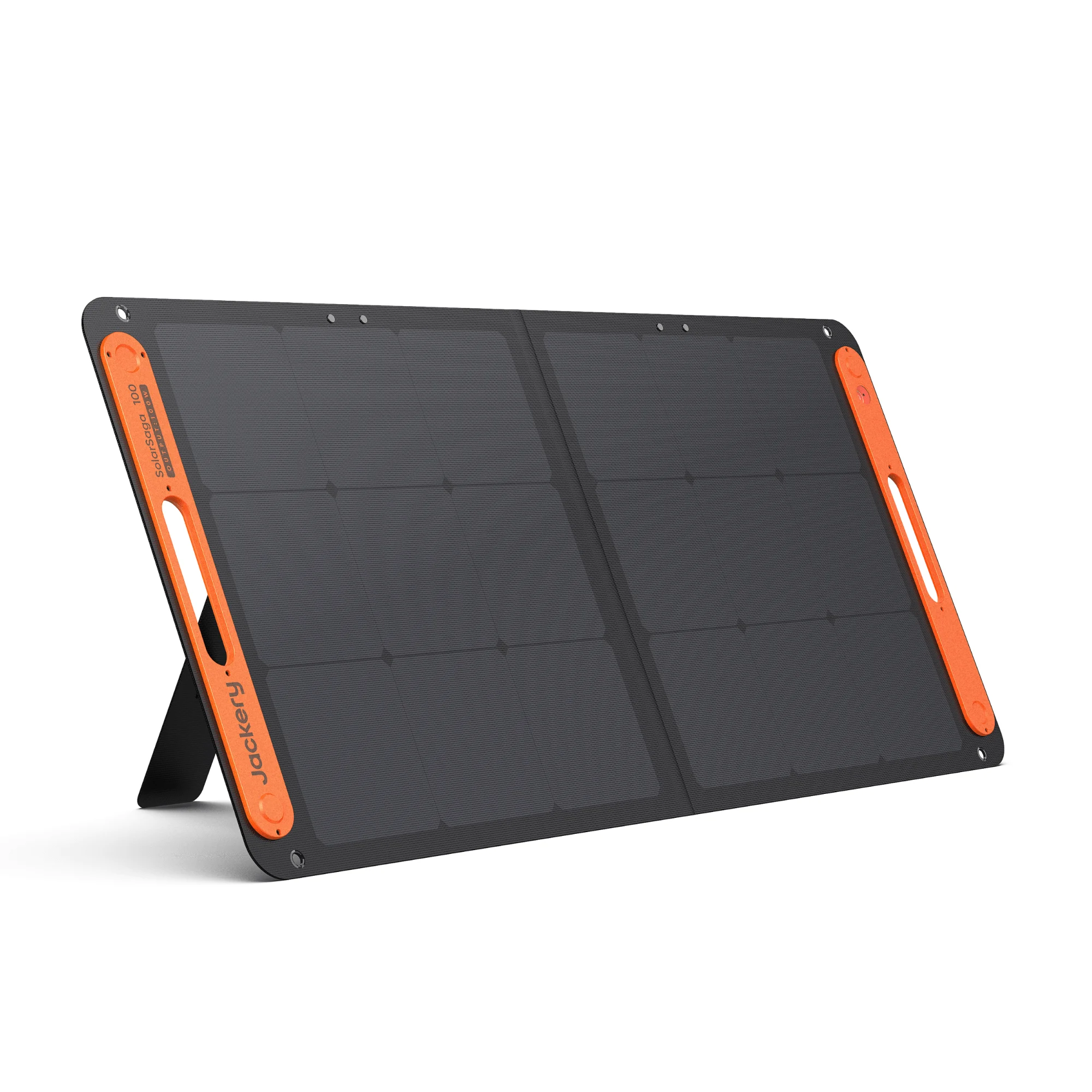
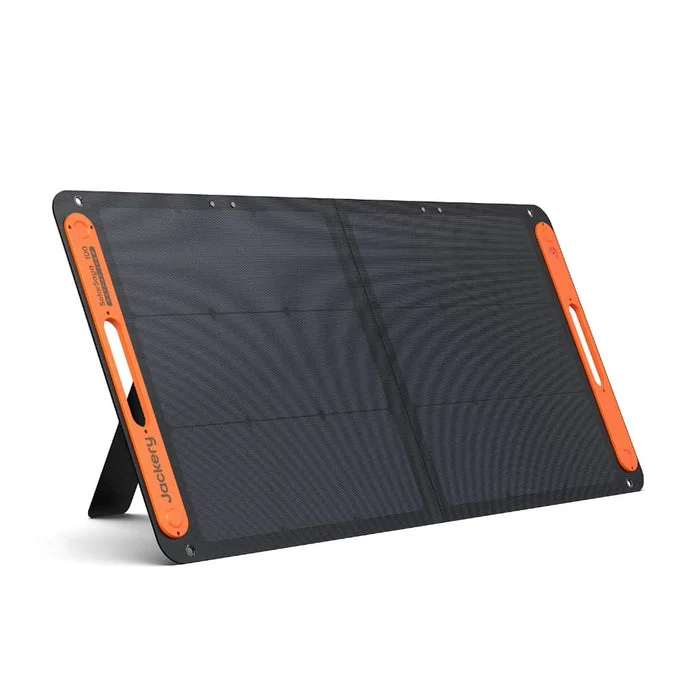
| Jackery SolarSaga 100W | 100W | ~9 lb | Best overall / Jackery stations | $$ |
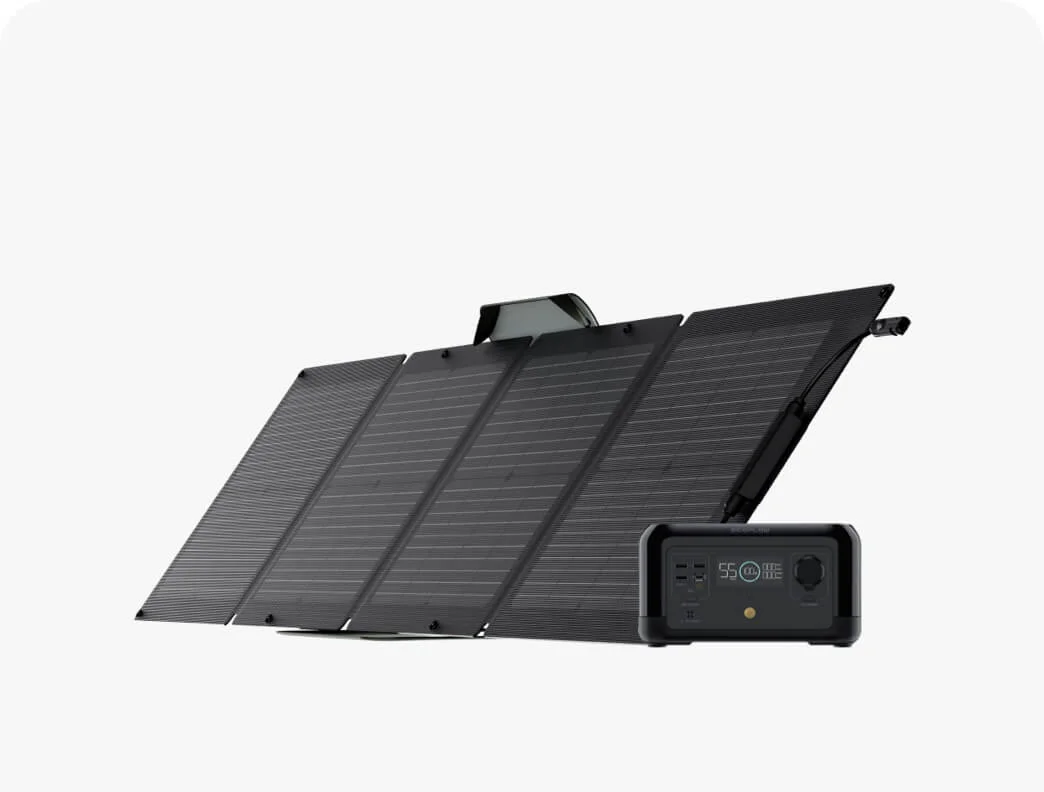
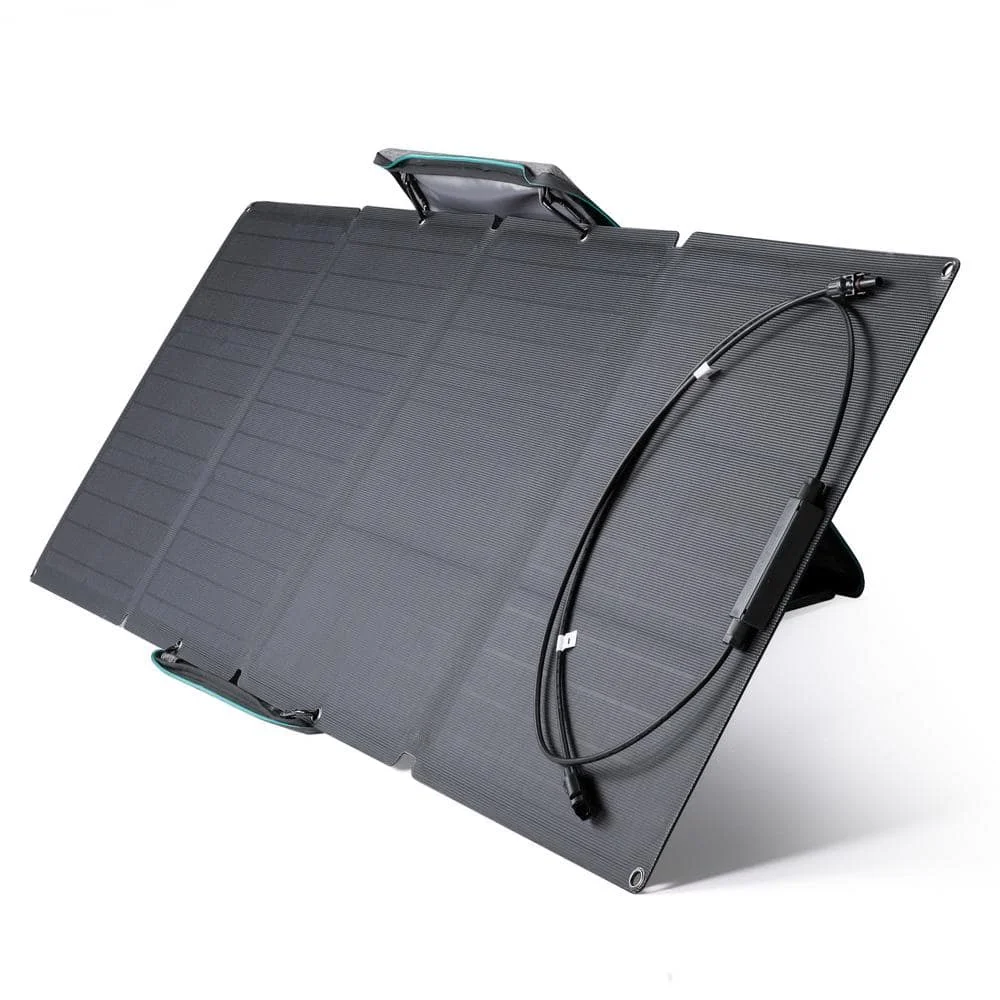
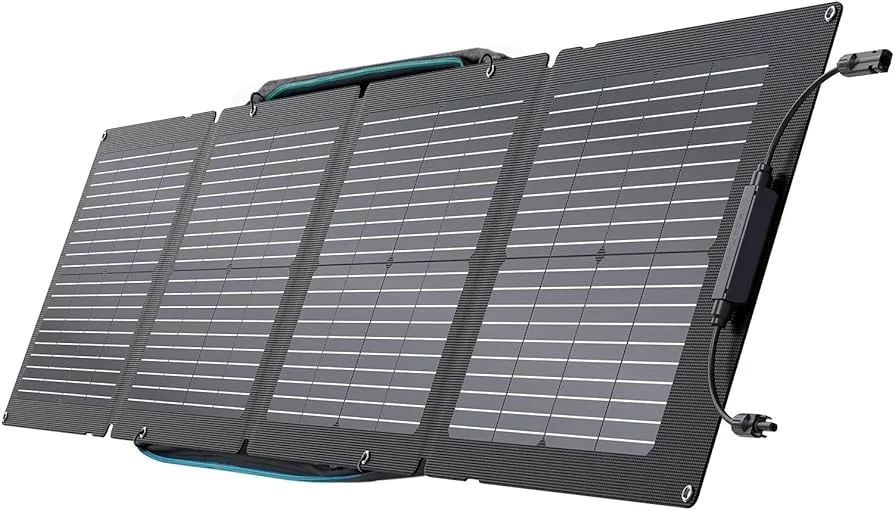
| EcoFlow 110W Portable Solar Panel | 110W | ~13 lb | Rugged build / EcoFlow stations | $$ |
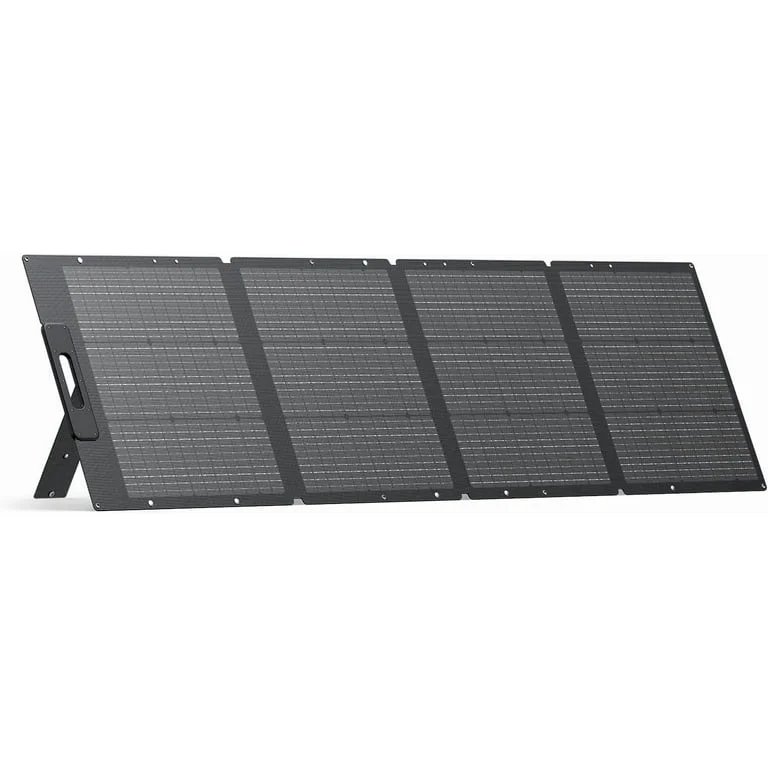
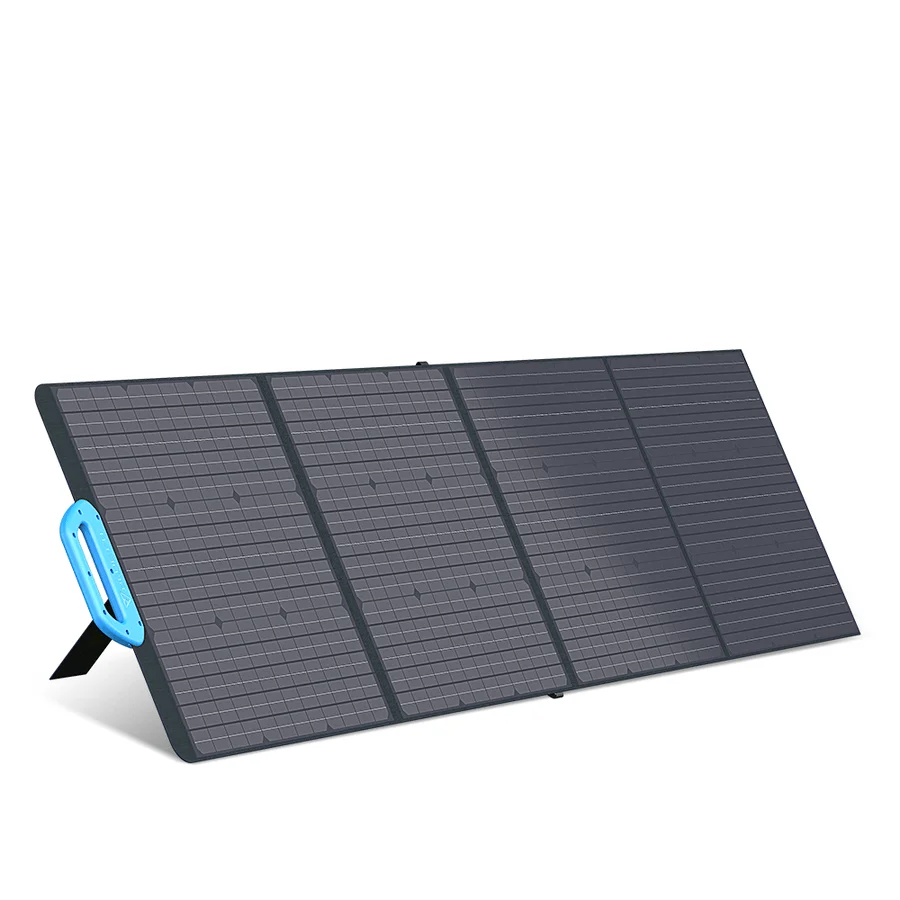
| BLUETTI PV200 Solar Panel | 200W | ~16 lb | Fast charging / bigger stations | $$$ |
| Renogy 100W Foldable Solar Panel | 100W | ~14 lb | Value / universal MC4 | $ |
All four pair with a portable power station to keep you charged off-grid. Match the panel to your station and your recharge speed.
One line on why each pick
- Jackery SolarSaga 100W — the best all-rounder: 100W folds light, has a built-in kickstand, and plugs straight into popular Jackery stations.
- EcoFlow 110W Portable Solar Panel — rugged and weather-resistant with a protective case, the durable pick that matches an EcoFlow station.
- BLUETTI PV200 Solar Panel — 200W for faster charging of bigger stations or heavier off-grid loads, when speed matters more than weight.
- Renogy 100W Foldable Solar Panel — the value pick with a universal MC4 connector that works with many stations via the right adapter.
Whichever you choose, real output runs below the rated watts — plan for roughly 60-80% in good sun. The Jackery and EcoFlow panels are the safest buys if you already own that brand's station, since the connector and voltage are matched out of the box; the Renogy is the one to reach for when you want a single panel that adapts across different stations; and the BLUETTI is the pick when a day of marginal, cloudy sun would otherwise leave a single 100W panel struggling to keep up with your loads.
Short buying criteria
Four things decide the right panel for car camping.
- Connector match: buy your station's brand panel, or confirm connector and voltage compatibility.
- Wattage: 100W is the sweet spot; go 200W for big stations or fast recharging.
- Weight and fold: a folding panel with a kickstand is the practical car-camping choice over rigid.
- Real output: expect ~60-80% of the rating; buy a little more panel if solar is your main recharge.
Simplest path: match the panel to your power station's brand and solar input, pick 100W folding, and set it in good sun. That covers most car campers.
For how much capacity you need to recharge, see our guide to power-station battery life.
How solar fits your car-camping power setup
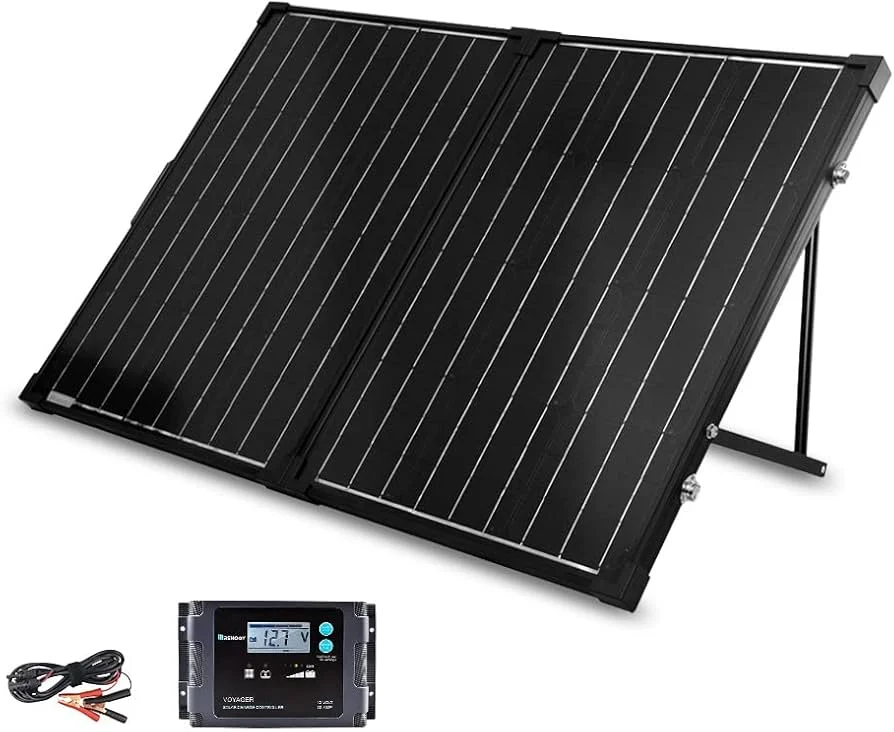
Solar is a recharge option, not a power source by itself — it tops up the power station that actually runs your lights, fan, and fridge. That pairing is the whole point.
The big advantage is independence: a 100-110W panel like the Jackery SolarSaga 100W or EcoFlow 110W lets you stay out longer without driving to recharge, which matters for dispersed and multi-day camping.
The honest limits: output depends on sun, angle, heat, and dust, so plan conservatively and reposition the panel through the day. For short trips you can often skip solar and just recharge by driving or from a wall outlet first — see our broader case for choosing a power station for car camping.
Solar earns its place on longer off-grid trips, and it pairs naturally with the rest of your kit in our car-camping essentials checklist.
Connector and brand matching: the detail that trips people up
The single most common solar mistake in car camping is buying a panel that does not actually plug into your power station. Connectors and voltage ranges vary, and a mismatch means no charge no matter how much sun you have.
The safe path is to buy the panel made by your station's manufacturer. A Jackery SolarSaga 100W is built to plug straight into a Jackery station; an EcoFlow 110W Portable Solar Panel into an EcoFlow; and so on. The connector, voltage range, and maximum input current are matched by design, so it simply works.
Third-party panels can still work, and the Renogy 100W Foldable Solar Panel is popular precisely because its universal MC4 connector adapts to many stations. But you must confirm three things first: the connector type (often MC4, Anderson, or a barrel plug, sometimes needing an adapter), that the panel's open-circuit voltage falls within your station's solar input range, and that the input current is within the station's limit. Get those right and any quality panel charges reliably; ignore them and you carry dead weight.
If you take one thing from this guide: match the panel to your station's connector and voltage range first, then worry about watts and weight.
Real-world output: why the watts on the box lie a little
A panel rated 100W almost never delivers 100W in the field, and understanding why keeps your expectations — and your charging plan — realistic. The rating is measured under ideal lab conditions; real camping conditions are rarely ideal.
Several factors cut output. Sun angle matters most: a panel flat on the ground or facing the wrong way loses a large share of its potential, which is why a built-in kickstand to aim the panel at the sun (and repositioning it through the day) is so valuable on folding panels like the Jackery SolarSaga 100W. Clouds and haze reduce output sharply, and even thin overcast can halve it.
Heat is a quieter thief — solar cells become less efficient as they get hot, so a panel baking in midday sun produces less than its cool-morning peak. Dust and dirt on the surface block light, so an occasional wipe helps. The practical rule is to plan for roughly 60-80% of the rated watts in good conditions and less when it is cloudy. If solar is your main recharge for a multi-day trip, buy a little more panel than the simple math suggests — a 200W BLUETTI PV200 Solar Panel gives real headroom over a single 100W unit when the weather does not cooperate.
- Angle: aim with the kickstand; reposition as the sun moves
- Weather: clouds and haze cut output a lot
- Heat + dust: hot, dirty panels make less power
- Plan for ~60-80% of the rating; buy headroom for solar-only trips
Setting up and using a panel well at camp
A good panel poorly used underperforms a modest panel set up well, so the few minutes you spend positioning it pay off all day. Start by placing the panel in unobstructed sun — even a small shadow from a tree branch, an awning, or part of the vehicle across one section of the panel can cut output disproportionately, because shading part of a panel drags down the whole string.
Use the built-in kickstand to angle the panel toward the sun rather than laying it flat. A panel tilted to face the sun's current position captures far more energy than one lying horizontal, and folding panels like the Jackery SolarSaga 100W and EcoFlow 110W Portable Solar Panel include kickstands for exactly this. Then reposition it a couple of times through the day as the sun moves across the sky — a thirty-second adjustment mid-morning and mid-afternoon meaningfully increases what you harvest.
Run the cable to your power station kept in the shade if possible, since stations and batteries also dislike heat, and keep the panel surface clean — a quick wipe of dust or pollen restores lost output. Finally, set the panel out early: topping up steadily from morning maximizes your day's harvest rather than scrambling to charge a depleted station in the weak afternoon sun. These small habits are the difference between solar that keeps you comfortably powered and solar that disappoints.
Common mistakes buying a solar panel for car camping
A few predictable errors waste money and leave campers with a dead station. The first is connector mismatch — buying a panel that does not plug into your station; match the brand or confirm compatibility carefully. The second is treating the rated watts as real output and being surprised when a 100W panel delivers far less under clouds or at a bad angle.
The third is choosing a rigid panel for a vehicle: rigid panels are cheaper per watt but bulky, awkward to store, and meant for permanent mounting, not daily setup — a folding panel like the EcoFlow 110W is the practical car-camping choice. The fourth is under-sizing the panel relative to your loads and station, so it never keeps up; if solar is your main recharge, lean toward more watts. The fifth is forgetting to actually aim and reposition it, leaving it flat all day and collecting a fraction of its potential. Avoid those and a portable panel becomes a genuinely useful way to stay out longer — see how it fits the whole power picture in our car-camping power guide.
- Connector mismatch: the panel will not charge your station
- Rated-watt expectations: real output is lower
- Rigid for daily use: bulky and hard to store
- Under-sizing / never aiming it: it cannot keep up
Verdict
For car camping, match the panel to your power station and favor a light folding design with an adjustable angle. The Jackery SolarSaga 100W is the best overall for most campers; the EcoFlow 110W Portable Solar Panel is the rugged pick that matches an EcoFlow station; the BLUETTI PV200 Solar Panel charges bigger stations faster; and the Renogy 100W Foldable Solar Panel is the value, universal-connector choice.
Buy the connector that fits your station, pick 100W as the sweet spot, plan for about 60-80% of the rated output in good sun, and set the panel out through the day. Do that and solar keeps you charged for multi-day off-grid camping; skip it for short trips where driving or a wall charge before you leave is simpler. Pair it with our power-station battery-life guide to size the whole system right.