The Short Answer: Only in Open Air, and the Hybrid Is No Excuse
Running the air conditioning in a Toyota Highlander overnight means idling the engine, and it is safe only in an open, well-ventilated area with the exhaust pipe verified clear. Do that, and you are managing the real hazard. Skip it, park in an enclosure, or block the tailpipe, and you are gambling with carbon monoxide.
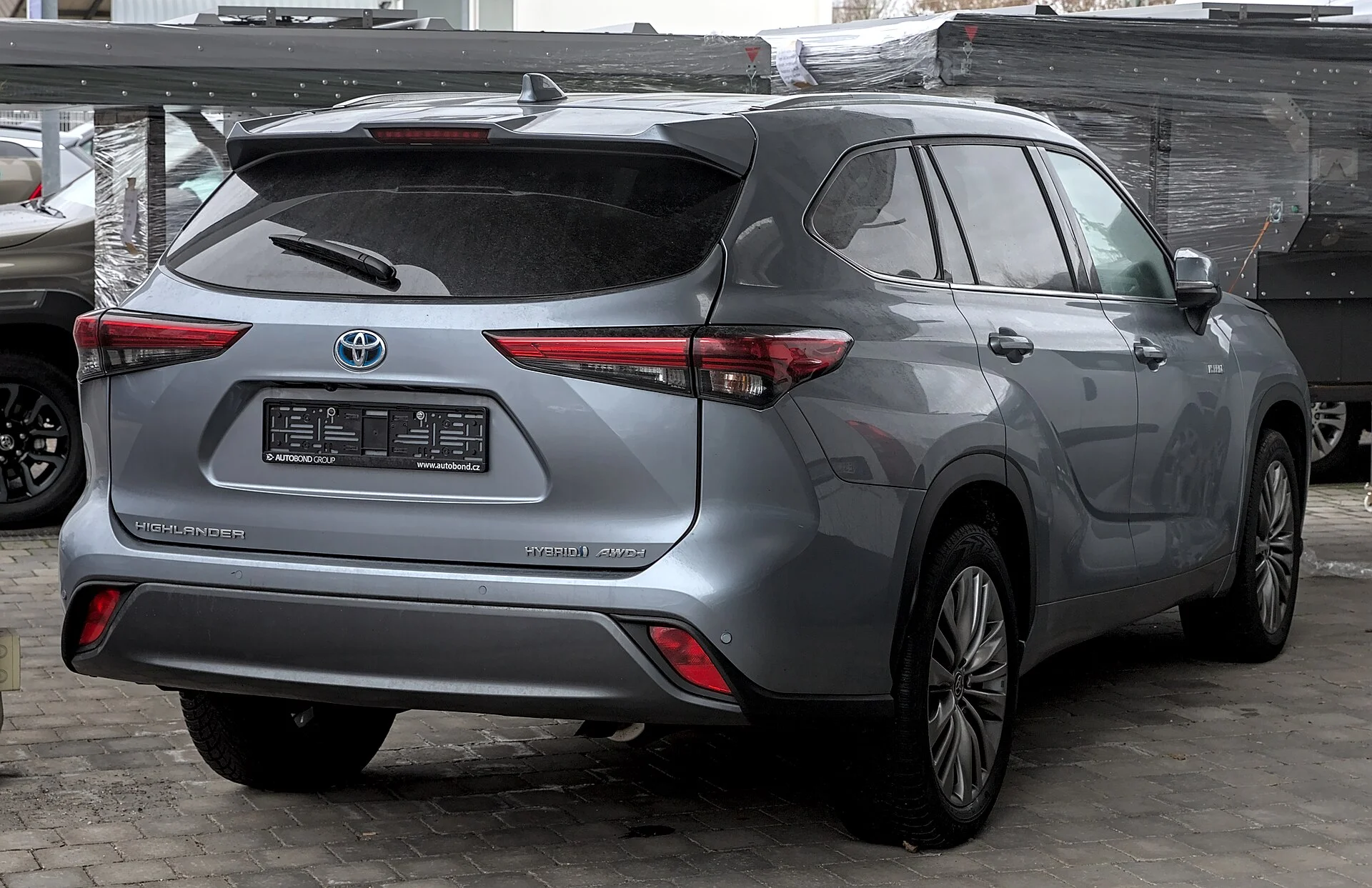
The assumption worth dismantling up front is that a Highlander Hybrid is safe because it barely uses fuel. It is not. Even in a hybrid, the gas engine still fires periodically and produces exhaust with carbon monoxide, so a hybrid is not automatically CO-safe for overnight sleeping. The fuel savings are real; the safety implication people read into them is not.
So the honest answer is a qualified yes for the gas Highlander and the same qualified yes for the hybrid. Both can run AC overnight without harm in the right conditions, and both can kill you in the wrong ones. The difference between the two is fuel economy, not safety, and conflating the two is exactly the kind of claim this guide exists to check.
The 2025 Toyota Highlander Camping Guide covers the Highlander as a camping platform; this article covers the one question that actually carries risk. The precautions are simple and the physics is unforgiving, so the rest of this guide lays out what the danger is, what the numbers mean, and how to stay cool with far less risk than idling all night.
The Real Danger Is Carbon Monoxide, Not the Engine
Strip away the noise and the whole safety question comes down to one gas. Carbon monoxide is a colorless, odorless gas produced by the engine's combustion; you cannot see or smell it, which is what makes overnight idling dangerous. You will not get a warning from your senses, which is why a sleeping person is uniquely at risk.
The lethal mechanism is specific: exhaust re-entering the cabin. This happens when the tailpipe is blocked by snow, mud, or tall dry grass, or when wind pushes exhaust toward a cracked window, which can actually draw carbon monoxide into the cabin rather than vent it out. The danger is not the engine running; it is where the exhaust goes.
That distinction is the whole game. An idling engine in open air, exhaust flowing away downwind, is a manageable situation. The same engine with a blocked pipe, or parked where wind curls the exhaust back through an open window, is a poisoning waiting to happen. The precautions all target that one failure mode: keep exhaust out of the cabin.
This is also why the hybrid badge means nothing for safety. A Highlander Hybrid produces less exhaust over a night because its engine runs intermittently, but every time it fires it makes carbon monoxide, and that CO behaves exactly the same way a gas engine's does. Less exhaust is not no exhaust, and the failure mode is identical.
What the CO Numbers Actually Mean
Marketing loves a vague reassurance; the CDC deals in numbers, so here they are. Per the CDC, more than 400 Americans die every year from unintentional, non-fire carbon monoxide poisoning, and more than 100,000 visit an emergency department for it. This is not a rare freak hazard; it is a common, documented cause of death.
The exposure ladder is what makes it concrete. Per CDC clinical guidance, around 200 ppm of carbon monoxide causes headache within 2 to 3 hours; about 400 ppm causes headache and nausea within 1 to 2 hours and becomes life-threatening after about 3 hours; and roughly 1,600 ppm can cause severe headache, dizziness, and nausea within 20 minutes and death within about 1 hour.
Now put a sleeper into that ladder. The common early symptoms of CO poisoning are headache, dizziness, weakness, nausea, chest pain, and confusion, and a sleeping person may never wake to notice them. The warning signs your body would use to save you require you to be awake and paying attention, which overnight you are not.
That is the case against complacency, in numbers rather than adjectives. The risk is real, it is measured, and it targets exactly the situation of sleeping in an idling car. None of this means you cannot run AC overnight; it means you respect the precautions that keep cabin CO at zero, because the margin for error while unconscious is thin.
How the Highlander Burns Fuel Overnight
The fuel side is where the gas and hybrid Highlanders genuinely differ, so here are the real numbers. The 2023-2025 gas Highlander has a 17.9-gallon fuel tank, while the Highlander Hybrid has a slightly smaller 17.1-gallon tank. A typical passenger car burns roughly 0.1 to 0.5 gallons of fuel per hour at idle, and running the AC pushes the gas Highlander toward the upper end, around 0.3 to 0.5 gallons per hour.
At about 0.4 gallons per hour, a full 17.9-gallon tank could theoretically idle the gas Highlander for around 40 hours, but you should never plan to run a tank near empty overnight in a remote spot. Running out of fuel is a real overnight hazard; budget your tank so you keep enough range to reach a fuel station in the morning rather than idling it to empty.
The hybrid works differently, and this is where the fuel savings come from. The Highlander Hybrid does not idle the gas engine continuously. In READY mode it cools the cabin off the hybrid battery, then briefly starts the engine only to recharge the battery, cycling on for a few minutes roughly every 10 to 15 minutes. Owners report running cabin AC for about 8 hours overnight on very little fuel compared to a gas engine idling the whole time.
There is also a system safeguard worth knowing. Toyota's manual warns not to leave the vehicle in accessory mode for more than about 20 minutes, or in ignition-on with the engine off for more than about 1 hour in park, or the system stops to prevent draining the 12-volt battery. That protects the battery, not you, and it is why real cooling requires the engine, not accessory mode.
Why 'Just Running the Fan' Does Not Cool
A tempting workaround is to skip the engine and run only the fan on the battery, and it does not work. Battery-only accessory mode runs the blower fan but not the AC compressor, so it moves air without cooling it and steadily drains the 12-volt battery, potentially leaving you unable to start the vehicle. You get warm air and a dead battery.
The reason is mechanical. Real air conditioning requires the engine, or the hybrid system, to drive the compressor that actually chills the air. The fan alone just circulates cabin air at whatever temperature it already is, so on a hot night it moves hot air around. There is no version of cabin cooling that does not involve the compressor, and the compressor needs the engine.
This matters because it closes off the apparent safe middle ground. People reason that they can avoid the CO risk by running just the fan, then discover it does not cool and it flattens the battery. The honest choice is between real AC with the engine and its precautions, or no engine and a different cooling strategy entirely.
So the fan-only idea fails on both counts: it does not cool, and it can strand you with a dead battery, which is its own overnight hazard. If you want cabin cooling from the vehicle, you are running the engine and managing the exhaust. If you do not want to idle, the answer is the no-idle methods later in this guide, not the accessory-mode fan.
The Heat You Are Actually Fighting
It helps to know the size of the problem, because it explains why people idle in the first place. A parked car's interior heats about 40 degrees Fahrenheit above the outside air within an hour, with roughly 80 percent of that rise happening in the first 30 minutes. A warm evening becomes an oven fast, and that is the discomfort driving the whole question.
That rapid heat gain is why passive cooling has to start before the cabin bakes. Once the interior is 40 degrees over ambient, any fan is just circulating hot air, so the winning move is to prevent the heat rather than fight it after the fact. Shade, reflective barriers, and airflow set up early keep the cabin from reaching that oven state.
The reflective sunshade is the highest-leverage passive tool. A reflective windshield sunshade can cut cabin air temperature by roughly 15 to 20 degrees Fahrenheit and dashboard temperature by up to about 40 degrees Fahrenheit, which meaningfully reduces how hard any cooling has to work. Blocking the sun before it enters is far more efficient than removing heat after.
Understanding the heat also right-sizes expectations for a fan. A battery fan cannot chill air, but it can keep moving air over your skin, which feels cooler through evaporation even when the air itself is warm. Combined with blocking the solar gain, that airflow is often enough to sleep comfortably without ever idling the engine, which is the safest outcome of all.
Safer Ways to Stay Cool Without Idling
The genuinely safe strategy is to not idle at all, and it works more often than people expect. The safer no-idle cooling options are 12-volt or battery-powered fans, cracked windows fitted with bug screens, parking in deep shade, and aftermarket parking-cooler units. Stacked together, these handle most warm nights without a running engine.
Airflow is the core of it, and a fan sized to the cabin does the work. For a battery fan to actually move meaningful air, aim for roughly 1 CFM per cubic foot of cabin volume so the interior air is turned over frequently. a battery-powered camping fan positioned to pull cooler night air in one window and push warm air out another creates the cross-flow that makes a warm cabin sleepable.
Screens make the open windows usable. Cracking windows on opposite sides for cross-flow only works if bugs stay out, so bug screens over the gaps are what turn open windows from a mosquito invitation into real ventilation. Paired with shade chosen at setup and a reflective sunshade, the passive kit addresses the heat at its source rather than fighting it with an idling engine.
None of this carries a CO risk, which is the entire point. A fan, screened windows, and shade produce zero exhaust and cannot poison you, and they do not drain your starting battery the way accessory-mode fan use does if you use a separate power source. For most summer nights in a Highlander, this is the setup to reach for first, before you ever consider idling.
If You Do Idle: The Rules That Keep It Safe
Sometimes it is genuinely too hot for passive cooling, and idling for AC is the call. When it is, the rules are non-negotiable. If you do idle for AC, do it only in an open, well-ventilated area, never in a garage, carport, or other enclosure, with the exhaust pipe verified clear of obstructions. That single sentence prevents the most common poisonings.
Window and detector discipline is the second layer. Crack a downwind window, not the window facing the exhaust or into the wind, so airflow carries any stray exhaust away rather than drawing it in, and keep a battery-powered carbon monoxide detector inside the cabin. The detector is the one thing that will wake a sleeper, which their own symptoms will not reliably do.
Exhaust vigilance continues through the night, especially in changing conditions. A pipe that was clear at bedtime can be blocked by drifting snow or shifting sand, and wind that carried exhaust away at 10 p.m. can swing to push it back by 2 a.m. This is why the enclosed-space rule is absolute and why the CO detector is not optional; conditions move while you sleep.
Follow those rules and idling for AC becomes a managed risk rather than a gamble. Open air, clear pipe, downwind window, CO detector, and enough fuel in reserve to reach a station. The hybrid does not change any of these rules; it only changes how much fuel the night costs. Treat the badge as an economy feature, not a safety one, and the precautions stay the same.
Setting Up a Safe, Cool Night
Put it together and the setup is a sequence, starting with location. Pick an open, shaded, level spot with the exhaust side clear, because location does more for both heat and safety than any gadget. Deep shade blocks the solar gain that drives the 40-degrees-in-an-hour heat rise, and open air handles the exhaust if you end up idling.
Set the passive cooling before dark. Reflective sunshade in the windshield, windows cracked on opposite sides with bug screens, and a battery fan sized near 1 CFM per cubic foot positioned for cross-flow. The Is a Toyota Highlander Good for Summer Car Camping covers the Highlander's warm-weather camping in more depth, and the Toyota Highlander 12V Outlet Locations and Fuse Map shows the 12-volt outlets you will use to run a fan without touching the starting battery.
Keep idling as the fallback, not the plan. If the night is too hot for passive cooling, idle by the rules: open air, clear pipe, downwind window, CO detector, fuel in reserve. Whether you have the gas or hybrid Highlander, those rules are identical, and the Can You Sleep in a Toyota Highlander covers the sleeping layout that pairs with either cooling approach.
Reviewed as a system, a safe cool night is mostly about preparation before you sleep. Location and passive cooling do the heavy lifting, idling is a managed backstop, and a CO detector is the guardrail for the one hazard that can act while you are unconscious. Set it up in that order and the Highlander is a comfortable, safe place to sleep on a warm night.
The Verdict: Safe With Precautions, Hybrid or Not
Running the AC in a Toyota Highlander overnight is safe with precautions and dangerous without them, and the deciding factor is carbon monoxide, not the engine itself. Idle only in open, well-ventilated air with the exhaust pipe clear, crack a downwind window, and keep a CO detector in the cabin. Those steps keep cabin CO at zero, which is the whole job.
The hybrid claim deserves its skeptical footnote. A Highlander Hybrid sips fuel by cycling its engine every 10 to 15 minutes and can run AC about 8 hours overnight cheaply, but it still fires the gas engine and still makes carbon monoxide. It is not automatically CO-safe, and treating the badge as a safety rating is exactly the mistake that gets people hurt.
The safer answer, when the weather allows, is not to idle at all. A battery fan near 1 CFM per cubic foot, screened windows cracked for cross-flow, a reflective sunshade cutting cabin temperature 15 to 20 degrees, and deep shade handle most warm nights with zero exhaust and zero CO risk. Reach for that kit first; idle only when passive cooling genuinely cannot keep up.
So the honest verdict is yes, carefully. The gas Highlander and the hybrid can both run AC overnight safely under the same rules, because they share the same hazard. Respect the CO precautions, keep a detector aboard, keep fuel in reserve, and prefer passive cooling, and a hot night in a Highlander is manageable. Ignore the rules or trust the badge, and it is not.