
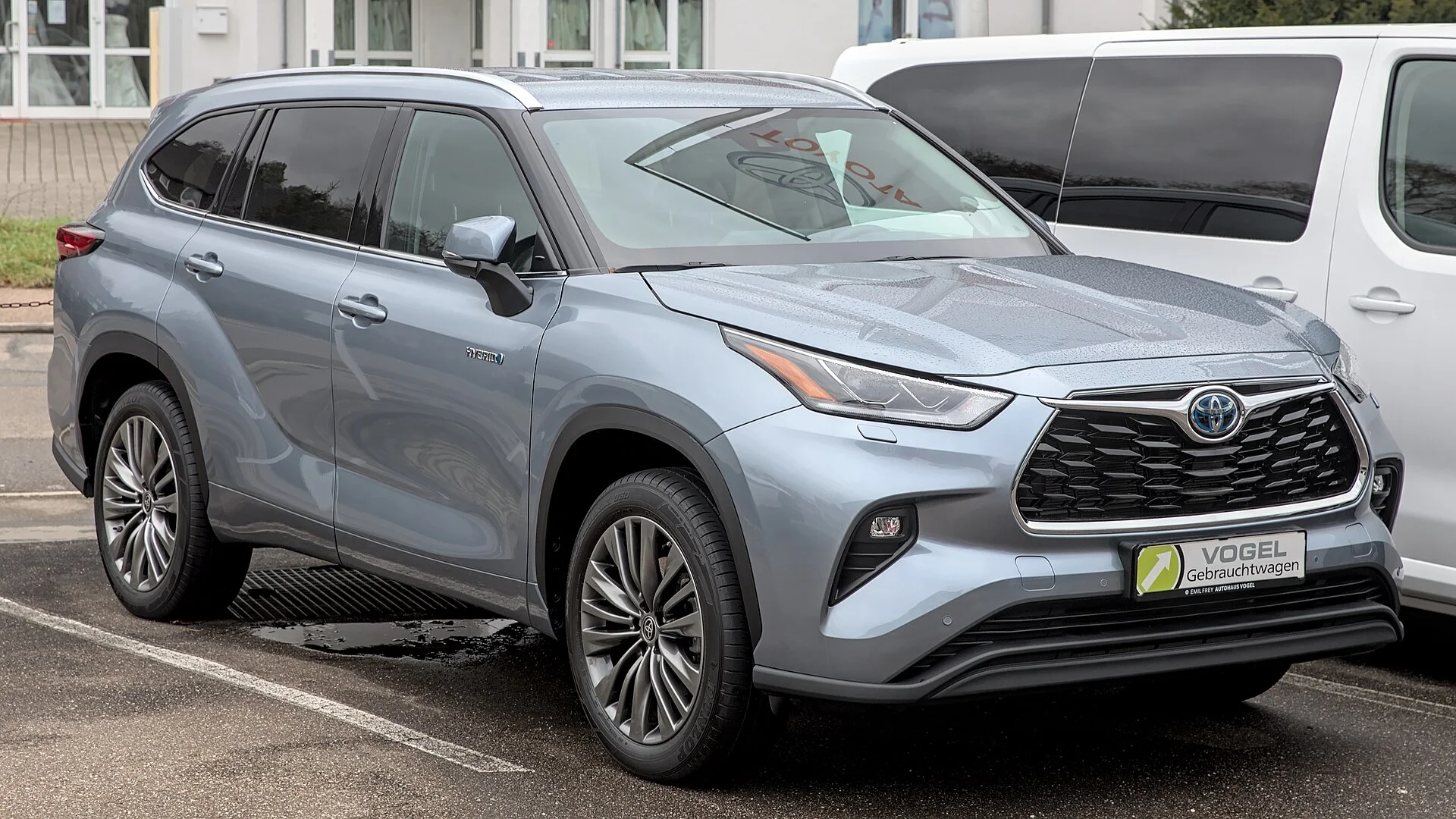
The Short Answer: A Roomy Camper With One Big Fork
Engineer the Highlander as a summer camping system and it holds up well, with one decision that dominates all the others. It is a comfortable three-row SUV for two adults to sleep in, but the drivetrain you choose - gas or Hybrid - changes your onboard power by a factor of fifteen. That is not a footnote; it is the spec that actually decides how you camp in the heat.
The space is genuine. The 2020-and-newer XU70 Highlander offers a maximum of 84.3 cubic feet of cargo with the second and third rows folded, and owners report roughly 73 inches of flat length - long enough for most adults to stretch out fully. That length is one of the Highlander's best car-camping traits, and it puts it ahead of many two-row crossovers for lying flat.
But the trade-off the marketing skips is power. On summer's core problem - moving air and maybe cooling without idling - your outlet wattage is the constraint, and it swings enormously between the two drivetrains. This guide sizes the Highlander honestly, and it treats that gas-versus-Hybrid fork as the central engineering decision, because it is.
The Space: 84.3 Cubic Feet, 73 Inches Flat
Start with the capacity, because it is a real strength. The Highlander gives 16.0 cubic feet behind the third row, 48.4 cubic feet with the third row folded, and the full 84.3 cubic feet with both rear rows down. For two-person summer sleeping, that maximum figure is the one that matters, and it is generous for the class.
Length is the more important number, and here the Highlander delivers. With all rear seats folded, owners report roughly 73 inches of flat cargo length, which is long enough for most adults to stretch out fully rather than curling or sleeping diagonally. A twin mattress at about 38 inches wide fits well, and two average-sized adults can sleep in the back, though it is snug at the shoulders.
The tall roofline adds usable sitting headroom in the cargo area, which matters more than people credit in summer - it lets you change comfortably and lets hot air rise away from the sleeping surface. So on raw livability, the Highlander is well-sized: enough length to lie flat, enough width for a couple, enough height to sit up. The capacity side of the equation is settled and favorable.

The Fork That Decides Everything: Hybrid vs Gas
Here is the engineering decision that outweighs everything else. The Highlander offers 120V AC household outlets on the 2020-and-newer Limited and Platinum trims, but the wattage differs sharply by drivetrain. The gas Highlander provides a 100-watt outlet. The Highlander Hybrid provides a 1500-watt 120V outlet. That is a fifteen-to-one gap on the exact spec a summer camper leans on.
Think about what each number means in practice. A 100-watt outlet is a phone-and-small-charger circuit - useful, but it will not run much. A 1500-watt outlet is genuinely household-grade: it can run a small portable fan, a CPAP machine, or even a compact cooler, which is a real advantage for summer camping. Same SUV, same cargo space, wildly different capability, decided entirely by the drivetrain badge.
This is the classic case of the spec that matters versus the spec that sells. Both models advertise '120V outlet available,' and a shopper reads that as equivalent. It is not. If summer camping - or any camping where you want real onboard AC power - is a priority, the Hybrid's 1500-watt outlet is not a nice bonus, it is the deciding feature. Buy the drivetrain for the outlet, and the rest of the Highlander comes along for free.
What 1500 Watts Actually Buys You
Let us size what that Hybrid outlet does for a summer camper, because the number is abstract until you map it to gear. At 1500 watts you can run a small portable fan, a CPAP, or a compact 12V-style cooler directly from the outlet - loads that the 100-watt gas version simply cannot support. For anyone who needs a CPAP, that alone can decide the whole purchase.
There is a second engineering advantage to the Hybrid beyond the raw wattage: it is battery-backed. As a hybrid, the Highlander can pre-cool the cabin efficiently and can run low-wattage fans off the battery-backed inverter, which better supports air-conditioning-off summer sleeping. You are not tied to running the gas engine to keep the inverter alive for small loads, which is exactly what you want overnight.
The honest caveat is that 1500 watts still is not enough to run a real air conditioner overnight, and no factory outlet in this class is. So the Hybrid does not let you sleep in refrigerated air without idling - nothing here does. What it buys you is the ability to run the fans and small devices that make AC-off sleeping comfortable, off a battery, quietly. That is the practical ceiling, and it is a meaningful one.
Leveling the Slightly-Inclined Fold
The Highlander's floor is good but not perfect, and knowing the imperfection lets you fix it cheaply. The third-row seats fold essentially flat and level with the cargo floor, which is the easy part. The second-row seatbacks, though, fold with a slight incline, so the surface is not dead level end to end without help.
The fix is trivial engineering: a mattress topper or foam over the inclined section levels it out. The three-row layout also means the second-row seat hinge and the fold-flat mechanism leave minor gaps and a slight step, but a full-length sleeping pad smooths those over. You are not building a platform here the way you would in a Forester - a decent pad does most of the work.
So the leveling problem is real but minor, and the solution is a pad you would carry anyway. Size the pad to the full 73-inch length so it bridges the second-row incline and the mechanism gaps in one piece, and the Highlander gives you a comfortable, near-flat bed. This is the cheap part of the setup; the expensive decision was the drivetrain, made before you ever bought the truck.
The Greenhouse Math: Glass and Color
Every SUV in this class fights the same summer enemy - solar gain - and the Highlander is no exception. Its large glass area plus the available panoramic moonroof produces a pronounced greenhouse effect, so reflective sunshades on the windshield and side glass are important to limit daytime heat-soak while parked. That is the highest-payoff cheap upgrade for summer, full stop.
Interior color factors into the math. The Highlander's cabin runs from light Graphite or Harvest Beige to dark Black depending on trim, and a lighter interior heat-soaks less in direct summer sun than a black leather cabin. If you are cross-shopping trims and summer camping is the goal, a lighter interior is a small, free thermal advantage worth weighting.
The panoramic moonroof is a double-edged spec, and it is worth being precise about. It is good for venting the hot air that collects at the ceiling, so it helps at night. But it adds solar gain when parked in direct sun, so it hurts during the day. The engineering answer is simple: cover it during the day for a cooler cabin at night. Manage the glass aggressively and the greenhouse effect stops being the problem it otherwise is.
Practically, that means a full set of covers, not just the windshield. A reflective windshield sun shade handles the biggest single pane of glass, and cheap reflective panels or cut-to-fit covers on the side windows and the moonroof close the rest of the gap. The physics is one-directional: every bit of radiant heat you reflect before it enters is heat you do not have to remove later with airflow you may not have. For a few dollars of reflective material, it is the best return on investment in the entire summer setup, and it takes five minutes to deploy once the panels are cut to the Highlander's glass.

Pre-Cool: Free Cooling From the Engine You Have
Before you sleep, the most effective heat tool costs nothing extra because it is already on the truck. Remote start, standard on many Highlander trims, lets you run the engine and air conditioning to pre-cool the cabin before climbing in. You knock down the heat-soak that builds in a closed SUV parked in sun while you are still outside setting up.
The Highlander adds rear-zone climate control, which lets you direct cooled air toward the cargo and sleeping area while the engine runs, for a quick pre-sleep chill of exactly the space you will occupy. That is more efficient than cooling the whole cabin from the front vents - you target the sleeping zone directly and get it cold fast.
The Hybrid does this even better, pre-cooling the cabin efficiently thanks to its drivetrain. But the honest engineering limit applies to both: pre-cool with the engine on, then shut down. Idling all night for AC is off the table for safety and fuel reasons, so the play is to bank the coolness and then hold it with airflow. The engine is a pre-cool tool, not an overnight AC unit, on either drivetrain.
Venting: Windows, Screens, and the Moonroof
Once the engine is off, airflow is your climate control, and the Highlander gives you good tools for it. Owners crack the front and rear windows for cross-ventilation, but the power windows only operate briefly after the engine is shut off, so set them before bed rather than after you are settled in. That timing habit is the difference between a vented cabin and a sealed one.
Two cheap additions make the venting reliable. Cut-to-fit bug screens over the cracked windows allow real cross-ventilation while keeping mosquitoes out on warm nights, and the available panoramic moonroof can be tilted to vent the hot air that collects at the ceiling and let a breeze in. Combined, cracked-and-screened windows plus a tilted moonroof create genuine through-flow.
Add a small 12V or USB clip fan to keep air circulating over the 73-inch sleeping length overnight, drawing almost nothing, and the ventilation system is complete. On the Hybrid you can also run a larger fan off the 1500-watt outlet if you want more air movement without touching the starter battery. Either way, the principle is the same: set the vents before bed, screen them, and keep the air moving.
Chasing Cooler Air
The most reliable summer strategy is the same one that beats every in-cabin trick: get to where it is cooler. For the most comfortable air-conditioning-off nights, the practical approach is to camp at shaded or higher-elevation sites where night temperatures fall, then rely on cracked windows and a fan rather than engine idling. Elevation and shade do more than any outlet.
The engineering reason this matters is thermal: a cabin that starts cooler and gets fed cooler night air never has to fight a heat-soak in the first place. Park in shade so the greenhouse effect never starts, gain elevation so the night air is genuinely cold, and your ventilation setup is working with the conditions instead of against them. That is the low-effort, high-payoff move.
Layer the whole system together and the Highlander is comfortable: drive to cooler ground, pre-cool with remote start and rear climate, cover the glass, crack and screen the windows, and run a fan - a bigger one on the Hybrid. Managed that way, the summer heat is handled at the source. The Highlander's job is to get you there and sleep you flat, and it does both well.

The Verdict: Buy the Hybrid for Summer
The Highlander is a good summer car camper on the fundamentals: 84.3 cubic feet of space, about 73 inches of flat length for a couple, a slightly inclined second-row fold that a pad levels, and a tall cabin you can sit up in. Those are settled strengths, and they make it one of the more livable three-row options for sleeping two.
The decision that actually matters is the drivetrain, and the numbers are stark. The gas Limited and Platinum give a 100-watt outlet; the Hybrid gives 1500 watts, enough to run a real fan, a CPAP, or a compact cooler off a battery-backed inverter. For summer camping, that is not a minor trim difference - it is the deciding feature, and it is the spec that matters over the one that merely sells.
So the engineering recommendation is clear: if summer camping is a real priority, buy the Highlander Hybrid for its 1500-watt outlet and battery-backed pre-cooling, then handle the glass with covers, vent with screened windows and the moonroof, and chase cooler elevation. Bought that way, the Highlander earns a confident yes. Bought as the gas model expecting real camp power, it earns a qualified one.