So is it actually illegal in Arizona, or not?
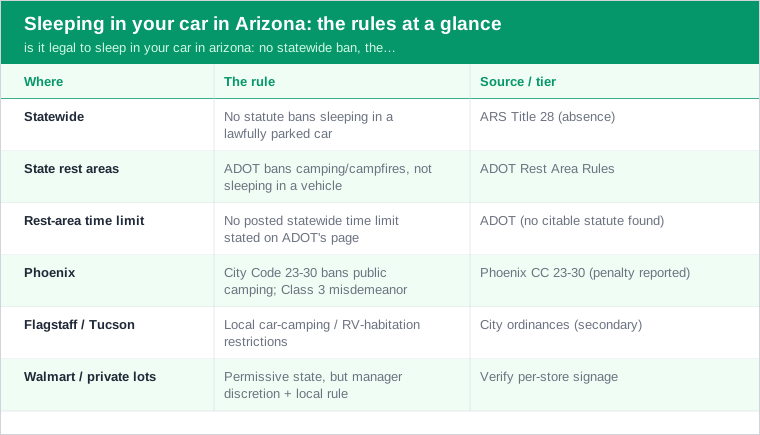
Straight answer, because you came here for one: no, it is not illegal to sleep in your car in Arizona. There is no statewide statute banning it - no section of Arizona Revised Statutes Title 28, the state's traffic law, criminalizes sleeping in a lawfully parked vehicle. The question is settled instead by rest-area rules and local ordinances.
I don't trust a legal claim until I've read the source, and on this topic that skepticism pays off, because half the confident answers online are wrong or unciteable. Some pages will tell you Arizona rest areas have 'no time limit'; others invent a statute number that doesn't exist. I'll show you what the official pages actually say, where the sources run out, and where I won't hand you a number nobody can back up.
The frame that makes Arizona make sense is a single distinction - camping versus sleeping - plus a handful of city rules that draw the real lines. Get that distinction and you'll understand every official page on the subject.
One framing point before the details: what changes the answer is never the fact that you were asleep - it's where the car was parked and what you set up around it. A driver reclined in a legally parked car at an interstate rest area is in a very different position from someone who pitched a tent on a Phoenix sidewalk, even though both were 'sleeping in Arizona.' The location and the conduct decide the outcome, not the nap itself. Everything below is really a map of which places and which behaviors move you from the permissive default into a rule that actually bites.
What does Arizona law actually say?
Here's the verifiable part. At the state level, Arizona has no statute on the books that makes sleeping in a parked car a crime. When you search the traffic code for it, you don't find a ban - you find an absence, which is the legal way of saying the state leaves it alone.
That absence means:
- The state default is permissive - park legally, and sleeping there isn't a state offense.
- Enforcement lives at two lower levels: ADOT's rules for its rest areas, and city or county ordinances for local streets and lots.
- 'Legal in Arizona' is a baseline, not a guarantee for any specific block.
So the real question isn't 'is it legal in Arizona' - it's 'is it legal where I'm parked.' The rest of this page is about the two places that can override the permissive default: the rest-area system and certain cities.
It helps to know why the absence matters. Arizona Revised Statutes Title 28 is the vehicle and traffic code, and it spells out plenty of parking offenses - blocking a fire hydrant, stopping in a freeway travel lane, leaving a vehicle abandoned - but none of them turn 'the occupant is asleep' into the violation. That's a deliberate structure: the state regulates unlawful parking, not lawful rest. So if you're parked somewhere a parked car is allowed to be, sleeping adds nothing the state can charge you with. The offense, when there is one, attaches to the parking or to a local camping rule - never to closing your eyes.
Camping versus sleeping: the distinction that decides it
This is the whole game in Arizona, so read it slowly. ADOT's official Rest Area Rules page prohibits camping and campfires at state rest areas - but it does not prohibit sleeping in your vehicle. The line the law draws isn't between awake and asleep; it's between camping and resting.
Per ADOT's Rest Area Rules, camping and campfires are prohibited at Arizona rest areas - but sleeping in your vehicle is not. The official line is camping versus resting, not sleeping versus not.
In plain terms: setting up a tent, chairs, an awning, or a campfire is 'camping' and is banned. Reclining your seat or lying flat in the back and napping is 'resting,' which is exactly what a safety rest area is for. So keep everything inside the vehicle, don't deploy any camp gear, and you're on the right side of the rule. This same distinction runs through most city ordinances too, which target 'camping,' not a driver's rest.
A useful test when you're unsure which side of the line you're on: could a passing officer tell you were camping without opening your door? If the answer is no - windows up, nothing deployed, no fire, no furniture on the pavement - you're resting. The moment something crosses the threshold of the vehicle and turns the spot into a little campsite, you've moved into the conduct the rule names. That's why experienced car campers keep the entire sleep setup inside the shell of the vehicle: a mattress in the back reads as a parked car, while a canopy and a camp chair read as a camp, no matter how the person inside would describe it.
Why won't anyone cite the rest-area rule?
Here's where the skeptic in me has to be honest with you. The camping prohibition is real and it's on ADOT's official page - but I could not find a specific Arizona Administrative Code or statute section number behind it. Plenty of blogs will confidently write 'A.A.C. R17-something,' and I'm not going to repeat a citation I can't verify. The rule exists on the state's own page; a clean statutory cite for it, I couldn't confirm.
The same caution applies to time limits:
- The 'no time limit' claim is aggregator-sourced, not printed verbatim on the ADOT page I read.
- What ADOT's page supports is that it sets no posted statewide time limit and prohibits camping, not resting.
- So I'll say exactly that and no more - the official framing is the camping ban, not a promised number of hours.
If a page hands you a precise Arizona rest-area statute and an exact hour cap, be skeptical - I looked, and the clean sources aren't there.
If you want to check this yourself, here's the honest path. The Arizona Administrative Code is searchable by title and chapter, and ADOT's rules would sit under the transportation title - but the rest-area rules page links to no specific section, and a chapter-by-chapter read didn't surface a clean camping-at-rest-areas provision I could point you to. That doesn't mean the rule is fake; agencies routinely post enforceable rules whose exact code home is buried or administered internally. It means the responsible thing is to cite the official page that actually states the rule and stop there, rather than dress it up with a section number that would only look authoritative while being unverifiable.
Can you sleep overnight at an Arizona rest area?
Practically, Arizona rest areas are among the more forgiving in the West for a longer stop, precisely because ADOT sets no posted statewide time limit and bans camping rather than resting. Tired drivers pulling off the I-10 or I-40 to sleep in the vehicle are doing the thing the rest area exists for.
- Sleep inside the vehicle, seat reclined or lying flat in back - that's resting, and it's allowed.
- Deploy nothing outside: no tent, chairs, awning, or fire - that's camping, and it's banned.
- Read any posted signs at the specific rest area, since individual sites can post their own limits.
Because I can't cite a guaranteed hour cap, treat 'overnight' as generally tolerated rather than legally promised, and don't overstay if signage or an officer says otherwise. A quiet night inside a car, with no camp set up, is the low-risk way to use an Arizona rest area.
Practically, the big interstate rest areas along the I-10 and I-40 - the corridors most road-trippers actually use crossing Arizona - are lit, patrolled, and busy with commercial drivers doing the same thing, which makes them some of the safer places to break a drive. Pull in nose-out if you can, lock the doors, crack a window for air, and keep valuables out of sight. Because there's no promised hour cap, the sensible ceiling is one sleep, not a multi-day stay: use the rest area to get road-legal again, then move on in the morning. If a site posts a specific limit or an officer moves you along, comply and drive to the next stop rather than argue a rule nobody can cite cleanly.
Where do the cities draw the line?
Cities are where Arizona's permissive baseline meets real enforcement, and post-2024 they've been getting stricter. The most-cited example is Phoenix: City Code 23-30 prohibits camping on public streets, sidewalks, rights-of-way, parks, and other public ground, and a violation is a Class 3 misdemeanor with a first-offense fine reported to be capped around $100.
My sourcing note, since precision matters: the Phoenix 23-30 section number is reliable, but the $100 / Class 3 penalty detail comes from a search snippet because the code page blocked a direct read - so I'd quote the penalty as 'reported,' not gospel. Either way, the ordinance targets camping on public ground, which is the same camping-versus-resting line again. Keep it inside the car, off residential and park land, and you're clear of the conduct the ordinance actually names.
It's worth reading what Phoenix 23-30 actually reaches, because the scope is broader than 'sidewalks.' The ordinance covers public streets, alleys, sidewalks, rights-of-way, parks and preserves, and other public ground the city controls - essentially the whole public realm, not just the obvious downtown blocks. What it does not reach is private property where you have permission, or a legally parked vehicle where you're simply resting. That's the practical seam a traveler works within: the ban is about camping on the public commons, so a legal spot on private land, or a rest stop off the city's system, sits outside the conduct 23-30 describes. The safest read is to treat every piece of Phoenix public ground as off-limits for anything that looks like a camp.
Phoenix, Flagstaff, and Tucson tightened the rules
Phoenix isn't alone, and the trend matters if you're passing through. Reporting indicates multiple metro-Phoenix cities passed or expanded urban-camping bans in late 2024, and Phoenix separately banned camping within 500 feet of schools, childcare, shelters, and parks in May 2024. Flagstaff enacted a car-camping ban by ordinance amendment, and Tucson restricts RV and vehicle habitation on residential streets under its city code.
- Flagstaff and Tucson specifics are secondary-sourced here - I couldn't verify the current exact code sections, so check locally.
- The direction is consistent: Arizona cities are tightening, especially near residential and park areas.
- Voter pressure is real too: Arizona's Prop 312 (2024) pushes cities to enforce camping and nuisance rules, per reporting.
The takeaway for a traveler: avoid city residential streets and park edges, and lean on rest areas, highway-corridor lots, and open BLM land instead.
A little more texture on the cities you might roll through: Tucson's approach runs through its city-code provisions on recreational and commercial vehicles, which push long-term RV and vehicle habitation off residential streets and toward designated parks rather than banning a single overnight rest outright. Flagstaff's car-camping ban arrived as a council ordinance amendment aimed at the same residential-street problem. The common thread is that these rules target sustained habitation and camping in neighborhoods, not a driver catching a few hours off a highway. Still, because I couldn't pin the current exact code sections for Flagstaff and Tucson, treat those as pointers to check locally, not as citations to rely on.
Walmart and private lots in Arizona
On private lots Arizona is actually one of the friendlier states, helped by its long RV-and-snowbird culture. Overnight parking at Arizona Walmarts is common along the I-10 and I-40 corridors and near Quartzsite, but it still comes down to store-manager discretion plus any local ordinance - some Sedona, Flagstaff, and Scottsdale-area stores prohibit it.
- Corridor and desert-town stores are your best odds; resort towns your worst.
- Check for posted signs, then ask the manager if there's none.
- BLM land is Arizona's ace - vast dispersed-camping acreage where longer stays are genuinely legal.
The BLM point deserves more than a bullet, because it's what makes Arizona genuinely easy for longer trips. Bureau of Land Management land across the state allows dispersed camping - commonly up to 14 days in a given spot before you're expected to move on - and the Quartzsite area in particular draws thousands of vehicle campers every winter onto exactly this kind of open public land. That's a real legal stay, not a merely tolerated one, which is a different category from a rest-area nap or a Walmart lot. If you want to settle in for a night or several rather than just sleep off a drive, public land is the tool, and it keeps you off the city streets where the ordinances bite.
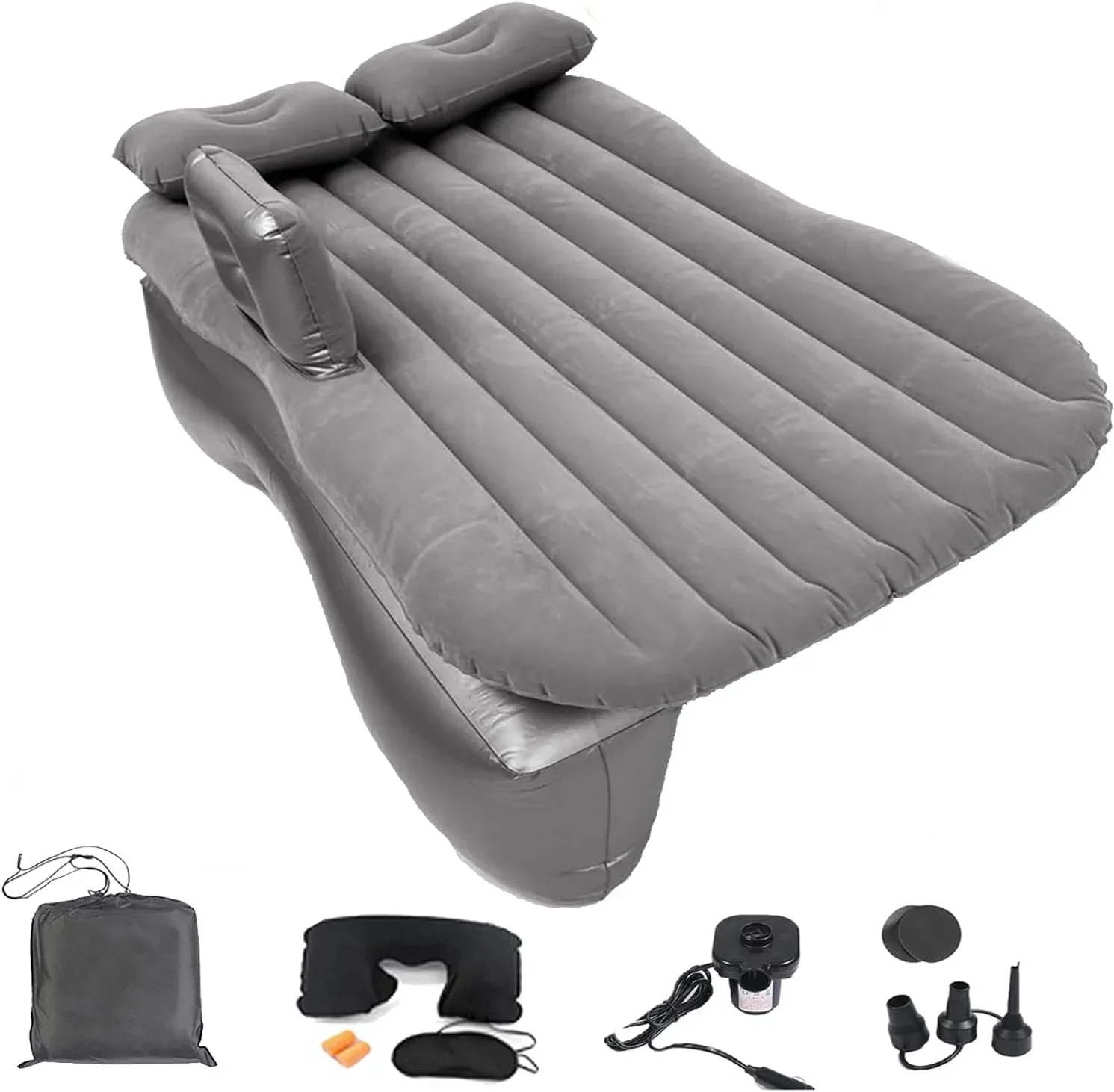
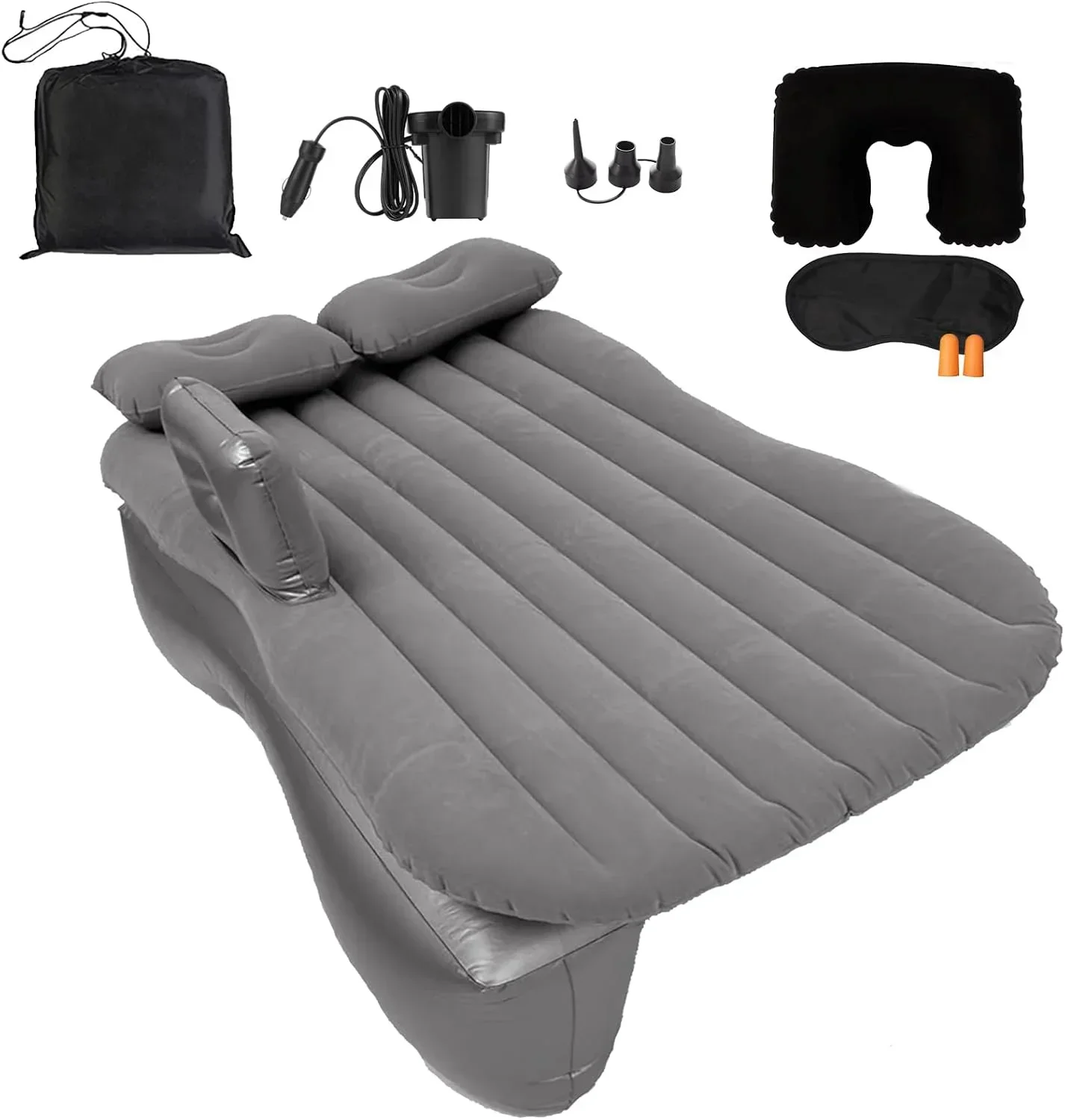
For a quiet, low-profile night on any lot, an Onirii SUV air mattress lets you lie flat and sleep without idling the engine, which keeps you comfortable and inconspicuous - the two things that keep a night trouble-free.
The national rulings that changed enforcement
Two court decisions shape how Arizona cities enforce all this. In City of Grants Pass v. Johnson, decided June 28, 2024, the U.S. Supreme Court held that enforcing generally-applicable public-camping ordinances does not violate the Eighth Amendment - which is why Arizona cities felt free to expand camping bans in late 2024.
The counterweight actually applies here, unlike in some states. Desertrain v. City of Los Angeles (9th Circuit, 2014) struck down a vague vehicle-habitation ordinance, and because Arizona sits in the Ninth Circuit, that vagueness precedent is binding law here - a city ordinance that's too vague about what 'living in a vehicle' means can still be challenged.
What Desertrain actually turned on is worth knowing, because it tells you where a challenge still has teeth. The Ninth Circuit struck down Los Angeles Municipal Code 85.02 - which banned using a vehicle 'as living quarters either overnight, day-by-day, or otherwise' - as unconstitutionally vague, because ordinary people couldn't tell what conduct crossed the line and police could enforce it arbitrarily. After Grants Pass, homeless plaintiffs lost the broad Eighth Amendment shield, but that vagueness reasoning survives on due-process grounds. So the practical lesson for Arizona is that a clearly written camping ban is now enforceable, while a sloppily drafted 'no living in vehicles' rule remains vulnerable - the drafting quality, not the sympathy of the defendant, is what's in play.
Grants Pass (2024) freed Arizona cities to enforce camping bans; Desertrain (2014), binding in the Ninth Circuit that includes Arizona, still requires those ordinances to be clearly written.
The skeptic's verdict on sleeping in Arizona
Put the verified pieces together and Arizona is a good state for a legal night in your car - as long as you respect the one distinction that runs through every official page. The state doesn't ban it, ADOT bans camping and not resting, and your job is to keep everything inside the vehicle and off the blocks cities protect.
- Sleep inside, camp outside is banned - reclined seat or flat in back, no tent or fire.
- Favor rest areas, corridor lots, and BLM land; avoid city residential streets and park edges.
- Don't trust an invented statute or a promised hour cap - I couldn't verify either.
- Stay low-profile and don't idle; a flat bed and a small battery beat running the engine.
If you remember one thing from a skeptic who read the pages, let it be this: Arizona's permission is real but conditional, and the condition is always about conduct and place, not sleep. The state gives you a permissive baseline, ADOT hands you forgiving rest areas as long as you rest rather than camp, and the cities carve out the neighborhoods and parks where a camp will draw a citation. Nobody honest about the sources will promise you a statute number for the rest-area rule or a guaranteed hour cap - so plan around the rule you can verify, keep your setup inside the vehicle, and you'll have a night that holds up whether or not anyone comes knocking.
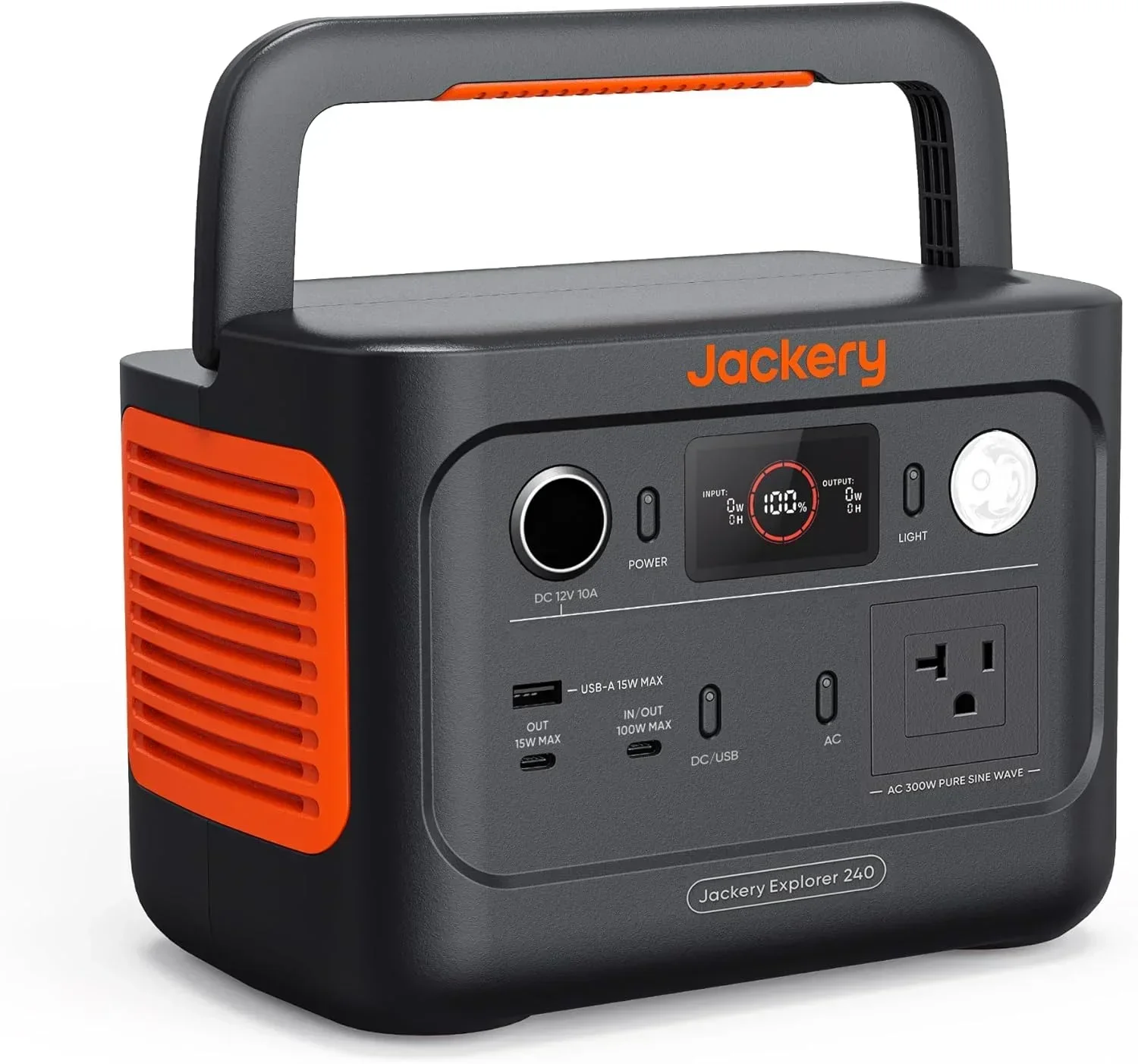
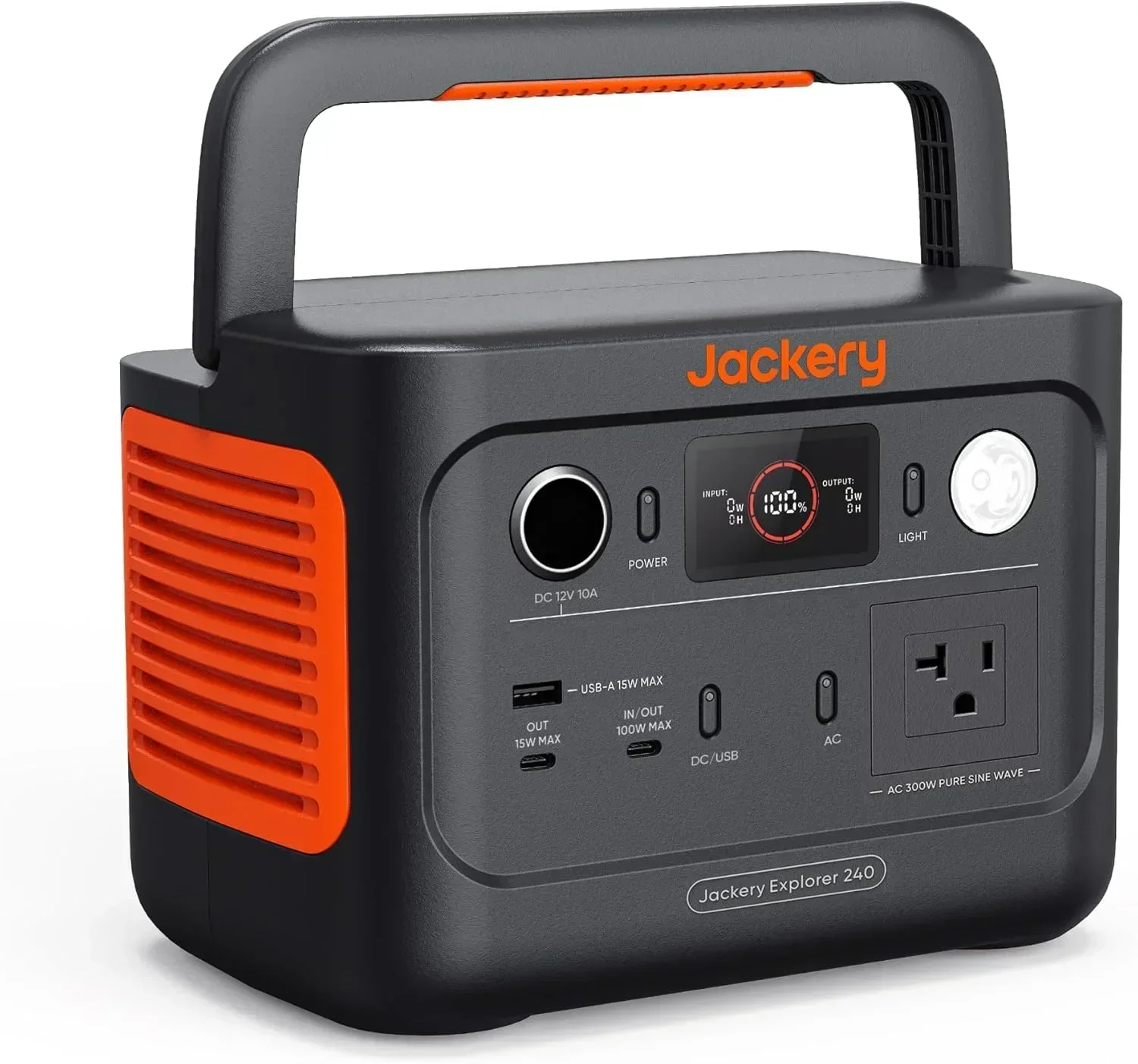
Powering a fan and charging without idling is simple with a Jackery Explorer 240 v2 power station. For the wider picture see where you can legally sleep by state, and compare notes with California's rules, another Ninth-Circuit state.
Related on Auto Roamer: safe and legal sleeping guide; sleeping at a rest area overnight.