Can you sleep at a rest area overnight?
Ask the internet 'is it legal to sleep at a rest area overnight' and you will get a confident yes and an equally confident no, often on the same forum. Here is the version that survives fact-checking: there is no national rule. Overnight rest-area parking is legal in some states, time-limited in others, and flatly banned in a handful - and the difference is which state's DOT posted the sign you are looking at.
I do not take 'it's totally legal' at face value, so I went to the statutes. What I found is that the whole question splits cleanly once you separate two things people constantly blend: federal law, which governs almost nothing about your overnight, and state policy, which governs all of it. Federal law cares about whether a rest area can sell you a hamburger; your state cares about how many hours you can park.
So the useful answer is not 'yes' or 'no' - it is a method. Know what federal law actually does (little), know the three buckets states fall into, and know the one line every state draws in the same place: resting in your vehicle is fine, camping is not. Get those and you can read any rest-area sign in the country correctly. Let me show my work.
What does federal law actually say about rest areas?
Start where everyone assumes the answer lives - federal law - because it is the biggest misconception. Interstate rest areas are governed by 23 U.S.C. Section 111 and its regulations, and the thing that statute actually cares about is commercialization: states generally may not sell merchandise or commercial services at Interstate rest areas built after 1960, with narrow exceptions like vending machines and tourism materials. That is why rest areas have vending machines and a state welcome-center brochure rack but no gas station or restaurant.
Read that again, because it is the crux: federal rest-area law is about commerce, not about you sleeping. There is no federal statute that sets - or bans - an overnight-parking time limit. Anyone who tells you 'it's federally legal' or 'federally illegal' to sleep at a rest area is citing a law that does not exist.
The direct consequence: because Washington left the overnight rule blank, each state DOT fills it in. A 'No Overnight Parking' sign in Virginia and a '24-hour limit' sign in Texas are both legal, both binding, and both state policy - not federal law. This is exactly why the answer changes at the state line, and why a blanket claim in either direction is wrong on its face.
What is the one line every state draws?
Before the state-by-state numbers, learn the distinction that is universal even though the hours are not. Every state's rest-area policy, however permissive or strict, draws the same behavioral line: resting or napping in your vehicle is allowed; camping is not. 'Camping' means the stuff that turns a parking stall into a campsite:
- Tents, awnings, and canopies - the single fastest way to convert a legal rest into a violation.
- Setting up outside the vehicle - chairs, tables, a stove, a grill, laundry lines.
- Extended or repeated stays beyond the posted limit, or returning to reset the clock.
Stay inside the vehicle, keep the footprint invisible, and obey the posted clock, and you are on the 'resting' side of the line in all 50 states. This is the same principle that governs private lots and city streets in our guide to where to park overnight - the law almost never punishes sleep, it punishes the campsite. A skeptic's tip: if you would be embarrassed to have a trooper photograph your setup, you have probably crossed the line.
Which states allow, limit, or ban overnight parking?
Now the part everyone wants - the numbers - with a warning I insist on giving first, because it is the difference between this article and the ones that mislead you. Only two state limits below are verifiable to a primary statute: California's 8 hours (21 CCR 2205) and Texas's 24 hours (Transportation Code 545.411). Every other number comes from RV and boondocking aggregators, and those sources contradict each other constantly. So treat the specifics as 'reportedly' and verify any state you plan to rely on against that state's DOT page. With that flag flying, states sort into three buckets:
- Bucket 1 - generally allow overnight: reportedly Arizona, Arkansas, Mississippi, Missouri, Montana, North Dakota, Oklahoma, Utah, West Virginia, Wyoming, and others with no restrictive posted limit.
- Bucket 2 - posted time limits: Texas 24 hours [statute-confirmed], New Mexico, Nevada, Iowa, and Kansas reportedly 24; Oregon 12; Idaho and Nebraska 10; California 8 [statute-confirmed] and Washington reportedly 8 (citable to RCW 47.38.020); shorter caps of 4, 3, or 2 hours in states like Minnesota, Kentucky, Maryland, Florida (general), Pennsylvania, and Tennessee.
- Bucket 3 - generally prohibit overnight: reportedly Connecticut, Georgia, South Carolina, Virginia, Wisconsin, and others that post 'No Overnight Parking' - plus, functionally, every short-limit state, since a 2-to-4-hour cap bans a full night just as effectively as a sign.
The practical read: the South Atlantic and parts of New England skew strict; the Mountain West and Plains skew permissive; and a posted two-hour limit is a no-overnight rule wearing a friendlier number.
Why do the popular guides contradict each other?
Here is the section the aggregators never write about themselves, and it is the most useful thing in this article. If you compare three 'rest area rules by state' guides, you will find the same state - California, Florida, Michigan, Pennsylvania - listed under a 'time limit' in one and 'prohibits overnight' in another. That is not sloppiness; it is a real ambiguity, and understanding it makes you immune to bad advice.
The reason: a posted time limit shorter than a night effectively IS an overnight ban. California's 8 hours is generous enough to count as 'allowed'; a 3-hour Maryland limit is short enough that honest people call it 'prohibits overnight,' because you cannot sleep a night in three hours. So the same state lands in different buckets depending on whether the writer sorted by 'is there a posted limit' or 'can you actually spend the night.' Both are describing the same sign.
My rule for reading any state list: ignore the bucket label and look at the number of hours. Anything at or above 8 is a real overnight; 4 is a long nap; 2 is a coffee stop. The hours never lie, even when the category headers contradict each other.
And the number that overrides every list: the one on the sign in front of you. State DOTs update policies, individual rest areas post local rules, and a specific site can be stricter than the state default. The posted sign is the law at that spot - no aggregator outranks it.
Why do rest areas exist in the first place?
To understand rest-area policy, it helps to know who they were really built for - and it was not car campers. Rest areas exist largely to keep commercial drivers legal under the FMCSA Hours-of-Service rules (49 CFR Part 395), which force truckers to stop. As the FMCSA rule is written, a property-carrying driver gets a maximum of 11 driving hours following 10 consecutive hours off duty, inside a 14-hour on-duty window, plus a required 30-minute break within the first 8 driving hours.
When a trucker hits that 11-or-14-hour wall, the law requires them to stop immediately - which is why rest areas fill with sleeping semis at night and why truck-parking shortages are a genuine safety problem. It also explains a few oddities in the state rules, like Florida's 10-hour limit for commercial vehicles versus a much shorter limit for everyone else: the longer caps are carved out to accommodate Hours-of-Service compliance.
The difference for you in a car: Hours-of-Service rules do not apply to private drivers. You have no legal cap on how long you can drive, so for a passenger car the only real constraint at a rest area is the posted time-limit or no-overnight policy - not federal driving law. When you share a rest area with sleeping truckers, you are both using it for the same reason - rest before more miles - but only one of you is legally required to be there.
Are rest areas actually safe to sleep at?
Legal and safe are different questions, and a skeptic should ask both. On balance, a maintained highway rest area is one of the safer public places to sleep in a vehicle - and usually safer than the alternatives people reach for when a rest area bans overnight. They are typically well-lit, many are camera-monitored, restrooms are open 24 hours, and a lot of them are attended or patrolled.
The safety practices are simple and worth following:
- Park near other vehicles and under lighting, ideally in the car section within sight of the trucks - there is safety in a populated, lit lot.
- Lock the doors and keep valuables out of sight. Most rest-area incidents are opportunistic theft, not worse.
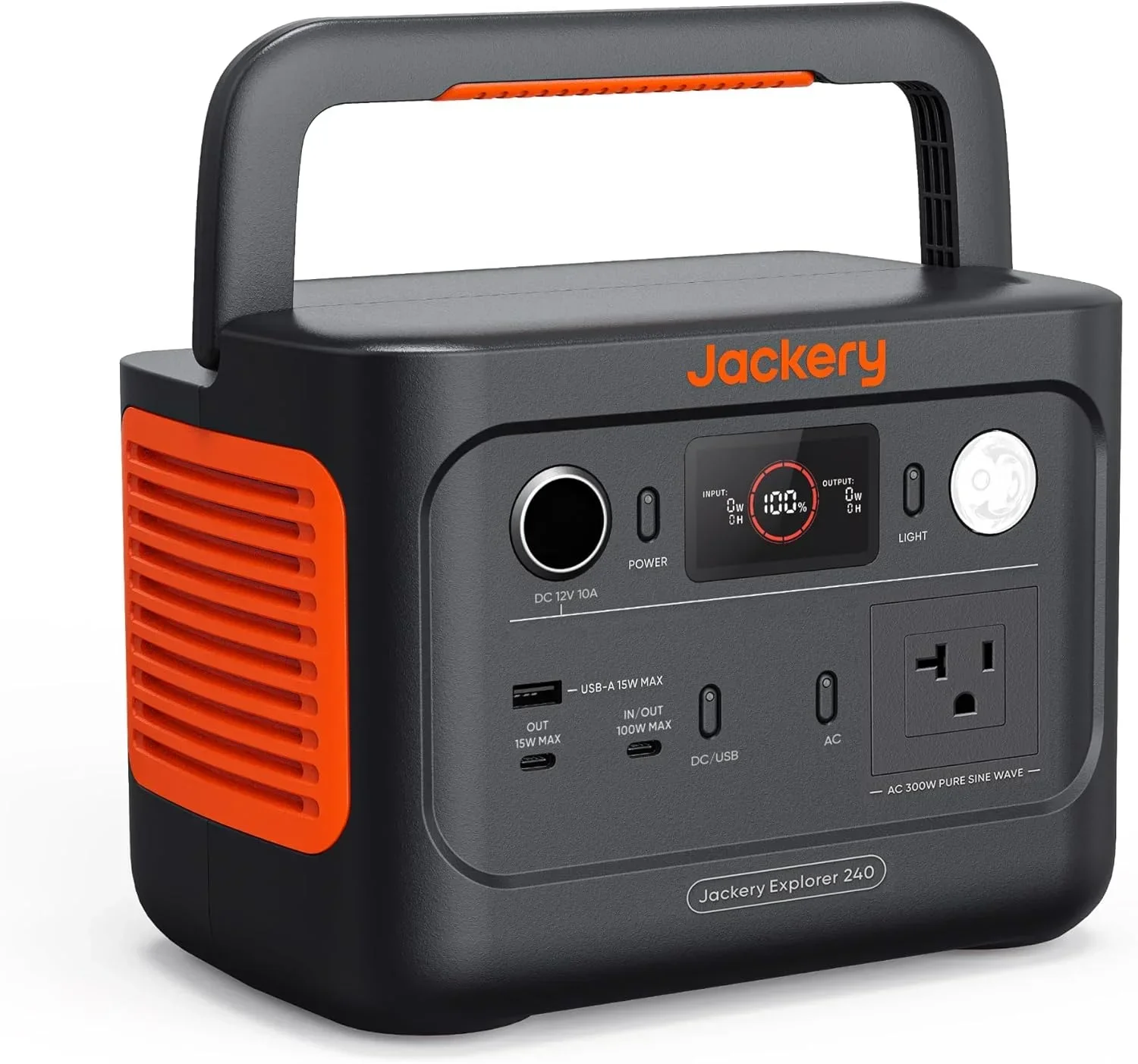
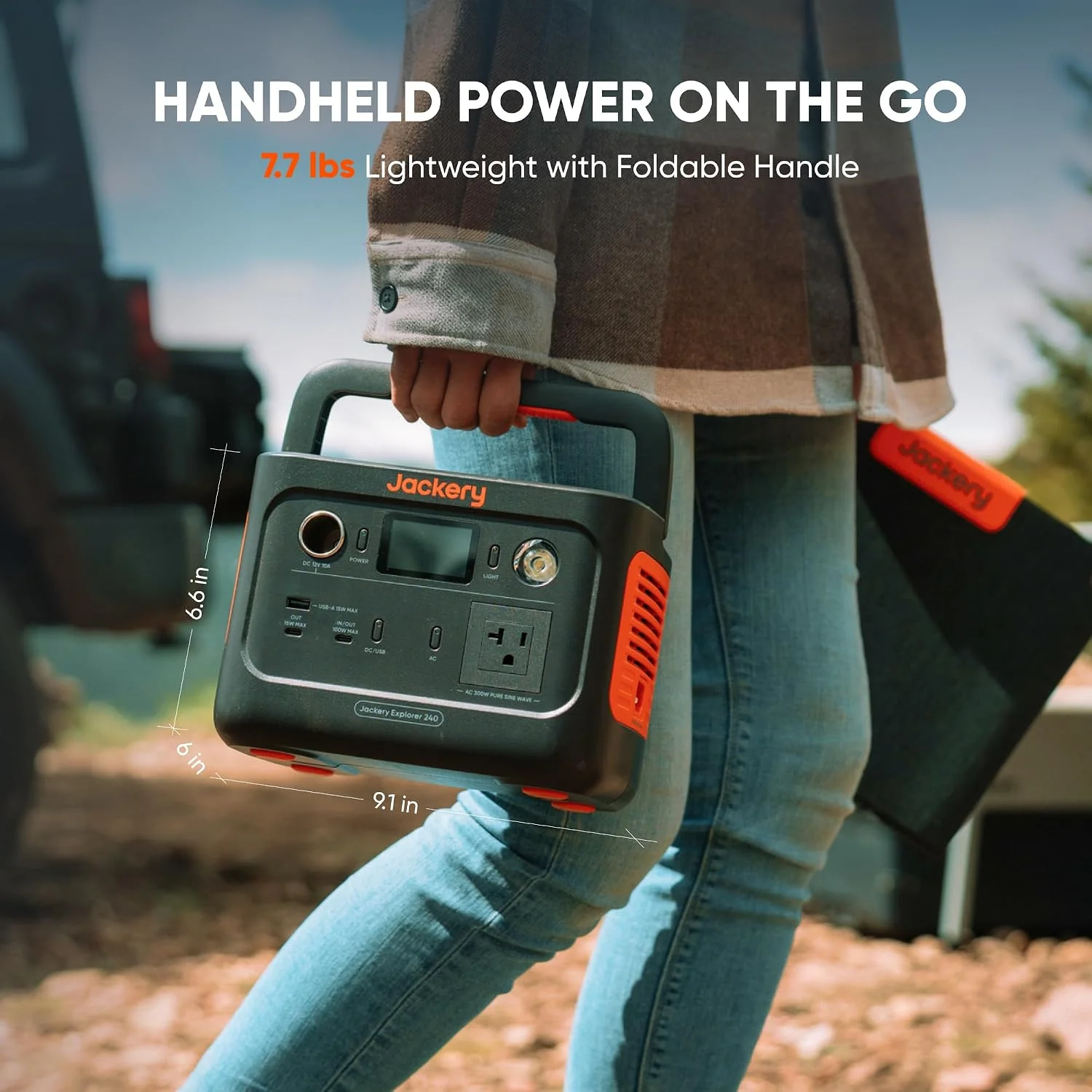
- Do not leave the engine running unattended while you sleep - it is a carbon-monoxide and fuel risk, and often against local rules; the Jackery Explorer 240 v2 power station runs a fan and your devices without it.
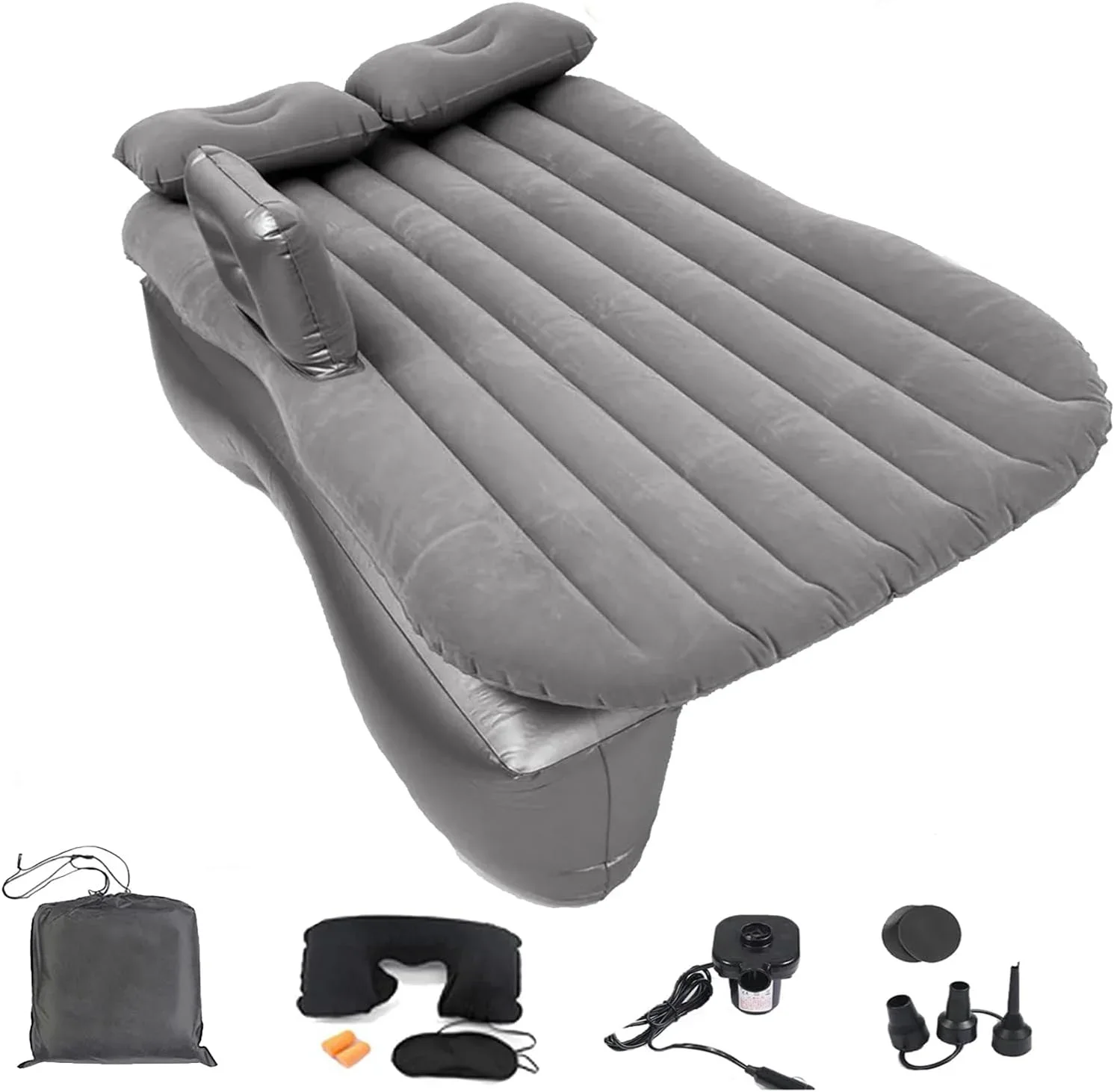
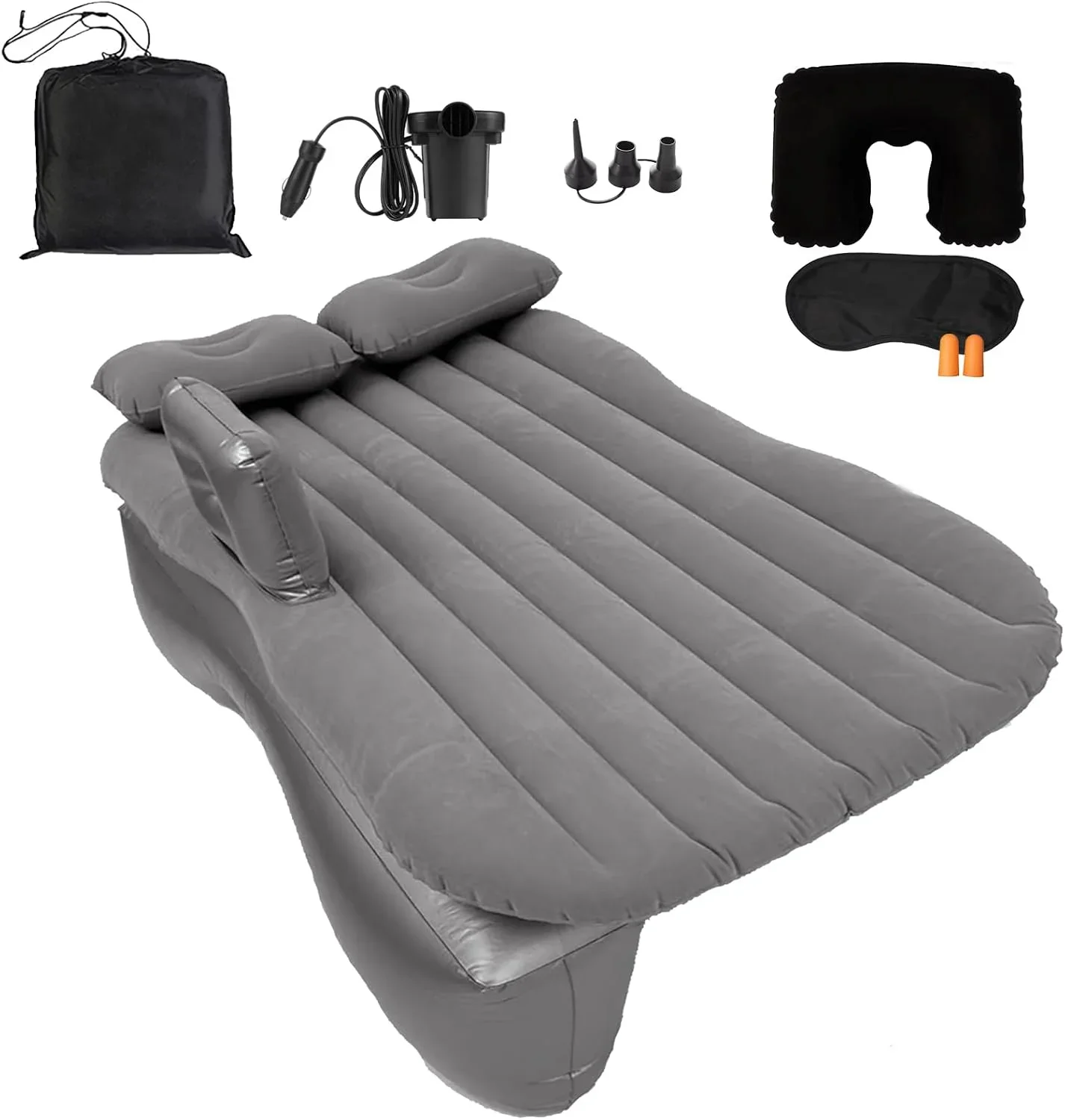
- Make the bed flat. A rest-area night is short enough already - a back-seat kit like the Onirii SUV air mattress levels the folded seats so you actually sleep the hours the sign allows.
- Trust your read of a place. If a rest area feels wrong - empty, unlit, sketchy - it is free to drive to the next one. That instinct is worth more than any statistic.
For the deeper overnight playbook - window covers, ventilation, and how to sleep without a knock - see our guide to sleeping in your car safely and legally.
How do you sleep at a rest area the legal way?
Put the whole thing together into a routine that keeps you legal in every bucket, because the safe move is to behave the same way regardless of the posted number:
- Read the sign first. It overrides every guide, including this one. No posted limit and no 'no overnight' sign usually means you are fine; a posted number is the hard rule.
- Stay in the vehicle. No tent, no chairs, no setup - the resting-vs-camping line is the one rule that is identical in all 50 states.
- Work within the clock. Even generous states cap you; arrive, sleep, and roll out inside the window rather than testing it.
- Have a plan B. If a rest area bans overnight or feels off, the next truck stop, Walmart, or state-legal option is rarely far - never force a spot that is telling you no.
Do that and you sidestep the entire 'is it legal' debate, because you are always visibly on the protected side of the line: a tired driver resting inside a vehicle, within the posted limit, moving on in the morning. That is the behavior every state's policy is written to allow.
What to do when a rest area says no
Plenty of states post 'No Overnight Parking,' so the practical skill is not just reading the sign - it is having a real move for when the answer is no. A skeptic plans for the closed door, and there is always another one nearby.
The most reliable fallback is a truck stop. Pilot, Flying J, and Love's sit at the same interstate exits as the rest areas, they generally welcome overnight parking, and they add fuel, food, and 24-hour restrooms. Park in the car section, not the truck lanes, and you are a welcome customer rather than a problem. After that come the private-lot options - a Walmart that allows it, a casino, a 24-hour business - each governed by the same permission-plus-local-ordinance rule as everywhere else.
- Truck stops: the interstate workhorse; confirm the car section and you are set.
- Permitted private lots: a quick ask inside turns a maybe into a yes.
- Public land: off the interstate, BLM and National Forest dispersed sites are genuinely camping-legal, not merely tolerated.
The one move to avoid is the tempting-but-worst option: pulling onto a freeway shoulder or an off-ramp to sleep. That is the one place explicitly illegal almost everywhere and genuinely dangerous - it is where fatigue-related shoulder collisions happen. A closed rest area is never a reason to stop somewhere unsafe; it is a reason to drive the few extra miles to a truck stop that says yes. Build that habit and a 'No Overnight Parking' sign stops being a problem and becomes just a routing note - the same way our where-to-park playbook treats it.
So where does that leave the overnight question?
Strip out the confident nonsense and the answer is clean. Sleeping at a rest area overnight is not governed by federal law - 23 U.S.C. 111 only bans commercialization. It is set state by state, running from Texas's statute-backed 24 hours down to 2-hour caps and outright 'No Overnight Parking' bans, and the only two limits you can fully trust to a primary statute are California's 8 hours and Texas's 24.
The one-sentence rule: read the posted sign, stay inside the vehicle, respect the clock, and have a backup. Do that and a rest area is one of the best legal overnight options in the states that allow it - and easy to recognize as a no in the states that don't.
Be a skeptic about the rest, too. Any guide that gives you a single confident answer for 'the rest area rule' is wrong, because there is no single rule. Verify the state you are actually in, believe the sign over the aggregator, and you will never get the answer wrong at the one location that matters - the one you are parked in tonight.