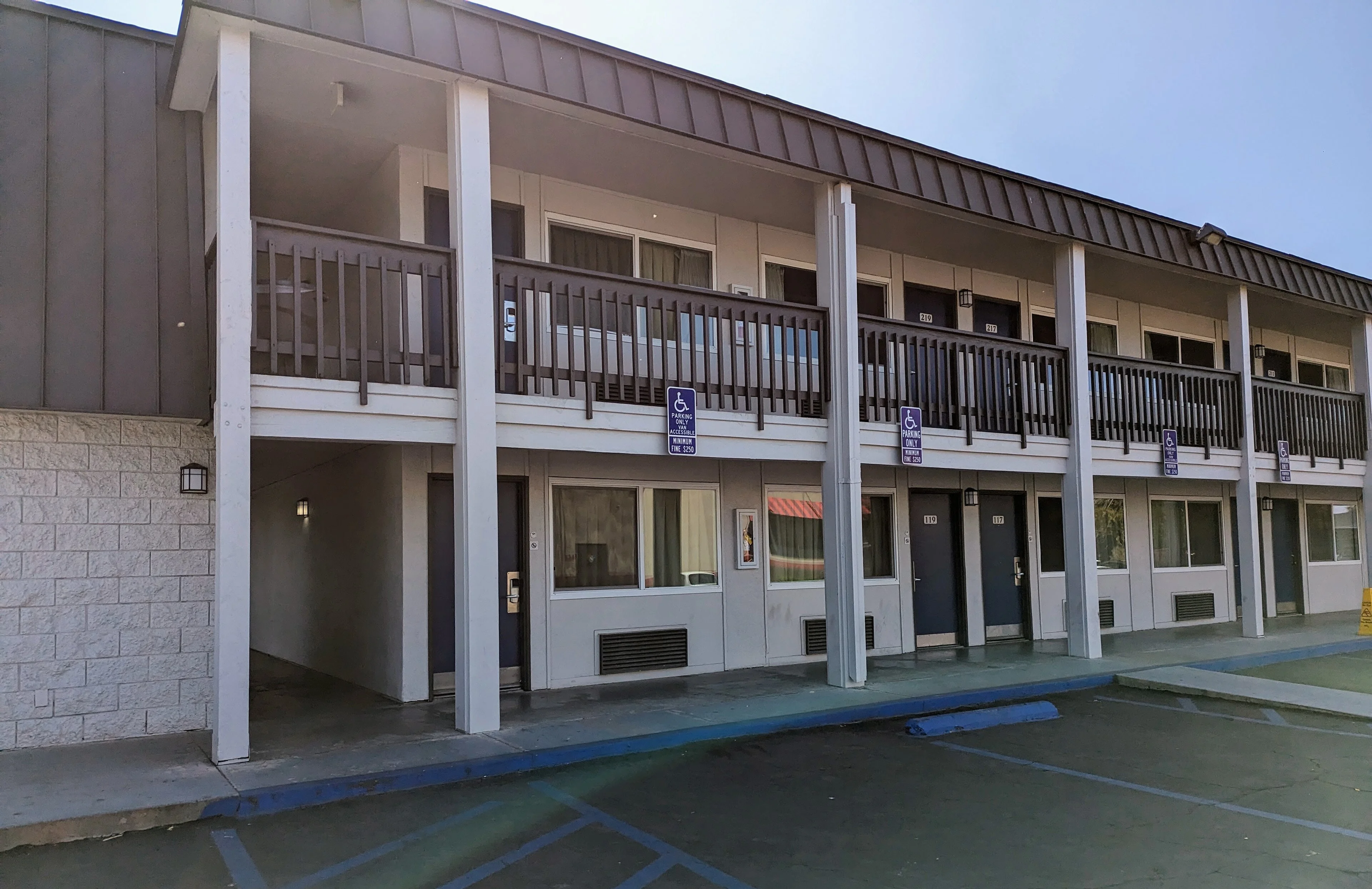
The short answer depends on one word: guest
Can you sleep in your car in a hotel parking lot? The answer turns almost entirely on a single distinction, and once you see it the rest is straightforward: are you a paying, registered guest of that hotel, or not? If you're a guest, sleeping in your car in the lot is generally fine - it's what the lot is for. If you're not, you have no right to be there, and the hotel can ask you to leave.
I read this the way I read any private-property question: it isn't governed by a single statute that says 'hotel-lot sleeping is legal' or 'illegal.' It sits at the intersection of two bodies of law - trespass, which governs who may be on the property, and local ordinance, which can independently restrict overnight vehicle sleeping. Neither one cares whether you're comfortable; both care whether you're permitted.
So this page sorts the answer by standing, not by vibe: why a hotel lot is private property, what being a registered guest actually buys you, where the trespass line falls for non-guests, the local-ordinance wrinkle that can override even a hotel's permission, what enforcement really looks like, and the one-sentence etiquette that resolves nearly all of it. The goal is that you know exactly where you stand before you recline the seat.
A quick note on why this matters more than it seems: a hotel lot feels semi-public because anyone can drive through it, but 'open to the public for business' is not the same as 'open to the public to sleep in.' That gap is where travelers get surprised - and it's the gap the rest of this page closes.
I want to flag one honest limit up front, because it shapes everything that follows. There is no nationwide statute you can point to that settles this, and any page that hands you a flat 'yes it's legal' or 'no it's not' is flattening two separate questions into one. What I can give you instead is the structure the answer actually has: a private-property layer that is the same everywhere, and a local-ordinance layer that varies by city. Learn the structure and you can reason about any lot you pull into, rather than hoping a stranger's blog described your exact town.
Why a hotel lot is private property, not public
Start with the foundation, because everything else rests on it. A hotel parking lot is private property. The owner may dictate its use and access, and your presence there is a license the owner extends - not a public right you hold. That single fact reframes the whole question from 'is it legal to sleep here' to 'am I permitted to be here.'
A hotel lot is private property. You are there on the owner's permission, which they can withdraw. The legal question isn't whether sleeping is illegal in the abstract - it's whether you have permission to be on that lot at all.
What follows from that, legally:
- Permission is the whole ballgame. With it, you're a welcome user of the lot; without it, you're a trespasser the moment you're asked to leave and don't.
- The owner sets the terms, including 'guests only' or 'no overnight parking,' and can enforce them.
- No statute grants you access. Unlike a public rest area with posted hours, a private lot offers no default right to stay.
The intuition that trips people up is treating 'anyone can drive in' as 'anyone can stay.' A lot open for business invites you to shop, dine, or check in - it does not invite you to bed down. Courts draw that distinction as a matter of the owner's implied license: the invitation is scoped to the business purpose, and stepping outside that scope, or overstaying it, returns you to the default, which is that you need the owner's leave to be there at all. This is exactly why a paying guest and a passing stranger can sit in identical cars, in identical spaces, and stand on completely different legal ground.
Registered guests: your standing to be in the lot
Now the good news, and it's the case most travelers are actually in. If you've booked a room, you're a registered guest, and parking - and sleeping - in the hotel's lot generally comes with that. The lot exists for guests' vehicles, so a guest resting in their car is using the property as intended.
- You have permission by virtue of your booking. A registered guest has standing to be in the lot that a stranger doesn't.
- It's common and reasonable - a guest who arrives exhausted, or who prefers the car for a pet or an early start, is a normal use, not a problem.
- Tell the front desk your plan. Even as a guest, a quick heads-up that you'll be in the vehicle avoids a well-meaning security check at 2 a.m.
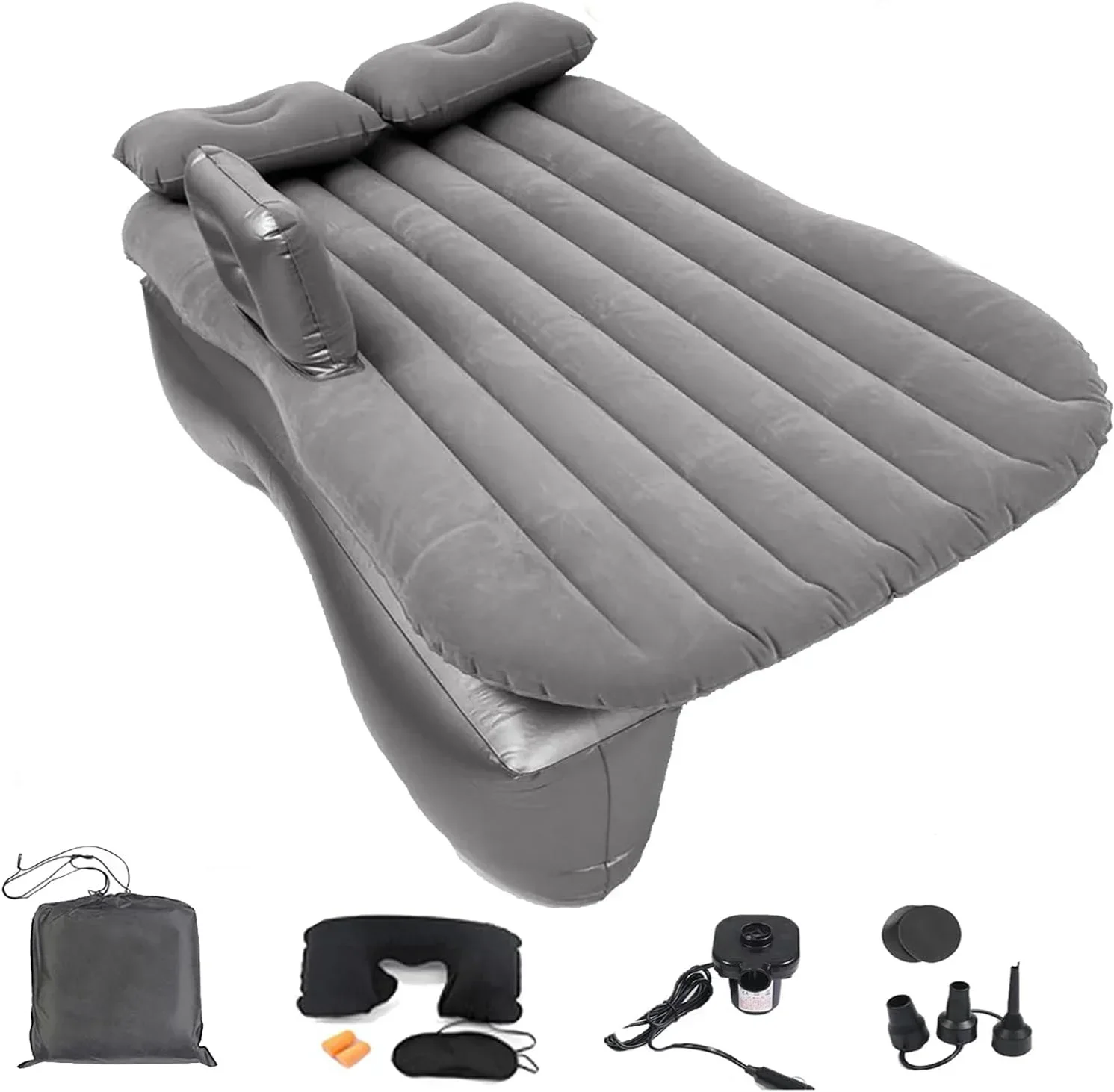
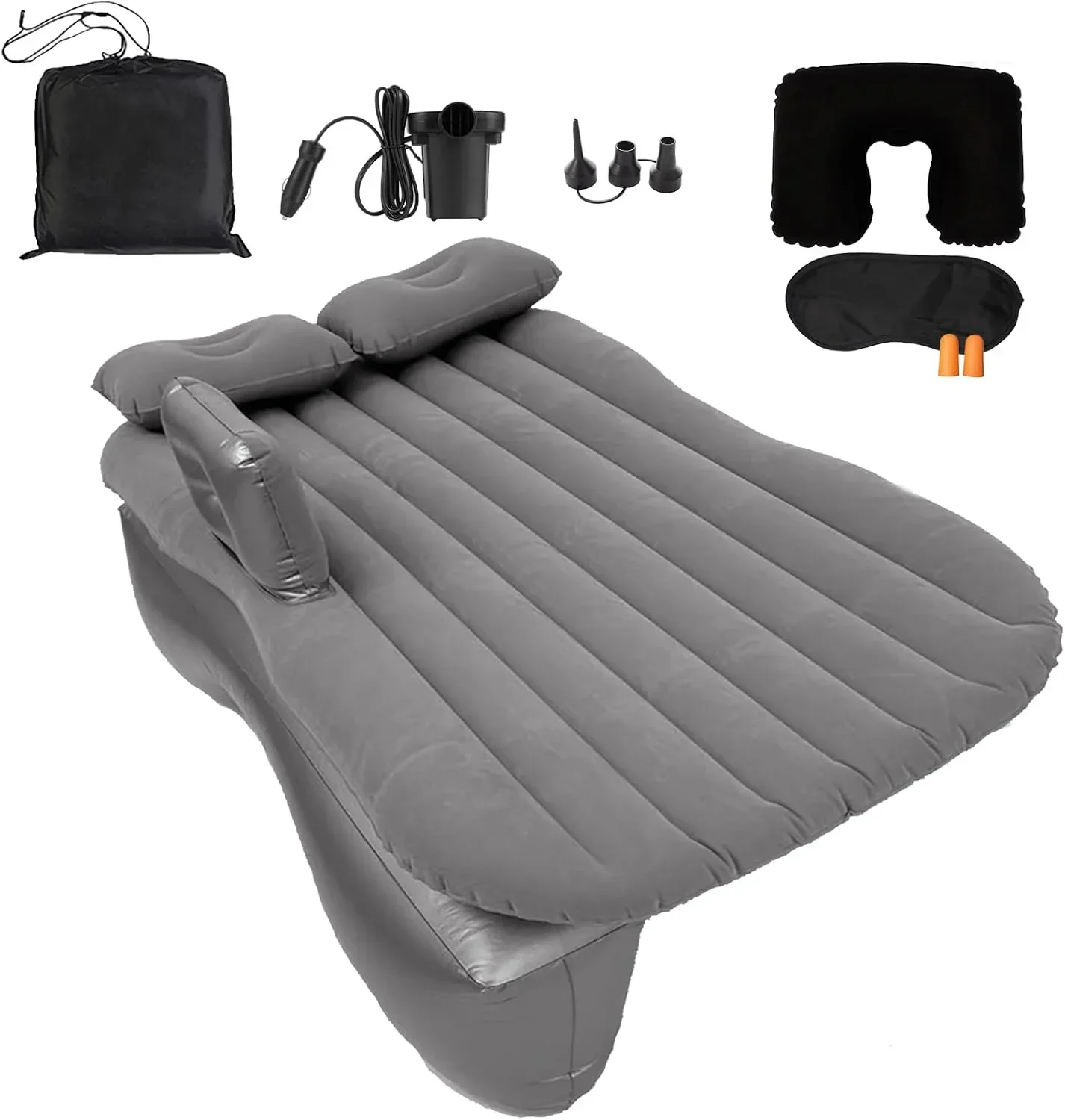
The comfort side is easy to solve, and it's worth solving because a guest paid for rest either way. An Onirii SUV air mattress levels a folded back seat into a real bed in one inflate, so a night in the car - by choice or necessity - is genuine sleep rather than a cramped compromise in a lot you're fully entitled to be in.
One honest caveat even for guests: the hotel can still object to how you use the lot. Being a guest gives you standing to be there; it doesn't license setting up camp with gear spread across three spaces. Keep it to sleeping quietly in your vehicle and your guest standing holds.
There's also a subtler trap in assuming the cheapest room makes you bulletproof. Booking a room does buy you the strongest standing there is on that property - but it doesn't cancel a city ordinance that reaches private lots, and it doesn't stop a manager from asking why you're in the car instead of the room you paid for. The guest who mentions the plan at check-in - 'I may sleep in my vehicle tonight, just so your night staff knows' - closes both gaps in one sentence. It turns a potential 2 a.m. misunderstanding into a note in the log, and it costs nothing but a moment of candor.
Non-guests and the trespass line
Here's the harder case, and the one the confident internet advice tends to gloss over. If you're not a guest, you have no inherent right to sleep in a hotel's lot, and the situation is governed by trespass law. You may be asked to leave - especially if the lot is full, reserved for guests, or hosting an event - and refusing turns it criminal.
As a non-guest, refusing to leave a hotel lot after being asked is criminal trespass - commonly a misdemeanor with fines aggregators cite typically around $100 to $1,000, and possible jail. The risk isn't the sleeping; it's the staying after a no.
How to stay on the right side of that line:
- Don't assume; ask. A non-guest with permission from the front desk is fine; a non-guest relying on going unnoticed is one knock away from being asked to leave.
- If asked to move, move. The moment permission is denied, staying is the actual offense - comply and go.
- Full and urban lots are the strictest. A packed city hotel is far more likely to say no than a quiet highway property with empty spaces.
Those fine and penalty figures are aggregator estimates rather than a fixed schedule, so treat them as the shape of the risk, not a precise quote - the governing point is the trespass principle, which is consistent.
It helps to see why the offense sits where it does. Trespass law doesn't punish you for being tired in a parking space; it punishes remaining on land after the person with authority over it has told you to go. That's why a non-guest who is asked to leave and simply drives off has committed no crime at all, while the same person who argues, delays, or comes back has crossed into a misdemeanor. The line is behavioral, not locational - which is genuinely good news, because it's a line entirely within your control.
It also explains why full and event-night lots are the flashpoints. When a hotel needs its spaces for paying guests, an unfamiliar occupied car stops being invisible and becomes a space the property actively wants back. A non-guest counting on going unnoticed has picked exactly the night the math turns against them. If you're not a guest, assume the answer on a busy property is no, and ask before you settle in rather than after a knock.
The local-ordinance wrinkle that overrides permission
Now the wrinkle that even careful travelers miss, and the reason hotel permission isn't always the end of the analysis. Some cities independently ban overnight vehicle sleeping - even on private property - by ordinance. Where they have, you can get a ticket or a tow regardless of whether the hotel is fine with you.
- Hotel permission is necessary but not always sufficient. In a strict city, the hotel's yes doesn't cancel the city's no.
- These ordinances have been spreading. After the 2024 Supreme Court decision in City of Grants Pass v. Johnson (June 28, 2024), which held that cities may enforce anti-camping rules on public property without violating the Eighth Amendment, many localities tightened overnight-sleeping rules that reach private lots.
- Ask about local rules, not just hotel rules. The front desk in a strict town often knows, and a quick check saves a windshield ticket.
Grants Pass itself is about public property, so don't overread it as directly controlling a private hotel lot - but its practical effect has been more local ordinances, which is exactly the layer that can override a hotel's permission. For how these rules vary place to place, the state-by-state legality guide maps the broader picture.
Here is the mechanism, so you're not just taking the wrinkle on faith. Grants Pass didn't create any private-lot rule; it removed an Eighth Amendment argument that had made some cities hesitant to enforce anti-camping and anti-overnight-parking measures at all. With that hesitation gone, more localities have written or dusted off ordinances - and the broadest of those reach vehicle sleeping anywhere inside city limits, private lots included. That's why you'll increasingly see a 'No Overnight Parking Per Local Ordinance' sign on a lot whose owner would otherwise not care. When the sign cites a city code rather than the hotel's own rule, that's the ordinance layer talking, and the hotel's blessing can't lift it.
Towing and enforcement: what actually happens
Let's be concrete about the downside, because knowing the enforcement reality helps you weigh the risk honestly. When a hotel or its security notices an unfamiliar car occupied overnight, the usual sequence is a check, a request to move, and - if that fails or if you're a non-guest - a tow at your expense.
- The knock comes first. Security or a manager may check on an occupied vehicle and ask your business; a guest answer resolves it.
- Refusal escalates. A non-guest who won't leave can bring police and a trespass charge.
- Towing is common and expensive. Aggregator estimates put the initial tow at roughly $100 to $300, plus about $20 to $75 a day in storage while the car sits in the yard - a costly way to end a night you were trying to do on the cheap.
Notice how quickly that storage line compounds. An impound isn't a single charge you pay and walk away from; at $20 to $75 a day, a car you can't retrieve until the next business day - or until you've scraped together the release fee - keeps billing while it sits. Those figures are aggregator estimates, not a posted schedule, and they vary by city and tow operator, but the direction is reliable: a tow is the single most expensive way this goes wrong, and it lands hardest on the traveler who had the least to spend.
The pattern to notice is that almost every bad outcome starts with being somewhere you didn't have permission to be. A guest who told the desk their plan rarely sees any of this; a non-guest hoping to go unnoticed courts all of it. Permission, again, is the whole difference. And permission is cheap - a single question at the desk - while its absence is what turns a free place to sleep into a several-hundred-dollar mistake.
The etiquette that gets you a yes
Because so much rides on permission, the highest-value habit is also the simplest: ask the front desk. As a guest planning to sleep in the car, or a non-guest hoping to, a direct question converts the entire gray area into a clear answer, and it costs you nothing.
- Ask directly. 'I'd like to rest in my car in your lot tonight - is that okay?' A yes from the desk is real permission; a guess is not.
- Book the room if you can. The cleanest standing is to be a paying guest, which usually makes the lot yours to rest in.
- Pick your property. A highway or long-haul hotel with an empty lot is far more likely to say yes than a full urban one.
- Stay low-profile. Park sensibly, don't idle, keep it quiet - a discreet car is an easy yes; a mini-campsite is not.
There's a reason the question works better than silence. A front desk that has said yes now has a reason to leave you alone - your car is expected, not suspicious - and if a security guard circles the lot at 2 a.m., the answer is already on record. The traveler who skips the question is betting that nobody notices; the one who asks has removed the bet entirely. On a quiet highway or long-haul property with an empty lot, that yes comes easily; on a full urban property it may not come at all, which is itself useful information to have before you recline the seat rather than after.
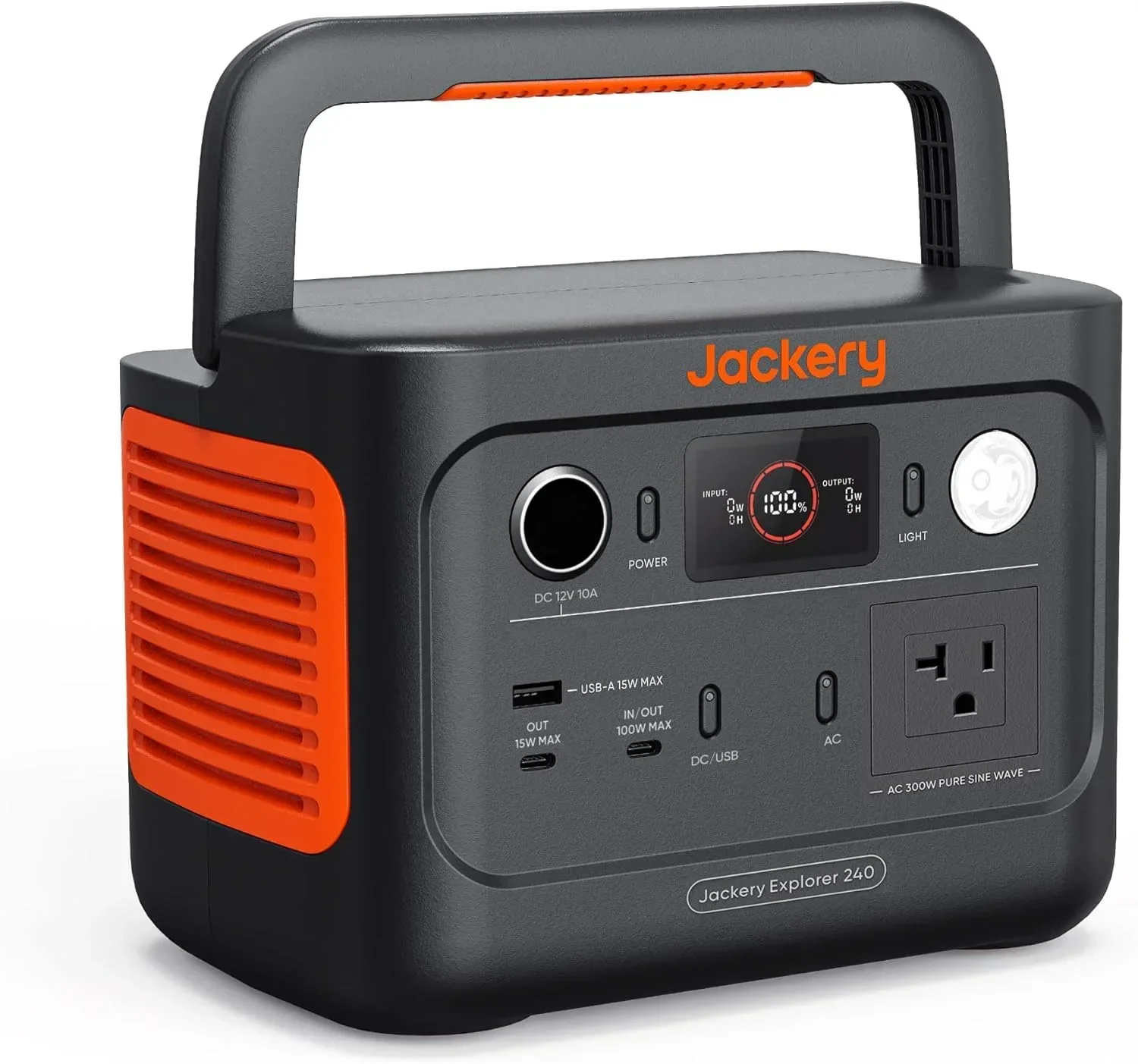
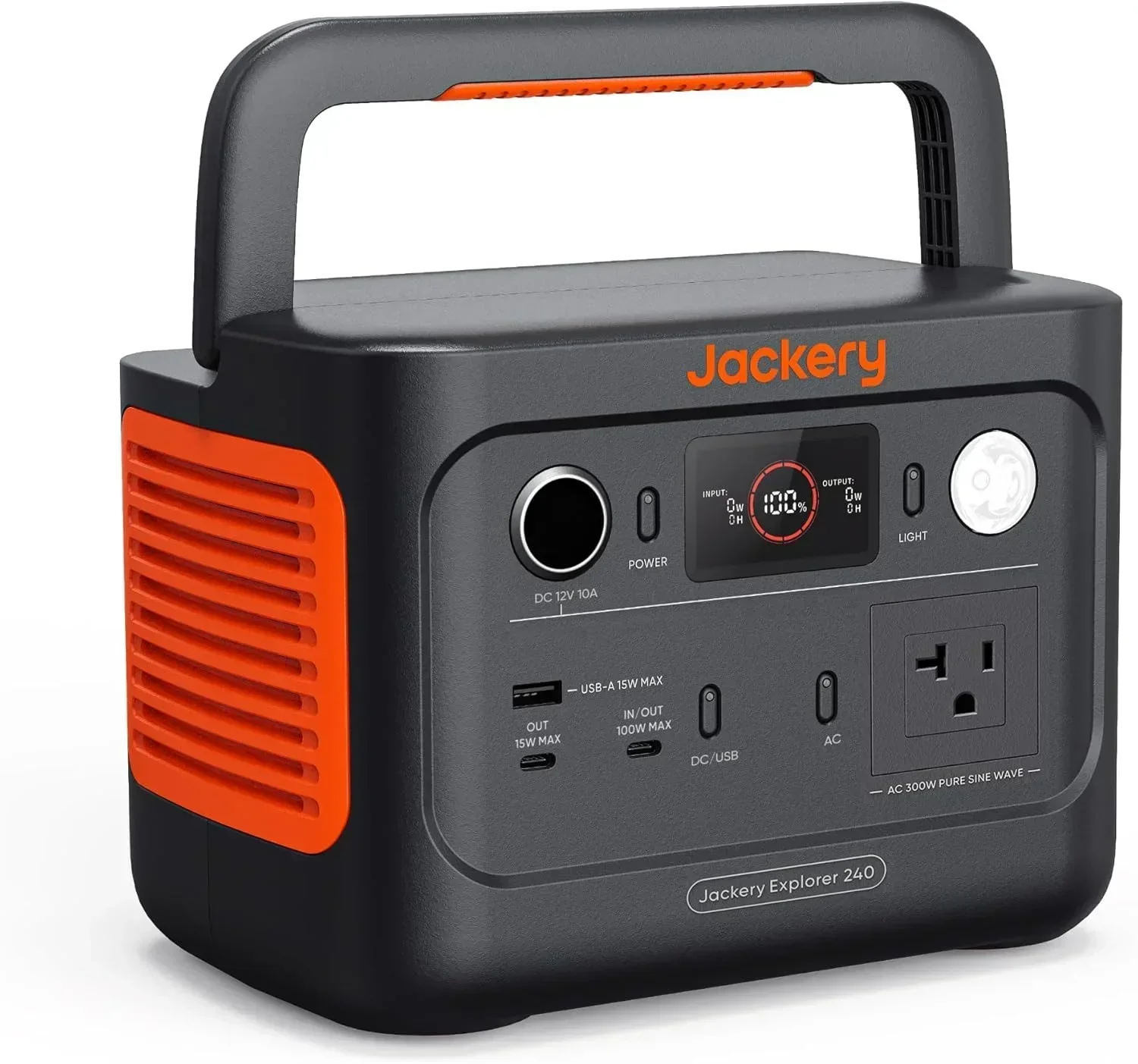
Keeping the car livable without idling helps you stay that discreet. A Jackery Explorer 240 v2 power station runs a fan and charging overnight and recharges off the 12V socket as you drive, so you're comfortable without the engine noise and fumes that draw a security check in the first place.
The bottom line on a hotel-lot night
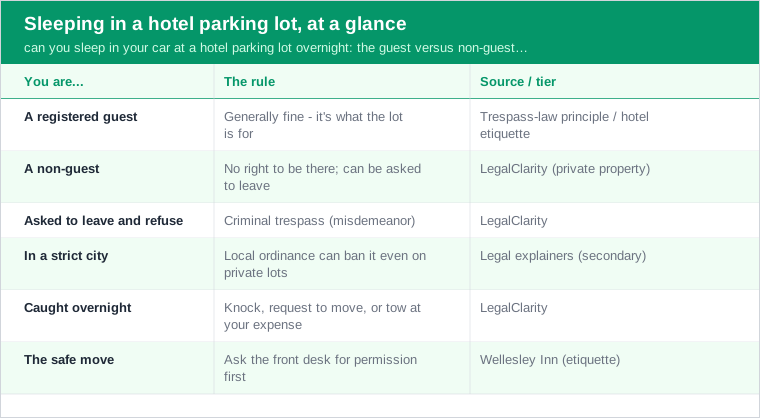
Put it together and the hotel-lot question resolves cleanly once you sort it by standing. A registered guest can generally sleep in the car in the lot; a non-guest is on private property with no default right and real trespass exposure; and in some cities a local ordinance can override even a hotel's yes.
The researcher's checklist:
- Be a guest if you can - it's the cleanest standing to be in the lot, and it comes with a room if you want it.
- If you're not a guest, get permission - ask the front desk, and if the answer is no, move on without argument.
- Check the local rule, since a city ordinance can apply even on private property.
- Stay low-profile and don't idle - a discreet, permitted car rarely has a problem.
If you remember nothing else, remember the order of operations: standing first, ordinance second, discretion third. Standing tells you whether you have any business being on the lot at all - guest yes, non-guest only with permission. The ordinance check tells you whether the city has overruled the hotel regardless. And discretion - parking sensibly, not idling, staying quiet past 2 a.m. - is what keeps a permitted stay from ever becoming a conversation. Get the first two right and the third one is easy; skip the first two and no amount of tidiness saves you from a $100 to $300 tow.
Do that and a hotel lot can be a safe, lit, well-located place to sleep - especially when you're already booked in. For the discretion habits that keep any overnight stop uneventful, the safe and legal sleeping guide is the companion to this page, and the where-to-park-overnight guide covers the alternatives when a lot says no.
Related on Auto Roamer: overnight parking at Walmart.