
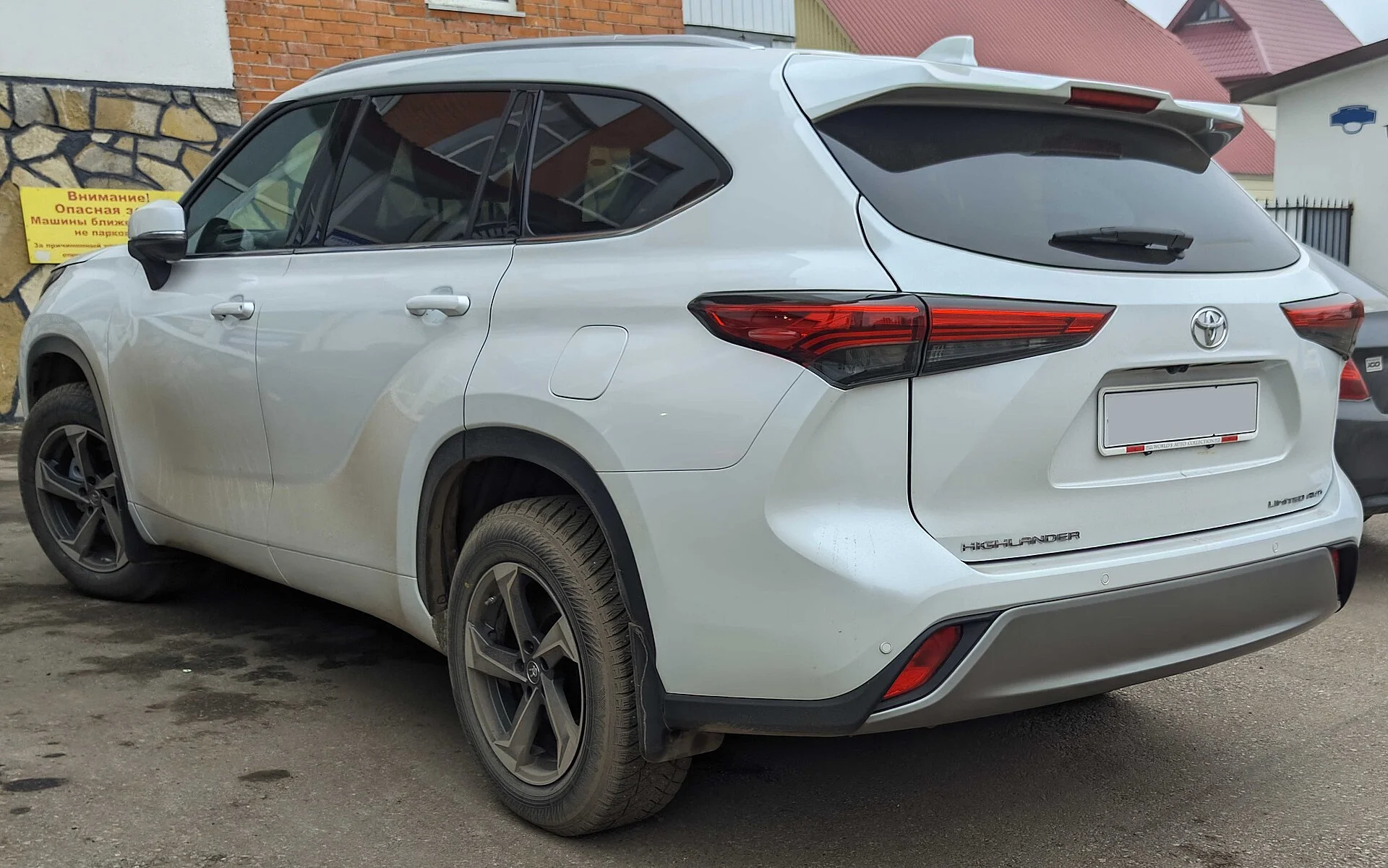
The Short Answer: A Warm, Capable Winter SUV
The 2020-2024 Toyota Highlander is a good winter car-camping vehicle, and it wins where cold-weather sleeping is actually decided: staying warm, reaching the site, and managing moisture. Available all-wheel drive on every trim gets you there, standard remote start on most trims warms the cabin before you climb in, and 84.3 cubic feet of folded cargo gives you a real, sealed, insulated space to sleep inside, away from wind and snow.
Sleeping inside an SUV is a genuine winter advantage over a tent or a truck bed, because the metal box holds heat and blocks weather. Fold the second and third rows and the Highlander's cargo floor stretches to about 83 inches, enough for most adults to lie down at a slight diagonal, in a cabin you can insulate and pre-warm. That combination is what makes it a comfortable cold-weather basecamp.
The one weakness to manage is glass, specifically the panoramic moonroof on higher trims, which loses heat faster than sheet metal on a cold night. The good news is that glass is the easy problem to solve with insulation, and this guide covers exactly how, alongside the pad R-values, the safe idling rules, and the condensation control that make winter sleeping work.
The figures here are the Highlander's published dimensions plus standard cold-weather insulation and safety facts, with owner-reported measurements flagged as such. Where a feature depends on trim, like remote start or the moonroof, we say so, because your specific Highlander shapes your winter setup.
The Sleeping Space: 83 Inches, Nearly Flat
The Highlander's cargo progression suits sleeping inside. Behind the third row you have 16 cubic feet, behind the second row 48.4 cubic feet, and with both rear rows folded 84.3 cubic feet. That maximum is the winter bedroom, a large enclosed volume you can insulate and warm far more easily than a tent.
With the seats folded, the cargo floor stretches to about 83 inches long, enough for most adults to lie down at a slight diagonal. That is a generous length for a midsize three-row, clearing most adults with room to angle. The rear liftgate opening measures about 43 inches wide by 29 inches tall, which sets how you load a platform and gear through the back.
One honest imperfection: the folded load floor is close to flat but not perfectly level, leaving a slight step where the seatbacks meet the cargo area. In winter that step matters a little more than in summer, because you want a continuous insulated surface under you with no gap for cold to pool. A thick pad or a simple leveling layer smooths it out, which you want anyway for warmth.
The takeaway is that the Highlander gives you an adult-length, nearly flat, fully enclosed space, exactly the kind of sealed box that makes winter camping comfortable when you insulate it. The Highlander cargo-dimensions guide details the folded bay, and the can-you-sleep-in-a-Highlander guide covers the fundamentals of fitting a bed inside.

Getting There: AWD and Ground Clearance
A winter camper is only as good as its ability to reach a snowy site, and here the Highlander is well equipped. All-wheel drive is available on every 2020-2024 trim, from the base L through the Platinum, so you can spec traction regardless of budget. For snow-covered forest roads and icy campground approaches, that available AWD is the difference between reaching your spot and turning back.
Ground clearance is a more modest 8 inches, which is honest to state plainly. That is enough for plowed roads, packed snow, and light unplowed access, but it is a car-based SUV, not a high-clearance off-roader. Deep, unbroken snow or rutted ice roads will exceed it, so match your winter destinations to a crossover's clearance rather than expecting truck-like capability.
The practical read: the Highlander's AWD gets you traction, and its 8 inches of clearance sets a sensible ceiling on terrain. For the vast majority of winter car camping, which is reaching a snow-dusted trailhead or a plowed campground, that combination is exactly right. For backcountry approaches through deep snow, it is the wrong tool, and a truck like the Tacoma or Colorado is a better fit.
Plan your winter trips around that reality and the Highlander rarely lets you down. It is a reach-the-site-and-sleep-warm vehicle, not a break-trail one, and knowing the difference keeps you from getting stuck a long way from a plow. Carry basic recovery items, traction boards and a shovel, for the one time a plowed lot ends in an unplowed spot, since even a capable AWD crossover can be stopped by a drift its 8 inches cannot clear.
The Warm-Up Advantage: Remote Start
Winter's cruelest moment is climbing out of a warm bag into a cold cabin, and the Highlander softens it. Remote start, Toyota Remote Connect, is standard on the LE, XLE, XSE, Limited, and Platinum trims, letting you warm the cabin before you get in or before you get up. On a cold morning you trigger it from the bag, let the heater run, and rise into a warm space rather than a frigid one.
Used correctly, remote start pairs with the safe idling rules that follow: a short burst to take the edge off, not an all-night crutch. A common cold-weather approach is a 10-to-15-minute heater burst to warm the cabin, then shutting the engine off to sleep, and remote start makes that burst effortless to trigger without leaving your bag.
The one caveat is trim. Remote start is standard on most Highlanders but not the base L, so if warming the cabin remotely matters to you, confirm the trim. On trucks and SUVs alike this is the kind of feature that seems minor in the showroom and feels essential at 6 a.m. in January.
Combined with the sealed cabin and good insulation, remote start makes the Highlander's mornings genuinely pleasant for winter camping. It does not replace a warm sleep system, but it removes the worst friction of cold-weather car camping, the icy wake-up, which counts for a lot over a multi-day trip.
The Moonroof Problem and How to Solve It
Now the Highlander's one real winter weakness. Higher trims offer a panoramic moonroof, a large single-pane glass area that loses heat faster than sheet metal on a cold night. Glass is a poor insulator, and a big pane of it directly over your sleeping space bleeds warmth to the cold sky all night, undoing some of the sealed cabin's advantage.
The fix is cheap and effective: insulate the glass. A roll of Reflectix reflective insulation adds about R-1 of insulation per layer over a window or a moonroof, costs about $18, and is enough to cut covers for most of a vehicle's windows. The double-bubble material is about a quarter-inch thick, so it cuts stiff and holds itself in a frame or against the moonroof glass without much fuss.
Cover the moonroof and the side windows both. One owner reported that with all windows except the windshield covered in Reflectix, the interior stayed 3 to 4 degrees warmer than outside by morning. That is a meaningful gain from an $18 roll, and it directly counters the moonroof's heat loss, turning the Highlander's one weakness into a solved problem.
The broader point: the Highlander's glass is its weak thermal link, and glass is the easiest thing to insulate. Panel over the moonroof and windows with Reflectix, and the sealed cabin does the rest. A trim with a moonroof is not a worse winter camper once you cover it, it just needs one more panel than a trim without.
Cut the panels at home before the trip, not in the cold at camp. Because the double-bubble material is about a quarter-inch thick and cuts stiff, a set of pre-sized covers for the moonroof and each window presses into place in minutes with numb fingers, where cutting to fit in the dark is miserable. Label each panel to its window and the whole insulation job becomes a two-minute step you actually do every night rather than skip.
The Sleep System That Keeps You Warm
Insulating the vehicle only matters if you also insulate yourself from below, which in winter is where most heat is lost. The ground, or a cold cargo floor, pulls warmth out of you all night, so a winter sleeping pad should have an R-value of R-5.0 or higher to block that cold coming up from below. Below R-5.0, even a warm bag loses the battle to the cold floor.
Match the pad to the cold you expect. The Exped MegaMat sleeping pad has an R-value of 8.1 and is rated to insulate down to about -40 degrees, which is deep-winter overkill for most trips but bombproof insurance for hard cold. For milder nights, closed-cell foam provides roughly R-3.6 to R-4.0 of insulation per inch of thickness, so a couple of layers or a foam-plus-air-pad stack reaches the R-5.0 target affordably.
The cabin helps your bag do its job. Overnight, the cabin temperature typically tracks within about 10 to 15 degrees of the outside air once the engine is off, so an insulated Highlander interior runs meaningfully warmer than the open night. That means your bag and pad face the cabin temperature, not the raw outside low, which is the whole reason sleeping inside beats a tent in the cold.
Stack it together: an R-5.0-or-higher pad under you, a bag rated for the night's low, and an insulated cabin holding within 10 to 15 degrees of outside. That system keeps you warm in the Highlander through genuinely cold nights, and it scales, more pad and more bag for colder trips, without changing the vehicle at all.
Idling Safely and Managing Carbon Monoxide
The winter temptation is to run the engine for heat, and it must be managed with hard rules, because the danger is invisible. Carbon monoxide is an odorless, colorless gas, and the CDC warns never to idle a vehicle with a snow-blocked exhaust, because carbon monoxide can build up inside within minutes. Before any idling, clear snow from around the tailpipe, every time.
Keep idling brief and ventilated. The safe approach is a 10-to-15-minute heater burst to warm the cabin, then shutting the engine off to sleep, never running the engine all night. Whenever you do idle for heat, crack a window about every 10 to 15 minutes to vent any buildup, since you cannot smell or see carbon monoxide and a sealed idling cabin is exactly where it accumulates.
The reason the Highlander tolerates short idling so well is its insulation. A well-Reflectixed cabin holds the warmth from a 15-minute burst long enough to fall asleep, so you are not tempted to run the engine longer. Good insulation is a safety feature here, not just a comfort one, because it shortens how much idling you need.
Treat these as non-negotiable: clear the tailpipe, burst-heat only, crack a window when idling, and never sleep with the engine running. Follow them and the Highlander is a safe winter camper; ignore them and no vehicle is. The rules are simple and they are absolute.
Controlling Condensation
The other invisible winter problem is moisture, and it comes from you. One sleeping person exhales roughly a liter, about a quart, of water vapor overnight, which condenses on cold glass and metal inside the vehicle. Wake to dripping windows and a damp bag and your next night is colder, because wet insulation stops insulating.
The fix is counterintuitive but essential: crack a window slightly while you sleep, which reduces condensation from your breath and lowers carbon-monoxide risk at the same time. That small gap lets the moist air escape rather than condensing on the cold surfaces, and it costs you very little warmth compared to the dampness it prevents.
The Reflectix panels help here too. By keeping the interior glass surfaces warmer, insulation reduces the cold surfaces where your breath condenses, so an insulated Highlander fights moisture better than a bare one. Pair the cracked window with covered glass and you keep both the cold and the damp at bay.
Manage moisture and you protect your whole sleep system across a multi-night trip. A dry bag and pad on night three are as warm as on night one, which is the difference between a comfortable winter weekend and a progressively colder one. The cracked window is the single habit that makes it happen.
Who the Highlander Suits in Winter
The Highlander winter-camps best for the solo camper, couple, or small family who wants to sleep inside a warm, sealed SUV and reach plowed or lightly snowy sites. Its 83-inch folded floor, available AWD, standard remote start on most trims, and insulate-able cabin make it a comfortable, low-drama cold-weather basecamp. For reach-the-trailhead winter trips, it is an excellent choice.
It suits buyers who already want a three-row family SUV and value that it doubles as a genuinely warm winter camper. The sealed cabin holds heat, the moonroof's weakness is a cheap fix, and the whole vehicle is easy to live with. For most families, that dual role is exactly what they need from one vehicle.
It suits deep-snow backcountry campers less well, purely on its 8 inches of ground clearance. If your winter camping means breaking trail through unplowed snow to remote sites, a higher-clearance truck serves better, and you would sleep in the bed rather than inside. The Highlander is a reach-the-site-and-sleep-warm SUV, not a trail-breaker.
Confirm two trim details for winter: remote start, standard on all but the base L, and whether the vehicle has the panoramic moonroof you will want to insulate. Neither changes the core answer, but both shape your setup. Compare how the same vehicle handles the opposite season in our guide to the Highlander for summer camping.

The Verdict: Warm Inside, Once You Cover the Glass
Is the Toyota Highlander good for winter car camping? Yes, distinctly, for sleeping inside a warm sealed SUV and reaching snowy but accessible sites. Its 84.3 cubic feet and 83-inch folded floor make an adult-length bed, available AWD gets you there, and standard remote start on most trims warms the cabin before you rise. It is a comfortable, capable cold-weather basecamp.
Its one weakness, the panoramic moonroof's heat loss, is also its easiest fix: $18 of Reflectix covering the glass keeps the interior 3 to 4 degrees warmer by morning. Pair that with an R-5.0-or-higher pad, a proper bag, safe burst-idling with the tailpipe cleared, and a cracked window for moisture, and the sealed cabin runs within 10 to 15 degrees of outside all night.
Match it to your terrain, plowed and lightly snowy rather than deep backcountry, given its 8 inches of clearance, and the Highlander is a warm, safe, roomy winter camper. Cover the glass, insulate from below, idle by the rules, and it turns a cold night into a comfortable one inside a vehicle you would happily drive the rest of the year.