How to Inflate and Deflate a Car Air Mattress: The Short Answer
Inflating and deflating a car air mattress comes down to two things: matching a pump to the valve, and getting the firmness right for the conditions. The quickest route to a filled mattress is the pump that shipped with it, or a separate 12V pump that plugs into your car's accessory socket. Seat the nozzle in the main inflation valve, run the pump, and stop a little before it feels drum-tight.
The single detail most beginners get wrong is overfilling. Air contracts as the night cools, so a mattress that feels perfect at dusk can be noticeably softer by 3 a.m. Filling it slightly under full does two jobs at once: it leaves room for that pressure drop, and it gives a touch more cushion under your hips and shoulders than a rock-hard bed ever will.
The fast way to do it, start to finish:
- Inflate: built-in pump or a 12V pump in the accessory socket, nozzle in the main valve, stop just short of fully firm.
- Set firmness: press a palm into the center; it should give about an inch, not feel like a trampoline.
- Deflate: switch the pump to reverse, or open the valve and press the flap fully open to let air rush out.
- Repack: roll firmly from the end opposite the valve, kneeling on it as you go, to squeeze the last air through the open valve.
Everything else in this guide is the why and the edge cases: which pump type actually suits car camping, the exact 12V outlet method, how to nail firmness through a cold night, fast deflation and folding, finding and patching leaks, and keeping the whole noisy business neighborly at a campground. The physics is simple air-behavior; the craft is in the details.
Pump Types: Which One Belongs in Your Car
The pump is the part that makes or breaks the experience, and there are really four kinds you will run into. Each trades speed, power dependence, and packed size differently, so the right choice depends on how and where you camp rather than on any single "best" answer.
Here is how the common options stack up for car camping:
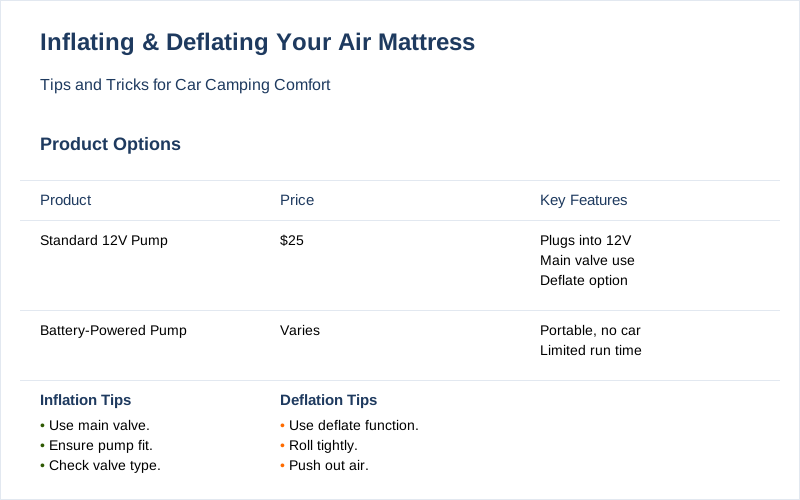
| Pump type | Power source | Best for |
|---|---|---|
| Built-in pump | Mains, 12V, or internal battery depending on model | Convenience; nothing extra to pack or lose |
| 12V plug-in pump | Car accessory socket | Car camping where the vehicle is right there |
| Rechargeable pump | Internal battery, USB-charged | Tent-adjacent or away-from-car setups |
| Manual pump | Foot or hand | Backup, no power needed, slow but reliable |
A built-in pump is the most foolproof option because it is matched to the mattress valve and there is nothing separate to misplace. The catch is that if it fails, you cannot swap it out, so a built-in pump is best paired with a cheap manual backup for peace of mind.
A 12V plug-in pump is the natural fit for car camping, since your car is the power source and it is parked feet away. It fills a mattress in a few minutes and many models reverse for deflation. The only real discipline is watching how long you run it off the starter battery, covered in the next section.
A rechargeable pump shines when you are not right next to the car, on a tent pad, a remote site, or a setup where running a cord to the socket is awkward. Charge it at home or off a power station, and it inflates without any tether. The tradeoff is that a dead battery means a dead pump, so top it up before every trip.
A manual foot or hand pump is the one that never lets you down. It is slow and a little sweaty, but it needs no power, weighs almost nothing, and lives in the trunk as insurance. Even committed electric-pump users tend to keep one as the thing that gets them a bed when everything else has died.

The 12V Outlet Method, Step by Step
Inflating from the car's 12V accessory socket is the workhorse method for car camping, and it is worth doing deliberately the first time so it becomes muscle memory. The whole sequence takes a few minutes once you know the order.
- Position the mattress first. Lay it out flat in its final spot before you add air; a partially inflated mattress is far harder to move into place than a flat one.
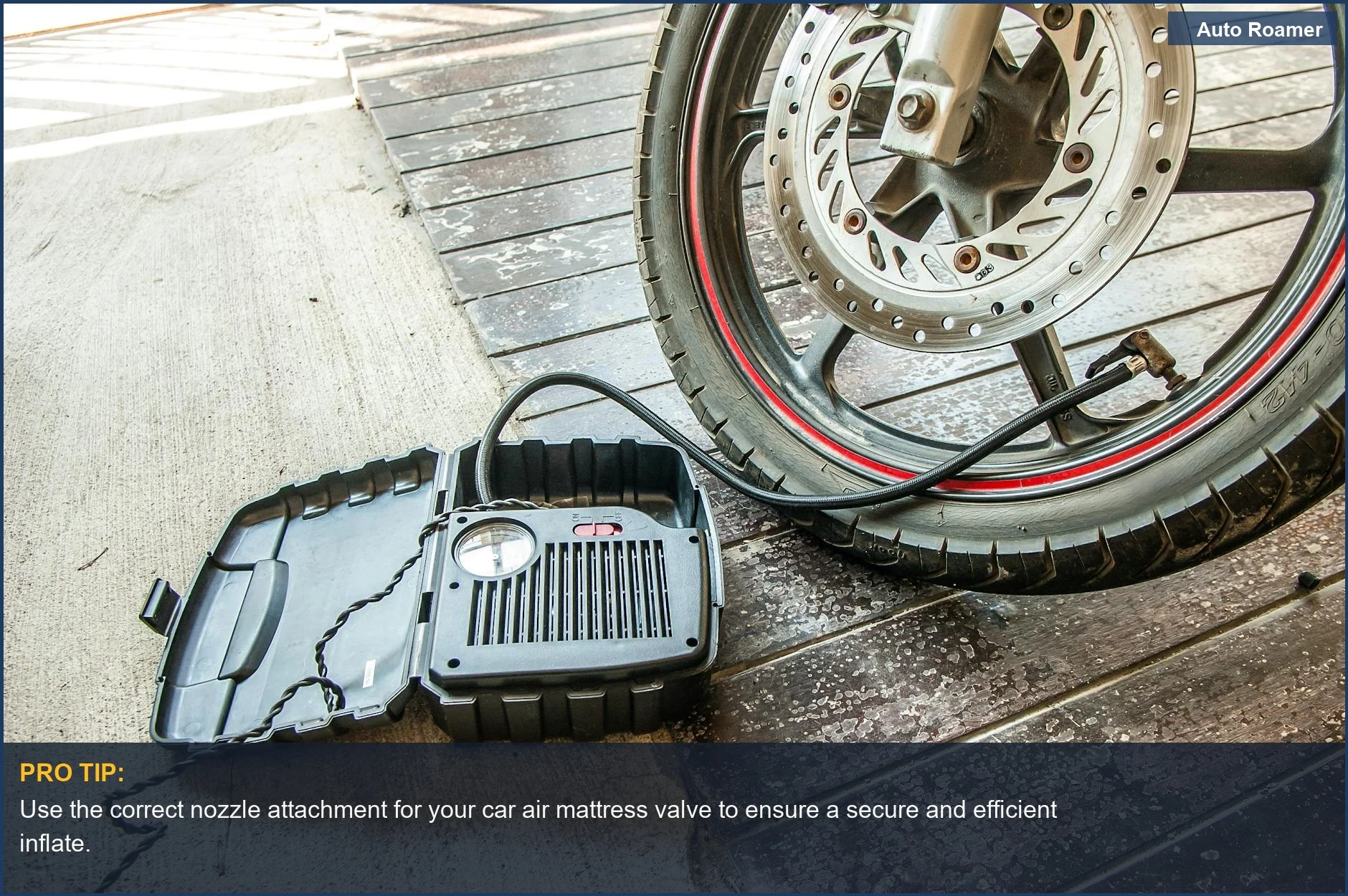
- Match the nozzle to the valve. Most car mattresses ship with a few nozzle adapters. Fit the one that seats snugly in the main inflation valve so air does not leak back past it.
- Run the engine for long sessions. A 12V pump typically draws several amps. For a quick fill it is fine on battery, but if you will run it more than a few minutes, idle the engine so you are not drawing down the starter battery.
- Plug in and inflate. Hold the nozzle firmly in the valve, switch the pump on, and let it fill until the mattress is nearly firm.
- Stop slightly under full. Cut the pump before it is drum-tight, then close the valve quickly to trap the air before it escapes.
The starter battery's only essential job is starting your car in the morning. Treat every amp you pull from it overnight as borrowed against that, and run the engine or a power station for anything longer than a quick task.
How much power is this, really? A typical 12V mattress pump in the 5-to-10-amp range, run for the two or three minutes it takes to fill a mattress, pulls a trivial amount from a healthy battery. The danger is not the inflation itself but leaving a pump or other loads running for long stretches with the engine off, which is how people end up with a flat battery at a remote site. If you want a dedicated source that never touches the car, a portable power station for car camping runs a pump and your other devices without borrowing from the starter battery at all.
If your pump does not reach the socket, a cheap 12V extension lead solves it, but check the lead is rated for the pump's current draw so it does not get warm. And if the socket only has power with the ignition on, that is your cue to run the engine during inflation anyway.
Getting Firmness Right and Beating the Cold-Night Pressure Drop
Firmness is where a good night and a bad one diverge, and it is governed by simple physics. Air takes up less volume as it cools, so the pressure inside a sealed mattress falls overnight as the temperature drops. Fill to perfect tautness at a warm dusk and you may wake up on a saggy, half-flat bed by dawn.
The fix is to inflate with that drop in mind:
- Stop slightly under full. Aim for a surface that gives about an inch when you press the center. It feels better on your body than rock-hard and leaves headroom for the overnight softening.
- Account for the temperature swing. The bigger the expected drop from evening to early morning, the more softness you should leave at fill time, because more cooling means more pressure loss.
- Top off if you wake up. A 12V or rechargeable pump makes a ten-second re-fill easy if the bed goes soft in the small hours.
There is a comfort reason to avoid overfilling that has nothing to do with temperature. An over-inflated mattress is taut and unyielding; it pushes back against your hips and shoulders instead of cradling them, and it transmits every movement to anyone sharing the bed. A slightly softer fill contours to you and sleeps far better, which is why seasoned campers almost never run their mattress drum-tight.
A car air mattress is not a pool toy. The goal is support that still has a little give, not maximum pressure. Under-fill on purpose and you solve comfort and the cold-night sag in one move.
Insulation from below matters as much as the air pressure for how warm and comfortable the bed feels. A car air mattress alone offers little insulation against the cold metal floor, so a pad or blanket layer underneath keeps the chill from pulling heat out of you. If you are still choosing between mattress styles, our comparison of an inflatable car bed versus a regular air mattress walks through how each handles cold and comfort, and our look at inflatable versus foam mattresses for car camping covers the insulation tradeoff directly.
Fast Deflation and Packing It Back Down
Deflation is where most of the frustration lives, usually because people just open the valve and hope. The mattress sighs out to half-flat, refuses to roll small, and never fits the bag again. Doing it properly turns a twenty-minute wrestling match into a five-minute job.
The efficient sequence:
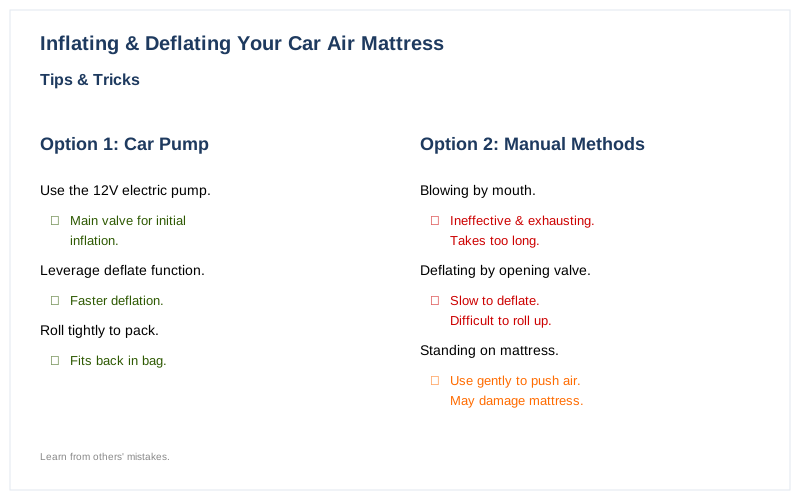
- Use the pump's reverse setting if it has one. Many 12V and built-in pumps suck air out far faster than it will ever escape on its own. This alone does most of the work.
- Hold the valve fully open. If the valve has a flap or toggle, press it in and keep it open so air is not fighting a partially closed gate on the way out.
- Press the air toward the valve. Start at the end opposite the valve and push or kneel your way along, forcing the trapped air ahead of you and out.
- Roll tightly from the far end. Once it is mostly flat, roll firmly from the valve-opposite end, keeping weight on the roll so the last air escapes as you go.
- Close and store. Seal the valve on the tightly rolled mattress before it can draw any air back in, then slide it into its bag.
If your pump has no deflate function, the rolling technique carries the day. Get as much air out by hand as you can first, then roll with real pressure from the far end toward the open valve, like squeezing toothpaste toward the cap. Standing gently on the mattress to flatten it before rolling helps, just keep away from sharp ground that could puncture it.
Always roll toward the open valve, never away from it. Roll the wrong way and you trap a pocket of air with nowhere to go, which is exactly why a mattress refuses to pack small.
A tidy pack-down is not just about the bag. A mattress stored with residual air and a few damp spots invites mildew and stresses the seams, so getting it genuinely flat and dry before it goes into long-term storage pays off in how long the mattress lasts.

Finding and Patching Leaks
Sooner or later a mattress that held air all season starts going soft overnight, and the culprit is almost always a small leak rather than a failed pump. The good news is that finding and fixing one is straightforward, and most kits include the patch you need.
To track down a leak:
- Inflate it firm and listen. In a quiet space, a slow hiss is often audible right at the hole; run a hand slowly over the surface and seams to feel for escaping air.
- Use soapy water. Wipe a soapy sponge over suspect areas; escaping air blows tiny bubbles that pinpoint the hole exactly. The valve seat and the seams are the usual suspects.
- Mark the spot. Circle the leak with a marker the moment you find it, because a pinhole is maddeningly easy to lose again once the surface dries.
Patching is simple once you have located the hole. Deflate the mattress, clean and fully dry the area around the leak, and apply the patch from the included repair kit, pressing firmly and giving the adhesive the cure time the instructions specify. A patch applied to a dirty or damp surface will not hold, so the prep matters more than the patch itself.
The valve is the most common leak point, not the fabric. Before you hunt the whole surface for a pinhole, check that the valve is fully seated and its cap is tight, since a loose valve mimics a puncture exactly.
If the leak is at a seam or is too large for a patch, the mattress may be near the end of its life, and that is a normal outcome rather than a failure on your part. Keeping a mattress clean, dry, and not overfilled is the best way to push that day off, and it is worth carrying the repair kit on every trip so a small hole never costs you a night's sleep.
A subtler cause of overnight softness is a slow weep at the valve rather than a hole in the fabric, and it is worth ruling out before you ever go looking for a puncture. Valves can seat imperfectly when the mattress is folded and stored, so a quick press to reseat the valve and a firm twist of the cap fixes a surprising share of mystery leaks. Only when the valve is confirmed tight is it worth doing the full soapy-water sweep of the seams and surface.
Noise, Etiquette, and Power Draw at Night
Pumps are loud, and a campground at dusk is a shared space, so a little timing and courtesy goes a long way. The same goes for how you manage power once everyone is settled in for the night.
The etiquette is mostly common sense once you have heard a neighbor's pump shatter the quiet:
- Inflate early. Set the bed up before quiet hours, ideally while you are still cooking or settling camp, so the pump noise lands during normal evening bustle rather than after lights-out.
- Top off quietly. If the bed sags overnight, a short, low-speed re-fill is far less disruptive than a full blast; many rechargeable pumps run quieter than a 12V unit.
- Mind the headlights and cabin light. Running the pump from the car often means an open door and a lit cabin; close it down promptly so you are not spilling light across a dark site.
Power management dovetails with the courtesy. The cleanest approach is to do all your inflation early in the evening, ideally with the engine running for anything longer than a quick fill, so that once you are in bed the car is fully off and the starter battery is untouched. If you anticipate needing to top off the mattress, charge phones, or run a fan through the night, a power station keeps all of that off the vehicle's battery entirely.
The quietest, safest setup is a mattress inflated and topped off before quiet hours, on a bed you do not need to touch again until morning. Plan the noisy work for early, and the night takes care of itself.
One safety note that overrides all etiquette: never run the engine to power a pump or anything else while you sleep in an enclosed vehicle. A running engine produces carbon monoxide, which is colorless, odorless, and can be fatal in an enclosed space. Do all engine-assisted inflation while you are awake and outside or with the vehicle well ventilated, then shut the engine off before you settle in. Pairing good airflow with a dry, well-set bed also keeps condensation down, which our guide on how to reduce condensation when sleeping in a car covers in depth, and if you are setting up in a smaller vehicle our notes on whether you can car camp in a sedan cover fitting a mattress into tight spaces.
Choosing a Mattress and Pump Combo That Packs Easy
Everything above is easier when the gear itself is chosen with inflation and packing in mind. When you are shopping, the pump features matter as much as the mattress, and a few specifics save you the most grief down the line.
The features worth prioritizing:
- A reverse-deflate pump. The single biggest time-saver. A pump that sucks air out turns pack-down from a chore into a thirty-second task.
- The right power match. For car camping, a 12V or rechargeable pump suits the way you actually camp; a mains-only pump is useless at a campsite.
- A sensible packed size. A mattress that rolls small and a pump that stows in the same bag keep the whole kit tidy in a trunk where space is precious.
- Durable valves and seams. The valve is the most-handled part and the most common leak point, so a well-built valve outlasts a fancy fabric.
Sizing the mattress to the vehicle is the other half of a good buy, because a mattress that does not fit the floor will never inflate to a flat, even surface no matter how careful you are with the pump. Wheel wells and an uneven folded floor force a too-big mattress to deform, leaving soft, lumpy edges. Our guide to choosing the right SUV air mattress size walks through measuring your load floor before you buy, and our roundup of the best car air mattresses for SUV camping covers models that ship with capable pumps.
If you are cross-shopping by vehicle, the same fit-and-inflate tradeoffs show up everywhere; our look at the best car camping mattress for a Subaru Outback is a useful illustration of how floor shape drives both the mattress choice and how firm you can safely inflate it.
Put it all together and the whole inflate-and-deflate routine becomes second nature: pick a mattress sized to your floor with a reverse-deflate 12V or rechargeable pump, fill it slightly under full to ride out the cold-night pressure drop, roll it down from the far end at pack-up, and keep a manual pump and a patch kit in the trunk as insurance. Get those habits right and a car air mattress goes from a fiddly chore to the most comfortable part of the trip.
It is also worth thinking about how the pump stores between trips, not just how it performs at the campsite. A rechargeable pump that lives in the trunk should be topped up before each trip and not left fully drained for months, and a 12V pump's cord and nozzle adapters are easy to lose if they are not kept in the same stuff sack as the mattress. The campers who never get caught out are simply the ones who keep the mattress, its pump, the nozzle adapters, and a patch kit together as a single kit, so setting up a bed is never a hunt for a missing piece.