
Four Outlets Sounds Generous. The Fuse Map Tells the Real Story.
Open the Palisade's spec sheet and the power situation looks abundant: the owner's manual lists four power outlet locations, spread front to back through the cabin. For a three-row SUV headed to a campsite, four 12V outlets reads like plenty. But the outlet count is the marketing number; the fuse map is the one that decides what you can actually run.
The reveal is in the ratings. Rear Power Outlet 1, Rear Power Outlet 2, the luggage-area outlet, and the front outlet are each protected by a 20A fuse in the engine compartment fuse box. That 20-amp protection, not the number of sockets, is what caps the draw at each point, and it is the first thing a camper planning to run gear should look up rather than assume.
The bigger surprise is the inverter. The Palisade's optional AC inverter outlet supplies 115V at a maximum of 150W and is protected by its own dedicated 30A fuse, and the owner's manual warns not to use an electric accessory with power consumption greater than 150W on it. That 150-watt ceiling, not the four-outlet count, is the real limit on what the Palisade can power at camp.
This guide reads the Palisade's power system the way its fuse map does: where the four outlets actually sit, what the 20-amp protection means for each, why the 150-watt inverter is the number that governs a household device, and how to plan a camp electrical setup around those real limits rather than the reassuring outlet count.
Where the Four Outlets Actually Sit
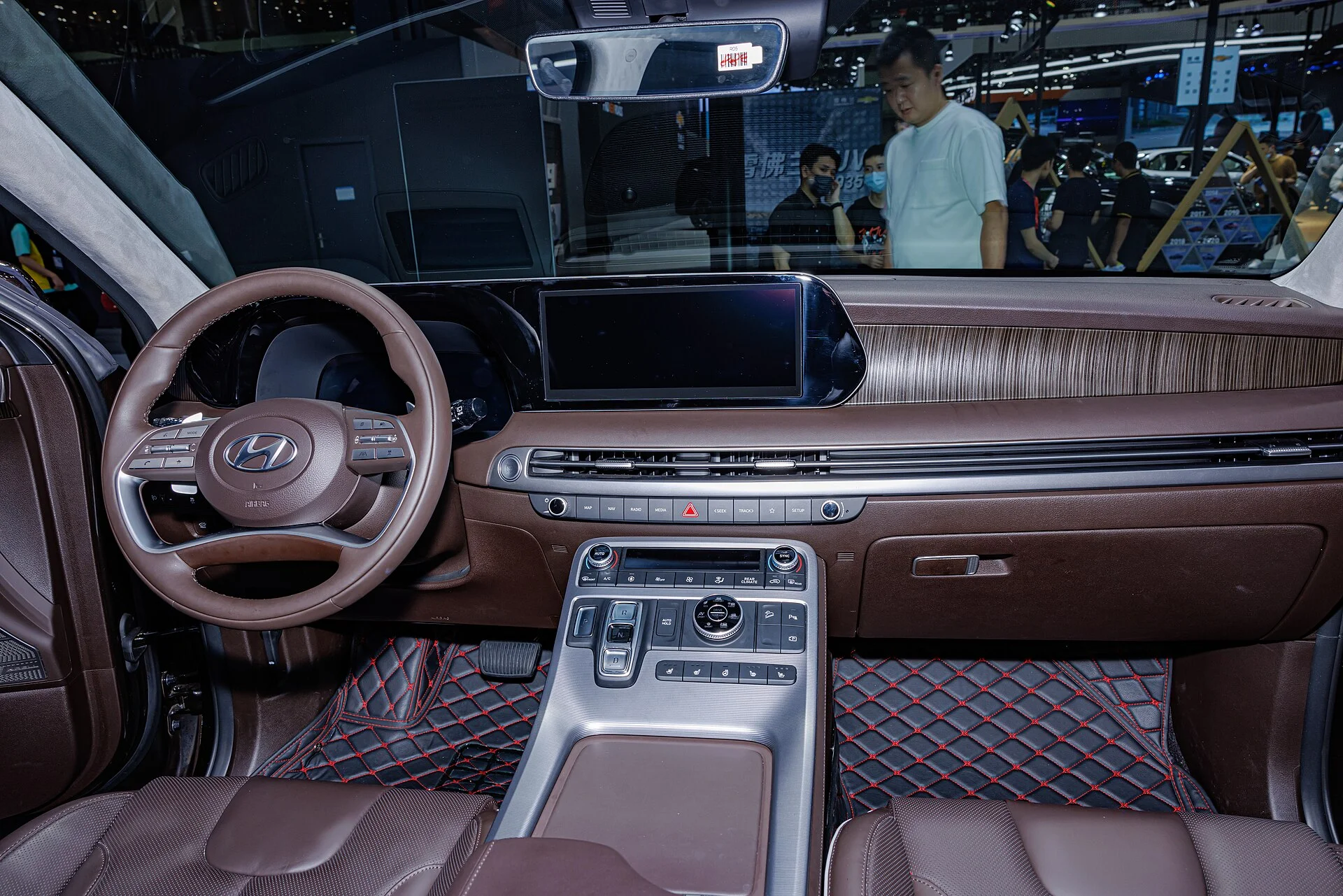
Location matters as much as count when the cargo bay is your bedroom, so start with where the power lives. The Palisade owner's manual lists four power outlet locations: front, rear second row, center console storage, and rear third row on the left side. That spread reaches every part of the cabin, which is genuinely useful for a family-sized camping setup.
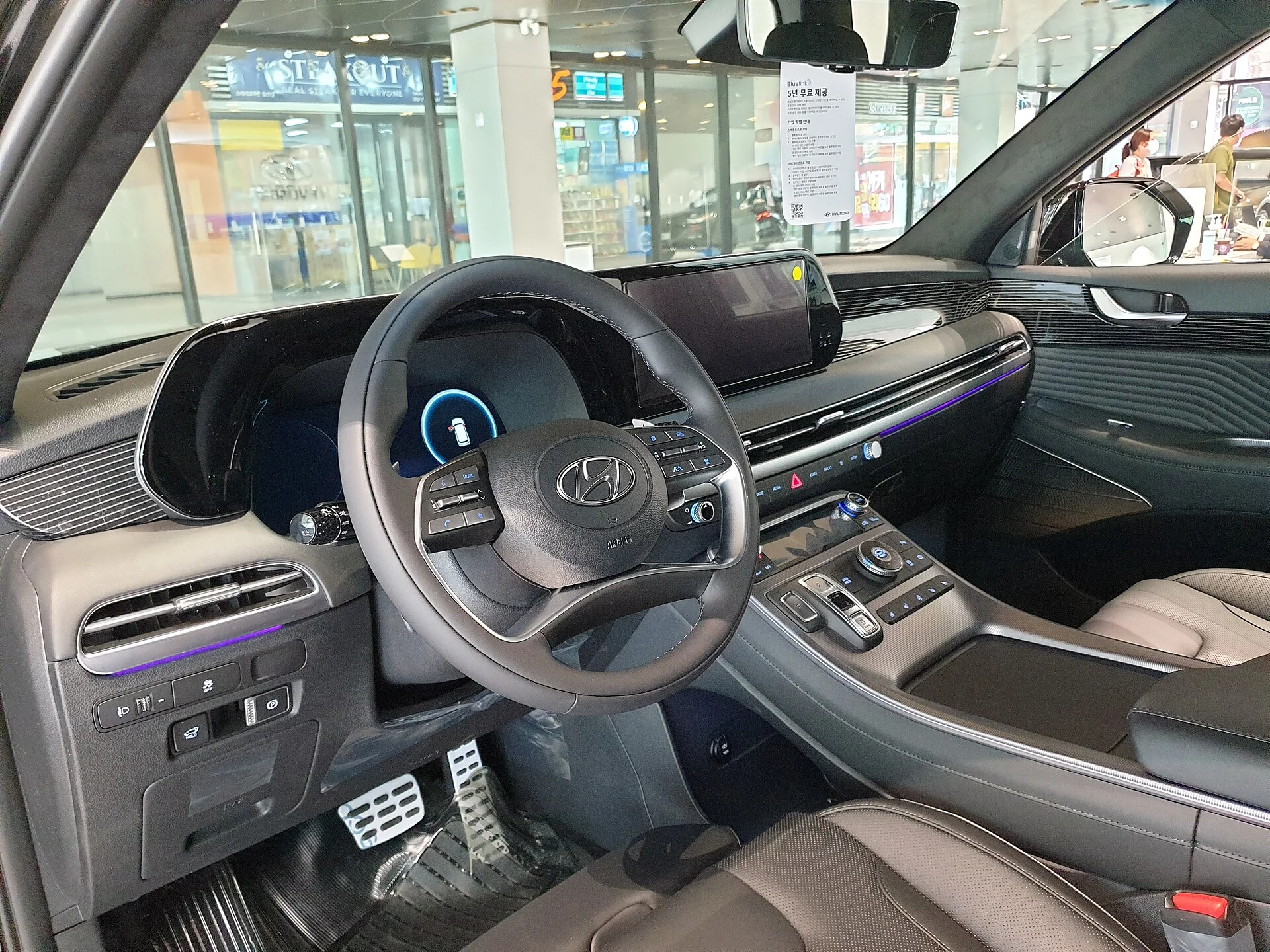
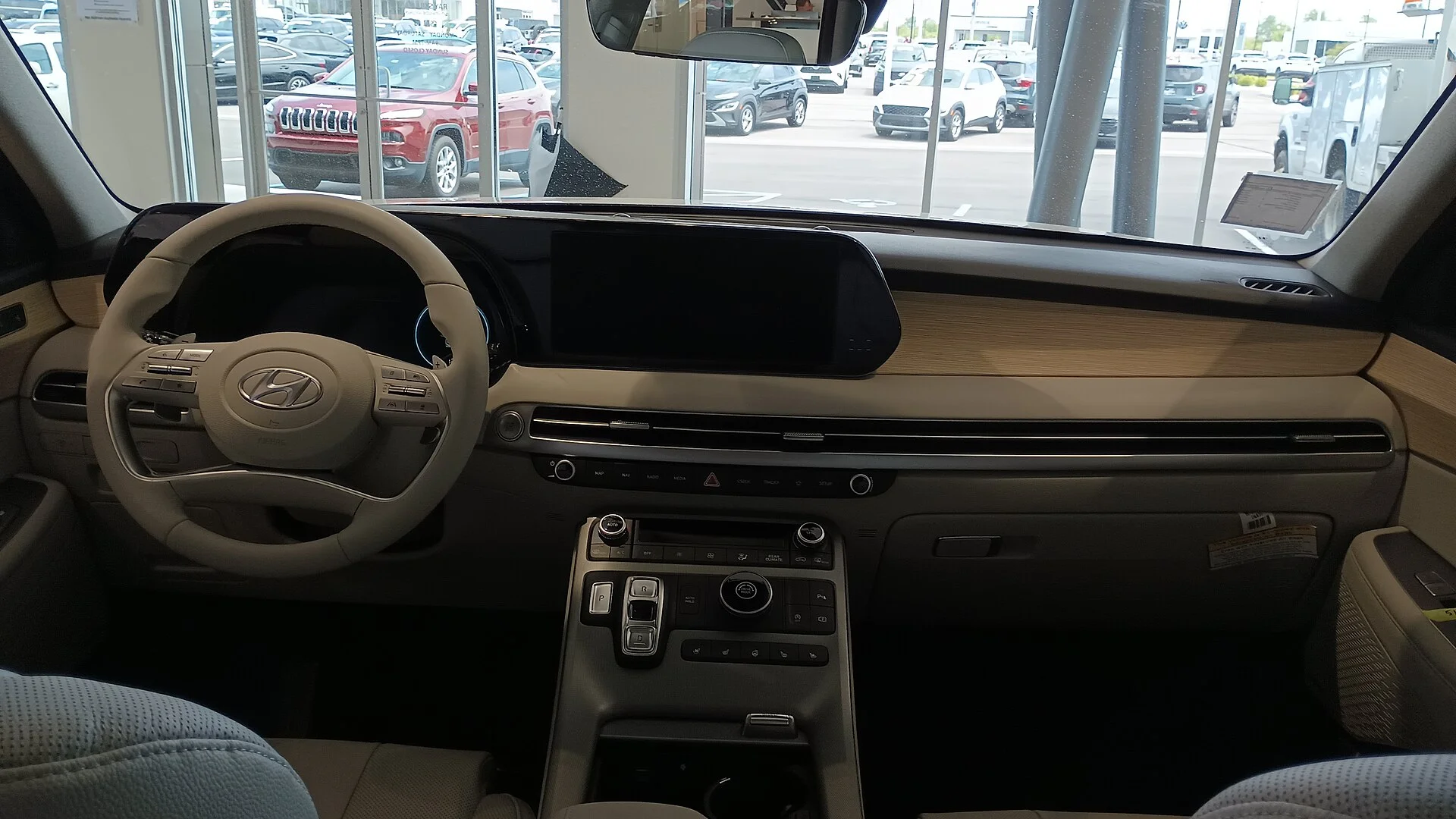
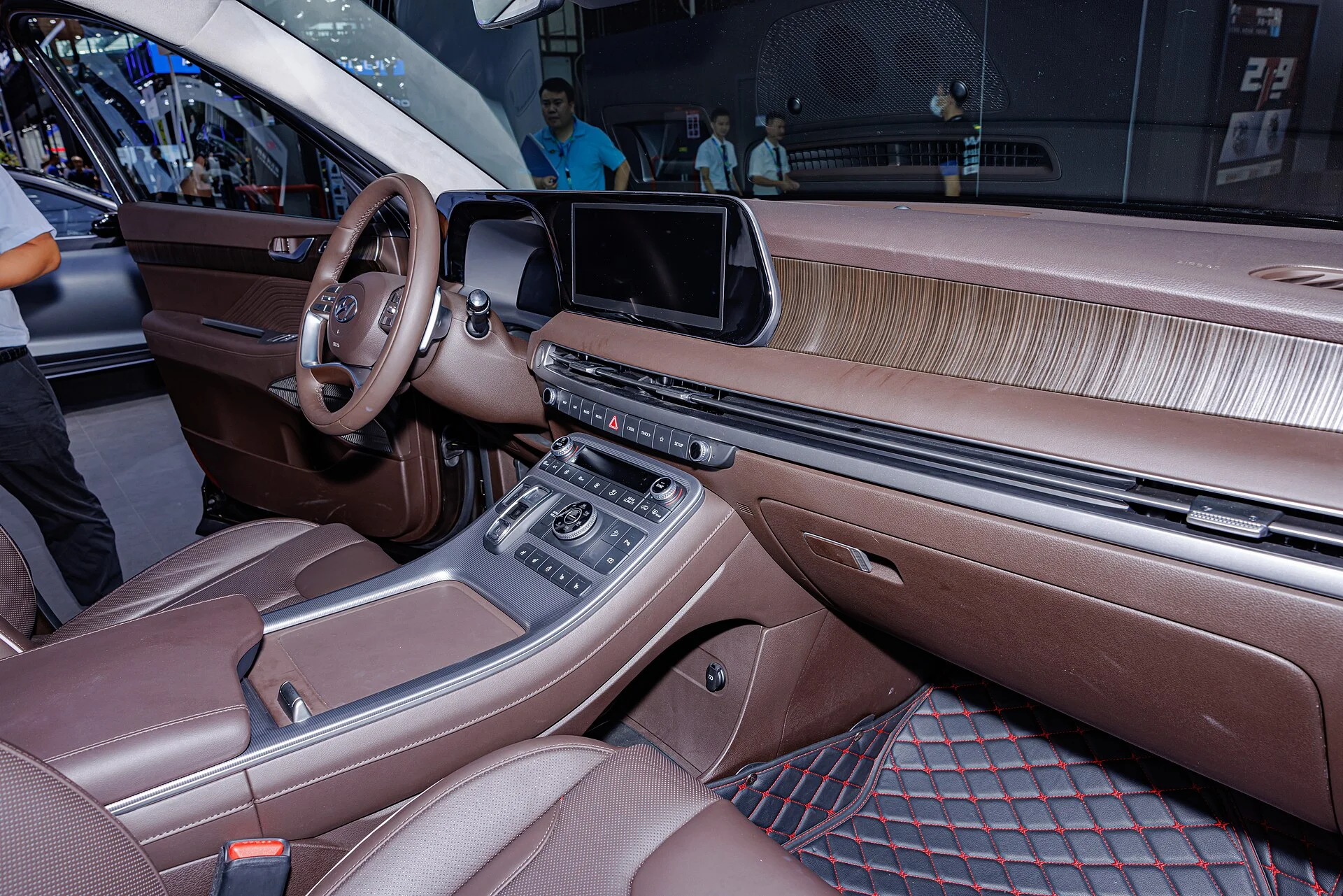
The front outlet and the center console storage outlet serve the driver and front passenger area, handy for dash-mounted devices, a tire inflator, or charging while the vehicle is running. The second-row outlet reaches the middle of the cabin where passengers, or a cooler, tend to live on a road trip.
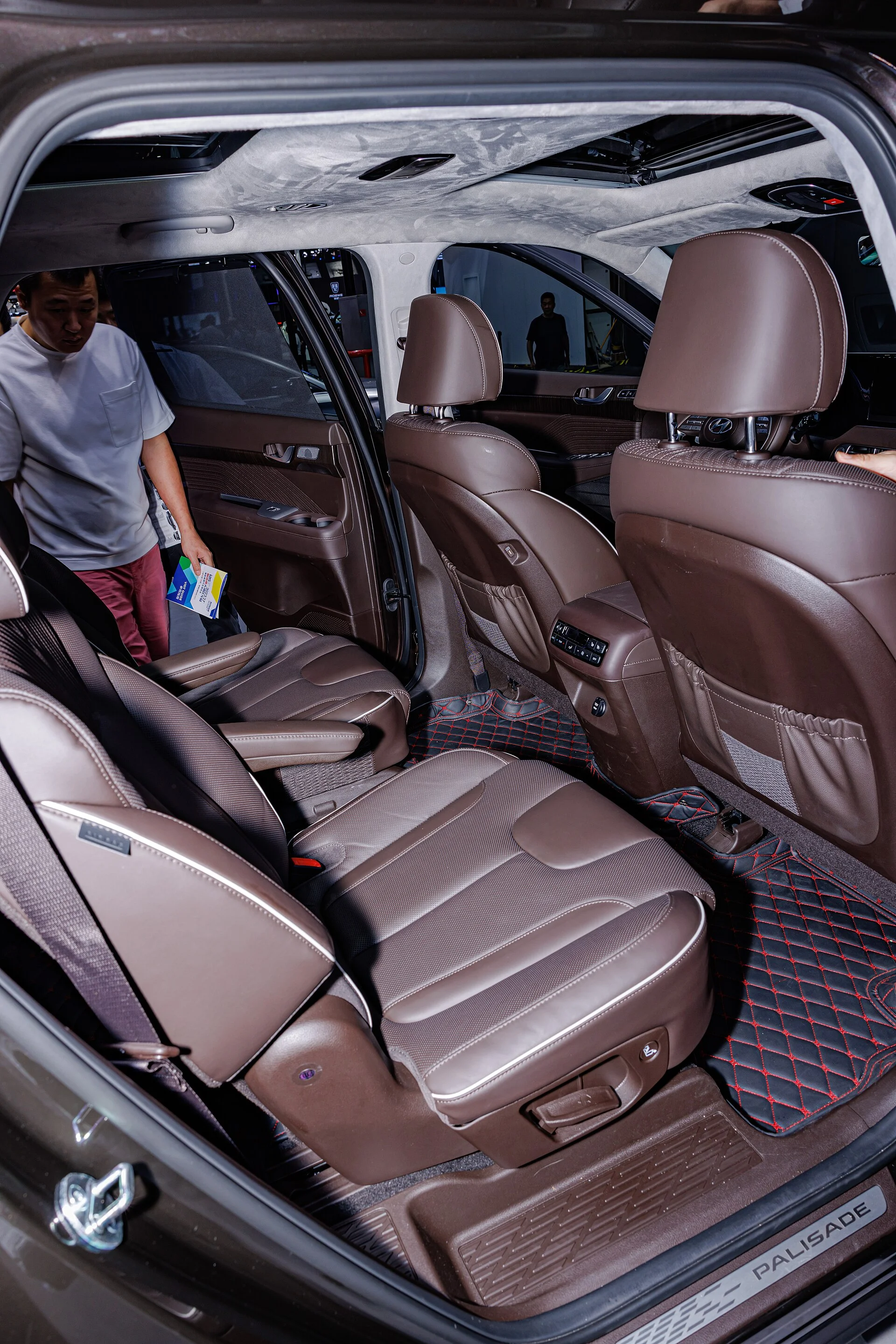
The two outlets that matter most for camping are the second-row and the third-row-left socket, because they reach toward the rear where a sleeping setup or a fridge would sit. The third-row-left location in particular puts power near the cargo area without running a cord the length of the cabin, which is the outlet a rear-mounted 12V fridge would tap.
Knowing the exact four locations lets a camper plan where devices go rather than discovering a cord will not reach. The console and front outlets serve the cab; the second-row and third-row-left outlets serve the living space. Matching each device to the nearest outlet is the first step in a tidy, functional camp power layout.
What the 20-Amp Fuse Means for Each Outlet
Every one of the Palisade's four 12V outlets shares the same protection, and understanding it prevents the most common camp-power mistake. Rear Power Outlet 1, Rear Power Outlet 2, the luggage outlet labeled POWER OUTLET 3, and the front outlet labeled POWER OUTLET 4 are each protected by a 20A fuse in the engine compartment fuse box.
A 20-amp fuse on a 12-volt circuit sets a ceiling on the current an outlet can deliver before the fuse blows. That is a meaningful amount of power for typical 12V camping gear, a fridge, a fan, a charger, but it is a hard limit, and a device that tries to pull more will pop the fuse rather than run. Knowing the number tells you what fits.
The 20-amp fuse is the real per-outlet limit, not the socket itself. A 12V accessory that draws within that budget runs; one that exceeds it blows the fuse, so the amp rating is the spec to check against a device's draw.
The location of these fuses, in the engine compartment fuse box, is worth noting for a practical reason: a blown outlet fuse at a campsite is replaced under the hood, not in the cabin. Carrying a few spare 20-amp fuses and knowing which labeled slot, POWER OUTLET 1 through 4, feeds which socket turns a dead outlet into a two-minute fix rather than a trip-ender.
The 150-Watt Inverter Is the Real Ceiling
The Palisade's most misunderstood power feature is its optional AC inverter, and it is the single most important number for anyone planning to run a household device. The AC inverter outlet supplies 115V at a maximum of 150W and is protected by its own dedicated 30A fuse. That 150-watt figure is the ceiling, and it is lower than many campers expect.
The owner's manual is explicit about the limit: do not use an electric accessory with power consumption greater than 150W on the inverter. That rules out a large class of devices. A laptop charger, phone charging, a small fan, or LED lighting fit comfortably under 150 watts; a coffee maker, a microwave, a hair dryer, or most electric kettles do not, and plugging them in simply will not work.
The reason the number is what it is comes down to the inverter's design and its dedicated 30-amp fuse. A 150-watt inverter is a convenience feature for small electronics, not a house-power system, and treating it as the latter is the setup for disappointment. It powers a device, not an appliance.
For camp planning, the practical rule is to sort every AC device by wattage against the 150-watt limit before the trip. Anything above it needs a separate power source, a portable power station, not the Palisade's inverter. Reading the 150-watt ceiling honestly is what keeps a camp electrical plan realistic rather than built on a socket that cannot carry the load.
12V Sockets vs the AC Inverter: Two Different Systems
The Palisade actually offers two distinct kinds of power, and confusing them is easy. The four 12V outlets deliver direct-current vehicle power through 20-amp fuses, while the optional AC inverter converts that to 115V household current capped at 150 watts. They serve different devices and have different limits.
The 12V sockets are the workhorses for camping gear, because most purpose-built camping electronics, fridges, fans, air pumps, and USB charging hubs, are designed to run on 12V directly. Tapping a 12V outlet avoids the inverter's conversion losses and its 150-watt cap, which is why a 12V fridge belongs on a 12V outlet, not plugged into an inverter through an adapter.
The AC inverter exists for the occasional device that only comes in a household plug: a laptop charger, a camera battery charger, small electronics without a 12V option. For those, the 115V outlet is genuinely handy, as long as the device stays under the 150-watt limit and its dedicated 30-amp fuse.
The design lesson is to match the device to the right system. Native 12V gear goes on the 20-amp 12V outlets; small household-plug electronics go on the 150-watt inverter; and anything power-hungry goes on a separate power station entirely. Reading the Palisade's power as two systems with two ceilings, rather than one pool of sockets, is how a camp setup uses each for what it does well.
USB-C Charging and the Small-Device Load
For the phones, tablets, headlamps, and cameras that dominate a modern camp's small-device load, the Palisade has a dedicated answer that bypasses the outlets entirely. The 2026 Hyundai Palisade features USB-C charging ports in all three seating rows, putting fast charging within reach of every passenger and every corner of the cabin.
USB-C ports are the right tool for small electronics because they charge directly at the voltage those devices want, without occupying a 12V socket or the inverter. Spreading them across all three rows means a family can charge devices from every seat, and a camper can keep a phone or headlamp topped up near the sleeping area without running a cord forward.
The practical benefit at camp is that the USB-C ports handle the high-frequency, low-power charging load, leaving the four 12V outlets free for the bigger draws like a fridge or a fan. That division keeps the 20-amp outlets available for the gear that actually needs them rather than tied up charging a phone.
For an owner of an earlier Palisade, the takeaway is to confirm the specific model year's USB provision, since the all-three-row USB-C layout is called out for the 2026 model. Either way, routing small-device charging to USB rather than the 12V outlets is the efficient plan, reserving the amp-limited outlets for the loads that justify them.
Planning a Camp Power Layout Around the Real Limits
Putting the numbers together, a Palisade camp power plan organizes itself around three tiers. Small devices charge on the all-row USB-C ports; native 12V gear runs on the four 20-amp outlets; and small household-plug electronics use the 150-watt inverter, with anything larger moved to a separate power station.
The rear outlets anchor the living-space setup. A 12V fridge on the third-row-left or second-row outlet draws within the 20-amp budget and sits near the cargo area where it belongs. A fan and lighting can share the other rear outlet, again staying under the per-outlet amp limit, which is easily done with efficient 12V camping gear.
The inverter's role is deliberately narrow. It handles a laptop or camera charger under 150 watts and nothing more, because the manual's warning against exceeding 150W is a hard line, not a suggestion. Planning to run a kettle or microwave off the Palisade is planning to be disappointed; those loads belong on a dedicated power station sized for them.
The honest camp plan, then, treats the Palisade as a capable distribution system for modest loads rather than a power plant. Its four outlets, three rows of USB-C, and small inverter cover the lighting, charging, and refrigeration a family camp needs, provided each device is matched to a source that can carry it. A separate portable power station covers the high-wattage gear the vehicle's 150-watt inverter cannot.
Troubleshooting a Dead Outlet at Camp
When an outlet goes dead at a campsite, the Palisade's fuse layout makes the diagnosis straightforward if you know where to look. Because each 12V outlet is protected by its own 20A fuse in the engine compartment fuse box, a single dead socket while the others work almost always points to a blown fuse on that specific circuit rather than a wiring fault.
The diagnostic sequence is to identify which outlet is dead, then find its labeled fuse, POWER OUTLET 1, 2, 3, or 4, in the engine bay fuse box. A blown 20-amp fuse is usually visible as a broken filament, and swapping in a fresh 20-amp fuse of the same rating restores the outlet. Using the correct amperage matters: a higher-rated fuse defeats the protection and risks the wiring.
The most common cause of a blown outlet fuse is a device that tried to draw more than 20 amps, so the fix is not just the fuse but understanding why it went. If the replacement blows again immediately, the device on that circuit is over the limit and belongs elsewhere, on a power station or a higher-capacity source.
For the inverter, the logic is the same but the fuse is different: the AC outlet has its own dedicated 30-amp fuse, so a dead inverter with live 12V outlets points there. Carrying spare 20-amp and 30-amp fuses and knowing which slot feeds what turns a dead outlet from a mystery into a quick, informed repair at the campsite.
Why the 12V System Beats the Inverter for Camping
It is worth stating plainly why a camper should lean on the 12V outlets rather than the inverter, because the instinct is often the reverse. Household plugs feel familiar, so the temptation is to run everything through the 150-watt inverter with adapters. That is the least efficient path and the one most likely to hit a limit.
The 12V outlets, each on a 20-amp circuit, deliver vehicle power directly to gear designed for it, with no conversion loss and a higher effective power budget than the inverter's 150 watts. A 12V fridge, the highest-value camp appliance, runs happily on a 12V outlet and would be crippled trying to route through a 150-watt inverter. The native path is simply better.
The inverter's value is real but bounded: it exists for the handful of devices that only come with a household plug and draw little power. Used for exactly that, it is a convenience; used as a general power source, it is a bottleneck that the manual's 150-watt warning makes explicit.
The efficient camper therefore builds around 12V, reserves the inverter for small AC-only electronics, routes phones and tablets to USB-C, and adds a dedicated power station for anything heavy. Reading the Palisade's power system in that order, 12V first, inverter last, uses each part for its strength and avoids asking the 150-watt outlet to do a power station's job.
Running Gear With the Engine Off: The Battery Question
The limit that catches campers off guard is not the fuse or the inverter but the battery behind them. All four 12V outlets and the 150-watt inverter draw from the vehicle's starting battery, and on most Palisade configurations the accessory outlets can run with the engine off, which is exactly when a camper wants them and exactly when they threaten the battery.
The arithmetic is unforgiving. A starting battery is designed to deliver a big burst to crank the engine, not to sustain a fridge or fan overnight, so a device left running on a 12V outlet with the engine off can flatten the battery to a no-start state by morning. The 20-amp fuse protects the wiring, not the battery's charge, so staying under the fuse is no guarantee against a dead battery.
The honest guidance is to treat the Palisade's outlets as engine-on or short-duration engine-off power, not an overnight house supply. Running a fridge overnight, the classic camp load, is precisely the use case the starting battery cannot sustain, which is another reason a dedicated power station belongs in the plan for anything that runs while you sleep.
For short stops, charging, a fan for an hour, a quick device top-up, the engine-off outlets are convenient and safe. For the sustained loads of an overnight camp, the discipline is to either run the engine periodically to recharge or, better, to power those loads from a separate battery or power station and leave the starting battery for its one non-negotiable job: starting the Palisade in the morning.
The Verdict: Plan Around 150 Watts, Not Four Outlets
The Palisade's power system is genuinely capable for family camping, but only if it is read correctly. The headline four outlets are useful and well-placed, front, second row, console, and third-row-left, yet each is capped by a 20-amp fuse, and that per-outlet limit, not the count, is what governs 12V gear.
The number that most shapes a camp plan is the inverter's 150-watt ceiling. The optional AC outlet supplies 115V at a maximum of 150W on its dedicated 30-amp fuse, and the manual's warning against exceeding it is absolute. That limit sorts devices cleanly: laptop and camera chargers fit, kettles and microwaves do not, and pretending otherwise only blows a fuse.
The efficient layout routes small devices to the 2026 model's all-row USB-C ports, native 12V gear to the four 20-amp outlets, small household electronics to the 150-watt inverter, and everything heavy to a separate power station. Each source does what it does well, and nothing is asked to exceed its rating.
Read the fuse map, not just the outlet count, and the Palisade becomes a predictable, well-organized camp power system. Plan around the 150-watt inverter ceiling and the 20-amp per-outlet budget, carry spare fuses for both, and the SUV covers a family's lighting, charging, and refrigeration cleanly, leaving the power-hungry loads to the dedicated gear built for them.