
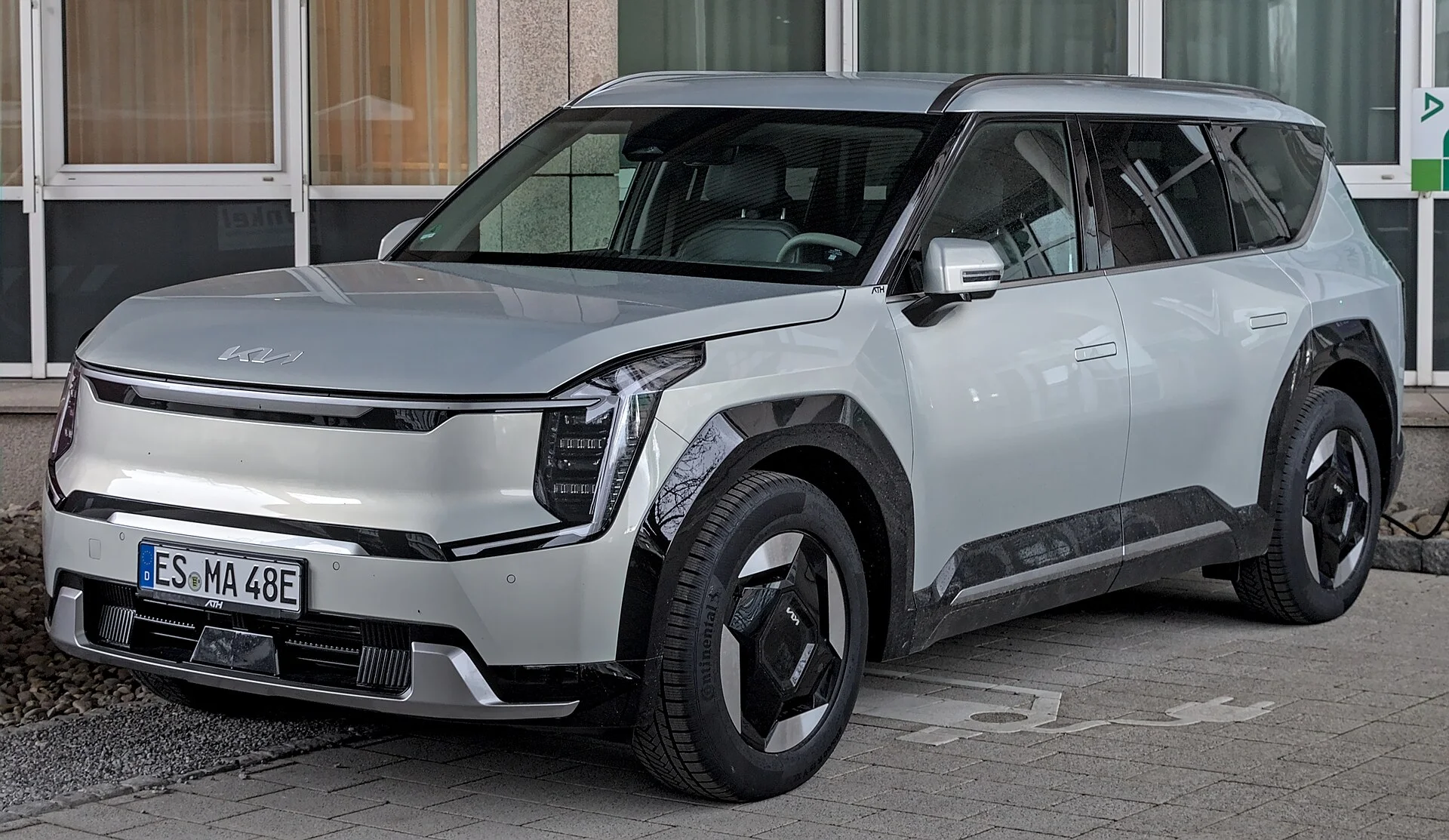
The honest verdict: same EV superpower, very different size
The Hyundai Ioniq 5 and Kia EV9 come from the same corporate family and share the same electric-camping superpower, but they are built for different trips. Both can do the one thing gas vehicles cannot: hold the cabin at a comfortable temperature all night, quietly, off the traction battery, with no idling engine and no exhaust. Both also carry up to 3.6 kilowatts of Vehicle-to-Load (V2L) power, essentially a giant power station built into the car.
The short version: buy the Ioniq 5 for efficiency, price, and easy parking in a sharp 5-seat package; buy the EV9 when you want a three-row family EV that also gives you 81.7 cubic feet — enough to actually sleep two adults flat inside.
The split is size. The Ioniq 5 is a two-row, five-seat crossover: efficient, affordable, and quirky-comfortable, with front seats that recline nearly flat for lounging. The EV9 is a three-row SUV with a vastly larger cargo floor, the one that turns into a genuine bed. If you camp solo or as a couple who don't mind a snug fit, the Ioniq 5 is plenty; if you want room to stretch out or bring the family, the EV9's extra space is the whole point.
What follows is the detail: how the EV camping advantage actually works, the sleeping-space numbers, what 3.6 kW of V2L runs, the honest overnight battery math, charging near campsites, and a clear buy recommendation — grounded in published specs rather than a single trip.
The EV camping advantage: camp mode and V2L
Before comparing the two, understand what makes any modern EV a remarkable camper, because it reframes the whole decision. A gas vehicle cannot safely heat or cool you overnight — idling burns fuel, makes noise, and risks carbon monoxide. Both of these EVs flip that limitation into a strength with a parked climate mode (Hyundai and Kia market versions of a utility or camper mode) that holds your set temperature off the big traction battery, silently and cleanly, for hours.
The second half of the superpower is V2L. Both cars deliver up to 3.6 kW of ordinary household AC power — the Ioniq 5 through a port under the rear seats and an adapter at the charge port, the EV9 through an interior outlet and an exterior adapter. That is enough to run a 12-volt fridge, an electric kettle, a small space heater, camp lights, and every device you own at once, drawing from a battery measured in tens of kilowatt-hours rather than a small camp pack.
Together, climate hold and V2L mean an EV camper needs far less add-on gear than a gas rig: no separate portable power station for car camping is required for most trips, because the car is the power station. That advantage is identical on both the Ioniq 5 and the EV9, so it does not decide between them — but it is why either one beats a comparable gas SUV for comfortable sleeping.
Sleeping space: cargo dimensions and flat-fold
This is where the two EVs genuinely diverge. Here are the load-floor figures that decide whether you can lie flat:
- Ioniq 5 (2-row): ~26.3 cu ft behind the rear seats, ~59 cu ft folded. The folded floor is usable but on the short side for a tall adult lying fully flat, and it is not perfectly level.
- Kia EV9 (3-row): 20.2 cu ft behind row three, 43.5 with it folded, and 81.7 cu ft with both rear rows down — a long, wide floor that fits two adults sleeping flat.
- Ioniq 5 extra trick: front seats recline nearly flat, so even the smaller car offers a comfortable lounging or nap position.
For actual overnight sleeping the EV9 is in a different class: its 81.7 cubic feet and longer floor let two adults lie flat with gear stowed, much like a midsize gas SUV. The Ioniq 5's ~59 cubic feet works for one adult on a pad, or a couple who are comfortable sleeping close and slightly diagonal, and its flat-reclining front seats are a genuine bonus for a quick rest.
Neither floor is billiard-table flat, so plan to level it. A thick, insulated pad hides the seams and slope; before buying, our guide on how to choose a car camping mattress size helps you match a pad to each car's usable rectangle, and a shaped car air mattress for SUV camping fits the folded floor better than a plain slab.
Sleeping in the Ioniq 5: efficient, clever, and just big enough
The Ioniq 5 punches above its size for camping because Hyundai designed the interior around flexibility. The flat floor (no transmission tunnel), the sliding second row, and the near-flat-reclining front seats give you more ways to arrange a rest than the exterior suggests. For a solo camper or a minimalist couple, folding the rear seats and laying a thick pad turns the ~59-cubic-foot space into a workable bed, while the reclining fronts cover an evening of reading or a roadside nap.
Its efficiency is the quieter camping win. The Ioniq 5 uses less energy per mile than the big EV9, so the same charge takes you farther between chargers and leaves a bigger buffer for overnight climate hold. It is also easier to park at a crowded trailhead or squeeze into a compact site, and it costs meaningfully less to buy. For campers whose trips are one or two people and reachable charging, the Ioniq 5 delivers the full EV camping experience for less money and less energy.
The honest limit is length. If you are tall, or you want two adults to stretch out fully flat, the Ioniq 5 asks for compromise — diagonal sleeping, a snug fit, or leaning on those reclining front seats. It is a superb small electric camper, not a substitute for a full-size SUV's floor.
Sleeping in the EV9: the electric SUV you can actually sleep in
The EV9 is the one you buy when the point is to sleep inside comfortably. With the second and third rows folded, its 81.7-cubic-foot floor is long and wide enough for two adults to lie flat side by side — the electric equivalent of camping in a big three-row gas SUV, but with the added magic of silent overnight climate and 3.6 kW of power on tap. It is, in practical terms, one of the best mainstream electric vehicles for in-car sleeping.
Space cascades into comfort. There is headroom to sit up and change, room to keep gear off the sleeping surface, and enough width that a couple is not negotiating every roll. Families can sleep some inside and pitch a ground or roof tent for the rest, using the EV9 as a climate-controlled, powered basecamp. Its bigger battery also gives the largest overnight climate buffer of the two cars, so a cold or hot night worries you less.
The trade-offs are the obvious big-SUV ones: it costs more, uses more energy per mile (so plan charging more carefully on long hauls), and is a larger vehicle to park and maneuver. For campers who want genuine flat sleeping, family space, and the longest climate runtime, those are easy trade-offs to accept.
Power and V2L: what 3.6 kW actually runs
Both cars share the same 3.6-kilowatt V2L ceiling, and it is genuinely transformative for camp cooking and comfort. That budget comfortably runs a 12-volt fridge, an electric kettle or single induction burner, a string of lights, a small heater or fan, and device charging — often several at once. Because it draws from the car's huge traction battery, you are not rationing watt-hours the way you do with a small camp power pack.
The practical difference between the two is access and runtime, not output. The Ioniq 5 exposes an interior port under the rear seats plus the exterior charge-port adapter; the EV9 offers an interior outlet plus its exterior adapter, and its larger battery simply lasts longer before you think about charging. Both let you cook a real breakfast, keep food cold for days, and power a CPAP without a second thought.
The upshot for gear budgets: with either EV, the pricey portable power station most gas campers buy becomes optional. You may still want a small backup pack for running loads while the car is off in deep cold, but the day-to-day power problem is solved by the vehicle. That is a real cost and packing advantage that both cars share equally.
Battery, range, and the honest overnight math
The one anxiety unique to EV camping is watching your range while you sleep, so be clear-eyed about it. Holding cabin climate overnight draws from the traction battery; owners commonly report it costs on the order of a low single-digit percentage of charge per hour, more in extreme heat or cold, less in mild weather. On a battery that stores tens of kilowatt-hours, a full or near-full charge leaves a comfortable buffer for a night plus the drive out.
The EV9's larger battery gives it the bigger absolute buffer, which is reassuring on a frigid night when the heater works hardest. The Ioniq 5's edge is efficiency: it sips less per mile, so a given charge stretches farther and it recovers range faster at a given charger. Neither is a problem if you arrive with a healthy charge and know where you will top up next.
The simple rule is to treat charge like a gas camper treats a fuel tank and a cooler of ice combined: arrive full, run climate in efficient bursts rather than blasting it, use good bedding and window shades to reduce the load, and keep a reserve for the drive to the next charger. Do that and overnight drain is a non-event in either car.
Charging and where you can realistically camp
The real constraint on EV camping is not the night — it is the map. Both cars are happiest camping within reach of charging: developed campgrounds, towns, or fast chargers along the route. For that style of trip, the silent climate and onboard power make them superb, and both support fast charging that refills the bulk of the battery in well under an hour on a capable charger.
Where gas still wins is deep, dispersed camping far from any plug for several days. There you must budget range for the round trip plus overnight climate, and the bigger, thirstier EV9 asks for more planning than the efficient Ioniq 5. Neither can be topped up by carrying a jerry can, so remote multi-day trips need genuine forethought about your return range.
Match the car to your map. If your camping clusters around campgrounds and road-trip corridors with charging, either EV is excellent and the Ioniq 5's efficiency is a bonus. If you routinely disappear into the backcountry for days, plan carefully in either — and lean toward arriving with the fullest possible battery, especially in the larger EV9.
Spec snapshot: the camping numbers at a glance
Keep these attributed figures handy when you plan a bed and a power setup:
- Ioniq 5 cargo: ~26.3 cu ft behind seats, ~59 cu ft folded; front seats recline nearly flat.
- EV9 cargo: 20.2 / 43.5 / 81.7 cu ft (behind row 3 / row 3 folded / both folded) — sleeps two flat.
- V2L power: up to 3.6 kW on both, via interior port plus exterior charge-port adapter.
- Climate hold: both offer a parked utility/camp mode that holds cabin temperature off the battery, silent and emission-free.
- Overnight drain: roughly a low single-digit percent of charge per hour for climate, weather-dependent.
- Footprint: Ioniq 5 = efficient, affordable 5-seater; EV9 = larger, pricier 3-row with the biggest battery buffer.
The numbers that decide it are the EV9's 81.7 cubic feet — the only floor here that fits two adults flat — against the Ioniq 5's efficiency, lower price, and clever reclining seats. Both share the camp-mode and V2L magic equally, so choose on size, budget, and how far from a charger you like to sleep.
Five setup mistakes that ruin an EV camping night
Electric camping is easy once you avoid the errors specific to it. These five cause the most trouble:
- Arriving at a low charge. Climate plus the drive out both draw the battery — start the night as full as you reasonably can.
- Blasting climate instead of nudging it. Use bedding and window shades first, then let camp mode top up the temperature in efficient bursts.
- Skipping window shades. Reflective shades cut heat gain, cold loss, and the climate load dramatically — cheap insurance for range.
- Sealing the cabin tight. Crack a window so breath moisture escapes, or you wake up to fogged glass and damp bedding.
- Ignoring the next charger. Always know where you will top up, especially in the thirstier EV9 on a remote trip.
None of these are hard, and none favor one car over the other — they are just the EV-camping fundamentals. Handle them and both the Ioniq 5 and the EV9 deliver the quietest, cleanest, best-powered night in this whole comparison, gas rigs included.
Which EV should you buy?
Buy the Ioniq 5 if you camp solo or as a couple, value efficiency and price, and mostly stay within reach of charging. It gives you the full electric-camping experience — silent climate, 3.6 kW of power, clever interior — in a sharp, affordable, easy-to-park package, and its efficiency stretches range and eases charging. Accept a snugger sleeping floor and it is the smart-value electric camper.
Buy the EV9 if you want to sleep two adults flat, carry a family, and have the largest overnight climate buffer. Its 81.7-cubic-foot floor makes it one of the few EVs you can genuinely sleep in like a big gas SUV, and the bigger battery is reassuring on extreme nights. You pay more and plan charging more carefully, but you get real space and range headroom.
Either way, remember the shared truth: both cars solve camping's power and climate problems better than any gas vehicle, so your decision is purely about size, budget, and how far off-grid you sleep — not about whether an EV can camp. It clearly can.
The bottom line
The Ioniq 5 and the EV9 prove the same point from two directions: a modern EV is a superb camper because it can hold climate overnight and power your whole camp, quietly and cleanly, in ways a gas vehicle cannot. They share that advantage equally, so the choice is about fit. The Ioniq 5 is the efficient, affordable, easy-to-live-with 5-seater; the EV9 is the roomy 3-row you can actually sleep two adults in.
Pick the Ioniq 5 for value, efficiency, and one-or-two-person trips near charging; pick the EV9 for flat sleeping, family space, and the biggest overnight buffer. Arrive with a healthy charge, use shades and good bedding to spare the battery, and know your next plug — do that, and either electric SUV delivers the quietest, cleanest night in this comparison.