
First, the Basics
The wind blast hits your car like a physical blow, yanking the steering wheel hard to the left as you pull alongside the Peterbilt on I-80. Suddenly, your visibility shrinks, swallowed by the truck's slipstream. Then comes the spray if it's raining, a blinding curtain of water thrown up by eighteen tires. This is the reality of trying to pass a semi truck safely, and the sheer physics involved can catch you off guard. You're not just sharing the road; you're navigating a different set of rules and significantly larger blind spots - the infamous "no-zones" FMCSA. If you can't see the truck driver's face in their side mirror, they almost certainly can't see you Athens Personal Injury Lawyer. Understanding these no-zones is the critical first step to safely passing an 18 wheeler on the highway.
The Short Answer
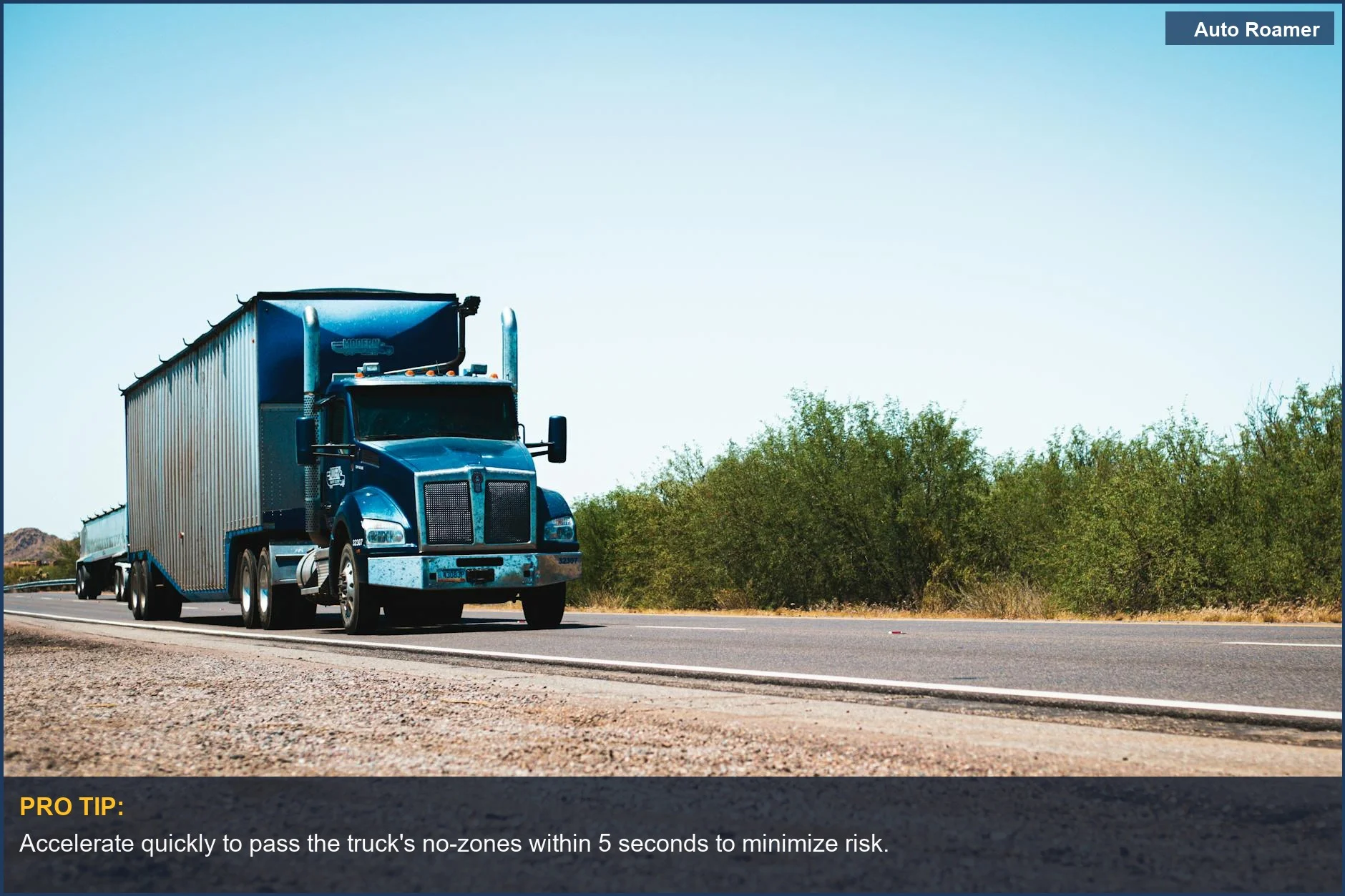
The fundamental mental model for passing a semi truck safely is to get past its four critical no-zones as swiftly and decisively as possible. Lingering beside a truck is the most dangerous position you can occupy.
Understanding these no-zones is paramount. The Federal Motor Carrier Safety Administration (FMCSA) identifies four main areas where a truck driver has significantly reduced visibility: a 20-foot zone in front, a 30-foot zone behind, a one-lane zone on the left side, and a two-lane zone on the right side FMCSA. The core insight: if you can't see the truck driver's face in their side mirror, they absolutely cannot see you.
Lingering in any of these zones dramatically increases your risk. Approximately one-third of all crashes between large trucks and cars occur in these no-zones Zeh & Associates. The right side blind spot is particularly large, extending out two lanes and past the rear of the trailer, making it the most dangerous place to be.
The goal is a quick, clean pass. This means accelerating sufficiently to move past the truck's blind spots decisively. Do not attempt to pass if you cannot maintain a safe speed differential. Remember, even with modern technology, blind spots remain a significant safety challenge for the trucking industry Zeh & Associates.
The number of large trucks involved in fatal crashes has seen an increase FMCSA, underscoring the importance of these safety protocols. Always prioritize passing on the left and ensure you are well ahead of the truck before merging back into its lane. If you cannot see the truck's mirrors, you are in a no-zone.
What You Need to Know
How to Handle This
What This Looks Like in Practice
- Passing a Loaded Tanker Truck in Rain on a Mountain Pass in a Compact Sedan. We encountered a loaded tanker truck on a steep, winding, rainy mountain descent. Visibility was severely reduced by the downpour and the truck's spray. We initiated a pass on the left, but the slick road and the truck's spray made traction and clear vision challenging. We succeeded by accelerating decisively before entering the blind spot and completing the pass as quickly as possible zehllaw.com. Lingering alongside the truck was a mistake; its rear wheel spray momentarily blinded us, highlighting the danger of extended exposure in the no-zone Why Blind Spots on Trucks Are Deadlier Than You Think.
- Overtaking Two Side-by-Side Semis on a Rural Highway in a Pickup Truck. Two semis traveled side-by-side on a two-lane highway, blocking both lanes. We waited until one truck drifted back, creating a small gap. We then accelerated rapidly to pass the remaining truck on the left, maintaining a safe speed differential CMV Driving Tips - Inadequate Surveillance | FMCSA. The key was waiting for a clear opportunity and executing a swift, decisive pass, not attempting to squeeze into a small gap.
- Passing a Flatbed with an Oversized Load in Dense Fog in an SUV. Driving in dense fog, we came up behind a flatbed truck with a wide, oversized load. Visibility was drastically reduced, making it impossible to judge distances or the truck's full dimensions. Passing on the right was not an option due to the truck's two-lane blind spot Where Are the 4 Blind Spots on an 18-Wheeler?. We maintained a significant following distance and waited for the fog to lift, prioritizing safety over a quick pass. In extremely hazardous conditions, not passing at all is sometimes the safest action.
Mistakes That Cost People
Mistake Passing on the right.
Why people make it It feels fastest, especially when a truck is in the left lane of a multi-lane highway.
What actually happens A truck's right blind spot is massive, often covering two lanes. The driver can't see you. You're a ghost. If they merge right or you misjudge their speed, a catastrophic accident is almost inevitable. The FMCSA highlights that a significant portion of truck accidents occur in these "no-zones." Truck Accidents: What to Know About No Zones & Blind Spots
The fix Pass on the left, always. Exception: if the truck is in the left lane of a three-or-more-lane highway and you're in the rightmost. Be extremely cautious, ensure you can see the driver's mirrors.
Mistake Cutting back in too soon after passing.
Why people make it Impatience. You want your "groove" back and assume the truck can react instantly.
What actually happens You've eliminated the truck's ability to stop. Trucks need significant distance to halt. Lingering too close removes their margin for error. If you can't see the truck driver's face in their side mirror, they can't see you. BE AWARE OF BLIND SPOTS - FMCSA
The fix Pass completely. Continue accelerating until you see both truck headlights in your rearview mirror before merging. This puts you well out of their blind spot.
Mistake Lingering alongside the truck.
Why people make it Uncertainty about when to pass, or insufficient speed differential for a decisive pass.
What actually happens This is the most dangerous position. You're in the truck's largest blind spots; the driver doesn't know you're there. This makes them vulnerable to lane changes, and you to their actions. Many accidents occur when cars linger in no-zones, which account for a third of all truck-car crashes annually. Why Blind Spots on Trucks Are Deadlier Than You Think
The fix Commit to the pass. If you're passing, do it quickly and decisively. If you can't maintain a speed differential for a swift pass, don't initiate it.
Mistake Underestimating truck blind spots.
Why people make it We're used to our car's limited blind spots and assume trucks are similar.
What actually happens Trucks have enormous blind spots, "no-zones." The front no-zone can extend ~20 feet, rear ~30 feet, and side blind spots span multiple lanes. The driver cannot see vehicles in these areas, making them extremely hazardous. Where Are the 4 Blind Spots on an 18-Wheeler?
The fix Always assume the truck driver cannot see you if you are near their vehicle, especially on the sides, front, or rear. Maintain significant distance behind, and pass quickly beside them.
Mistake Not accounting for vehicle differences.
Why people make it We assume all vehicles perform similarly.
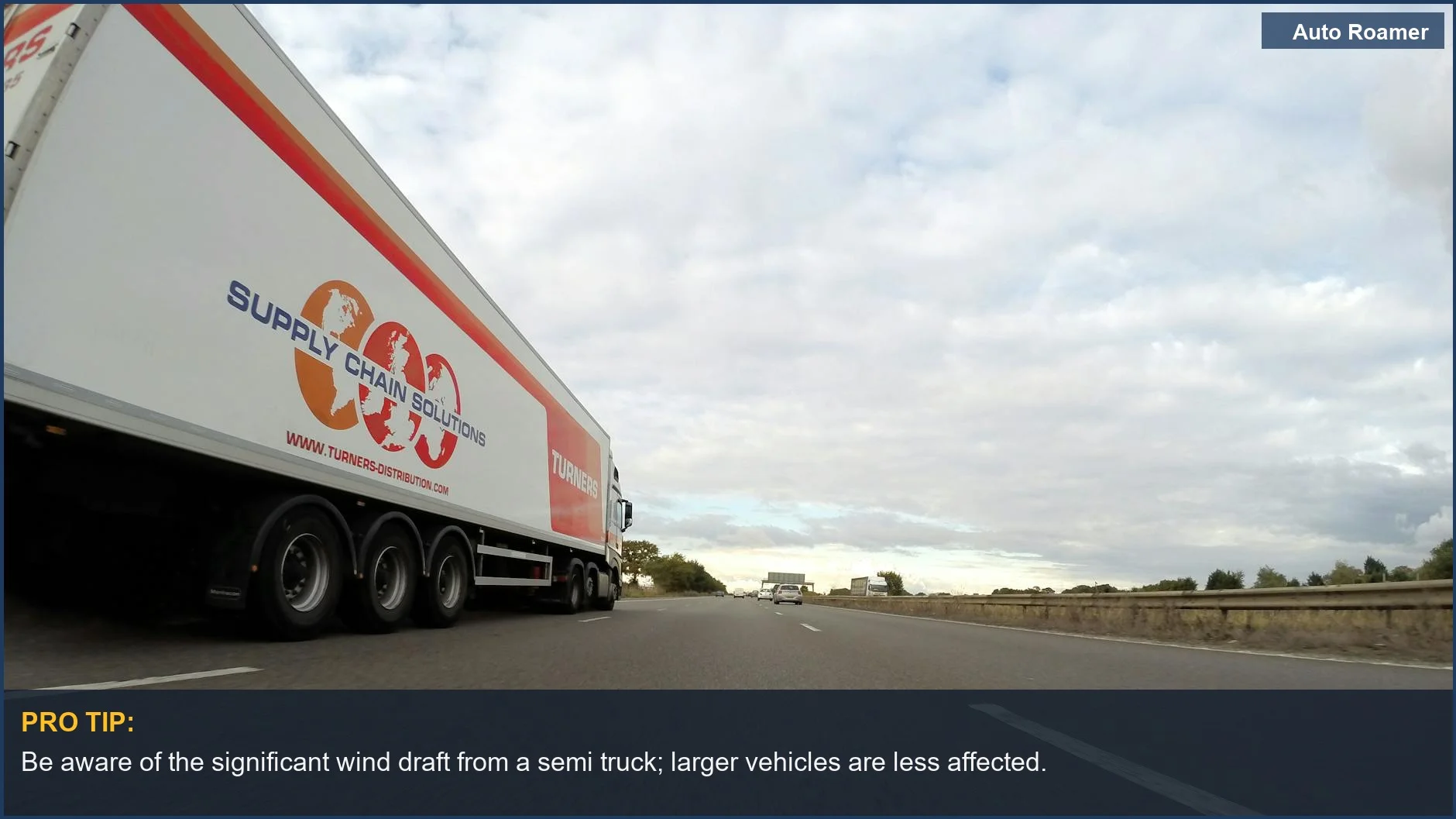
What actually happens Smaller vehicles are more susceptible to wind draft from semis and sit lower, potentially deeper in blind spots. Newer vehicles with driver-assistance systems may not effectively "see" large trucks. A truck's mass (up to 75,000 lbs heavier than a car) means far greater inertia and stopping requirements. Truck Accidents: What to Know About No Zones & Blind Spots
The fix Be aware of your vehicle's limitations and the truck's capabilities. Give yourself ample space, especially in smaller cars, and be cautious with advanced safety features that might not fully recognize large trucks.
Key Takeaways
- Pass quickly and decisively on the left. Never linger in the truck's blind spots, often called "No-Zones." These areas, extending up to 20 feet in front, 30 feet behind, and two lanes to the right, make it impossible for the truck driver to see you [PDF] BE AWARE OF BLIND SPOTS - FMCSA.
- Maintain a significant speed differential when passing. You need to move past the truck swiftly. If you can't see the truck driver's face in their side mirror, they likely can't see you CMV Driving Tips - Inadequate Surveillance | FMCSA.
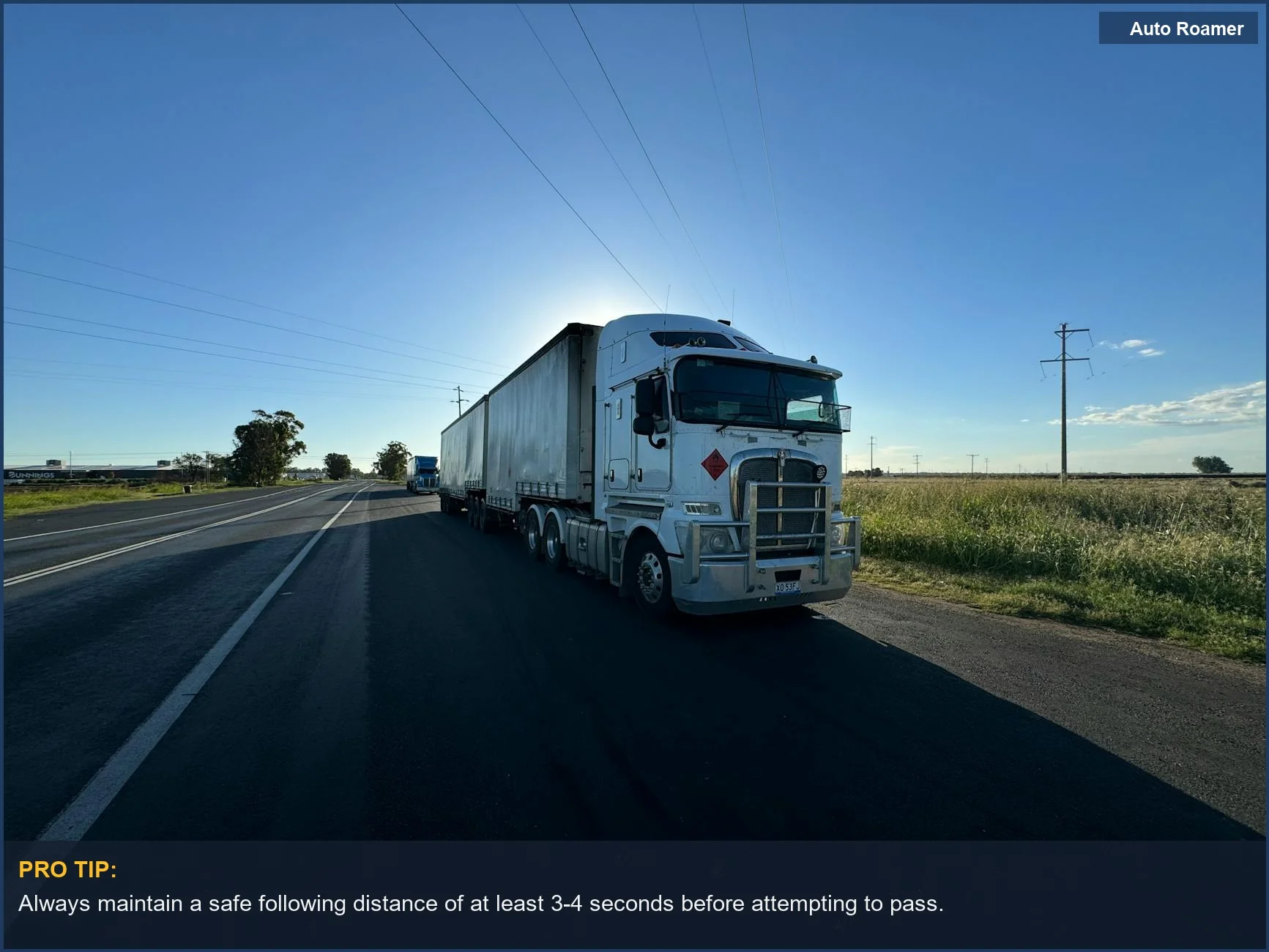
- Ensure you have ample space to merge back. Don't cut in too soon; a loaded semi needs over 525 feet to stop. Wait until you can see both of the truck's headlights in your rearview mirror before merging back into the lane Truck Accidents: What to Know About No Zones & Blind Spots.
- Avoid passing on the right unless absolutely necessary on a multi-lane highway with the truck in the left lane. The right side blind spot is the largest, extending up to two lanes wide Where Are the 4 Blind Spots on an 18-Wheeler?.
- The single most important thing to remember when passing an 18 wheeler highway: get past the truck's No-Zones as fast as possible. Lingering beside a truck is the most dangerous position you can be in.