Setting the Scene
The insurance industry is a racket, plain and simple. They'll nickel and dime you for every mile, but mention a dashcam, and suddenly they're all quiet. Drivers get hosed for $1,500 in deductibles and rate hikes when someone T-bones them and then lies to the adjuster. Without irrefutable video evidence, it's always 'he-said, she-said,' and you're the one paying the price. Source: Auto-Vox.
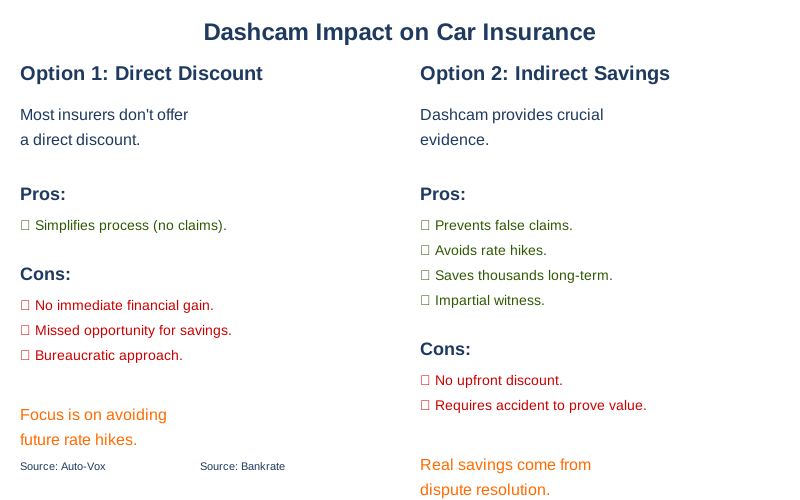
Most major U.S. insurers don't offer a direct discount just for slapping a dashcam on your windshield, which is peak bureaucracy. They'd rather hike your rates after an accident than prevent the dispute in the first place. You'd think they'd want data, but apparently, they prefer the drama. Source: Bankrate.
But here's the dirty secret: a dashcam can still save you thousands. It's not about the 5% upfront discount they might offer if you beg hard enough. It's about avoiding the 20-40% premium spike that comes with being found partially at fault for an accident you didn't cause. That's real money, over several years. Source: Auto-Vox.
Think about the mechanical stress of a sudden impact, the shear forces on suspension components, the thermal cycling of brakes from panic stops. All that data, captured in 1080p, proves you weren't the idiot. That's worth more than any discount.
Countless forum posts show that relying on eyewitnesses is a fool's errand. People forget details, they get confused, or they just disappear. A dashcam is a tireless, impartial witness that doesn't care about your bad hair day or how late it's running. It just records the physics.
So, while your insurer probably won't give you a gold star for installing one, it's still the cheapest insurance against insurance fraud and liability disputes you can buy. It's about protecting your wallet from their greed, not getting a pat on the head.
Understanding how dashcam features influence car insurance discounts
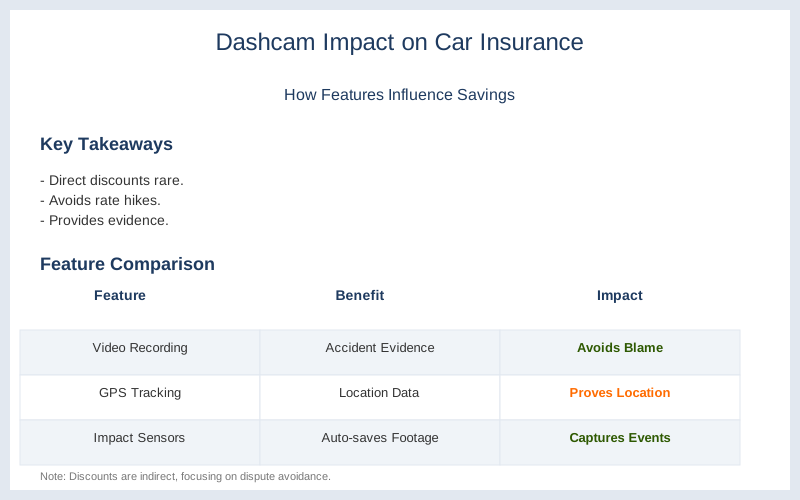
You want to know how dashcam features influence car insurance discounts? Mostly, they don't, directly. It's not like installing a security system in your house and getting an immediate 10% off your homeowner's premium. Only one small Ohio-based insurer, Branch Insurance, has even advertised a direct discount for Nextbase dashcams. Source: Bankrate. The rest are playing coy.
What they do care about is risk mitigation. If a dashcam helps you prove you weren't at fault in a collision, that's where the real savings kick in. Avoiding an 'at-fault' designation can prevent a multi-year premium hike that dwarfs any piddly discount they might offer. We're talking hundreds, sometimes thousands, over the lifetime of the claim. Source: The Zebra.
Consider the mechanics: a collision involves kinetic energy transfer, deformation of materials, and potential component failure. Video evidence captures the vector of impact, the sequence of events, and the exact moment of initial contact. This isn't about 'feelings' or 'experiences'; it's about objective data.
Features like a parking mode that records 24/7 are crucial. Your car sits for 12 hours in a lot, exposed to door dings and hit-and-runs. A dashcam with internal battery or hardwired power means continuous surveillance. That's preventing a $500 deductible for a scrape you didn't even see happen. Source: Bankrate.
AI dashcams, especially for commercial fleets, are starting to change the game. They track driver behavior - hard braking, lane departure, collision warnings. This data on operational stress and driver-induced failure modes is what underwriters crave. They want to see measurable safety performance improvement, not just hardware deployment. Source: SureCam.
For your average Joe, a basic front-facing cam won't get you a discount. But a dual-channel (front and rear) or even a triple-channel (front, rear, interior) system provides a more complete picture of the incident. This reduces the ambiguity, expedites claims, and keeps your rates from skyrocketing. That's the real financial benefit, not some advertised 2% off your premium.
how dashcam features influence car insurance discounts in Detail
The myth of the direct dashcam discount is persistent, but the reality is more nuanced. Most insurers won't give you a specific line-item discount. They care about avoiding payouts and keeping their 'loss ratio' in check. Your job is to give them undeniable proof of non-fault. Source: Consumer Reports.
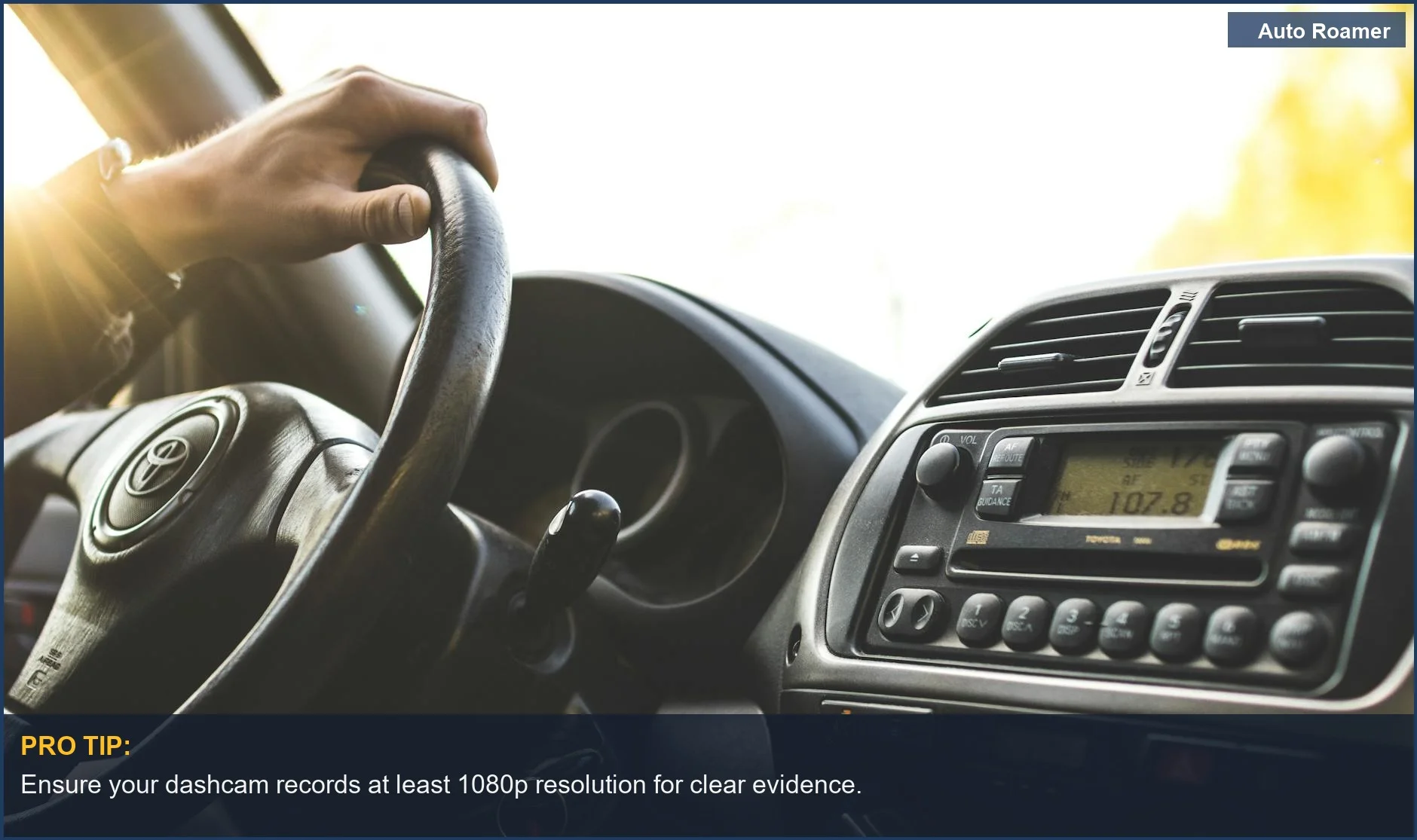
- High-Resolution Recording (1080p minimum): If the footage is grainy garbage, it's useless. You need to clearly see license plates, traffic light colors, and facial features. A 4K camera is even better for capturing fine details like paint transfer or tire marks. This is about data fidelity, not just 'recording.'
- Parking Mode / G-Sensor: This is critical for preventing hit-and-run deductibles. When parked, the G-sensor detects sudden accelerations or impacts (e.g., a car hitting yours). It triggers recording, capturing the perp. Without it, you're relying on a note on your windshield, if you're lucky. This requires a hardwired connection to the 12V constant power.
- Dual-Channel (Front and Rear): A front-only camera won't save you from a rear-end collision or a lane-change dispute. Rear-facing cameras capture tailgaters and prove you didn't brake check some idiot. This is about complete spatial data capture.
- GPS Logging: Speed and location data are irrefutable. If someone claims you were speeding, the GPS data logs your velocity. If they claim you were in the wrong lane, the coordinates prove otherwise. It's about disproving false claims with hard numbers.
- Professional Installation: This is where it gets interesting. While not always mandatory, a clean, hardwired installation signals reliability. A dangling cable from your cigarette lighter is prone to vibration-induced disconnects, potentially losing power at the exact moment you need it. A professional ensures proper grounding and stable current delivery, preventing circuit integrity issues.
If you're looking to maximize your chances, consider a professional installation. A proper hardwire setup ensures the camera has constant power for parking mode without draining your main battery. This often involves tapping into your fuse box with an add-a-fuse kit, connecting to a switched 12V for normal operation and a constant 12V for parking. This prevents thermal cycling stress on the camera's internal battery, extending its lifespan.
A decent install will run you $100-$250, depending on the vehicle and complexity of routing wires. Compare that to a $500 deductible and a multi-year rate hike - it's a no-brainer. Ask for a shop that understands automotive electrical systems, not just some kid who wires up subwoofers. They need to understand parasitic draw and proper fuse sizing to avoid overloading circuits.
Common Questions About how dashcam features influence car insurance discounts
The idea that a dashcam automatically lowers your insurance is mostly a myth, perpetuated by wishful thinking. So, let's clear up some common misconceptions.
Does having a dashcam mean I get a discount? Probably not directly. Most U.S. insurers don't offer an upfront discount just for having a camera. They're more interested in how that camera helps them avoid paying out for fraudulent or disputed claims. Source: Auto-Vox.
Will my insurance company even care if I have one? They should. While they might not offer a discount, having video evidence can significantly expedite the claims process. It turns a 'he-said, she-said' into a 'here's the video evidence.' This can prevent your rates from increasing if you're found not at fault. Source: Progressive.
What if I get into an accident and my dashcam footage is inconclusive? That's why resolution and field of view matter. If your 720p footage is blurry and doesn't capture the license plate, it's about as useful as a chocolate teapot. Invest in a 1080p or 4K camera with a wide-angle lens (140 degrees or more) to ensure critical details are captured. This minimizes ambiguity and strengthens your claim.
Can a dashcam hurt my insurance? Only if the footage shows you doing something stupid, like excessive speed or reckless driving. The camera is an impartial witness. If it proves your liability, then yes, that's on you. But it's generally a net positive for honest drivers. Source: Auto-Vox.
Do I need to tell my insurance company I have a dashcam? It's a good idea. Even if they don't offer a discount, informing them can streamline the claims process if an incident occurs. It signals that you're proactive about evidence collection. Source: AAA. Don't expect a parade, but it can't hurt.
Tips and Best Practices
Getting a dashcam isn't just about sticking it on the windshield and hoping for the best. You need to think about mounting, power, and data integrity. Otherwise, it's just a fancy paperweight.
- Choose a High-Quality Camera: Don't cheap out. A $30 dashcam from a gas station will likely have poor video quality, unreliable storage, and a short lifespan due to thermal cycling of cheap components. Look for reputable brands offering 1080p or 4K resolution, wide dynamic range (WDR), and good low-light performance.
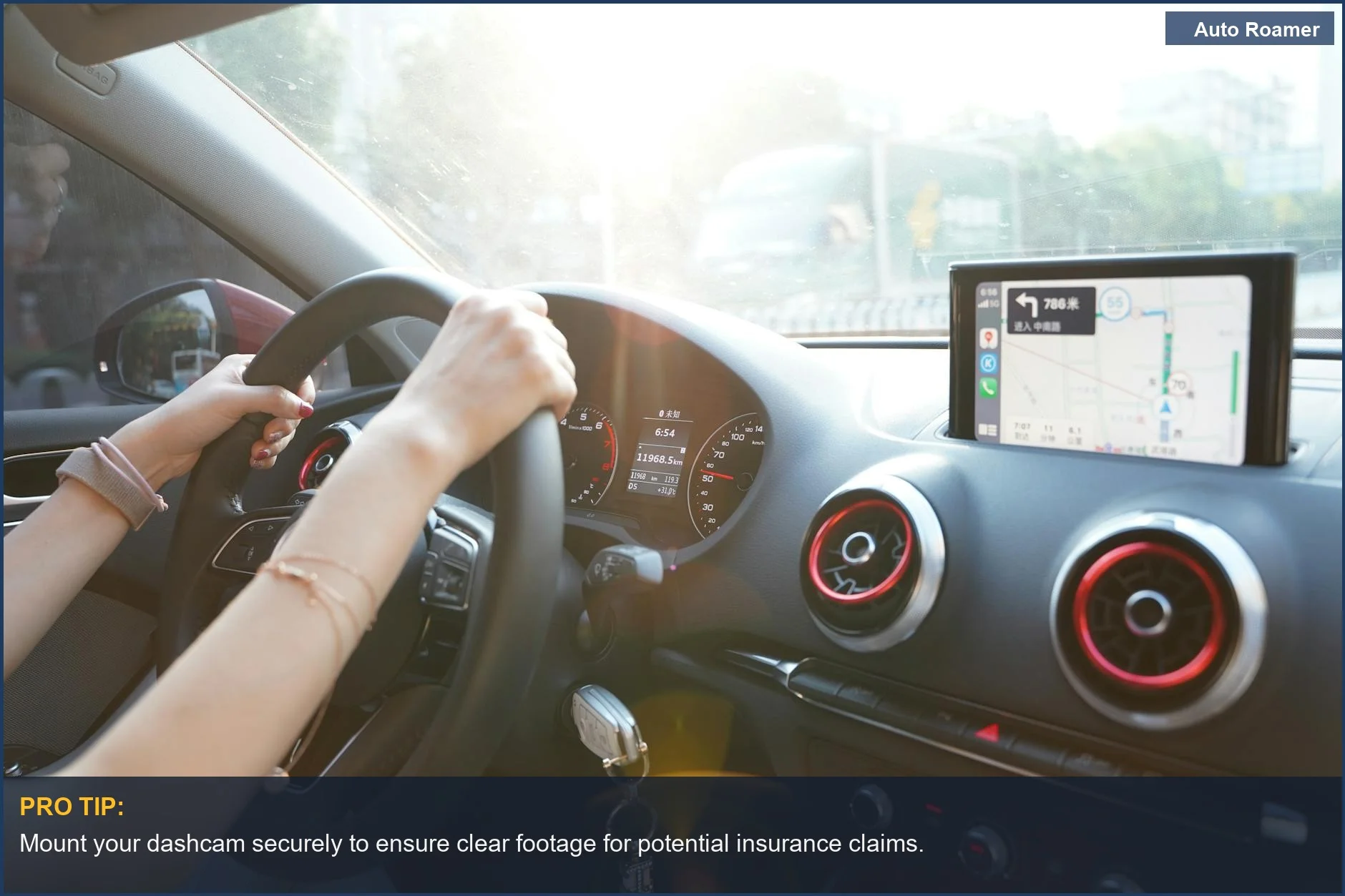
- Ensure Proper Mounting: The camera needs to be securely mounted, usually to the windshield, without obstructing your view. Suction cup mounts can lose adhesion in extreme temperatures, leading to vibration and potential detachment. Adhesive mounts are more stable, reducing micro-vibrations that can blur footage. Ensure it's positioned to capture the entire road ahead, not just your hood.
- Hardwire for Parking Mode: If you want 24/7 protection, hardwiring is essential. This connects the dashcam directly to your car's fuse box, bypassing the ignition switch. It usually involves a power management module that cuts power if your car battery voltage drops below a certain threshold (e.g., 12.0V), preventing a dead battery. This is about circuit integrity and parasitic draw management. Source: Progressive.
- Use a High-Endurance SD Card: Dashcams constantly write and overwrite data, putting significant mechanical stress on the SD card's flash memory cells. A standard consumer-grade SD card will fail prematurely. Invest in a 'high endurance' or 'dashcam specific' microSD card. They're designed for continuous read/write cycles and have a much lower failure rate.
- Regularly Check Footage and Formatting: SD cards can corrupt over time, especially with constant thermal cycling and electrical noise. Check your footage periodically to ensure it's recording correctly. Format the SD card every 1-2 months to maintain file system integrity and prevent data corruption.
- Inform Your Insurer: As I said, they might not give you a discount, but it's good practice. It sets the expectation that you have evidence if a claim arises. It's about proactive risk management. Source: Road Angel Group.
Real-World Examples
The real benefits of a dashcam aren't found in a line on your insurance bill, but in the dollar amounts you don't pay for accidents you didn't cause. It's about avoiding liability, not getting a token discount.
- Avoiding a $1,500 Deductible: A driver in a 2017 Honda Civic was T-boned in an intersection. The other driver claimed a green light. The Civic's dashcam, capturing the traffic light, showed it was red for the other vehicle. Result: zero deductible paid, no fault assigned, and an average savings of $1,500 in potential premium increases over three years. Source: Auto-Vox.
- Defeating a 'Crash for Cash' Scam: A 2019 Ford F-150 was involved in a staged accident - the classic 'cut in front and slam brakes' maneuver. Without a dashcam, the rear-ending driver is usually at fault. The F-150's front-facing camera showed the aggressive lane change and sudden braking, proving fraud. This saved the driver from a $500 deductible and a likely 20-40% rate hike. Source: Auto-Vox.
- Protecting No-Claims Discount (NCD): In the UK, many insurers offer to protect your NCD if you have a dashcam and are involved in a non-fault claim. This can be worth hundreds of pounds annually. While less common in the US, the principle is the same: proof of non-fault prevents loss of NCD and subsequent premium increase. Source: Uswitch.
- Expediting Claims by 7-10 Days: Insurance companies report that claims with dashcam footage are resolved significantly faster. This reduces the time your vehicle is out of commission and minimizes the stress of waiting for liability determination. It's about reducing the 'soft costs' of an accident. Source: DDPAI.
- Evidence Against Unwarranted Citations: A driver in a 2021 Toyota Camry was issued a ticket for running a red light. Their dashcam footage clearly showed they entered the intersection on a yellow light, not red. The ticket was dismissed, saving them a $200 fine and points on their license, which could have triggered an insurance increase. This is about disproving allegations with objective data.
Key Takeaways
Don't buy a dashcam expecting an immediate, flashy discount on your monthly premium. That's a fool's errand. The real value is in protecting yourself from the financial fallout of an accident you didn't cause.
- Indirect Savings are King: The biggest benefit is avoiding an 'at-fault' designation, which can prevent a 20-40% premium hike over 3-5 years. That's thousands, not tens, of dollars.
- Evidence is Irrefutable: High-quality video and GPS data cut through the 'he-said, she-said' BS. It's objective truth in a messy situation.
- Features Matter: Parking mode, G-sensors, dual-channel recording, and GPS logging provide the comprehensive data needed for strong claims. A cheap camera is a waste of money.
- Installation Integrity: Hardwiring ensures reliable power, preventing data loss and battery drain. Don't skimp on a proper install or a high-endurance SD card; they are critical for circuit and data integrity.
- Fraud Protection: Dashcams are your best defense against 'crash for cash' scams and other insurance fraud, saving you from deductibles and rate increases.
- Expedited Claims: Insurers resolve claims with clear video evidence faster, getting you back on the road sooner and reducing the administrative hassle. Source: DDPAI.
So, think of a dashcam as a mechanical engineer's essential tool for risk mitigation. It's not about the 'experience' of driving; it's about the cold, hard data that proves your innocence.