
When to Upgrade Your Dashcam vs Buying a New Car With Integrated Tech
You drop a grand on a new phone every two years, but your dashcam, the thing that saves your ass from insurance scams and parking lot ding-dongs, is still a grainy 1080p brick from 2018. The 2026 dashcam market has thermal night vision and instant CarPlay, but you're still debating if your old one is 'good enough.' It's not.
You drop a grand on a new phone every two years, but your dashcam, the thing that saves your ass from insurance scams and parking lot ding-dongs, is still a grainy 1080p brick from 2018. The 2026 dashcam market has thermal night vision and instant CarPlay, but you're still debating if your old one is 'good enough.' It's not.
That 0.5 lux low-light sensor isn't going to catch the license plate of the guy who sideswiped you at 3 AM. Your old cam likely records at 30 frames per second, which means motion blur turns critical details into abstract art.
I've seen enough forum posts to know the drill. Someone gets hit, pulls the footage, and it's a pixelated mess. The insurance company laughs. You're out a deductible and fighting a losing battle.
This isn't just about recording; it's about verifiable evidence, about protecting your financial integrity when some clown decides your fender is a speed bump.
The decision isn't just 'new dashcam' versus 'new car.' It's about evaluating the mechanical stress your existing vehicle is under, the circuit integrity of its aging systems, and the thermal cycling history of its components.
Does your current ride have 150,000 miles on the clock, with suspension bushings that squeal like a banshee and an engine that burns a quart of oil every 1,000 miles? Then maybe a fancy new dashcam is just lipstick on a pig.
A new car with integrated tech, like advanced driver assistance systems, might look shiny.
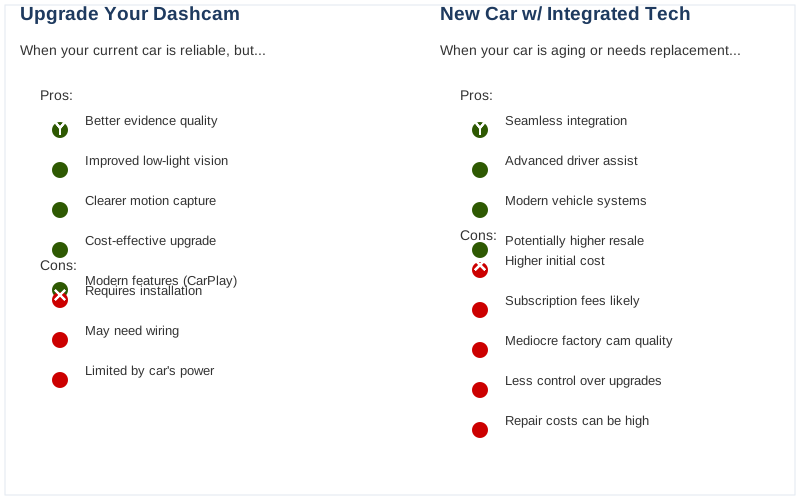
But that integrated dashcam often comes with a subscription fee for cloud storage or parking mode, turning a one-time purchase into a recurring drain. Plus, the resolution on factory cams is often mediocre, designed for convenience, not forensic detail. You pay more for less.
I've spent years dealing with aftermarket electronics and the headaches they can cause.
From parasitic draws killing batteries to poorly routed cables creating EMI, there's a science to integrating anything into a modern vehicle's CAN bus system. Don't just slap something in there. Understand the power demands, the data throughput, and the physical mounting points. Otherwise, you're just adding another failure point.
This isn't a fashion statement. This is about verifiable data. It's about making a cold, hard decision based on physics, not feelings. Your wallet will thank you.
Or it won't, if you keep running that potato cam.
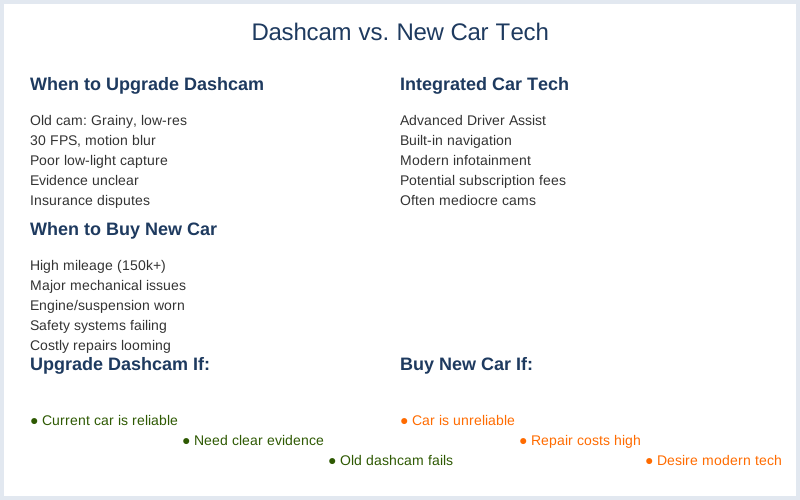
Understanding when to upgrade your dashcam vs buying a new car with integrated tech
The core question isn't just about features; it's about the cost-benefit ratio of securing your assets versus sinking more money into a depreciating asset. Your current dashcam, if it's more than three years old, likely lacks the sensor technology to capture clear license plates at night or handle high-speed motion without excessive blur. That's a fundamental physics limitation of older CMOS sensors.Modern dashcams, like those using Sony STARVIS 2 sensors, offer significantly improved low-light performance and dynamic range. This isn't marketing fluff; it's a measurable improvement in photon capture efficiency. A 4K resolution with a high frame rate, say 60fps, provides more data points per second, reducing motion blur and increasing the probability of clear identification.
On the flip side, buying a new car for integrated tech can be a financial black hole. A new car depreciates 20% the moment you drive it off the lot. That's a $10,000 loss on a $50,000 vehicle before you even get home. The integrated dashcam, if it exists, is often an afterthought, typically a 1080p unit with limited storage and no advanced parking mode. You're paying for a whole car, not just a better camera.
Consider the mechanical stress on your current vehicle. If your car is nearing 150,000 miles and needs new struts, a timing belt, and has rust perforating the frame, adding a $400 thermal night vision dashcam is like putting a titanium bolt on a crumbling concrete wall. The weak link isn't the camera; it's the vehicle itself. Resolution and frame rates are critical, but so is the platform they're mounted on.
Some new vehicles offer advanced driver assistance systems (ADAS) that use cameras. These are primarily for collision avoidance, lane keeping, and adaptive cruise control. They are not designed for forensic video capture. The field of view might be narrow, the video compression high, and access to raw footage non-existent. It's a different tool for a different job.
The Vantrue Pilot 2, for example, showcased at CES 2026, offers thermal night vision and CarPlay integration. That's a significant upgrade in data capture and user experience, bringing modern features to any vehicle. This kind of aftermarket solution leverages specialized components, rather than relying on generalized, often compromised, integrated systems.
My rule of thumb: if your current vehicle is structurally sound, has less than 100,000 miles, and no major pending repairs exceeding $2,000, then an aftermarket dashcam upgrade is the smarter financial move. You're targeting a specific weak point - the lack of reliable video evidence - without the massive capital expenditure of a new car. You're fixing a single point of failure, not replacing the entire system.
when to upgrade your dashcam vs buying a new car with integrated tech in Detail
1. Assess Your Current Dashcam's Capabilities:
Pull up some recent nighttime footage. Can you clearly read a license plate from 10 feet away? If not, your dashcam is likely using an outdated sensor. Most older cams struggle with low light, resulting in high noise and poor detail. The Viofo A329S, a top-tier aftermarket option, uses Sony STARVIS 2 sensors for superior night vision. Your $80 Amazon special from 2020 probably doesn't.
2. Evaluate Your Vehicle's Lifespan and Mechanical Integrity:
If your car has 180,000 miles and the transmission shudders when shifting, investing in a new $400 dashcam might be misplaced. The mechanical stress on the frame, the thermal cycling of the engine, and the general wear and tear mean the vehicle itself is a ticking time bomb. A fancy dashcam won't prevent a rod from punching a hole in your block.
3. Consider the True Cost of Integrated Tech in a New Car:
New cars often boast 'integrated dashcams' or 'advanced camera systems.' These are rarely designed for the forensic detail an aftermarket dashcam provides. They're usually 1080p, with limited storage, and often require a subscription for full functionality. You're paying a premium for a new car, and the camera system is usually an inferior afterthought. Built-in dashcams can be expensive with extras.
4. Research Aftermarket Dashcam Features:
Modern aftermarket dashcams offer features like 4K resolution, HDR (High Dynamic Range) for challenging lighting, thermal night vision (from CES 2026, as seen in Tom's Guide), buffered parking mode, and dual-channel recording (front and rear). Some even integrate with CarPlay. These features directly address common failure modes in accident reconstruction. Many are buying the wrong dashcam without understanding these features.
5. Calculate the Financial Impact:
A high-quality aftermarket dashcam like the Viofo A329S costs around $250-350. A new car with 'integrated tech' can easily add $5,000 to $10,000 to the price, just for features that are often less capable than aftermarket. The depreciation alone on that new car will dwarf the cost of any dashcam. It's simple math: target the problem, don't buy a whole new system.
Common Questions About when to upgrade your dashcam vs buying a new car with integrated tech
My existing dashcam is old, but it still 'works.' Should I just keep it?
Define 'works.' If your old cam records at 720p and can't read a license plate in broad daylight from 15 feet, it's not 'working' for its primary purpose. The point of a dashcam is irrefutable evidence. If the footage is too blurry or dark, it's just a fancy paperweight. Upgrade. Outdated doesn't mean no good, but it's often close.
Are integrated dashcams in new cars any good?
Generally, no. They're often basic, low-resolution units designed for convenience rather than critical incident recording. They lack advanced features like buffered parking mode, thermal night vision (like the Vantrue Pilot 2 at CES 2026), or cloud connectivity without a subscription. You're paying for the whole car, not a specialized recording device. It's a compromise, always.
What's the most critical feature I should look for in a new dashcam?
Hands down, it's the image sensor and processor. Look for Sony STARVIS 2 sensors and a powerful CPU that can handle 4K 60fps recording with HDR. This combination directly impacts the clarity of footage in varying light conditions and at speed, minimizing motion blur and maximizing detail capture. Everything else is secondary to raw data quality.
My car is still under warranty. Will installing an aftermarket dashcam void it?
No, not if installed correctly. A properly installed dashcam, wired to a switched fuse with an add-a-fuse kit, will not void your warranty. If you start cutting factory wires or draw excessive current that causes a system fault, then yes, you've created a problem. Stick to established best practices for circuit integrity. Don't be a hack.
Is a dashcam really worth the investment if I'm a careful driver?
This isn't about *your* driving; it's about everyone else's. The guy who runs a red light, the hit-and-run in the parking lot, the insurance fraud artist faking whiplash. A $250 dashcam can save you $10,000 in legal fees, insurance premium hikes, and deductibles. It's a preventative measure against external mechanical stress and financial liability. It's cheap insurance, plain and simple.
Tips and Best Practices
1. Prioritize Sensor Quality Over Resolution Hype:
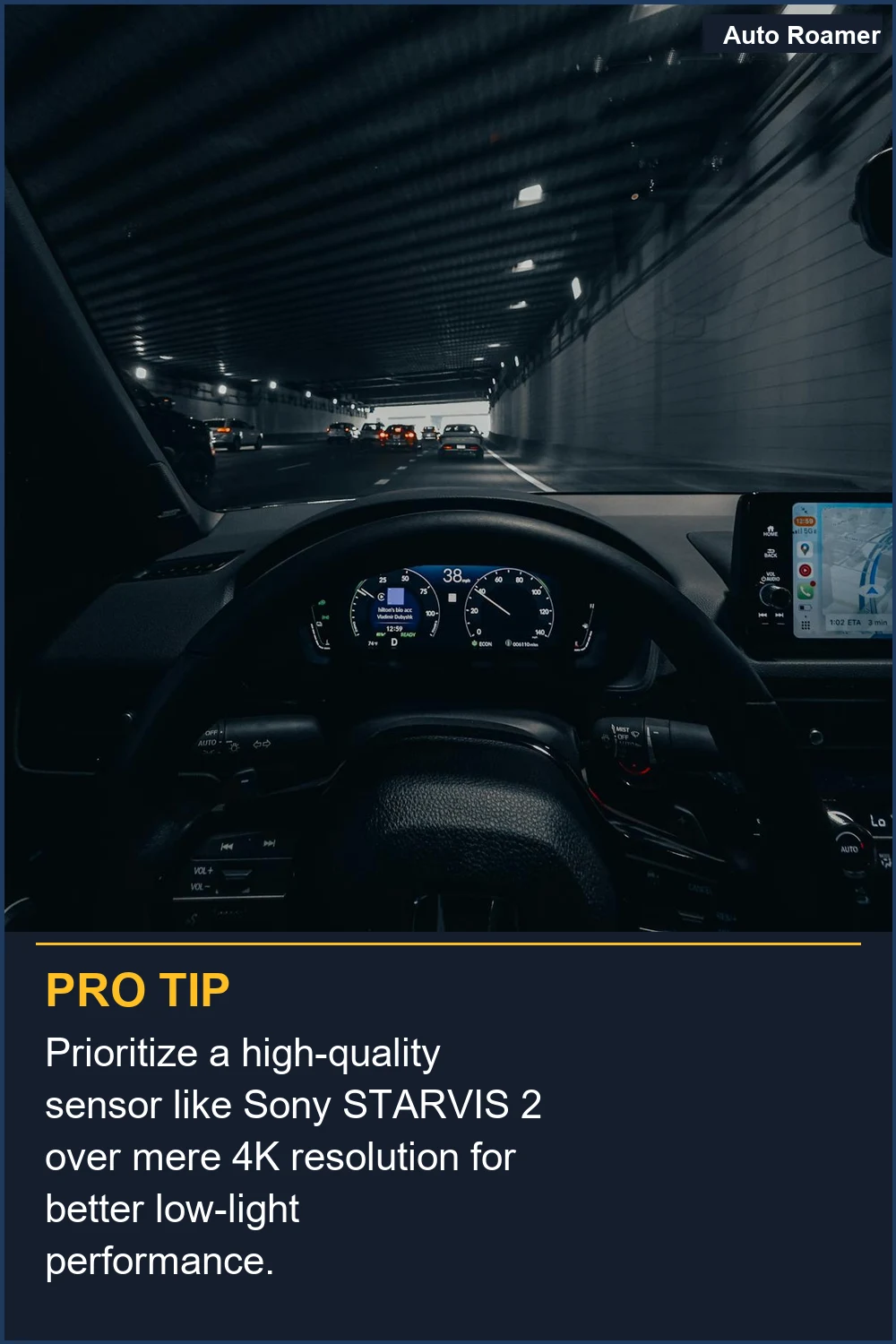
Don't fall for '4K' marketing if it's on a cheap sensor. A 1440p camera with a high-quality Sony STARVIS 2 sensor will outperform a 4K camera with a garbage sensor in low-light and high-contrast situations. The sensor's ability to capture photons and its dynamic range are far more critical for usable footage. Car and Driver's best dashcams highlight sensor quality.
2. Always Hardwire for Parking Mode:
If you want 24/7 protection, you need a hardwire kit. This connects your dashcam directly to your car's battery, usually through the fuse box, to enable parking mode. Use a voltage cut-off module to prevent battery drain. This ensures constant power without stressing your vehicle's 12V system beyond its design limits.
3. Use a High-Endurance MicroSD Card:
Dashcams constantly write and rewrite data, which is brutal on standard microSD cards. Invest in a 'high endurance' card from a reputable brand. These are designed for continuous thermal cycling and write cycles. A cheap card will fail in weeks or months, leaving you without footage when you need it most.
4. Position for Optimal Field of View and Minimal Vibration:
Mount the dashcam as high on the windshield as possible, centered, and behind the rearview mirror to maximize the field of view and minimize visual obstruction. Ensure the mount is secure to prevent vibration, which causes motion blur and mechanical stress on the camera's internal components. A loose mount means blurry footage.
5. Consider Dual-Channel or Three-Channel Systems:
A front-only camera is good, but a front and rear system (dual-channel) provides crucial context for rear-end collisions. Some systems even offer a third interior camera. This covers multiple angles, giving you a comprehensive record of events, which is vital for insurance claims. Upgrading your current vehicle with these systems is often more cost-effective.
6. Check for Capacitor-Based Power, Not Batteries:
Many dashcams use supercapacitors instead of lithium-ion batteries. Capacitors are far more resistant to the extreme thermal cycling inside a car (from 0 degrees F to 150 degrees F). Batteries swell and fail under these conditions. Capacitors are a sign of thoughtful engineering for automotive environments.
7. Properly Route Your Cables:
Don't just let cables dangle. Route them along the headliner, down the A-pillar, and under the dash. Use trim tools to tuck them neatly. This prevents mechanical stress on the cables, reduces potential for interference with airbags (don't route over airbags!), and looks professional. A sloppy install is an eventual failure point.
Real-World Examples
Case 1: The Parking Lot Hit-and-Run
A 2017 Honda Civic owner had a cheap $60 dashcam. Someone backed into his front bumper, leaving a 10mm deep gouge and fleeing. The dashcam recorded, but the 720p resolution and lack of buffered parking mode meant the incident was only partially captured. The license plate was unreadable due to motion blur and low light. Insurance paid out, but the owner faced a $500 deductible. A Viofo A329S with buffered parking mode would have caught the plate clearly. Newer cameras offer better parking modes.
Case 2: The 'Phantom Brake' Scam
A driver with a 2019 Toyota RAV4 was targeted by a 'phantom brake' scammer. The scammer cut in front, slammed on brakes, and then claimed whiplash. The RAV4's factory-integrated dashcam recorded, but the video was heavily compressed, dropping crucial frames. The lack of 60fps meant the sudden deceleration wasn't captured smoothly. The driver fought a lengthy legal battle. A 4K 60fps aftermarket cam would have provided irrefutable evidence of the scammer's deliberate braking. Fleet safety guides emphasize high-quality video for evidence.
Case 3: Thermal Failure in Extreme Heat
A Ford F-150 owner in Arizona had a dashcam with an internal lithium-ion battery. During a summer heatwave, ambient cabin temperatures hit 160 degrees F. The battery swelled, causing mechanical stress on the housing and eventually failing, rendering the camera inoperable. A capacitor-based dashcam, designed for extreme thermal cycling, would have continued operating without issue. This is a common failure mode in hot climates.
Case 4: The Nighttime Deer Strike
A Subaru Outback driver hit a deer on a dark rural road. His old dashcam recorded only a dark, blurry mess, making it impossible to prove the impact point or the animal's sudden appearance. With a thermal night vision dashcam, like the Vantrue Pilot 2 showcased at CES 2026, the deer's heat signature would have been visible well before impact, providing critical evidence for insurance and peace of mind.
Key Takeaways
- Your old dashcam, if it's more than three years old, likely has a sensor that can't cut it for critical evidence capture. The physics of older CMOS technology means poor low-light and motion blur.
- Upgrading to a new aftermarket dashcam with a Sony STARVIS 2 sensor and 4K 60fps recording is a cost-effective way to get verifiable evidence. Expect to pay $250-350 for a top-tier unit.
- Buying a new car solely for 'integrated tech' is a financial black hole. Factory dashcams are often inferior, low-resolution, and come with subscription fees. That depreciation hit alone is massive.
- Hardwire your dashcam for buffered parking mode to protect against parking lot incidents. Use a voltage cut-off to prevent battery drain and ensure circuit integrity.
- Invest in high-endurance microSD cards and dashcams with supercapacitors for extreme thermal cycling resistance. Lithium-ion batteries will fail under prolonged heat.
- The decision hinges on your current vehicle's mechanical integrity. If it's a rust bucket with 180,000 miles, a new dashcam is a band-aid. If it's solid, upgrade the camera.
- Don't just record; record with clarity. The value of a dashcam is directly proportional to the quality and evidentiary weight of its footage. Pixelated garbage is useless.
Frequently Asked Questions
How much does a professional dashcam installation cost versus doing it myself?
Do I really need a voltage cut-off module if I hardwire my dashcam for parking mode?
What if I install a new dashcam, but the footage is still blurry at night?
Can a poorly installed dashcam permanently damage my car's electrical system?
I heard dashcams are illegal in some places. Is that true?
🏅 Looking for Gear Recommendations?
Check out our tested gear guides for products that work with this setup:
Sources
- move the dashcam to new car or get a new one? - Reddit
- Tech Upgrades to Look for in a Used Vehicle in 2026
- Car Dash Cam Technology and Reviews: 2026 Fleet ...
- Before You Buy A Dash Cam In 2026 – Watch This First
- Best Dash Cams for 2026, Tested and Reviewed
- Here's Why Every Car You Own Should Have A Dash Cam! - YouTube
- Everyone is Buying the Wrong Dash Cam! (2026) : r/driving
- Dash Cam Buying Guide 2026: Tips To Pick The Right Model
- Dashcam for Cars: Is It Worth It? - Kelley Blue Book
- Dashcam Buyer's Guide January 2026: Recommendations ...
- Should You Buy a New Car or Invest in Automotive Upgrades?
- The coolest thing at CES 2026 is a new dashcam that ...