
The Short Version
The dealer quoted me $1800 to replace a rearview mirror on a 2021 F-150. Not because the glass was broken, but because the integrated blind-spot monitoring sensor was faulty. This isn't just about glass and plastic anymore; it's about microcontrollers, CAN bus signals, and proprietary diagnostics. They're selling you a whole system when one 50-cent component fails.
The cost of replacing integrated smart car tech components is not about raw material or labor, it's about the licensing, the specialized tools, and the deliberate obfuscation of repairability. Auto shops need expensive new equipment just to look at this stuff. It's a gold mine for manufacturers, a nightmare for your wallet.
The Short Answer
Modern vehicle electronics are built like black boxes. A single control module might handle everything from your infotainment to your ABS. Thermal cycling, vibration, and minor voltage spikes can cause micro-fractures in solder joints or delamination of PCB layers. This leads to intermittent signal loss or complete circuit failure. The tolerance for error is razor-thin.
Take an ADAS camera, for example. It's not just a camera; it's an optical sensor array with a dedicated image processor. If humidity causes internal condensation and corrosion on the lens's anti-reflective coating, the field-of-view calibration shifts. Suddenly, your lane-keeping assist thinks the lane is 0.15 degrees off. Regulatory bodies like NHTSA demand precise calibration tolerances. The dealer's only fix is a full replacement, often costing upwards of $1000 for the part alone.
Then there's the software. Every 'smart' component has firmware that needs to talk to the car's central brain, the Body Control Module (BCM) or Powertrain Control Module (PCM). A glitch in the software, or a corrupt memory sector in the component's EEPROM, can render it useless. You can't just reflash it with a $20 OBD-II scanner. You need proprietary diagnostic tools that cost shops tens of thousands, sometimes hundreds of thousands, to license.
73% of pro technicians struggle with OEM data access, according to one survey. It's a deliberate barrier to entry for independent repair shops.
The mechanical stress on these components is also often overlooked. A fender bender that slightly twists the frame can throw off sensor alignment, even if the sensor itself isn't visibly damaged. The shear forces on mounting brackets, the vibration frequencies transmitted through the chassis - these all contribute to component fatigue and eventual failure. They're designed to be replaced, not repaired. It's a revenue stream, pure and simple.
The Reality Check
The 'smart' car isn't just a rolling computer; it's a collection of interconnected, often proprietary, systems designed with limited repairability. When something breaks, you're usually replacing a whole module, not a single chip. This drives up cost because the system is over-engineered as a single unit, rather than a collection of serviceable parts. Integration complexity and rising component costs are significant challenges for manufacturers, they say. For us, it's just a bill.
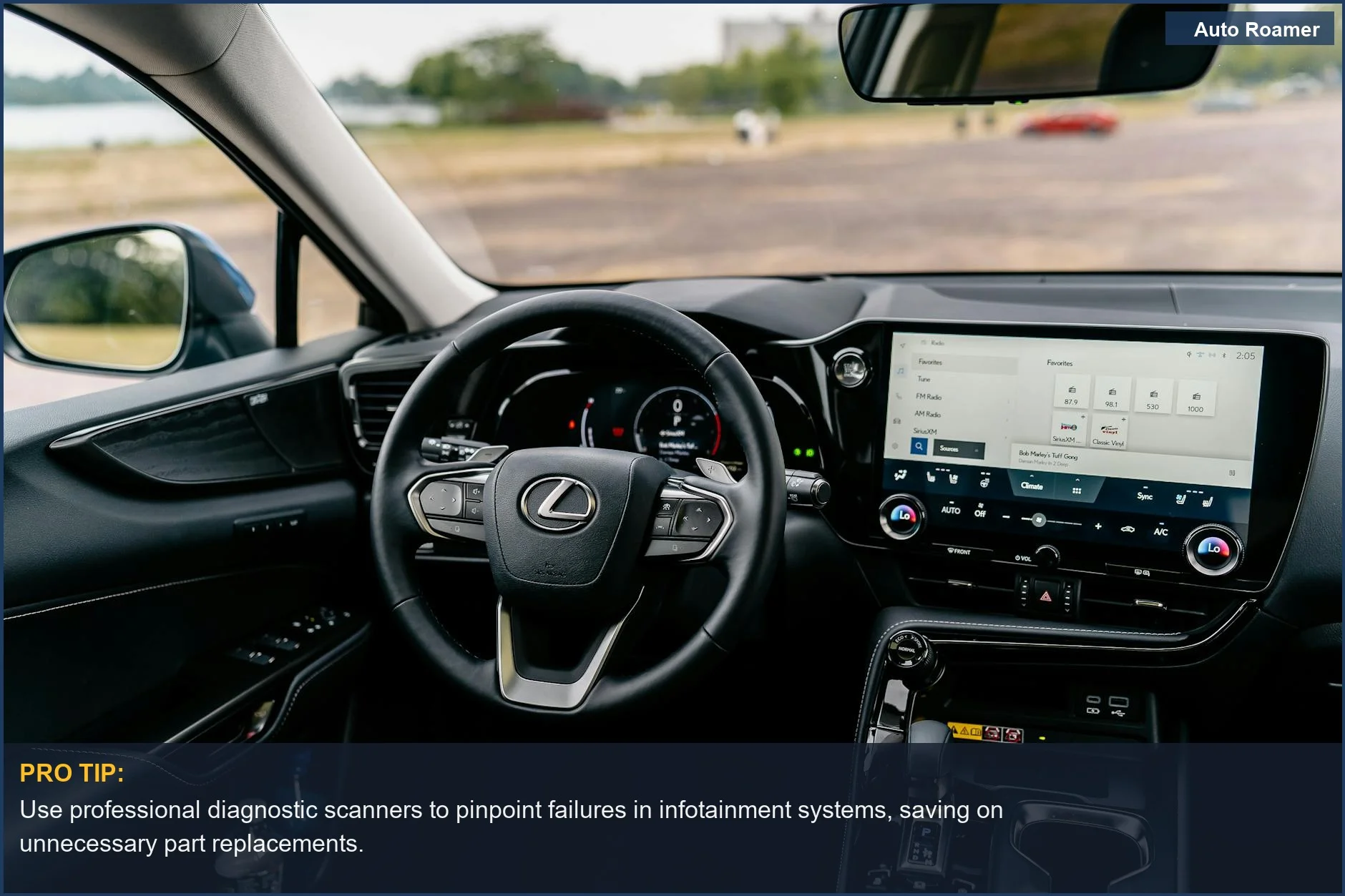
Consider your infotainment screen. It's not just a display. It's a touch-sensitive panel, a GPU, a dedicated processor, and a network interface. A single dead pixel cluster or a failing digitizer layer means the whole unit goes in the trash. No simple screen swap like a phone. This is by design, to force a higher-margin replacement.
Then there's the thermal management. These high-density electronic modules generate heat. If the heatsink compound outgasses or the cooling fan seizes, internal temperatures climb. This accelerates component degradation, leading to premature failure of integrated circuits. It's a ticking time bomb, especially in hot climates.
| Component | How It Fails | Symptoms | Fix Cost |
|---|---|---|---|
| Infotainment Head Unit | Touchscreen digitizer failure, internal PCB micro-fractures from thermal cycling. | Unresponsive screen, intermittent reboots, 'ghost' touches. | $800 - $2500+ |
| Blind Spot Monitor (BSM) Radar | Moisture intrusion, sensor misalignment from minor impact, internal antenna delamination. | False warnings, system deactivation, no detection of vehicles. | $500 - $1500+ |
| ADAS Camera Module | Lens fogging/condensation, image sensor degradation, software corruption. | Lane departure warnings fail, adaptive cruise control errors, poor image quality. | $700 - $1800+ |
| Body Control Module (BCM) | Voltage spikes, internal short circuits, corrupt firmware from bad updates. | Random electrical glitches, window/lock failures, parasitic battery drain. | $600 - $1200+ |
| Powertrain Control Module (PCM) | Heat damage, internal component failure, shorted driver circuits for injectors/coils. | Engine misfires, transmission shifting issues, 'limp mode' activation. | $1000 - $2500+ |
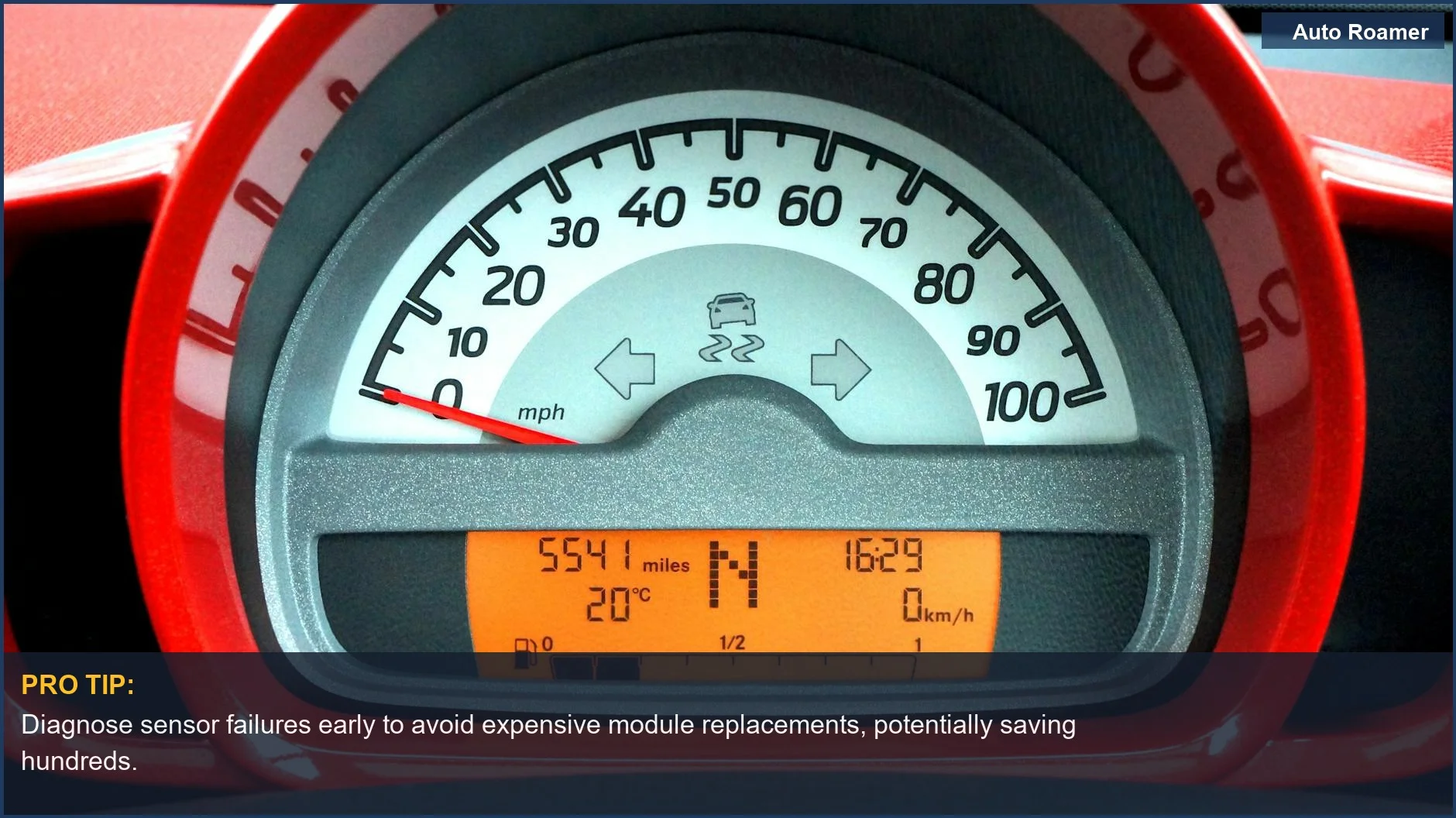
These costs are for the part alone, before labor and mandatory reprogramming. A Smart Fortwo PCM replacement, for instance, averages $1018 to $1047 for parts and labor. Labor is only $61-$90. The part is the killer. It's not just about what breaks, but about the mechanical and electrical architecture that makes it so damn expensive to fix.
How to Handle This
- Identify the Exact Failure Mode: Don't just guess. If your infotainment is glitching, is it the screen's tactile layer or the underlying processor? Pull any relevant diagnostic trouble codes (DTCs) with a professional scanner, not a generic OBD-II reader. A cheap scanner might only read powertrain codes, not body or communication errors. This is step one, before you buy anything.
- Verify Power and Ground Circuits: Before assuming a module is dead, check its power supply. Use a multimeter to confirm 12V at the power input and a solid ground connection. A corroded ground strap can cause all sorts of phantom electrical issues, making a perfectly good module appear faulty. Don't overlook the simple stuff. Check for voltage drops under load.
- Inspect Wiring Harnesses for Physical Damage: Look for pinched, chafed, or cut wires, especially where harnesses pass through body panels or near moving parts. Vibration can cause insulation abrasion and eventual short circuits. This is a mechanical stress issue, not a component failure. A visual inspection can save you hundreds.
- Check for Component-Specific Fuses/Relays: Many 'smart' components have dedicated fuses, sometimes hidden in auxiliary fuse boxes that aren't in the owner's manual. A blown fuse means a short circuit somewhere, or an overcurrent draw. Replacing the fuse without finding the root cause is just asking for it to blow again. Modern electrical components are complex.
- Source Used/Refurbished Modules (with Caution): For expensive modules like infotainment or BCMs, look for reputable used parts suppliers. Ensure the part number is an exact match. Be aware that many modules are VIN-locked or require dealer-level programming after installation. This means you might save $1000 on the part, but still pay $300 for programming. It's a gamble.
- Consider Aftermarket Retrofit Kits: For infotainment, sometimes a complete aftermarket head unit with integrated CarPlay/Android Auto is cheaper than fixing the OEM system. Professional CarPlay installation costs range from $200-$800. DIY can be $150-$600 for equipment only. This avoids the OEM repair cycle entirely. Just make sure it integrates properly with existing vehicle systems, or you'll have new problems.
- Get Multiple Quotes for Programming/Calibration: If you replace a module, it almost certainly needs programming. Call several dealerships and independent shops. Ask for a flat rate for programming your specific module for your specific vehicle. Don't let them charge you an hour of diagnostic time just to plug in their tool. They should know the procedure and time required.
What This Looks Like in Practice
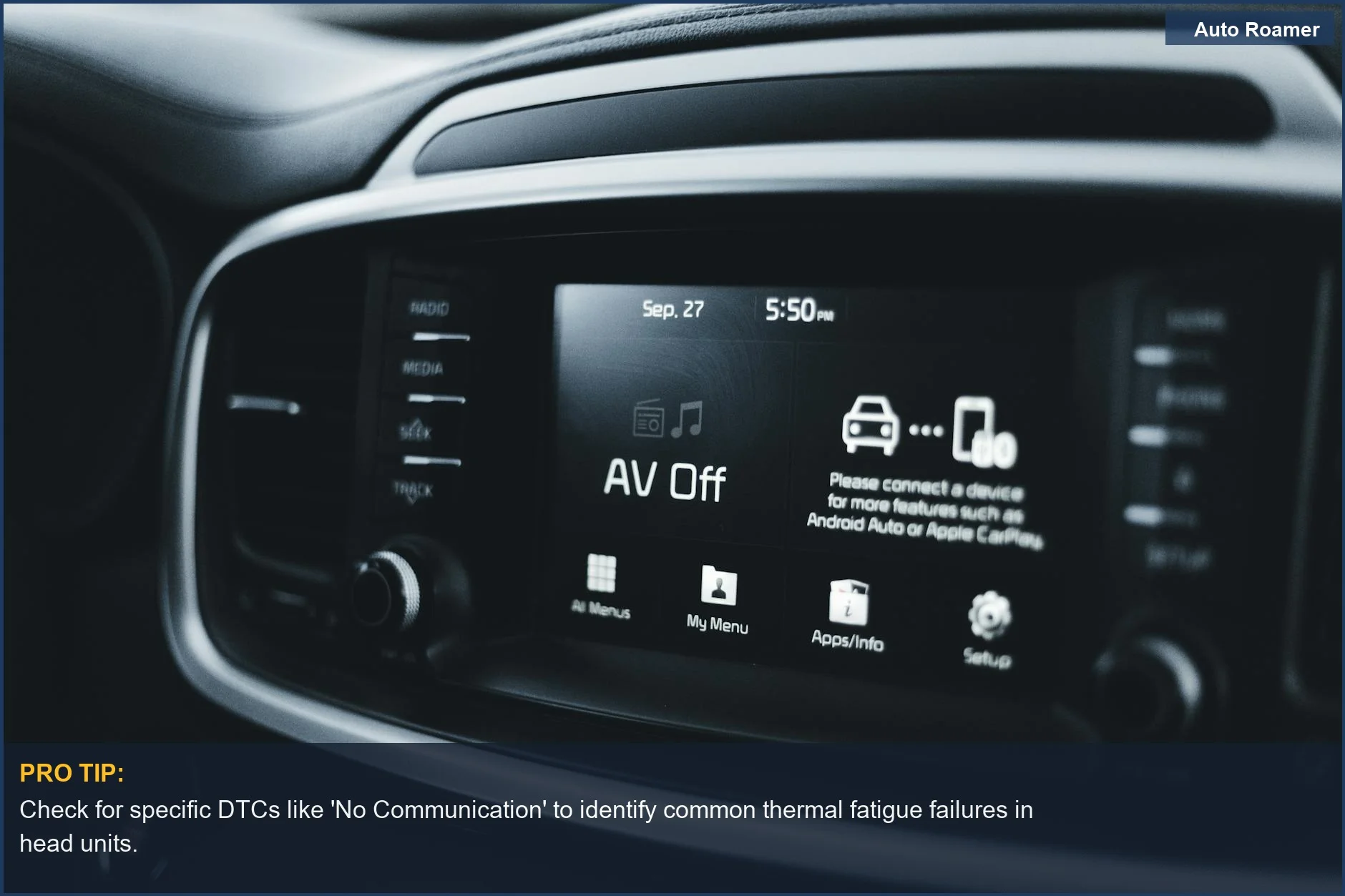
- 2017 Honda Civic, Infotainment Black Screen: Customer complains the screen is dead, no audio, no rearview camera. Diagnostic scan reveals 'No Communication with Audio Unit' DTC. Power and ground are good. The internal CPU on the head unit's main board likely suffered a thermal fatigue failure. Dealer quotes $1500 for a new unit, plus $180 for programming. A used unit from a salvage yard might be $400, but still needs programming.
Total fix: $580 if you find a good used one and get a decent shop to program it.
- 2019 Ford F-250, Blind Spot Monitor Failure: Passenger side BSM light is always on, system shows a fault. Visual inspection shows a minor dent on the bumper where the radar module is mounted. The impact created enough mechanical stress to shift the internal antenna array by 0.2 degrees, exceeding its operational tolerance. Dealer quotes $1200 for a new module and $250 for calibration. No repair possible, the internal components are sealed.
This is a direct result of impact energy propagation.
- 2020 Tesla Model 3, Door Handle Sensor Issues: Driver's door handle doesn't present automatically, sometimes retracts prematurely. No visible damage. Scan shows 'Door Handle Sensor Intermittent Signal' error. The inductive sensor inside the handle mechanism has a micro-crack in its solder joint from repeated thermal cycling and mechanical actuation. Tesla's fix: full door handle assembly replacement, $700. It's not just a sensor, it's a whole electromechanical unit.
- 2018 Toyota RAV4, Lane Keep Assist Malfunction: 'Pre-Collision System Malfunction' warning on the dash. Front camera module behind the rearview mirror. Turns out, a small stone chip on the windshield directly in front of the camera lens caused enough optical distortion to throw off its image processing algorithms. The camera itself is fine, but the lens now has a 1mm impact crater. Dealer wants $1000 for a new windshield, plus $350 for camera recalibration.
EVs have increasingly complex sensor arrays.
- 2022 Chevrolet Silverado, Wireless Charger Overheating: Phone gets scorching hot, charging stops prematurely. The inductive charging coil is fine, but the integrated thermal management sensor within the charging pad assembly is faulty, giving false temperature readings. The system shuts down to prevent thermal runaway. Dealer says you need a whole new center console charging pad assembly, $600. It's a single point of failure in a larger, non-modular unit.
Used parts can save money, but often come with their own risks.
Mistakes That Cost People
- Ignoring Diagnostic Trouble Codes (DTCs): Just because the check engine light isn't on doesn't mean there aren't codes. Many smart tech issues generate 'U' codes (network communication) or 'B' codes (body electrical) that a basic scanner won't read. You need a full scan tool. Guessing is expensive.
- Buying Used Parts Without Verifying Compatibility/Programming Needs: A used module might physically fit, but if it's VIN-locked or requires specific firmware for your vehicle's options, it's a paperweight. Always confirm programming requirements before you buy. This is a common trap.
- Assuming a Blown Fuse Means a Simple Fix: A fuse blows for a reason - usually an overcurrent condition from a short circuit or a component drawing too much power. Replacing it without diagnosing the root cause is like putting a band-aid on a gushing wound. The new fuse will just pop again, or worse, cause further damage.
- Neglecting Proper Grounding Points: Loose or corroded ground connections are notorious for causing intermittent electrical gremlins in smart systems. A fluctuating ground potential can wreak havoc on sensitive digital circuits, leading to erratic behavior or complete module shutdown. Check your grounds with a voltage drop test.
- Improper Disconnection of 12V Battery: Disconnecting the battery without following the manufacturer's procedure can sometimes corrupt module memory or trigger anti-theft systems. Always check the service manual for specific steps, especially for vehicles with complex BCMs. This isn't your grandpa's car battery.
- Failing to Calibrate After Replacement: Many smart components, especially ADAS sensors (cameras, radar), require precise calibration after replacement. Skipping this step means your safety systems won't function correctly, potentially leading to dangerous situations or further system errors. Professional installation often includes calibration, for a reason.
- Not Checking for Software Updates: Sometimes a 'faulty' module just needs a software update. Manufacturers frequently release patches to fix bugs or improve system stability. A dealership or a well-equipped independent shop can check for and apply these updates. It's cheaper than a new module if it's just a firmware glitch.
Key Takeaways
The rising cost of integrated smart car tech components isn't just inflation; it's a deliberate design choice that prioritizes complex, non-modular systems. When a single sensor or circuit fails, you're often forced to replace an entire, expensive assembly.
- Proprietary Diagnostics: Dealerships and a few well-equipped independent shops hold the keys to diagnosing and programming these systems, creating a repair bottleneck.
- Integration over Modularity: Components are sealed units.
A microscopic thermal fatigue crack in a solder joint means the whole $1000 module is junk.
- Mechanical Stress & Thermal Cycling: Vibration, minor impacts, and temperature fluctuations are silent killers for these sensitive electronics, leading to premature failure.
- Software Dependency: Firmware glitches and corrupt memory can render hardware useless, requiring specialized, expensive reprogramming.
- Calibration Criticality: Many safety and convenience features require precise calibration after any component swap, adding another layer of cost and specialized labor.
Don't just blindly pay the dealer. Understand why it broke, check for simple fixes, and always get multiple quotes for diagnostics and programming. Your wallet will thank you.