
Setting the Scene
As an Amazon Associate I earn from qualifying purchases.
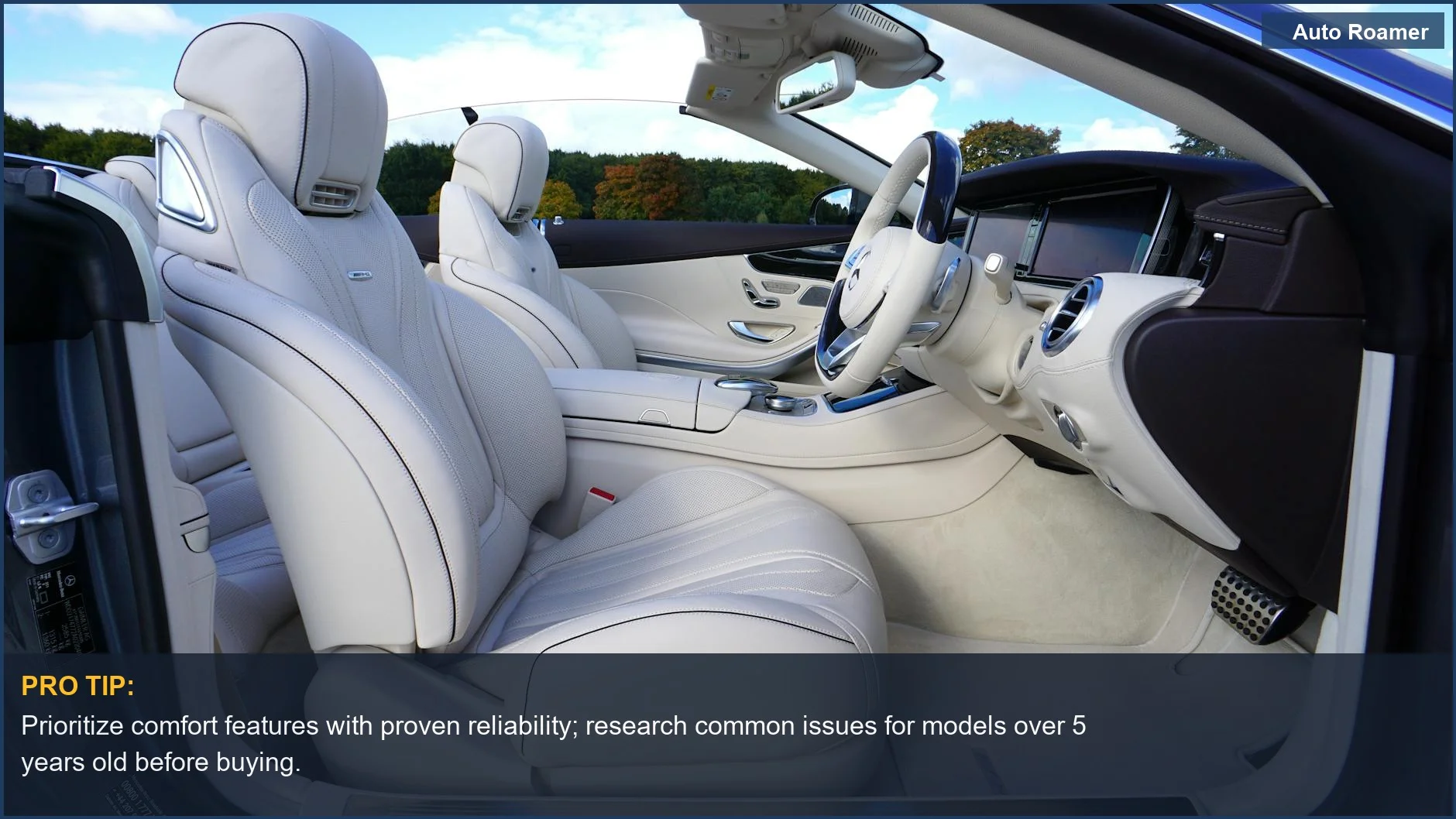
A dealer might want $3,500 more for a truck with the premium audio and sunroof package, and walking away is often the smart move. Most of that extra cash vaporizes the second you sign the papers. Dealers love to push those 'comfort features' when you're buying, promising an elevated 'experience.' What they don't tell you is how those fancy options become dead weight on your resale value five years down the road. It's a classic depreciation trap, designed to squeeze maximum profit on the front end. Plenty of vehicles have a $2,000 factory navigation system that is now slower than a $99 phone app and adds exactly $0 to the trade-in. The thermal cycling on those LCD screens alone guarantees a shorter lifespan than a basic radio. You're paying for a ticking time bomb of obsolescence. Think about the underlying physics: every additional feature is another complex system with its own failure modes. A panoramic sunroof isn't just glass; it's a motor, tracks, seals, and drain tubes. Each component adds points of failure, increasing the maintenance cost and reducing the long-term reliability. That's not comfort; that's future shop time. Even something as simple as power seats means more motors, more wiring harnesses, and more potential for a short circuit or a stripped gear. A 2008 truck with manual crank windows will often still work perfectly. Try finding a 2008 with fully functional power windows that haven't developed a bad switch or a frayed wire. It's a gamble. The real cost of a vehicle isn't just the sticker price; it's the price you pay minus what you can sell it for later. Edmunds predicts stability in new vehicle prices into 2026, but depreciation on comfort features will continue to gut your equity. Ignore the dealer's pitch about 'luxury' and focus on the hard numbers and the failure rate of complex systems.What Real Users Say
Consider a fully loaded 2020 Explorer with every bell and whistle - massaging seats, a giant infotainment screen, the works. Its trade-in offer can come in $8,000 less than a base model with similar mileage. Dealers just point at the 100,000-mile warranty expiration on the infotainment system and shrug. That's the market reality.
Buyers look at two things: mechanical health and cosmetic appearance. Consumer Reports found cars with verified maintenance records sell 15 percent faster and for more money. Nobody cares if your massaging seat motor is still humming; they care if the engine is going to grenade itself.
Excessive wear, stains, or damaged electronics in the interior will absolutely lower an offer. A ripped leather seat from a premium package is worse than a clean cloth seat from a base model. The repair cost for a leather re-upholster can hit $800 per seat. That's a direct hit to your resale value.
Even something like mileage, which is a key indicator of component wear, isn't judged in isolation. A well-maintained vehicle with 150,000 miles can be more appealing than a 90,000-mile car with no service history. Documented maintenance builds buyer confidence, regardless of the fancy features.
Market demand also plays a role. When gas prices spike, that thirsty V8 with premium audio takes a bigger hit than the fuel-efficient four-cylinder. Features that don't directly impact the core function of transportation are often the first to lose value.
Top Picks According to Real Owners
Top Picks According to Real Owners
| Feature | Resale Impact | Underlying Physics/Reason | |:--------------------|:---------------|:-------------------------------------------------------------------| | Sunroof/Moonroof| +$500 to +$1,000 | Adds perceived luxury, increases cabin light. Failure modes are motor, track binding, seal leaks. | | Heated Seats | +$200 to +$500 | Simple resistive heating element. Low failure rate, high comfort perception. | | Advanced Safety | +$750 to +$1,500 | Collision avoidance systems, blind-spot monitoring. Perceived reduction in accident risk. | | Tinted Windows | +$250 to +$500 | Reduces solar load on interior, improves privacy. Check state tint laws; excessive tint can be a liability. | Heated seats are a pretty solid bet. A simple resistive heating element embedded in the seat cushion has a low failure rate compared to, say, a complex ventilated seat system with fans and ducting. The thermal expansion and contraction cycles are minimal, so the mechanical stress is low. Advanced safety features, like adaptive cruise control or blind-spot monitoring, are also gaining traction. Buyers perceive these as reducing their risk of a collision, which is a tangible benefit. The electronics are complex, but the market values the perceived safety. Higher trim levels with these features often fetch more money. Tinted windows are a mixed bag. They reduce the thermal load on the HVAC system, which is good, and offer privacy. But if your tint is illegal - say, less than 70% visible light transmission on front-side windows in California - it's a liability. You're paying for a ticket and a potential re-tint. This isn't always a net positive. Take a 2014 Civic EX with heated seats and a sunroof. Both can work flawlessly for 180,000 miles. At resale, buyers specifically mention those features as a selling point. That's real value, not some outgassing, flaky infotainment screen.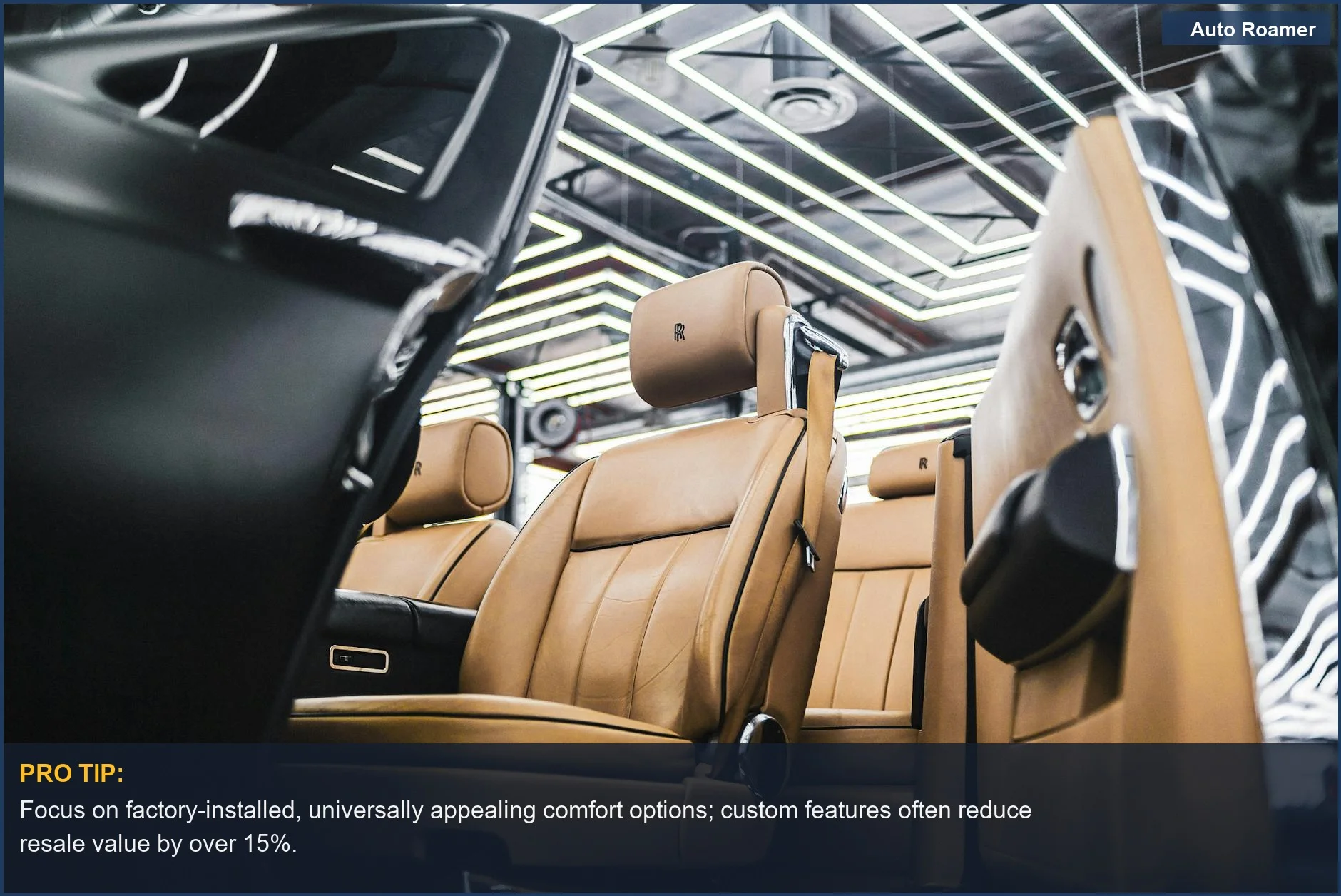
The Debate: What Divides Owners
I've heard people argue all day about whether a custom paint job adds value. My take? Unless it's a factory limited edition, it's usually a net negative. You're narrowing your buyer pool to someone who shares your exact taste, which is a statistical anomaly.
The Debate: What Divides Owners
| Feature/Option | Pro-Resale Argument | Anti-Resale Argument |
|:--------------------|:---------------------------------------------------|:---------------------------------------------------------|
| Custom Paint | Unique, stands out, appeals to specific buyers. | Narrows buyer pool, perceived as a cheap fix for damage, original color preferred. |
| Large Infotainment| Modern tech, navigation, connectivity. | Rapid obsolescence, high repair cost, slow performance over time. |
| Premium Audio | Superior sound quality, immersive experience. | Speaker deterioration from thermal cycling, complex amplifier failure, high cost for minimal return. |
| Leather Seats | Luxury feel, easy to clean. | Cracking/creasing from UV exposure, expensive repair, can feel hot/cold. |
Custom paint jobs are a prime example. A study found yellow cars lose the least value, but that's a factory color, not some aftermarket metallic purple. Unless you're painting it a rare factory hue, you're likely just making it harder to sell. It's a personal preference, not a universal value add.
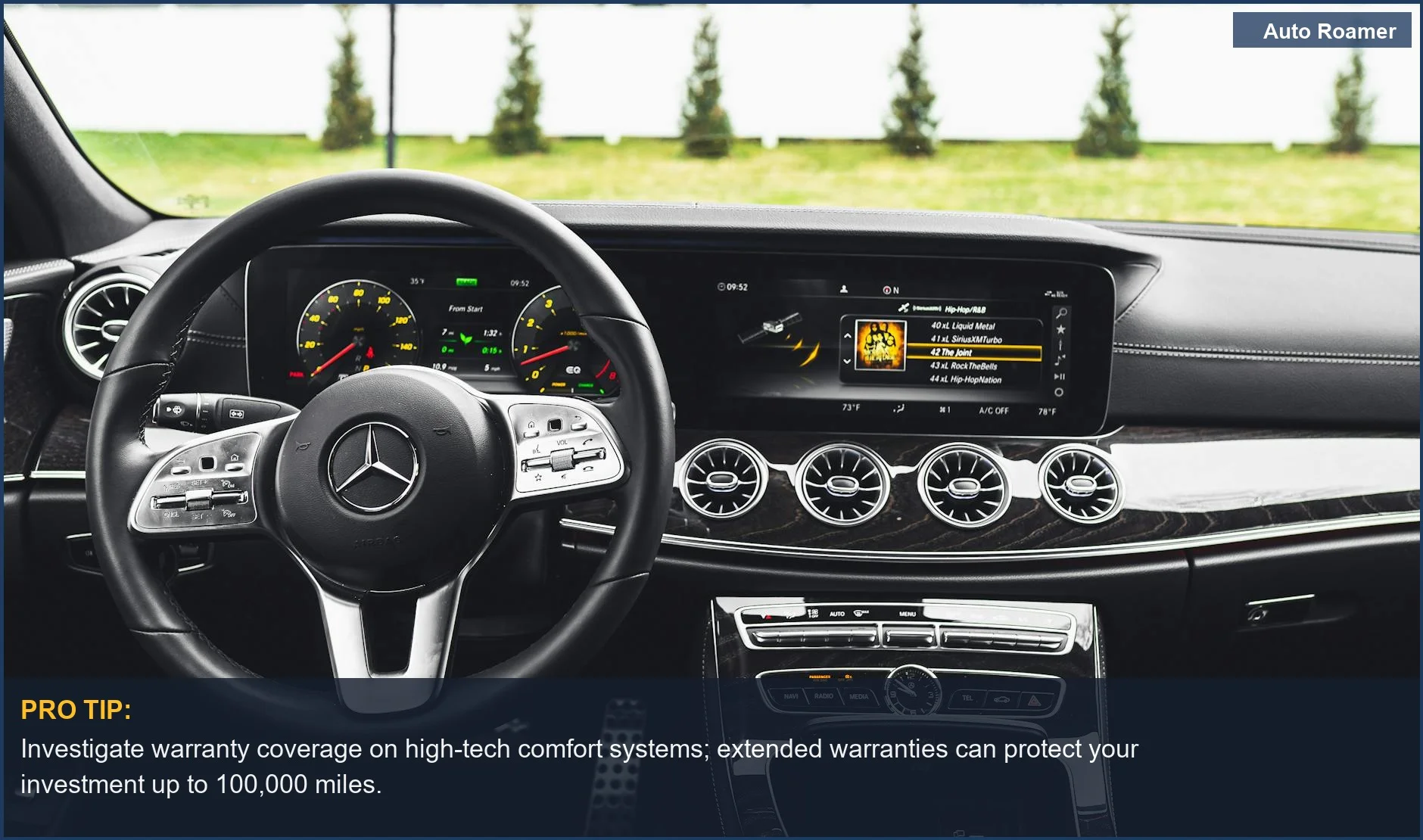
Large infotainment screens are another point of contention. Sure, they look slick on the showroom floor. But a 5-year-old system is often slower than a snail, with outdated maps and flaky Bluetooth. The thermal cycling on the LCD panel and the stress on the solder joints from vibration mean a higher failure rate. Replacing one can cost $1,500, a cost the buyer will factor in.
Premium audio systems are tricky. The speakers, especially the foam surrounds, degrade over time from UV exposure and thermal cycling. The amplifier can fail due to heat buildup. You might appreciate the nuanced bass response, but the next buyer just sees a potential $500 speaker replacement bill. Resale value is tied to both desirability and durability. Fancy audio often fails on the durability front.
Leather seats, while luxurious, are prone to cracking and creasing from UV exposure and repeated mechanical stress. Countless driver's seats end up with the bolster completely torn after 100,000 miles. Repairing that can be hundreds of dollars, whereas a robust cloth seat might just need a steam clean. The 'luxury' often comes with a higher long-term maintenance burden.
Long-Term Reliability and Durability
A well-kept 1998 Camry still runs like a top, with manual windows and no fancy screens. That's long-term reliability. Modern cars, especially with all the comfort tech, are a different beast. Every additional component, from a power liftgate motor to a ventilated seat fan, adds mechanical complexity and points of failure. The shear forces on plastic gears and the fatigue life of electrical contacts are real concerns.
Long-Term Reliability and Durability
- Heated Steering Wheel: Low failure rate. Simple resistive heating element, minimal moving parts. The wiring harness inside the steering column is the main point of stress from rotational motion, but it's generally robust. Adds tactile comfort in cold climates. This feature is highly valued in colder regions.
- Power Liftgate: Higher failure rate. Involves motors, sensors, and complex linkages. The mechanical stress on the hinges and the motor's gearbox from repeated open/close cycles is significant.
More than one fails due to stripped plastic gears or corroded wiring in the boot.
- Ventilated Seats: Moderate to high failure rate. Small fans and ducting within the seat. These fans are susceptible to dust ingress and bearing wear, leading to noise or complete failure. The increased complexity compared to basic heated seats adds maintenance headaches. Thermal cycling on small motors reduces their lifespan.
- Head-Up Display (HUD): Moderate failure rate.
Involves a projector, mirror system, and control electronics. The thermal load from the projector and the vibration from driving can degrade internal components. Calibration issues are also common, leading to a blurry or misaligned display.
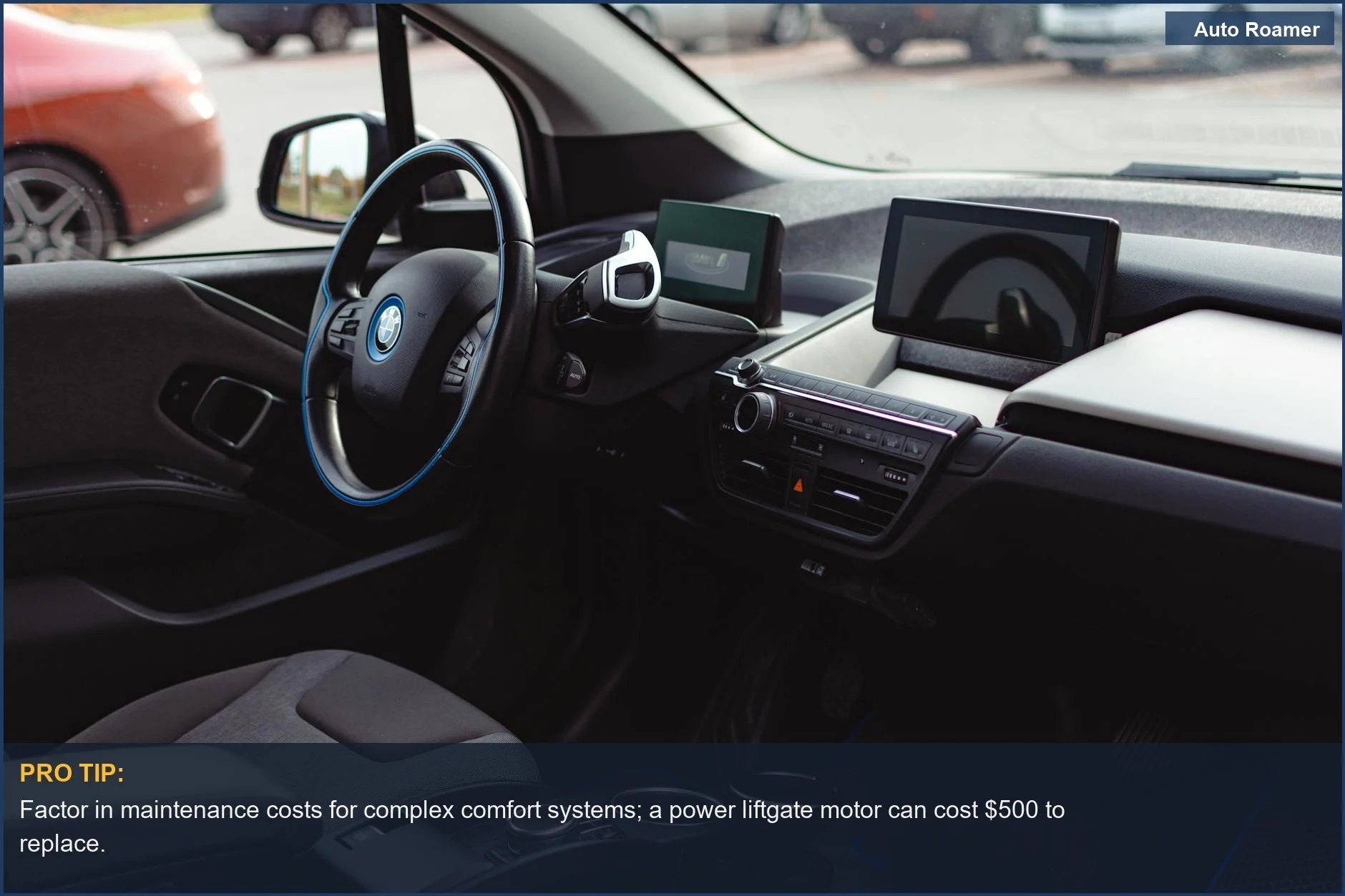
Power liftgates are a classic example of over-engineering. The convenience is nice, but the mechanical stress on the motor, the hinges, and the control module is immense. Power liftgate motors fail more often than owners expect, usually due to internal gear failure from repeated high torque loads. The cost for a new OEM motor can be $700, plus labor.
Ventilated seats sound great, but those tiny fans are notorious for developing bearing noise or failing entirely. They're constantly moving air, sucking in dust and debris, and operating under thermal cycling. The repair often means dismantling the entire seat, which is a multi-hour job for a $50 fan. It's a low-cost part with high labor. Rips, tears, and odors in the interior can reduce trade-in value, and a noisy fan just adds to the list of 'fix-it' items.
Long-term, simplicity often wins. Fewer moving parts, fewer electronic modules, fewer potential failure points. That's the real durability you want.
How to Choose Based on Real Feedback
Don't fall for the glossy brochures. When you're looking at a used car, focus on the fundamentals. That $2,000 premium for a navigation system from 2018 is now worth exactly zero. You can get better GPS on a $100 smartphone. The real value is in the underlying health of the vehicle, not the outdated tech.
How to Choose Based on Real Feedback
| Feature/Option | What to Look For (Inspection) | Questions to Ask Seller/Dealer |
|:--------------------|:---------------------------------------------------|:-------------------------------------------------------------|
| Sunroof/Moonroof| Check for water stains around headliner (leaks). Test motor operation for smooth, quiet movement. | Has it ever leaked? When was the last drain tube cleaning? |
| Heated/Ventilated Seats| Test both heat/vent functions on all seats. Listen for fan noise (ventilated). | Are all heating/cooling elements fully functional? Any previous repairs? |
| Infotainment System| Test all functions: navigation, Bluetooth, radio.
Check screen for dead pixels or lag. | Is the system up-to-date? Any known software glitches? |
| Power Liftgate | Operate fully open/close several times. Listen for grinding, binding. Check for smooth movement. | Has the motor ever been replaced? Any issues with sensors? |
When inspecting a sunroof, look for water stains on the headliner. That's a dead giveaway of a clogged drain tube or a failed seal. The cost to drop a headliner and clear drains can be $300. A new seal and labor could run $600. That's money out of your pocket before you even drive it off the lot. Vehicle health data is becoming critical for valuation.
For heated/ventilated seats, test every single setting. If a fan rattles, it's a worn bearing. If a heating element is dead, it's usually an open circuit in the resistive wire. These are not cheap fixes. A dealer will quote you $400+ to diagnose and replace a seat heater element.
Don't let the dealer distract you with 'premium' features. Ask about the service history. Get a pre-purchase inspection. Focus on the engine, transmission, suspension, and brakes. Those are the systems with real mechanical stress and the highest cost-per-fix. The comfort features are often just icing on a potentially rotten cake.
Bottom Line
The bottom line is simple: most comfort features are depreciating assets that add complexity and potential failure points to your vehicle. They rarely recoup their initial cost at resale and often become liabilities as they age. Focus on fundamental reliability and essential safety.
Bottom Line
- Prioritize core mechanical integrity: Engine, transmission, brakes, suspension. These are your non-negotiables for long-term value and safe operation.
- Be wary of complex electronics: Infotainment systems and advanced driver-assist features become obsolete quickly and have high repair costs due to intricate circuit integrity and proprietary components.
A 5-year-old navigation system is often slower than a phone app.
- Simpler is often better for resale: Manual controls, cloth seats, and basic audio systems tend to age gracefully with fewer failure modes. Less to break, less to fix.
- Documented maintenance is king: A detailed service history proves mechanical diligence and adds more value than any fancy optional extra.
New vehicles depreciate the moment you drive them off the lot, and comfort features accelerate that slide.
- Consider regional demand: Heated seats are a plus in Minnesota, a shrug in Miami. Understand your local market before overspending on climate-specific features.
My advice? Keep it simple. A well-maintained base model will often outlast and out-value a fully loaded luxury trim in the long run. You're buying transportation, not a lounge. Every extra button is another chance for a failure. Every complex system is another thermal cycle away from a repair bill.