Why the Ridgeline is the one truck-bed camper you measure differently
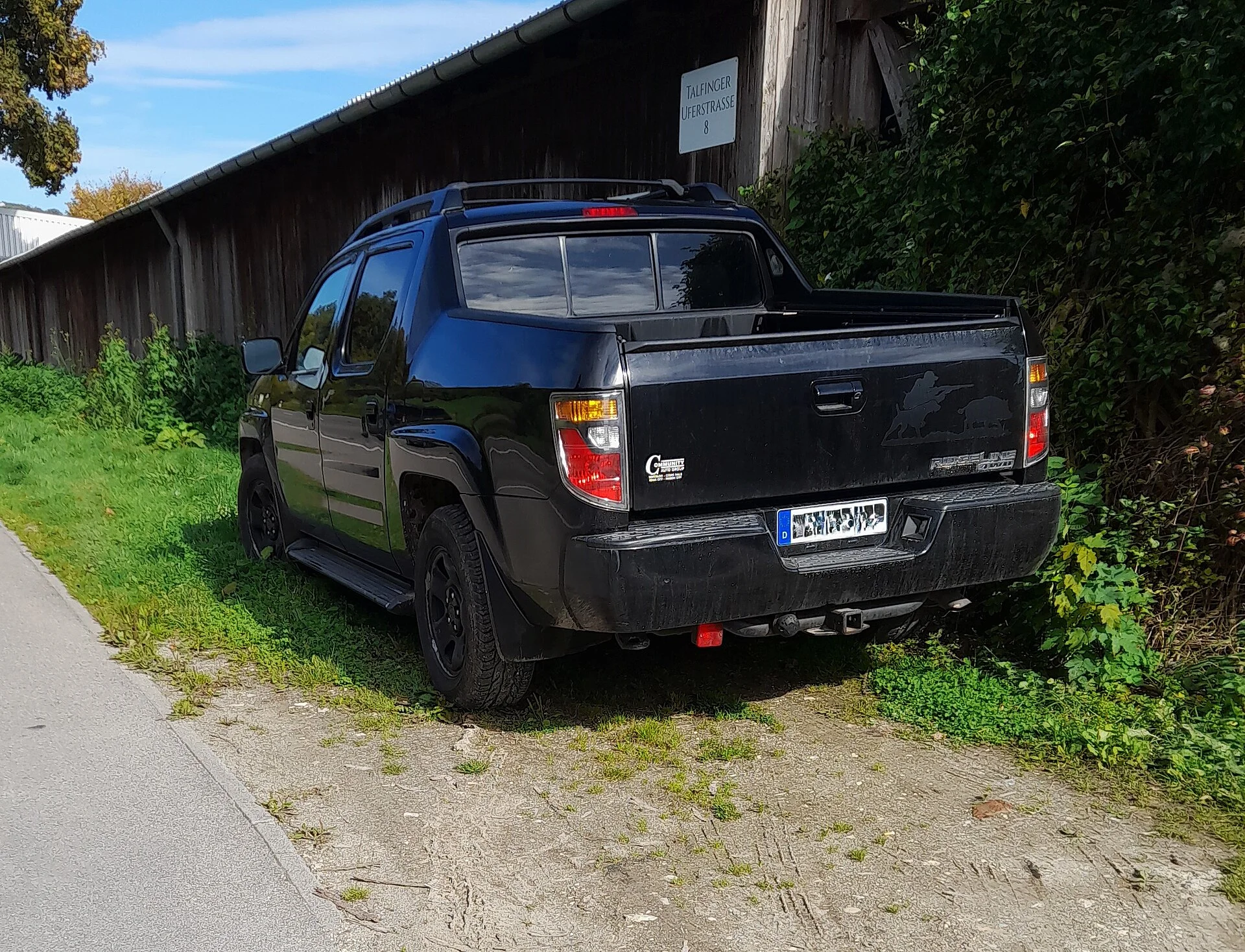
Here's what trips people up first: the Honda Ridgeline doesn't give you a short-bed-versus-long-bed choice. Every body-on-frame truck makes you pick a bed length at the dealer, and that choice decides whether you sleep flat. The Ridgeline has exactly one bed - about 64 inches of flat composite floor - and that's it. So the question isn't which bed you bought; it's whether one 64-inch bed works for how you sleep.
Eighteen years under hoods taught me to read a spec sheet for what it's hiding, and the Ridgeline's sheet hides two things in its favor that no other pickup has: a lockable trunk molded into the floor under the bed, and a tailgate that swings out like a door or folds down flat. Those aren't marketing - they change how you pack and sleep. What the sheet doesn't flatter is the depth: at roughly 17 inches, the Ridgeline's bed walls are shallow, so you get less wind shelter than a full-size bed gives.
This page works the real numbers - floor length, the width between the wheel wells, the depth - and then the two tricks that make a short unibody bed punch above its size. If you want the full sleep build rather than just the measurements, our Honda Ridgeline camping guide covers the setup; this one is the geometry underneath it.
The single bed: about 64 inches of flat composite floor
Start with the number that decides a bed: floor length. Honda's own figures put the Ridgeline bed at about 64 inches long with the tailgate up, 60 inches wide at the widest point, and 33.9 cubic feet of volume. That 64 inches is your straight sleeping length, and it's the same on every Ridgeline - RTL, Sport, TrailSport, Black Edition. There's no length upgrade to chase.
- ~64 in floor: your flat, tailgate-up sleeping length - short by pickup standards.
- 60 in bed width (at the rails): the widest point, above the wheel wells, not the floor you sleep on.
- 33.9 cu ft: main-bed volume, before you count the trunk under the floor.
Compare that 64 inches to a full-size: a Ram 1500's crew-cab bed runs about 67 inches and an eight-foot bed nearly 98. The Ridgeline sleeps shorter than almost any traditional truck - which is exactly why the diagonal and the tailgate, later on, aren't tricks so much as the main event. Read 64 inches as your honest straight length and hold every other number against your own height, because that's where a short bed quietly fails a tall sleeper.
Fifty inches between the wheel wells - flat, and wide enough to matter
The width that counts for anyone sleeping on the floor is the pinch between the wheel wells, and on the Ridgeline that's about 50 inches - and it's the same the whole length of the bed. Honda leans on this number for a reason: 50 inches is enough to lay a four-foot sheet of plywood flat on the floor, which is the same clearance that lets you lay a wide sleeping pad flat.
Fifty inches is a little over four feet - room for one wide pad with space to spare, or two narrow ones side by side. A queen mattress is 60 inches wide, so it will not fit flat between the wells. That's the single most common Ridgeline camping-bed mistake.
What that means for your setup, in plain terms:
- One sleeper: easy - a 20-to-25-inch pad has room on either side.
- Two sleepers: two twin-width pads fit between the wells; skip the queen or build up over them.
- Over-the-wells platform: a deck level with the wheel-well tops reclaims the wider 60-inch rail width above them and turns the wells into storage.
The 50-inch floor width is genuinely generous for a mid-size truck - a lot of them pinch to the low 40s. That's the Ridgeline's quiet width advantage, even though its length is short.
Seventeen inches of depth: the honest weak spot
Here's where the reps go quiet. The Ridgeline's bed is about 17 inches deep, and that's shallow for a truck. A full-size bed runs 21 to 22 inches; even most mid-size beds beat 17. Depth is what tucks a sleeper below the bed rails, out of the wind, so the shallower the walls, the less shelter the bed gives you on its own.
- ~17 in depth: your body sits higher relative to the rails, more exposed to a crosswind than in a deep full-size bed.
- Flat composite floor: no ribs, no hump - a pad or platform sits clean, which partly makes up for the shallow walls.
- The trade: easier to climb in and out over a low side, worse at blocking wind - plan your weather cover accordingly.
I won't paper over this: if you're used to a deep truck bed's cocoon, the Ridgeline will feel airier. The fix isn't complicated - a tailgate canopy or a topper does the wind-blocking the shallow sides don't - but you should know going in that on the Ridgeline weather protection is part of the build, not a bonus. The flat floor is the consolation: it's a genuinely clean surface to sleep on, no wheel-well hump or bed ribs fighting your pad.
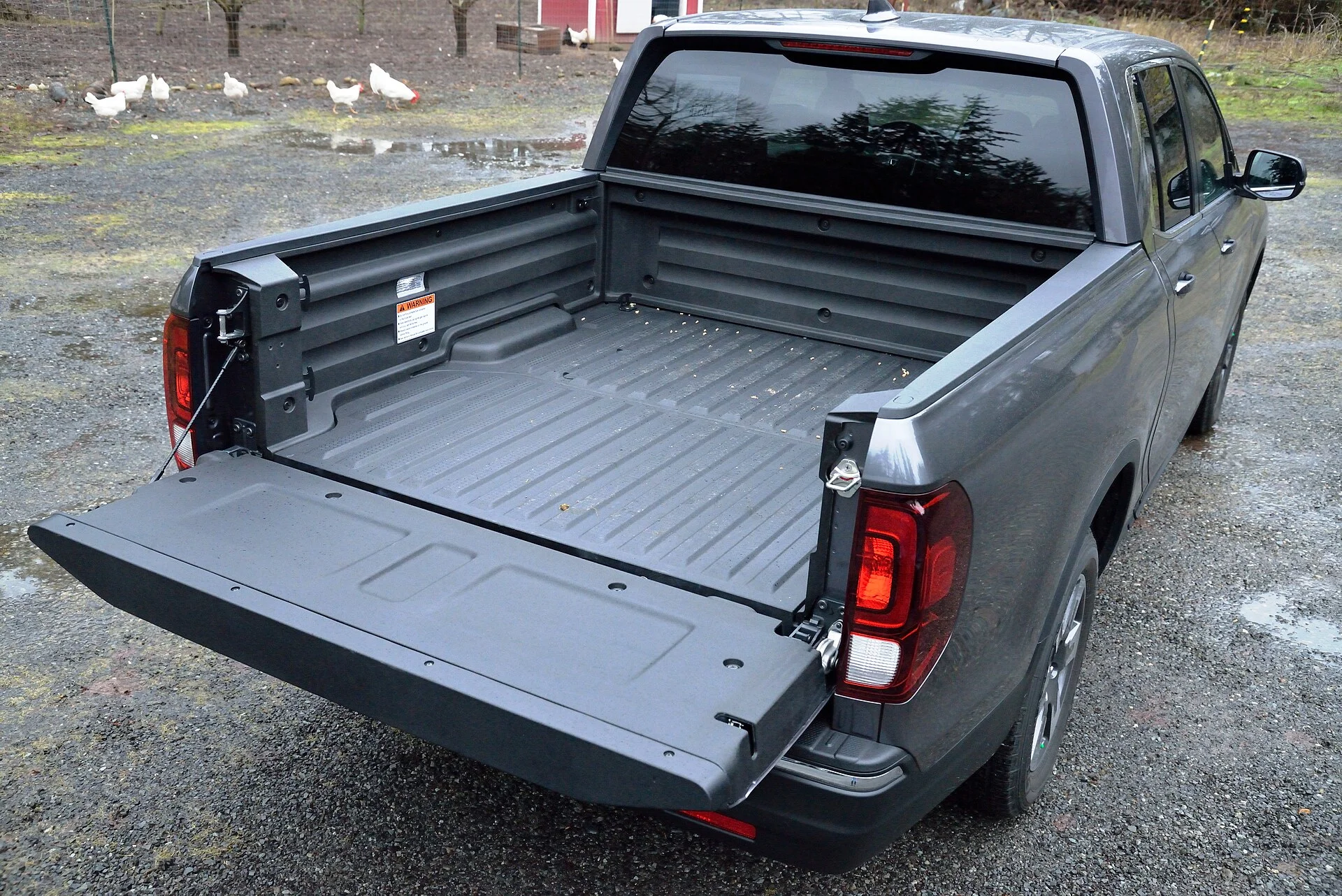
The In-Bed Trunk: 7.3 cubic feet no other pickup gives you
This is the Ridgeline's headline trick, and it's a real one. Molded into the floor under the bed is a lockable, watertight compartment - Honda calls it the In-Bed Trunk - with 7.3 cubic feet of space and a drain plug in the bottom. Combined with the 33.9-cubic-foot main bed, that's 41.2 cubic feet total, and none of it eats your sleeping floor.
The drain plug is the part that matters for camping. Fill it with ice and it's a cooler. Pull the plug and it drains. Lock it and it's a dry, secure box for food, a battery, or valuables - under the pad you're sleeping on.
For a sleeper, this changes the packing math. On a normal short bed, every cooler and gear box competes with your body for the 64 inches of floor. On the Ridgeline you drop the heavy, wet, or valuable stuff into the trunk below the deck and keep the whole floor clear to sleep on. That's how a 64-inch bed sleeps bigger than it measures.
One caveat from wrenching on these: the trunk's lid is your bed floor, so anything you want to reach at night has to come out before you lay the pad down. Load the trunk with what you won't need until morning - the cooler, the recovery gear - and keep the midnight stuff up top or in the cab.
Why the composite bed is a camper's friend
The Ridgeline's bed isn't stamped steel - it's a composite (fiberglass-reinforced) molding, and that's an underrated advantage for someone sleeping in it. Composite doesn't rust, doesn't dent when you drop a jack on it, and - the part that matters at 6 a.m. - it doesn't get as brutally cold to the touch as a bare steel bed. It also comes with the scratch-resistant surface built in, so you don't need a drop-in liner stealing an inch of width and length.
- No rust, no dents: the surface shrugs off the gear-hauling abuse that chews up a steel bed.
- No liner needed: you keep the full ~50-inch floor width - a drop-in liner would quietly cost you a fraction of an inch everywhere.
- Warmer, quieter floor: composite isn't the cold, drumming steel sheet you brace against on a frosty morning.
Don't overread it - composite is still a hard floor, and you absolutely want a pad on it. But it's a better starting surface than steel for sleeping, and skipping the bedliner means the ~64-inch and ~50-inch numbers on the spec sheet are the numbers you actually get, not liner-shrunk versions of them.
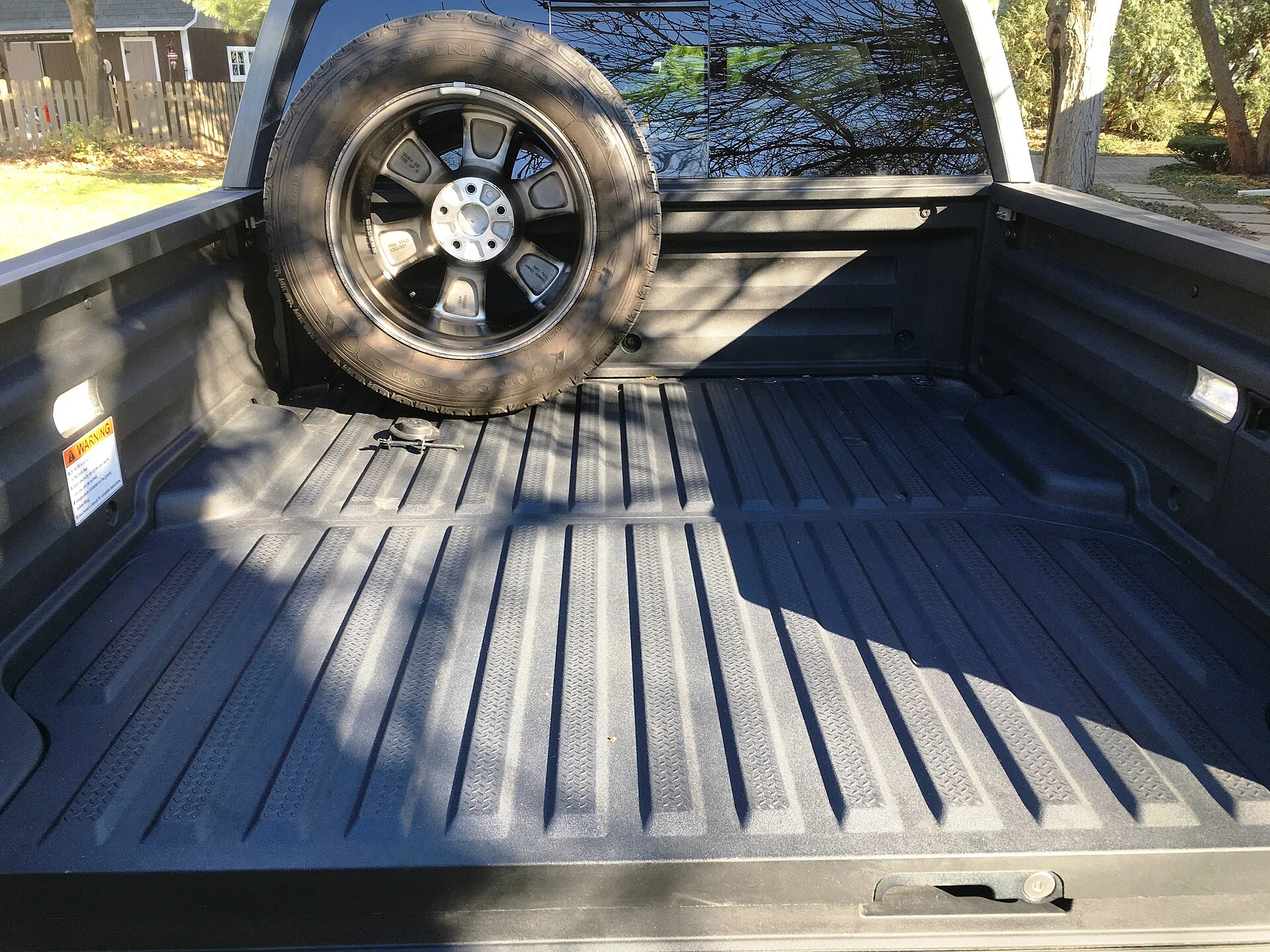
The dual-action tailgate, and what it buys a sleeper
The Ridgeline's tailgate does something no traditional pickup gate does: it folds down flat the normal way, or it swings out sideways like a door. For loading that's convenient; for sleeping it's genuinely useful, because the two modes solve two different problems.
- Folded down: extends your sleeping length by roughly 18 to 20 inches - the move that turns a 64-inch floor into a flat-enough run for a six-footer. Honda doesn't publish the exact added length, so measure your own gate.
- Swung out like a door: gives you a clear step-in at the side, handy for climbing into a made-up bed without crawling over the end.
The swing-out mode is also the better seat. With the gate open like a door and your legs out the side, you can sit up and cook or pull on boots without the tailgate-down puddle of gear in your lap.
The catch is the same as any tailgate-down setup: the folded gate sits a touch lower than the bed floor and isn't perfectly load-flat, so bridge the seam with a pad or a board, and cover the open end - a shallow 17-inch bed with the gate down leaves your feet exposed unless a canopy overhangs them.
Sleeping in 64 inches: the diagonal is your friend
Here's the honest math for a tall sleeper. A six-footer is 72 inches. The Ridgeline's 64-inch floor leaves you about eight inches short lying straight with the tailgate up. You have two clean fixes, and one of them costs nothing.
The diagonal of a 50-by-64-inch floor is about 81 inches - longer than a six-footer - so lying corner to corner, most adults fit flat with the tailgate closed and the weather locked out. Try the diagonal before you commit to sleeping with the gate down.
Run the numbers on yourself. Straight, the 64-inch floor covers anyone up to about 5 foot 7 on a thin pad. On the diagonal, the roughly 81-inch clear run covers a six-footer, as long as the wheel wells don't eat the corners you're aiming for - so measure the real clear diagonal on the floor, not off this chart. And a thick air mattress steals from both numbers, so a borderline sleeper should go with a low-profile pad.
The other fix is the tailgate: fold it down for another 18 to 20 inches and you've got room to spare, at the cost of needing a canopy over the open end. For a solo camper, diagonal-tailgate-up is usually the simpler, warmer night the Ridgeline offers; for a taller or two-person setup, tailgate-down with a cover is the honest answer.
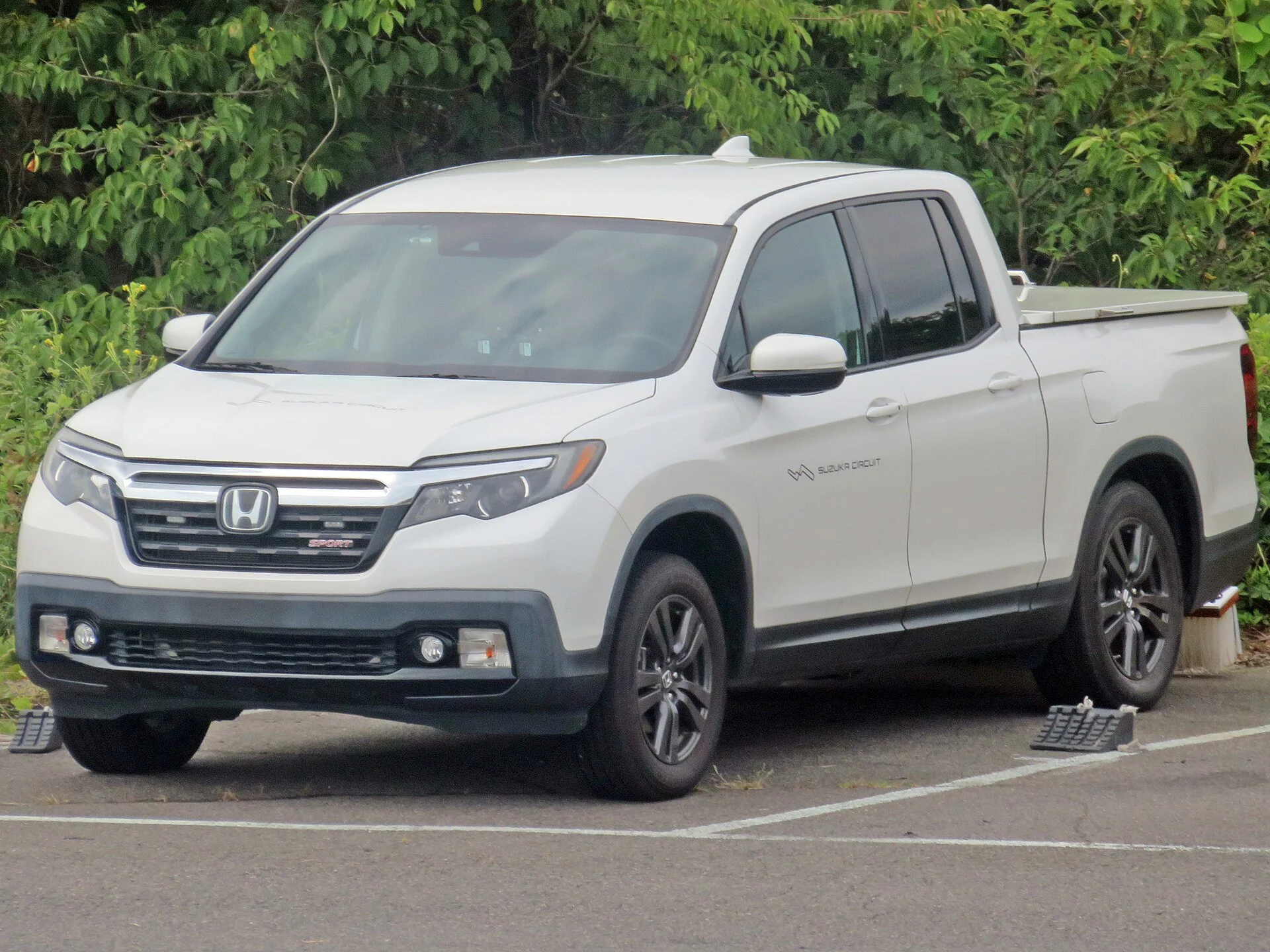
Powering camp from a short bed
The Ridgeline isn't a Pro-Power-Onboard rolling generator like an F-150 hybrid, so set expectations there. What some trims add is a 115-volt household outlet in the bed wall - handy, but modest, and not on every truck, so check your trim rather than assuming it's there. Treat it as a convenience outlet for charging and small loads, not a campsite power plant.
- If your trim has the bed outlet: good for a phone, a fan, or a light while the engine's running - it's fed by the truck, not a silent house battery.
- If it doesn't: you're in the same boat as most campers, and a portable power station is the right answer for overnight loads.
For anything that has to run all night - a 12-volt fridge, string lights, a CPAP - a portable lithium power station wins on the Ridgeline the same way it does on any truck: it's silent, it doesn't need the engine, and it lives happily in the In-Bed Trunk out of the weather. Our roundup of the best portable power stations for car camping sizes one to your loads. The Ridgeline's contribution is the trunk to hide it in, not the watts to replace it.
Keeping weather out of a shallow bed
Because the Ridgeline's sides are only about 17 inches tall, weather protection does more work here than on a deep bed - the shallow walls block less low wind on their own. You don't need a full cap to sleep out, but you do need a plan.
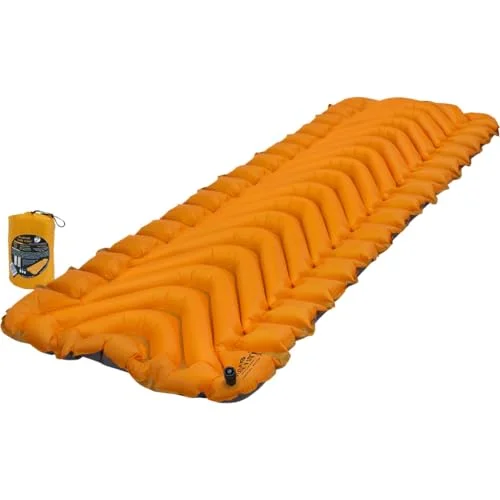
- Level the floor first: a Klymit Insulated Static V Lite pad turns the hard composite floor into a sleepable surface and packs down small - the base layer for any Ridgeline setup.
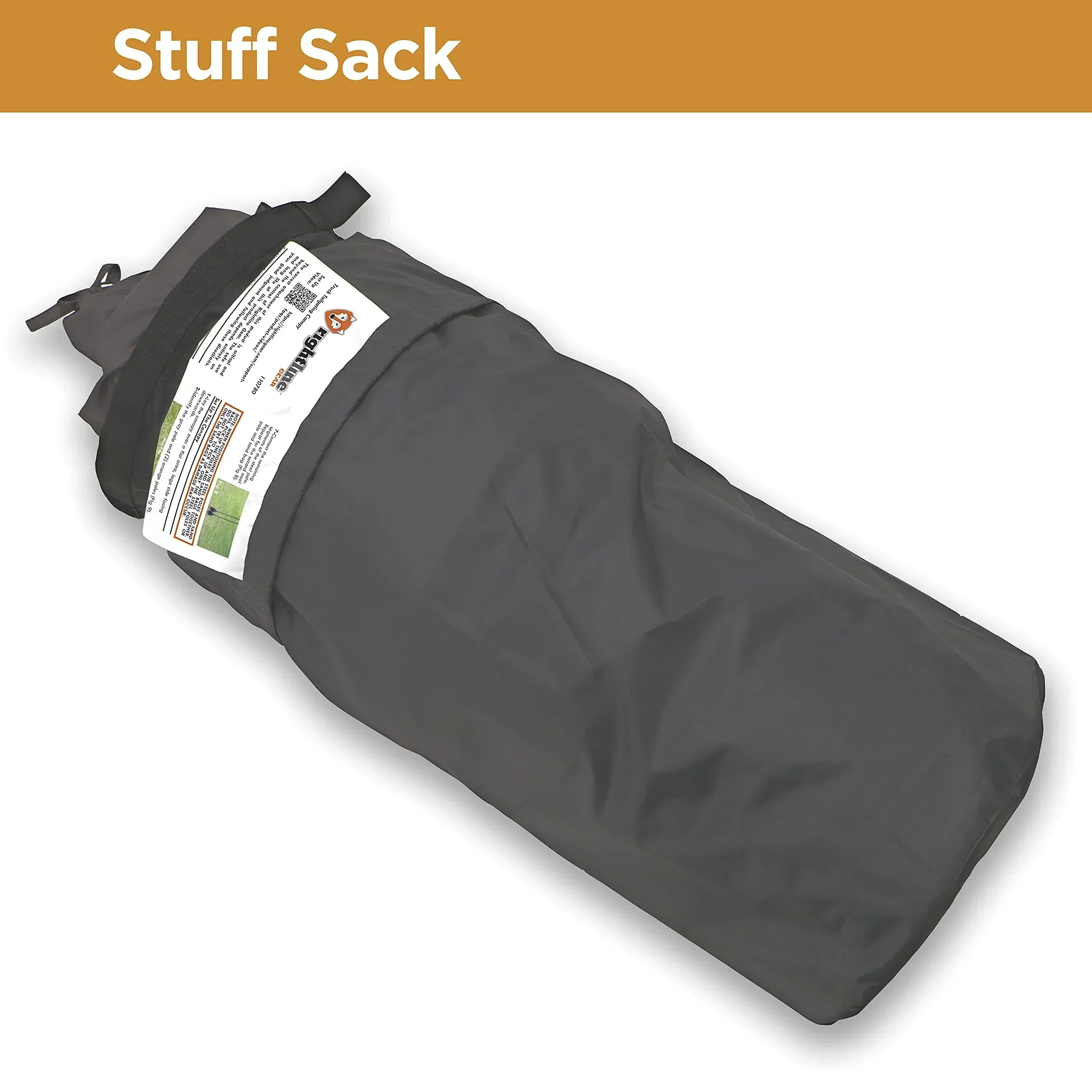
- Then cover it: a Rightline Gear tailgate canopy clamps over the open bed to shed rain and dew without the cost or permanence of a topper - and it's the right call for a tailgate-down night, when the shallow sides leave your feet the most exposed.
- The upgrade path: a soft or hard topper is the all-weather answer if you camp often, and on the Ridgeline it also restores the wind shelter the shallow bed gives up.
Order of operations: level, then cover. Guy-line a clamp-on canopy off a stake pocket so a gust can't lift it, and size it to overhang the tailgate if you're sleeping gate-down. On the Ridgeline, a cover isn't the luxury it is on a deep bed - it's doing the wind-blocking the 17-inch sides can't.
Measure your own bed before you buy anything
Spec charts are a starting point, not your truck. Before you buy a pad, a canopy, or build a platform, take four numbers in your own Ridgeline bed - ten minutes that saves a wrong purchase.
- Floor length: bulkhead to closed tailgate - your straight sleeping length.
- Wheel-well width: the pinch between the wells at its narrowest - the real two-pad ceiling.
- Floor diagonal: corner to corner on the floor, clear of the wells - your tailgate-up flat option.
- Tailgate-down length: floor plus the folded gate - because Honda doesn't publish the added inches.
Take the wheel-well width at the narrowest point - usually the front face of the well - because that's the pinch a pad or platform actually has to clear. And measure with your pad in place if you can: a lofty air mattress changes the height you have to work under a canopy, and the shallow 17-inch sides give you less headroom to spare than a deep bed would. Write the four numbers down and take each twice - that turns a generic chart into a plan that fits your exact truck.
The verdict on the Ridgeline as a truck-bed bed
The Honda Ridgeline is a short-bed camper that punches above its 64 inches, and it does it with two features no other pickup has. The straight length is genuinely short - a six-footer sleeps on the roughly 81-inch diagonal or drops the dual-action tailgate for another 18 to 20 inches. The 50-inch floor width is generous for a mid-size, though a 60-inch queen still won't lie flat. And the 17-inch depth is the honest weak spot: shallow sides mean weather cover does real work.
What tips it: the lockable 7.3-cubic-foot In-Bed Trunk clears your sleeping floor of the cooler and the heavy gear, and the composite bed gives you a rust-free, liner-free, warmer surface to sleep on. Level it with a pad, cover it against the wind, and a 64-inch bed sleeps bigger than it measures.
Buy the pad to your height, use the diagonal, and hide the heavy stuff below the deck. If you're cross-shopping, our Ford Maverick and Toyota Tacoma bed breakdowns weigh the same length-versus-width question, and the Maverick versus Ridgeline comparison puts the two unibody trucks head to head.