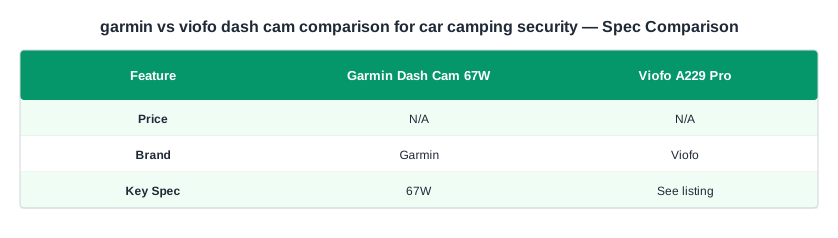
Two cameras, one trade-off: ecosystem or spec sheet
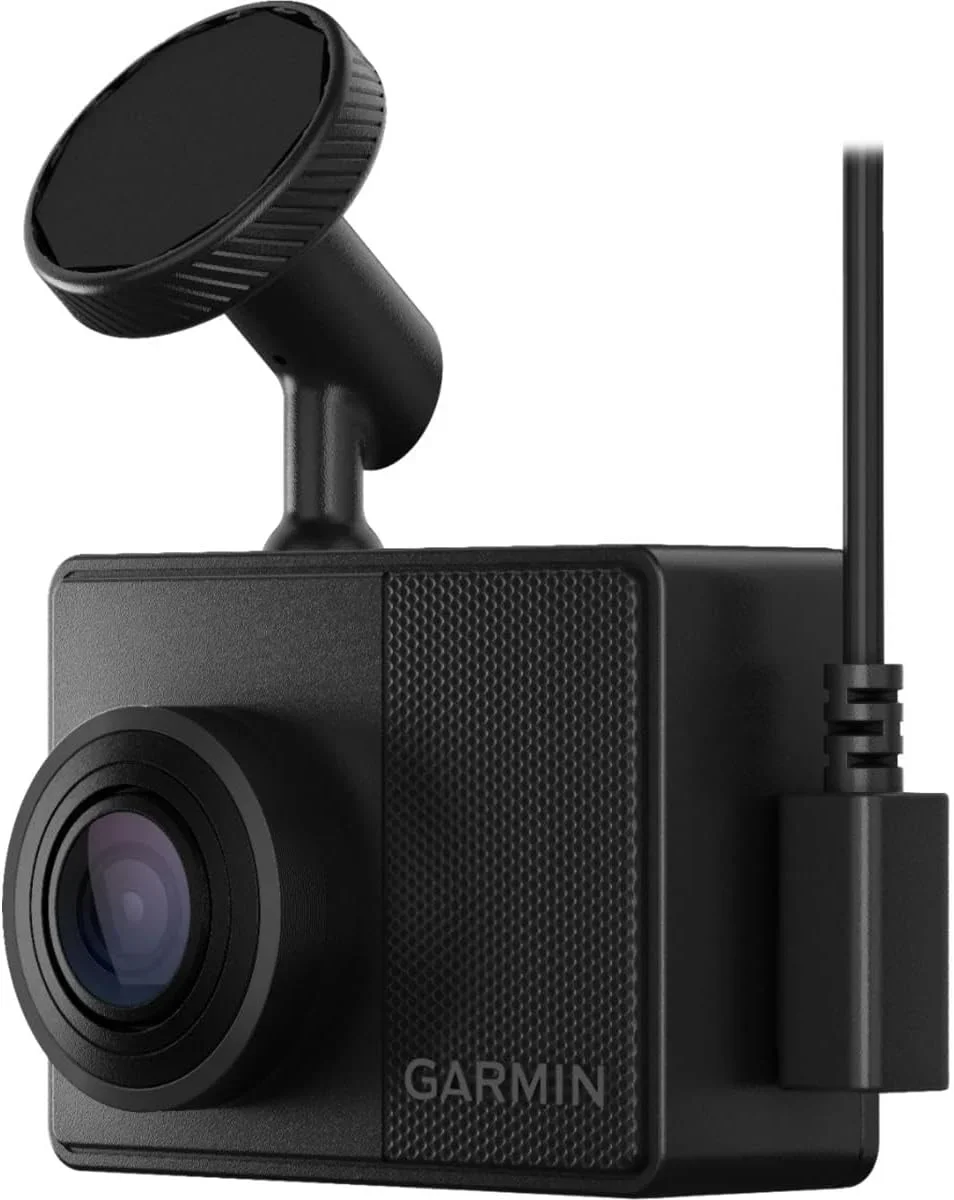
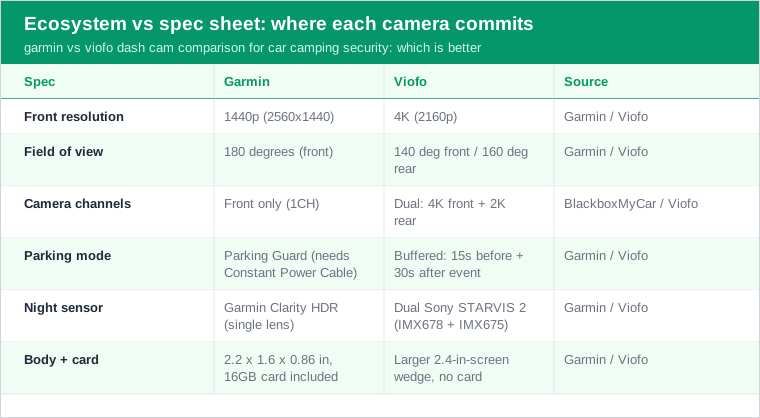
The Garmin Dash Cam 67W films 1440p through a 180-degree lens from a body just 2.2 inches wide, while the Viofo A229 Pro films sharper 4K through a 140-degree front lens and adds a rear camera plus buffered parking mode that banks 15 seconds before an impact and 30 seconds after, per Garmin and Viofo. On raw capture the Viofo carries roughly 125% more front pixels and records around the clock for 24 hours; on simplicity the Garmin fits in a shirt pocket and answers to your voice. That sentence is the whole comparison: this is not a fight over which camera is 'better,' it's a fork between an ecosystem and a spec sheet.
I match gear to priorities, so I'm going to refuse the usual one-winner verdict here, because these two cameras are optimized for different buyers. The Garmin is the ecosystem play - tiny, voice-driven, wrapped in a polished app and a brand that answers the phone. The Viofo is the spec-sheet play - more resolution, two channels, a stronger night sensor, and enthusiast-grade parking modes, usually for less money. The wrong move is buying the one that doesn't match what you value.
So I've built this as a priority-matcher for car campers specifically - people who park a loaded vehicle at a dark trailhead and want a witness while they sleep. Each section takes one priority - size, video quality, parking-mode security, app, price - names the winner, and tells you who should weight it. A matrix at the end turns your top concern into a purchase. Every figure is attributed to Garmin, Viofo, or BlackboxMyCar as we go.
If you value simplicity and a tiny footprint: Garmin
Start with the priority most campers underrate until they mount the thing: how small and how simple. The Garmin 67W is genuinely pocket-sized, measuring about 5.62 x 4.05 x 2.19 cm - roughly 2.2 inches wide - which BlackboxMyCar describes as pocket-sized and easy to stash discreetly on the windshield. It hides behind the mirror and effectively disappears, and for a camper that discretion is security: a camera a passer-by never notices is one nobody bothers to rip off a parked, obviously-loaded vehicle.
Simplicity is the other half of the Garmin's case. Voice control lets you save a clip, start or stop audio, and take a still with a spoken command, per Garmin - no reaching for a button on a mountain switchback or fumbling in the dark at camp. The whole unit is built to set up once and forget, which is exactly what a lot of campers want from a device that should just run in the background.
If your priority is a camera that vanishes on the glass and never asks for attention, the Garmin wins this round outright. Small, voice-driven, and discreet is a real feature set - not everyone wants to administer a dual-channel system with a rear cable down the headliner.
The cost of that simplicity is reach: the Garmin is a single front-facing camera, per BlackboxMyCar, so it watches the windshield and nothing behind you - a real limit for overnight coverage, and the first place the Viofo answers back.
If you value raw video quality: Viofo
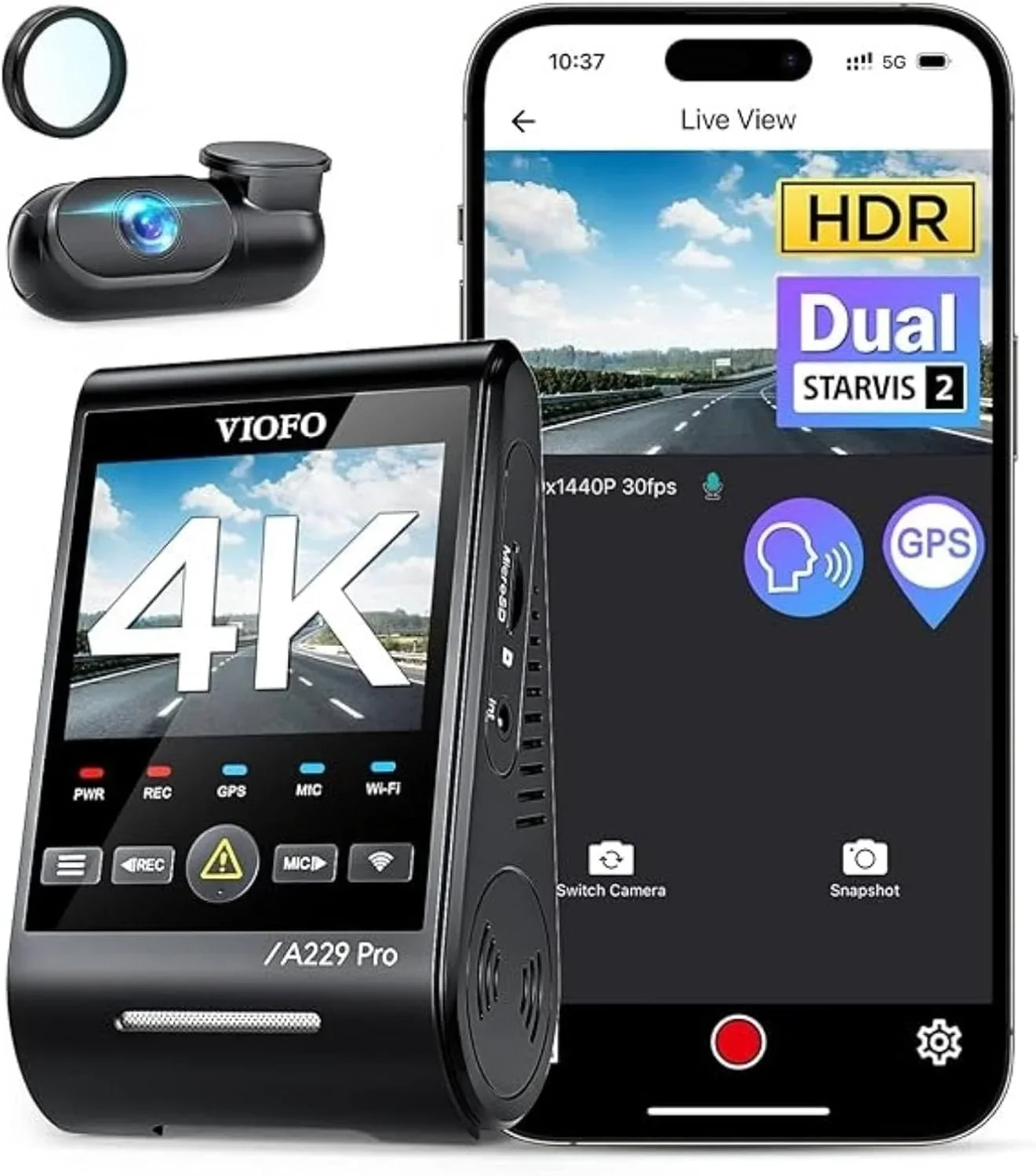
Flip to the spec-sheet priority and the Viofo takes over. The A229 Pro records 4K (2160p) on the front camera and 2K on the rear, per Viofo, against the Garmin's 1440p single front channel, per Garmin - about 125% more pixels up front and a second camera the Garmin simply doesn't have. For reading a license plate or a face off recovered footage, more resolution and a rear angle are exactly the details that turn a blurry clip into usable evidence.
The gap is not only pixel count. Consider what each camera actually covers:
- Garmin 67W: a single 180-degree front lens with Garmin Clarity HDR, per Garmin - the widest single view here, and strong in even light, but front-only.
- Viofo A229 Pro: 4K front at 140 degrees plus a 160-degree rear channel, per Viofo - narrower up front, but it watches both ends of a parked vehicle at once.
- What it means at camp: the Garmin's wider single lens catches more across the windshield; the Viofo's two sharper channels catch more of the whole vehicle, which matters when a threat circles a parked camp.
So 'better video' splits by what you're protecting. The Garmin's 180-degree wide-angle front is excellent single-camera coverage; the Viofo's 4K-plus-2K dual system resolves more detail and watches the rear approach the Garmin can't see. If image evidence is your priority, the Viofo is the pick.
If you value overnight parking protection: Viofo, with one caveat
This is the priority that should dominate a car camper's decision, because at a trailhead a dash cam stops being a driving recorder and becomes a security camera. Both cameras offer a parking mode, but they are not the same class of feature. The Viofo A229 Pro runs a buffered parking mode: it continuously buffers video and, on detecting motion or an impact, saves 15 seconds BEFORE the event and 30 seconds after across three 24/7 modes, per Viofo. The Garmin's Parking Guard alerts you and automatically saves video when an incident is detected, per BlackboxMyCar - useful, but built around the event trigger rather than a pre-roll buffer.
The buffer is the whole game for catching a culprit. Evidence lives in the approach - the person walking up, testing a handle, looking in - which happens BEFORE anything registers as an impact. A camera that banks 15 seconds of lead-up captures the plate and the face; one that starts at the trigger can miss them.
Here's the caveat that keeps this honest for the Garmin: its Parking Guard needs the accessory Constant Power Cable to keep watching after the engine is off, per Garmin, and the Viofo likewise needs a hardwire kit or battery for its 24-hour modes. Neither camera guards anything overnight on the standard 12V plug alone. But once both are properly powered, the Viofo's buffered, dual-channel, 24-hour coverage is the stronger overnight protector - which is why our Viofo dash cam review weights parking mode so heavily for campers.
If you value the app and brand ecosystem: Garmin
Now the priority that spec sheets never show. The Garmin 67W connects over Wi-Fi and Bluetooth to the Garmin Drive app for iOS and Android to view, edit, and share footage, and adds optional Vault cloud storage accessible from the app, per Garmin. That's a mature, well-supported ecosystem from a company whose whole business is navigation and support - if you value polish, updates, and a brand that answers the phone, the Garmin is the safer long-term citizen.
The Viofo is not appless - it pairs to the VIOFO app over faster 5GHz Wi-Fi for previews, downloads, and settings, per Viofo, pulling a night's 4K clips off the card faster than the Garmin's slower link. But its ecosystem is enthusiast-flavored: deeper settings, less hand-holding, and community support rather than a polished corporate help line.
The split by priority is clean:
- Garmin: polished app, cloud Vault option, strong brand support - the pick if you want simple and supported.
- Viofo: faster 5GHz transfers and deeper control - the pick if you want speed and settings and don't mind a steeper learning curve.
If a frictionless app and a brand safety net are what you value, the Garmin wins the ecosystem round - and for a lot of non-technical campers that's worth more than a spec.
Night vision at a dark trailhead
Campsites are dark, so low-light performance deserves its own line, and it leans Viofo. The A229 Pro uses dual Sony STARVIS 2 sensors - the IMX678 up front and IMX675 at the rear - with HDR built for super night vision, per Viofo. STARVIS 2 is a newer low-light sensor generation designed to hold detail in high-contrast dark scenes: a streetlight against a black lot, headlights against a shadowed trailhead. The Garmin counters with Garmin Clarity HDR on its single front lens, per Garmin - capable in even light, but a single-channel, older-sensor design.
Why the difference matters specifically for a parked camp:
- High-contrast scenes: the Viofo's STARVIS 2 HDR keeps a plate readable when a bright light sits beside deep shadow - the normal condition at night.
- Rear coverage in the dark: the Viofo's second STARVIS 2 sensor watches the approach behind a parked vehicle, where overnight threats often come from; the Garmin has no rear eye at all.
- Garmin's real case: in even light its 180-degree front is wide and clean - not a weak camera, just single-channel and tuned for daytime driving over midnight surveillance.
For the narrow job of watching a dark, parked camp, the Viofo's dual STARVIS 2 night vision is the better tool. In daylight driving the gap narrows and the Garmin's wide, clean front image is perfectly competitive.
If you value price and total value: Viofo, usually
Money is a priority too, and it tilts Viofo - with an asterisk. Reviewers consistently frame Viofo as the value and raw-quality brand and Garmin as the polish-and-support brand: BlackboxMyCar's head-to-head lands on Garmin winning build and app polish while Viofo wins on value and raw video quality. On a pure capability-per-dollar basis, the Viofo hands you 4K, a second camera, dual STARVIS 2, and buffered parking mode for money that often undercuts the smaller, single-channel Garmin.
Count the working system, not the box. The Garmin includes a 16GB card but needs the Constant Power Cable for parking mode; the Viofo includes no card and needs a hardwire kit. Add both to a real overnight-security setup and the totals move - though the Viofo generally still delivers more camera per dollar.
The value split by priority:
- Viofo: more hardware and more features for less - the pick if you're optimizing capability against budget.
- Garmin: you pay a premium for size, simplicity, and ecosystem, not for specs - the pick if those intangibles are what you value.
If your priority is the most protection per dollar, the Viofo is the value winner; if it's the most polish per dollar, the Garmin earns its premium. For a fuller enthusiast-tier comparison, our Thinkware U3000 Pro vs Viofo A229 Pro matchup runs the same value lens one class up.
Powering either one overnight: the step that makes parking mode real
One practical note governs BOTH cameras, and skipping it wastes every spec above: parking mode only records while the camera has power after the engine is off. For overnight camping that means the Garmin's Constant Power Cable or a hardwire kit for the Garmin, and a hardwire kit or dedicated battery for the Viofo's 24-hour modes - not the standard 12V socket, which either goes dead with the ignition or slowly drains the battery you need to start in the morning. This is setup, not a Garmin-vs-Viofo difference, but it's what turns either camera's parking mode from a spec into protection.
The overnight-power checklist for either camera:
- Constant power: the Garmin needs its accessory cable; the Viofo needs a hardwire kit or battery - budget for it up front.
- Low-voltage cutoff: a proper hardwire kit protects the starter battery so a full night of parking mode doesn't leave you stranded at a remote trailhead.
- High-endurance card: both max out at 512GB, per Garmin and Viofo; the Garmin includes a 16GB starter card, the Viofo includes none - buy a high-endurance card rated for continuous rewriting either way.
Cold nights add one trap for both: a chilled battery sags in resting voltage, so set the cutoff conservatively in winter or a mode that runs all night in July can stop guarding within an hour on a freezing night. A dedicated dash-cam battery sidesteps it on multi-night trips - the setup our Redtiger vs Viofo comparison details for either brand.
The priority matrix: turn your top concern into a purchase
Here's the whole comparison as a decision, not a debate. Pick the row that describes what you care about most and the camera on the right is your answer - because these two are built for different priorities, and the right buy is simply the one that matches yours.
- You want it tiny and invisible on the glass: Garmin - a 2.2-inch body that hides behind the mirror, per BlackboxMyCar.
- You want voice control and set-and-forget simplicity: Garmin - spoken commands to save clips and shoot stills, per Garmin.
- You want the sharpest, most complete footage: Viofo - 4K front plus a 2K rear channel, per Viofo.
- You want the strongest overnight parking security: Viofo - buffered mode saving 15 seconds before an event, per Viofo.
- You want the best night vision at a dark camp: Viofo - dual Sony STARVIS 2 sensors, per Viofo.
- You want a polished app and brand support: Garmin - the Garmin Drive app and Vault cloud option, per Garmin.
- You want the most camera for the money: Viofo - value and raw quality winner, per BlackboxMyCar.
Notice the pattern: the Garmin owns the human-facing priorities - size, simplicity, app, support - and the Viofo owns the technical ones - resolution, channels, night sensor, parking buffer. There is no row where both win, which is why a single verdict would mislead half of you.
For the camper specifically, weight the matrix toward the security rows - parking mode, night vision, rear coverage - and the Viofo tends to carry it. If your camping is casual and your bigger worry is a camera that's easy to live with day to day, the Garmin's column is the honest answer instead.
The verdict: match the camera to what you actually value
As a systems analyst I won't crown one winner, because that would be the wrong output for a genuine fork. For overnight car-camping security specifically, the Viofo A229 Pro is the stronger tool - 4K plus a 2K rear channel, dual Sony STARVIS 2 night vision, and buffered parking mode that banks 15 seconds before an incident, per Viofo. If protecting a parked camp at a dark trailhead is your priority, the spec sheet is on your side and the Viofo is the pick.
Buy the Viofo A229 Pro if capability is the priority - resolution, dual-channel coverage, night vision, and buffered parking mode are the features that actually protect a parked vehicle. Buy the Garmin 67W if simplicity is the priority - a tiny, discreet, voice-controlled camera with a polished app and strong support that just runs in the background.
The Garmin Dash Cam 67W is not the loser of this comparison - it's the winner of a different one. For a camper who wants a set-and-forget witness that disappears on the glass and answers to a spoken word, its 180-degree front, pocket size, and Garmin Drive ecosystem are exactly right, per Garmin. Match the camera to your priority and neither buyer is wrong. If you're still cross-shopping brands, our Garmin vs Nextbase comparison runs this same priority lens across Garmin's closest rival.