
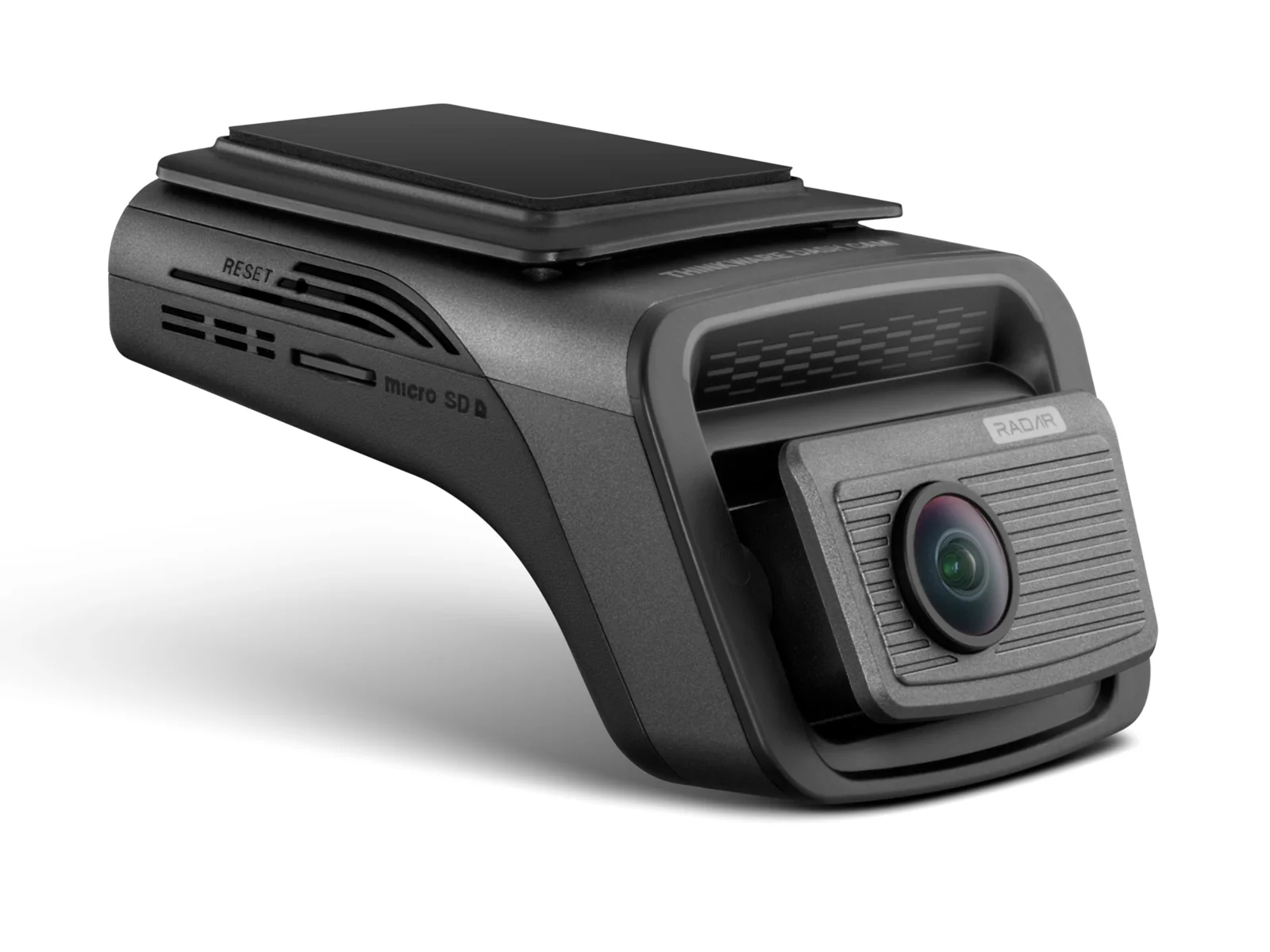
Same 4K core, two different philosophies
Here's the honest headline before the specs: the Thinkware U3000 Pro and the VIOFO A229 Pro shoot nearly identical footage. Both are 4K-front, 2K-rear dual cameras built on Sony's latest STARVIS 2 sensors, and in daylight you would struggle to tell their clips apart. The decision isn't about image quality — it's about which philosophy you're buying.
The Thinkware is the set-and-forget premium play: it uses a radar sensor to wake for parking incidents, adds thermal-protection circuitry for hot climates, ships with a 64GB card and OBD cable in the box, and can bolt on an optional LTE module so you get phone alerts and live view from anywhere. The VIOFO is the enthusiast value play: true HDR, hands-free voice control, a bundled CPL filter, and a lower price — but you supply your own SD card and buy the HK4 hardwire kit for parking mode.
Want it to just work, watch your parked car over LTE, and never think about it? The U3000 Pro. Want the most camera for the money and don't mind tinkering? The A229 Pro.
Image quality: a near-tie where it counts
Both cameras record 4K up front and 2K at the rear on STARVIS 2 sensors, the generation Sony built specifically to pull detail out of near-darkness. In practice that means both nail the job that actually matters — reading a license plate two lanes over, at night, under mixed streetlight — far better than the 1080p cameras most people are upgrading from.
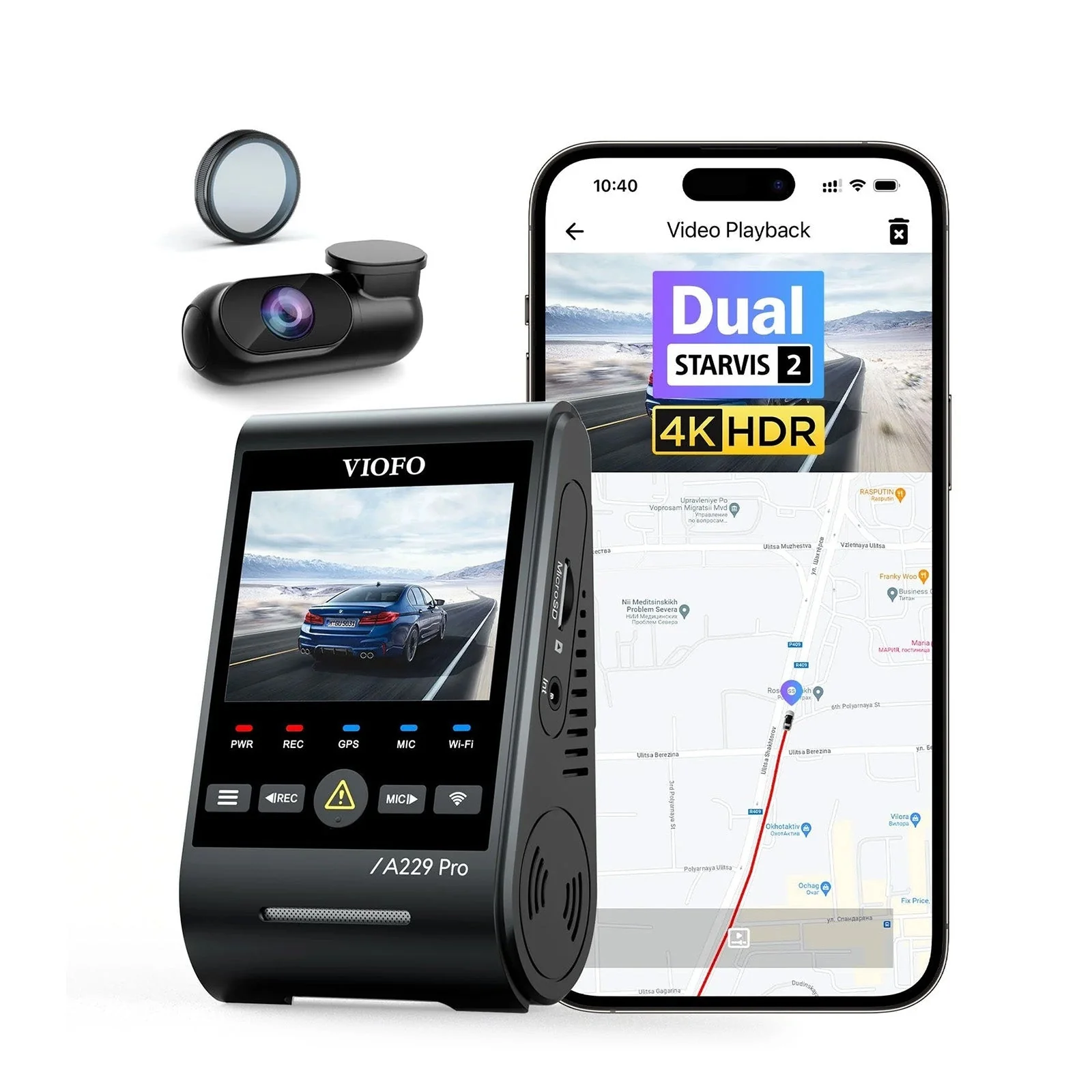
Where their processing philosophies split: VIOFO leans on HDR to balance a bright sky against a shadowed plate, which tends to look punchy and hold highlights well. Thinkware's Super Night Vision 4.0 is a software brightening pass that lifts shadow detail in genuinely dark scenes, so unlit rural roads can read a touch cleaner. Neither is categorically better; they're two tunings of the same excellent hardware. Both include a CPL filter to kill windshield reflections, which does more for real-world clarity than any spec-sheet number.
One honest caveat about 4K: it only pays off if you feed it a fast, high-endurance microSD card and actually keep the bitrate high. Both cameras will happily record 4K, but a slow or worn-out card causes dropped frames and corrupted clips — the exact moment the footage becomes worthless. Whichever you buy, budget for a proper high-endurance card rated for continuous dash-cam writing, and reformat it every month or two. That single habit does more for the quality of the evidence you capture than the gap between these two cameras ever will.
Parking mode: radar vs a hardwire kit
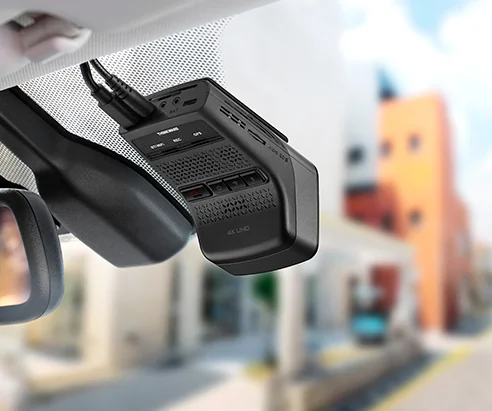
This is the biggest genuine difference between the two, and it's where the Thinkware earns its premium. The U3000 Pro has a built-in radar sensor that detects a person or car approaching your parked vehicle and wakes the camera to record — without draining power keeping the sensor always watching the way a pure motion-pixel trigger does. Combined with its buffered recording, you capture the seconds before the bump, not just after.
The VIOFO A229 Pro does parking mode too — buffered, motion, and impact — but it needs the optional HK4 ACC hardwire kit to pull it off, and it triggers on image-based motion rather than radar. That works well and costs less, but it can be chattier (a swaying tree branch can wake it) and it lacks the U3000 Pro's radar precision. Both cameras should be hardwired for parking protection; only the Thinkware ships the tools to make that painless out of the box.
Heat, longevity and the cloud question
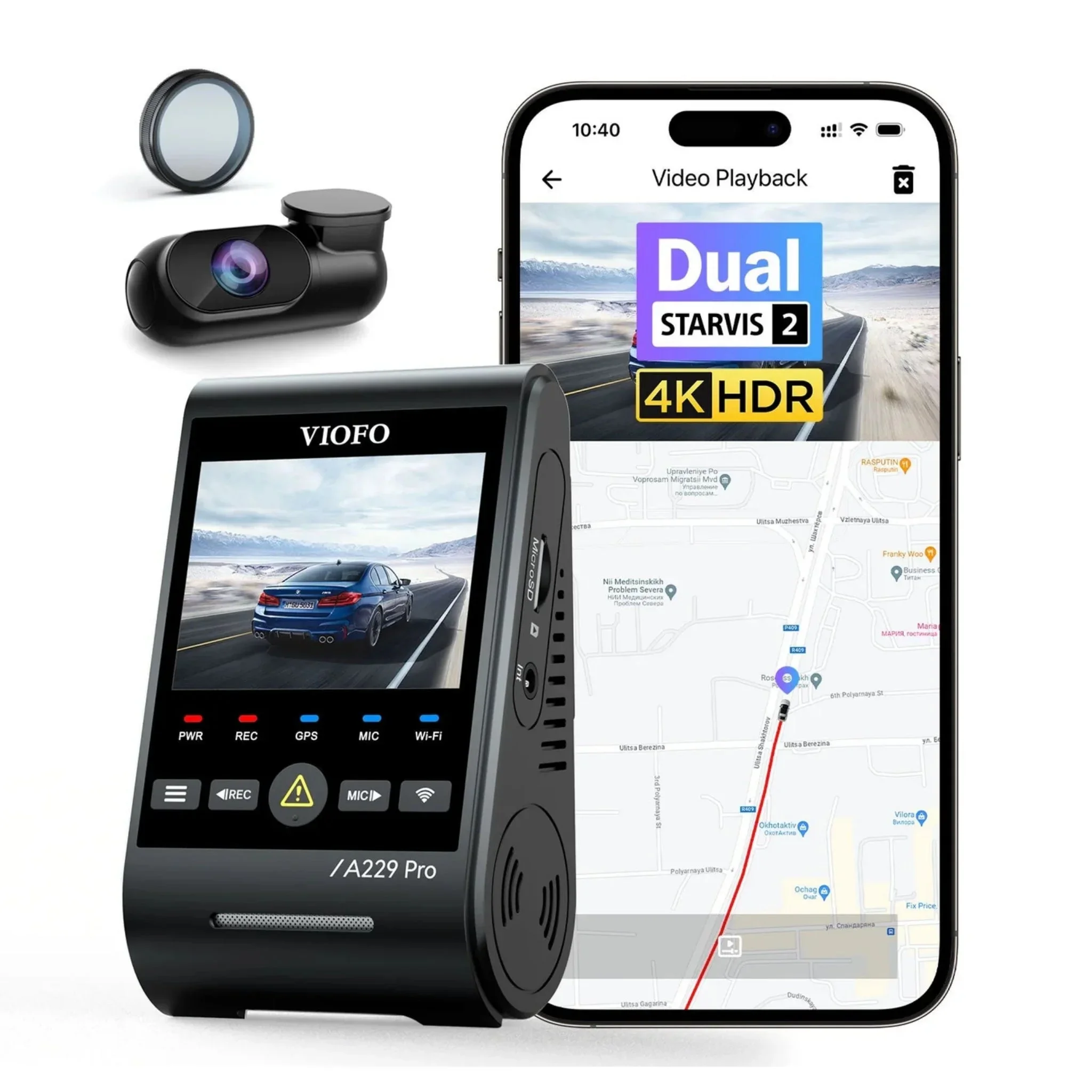
Dash cams live on a windshield, which in summer is one of the hottest places in your world. Both of these avoid the classic failure point by using capacitor-class power rather than a cheap lithium pouch that swells and dies. The VIOFO uses a supercapacitor — a capacitor rather than a chemical battery, so there is nothing to swell, leak, or lose capacity after a few hot summers. The Thinkware also skips the lithium pouch and adds a thermal-protection circuit that shuts the camera down before damage in extreme heat, plus a build rated for high temperatures. If you park in the desert sun, both are safe bets, with a slight edge to the Thinkware's active thermal management for the very worst heat-soak days when a car interior can push past 150°F.
That distinction matters more than it sounds. The single most common way a cheap dash cam dies is a swollen internal battery after one desert summer, and it usually fails silently — you only discover it wasn't recording when you actually needed the footage. Both of these cameras engineer that failure mode out, which is a big part of why they cost what they do.
The other forward-looking difference is connectivity. The U3000 Pro accepts an optional LTE module that turns it into a connected camera: push alerts when something hits your parked car, remote live view, and vehicle tracking, with a bundled trial data plan. VIOFO keeps things local — 5GHz Wi-Fi to your phone when you're standing next to the car, quad-mode GPS for accurate speed and location stamps, but no cloud. If remote awareness of your parked car matters to you, that LTE option is a real reason to pay more.
Which one should you buy?
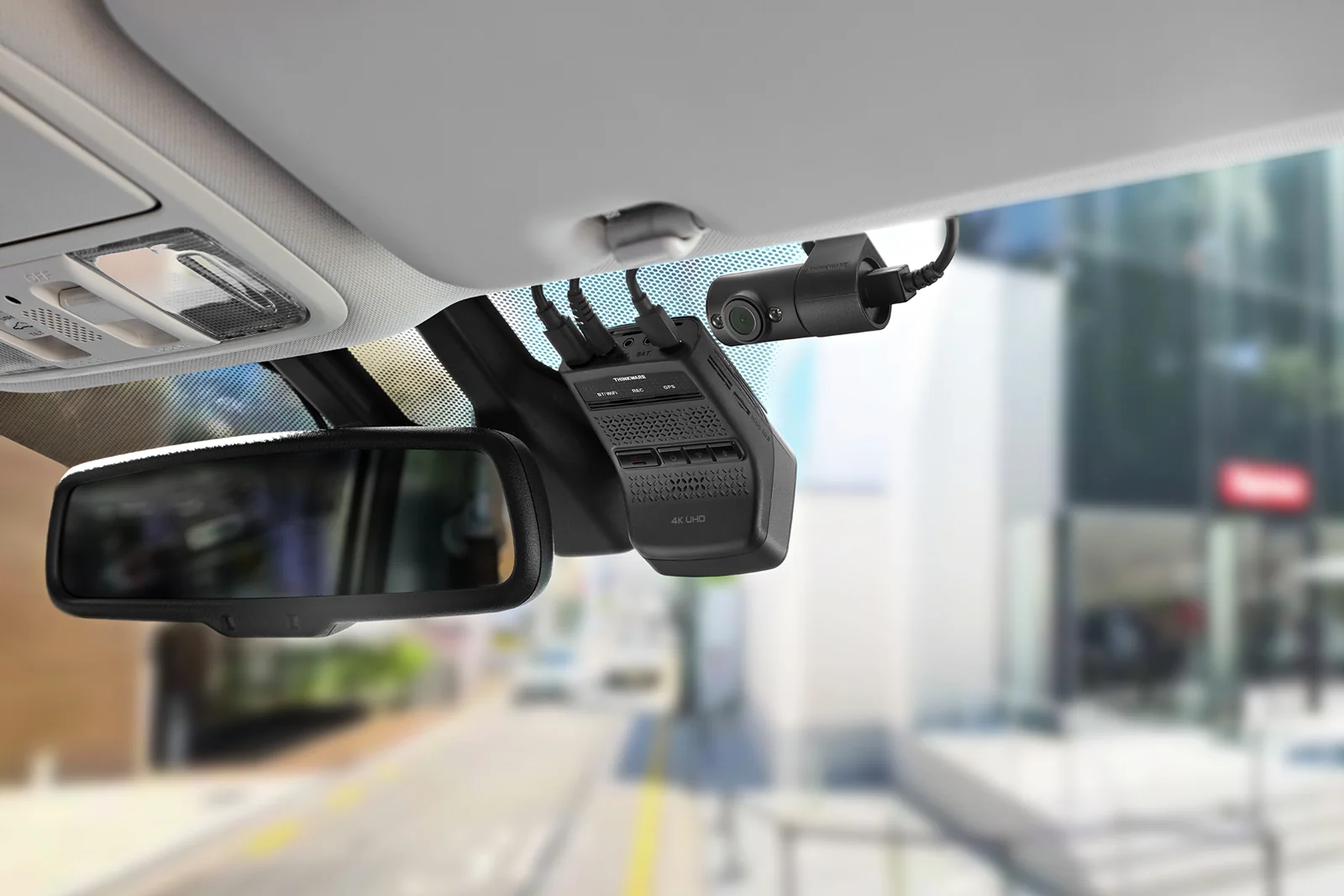
After all the specs, the buying logic is short. Here's where the value lands:
- Buy the Thinkware U3000 Pro if you want radar parking mode that sips power, active thermal protection for a hot climate, the convenience of a 64GB card and OBD cable in the box, or the option to add LTE and watch your parked car from your phone. It's the premium, lower-hassle choice.
- Buy the VIOFO A229 Pro if you want the same 4K STARVIS 2 image quality for less money, value real HDR and hands-free voice control, and don't mind supplying your own SD card and adding the HK4 kit for parking mode. It's the enthusiast value champion.
- Either way, hardwire it and buy a high-endurance card. A flagship 4K camera on a cigarette-lighter plug with a cheap card is a fast way to waste the money you just spent.
Both are genuinely excellent cameras that will outclass anything you're replacing. Match the one you buy to how you actually use it — radar-and-cloud peace of mind, or maximum image quality per dollar — and you won't be second-guessing the choice every time you glance at the mirror.