
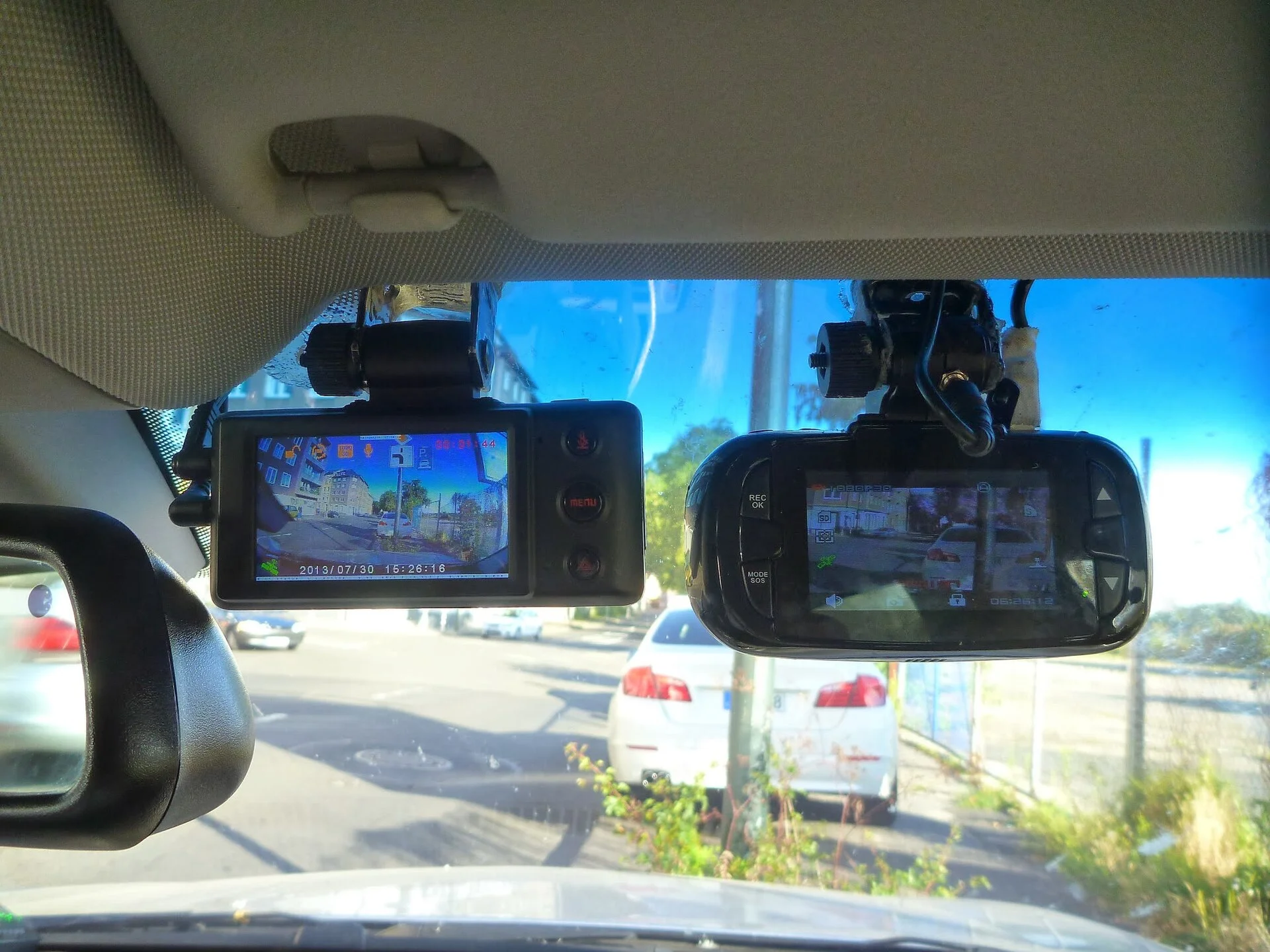
Two dash cams from different price tiers
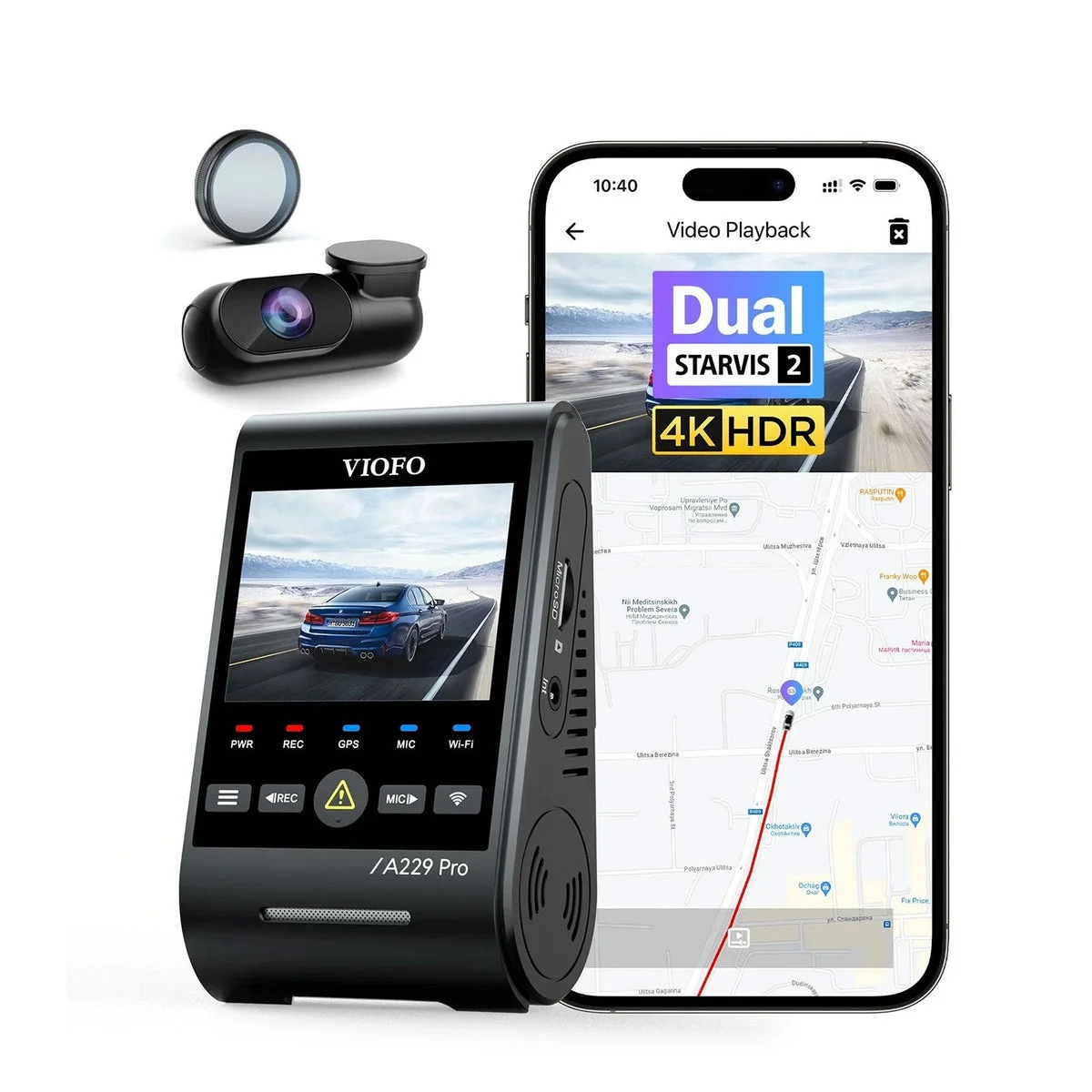
The VIOFO A229 Pro and the 70mai A500S are both popular dual-channel dash cams, but they aren’t really rivals on paper — they sit a tier apart. The A229 Pro is a flagship 4K camera built around Sony’s newest STARVIS 2 sensors and sells for roughly three to four times the price of the 70mai.
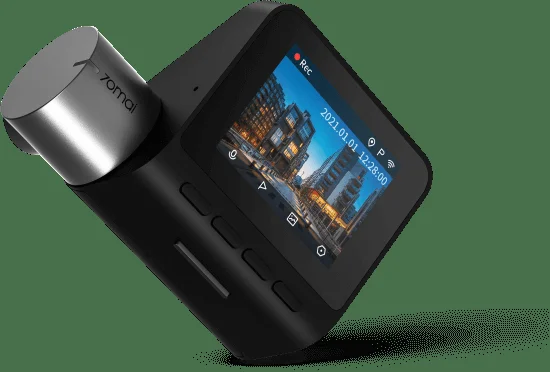
The 70mai A500S (sold as the Dash Cam Pro Plus+) is a 2.7K budget camera that bundles in features VIOFO leaves off, like built-in ADAS driver alerts. So the real question isn’t “which is better” — the 4K camera wins most spec lines — it’s whether the A229 Pro’s upgrades are worth paying for, or whether the A500S covers what you actually need for a fraction of the cost.
This comparison walks the differences that change the footage you get back: resolution and sensor, low-light recording, the rear channel, parking protection, and the app and price gap.
Resolution and sensor: 4K STARVIS 2 vs 2.7K
The headline difference is the front sensor. The A229 Pro records true 4K UHD (3840×2160) using Sony’s 8-megapixel STARVIS 2 IMX678, the current generation of automotive sensor. The A500S records 2.7K (2592×1944) from the older Sony IMX335.
| Spec | VIOFO A229 Pro | 70mai A500S |
|---|---|---|
| Front resolution | 4K UHD (2160p) | 2.7K (1944p) |
| Front sensor | Sony STARVIS 2 IMX678 (8MP) | Sony IMX335 (5MP) |
| Rear camera | 2K QHD, STARVIS 2 IMX675 (included on 2CH) | 1080p RC06 (sold separately) |
| HDR | Yes, front + rear | WDR |
| Max storage | 512GB microSD | 128GB microSD |
| Voice control | Yes | No |
| ADAS alerts | No | Yes (lane / collision / start) |
| Typical price | ~$330 (front + rear) | ~$60-100 |
More pixels means more detail to crop into — the practical payoff is reading a license plate a lane or two over, which the extra 4K resolution and the newer STARVIS 2 sensor are designed to help with.
Low-light recording
Night footage is where sensor generation matters most, and it’s the clearest reason VIOFO charges more. The A229 Pro pairs the STARVIS 2 IMX678 with VIOFO’s HDR processing, which the company markets as “Night Vision 2.0” for brighter low-light capture.
The 70mai A500S leans on its Sony IMX335, a large f/1.8 aperture, and a 6-layer lens to pull in light, with WDR to balance bright and dark areas. On paper that’s a capable budget setup, but it is a generation behind the STARVIS 2 hardware in the VIOFO.
If most of your driving is in daylight, both cameras give you usable, readable footage. If you regularly drive unlit roads at night, the newer sensor and HDR pipeline in the A229 Pro are the upgrade you’re paying for.
There’s a second reason the sensor difference matters at night: headlight glare. HDR works by blending multiple exposures so a bright light source doesn’t blow out the rest of the frame, which is how a dash cam keeps a plate readable when an oncoming car’s high beams hit the lens. Both cameras apply this kind of dynamic-range processing, but the A229 Pro’s STARVIS 2 hardware gives it more headroom to work with before detail is lost.
The rear camera and channel count
Both cameras can watch the road behind you, but how you get there differs — and so does the quality.
- VIOFO A229 Pro: the common 2-channel kit ships with a 2K QHD rear camera using a second STARVIS 2 sensor (IMX675). A 3-channel version adds a 1080p interior cabin camera.
- 70mai A500S: the front unit records alone out of the box. Adding rear coverage means buying the RC06 rear camera separately, and it records at 1080p — a step below the front.
For ride-share drivers or anyone who wants to monitor passengers, the A229 Pro’s optional interior channel is something the A500S can’t match. For basic front-and-rear coverage, the A500S plus RC06 still does the job at a much lower total price.
Rear-camera quality is easy to overlook until you need it. A 1080p rear feed is fine for documenting that you were rear-ended and roughly how, but the 2K STARVIS 2 rear on the A229 Pro gives you a better shot at reading the plate of a car that taps you and drives off. If most of your risk is behind you — stop-and-go commuting, tight parking — that rear resolution difference is worth weighing, not just the front number everyone quotes.
Parking mode and how it's powered
Parking surveillance — recording while you’re away from the car — is handled very differently on these two.
The A229 Pro uses a supercapacitor (more heat-tolerant than a battery) and offers a buffered 24-hour parking mode that captures the moments before an impact, not just after. The A500S supports parking monitoring too, but VIOFO and 70mai both require a separate hardwire kit to draw power from the car while parked — budget for that accessory on either camera.
The supercapacitor is also a reliability point for hot climates: it tolerates the high cabin temperatures that degrade lithium batteries over time, which is part of why VIOFO targets the A229 Pro at drivers who leave a camera mounted year-round.
Buffered recording is the detail worth understanding here. A basic parking mode only starts saving footage after a sensor detects an impact, so it can miss the seconds leading up to a hit-and-run. A buffered mode like the A229 Pro’s continuously holds a short rolling clip in memory, so when something triggers it, you get the approach as well as the impact — often the part that actually identifies the other vehicle.
App, Wi-Fi, GPS and driver alerts
Both cameras have built-in Wi-Fi, GPS, and a companion phone app for pulling clips, but the details split along the price line — with one twist in the budget camera’s favor.
- Wi-Fi transfer: the A229 Pro adds 5GHz Wi-Fi alongside 2.4GHz, which moves large 4K files to your phone faster. The A500S uses 2.4GHz.
- GPS: both stamp speed and location; the A229 Pro supports multiple satellite systems for a quicker, steadier lock.
- Driver alerts (ADAS): this is the A500S’s edge — it includes lane-departure, forward-collision, and front-vehicle-start warnings that the A229 Pro doesn’t offer.
- Voice control: only the A229 Pro lets you start a recording or take a photo hands-free.
You’ll want a fast, high-endurance microSD card rated for dash cams for either camera — 4K footage in particular fills a card quickly.
Price and value
This is the whole decision in one line: the VIOFO A229 Pro typically runs around $330 for the front-and-rear kit, while the 70mai A500S sits in the $60-100 range, with the rear camera adding a little more.
That gap buys you genuine upgrades — 4K over 2.7K, newer STARVIS 2 sensors front and rear, voice control, 5GHz transfer, and a supercapacitor. Whether those are worth roughly triple the spend depends on how much you value night clarity and plate detail versus simply having a reliable record of your drive.
Factor in the extras too, because they narrow the gap less than you might think. Both cameras need a hardwire kit for parking mode and a high-endurance card, so those costs apply either way. The A500S also charges separately for its rear camera, while the VIOFO bundles one in. Add it all up and the A229 Pro is still clearly the pricier setup — just not quite as lopsided as the headline sticker prices suggest.
Prices move with sales, so check the current listing before you buy; the tiers, though, stay the same.
Which should you buy?
Match the camera to what you actually need:
- Buy the VIOFO A229 Pro if you want the best image quality — 4K front, 2K rear, strong night performance from STARVIS 2 sensors — and you’re comfortable paying flagship money for it. It’s the better evidence camera if reading plates matters to you.
- Buy the 70mai A500S if you want solid, GPS-stamped 2.7K footage and helpful driver-assist alerts for the lowest reasonable price, and you don’t need 4K or an interior camera.
- On a tight budget? The A500S front-only setup is a lot of camera for the money; add the RC06 later if you want rear coverage.
The VIOFO A229 Pro is the better camera in almost every spec that affects footage — resolution, sensor generation, rear quality, and connectivity — and if image quality is your priority, it’s the clear pick.
But “better camera” and “better buy” aren’t the same thing. The 70mai A500S delivers most of the protection a dash cam exists to provide — a clear, time-and-location-stamped record — plus ADAS alerts, for well under half the price. For a lot of drivers, that is the smarter spend.
Choose the A229 Pro for maximum evidence quality; choose the A500S for the best value. Either way, pair it with a high-endurance card and confirm your parking-mode plan before you mount it.
One last framing that helps: decide what job the camera is doing for you. If it’s an insurance and evidence tool first — you want the clearest possible record of a plate, a sign, or a sequence of events — the resolution and sensor gap justifies the A229 Pro. If it’s a peace-of-mind tool that simply needs to be running, stamped with time and place, and easy to pull clips from, the A500S already does that and leaves money in your pocket for the hardwire kit and a good card.