
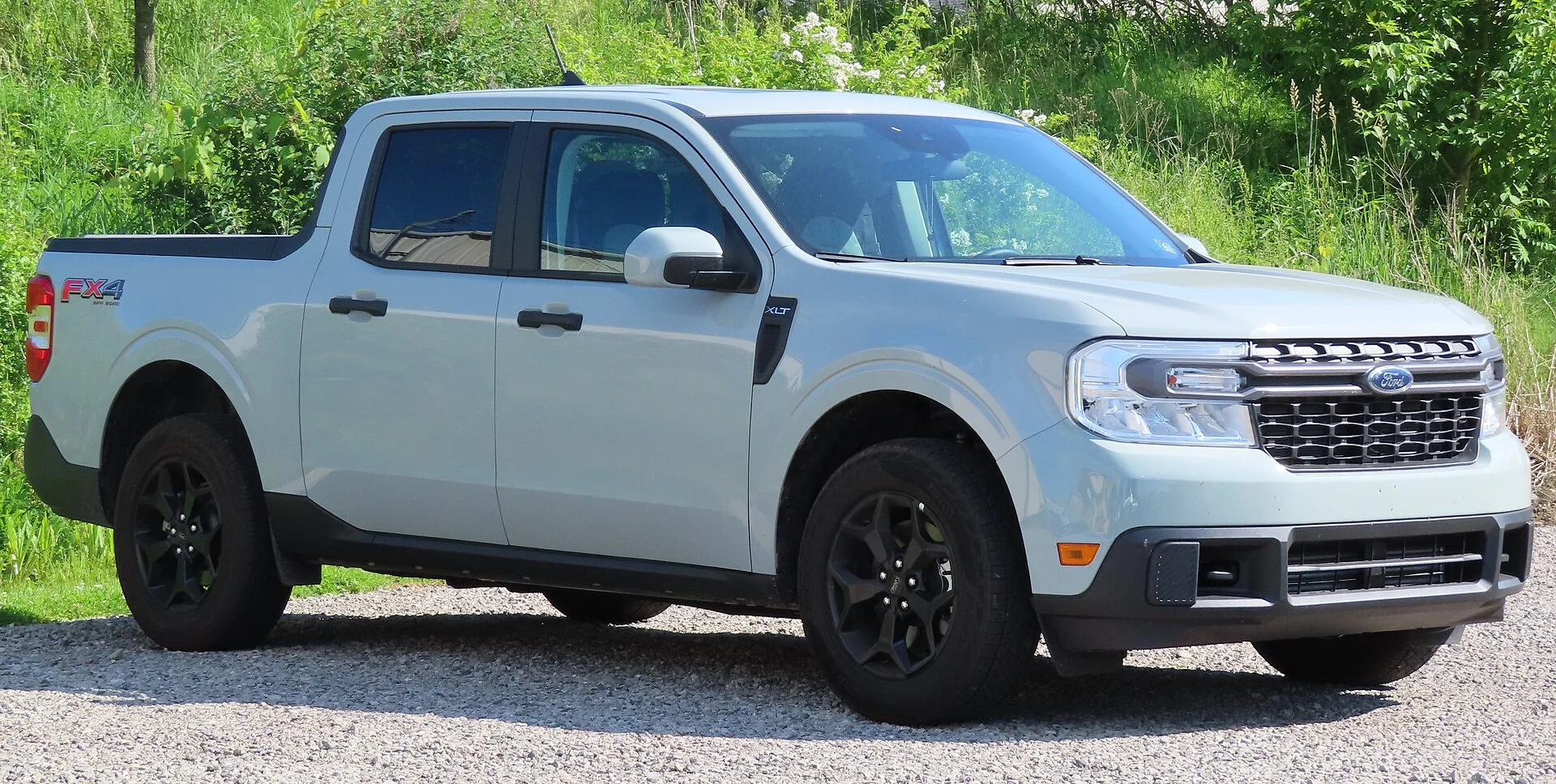
A Compact Truck That Carries Like a Bigger One
The marketing angle on the Ford Maverick is fuel economy and price. The number that quietly makes it a serious camping vehicle is payload: a maximum of 1,500 lb, available with either the 2.5L Hybrid front-drive or the 2.0L EcoBoost powertrain. For a compact unibody pickup that starts cheap and sips fuel, that is a genuinely surprising figure.
Put it in context and the surprise sharpens. Fifteen hundred pounds of payload is competitive with, and in some configurations beats, midsize and even some full-size trucks that cost far more and drink far more. The Maverick does it in a footprint that parks like a sedan. That is the spec that matters, and it is not the one the ads lead with.
The skeptic's question is always whether a headline number survives contact with a spec sheet. Here it does, but with fine print worth reading: 1,500 pounds is the maximum, it depends on configuration, and payload is a shared budget that towing spends into. A camper who understands how that budget works gets a remarkably capable little truck; one who assumes 1,500 pounds is free and clear can overload it.
This guide reads the Maverick's payload the way a parts-counter veteran reads any bold claim: where the number comes from, what it costs to reach, how the hybrid and EcoBoost compare, and how a trailer's tongue weight quietly eats into the same budget that carries your passengers and gear.
Where the 1,500-Pound Number Comes From
Payload is not a marketing invention; it is subtraction. It is the truck's gross vehicle weight rating, the most it is legally allowed to weigh fully loaded, minus its curb weight, what it weighs empty. Everything you add, people, gear, and a trailer's tongue weight, lives in the gap between those two numbers.
For the Maverick, the math works out generously. The GVWR ranges from 5,230 lb to 5,320 lb on the Hybrid front-drive and up to 5,240 lb on the EcoBoost all-wheel-drive, while curb weight is 3,563 lb for front-drive variants and 3,731 lb for all-wheel-drive. Subtract the curb weight from the GVWR and the payload lands near that 1,500-pound maximum on the lightest, highest-rated configurations.
Payload is GVWR minus curb weight. Add all-wheel drive and the curb weight climbs from 3,563 to 3,731 pounds, so the heavier truck carries less. The lightest configuration carries the most.
That relationship explains why the maximum shows up on specific builds. Adding all-wheel drive, heavier trim content, or accessories raises curb weight, and every pound of curb weight is a pound of payload spent before anything is loaded. The 1,500-pound figure belongs to a light, well-chosen configuration, not to every Maverick on the lot.
The honest way to know a specific truck's payload is to read the yellow sticker on the driver's door jamb, which states that exact vehicle's payload as built. That number, not the brochure maximum, is the budget a camper actually has to work with.
Hybrid vs EcoBoost: They Share the Top Number
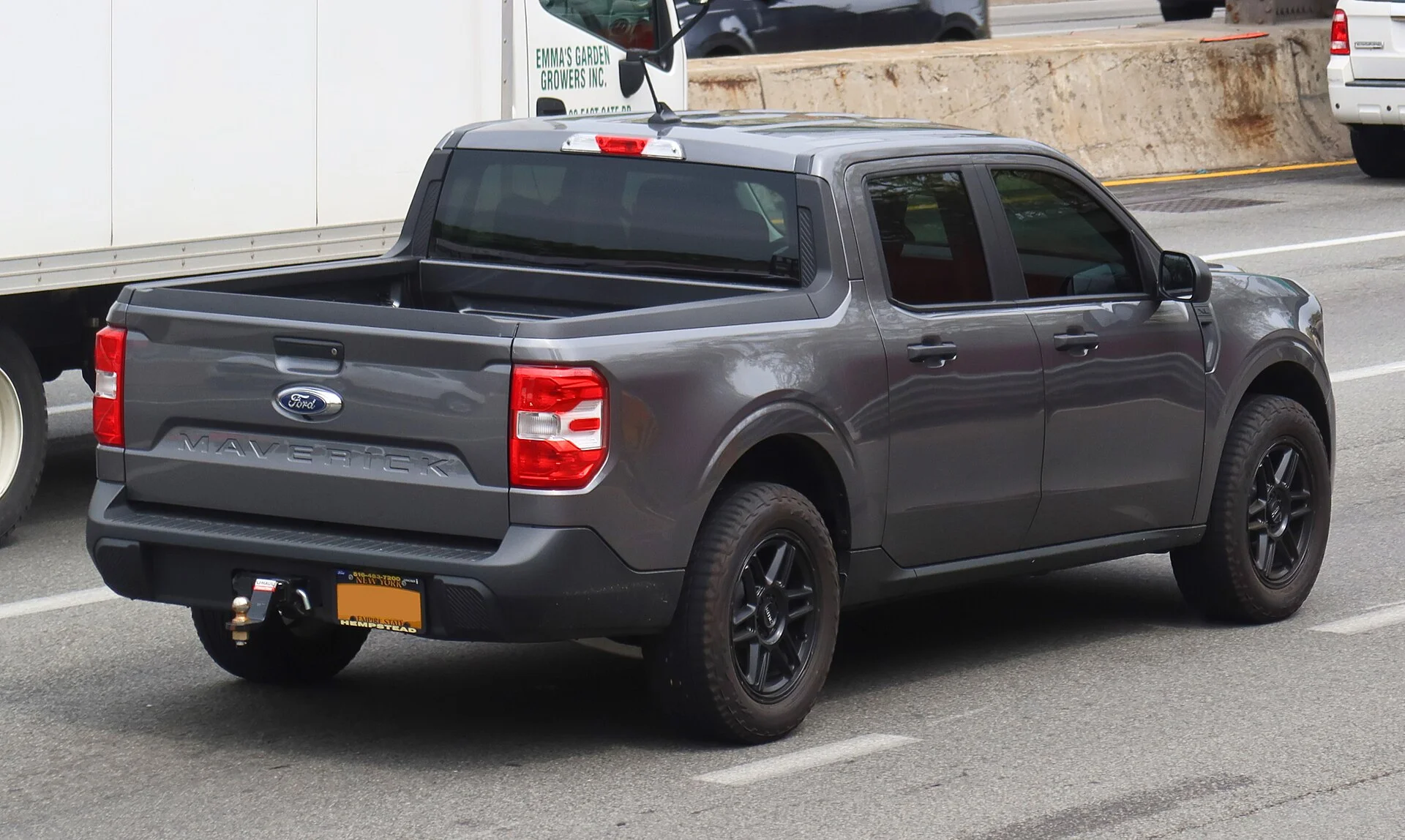
Here is where the Maverick defies the usual pattern. On most trucks the workhorse engine carries more than the efficient one, so buyers assume the hybrid must give up payload. On the Maverick the maximum 1,500-pound payload is available with either the 2.5L Hybrid or the 2.0L EcoBoost. The efficient engine does not cost you cargo capacity.
The engines differ in output, not in how much they let you carry. The 2.5L Hybrid produces 191 hp, tuned for economy and around-town ease; the 2.0L EcoBoost turbocharged engine produces 250 hp, tuned for stronger acceleration and, importantly, more towing. So the choice between them is about power and towing, not about payload, which is a refreshingly clean decision.
For a camper, that means the frugal hybrid is not the compromise it would be on other trucks. A Maverick Hybrid can carry the same 1,500 pounds of camp gear, passengers, and rooftop load as the EcoBoost while returning far better fuel economy on the highway drive to the trailhead. The payload budget is identical; only the way the truck moves that load differs.
The place the EcoBoost separates itself is towing, which we will get to, and where its extra power and available tow package matter. But for a buyer whose camping is about hauling gear in the bed and cabin rather than pulling a heavy trailer, the hybrid delivers the full payload story with the better economy. That is an unusual and genuinely good deal.
The 1,500 Pounds Is a Shared Budget
The catch that trips up new truck owners is that payload is not just what goes in the bed. It is everything the truck carries that is not part of the truck: passengers, cargo in the bed, cargo in the cabin, roof load, and a trailer's tongue weight all draw from the same 1,500-pound account.
The Maverick seats five in its standard SuperCrew four-door cab, and people are payload. Five adults can account for a substantial share of the budget before a single piece of gear is loaded. Add a bed full of camping equipment, a cooler, water, and a rooftop cargo box, and the 1,500-pound budget fills faster than the roomy bed suggests.
This is the number the spec sheet states plainly but buyers still overlook. A Maverick is not carrying 1,500 pounds of gear; it is carrying 1,500 pounds total, of which the humans usually take the first big slice. The real cargo capacity for stuff is the payload minus the passengers riding along, and on a full family trip that remainder is a good deal less than the headline.
The practical move is to budget honestly: estimate passenger weight, subtract it from the door-jamb payload figure, and load gear to what remains. Done that way the Maverick's payload is still excellent for its size, but it is spent deliberately rather than blown through by assuming the bed capacity and the payload are the same thing. They are not.
Towing Spends Payload Through Tongue Weight
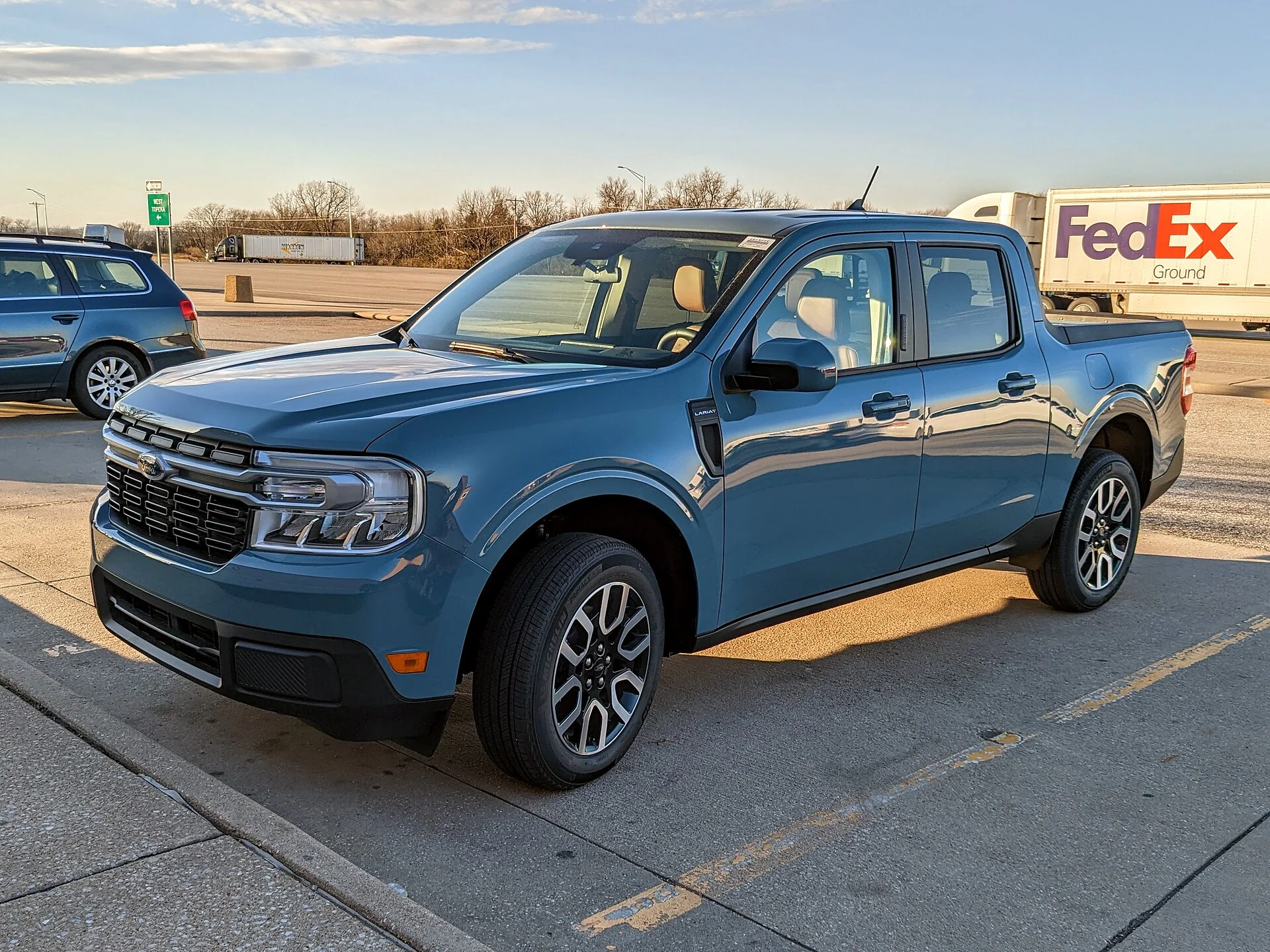
The place payload and towing collide is tongue weight, the downward force a trailer puts on the hitch, and it comes straight out of the payload budget. On the Maverick this is easy to miss because the truck tows more than its size suggests, but every pound of tongue weight is a pound of payload gone.
The Maverick's standard towing capacity with the hybrid and no tow package is 2,000 lb, and with the optional 4K Tow Package on the EcoBoost it rises to 4,000 lb. That package is more than a number bump: it adds lower gear ratios, a higher-capacity radiator, a transmission cooler, and a bigger cooling fan to protect the engine while towing. The maximum tongue weight with a standard bumper-pull hitch and the 4K package is 200 lb.
That 200-pound tongue weight lands in the payload column alongside passengers and cargo. So a Maverick towing a trailer near its 4,000-pound limit is already spending 200 pounds of its 1,500-pound payload before loading people and gear. The gross combined weight rating with the 4K Tow Package on EcoBoost models is 8,145 lb, which caps the truck-plus-trailer total.
The upshot is that a camper cannot max the payload and max the towing at the same time. Pulling a trailer means reserving part of the payload for its tongue weight, which leaves less for cabin passengers and bed cargo. The Maverick's numbers are strong for its class, but the tow and payload budgets are one account, and towing draws it down.
The Bed Carries Its Share, Within Reason
The Maverick's bed is central to its camping appeal, and its dimensions set what fits, but the bed capacity is still governed by the overall payload budget, not by its own separate number. The bed is 4.5 feet long, with a bed length of 54.4 in and up to 33.3 cu ft of cargo volume, which is compact but usable.
Width is where the Maverick's bed earns points for a small truck. It measures 42.6 in between the wheel wells and 53.3 in in overall bed width, and the flat load floor with available tie-down and accessory systems makes it genuinely functional for gear, bikes, and camp equipment. It is a real truck bed, not a styling exercise.
What the bed dimensions do not do is raise the payload ceiling. Whatever goes in the bed still counts against the same 1,500-pound maximum shared with the cabin and any trailer tongue weight. A camper can fill the bed's 33.3 cubic feet with lightweight gear and stay well within budget, or half-fill it with dense cargo and hit the payload limit; volume and weight are different constraints.
For most camping loads, gear tends to run bulky rather than heavy, so the Maverick's bed volume fills before its payload does, which is a comfortable place to be. The truck to worry about overloading is the one hauling dense cargo, water, batteries, or building materials, where the weight climbs fast even in a small bed. Reading both the volume and the weight keeps the bed working within the truck's real limits.
What a Realistic Camping Load Looks Like
Numbers on a spec sheet are abstract until you load an actual trip, so it helps to walk a realistic Maverick camping setup against the 1,500-pound budget. The point is not a single right answer but seeing how quickly the account is spent, and where the margin sits.
Start with people. Two adults up front are payload, and a family of four or five fills the SuperCrew cab and takes a substantial bite before any gear. Then add the camp kit: a rooftop tent or cargo box on the roof, sleeping and cooking gear in the bed, a cooler, water, and tools. Each item is modest; together they add up, and the roof load in particular counts fully against payload.
If a trailer is in the picture, reserve its tongue weight first, up to 200 pounds with the 4K package, before spending the rest on people and gear. What remains is the true cargo allowance, and on a loaded family trip it is a fraction of the 1,500-pound headline. That is not a Maverick weakness; it is how payload works on any truck, and the Maverick simply starts from a strong number.
The reassuring conclusion is that for the way most people camp, gear that is bulky but not dense, a couple of adults, and a light trailer or none, the Maverick's payload is more than enough and its economy is a bonus. The buyer who runs into trouble is the one who treats 1,500 pounds as free of passengers and tongue weight. Budget it as a shared account and the little truck delivers.
What You're Actually Paying For
Strip away the marketing and the Maverick's real value proposition, from a payload standpoint, is a lot of usable capacity in a small, efficient, affordable package. The 1,500-pound maximum is legitimately impressive for the class, and it is available with the fuel-sipping hybrid, which is the part that beats expectations.
What a buyer is paying for is right-sized capability. The Maverick is not pretending to be a half-ton; its overall length of about 199.7 in, width of about 72.6 in without mirrors, and 121.1-in wheelbase keep it compact and easy to live with, while the payload and available 4,000-pound towing cover the vast majority of real camping needs. The truck matches its capability to how most people actually use a pickup, not to a spec-sheet arms race.
The honest caveat is the shared-budget reality this guide keeps returning to. The 1,500-pound number is real but not free; passengers and tongue weight spend it, and all-wheel drive trims it by adding curb weight. A buyer who reads the door-jamb sticker and budgets accordingly is getting exactly what the truck promises. One who reads only the brochure maximum will feel shortchanged when a full family trip uses most of the payload on people.
For a camper choosing among small trucks and crossovers, the Maverick's combination of payload, economy, and price is hard to beat when the numbers are understood. It is the rare case where the surprising spec survives scrutiny, as long as you remember what it includes. That is the skeptic's verdict: a real number, honestly earned, worth buying for the right use.
Managing the Load You Actually Carry
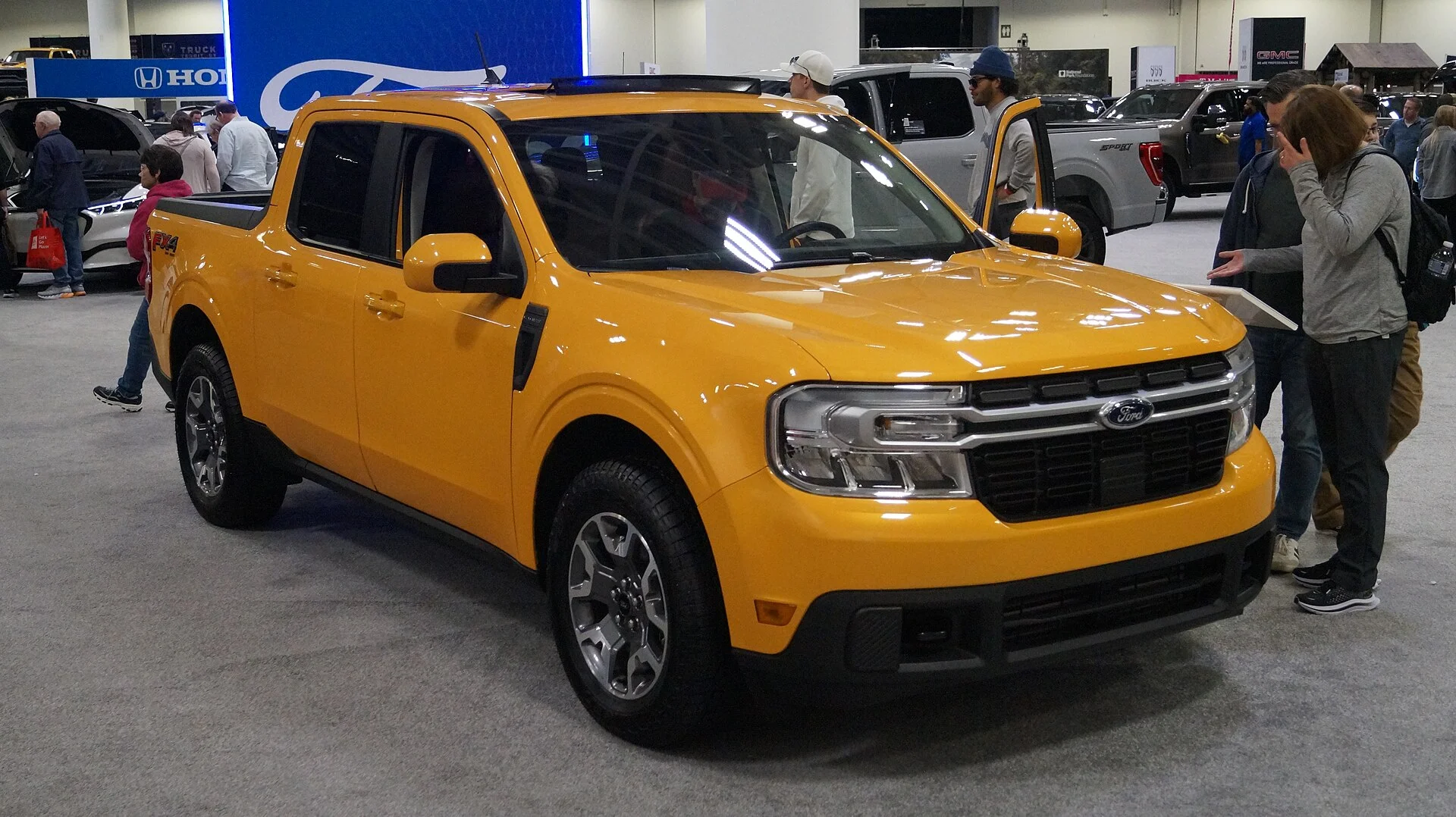
Knowing the payload budget is half the job; the other half is managing the load so it rides safely and does not shift the truck's balance. A Maverick loaded to its limit behaves differently than an empty one, and how the weight is placed matters nearly as much as how much of it there is.
Weight low and forward is the goal. Heavy items should sit on the bed floor, ahead of or over the rear axle, not stacked high or hung off the tailgate, because weight placed high raises the center of gravity and weight placed far back unloads the front wheels. On a compact truck with a 121.1-in wheelbase, that balance is easy to upset, and a nose-light Maverick steers vaguely and stops longer. Loading with placement in mind keeps the truck planted.
Securing the load is the step that protects both the cargo and the payload math. Gear that slides is gear that shifts weight around while you drive, and in the Maverick's 54.4-inch bed a loose load moves enough to matter. Anchoring cargo to the bed's tie-down points keeps it where it was placed, so the balance you set up at camp is the balance you keep on the highway. A quality bed cargo net and tie-down set turns a pile of loose gear into a stable, secured load.
The roof deserves its own caution. Anything on a roof rack or rooftop tent counts fully against payload and sits at the worst possible height for stability, so roof loads should be kept light and the heavy gear kept in the bed. A Maverick with a modest roof load and its dense cargo low in the bed uses its payload budget efficiently and drives like the sensible small truck it is. Load it top-heavy and tail-heavy, and even a load within the weight limit can make the truck feel unsettled.
The Verdict: A Real Number, Spent Wisely
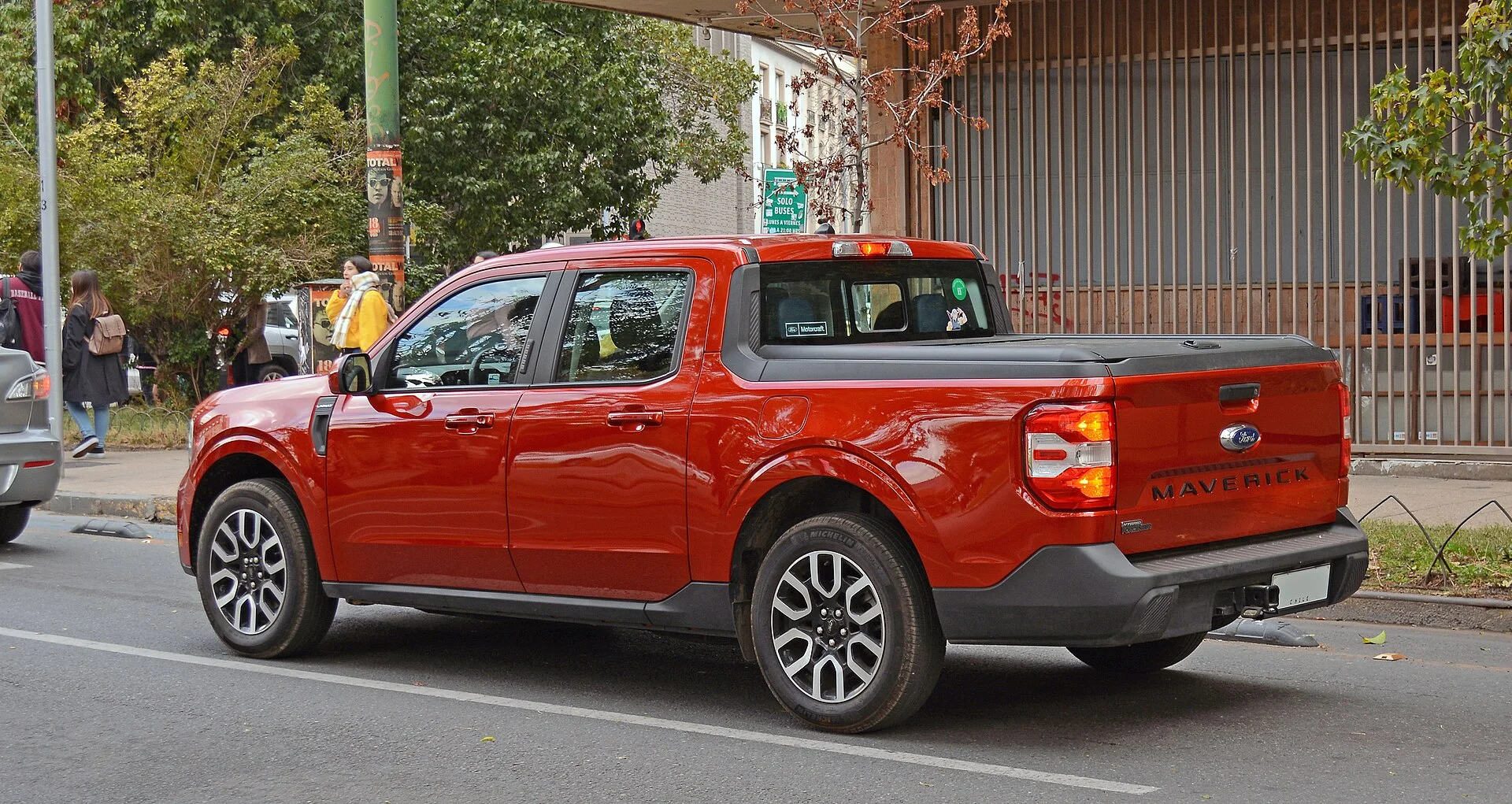
The Maverick's 1,500-pound maximum payload is a genuinely strong figure for a compact, efficient, affordable pickup, and unlike most trucks it is available with the frugal 2.5L Hybrid as well as the 2.0L EcoBoost. The efficient engine does not cost you cargo capacity, which is the pleasant surprise at the heart of the truck.
Payload is GVWR minus curb weight, so the maximum belongs to the lightest configuration. Adding all-wheel drive raises curb weight from 3,563 to 3,731 pounds and trims payload accordingly, and the only way to know a specific truck's figure is the yellow door-jamb sticker, not the brochure.
The rule that keeps a Maverick within its limits is that payload is a shared budget. Passengers, bed cargo, roof load, and a trailer's tongue weight, up to 200 pounds with the 4K Tow Package, all draw from the same 1,500-pound account. Reserve tongue weight first, subtract passenger weight, and load gear to what remains.
Read that way, the Maverick is one of the most sensibly capable camping vehicles in its class, carrying and towing more than its size and price suggest while returning economy a bigger truck cannot. Treat 1,500 pounds as free and clear of people and trailers, and the number that beat expectations becomes an overloaded little truck. Spent wisely, it is exactly the deal it appears to be.