
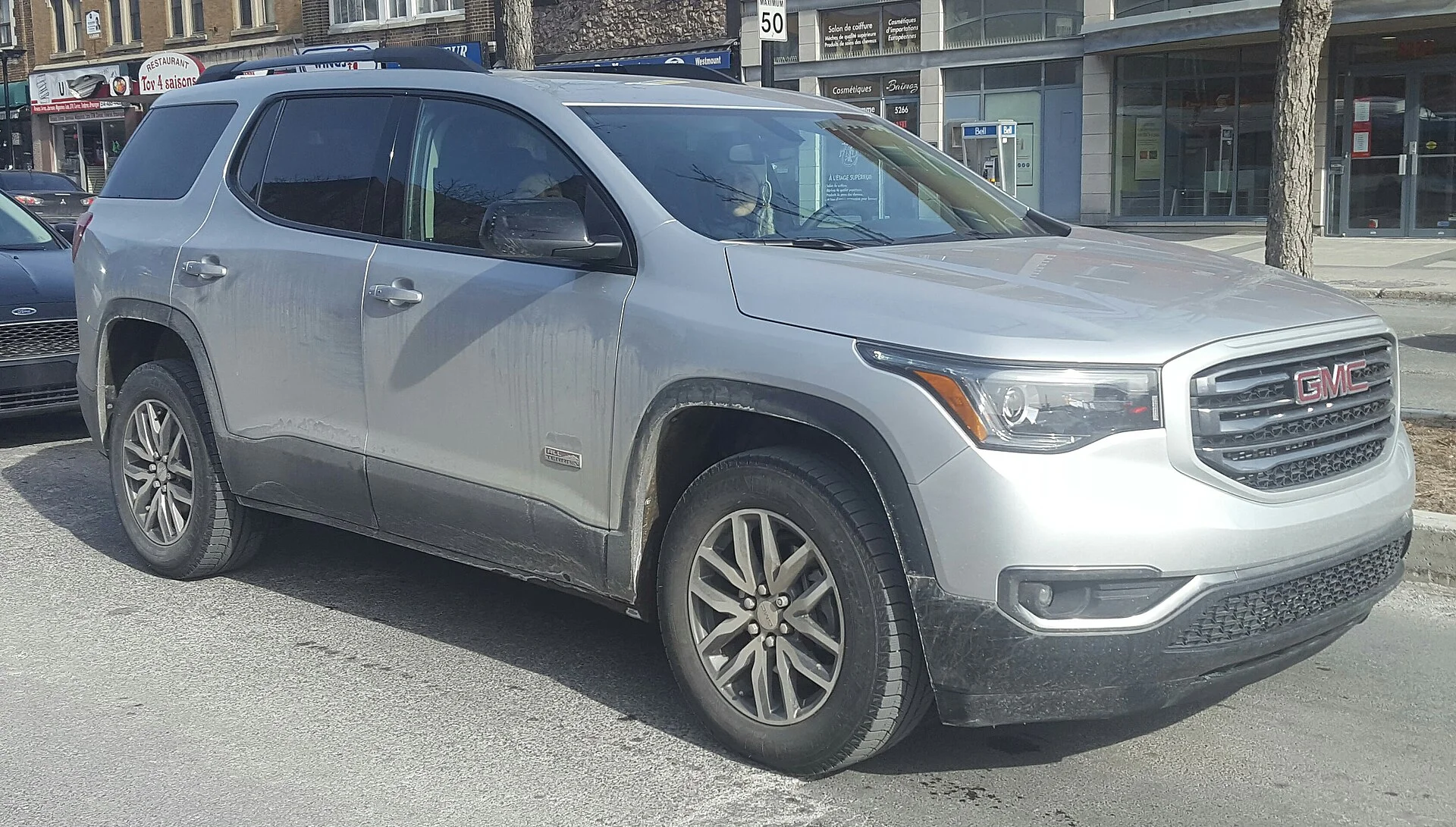
The honest verdict: the roomier Acadia vs the more capable Explorer
The Ford Explorer and GMC Acadia are both midsize three-row SUVs that fold flat into a workable bed, but the 2024 Acadia redesign changed the math between them. The Acadia grew into one of the roomiest haulers in the class — 98 cubic feet of maximum cargo — while the Explorer stayed around 85. For camping, where cargo volume is sleeping room, that difference is the headline.
The short version: buy the Acadia for the bigger sleeping floor and more everyday cargo; buy the Explorer for stronger available towing and a more dynamic, rear-drive-based drive. Both need the front seats slid forward for a six-footer, and neither runs climate all night.
Neither SUV is a purpose-built camper, so the comparison is about which family three-row you would rather sleep in occasionally. The Acadia gives you more room to stretch out and to keep gear off the bed; the Explorer gives you a little more capability and driving polish. Both fold their rear rows into a load floor that, with a thick pad, becomes a genuine one-or-two-person bed.
What follows: the cargo numbers that decide your bed, how each one actually sleeps, the flat-floor reality, power and weather for an overnight, and a clear buy recommendation — all grounded in published specs rather than a single drive.
Cargo dimensions: the numbers your bed is built on
In an SUV, cargo volume is sleeping volume, so start with the published figures:
- Ford Explorer: ~16-18 cu ft behind row three, ~46-48 cu ft behind row two, and 85.3-85.8 cu ft with both rear rows folded.
- GMC Acadia (2024 redesign): 23 cu ft behind row three, 57 cu ft behind row two, and 98 cu ft with both rear rows folded.
- The gap: the Acadia leads at every configuration — most importantly ~13 cu ft more at maximum and several more behind the third row for trip gear.
For sleeping, the maximum figure matters most because you fold both rear rows to create the bed. The Acadia's 98 cubic feet gives a longer, wider floor that swallows two pads and still leaves room for gear; the Explorer's ~85 is workable but tighter, and you will manage gear more carefully. Behind the third row, the Acadia's 23 cubic feet is also the more useful for a loaded family trip.
Neither floor is perfectly flat with the seats down, so a thick pad is essential to bridge the seams. Before buying, our guide on how to choose a car camping mattress size helps you match a pad to each SUV's usable rectangle, and a shaped car air mattress for SUV camping fits the folded floor better than a plain slab.
Sleeping in the Acadia: the roomier family basecamp
The redesigned Acadia is the one to pick when interior room is the priority. Its 98 cubic feet of maximum cargo is among the most generous in the midsize class, and that space translates directly to camping comfort: a longer floor for a taller sleeper, enough width for two adults on pads, and room to keep bins and a cooler off the bed. It sleeps like a larger vehicle than its price suggests.
The extra volume also helps the daily-trip reality. With 23 cubic feet behind the third row, you can carry a family's gear without folding the whole cabin, then drop the rows only when it is time to sleep. The tall, boxy cargo area gives headroom to sit up and change, a comfort many sleeker SUVs sacrifice, and available 110-volt and 12-volt outlets keep a fan and devices running.
The honest caveats are the ones every gas SUV shares: a six-footer still slides the front seats forward to lie fully flat, the folded floor needs a thick pad to level the seams, and you cannot run climate all night. None of that is unique to the Acadia — and its extra space makes each of those easier to work around than in the tighter Explorer.
Sleeping in the Explorer: the capable, tighter alternative
The Explorer approaches the same job with a little less room and a little more capability. Its ~85 cubic feet of maximum cargo is genuinely usable for one adult stretched out or two sleeping close, and the rear-drive-based architecture gives it stronger available towing and a more planted, dynamic drive than the Acadia — useful if you tow a small trailer or simply enjoy the road to camp.
In practice the Explorer sleeps a solo camper comfortably and a couple snugly, with gear managed onto the front seats and into footwells. The load floor folds reasonably flat, a thick pad handles the rest, and available outlets cover a fan, lights, and charging. It is a competent occasional camper wrapped in a well-rounded family SUV.
The trade-off is simply space. Against the roomier Acadia, the Explorer asks for more discipline about what rides where, and two tall adults will feel the tighter floor. If your priority is towing, drive feel, or the Ford ownership experience, that compromise is easy; if it is maximum room to sleep and store, the Acadia has the clear edge.
The flat-floor reality: seat-fold and sleeping length
Both SUVs create their bed the same way — fold the third row, then the second row, into a continuous load floor — and both share the same honest limitation: the floor is not a perfectly flat, gap-free platform. There are seams where the rows meet, a slight step or slope, and the seatbacks rarely sit dead level with the cargo floor. This is normal for the class, not a flaw in either vehicle.
Sleeping length is the other reality check. In a midsize three-row, a six-foot adult usually needs to slide the front seats forward to stretch out fully flat, using the space all the way to the front footwells. The Acadia's longer floor gives a bit more margin here; the Explorer is workable but tighter for tall campers. In both, sleeping slightly diagonally can buy a few extra inches.
The fix in either is the same: a thick, insulated pad to bridge the seams and add length-friendly loft, and attention to leveling the vehicle itself. If your site is not flat, learning how to level your car for sleeping with ramps or blocks keeps you from sliding all night, which matters more in a big SUV than people expect.
Getting to camp: drivetrain, clearance, and towing
Neither of these midsize three-rows is a rock crawler, but both reach the maintained dirt and gravel roads that lead to most campsites with confidence. The Explorer rides on a rear-drive-based platform with available all-wheel drive and terrain modes, giving it a planted feel and stronger available towing — enough for a small trailer or teardrop camper alongside sleeping in the SUV. Its clearance handles washboard and light ruts without drama.
The Acadia counters with a front-drive-based layout, available all-wheel drive, and an AT4 trim that adds a slightly more rugged setup and all-terrain attitude for gravel-road access. It prioritizes interior volume over outright capability, so it tows less than the Explorer but carries more, which is the core trade between them for a camping family.
Both return roughly low-to-mid-20s mpg depending on engine and drivetrain, so neither is thrifty nor especially thirsty. For campers whose access roads are dirt and gravel rather than technical trails, either has the clearance and traction needed; the deciding questions are whether you tow (lean Explorer) or want maximum room to sleep and store (lean Acadia). Save the hardcore trails for a body-on-frame SUV or a truck — that is simply not what either of these is built to do, and pretending otherwise leads to scraped bumpers.
Power and climate: what a gas SUV can and can't do overnight
Here both SUVs are honest about their limits, and it is important to be clear: neither should run heat or air conditioning all night. Idling a gas engine to hold cabin temperature wastes fuel, makes noise, and carries carbon-monoxide risk. This is the one area where an electric SUV genuinely outclasses both — but among gas vehicles, the Explorer and Acadia behave identically.
For keeping gear alive, both offer 12-volt sources and, on some trims, a 110-volt household outlet, enough for a fan, lights, and charging. For a 12-volt fridge or heavier draw, the right tool in either SUV is a portable power station for car camping rather than the vehicle's outlet — size it to your overnight load and recharge it on the drive.
Climate comfort therefore comes from your setup, not the engine. Reflective window shades cut heat and cold dramatically, a battery fan moves air, and good bedding does the rest. Because both SUVs are large and well-sealed, the same tactics work equally well in each — the vehicle is the shelter, and your gear is the climate system.
Weather and ventilation: heat, cold, and condensation
Sleeping inside a sealed SUV cabin brings the usual moisture challenge: two people breathing overnight will fog the glass and dampen bedding by morning. The fix is the same in both — crack a window an inch or two, run a small vent fan, and never cook inside. The habits in our guide on how to reduce condensation when sleeping in a car apply directly to both the Explorer and the Acadia's big glass area.
For summer heat, both large cabins can get warm fast in the sun, so shade and airflow matter. Reflective shades, parking in shade, and a battery fan are the core moves, and the techniques for staying cool sleeping in a car carry over unchanged. The Acadia's slightly larger, taller cargo area gives marginally more air volume, but the difference is small.
For cold nights, the answer in both is your sleep system, not the vehicle: a season-rated bag, an insulated pad with real R-value, and a 12V heated blanket for car camping. A big SUV cabin holds a little residual warmth, but you ultimately sleep as warm as your bedding lets you — so invest there first in either SUV.
Two people and gear: how each SUV packs a trip
For a couple plus a weekend of gear, the Acadia's extra room shows. Its 98 cubic feet lets two adults sleep on the folded floor while bins, a cooler, and clothes ride behind or beside without crowding the bed, and the taller cargo area makes organizing easier. The Explorer does the same job with less margin, so you lean more on the front seats and footwells for storage.
Here is the practical split most campers land on:
- Solo camper: either SUV is easy and comfortable; pick on drive and price.
- Couple sleeping inside: the roomier Acadia is the more livable choice, especially for taller adults.
- Family that tents the kids: the Explorer's towing lets you add a small trailer; the Acadia's space keeps more gear inside.
Either way, a rooftop or ground tent expands your options, and both SUVs carry a modest roof load — check the rating before adding a heavy rooftop tent to a tall three-row.
Spec snapshot: the camping numbers at a glance
Keep these attributed figures handy as you plan a bed and a power setup:
- Explorer cargo: ~16-18 / ~46-48 / 85.3-85.8 cu ft (behind row 3 / row 2 / both folded).
- Acadia cargo: 23 / 57 / 98 cu ft — the roomier floor at every configuration.
- Sleeping fit: both need the front seats slid forward for a six-footer; the Acadia's longer floor gives more margin.
- Capability: Explorer's rear-drive-based platform generally tows more and drives sharper.
- Power: both offer 12V and, on some trims, a 110V outlet; add a power station for a fridge.
- Climate: neither runs overnight — manage with shades, a fan, and bedding.
The deciding number is the Acadia's 98 cubic feet against the Explorer's ~85: more room to sleep and store. If towing and drive feel outrank raw space for you, the Explorer earns its keep; if sleeping room and everyday cargo lead, the Acadia is the roomier, easier camper.
Five setup mistakes that ruin the first night
Both SUVs camp well once you avoid the errors common to sleeping in any three-row. These five cause the most rough nights:
- A thin pad on the folded floor. You'll feel every seam — use a thick, insulated pad to level the surface and add warmth.
- Forgetting to slide the front seats forward. Tall sleepers need that length; set it up before dark.
- Parking on a slope. Big SUVs slide too — level with blocks or find flat ground.
- Sealing the cabin tight. Crack a window so breath moisture escapes, or you wake up to fogged glass.
- Expecting the engine to heat you. It won't and shouldn't run all night — bring a season-rated bag and a fan.
None of these depend on which SUV you buy. An Explorer or an Acadia with a thick pad, the seats set right, level ground, a cracked window, and the correct bag both deliver a comfortable night — leaving the real decision where it belongs: room versus capability.
Which SUV should you buy?
Buy the Acadia if sleeping room and everyday cargo lead your list. Its 98 cubic feet make it the roomier camper — more floor for two adults, more space to keep gear off the bed, and a taller cargo area to move around in. For families and couples who want the most usable interior in the midsize class, the redesigned Acadia is the easy pick.
Buy the Explorer if capability and drive matter more than the last few cubic feet. Its rear-drive-based platform generally tows more and feels sharper on the road, and its ~85 cubic feet still sleep one adult comfortably or two snugly. If you tow a small trailer or value the driving experience, the Explorer's trade of a little room for more capability is worthwhile.
Either way, budget for the same finishing kit — a thick pad, window shades, a fan, and a power station for a fridge — because that gear, not the badge, determines how well you actually sleep in a midsize three-row SUV.
The bottom line
The Explorer and the Acadia both fold flat into a capable occasional camper, and the 2024 Acadia redesign gives it the clearer camping edge on room: 98 cubic feet against the Explorer's ~85 means more space to sleep and store. The Explorer answers with stronger available towing and a more dynamic drive, which some campers value more than the extra volume.
Pick the Acadia for maximum sleeping room and everyday cargo; pick the Explorer for capability and road manners. Then equip either the same way — a thick pad, shades, a fan, and a power station for the fridge — and manage climate with your gear rather than the engine. Do that, and either midsize three-row delivers a genuinely comfortable night out.