
Driving Safety

Essential Components of a Vehicle Recovery Kit for Off-Road Adventures

Casey - The Weekend Warrior
5 min read
Includes Video

My first time getting properly stuck off-road wasn't in some gnarly rock garden, it was in a muddy field outside of Denver after a freak spring snowstorm. My little Subaru Outback, bless its heart, was buried up to the doors.

My first time getting properly stuck off-road wasn't in some gnarly rock garden, it was in a muddy field outside of Denver after a freak spring snowstorm. My little Subaru Outback, bless its heart, was buried up to the doors. I had zero clue what I was doing, just a vague notion that I needed 'stuff'. My "recovery kit" consisted of a bungee cord and a vague sense of panic.

The real move is having the right gear before you need it. This isn't about extreme overlanding; it's about not spending 6 hours digging your car out with a flimsy plastic trowel and crying.
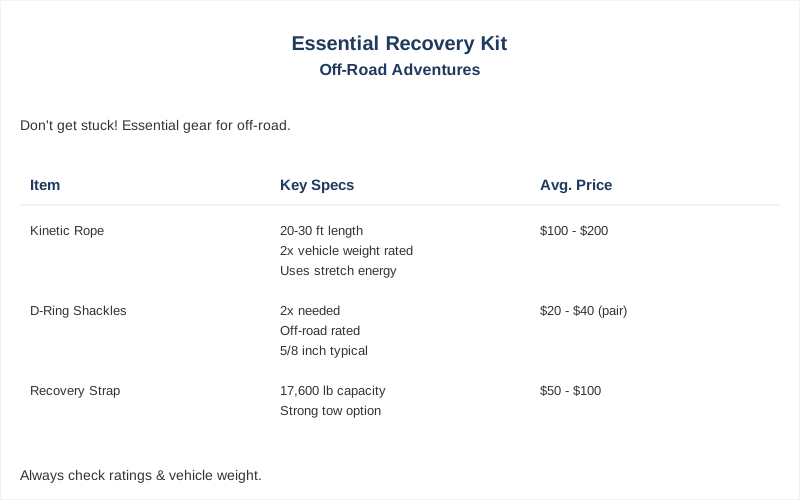
Essential Components of a Vehicle Recovery Kit for Off-Road Adventures — Key Specifications Compared
Key specifications for Essential Components of a Vehicle Recovery Kit for Off-Road Adventures

The Core Answer

Look, nobody wants to be the person who needs a recovery kit, but if you drive anywhere with more dirt than pavement, it's a non-negotiable. My first real recovery kit was a cobbled-together mess that cost me about $150. It got the job done, barely. The honest version is you need a few key items to pull yourself or a buddy out of a jam. Don't overthink it; think about what actually works when your tires are spinning in goo. A good recovery strap or kinetic rope is your best friend. I learned this the hard way when I tried to use a regular tow strap that nearly snapped. A kinetic rope, about 20-30 feet long, stretches and uses that stored energy to yank you out. Aim for one rated for at least twice your vehicle's weight. For my Outback, that means something around 10,000 pounds.Motortrend recommends straps with a 17,600-pound capacity for serious off-roading. Next up: shackles. You'll need at least two D-ring shackles, sometimes called bow shackles. These connect your strap to the recovery points on your vehicle. Make sure they're rated for off-road use, not just some rusty hardware store find. I bought a set of 5/8-inch D-rings for about $30 for a pair.Agency6 mentions both D-ring and soft shackles as essential. A tree protector is also clutch if you're near trees and don't want to damage them or your strap. It's essentially a thick strap that wraps around the tree. This prevents the recovery strap from getting shredded. Most decent kits include one.eBay Motors lists a tree-trunk protector as a key component. If you're feeling fancy, or your rig is heavier, a winch is the ultimate tool. But for beginners, a kinetic rope and shackles will get you out of 90% of situations. I saw a guy with a massive winch get himself even more stuck because he didn't know how to use it. Stick to the basics first. A winch rated at least 2x your vehicle weight is recommended if you go that route, according to Sanderson Auto Repair. Don't forget gloves. Seriously. Ripping your hand open while trying to unhook a strap is a rookie mistake that adds insult to injury. Heavy-duty work gloves are about $20 and worth every penny.RUX agrees that gloves are essential for hand protection. Finally, a shovel. A small folding shovel can be a lifesaver for digging out mud or snow from around your tires. Mine cost $25 and has seen better days, but it gets the job done. It's amazing how much you can move with a decent shovel.Dixie 4Wheel Drive lists a shovel as essential gear.
To ensure you're fully prepared, understanding vehicle recovery kits is essential for any overlanding trip.
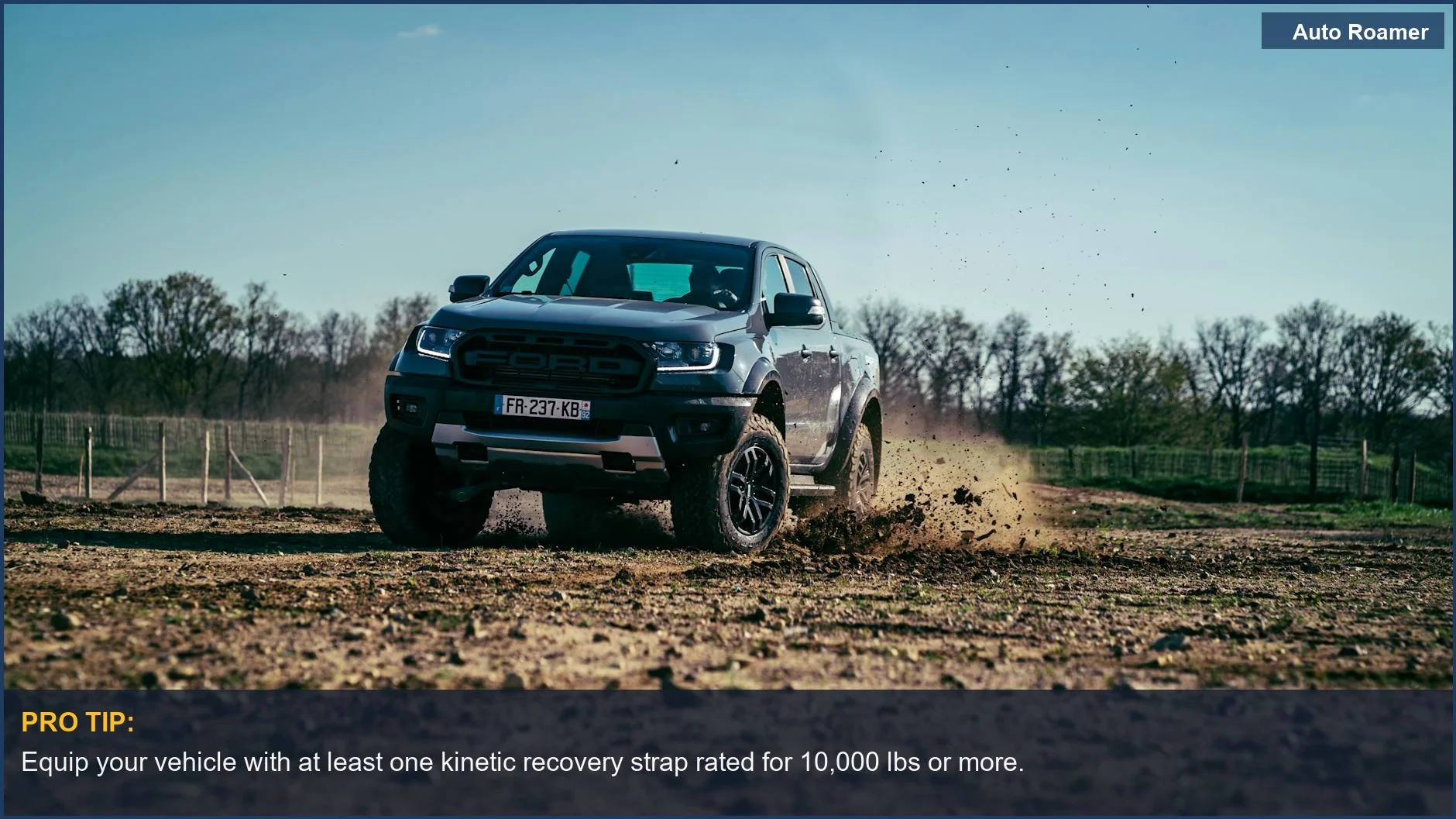
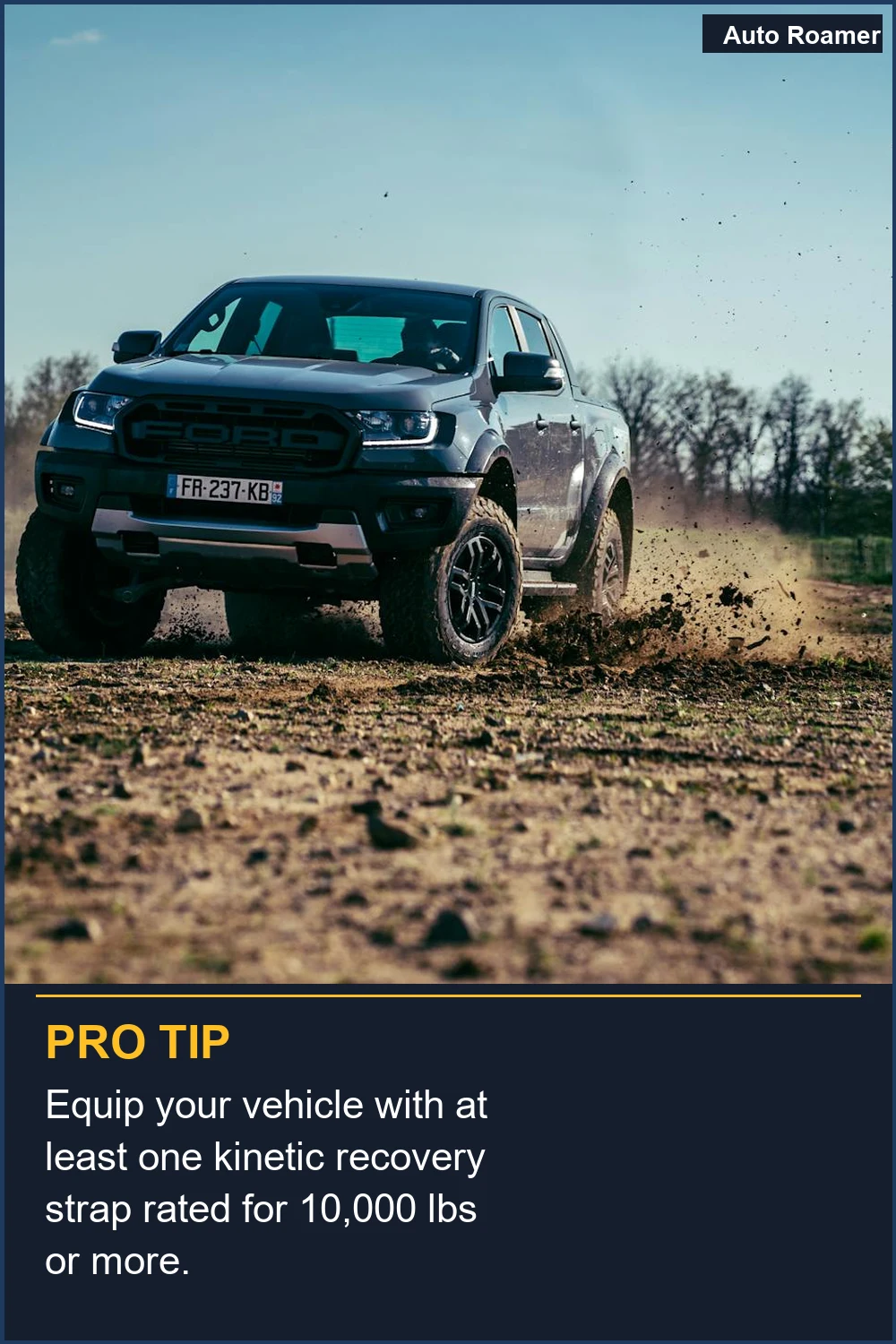
Equip your vehicle with at least one kinetic recovery strap rated for 10,000 lbs or more.
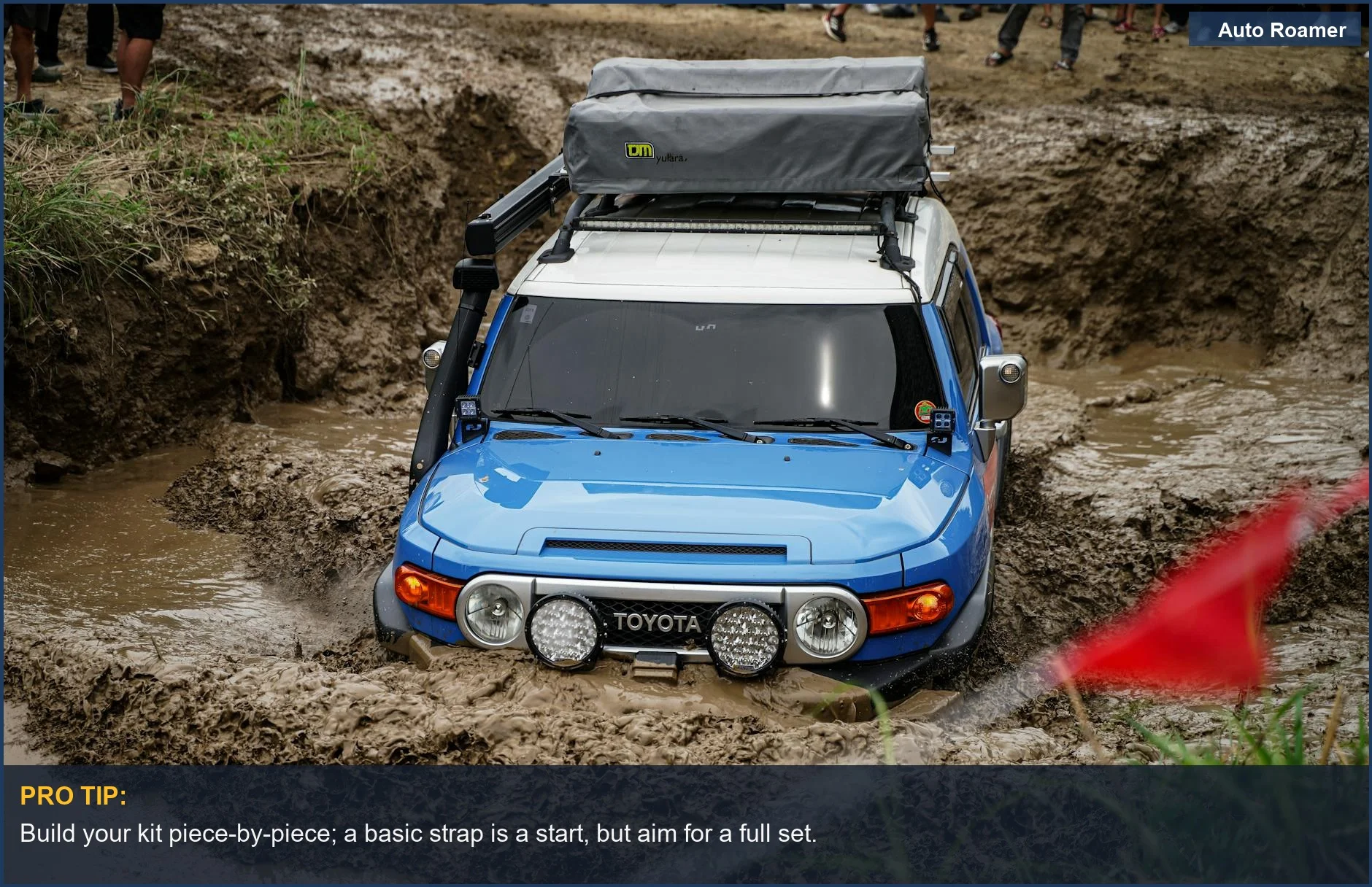
Don't get stuck! This dynamic SUV highlights the need for reliable off-road gear. A good recovery kit is non-negotiable for safe adventures, especially when dirt replaces pavement. | Photo by Grégory Costa

Why This Matters for Your Setup

This isn't just about looking cool with a bunch of gear. It's about getting yourself home without calling for a tow truck, which can cost upwards of $300 depending on where you are.
  • Strap vs. Rope: A kinetic recovery rope is generally better for beginners because it's more forgiving and less likely to damage your vehicle if used improperly. A standard tow strap is a static line and can cause serious damage if it breaks or jerks too hard. I learned this when a friend used a cheap tow strap on my car and nearly ripped off my bumper.
  • Shackle Rating: Those cheap shackles you see at the hardware store? Forget 'em. You need shackles rated for at least your vehicle's Gross Vehicle Weight Rating (GVWR). For most SUVs and trucks, this means 5/8-inch or 3/4-inch shackles. A set of quality 5/8-inch D-rings can be found for around $30.Agency6 highlights the importance of D-ring shackles.
  • Winch vs. No Winch: A winch is amazing, but also expensive ($500-$1500+) and requires knowledge. For most weekend warriors, a good kinetic rope and shackles are the $100-$200 version that will get you out of trouble. Sanderson Auto Repair notes that winches allow for self-recovery.
  • Traction Boards: If you're often in mud or sand, traction boards are a game-changer. They cost about $200-$300 for a set, but they can save you from digging for hours. They provide grip when your tires have none.RUX lists traction boards as essential.
  • Gloves and Dampeners: Don't forget basic safety. Heavy-duty gloves protect your hands, and a winch dampener (a weighted blanket for your winch line) prevents it from whipping around if it breaks. Safety first, people!
  • Knowing how to use your gear effectively is crucial, so familiarize yourself with safe recovery techniques before hitting the trails.
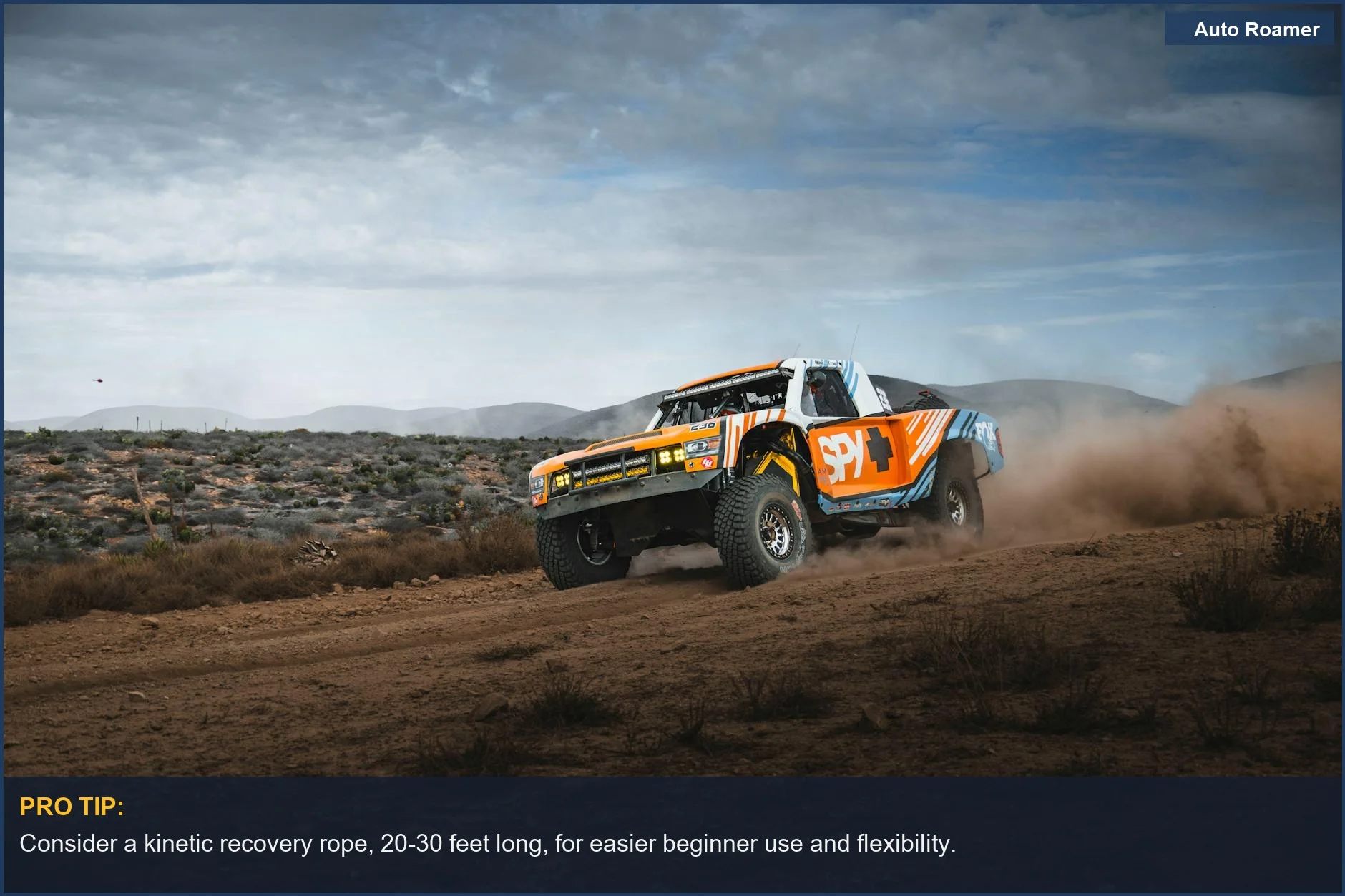
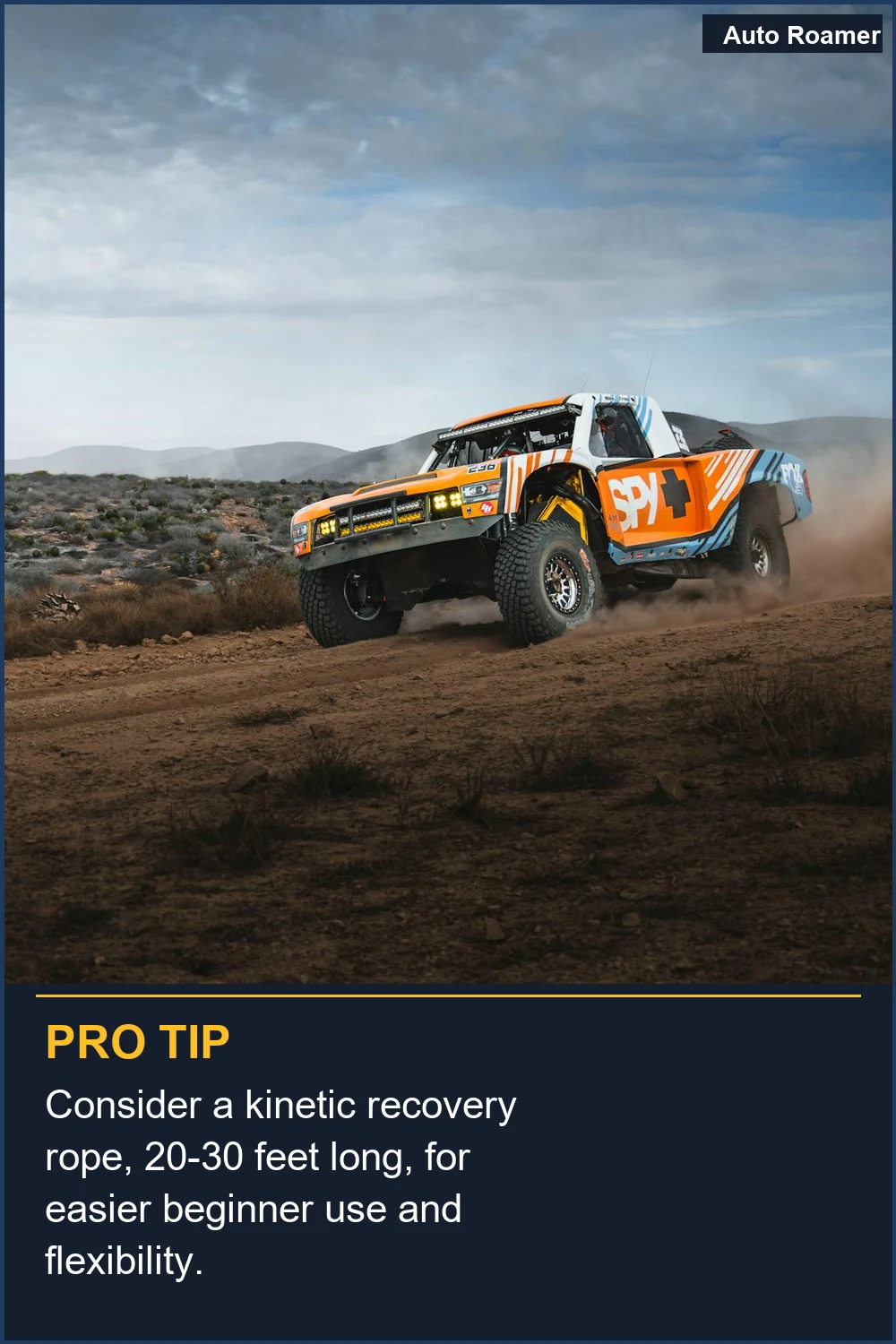
    Consider a kinetic recovery rope, 20-30 feet long, for easier beginner use and flexibility.
    This rally truck showcases extreme off-road conditions. Having the right overlanding tools, like a kinetic rope, can save you over $300 in tow fees. | Photo by Nattipat Vesvarute

    Making the Right Choice

    Building your own recovery kit is usually cheaper than buying a pre-made one, and you get exactly what you need. My first "kit" was literally just a strap I found in my dad's garage. Not ideal.
  • Kinetic Rope: Aim for one that's 20-30 feet long and rated for at least 10,000 pounds for a typical SUV. This will run you around $100-$150. Motortrend highlights the capacity of recovery straps.
  • Shackles: Get two quality 5/8-inch D-ring shackles. About $30 for the pair. eBay Motors emphasizes having multiple shackles.
  • Gloves & Shovel: $45 total for a good pair of gloves and a folding shovel. This is the $50 version of not ruining your hands or spending hours with a trowel.
  • Tree Protector: If you plan on off-roading near trees, this is a must. They're usually $30-$50. Dixie 4Wheel Drive lists these components as essential.
  • Total for a solid starter kit: roughly $200-$250. This is way cheaper than a tow truck or fixing damage from using the wrong gear. It's an investment in not getting stuck and not getting hurt.
    To enhance your kit further, consider exploring the options in our guide to the best vehicle recovery kit for overlanding.
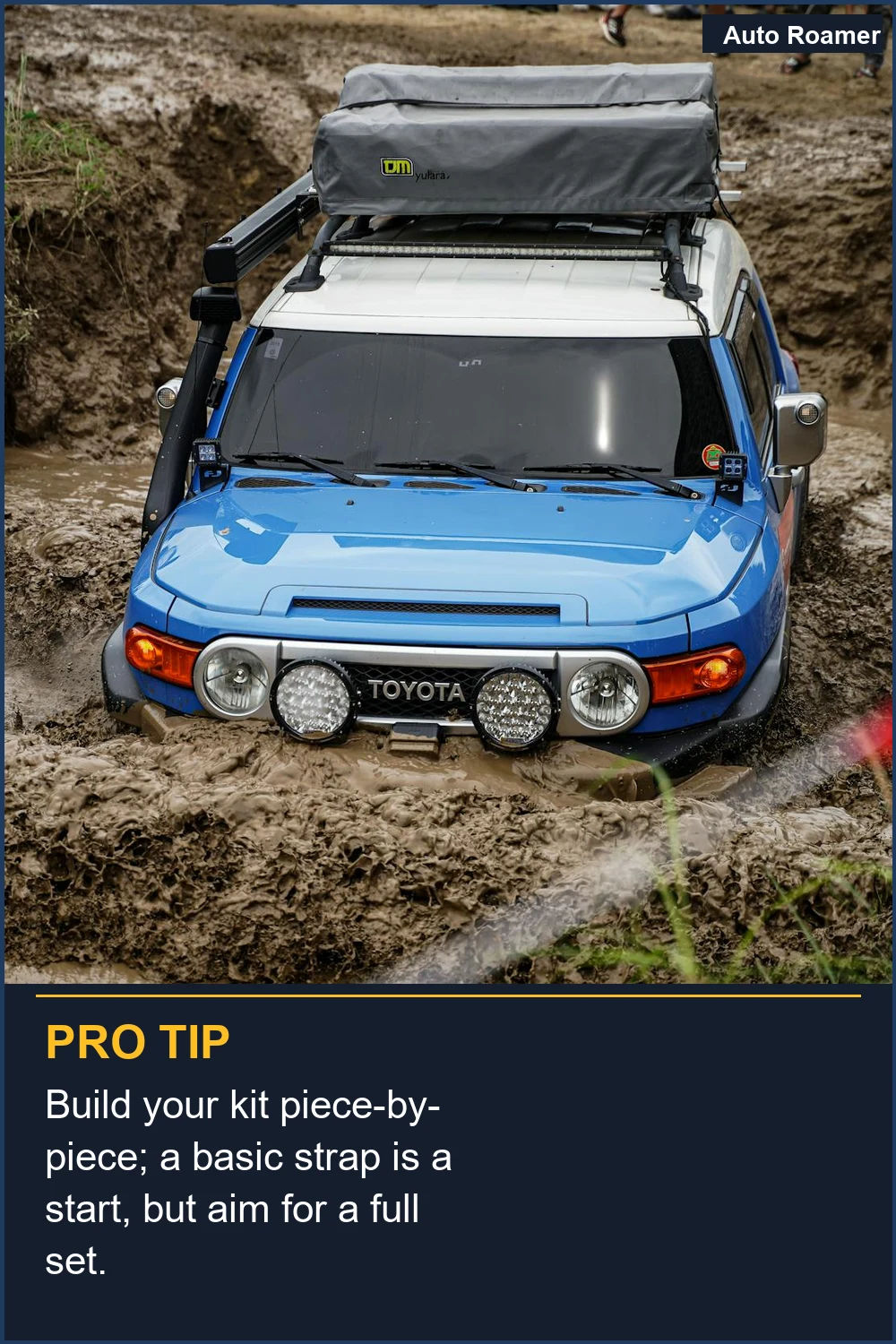
    Build your kit piece-by-piece; a basic strap is a start, but aim for a full set.
    Navigating muddy terrain requires preparation. Building your own recovery kit with essential components is often cheaper than buying pre-made and ensures you have what you need. | Photo by Harvey Tan Villarino

    Frequently Asked Questions

    I saw a full recovery kit online for $150, but it only came with a 5,000-pound strap. My truck is a 6,000-pound SUV. Should I just get that cheap one to save cash?
    Absolutely not. That's a rookie mistake waiting to happen. Using a strap rated below your vehicle's weight is incredibly dangerous. The strap could snap, causing serious damage or injury. Stick to straps rated at least twice your vehicle's weight, which for your 6,000-pound SUV means at least a 12,000-pound capacity strap. Better to spend $100 more now than deal with a broken bumper or a trip to the ER later.
    Do I really need a kinetic rope, or can I just use a really strong tow strap and be careful?
    You *can* use a strong tow strap, but a kinetic rope is the real move for a reason. A tow strap is static; it doesn't stretch. When you yank with a static strap, all that force is immediate and jarring, which can break parts on either vehicle. A kinetic rope stretches, absorbing that shock and using the stored energy to pull. It's smoother and significantly safer. I learned this after a friend's static strap nearly took out my taillight.
    What if I have a kinetic rope, shackles, and gloves, but I still can't get my buddy's Jeep unstuck from deep mud?
    If the rope is taut and the vehicle isn't budging, you've hit your limit. First, check if the recovery points on both vehicles are solid and properly attached. Sometimes, you might need to dig out more mud from around the tires. If that doesn't work, and you've exhausted your options, it's time to admit defeat and call for professional help. Trying to force it with inadequate gear can cause more damage.
    Can using a kinetic rope too aggressively permanently damage my vehicle's frame?
    Yes, it absolutely can if you're not careful. While kinetic ropes are designed to be dynamic, using them with excessive force, especially on older or weaker frames, can cause damage. Always ensure you're using proper recovery points rated for towing and that the rope is attached securely. A good rule of thumb is to start with a gentle pull and increase tension gradually. If you hear creaking or straining, stop immediately.
    I heard you can just use a chain for recovery. Is that true?
    No. Just... no. Chains are a terrible idea for vehicle recovery. They are rigid, heavy, and have no give. If a chain snaps under tension, it can become a deadly projectile. Plus, they're not designed for the kind of dynamic forces involved in pulling a stuck vehicle. Stick to rated recovery straps or kinetic ropes. Chains are for anchors, not for yanking cars out of ditches.

    🏅 Looking for Gear Recommendations?

    Check out our tested gear guides for products that work with this setup:

    C

    Casey - The Weekend Warrior

    Weekend car camper and road trip enthusiast. Focuses on practical, budget-friendly solutions for families and first-time campers.

    Sources

    Related Articles