The Short Version
I've seen too many suckers buy a 'clean' used car that's been thrashed off-road or had its electronics butchered for a half-baked audio system. The average dealership doesn't want you looking too close, they just want to move iron. You need to know if that lifted truck spent its life bouncing off rocks at 15 PSI or if some idiot wired a 1000W amp directly to the alternator with 10-gauge speaker wire. That's a ticking electrical fire.
Carreformer.com points out that modifications are common, but they don't tell you how to spot the bad ones. My job is to explain how to spot the bad ones, because they will always fail.
The Short Answer
Checking a vehicle's history for prior modifications isn't about finding a perfectly stock car; it's about identifying latent failure points introduced by prior owners. A lift kit installed with incorrect torque specs on U-bolts means constant re-torquing or eventual shear failure. An ECU tune without proper cooling upgrades will lead to thermal cycling stress on head gaskets and eventual outgassing. The physics don't lie.
Every modification alters the original design parameters. The factory spends millions on R&D to balance component strength, thermal loads, and vibrational frequencies. An aftermarket strut assembly might offer more travel, but if its spring rate is too high, it'll hammer the upper shock mounts, leading to fatigue cracking over time. This isn't theoretical; it's basic materials science.
Vehicle history reports, like those from oreateai.com, won't explicitly list 'lift kit installed.' But they will show registration states known for off-roading, or multiple ownership changes in short periods - often a red flag for a problematic build. A vehicle's title can even indicate if it was a 'total loss' due to accident or flood damage, which often leads to shoddy repairs and hidden mods. KBB.com highlights these reports as crucial.
My primary concern is always where the original design's mechanical stress points have been altered. A higher center of gravity from a lift kit changes roll dynamics and puts increased shear force on ball joints and tie rod ends. These components weren't designed for that extra leverage. It's not just about what's been added, but what original components are now operating outside their specified load limits. This is where the failure rate skyrockets.
The Reality Check
The 'Reality Check' on a used vehicle means looking beyond the shiny paint to the actual engineering decisions made - or unmade - by previous owners. Factory components are designed with specific tolerances for mechanical stress and thermal loads. Every aftermarket part introduces a variable. Did they use Loctite on the fasteners? Was the torque correct? Probably not.
A common issue is suspension modifications. A 3-inch lift on a Jeep might look cool, but if it wasn't done with extended brake lines, the first time the suspension fully articulates, those lines will stretch and potentially rupture. Hydraulic system failure. Congratulations, you just lost your brakes. KBB.com mentions checking for title brands, which often signal prior damage that could hide poor repair work.
Aftermarket lighting is another minefield. Running high-wattage auxiliary lights without proper relay circuits and fused power can overload the factory wiring harness. This leads to increased current draw, higher wire temperatures, and eventual insulation breakdown or even a thermal event. The National Motor Vehicle Title Information System (VehicleHistory.gov) helps you track these things.
Here's a breakdown of common failure points from sketchy mods:
| Component | How It Fails | Symptoms | Fix Cost |
| Lifted Suspension | Increased ball joint shear, premature CV joint wear due to extreme angles. | Clunking over bumps, vibration during turns, torn CV boots. | $300 - $1500 per axle |
| ECU Tuning (no supporting mods) | Thermal stress on head gasket, pre-ignition leading to rod bearing failure. | Overheating, coolant loss, metallic knocking noise. | $1500 - $8000+ |
| Aftermarket Stereo Wiring | Parasitic draw, melted insulation, electrical shorts, battery drain. | Dead battery, flickering lights, burning smell. | $100 - $700 (fire damage variable) |
| Oversized Tires (no fender mods) | Tire rub on fender liners and suspension, leading to tire damage and control arm fatigue. | Scraping noise on turns/bumps, uneven tire wear. | $200 - $1000 (tires + bodywork) |
My personal favorite is the 'cold air intake' that sucks in hot engine bay air. Brilliant engineering. It's not about the part, it's about the system. If you change one thing, you often need to change three others to maintain the original reliability. Most backyard mechanics skip that part. That's why you need to look at the entire system, not just the individual components.
How to Handle This
When you're looking at a used vehicle, you need a plan to sniff out previous modifications. Don't just kick the tires. A specific checklist helps, because people do try to hide this stuff. Speedwaymedia.com emphasizes a pre-purchase inspection is key; I'm telling you what to look for.
- Get the VIN: First, grab the 17-digit VIN. Run a history report through a reputable service. I don't care which one, just get one. Look for registration in states like Colorado, Utah, or California - places known for off-roading culture. Multiple owners in a short period (under 18 months per owner) can signal a problematic vehicle someone's trying to offload.
Reddit users often warn about scammers trying to get you to pay for fake reports; use an established provider.
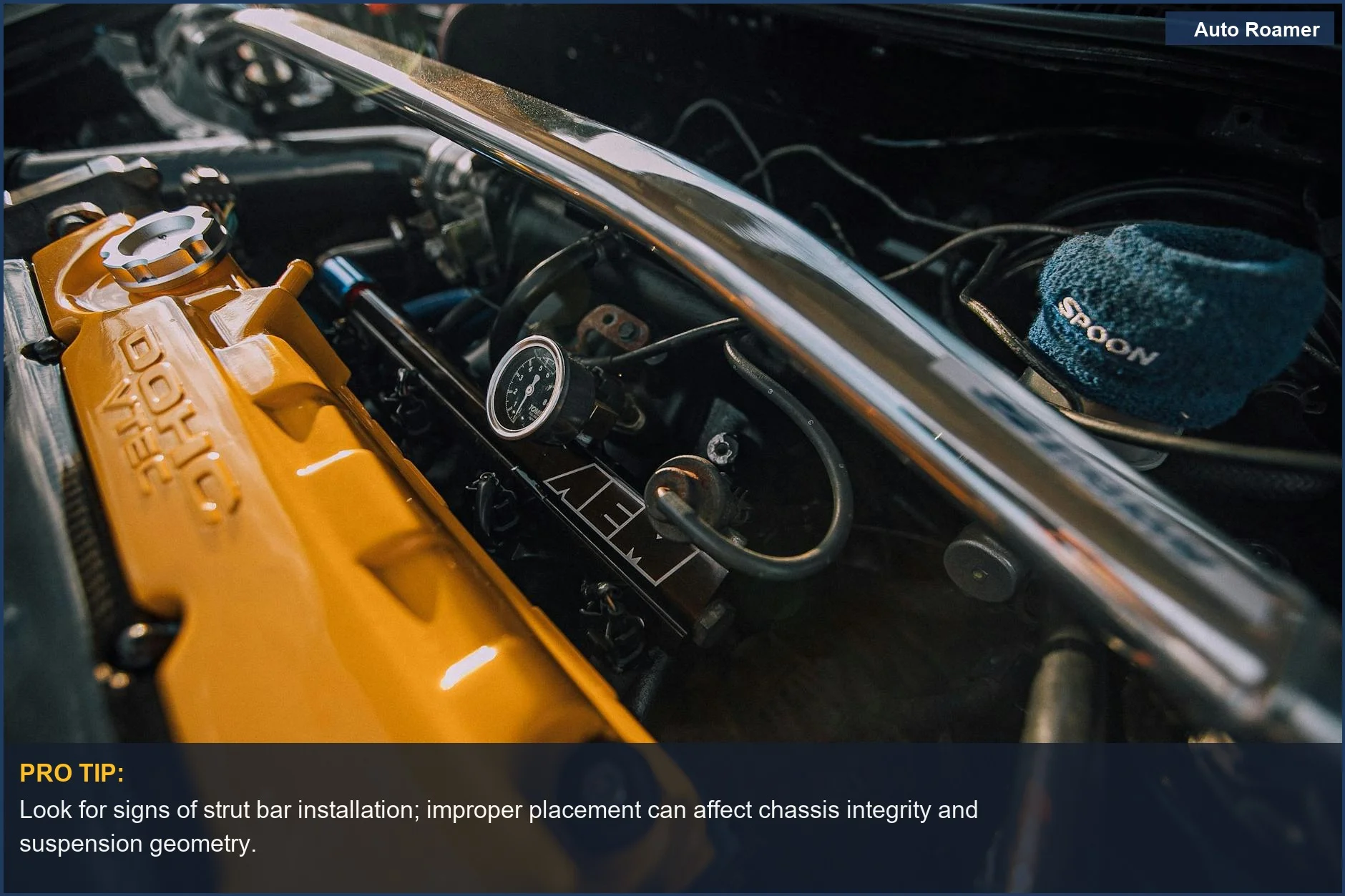
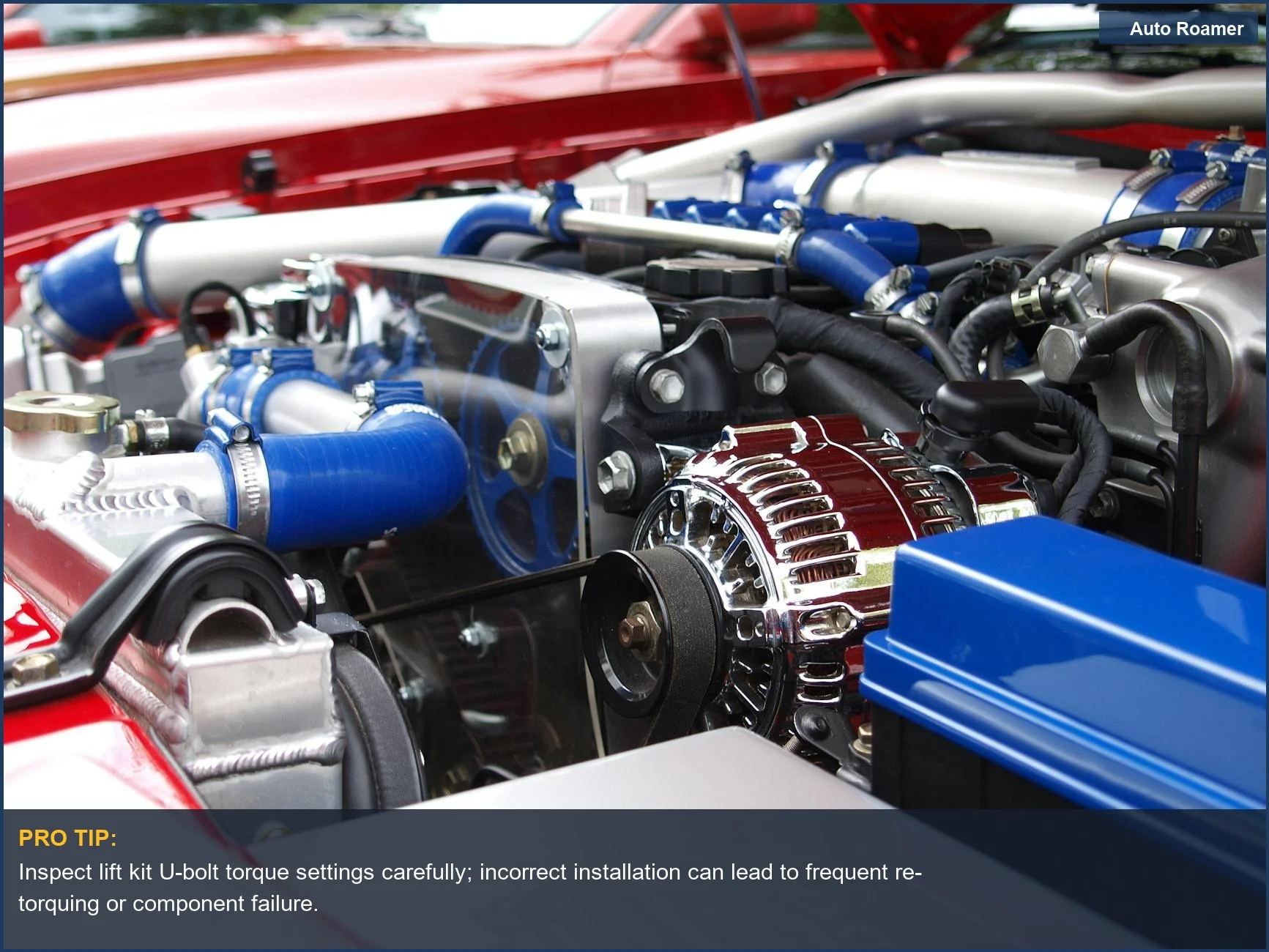
- Inspect Suspension Components: Get under the vehicle. Look for shiny, new-looking control arms, shocks, or coil springs that don't match the age of the rest of the chassis. Check for non-OEM welds on frame components. Are the brake lines stretched or zip-tied out of the way? That's a huge red flag for improper lift installation. Examine U-bolts on leaf springs - look for fresh tool marks indicating recent removal or re-torquing.
Check for shims between the axle and leaf springs, which indicate driveline angle correction.
- Check for Wiring Aberrations: Pop the hood and look at the engine bay wiring. Are there any non-factory wire splices, especially with electrical tape instead of heat shrink? Are there extra wires running to the battery terminals or through the firewall? Trace them. Look for aftermarket fuse blocks or relays that don't look OEM. Audio systems, auxiliary lights, or performance modules are often wired incorrectly, leading to intermittent electrical gremlins or even fires.
- Examine the ECU and Exhaust: Look for aftermarket tuning modules plugged into the OBD-II port or spliced into the ECU harness. Scan the exhaust system for non-factory catalytic converters or resonator deletes. Look for fresh welds on the exhaust piping, especially if the rest of the system is rusted. A missing catalytic converter is an immediate emissions failure and a $1500+ fix.
- Test Drive and Listen: Drive the vehicle. Listen for unusual drivetrain noises - clunks on acceleration/deceleration can indicate worn universal joints or differential issues from modified driveline angles. Feel for vibrations at speed, which could mean unbalanced tires, improper wheel spacers, or driveline harmonics introduced by suspension lifts. Listen for excessive road noise from aggressive, oversized tires that may rub.
What This Looks Like in Practice
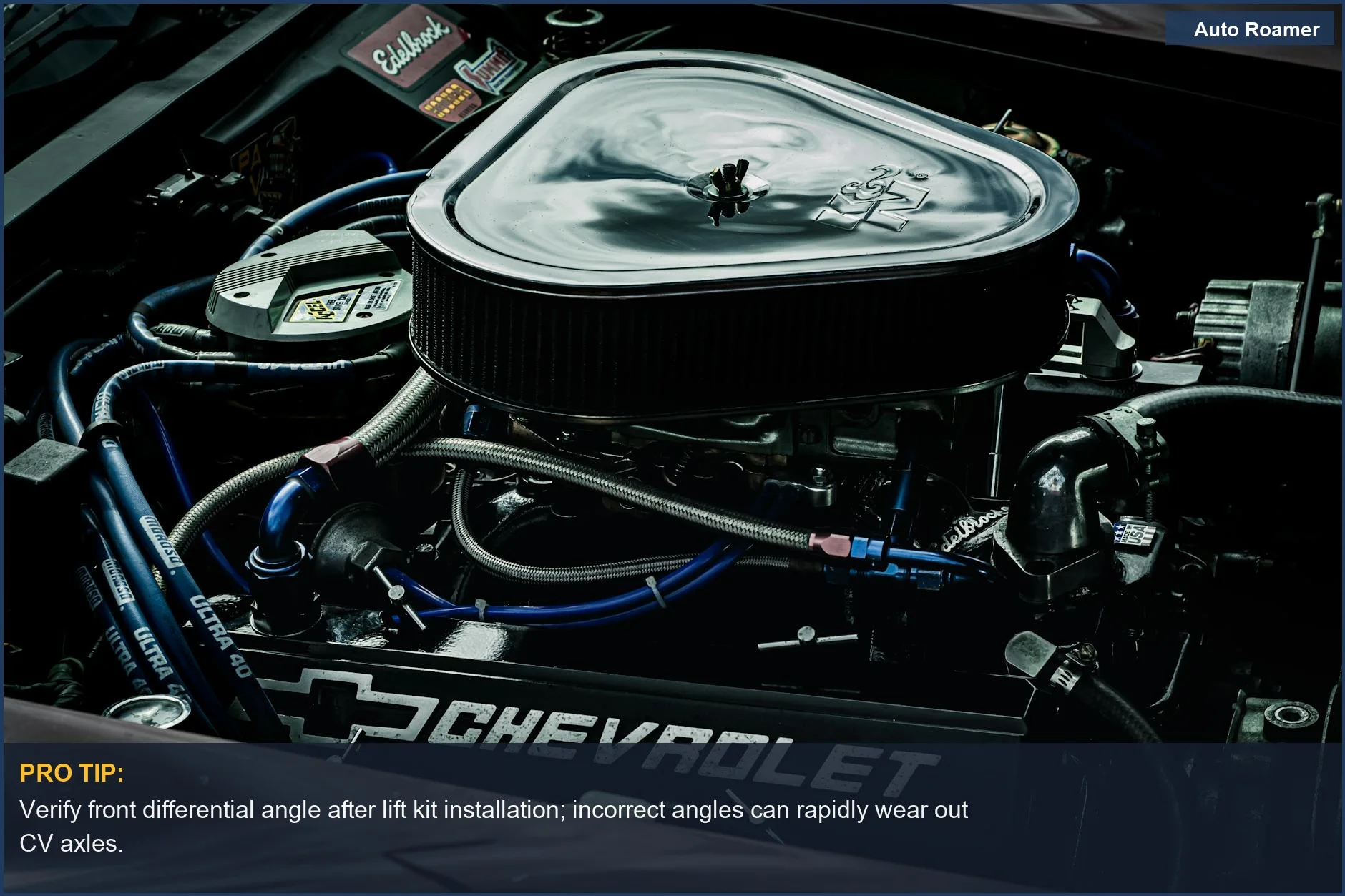
I once saw a guy buy a 'clean' 2015 F-150 for $28,000. It had a 6-inch lift and 35-inch tires. Looked great on the lot. Two weeks later, the front CV axles started clicking like a broken clock. The lift kit had been installed without correcting the front differential angle, forcing the CV joints to operate at extreme angles, causing premature wear on the inner races and cages.
McLeod Auto Sales emphasizes checking maintenance records; I'm telling you to check the geometry.
Another genius bought a modified Subaru WRX. The seller claimed it had a 'Stage 2 tune.' What he didn't say was it was running 22 PSI of boost on the stock intercooler. Within 3,000 miles, cylinder 4 developed a misfire due to piston ring land failure from excessive cylinder pressures and thermal loading. The repair bill was $6,000 for a short block. The owner just looked at the horsepower numbers, not the thermal limits.
Then there's the classic. A buyer picked up a Jeep Wrangler with a fancy aftermarket bumper and winch. The winch was hardwired directly to the battery with 8-gauge wire, no fuse, no relay. The first time the winch motor stalled, the wire overheated, melted its insulation, and shorted against the frame. Luckily, it didn't burn the whole thing down. This is basic circuit integrity, people.
I also saw a 4Runner where the previous owner had put on massive fender flares but didn't trim the inner fender liners enough. Every time the suspension compressed, the oversized tires would rub a hole in the plastic. Eventually, the tire caught the wiring harness for the ABS sensor, ripping it out. Now you have no ABS and a $400 sensor replacement. Pay attention to clearance.
One guy bought a beat-up Civic that had a cheap 'turbo kit' cobbled onto it. The oil feed line to the turbo was a leaky, unbraided rubber hose. It blew off on the highway, dumping all the engine oil in 30 seconds. Engine seized. Cost of the car: $2,500. Cost of the new engine: $4,000. It's always the cheap parts that kill the expensive ones. Thermal dynamics and fluid pressure, baby.
Mistakes That Cost People
People make stupid mistakes when checking used cars, and they always cost money. Here are the common ones I see:
| Mistake | Why It Fails | Consequence |
| Ignoring the VIN Check | Misses salvage titles, flood damage, or multiple owners in high-risk areas. | Buying a car with hidden structural damage or a history of abuse. |
| Trusting Seller's Word | Sellers lie. They omit details about cheap parts or poor installation. | Assuming a modification was done correctly, leading to premature failure. |
| Focusing Only on Aesthetics | A shiny paint job hides rust, bad welds, or incorrect bolt torque. | Overlooking critical mechanical stress points and impending component failure. |
| Skipping the Test Drive | You won't hear clunks, feel vibrations, or notice erratic shifting caused by mods. | Missing driveline issues, suspension binding, or transmission problems. |
| Not Looking Underneath | Hidden damage to frame, exhaust, suspension, and wiring is often visible only from below. | Buying a vehicle with compromised structural integrity or ripped wiring. |
| Ignoring Fluid Leaks | Leaks often indicate loose fittings, cracked components, or worn seals from excessive stress. | Small leaks become large leaks, leading to catastrophic component failure (e.g., transmission, differential). |
One guy bought a diesel truck that had a 'chip tune' and never bothered to check the exhaust gas temperatures. He melted the turbocharger in 6 months. Turbocharger replacement: $2,500. Idealautosalesbensonhurst.com advises understanding reports; I advise understanding the physics. You think that performance gain came for free? There's always a trade-off. It's usually thermal load or mechanical stress.
Another common blunder is assuming a 'professional' shop did the work. Professional doesn't always mean correct. I've seen shops install suspension parts without proper bump stop extensions, causing the shocks to bottom out and blow their seals in a year. The customer just thought the parts were cheap. Nope, the installation was cheap.
Key Takeaways
Don't be a mark. When checking a used car for previous modifications, your primary objective is to identify systemic weaknesses that will lead to premature component failure. Every modification alters the original engineering, introducing new points of mechanical stress, thermal load, or compromised circuit integrity.
- VIN Check is Non-Negotiable: Use NerdWallet's advice to track title and registration history. Look for states known for off-roading, salvage titles, or suspiciously short ownership periods. This tells you where the car might have been thrashed.
- Physical Inspection is Paramount: Get under the vehicle. Look for non-OEM welds, stretched brake lines, improper wiring, and shiny aftermarket parts that don't match the vehicle's age.
These are all signs of altered mechanical properties or compromised electrical systems.
- Test Drive for Symptoms: Listen for clunks, feel for vibrations, and note any odd handling characteristics. These are tactile indicators of altered suspension geometry or driveline stress.
- Always Assume the Worst: Don't trust the seller's word. Verify everything. If a modification isn't explicitly documented with receipts from a reputable shop, assume it was done cheaply and incorrectly. This mindset saves you thousands in future repairs.