
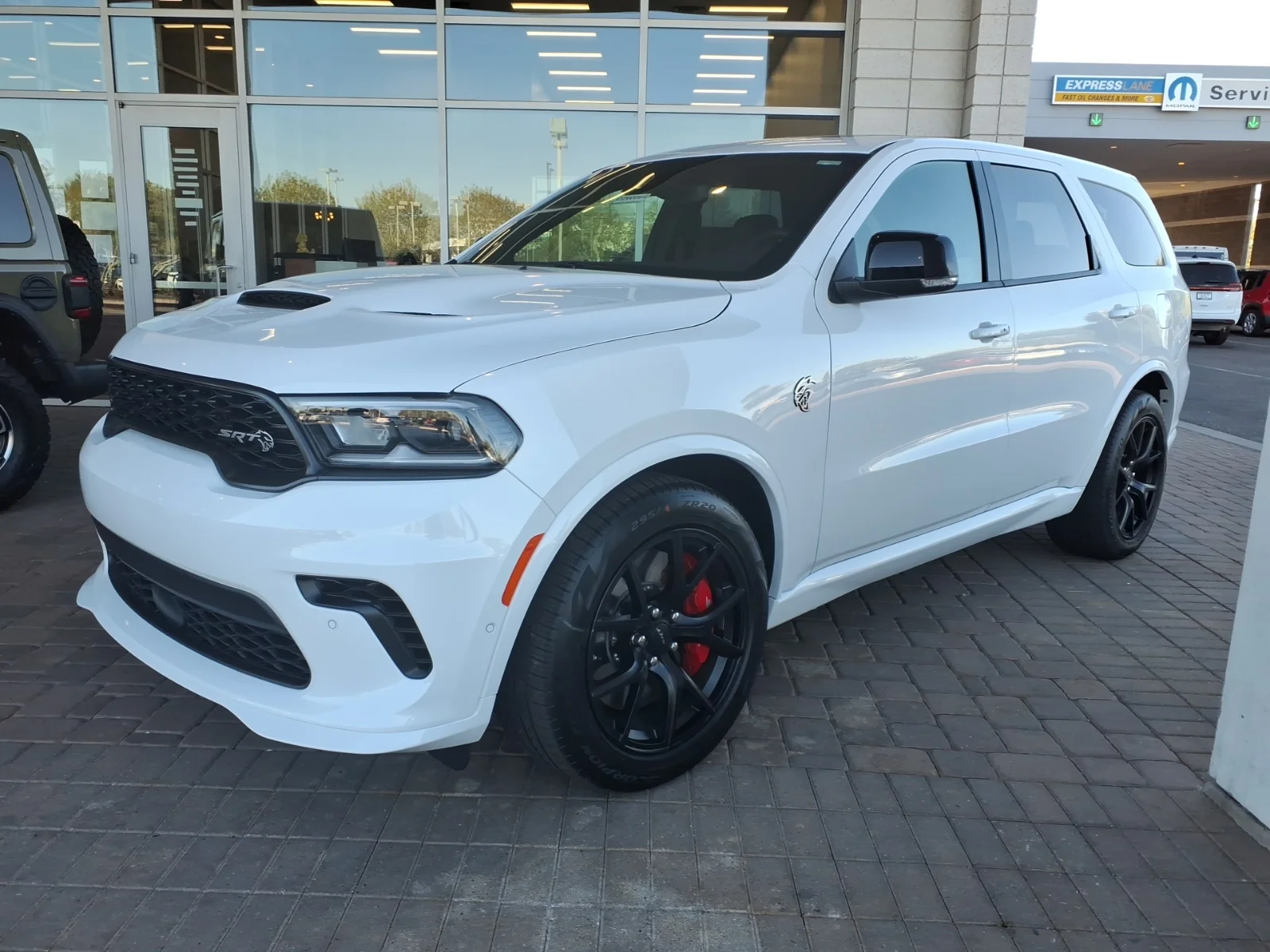
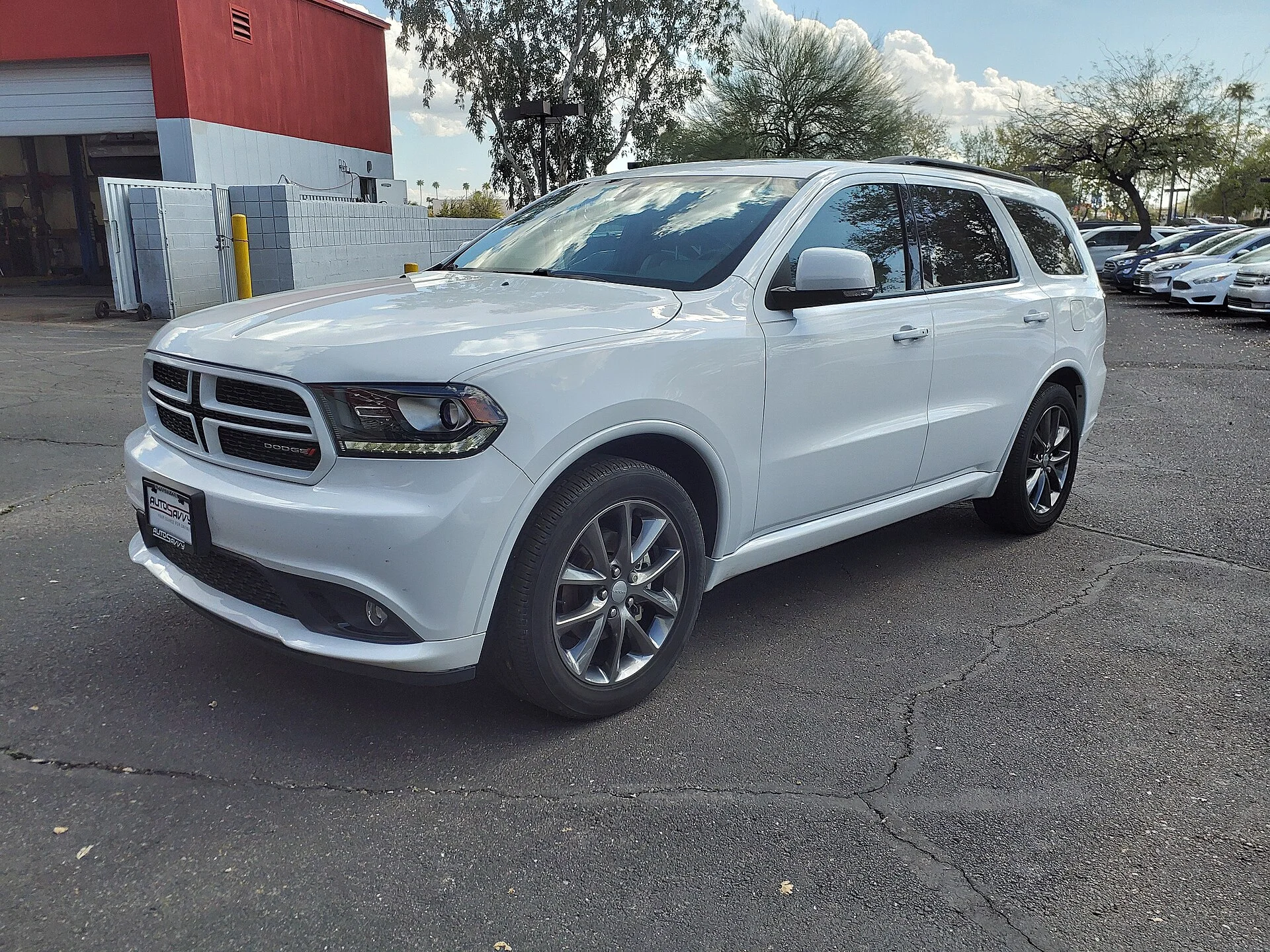
The Three-Row SUV That Tows Like a Truck
Most three-row SUVs treat towing as an afterthought, good for a small trailer and not much more. The Dodge Durango is the outlier. Properly equipped, it tows a best-in-class 8,700 lb for three-row SUVs, a figure that puts it ahead of the family-hauler pack and into genuine travel-trailer territory. For a camper who wants three rows of seats and real tow capability in one vehicle, that number is the reason the Durango is on the list.
But 8,700 lb is the top of a ladder, not a rating every Durango carries. The number climbs by trim and engine and, critically, by one package. A base V6 Durango and a Tow N Go HEMI are separated by thousands of pounds of capacity, and buying the wrong one for the trailer is the same mistake that overloads any tow vehicle.
The Durango's tow story is really a story about which engine and which package are under a specific truck. The range runs from a capable-but-modest V6 up through the HEMI V8 tiers to the shared SRT ceiling, and the difference between them is exactly the difference between a small trailer and a large one.
What follows climbs that ladder trim by trim, then covers the payload side the SRT models expose, and how to match a camper to the tier honestly rather than assuming the headline rating is universal.
The Base V6 Tier: 6,200 lb
Every Durango starts with the 3.6L Pentastar V6, and it is rated to tow up to 6,200 lb across V6-equipped trims. That is a respectable number for a three-row SUV and comfortably more than most crossovers manage, but it is the floor of the Durango range, not a headline figure.
A 6,200 lb rating handles small and mid-size travel trailers, pop-up campers, and lighter toy haulers with margin. For a family that camps in a modest trailer and wants the space of three rows, the V6 Durango is a sensible and capable match, and it avoids the fuel and cost penalties of the larger engines.
The limitation is simply the ceiling. A buyer eyeing a larger travel trailer, or one who wants headroom for a loaded trailer on a grade, will find 6,200 lb runs short where the HEMI tiers do not. The V6 is the right Durango for a light-to-mid trailer and the wrong one for a heavy one.
The practical read is that the base engine defines a clear trailer class. Match a trailer whose loaded weight sits well under 6,200 lb and the V6 Durango tows it happily for years; reach past that and the engine, not the SUV, is the limit that has been exceeded.
The HEMI V8 Tier: 7,200 to 7,400 lb
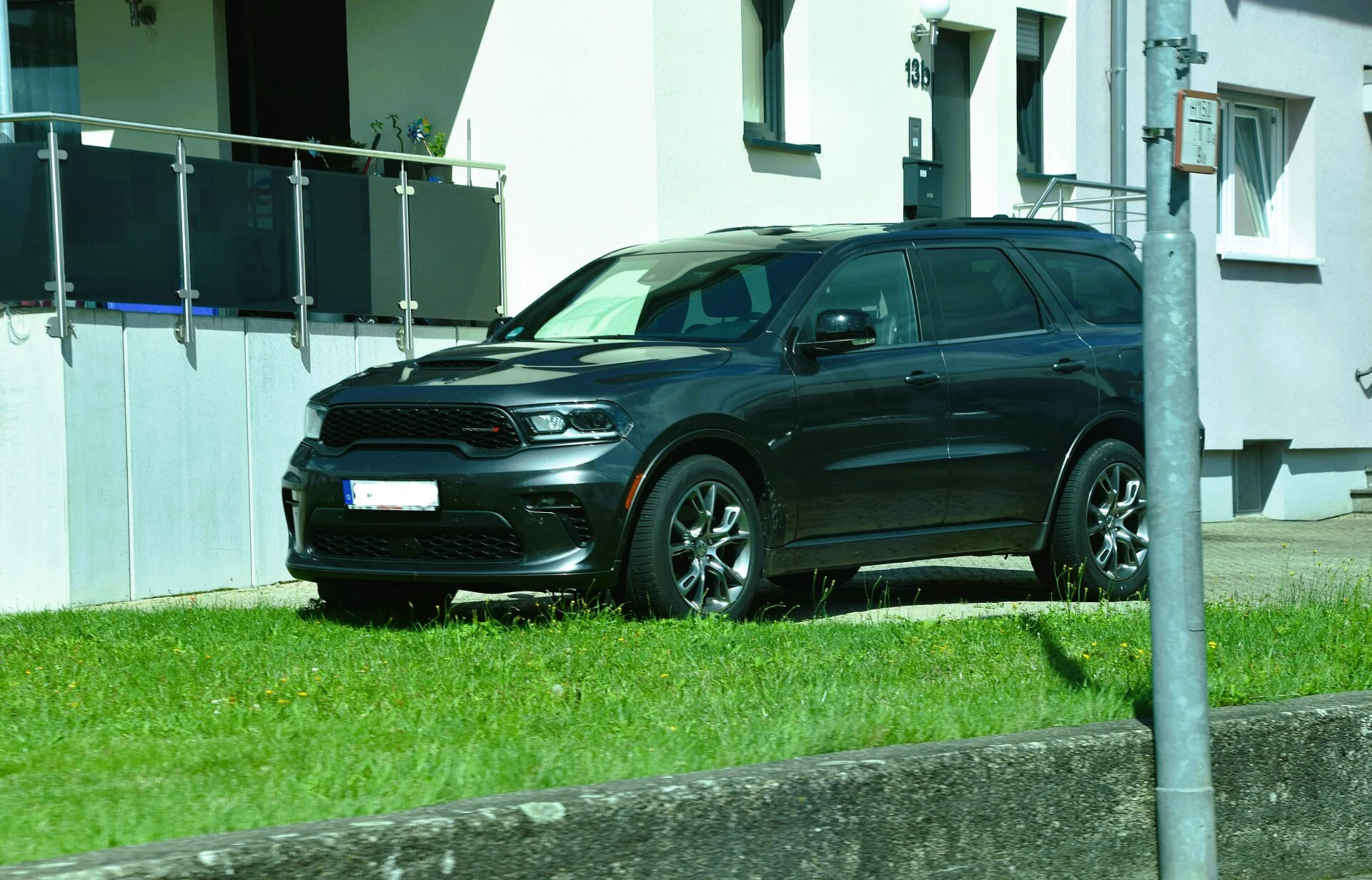
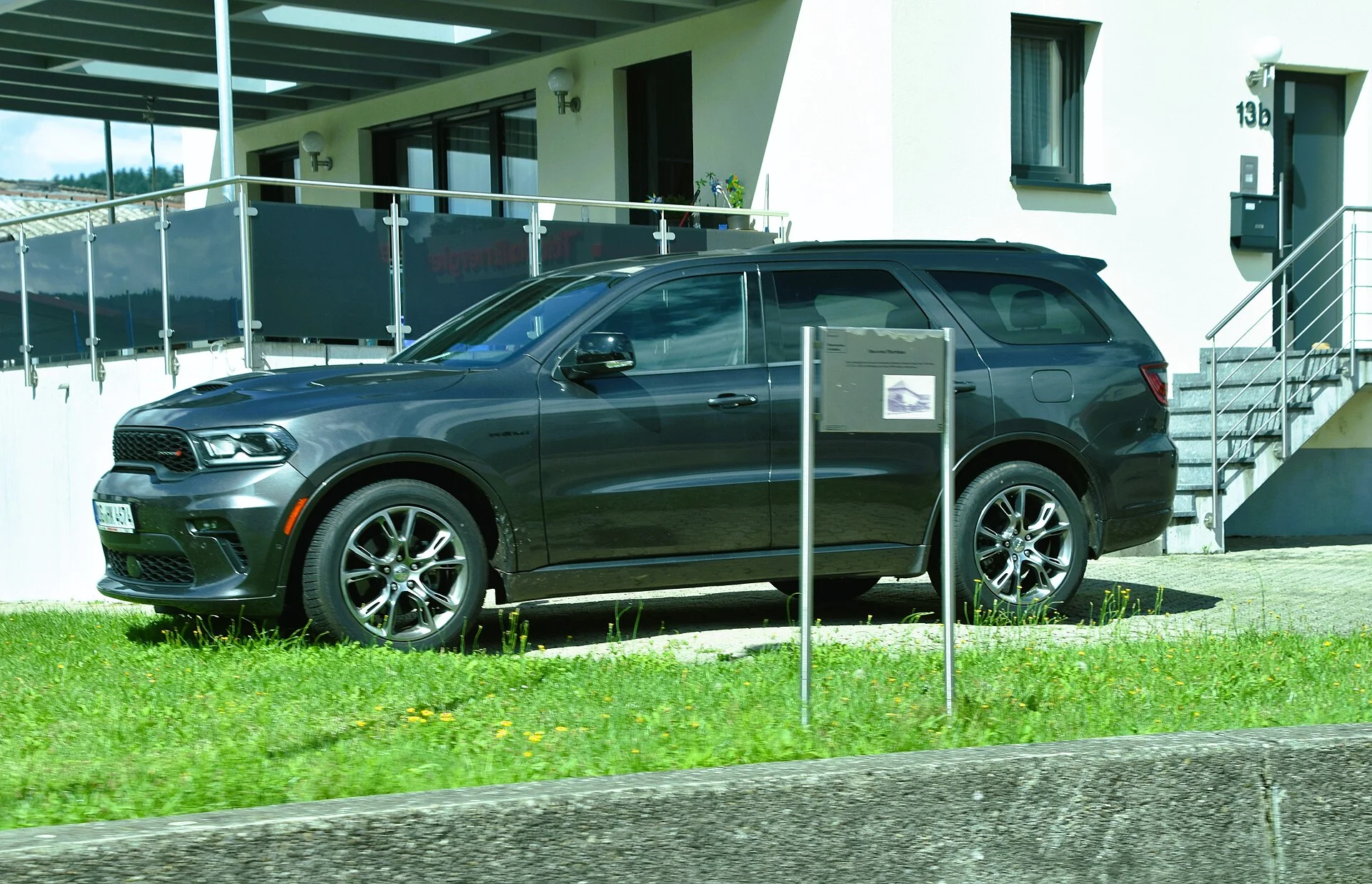
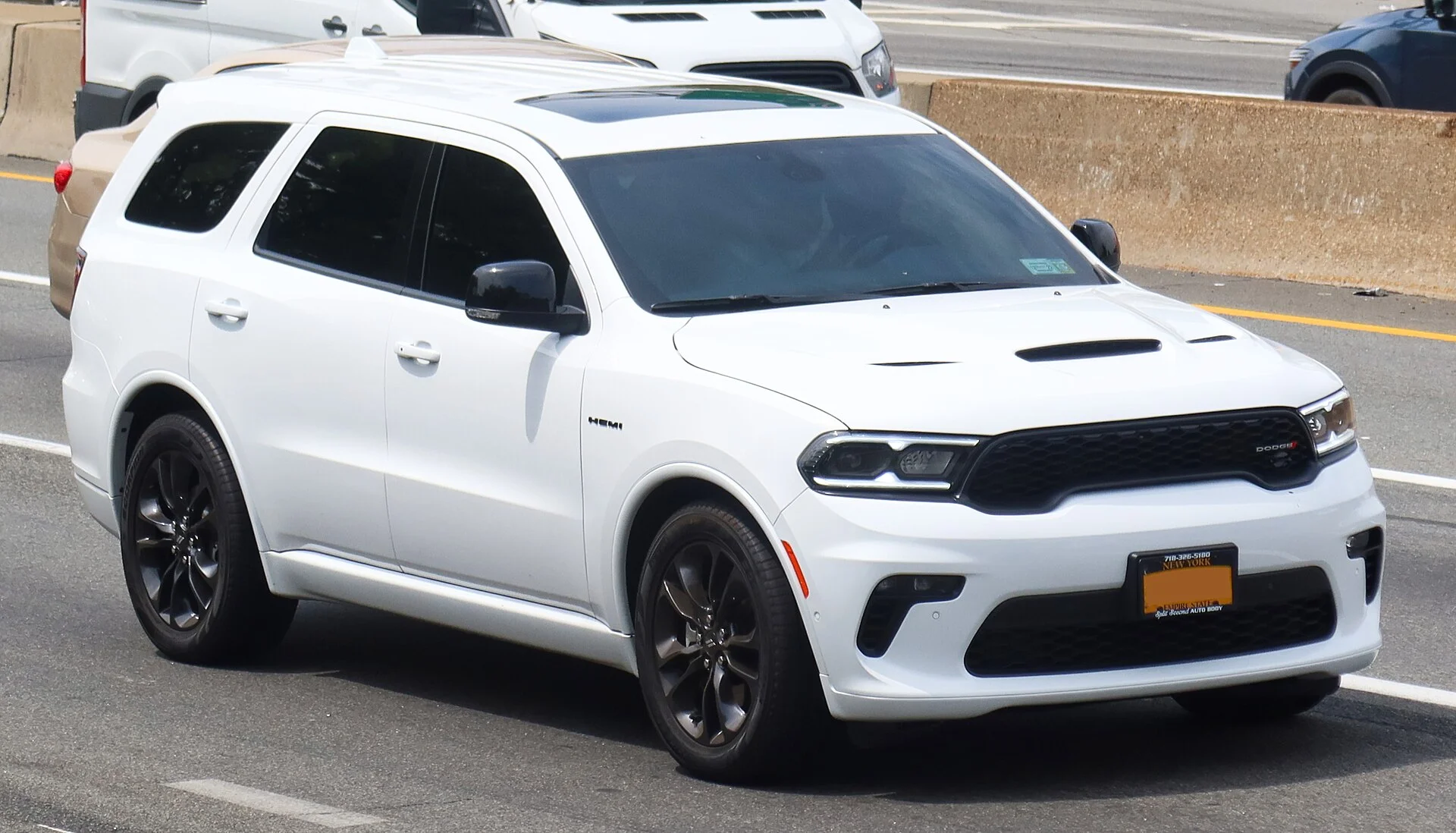
Stepping up to the 5.7L HEMI V8 lifts the Durango into a higher class. In standard form the HEMI tows 7,200 to 7,400 lb depending on drivetrain, a jump of roughly a thousand pounds over the V6 that opens up larger trailers. Rear-drive and all-wheel-drive configurations account for the spread within that range.
That 7,200 to 7,400 lb window covers a broad set of mid-size and larger travel trailers, and for many campers it is all the capability the Durango needs to be a serious tow vehicle. The V8's torque also makes towing feel more relaxed than a smaller engine working near its limit, which matters on long grades and in heat.
The HEMI's standard 7,200 to 7,400 lb rating is already strong, but it is not the Durango's ceiling. That figure is what the V8 tows before the Tow N Go Package is added, and the package is what unlocks the headline number.
For a buyer, the HEMI without the package is the middle rung of the ladder: markedly more capable than the V6, but leaving the Durango's best rating on the table. Whether to climb the last rung comes down to the package covered next.
Tow N Go: The Package That Unlocks 8,700 lb
The Durango's headline rating is a package decision. The Tow N Go Package is available on all Durango HEMI V8 models and lifts towing capacity to a best-in-class 8,700 lb for three-row SUVs. Without it, the HEMI tops out in the 7,200 to 7,400 lb range; with it, the same engine reaches 8,700 lb.
The package works because reaching the top rating takes more than the V8. Tow N Go bundles the hardware, cooling, and chassis provisions that let the Durango sustain the heavier pull, which is why Dodge ties the 8,700 lb figure to its presence rather than to the engine alone. It is the equivalent of the max-tow package on a pickup.
For a camper, this makes the package the single most important box to check when shopping a tow-focused Durango, especially used. A HEMI Durango without Tow N Go is rated well below the headline, and the difference is exactly the capability needed for a larger trailer. The build sheet or window sticker shows whether it was ordered.
The takeaway is that 8,700 lb is earned, not assumed. A HEMI plus Tow N Go is the configuration that turns the Durango into the class-leading tow SUV; the same HEMI without it is a strong but middle-tier tow vehicle rated in the 7,200 to 7,400 lb band.
The SRT Models Share the Ceiling
The Durango's performance flagships tow as hard as they accelerate. The SRT 392, powered by a 6.4L HEMI V8, and the SRT Hellcat, powered by a 6.2L supercharged HEMI V8, both share the Durango's 8,700 lb maximum tow rating. The most powerful Durangos are also among its most capable tow vehicles.
That the SRT 392 and Hellcat match the Tow N Go HEMI's 8,700 lb rather than exceeding it is the useful detail. Their extra power raises acceleration and top speed, but the tow ceiling is set by the same chassis, cooling, and hitch provisions that cap the Tow N Go models, so more horsepower does not buy more towing here.
For a buyer, this means the SRT models are a way to get the class-leading 8,700 lb rating with dramatic performance attached, not a way to tow more than a well-equipped standard HEMI. If the goal is simply maximum towing, the Tow N Go HEMI reaches the same number for far less money.
The SRT tier is therefore about pairing the ceiling tow rating with performance, which is a real want for some owners. But the towing itself is capped at the class-leading 8,700 lb the Tow N Go package already provides, and that is the number that matters for matching a trailer.
The Payload the SRT Models Reveal
Towing gets the attention, but payload is the limit a loaded rig runs into, and the SRT models publish the figures that make it concrete. The 2024 Durango SRT Hellcat carries a GVWR of 7,100 lb and a curb weight of 5,575 lb, and Dodge lists its payload capacity at 1,590 lb. The 2024 Durango SRT 392 has a payload capacity of approximately 1,410 lb.
Payload is everything the SUV carries: passengers, cargo, and a trailer's tongue weight. A figure in the 1,410 to 1,590 lb range sounds generous until three rows of passengers and a weekend of camp gear are subtracted, after which the margin left for tongue weight can be tighter than expected.
The relationship worth understanding is that payload is bounded by GVWR minus the vehicle's curb weight, which is why a heavier performance model with more curb weight has less payload left over. The Hellcat's 5,575 lb curb weight against its 7,100 lb GVWR is what leaves the 1,590 lb Dodge publishes.
For a camper, the lesson is to check payload alongside the tow rating. A conventional trailer places part of its weight on the hitch, and that tongue weight counts against payload, so a Durango can sit within its 8,700 lb tow rating and still be loaded to its payload limit through passengers, gear, and hitch weight combined.
Matching a Camper to the Tier Honestly
The reliable way to overload any tow vehicle is to compare a trailer's dry weight to the vehicle's rating. Dry weight is the empty factory number; loaded with water, propane, batteries, and gear, a travel trailer weighs meaningfully more, and the Durango has to be rated above that loaded weight, not the brochure dry figure.
Applied to the Durango's ladder, this is why the tier choice cascades. A larger travel trailer that loads heavy wants the 8,700 lb Tow N Go or SRT ceiling so the loaded trailer still sits under the rating with margin. Put the same trailer behind a 6,200 lb V6 and the loaded weight can erase the headroom entirely, turning a capable SUV into an overloaded one.
Tongue weight is the second half of the match and lands on payload, in the 1,410 to 1,590 lb range for the SRT models. A properly loaded conventional trailer places a share of its weight on the hitch, and that share draws against payload, not the tow rating, so both limits have to clear the trailer together.
The honest method is to estimate the trailer loaded, add its tongue weight to the Durango's passengers and gear, and confirm both the tow rating for the specific engine-and-package combination and the payload cover it with margin. Done that way, the Durango's tiers map cleanly onto trailer classes instead of guesswork.
Why a Three-Row SUV Tows Differently Than a Pickup
A Durango and a pickup with similar tow ratings do not tow identically, and the difference is worth understanding before loading a trailer. An SUV carries its passengers and cargo inside the same body that anchors the hitch, so the interplay between a full cabin and a loaded trailer is more direct than on a pickup with an open bed.
That is why payload discipline matters more on a three-row SUV used for camping. Fill the Durango's three rows with people and the cargo area behind them with gear, and a large share of the 1,410 to 1,590 lb payload is spent before the trailer's tongue weight is added. A pickup owner rarely loads the cab as heavily.
The upside is that the Durango puts genuine tow capability and family space in one vehicle, which a pickup cannot match without a crew cab and a very different footprint. The 8,700 lb ceiling with three usable rows is a specific and valuable combination for a camping family that also needs daily seats.
The balanced view is to treat the Durango as a tow-capable family SUV rather than a truck substitute. Its class-leading rating is real, but the loaded cabin means payload is the limit to watch, and matching a trailer to both the tow rating and the payload is what keeps the whole rig within its designed limits.
Setting Up the Durango to Tow Its Rating
Reaching a rating on paper and towing it safely are two different things, and the gap is the setup. On the Durango's heavier tiers, a trailer approaching the 7,200 to 8,700 lb range needs its own braking, because the SUV's brakes alone are not sized to stop that combined weight repeatedly on a downgrade. Trailer brakes are part of what the rating assumes.
Weight distribution is the other half. A properly adjusted hitch and, where appropriate, a weight-distribution setup keep the load balanced between the Durango's axles rather than sagging the rear, which preserves steering and braking control. A trailer that tows within the rating but sits nose-heavy on the hitch still handles poorly.
The connections deserve the same care. A secure hitch, correctly rated ball, safety chains, and working trailer lights are the basics that let the Durango tow its rating without drama, and they are the first things to verify before a trip rather than at the ramp. A quality weight-distribution hitch is a sensible companion for the heavier tiers.
Set up this way, a Tow N Go or SRT Durango tows its class-leading 8,700 lb with the composure the rating implies. Skip the trailer brakes or the weight distribution and the same SUV, still legal on paper, becomes harder to stop and steer than its numbers suggest, which is exactly where the setup earns its place.
The Verdict: Climb the Ladder to the Right Rung
The Dodge Durango earns its reputation as the three-row SUV that tows like a truck, but only at the right rung of its ladder. The best-in-class 8,700 lb rating belongs to the HEMI V8 with the Tow N Go Package and to the SRT models, not to every Durango, and treating the headline as universal is how a V6 ends up under too much trailer.
The ladder is clear: the 3.6L V6 tows up to 6,200 lb, the standard 5.7L HEMI 7,200 to 7,400 lb, and the HEMI with Tow N Go, along with the 6.4L SRT 392 and 6.2L supercharged Hellcat, all reach 8,700 lb. Pick the rung that clears the loaded trailer weight with margin, not the one that matches the dry weight.
Payload is the limit not to forget. The SRT models publish figures around 1,410 to 1,590 lb, and passengers, gear, and tongue weight all draw against it, so a Durango can sit within its tow rating and still be loaded to its payload ceiling. Both numbers have to clear the trailer together.
Confirm the engine, the Tow N Go package, and the payload for the specific Durango before buying the trailer, and set it up with trailer brakes and proper weight distribution. Matched and equipped that way, the Durango delivers class-leading towing with three usable rows; chosen at the wrong rung, it is a capable SUV asked to do more than its tier allows.