Gear

Do You Need a Rear Camera for Your Dash Cam?

Casey - The Weekend Warrior
3 min read
Includes Video

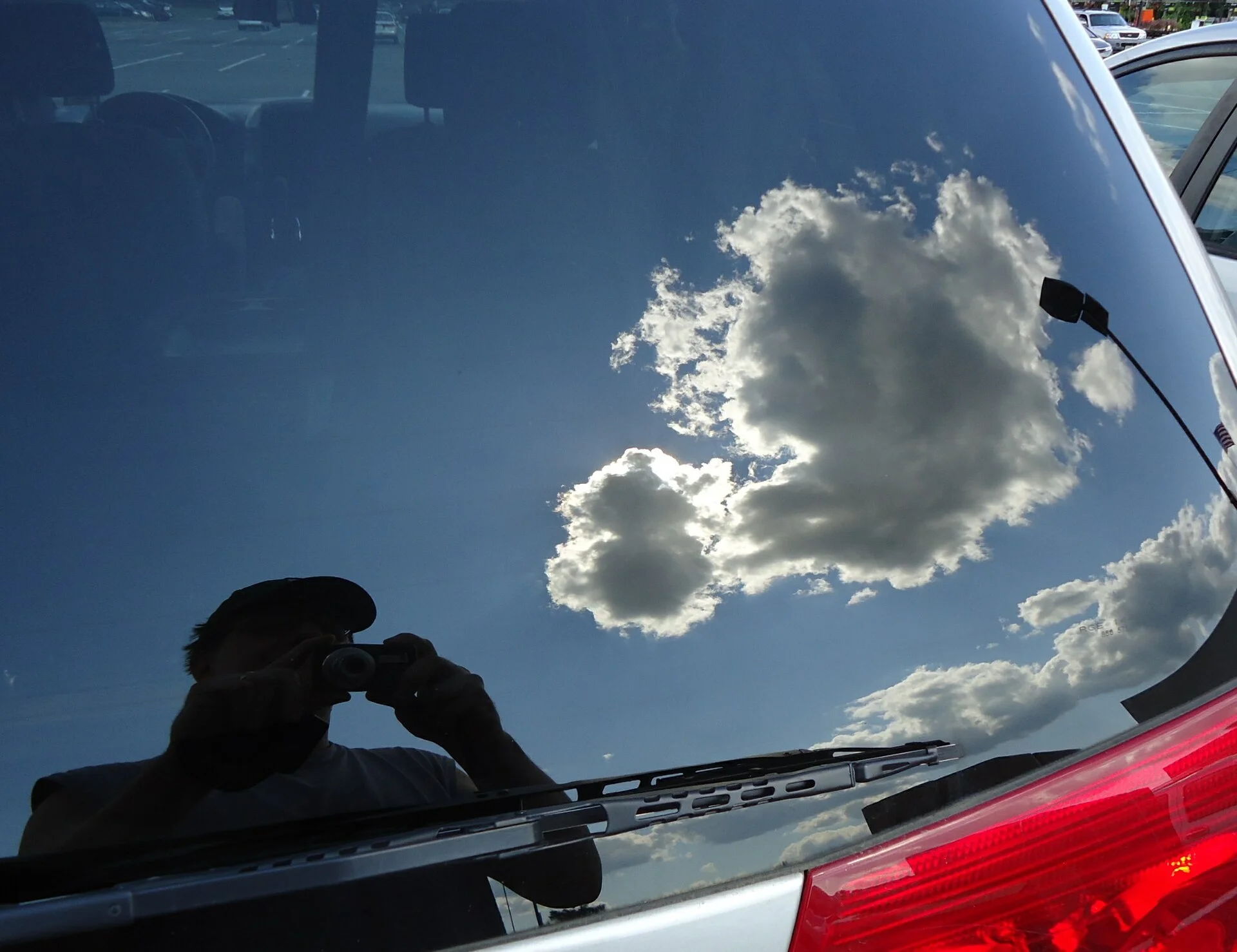
A rear dash cam is an additional camera that mounts inside your rear windshield, providing a view of what's happening behind your vehicle. Think of it like adding a second set of eyes, but these eyes are constantly recording and don't get distracted by the radio.

A rear dash cam is an additional camera that mounts inside your rear windshield, providing a view of what's happening behind your vehicle. Think of it like adding a second set of eyes, but these eyes are constantly recording and don't get distracted by the radio. While a front camera is standard for capturing front-end impacts, it leaves a huge blind spot for anything happening behind you.

People often ask if it's really necessary, especially when they're already spending money on a good front unit. Some folks online even say it's overkill. But honestly, when you consider how many fender benders happen from behind, it starts to look less like a luxury and more like smart insurance.

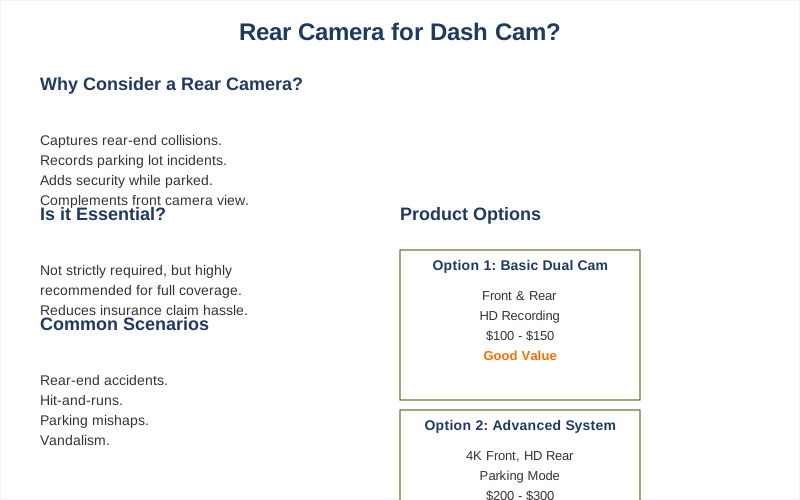
Do You Need a Rear Camera for Your Dash Cam? — Key Specifications Compared
Key specifications for Do You Need a Rear Camera for Your Dash Cam?

The Core Answer

So, do you *need* a rear dash cam? Here's the honest version: probably not, but I sure wish I had one on my first few trips. My first car camping trip involved a near miss in a parking lot at Big Basin Redwoods State Park. I was backing out of a spot, thought I had plenty of room, and then heard a crunch. Some dude in a giant SUV decided to squeeze past me, clipped my bumper, and then drove off. My front dash cam saw exactly zero of it. The police report was my word against his, and the insurance company wasn't thrilled. This is a common story. Most accidents are rear-enders, and your front camera is useless for those. It's like going to a gun fight with only a knife - you're covered for some things, but wide open for others. A rear camera captures those 'oops' moments from behind, whether it's a careless driver, a parking lot ding, or even someone trying to mess with your car while it's parked. Parking mode is a big deal for many people, and that includes what happens behind your vehicle. I've heard stories of people getting hit while parked and the culprit driving off. Without a rear camera, you're left with nothing but a dent and a whole lot of frustration. It's not about having the most expensive setup, it's about covering your bases. For me, the peace of mind from knowing I have footage of *everything* is worth the extra wiring.
To enhance your vehicle's safety features, it's worth considering the differences between a dashcam and a rear-view mirror camera.
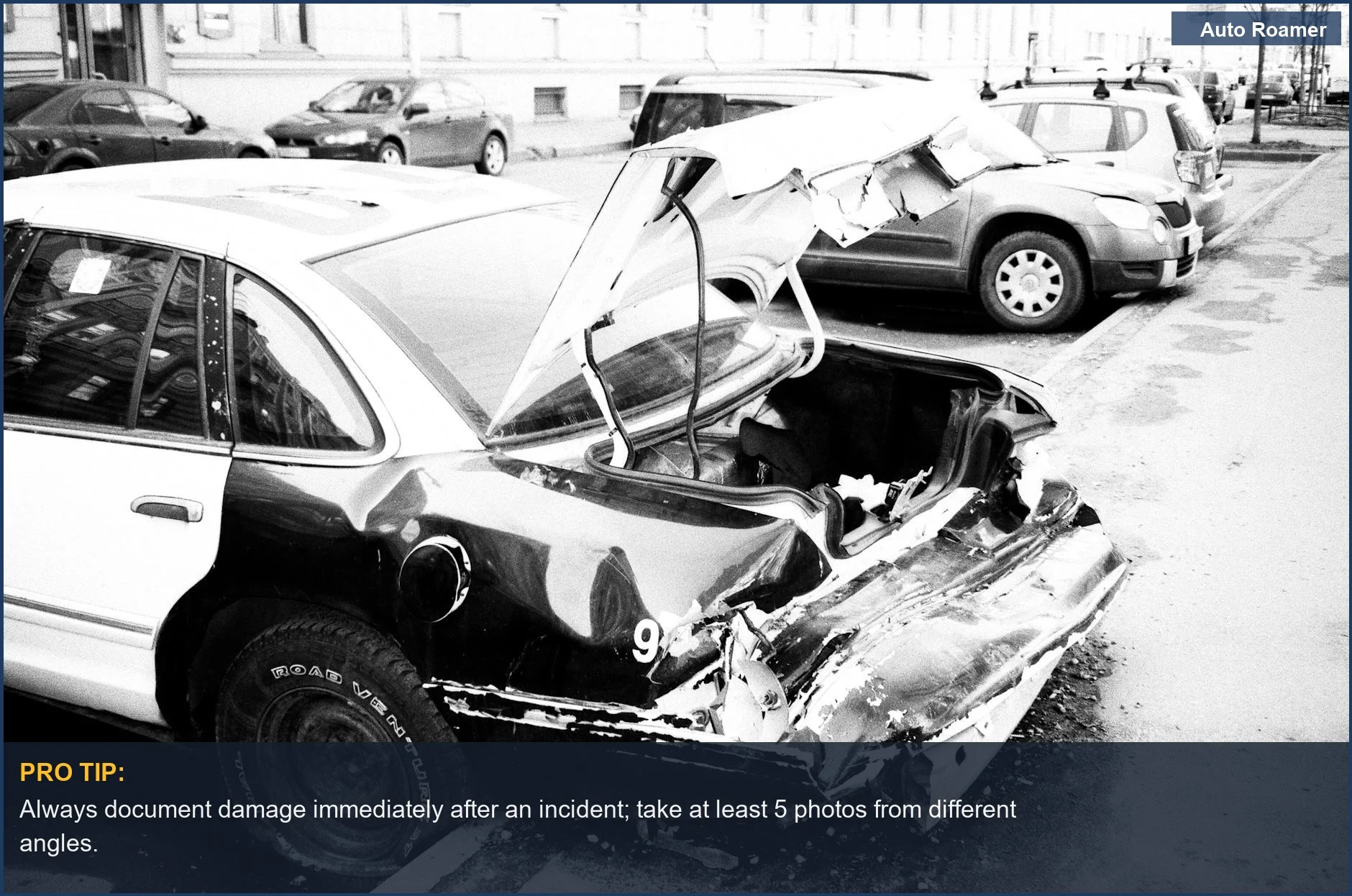
Always document damage immediately after an incident; take at least 5 photos from different angles.
A stark reminder of vehicle damage after an accident. This is why a rear dash cam can be invaluable for capturing incidents you don't see. | Photo by Aleksandr Neplokhov

Why This Matters for Your Setup

Why does this matter for your setup? It's all about what you want to protect and how you use your vehicle.
  • Rear-End Collisions: These are the most common type of car accident. Your front camera won't help if someone slams into your bumper. A rear camera gives you irrefutable proof of fault.
  • Parking Lot Incidents: Ever had someone ding your door or bumper in a crowded lot? Without a rear camera, it's a nightmare to prove who did it.
  • Hit-and-Runs: If someone clips you and drives off, especially while you're parked or in traffic, a rear camera is your best friend for identifying them.
  • Parking Mode: Many dash cams have a parking mode that records impacts or motion even when the car is off. A rear camera extends this protection to the back of your vehicle.
  • Fraud Protection: Unfortunately, some people try to stage accidents or make fraudulent claims. A rear camera can show that you weren't at fault.
Understanding the benefits of a dash cam can help you make informed decisions about your vehicle protection options.
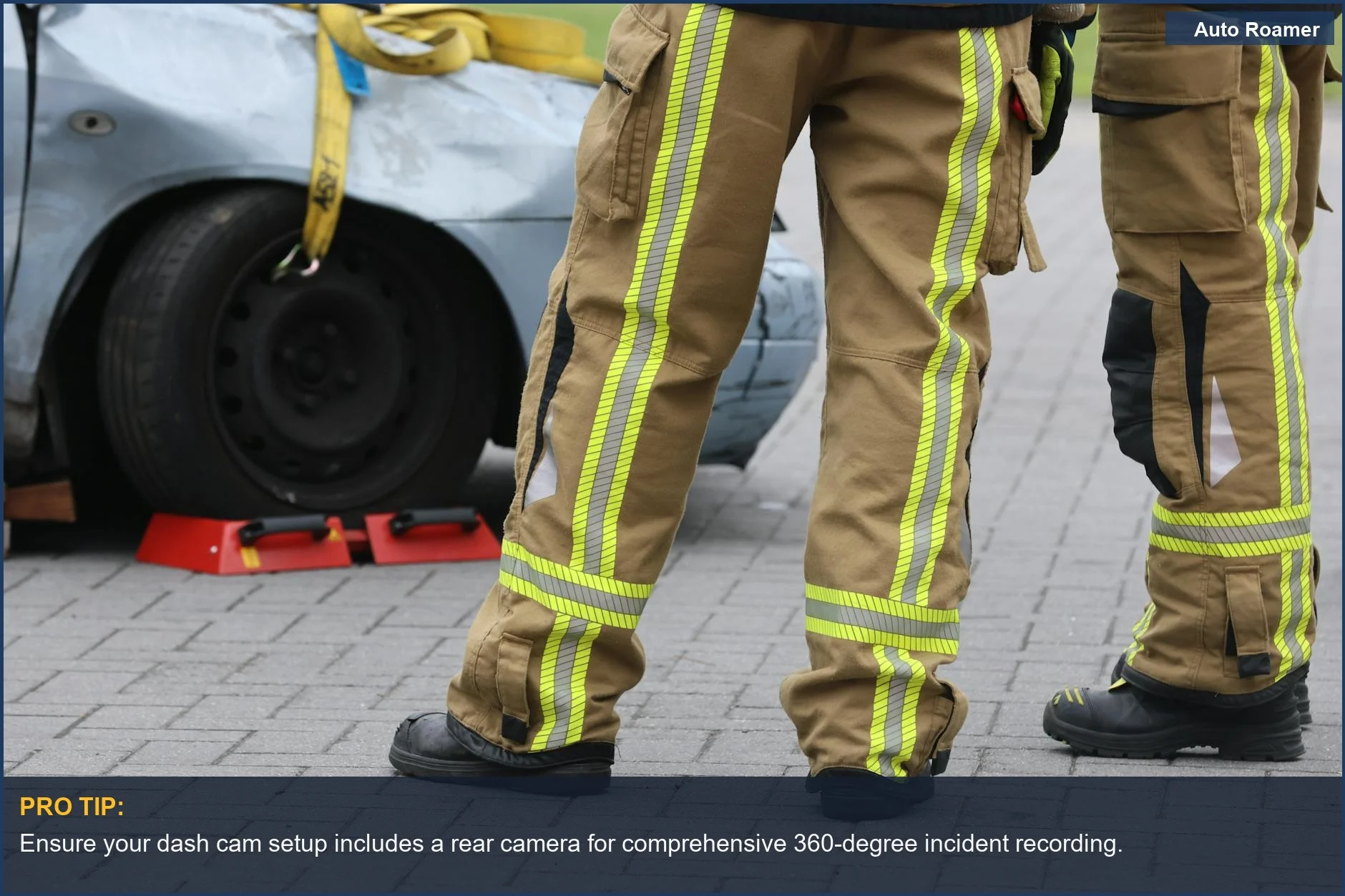
Ensure your dash cam setup includes a rear camera for comprehensive 360-degree incident recording.
When accidents happen, crucial evidence is key. Firefighters examine the scene, underscoring the need for reliable dash cam coverage from all sides. | Photo by Ann H

Making the Right Choice

So, is a rear dash cam a 'must-have' like your front camera? Not strictly, but it's a smart addition for comprehensive coverage.
  • Consider Your Driving Habits: If you do a lot of city driving, parallel park often, or live in an area with high traffic, a rear camera is highly recommended.
  • Budget vs. Protection: While it's an extra cost, think of it as a small investment for potentially huge savings on insurance deductibles or repair bills. For example, a dual-channel system might cost $150-$300, compared to a $500 deductible.
  • Ease of Installation: Most dual-channel systems are designed for easy DIY installation, similar to wiring up a front camera.
  • Peace of Mind: For me, the biggest win is the feeling of being fully covered. I don't have to worry about what's happening out of sight.
Considering your priorities, you might also want to explore how a dashcam can enhance your road trip experience in this road trip guide.
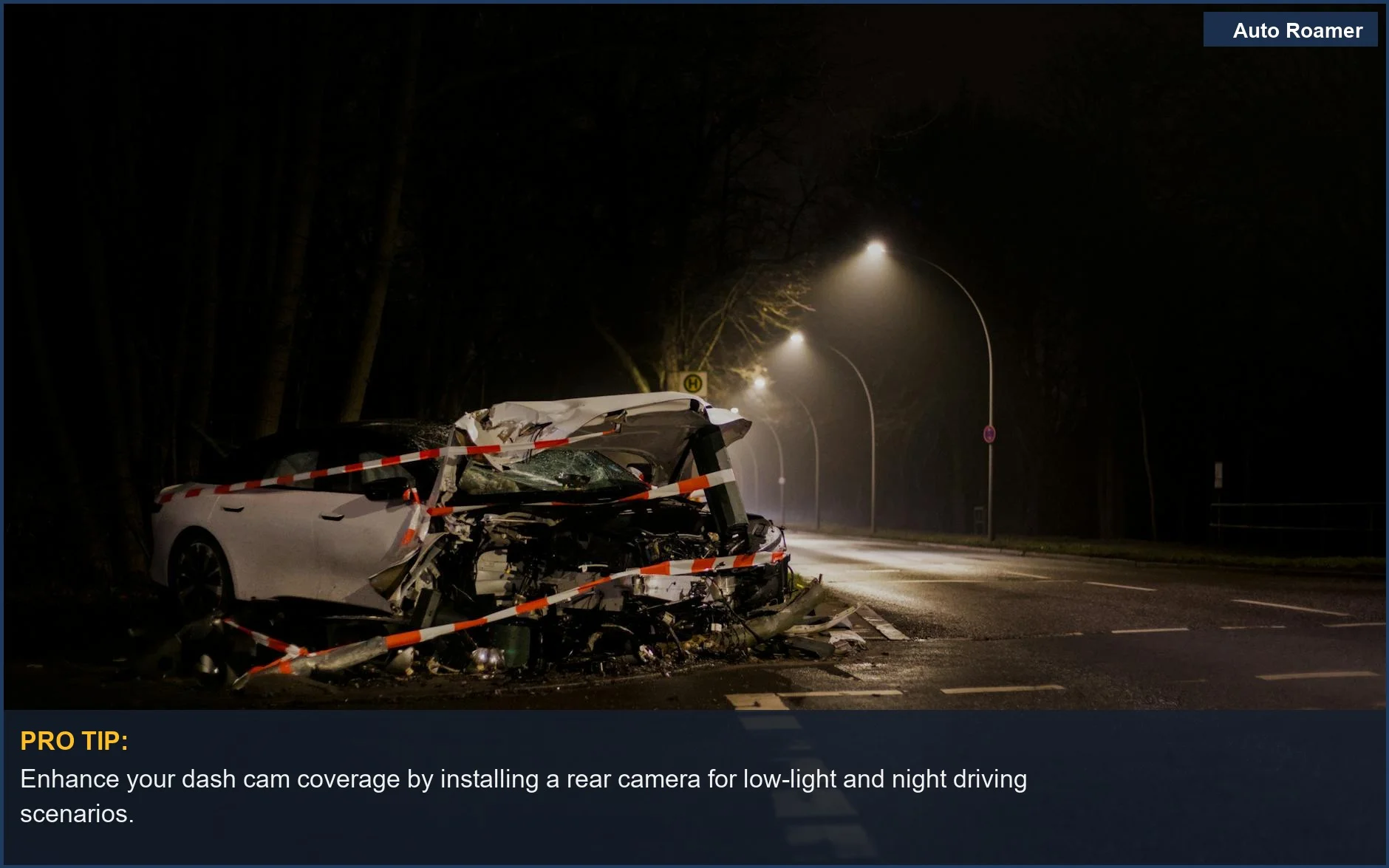
Enhance your dash cam coverage by installing a rear camera for low-light and night driving scenarios.
Even on dimly lit streets, accidents occur. A rear dash cam provides critical footage, especially during nighttime driving or in low visibility. | Photo by Julien

Frequently Asked Questions

If I have a $200 dual-channel dash cam system, how much more would a mechanic charge to install it compared to me doing it myself?
A mechanic might charge anywhere from $100 to $250 for installation, depending on how complex they make it. My first install took me about 45 minutes in my old Honda Civic, and that included figuring out where to hide the wires. You can usually find a decent dual-channel system for around $150, so doing it yourself saves you a chunk of change.
Do I really need to run wires all the way to my fuse box for the rear camera, or can I just plug it into the cigarette lighter?
You *can* plug it into the cigarette lighter, but that usually means it only records when the car is running, which defeats the purpose of parking mode. Running it to the fuse box, often with a $15 hardwire kit, ensures it powers up correctly and can record even when the car is off.
What if I install the rear camera and the footage is still blurry or unreadable in low light?
That's a rookie mistake, but it happens. Make sure the lens is clean – road grime is brutal. Also, check your dash cam's settings; some have adjustable exposure or night vision modes. If it's still bad, you might have a dud camera, or you might be expecting miracles from a cheap unit. My $50 version definitely struggled after dark.
Can having a rear dash cam permanently damage my car's electronics?
Not if you install it correctly. The main risk is shorting something out if you mess up the wiring to the fuse box. Using a proper hardwire kit with built-in fuses and following the instructions carefully prevents this. It's like plugging in a phone charger; if you do it right, nothing bad happens.
I heard you can just put a front dash cam in the back window. Is that true and does it work?
Yeah, some people do that, and it technically gives you rear coverage. The catch is that most front cameras aren't designed for the wide-angle view you need out the back, and they might not have a dedicated rear camera cable. You also lose the benefit of a compact rear unit that's less obvious. It's a workaround, but not ideal for dedicated rear recording.

🏅 Looking for Gear Recommendations?

Check out our tested gear guides for products that work with this setup:

C

Casey - The Weekend Warrior

Weekend car camper and road trip enthusiast. Focuses on practical, budget-friendly solutions for families and first-time campers.

Sources

Related Articles