Why Your Dash Cam Keeps Falling Off the Windshield
The packaging said industrial-strength adhesive. The camera said otherwise, somewhere around the third hot afternoon, when it let go of the glass and took the cable run down with it.
Here's what the box doesn't mention: a dash cam that keeps dropping is almost never a camera problem. It's a mounting failure with four usual suspects — summer heat cycles cooking a cheap pad, glass that was never actually clean, a mount parked on the tint band, or a suction cup that quietly aged out of the job.
The fix is cheap. A replacement adhesive kit with 3M-grade pads and an electrostatic film layer costs less than a takeout lunch and holds for years when the prep is right. An installer will charge sixty to a hundred dollars for the same ten minutes of work.
But cheap parts plus bad prep equals a camera in your footwell again by August. The prep is the product. Most 'defective mount' reviews are really confessions about glass cleaner and a thirty-second cure time.
So before you order anything, run the diagnosis below. Match the failure to its cause, do the re-mount procedure once, properly, and pick the mounting system that fits your climate instead of the one that came in the box.
Below:
- Why mounts let go
- The exact re-mount steps
- Adhesive versus suction versus electrostatic film, by climate
- The replacement hardware worth buying when the mount design itself is the weak point
For the deeper chemistry on pads, our dash cam mount adhesive guide goes further.
One spoiler before we start: the answer is never 'use more pads.' Stacked adhesive is a softer, thicker hinge — it fails faster. What holds a camera is contact area and cure time, not volume.
The Four Failure Modes: Heat, Oil, Tint, and Tired Suction
Match your drop to its cause before you fix anything. Re-sticking the same mount the same way is how people end up buying three pads to avoid one correct install.
| Symptom | Likely cause |
|---|---|
| Drops in July, re-sticks fine in October | Heat-softened bargain adhesive |
| Holds about a week, then lets go | Oily glass — cleaner residue, never real prep |
| Peels within weeks at the top of the glass | Mounted on the tint band or dot-matrix frit |
| Needs re-moistening every month | Suction cup aged past its lifespan |
Summer heat cooks cheap adhesive
Your windshield is a greenhouse. An Arizona State University study measured dashboards averaging 157°F after an hour parked in 95-plus-degree sun — and the glass above them runs nearly as hot.
Bargain acrylic foam pads soften near those temperatures, creep under the camera's weight, then let go on the cool-down. 3M rates its VHB family to roughly 200°F in sustained use, which is exactly the margin the no-name pads are missing. If your cam drops in July and re-sticks fine in October, this is your failure mode.
The glass was never clean
Glass cleaner is not prep. Most household cleaners leave surfactant or silicone film behind — invisible, slick, and exactly where you pressed your 'permanent' pad.
Add windshield-treatment residue, off-gassed plasticizer haze from the dash, and a swipe of your own fingerprints, and the adhesive is bonding to a layer of oil instead of glass. It holds for a week. That's the cruel part — just long enough to feel fixed.
You mounted on the tint band or the dot matrix
The shaded strip and the dotted frit border at the top of the windshield are ceramic — textured, and a fraction of the contact area of smooth glass.
A pad on the dots is gripping maybe half its rated surface. Owners report mounts on the frit border peeling within weeks while the same pad lower on the glass holds indefinitely. Move it down an inch; legality and adhesion both improve.
Suction cups age out
Suction is a wear item that nobody replaces. The plasticizers that keep the cup supple migrate out over a couple of years; the rubber stiffens, the seal stops conforming, and every temperature swing pumps a little air behind it.
If the cup needs re-licking — sorry, 're-moistening' — every month, that isn't a maintenance ritual. It's a retirement announcement.
Identified yours? Good. The repair is the same ten-minute procedure either way — only the hardware changes.
The Re-Mount That Holds: Prep, Pad, Patience
The procedure below is boring, ten minutes long, and the reason some mounts survive five summers while the identical mount one lane over is on its third pad. The steps, in order:
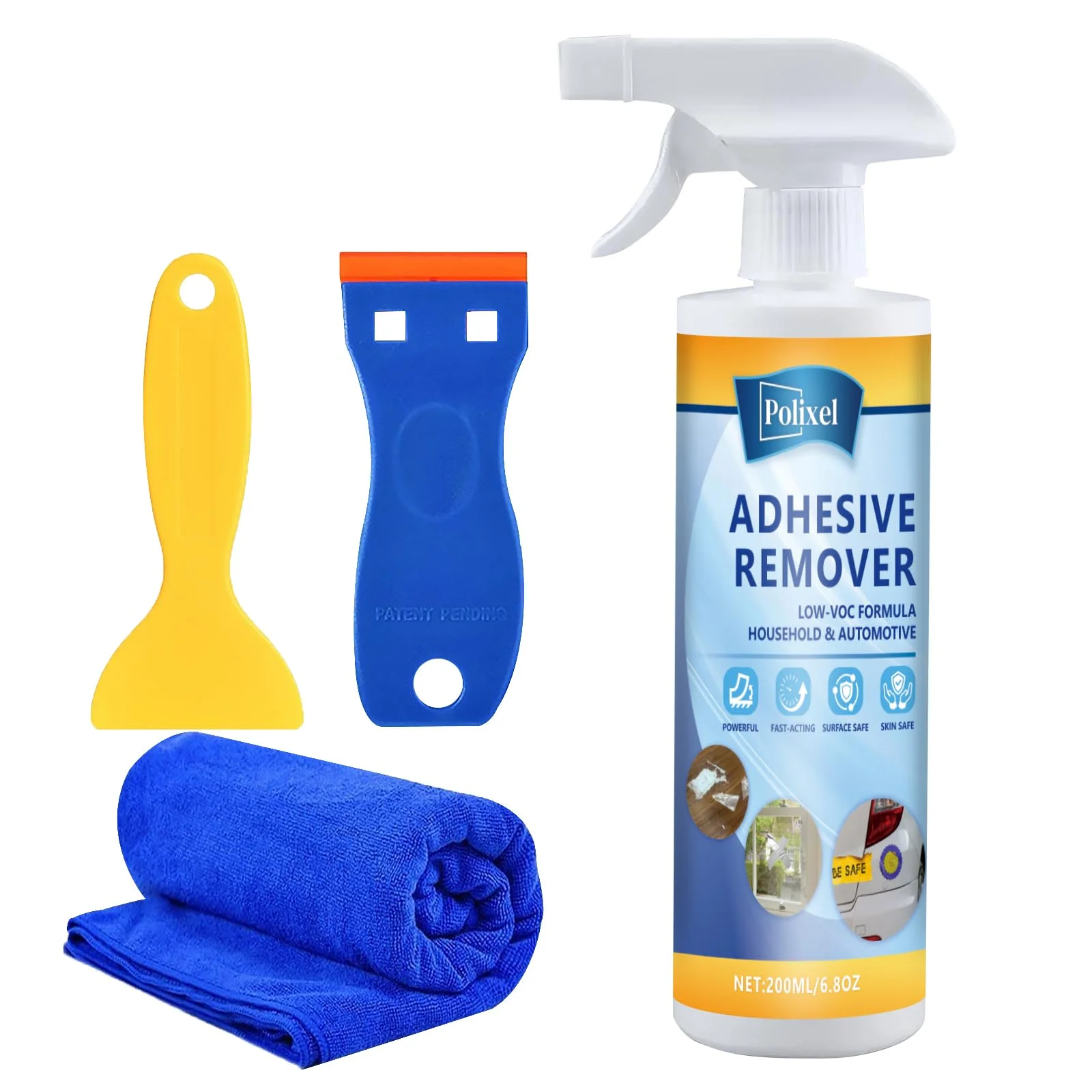
- Strip the old pad completely. Peel the residue, then dissolve what's left with an automotive adhesive remover. The new pad needs glass, not the corpse of the old one.
- Clean with 90%+ isopropyl alcohol, not glass cleaner. Two passes with a lint-free cloth, letting it flash off fully. Alcohol lifts the oil film; household cleaners replace it with a new one.
- Pick the spot: smooth glass, below the frit dots, inside the wiper sweep, legal in your state. If it's cold out, warm the glass to room temperature first — adhesive wets out poorly on cold glass.
- Apply a fresh 3M VHB pad with firm, even pressure for a full 60 seconds. Pressure is what wets the adhesive onto the glass; a quick poke gets you a quick drop.
- Wait. 3M's published cure data: about 50% bond strength at 20 minutes, 90% at 24 hours, full strength at 72. Hang the camera tomorrow, not now.
That last step is where everyone fails. Twenty minutes feels cured — it's half. Hang the camera the next day, and route the cable with slack so it isn't a constant downward tug on a fresh bond.
Hardware notes: genuine 3M VHB pads cost a few dollars and outperform the 'extreme strength' mystery pads sold beside them. Pure isopropyl wipes are the other two dollars of the fix. Owners who follow the full prep consistently report the pad outlasting the camera; the one-star 'fell off again' reviews almost all describe same-day re-hangs on unprepped glass.
Total bill: under fifteen dollars and one overnight wait. A windshield shop's minimum bench fee costs more than the entire parts list — for the same chemistry.
Adhesive vs. Suction vs. Electrostatic Film: Match the Mount to Your Climate
There are three honest ways to hold a camera to glass, and the right one depends on where you park more than on what any listing claims.
Adhesive (VHB-class) is the default for a reason: the highest heat tolerance, the lowest profile, zero re-seating ritual. Its cost is commitment — moving it later means scraping and re-prepping. If the car sleeps outside in a hot-summer state, this is the answer.
Owners report VHB-mounted cams surviving multiple Phoenix and Texas summers without a re-stick — on the same forums where the suction-cup threads read like a support group every June.
Suction is the right tool for a narrower job than its popularity suggests: rentals, shared cars, anyone who moves one camera between vehicles. Modern gel-ring cups hold well for a season or two, then age out as the rubber stiffens. Treat them as a consumable with a two-year clock, not a permanent fixture.
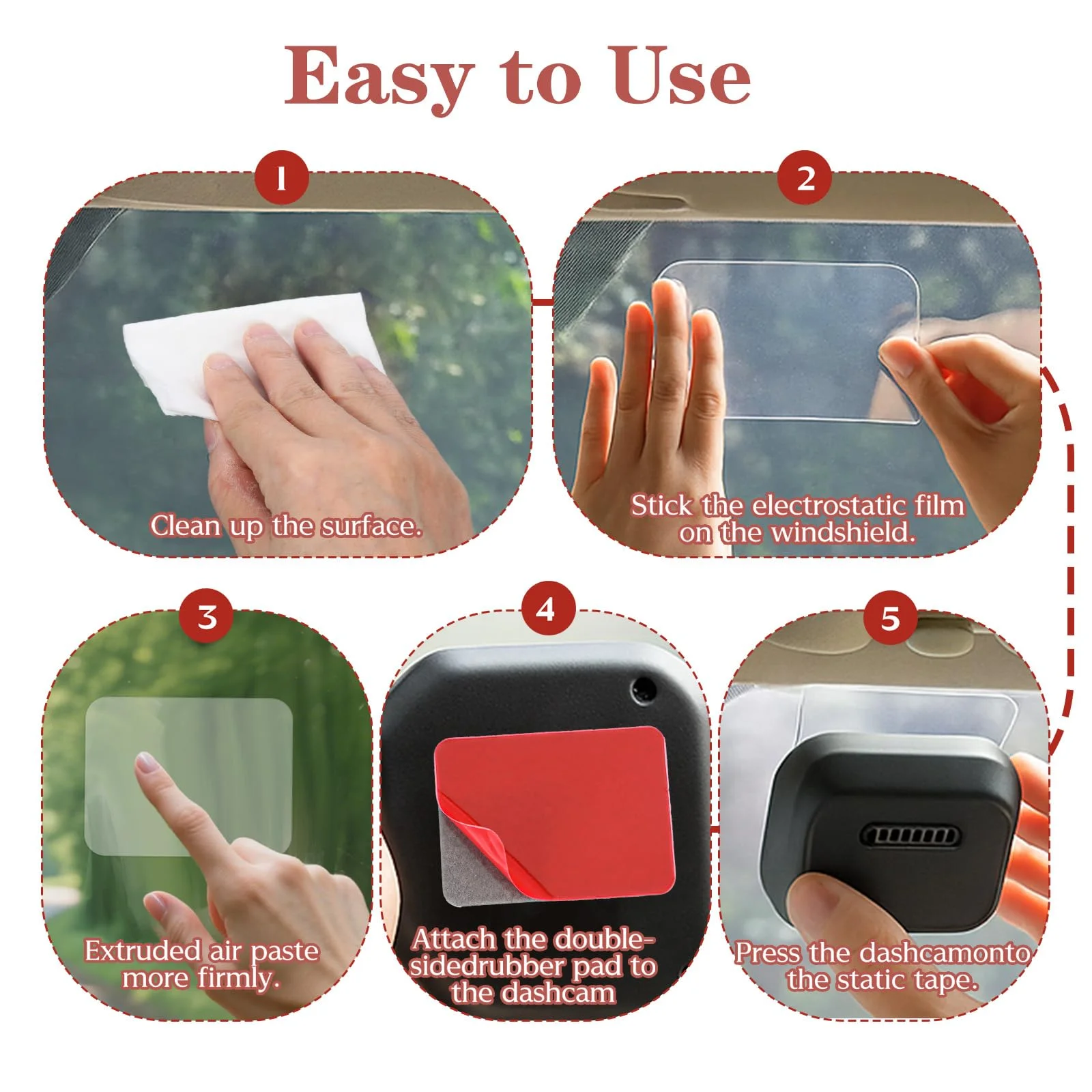
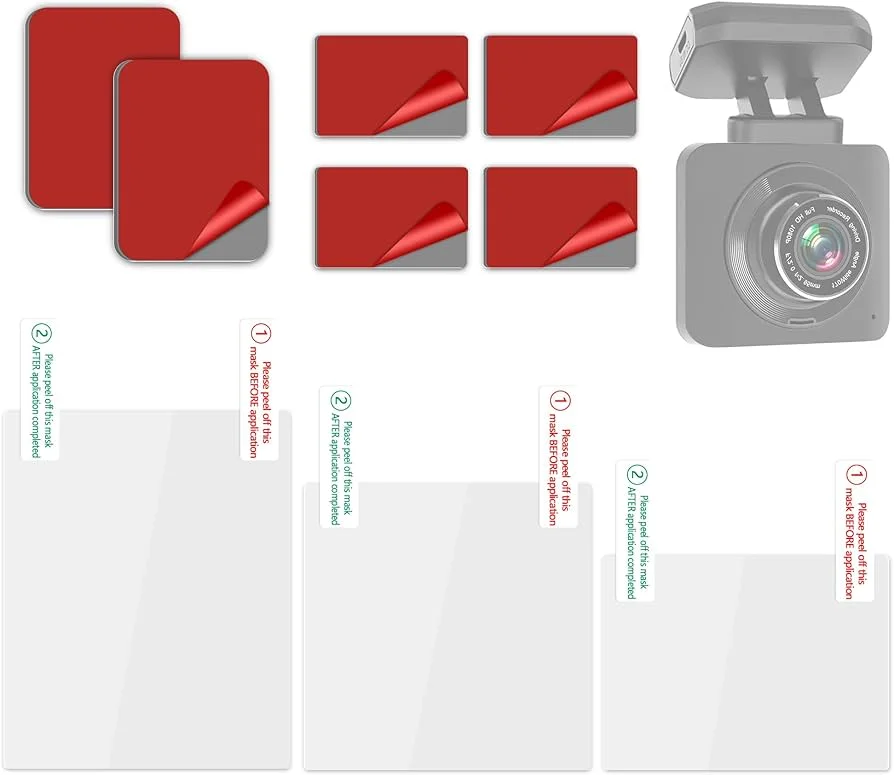
Electrostatic film is the quiet third option most buyers haven't met: a static-cling sheet goes onto the glass first, the adhesive pad bonds to the film, and removal later is a peel instead of a razor-blade session.
A film-plus-pad kit gets you adhesive-grade holding power with a clean exit — the move for leased cars, or anyone who has already fought baked-on residue once and lost the afternoon.
The climate cheat sheet: hot-state outdoor parking — adhesive, full stop. Garage-kept or mild coastal — any of the three works. Deep-winter regions — adhesive again, applied to warm glass; suction cups hate cold snaps even more than they hate heat.
Notice what's not on the list: super glue, double-stacked foam pads, and the dollar-store gel sticker. Each holds exactly long enough to make the next drop more expensive.
When the Mount Itself Is the Problem
Sometimes the pad is innocent. Some mounts are engineered to fail — a footprint too small for the camera's weight, a long lever arm that multiplies every vibration, or a plastic ball joint that loosens and lets the camera nod until something gives.
Run the math the listing won't: a footprint smaller than a postage stamp, holding four ounces of camera at the end of a two-inch arm, inside a 150-degree greenhouse, forever. Does that actually sound permanent?
Weight matters more than buyers think. Mirror-style cams and three-channel rigs with interior lenses carry real mass; a mount that holds a two-ounce pencil cam fine will creep under six ounces of electronics and glass.
Owner threads on the heavier cams repeat the same arc: holds for a month, droops by week six, footwell by month two — with the pad still firmly on the glass the whole time.
Heat compounds all of it. Our guide on what extreme temperatures do to dash cam components covers why the mount is usually the first casualty, well before the battery or the sensor.
The tells that you're fighting design rather than adhesive:
- The pad stays stuck but the camera droops.
- The failure recurs at the joint, not the glass.
- The cam visibly swings in its bracket on rough roads.
New pads fix none of those.
Replacement is cheap. A universal replacement mount with a short arm and a metal joint runs ten to twenty dollars. Match your camera's bracket style — most use a slide-in wedge or a quarter-turn tab — and keep the arm short. Less lever, less leverage, less footwell. The footage is the whole point, and the camera can't record the road from the floor.
The Fix-It Kit: What's Actually Worth Buying
The entire repair list fits in one small order, and none of it is exotic. Here's what earns a spot, and what each piece is actually for.
Dash cam adhesive replacement kit with electrostatic film — the one-stop fix. You get fresh double-sided pads cut for dash cam bracket plates plus static-cling film sheets that make the next removal a peel instead of a scrape. For most re-mounts, this is the default buy and the only line item you strictly need.
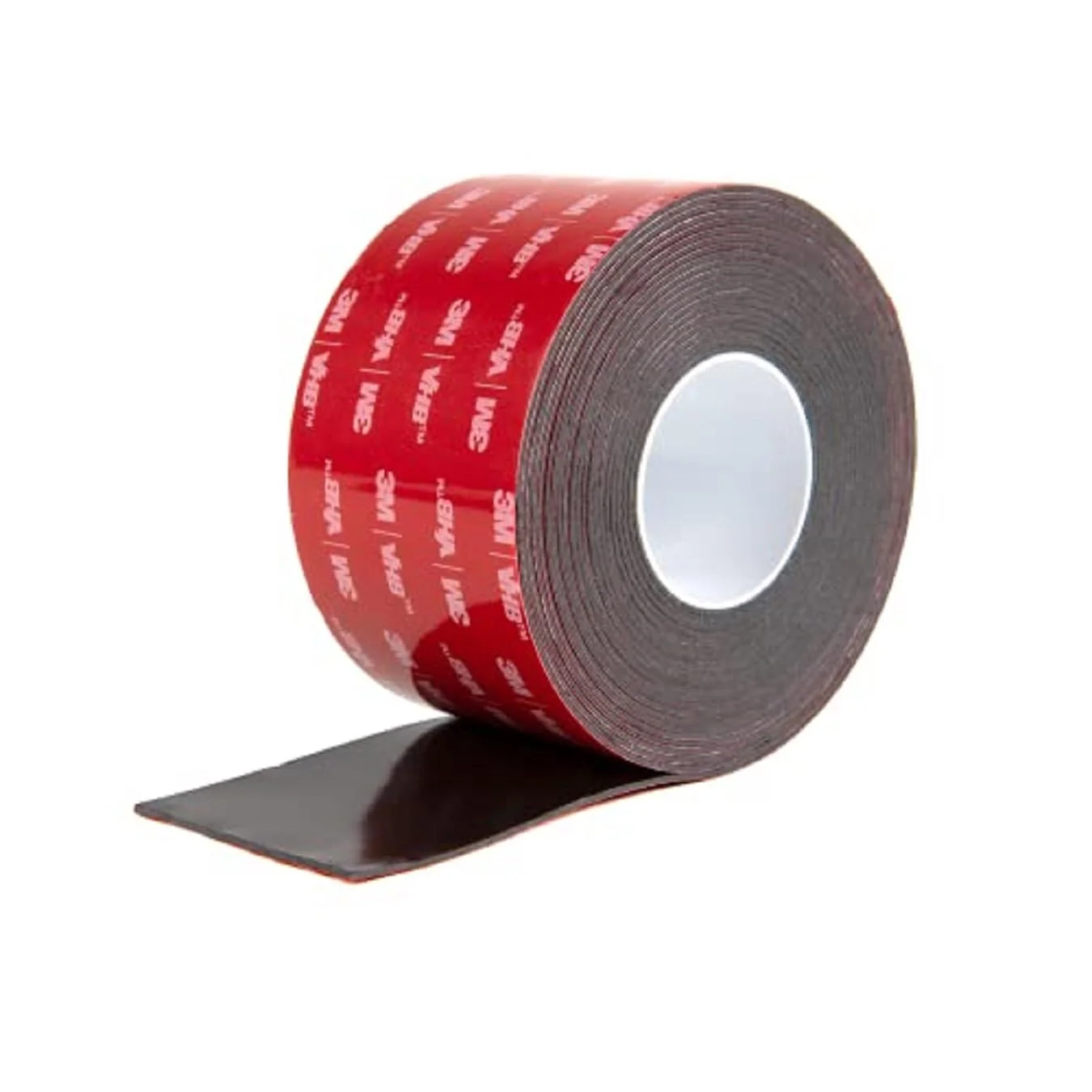
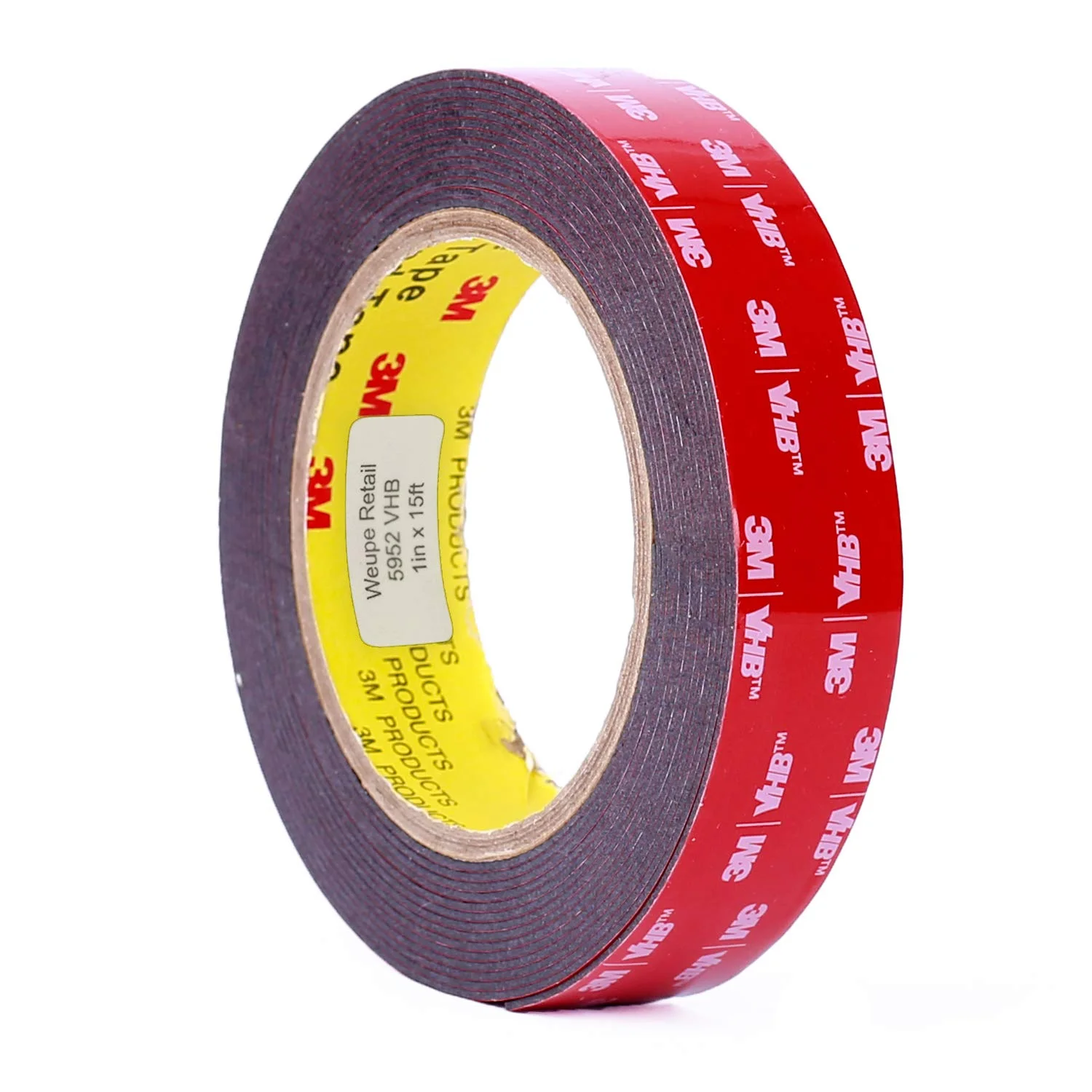
5952 VHB tape — the heavy-duty upgrade when your camera is heavy or your summers are brutal. Rated to roughly 200°F in sustained use per 3M's own data, which is the difference between a bond and a July deadline. One roll, cut to size, re-mounts every camera and toll tag in the household for years.
99% isopropyl wipes — the two-dollar item doing half the work. Individually wrapped wipes live in the glovebox and prep the glass correctly every single time, with nothing left behind to undermine the pad.
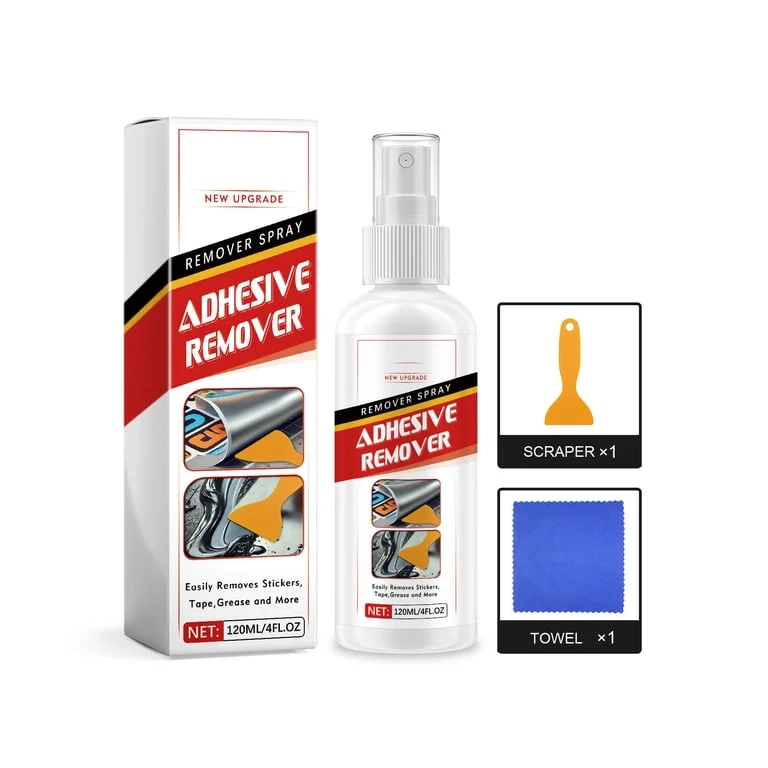
Automotive adhesive remover — for dissolving what the old pad left behind without scratching the glass or clouding the tint band above it.
A universal replacement mount — only if the diagnosis pointed at design. Short arm, metal joint, and a footprint larger than the one that just failed you.
The skip list: 'extreme nano tape' of unknown chemistry, stacked foam pads, and any suction cup sold for less than a coffee. The savings are not savings; you'll meet the footwell again. Owners who switched from mystery pads to the 3M-based kits consistently report the second install being the last one they did.
Keep It Stuck: Habits That Prevent Round Three
A correct re-mount removes most of the risk. What's left is parking and cable discipline — free, boring, and the difference between doing this job once and turning it into a seasonal tradition.
Shade is adhesive insurance. A windshield sun shade knocks the glass temperature down dramatically on a parked car, which is the biggest favor you can do a bonded pad in summer. Cracking the windows helps the cabin; the shade helps the glass.
If you park outdoors all day, nose the car away from the afternoon sun when you can. The windshield takes the worst of a western exposure, and it's a zero-cost habit with a measurable payoff across a summer.
Route the cable with slack at the camera. A taut cable is a constant downward pull on the bond — plus a snag waiting for a passenger's knee. Two adhesive cable clips along the headliner cost pennies and remove the tension entirely.
Stop touching the camera. Every angle adjustment made by yanking the body instead of the mount's joint peels the pad a little. Set the angle once using the app's live preview, then leave it alone.
Twice a year, give the mount a five-second wiggle test — pair it with your SD-card reformat day so both actually happen. Catching a softening bond in the driveway beats catching the camera mid-commute.
And when a suction cup crosses its second birthday, replace it on schedule like the wear item it is. Rubber doesn't announce its retirement; it just stops showing up one cold morning.
None of this is fussy — it's the same logic as not carrying a laptop by its screen. Hardware lasts when the mounting points aren't doing extra work they were never rated for.
The Verdict: Fix It Once
A dash cam that keeps falling off the windshield is a ten-minute, fifteen-dollar problem that gets treated like a defective product. The camera is fine. The bond was never given a fair chance — and the marketing never mentioned it needed one.
Match the failure first: July drops mean heat-grade adhesive; week-one drops mean prep; peeling at the top of the glass means you're on the tint band; a monthly re-lick ritual means the suction cup is done. The right fix is cheap. The wrong fix is quarterly.
The procedure, condensed:
- Strip the old residue.
- Prep with pure isopropyl.
- Mount on smooth glass below the frit dots.
- Press a genuine 3M-grade pad hard for a full minute.
- Give it 24 hours before the camera goes back up.
Cure time is the step everyone skips — and the reason half the one-star mount reviews exist.
For most people the adhesive-plus-electrostatic-film kit is the buy: pad-grade holding power, a clean removal later, under twenty bucks delivered. Hot-state, outdoor-parked, or heavy camera: go straight to genuine 3M VHB and don't look back. Frequent car-swappers: a quality suction mount, replaced every two years, is the honest tool for that job.
And if the camera droops while the pad holds, stop buying pads. The mount design is the problem, and ten dollars of replacement mount ends the cycle for good.
Total damage for the permanent version: about fifteen dollars, ten minutes of work, and one overnight wait. Compare that to a hundred-dollar install appointment — or to a camera that films your floor mats during the one crash you bought it for.
Marketing said permanent. It meant 'permanent, conditions apply.' Now you know the conditions — clean glass, real adhesive, full cure — and all three together cost less than one more drop. — Tom Reyes
Different glitch? Here's fixing a dash cam whose time and date keep resetting.