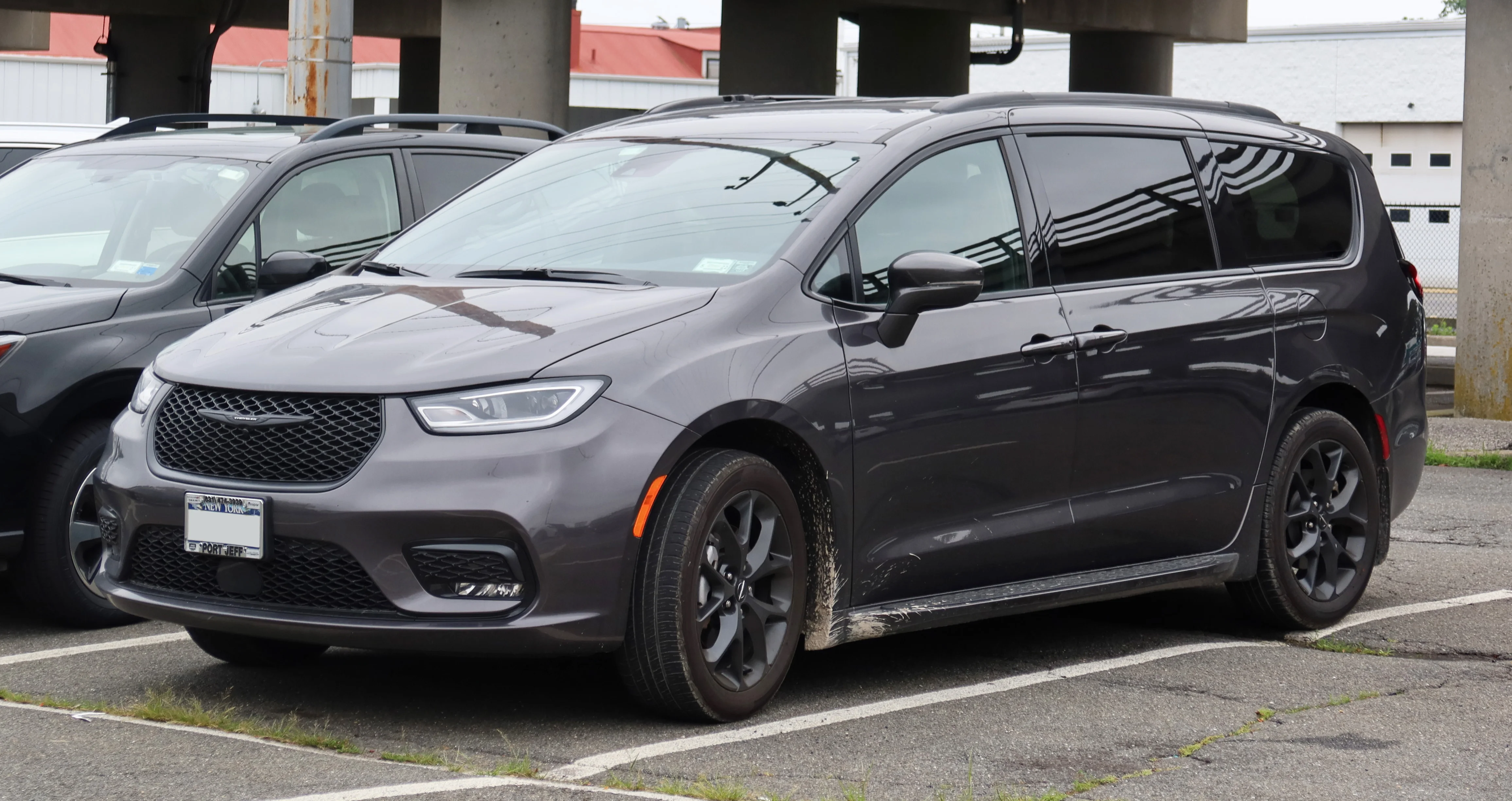
Marketing says 1800 watts of onboard power. Reality:
The forums will tell you the Pacifica Hybrid packs an 1800-watt household inverter for running your campsite. It doesn't. That number is aftermarket folklore, not a factory spec - and chasing it is how people plan around power the van never had.
So let's do this the way I do everything: separate the claim from the spec sheet. The Chrysler Pacifica is genuinely interesting for camping, but for a reason nobody hypes and against a myth everybody repeats. The myth is the 1800-watt hybrid inverter, which is not a feature Chrysler offers on this van. The real story is quieter and more useful: the Pacifica has one factory outlet that actually stays live with the key off, which is something none of the other mainstream minivans can say.
This page checks every power claim against what the owner's manual actually documents. I'll map where the sockets are, tell you plainly which one is special, debunk the 1800-watt story with the correction stated in the same breath, flag the ratings Chrysler doesn't publish, and separate what the gas and hybrid versions really give a camper. You're paying attention to power because it decides your night - so let's get the numbers right. And getting them right has a dollar value here: the 1800-watt story quietly steers buyers toward the pricier hybrid for power it never adds, so the correction isn't pedantry - it's the difference between paying for a feature and paying for a rumor, which is exactly the kind of gap a skeptic exists to close.
The one outlet that actually stays on with the key off
Here's the real headline, and it's the opposite of the hype: the Pacifica's standout camping feature isn't a big number, it's a small socket that doesn't turn off. In the right-rear cargo area there's a 12-volt socket marked with a battery symbol, and the owner's manual documents it as remaining live even with the ignition off. Across the four mainstream minivans a camper cross-shops, that's the only factory outlet that runs key-off.
- Where it is: right-rear cargo area, marked with a battery symbol to distinguish it from the switched sockets.
- What's special: it stays powered with the key off, so it can run a small load overnight without leaving the van on.
- The catch Chrysler prints: the manual pairs it with a discharge warning - because it's fed from the battery, a heavy or long draw can flatten your starter battery.
That's a real, checkable advantage, and it's the sort of thing the brochure never trumpets because it doesn't sound as impressive as '1800 watts.' But for a camper, an always-on socket you can trickle a small load through beats a big outlet that dies when you turn the key. One more practical point the marketing never mentions: because that socket is unswitched, there's no accessory-delay timer counting down to cut it the way the switched sockets do a few minutes after you pull the key - it simply stays hot until you unplug, which is precisely what makes it usable while you sleep.
The 1800-watt inverter that isn't there
Let's put the myth to rest properly, because it's everywhere. The claim is that the Pacifica Hybrid, thanks to its big traction battery, offers an 1800-watt household inverter you can run a campsite from - the way a Ford F-150 hybrid's Pro Power Onboard works. Checked against Chrysler's own materials and owner reports, that feature is simply absent: there is no factory 1800-watt outlet on the Pacifica Hybrid.
The correction matters because the myth changes what you buy. If you pick a Pacifica Hybrid expecting to run a coffee maker and a fan off a factory 1800-watt outlet, you've planned around hardware that doesn't exist - the hybrid's household outlet is the same modest 150 watts as the gas van's.
Where does the number come from? Probably a mix of confusion with the traction battery's capacity and wishful cross-application from other plug-in vehicles that do offer big inverters. Whatever the source, treat any '1800-watt Pacifica' claim as unverified - the van's real household outlet is 150 watts, and that's the figure to plan around. Put it in scale before you argue with it: 1800 watts is twelve times the 150 the van actually delivers, not a rounding error you can bridge with a heavier extension cord or a better inverter cable - the socket on the other end was never wired for it, and no accessory you plug in changes what the factory ran to that outlet.
The 150-watt outlet: same on gas and hybrid, ignition-on only
Here's what the Pacifica's household outlet actually is. Both the gas and the hybrid Pacifica offer a 115-volt, 150-watt AC outlet - the same modest rating on either powertrain - and it works only with the ignition on. It's fine for a laptop, a phone charger, or small electronics while you're set up, and it's not in the same league as a Sienna's 1500-watt inverter.
- 115 volts, 150 watts: light-duty household power for small devices.
- Same on both powertrains: the hybrid does not get a bigger outlet than the gas van, despite the myth.
- Ignition-on only: like most factory inverters, it's dead with the key off - so it's daytime and engine-on power, not an overnight supply.
So the AC outlet is a convenience, not a camping power system. The genuinely useful key-off feature is the battery-symbol 12V socket from a couple sections back - the household outlet is just a place to charge a laptop while the van is running. And 150 watts is a hard ceiling, not a soft suggestion: a drip coffee maker pulls 900 to 1,200 watts, so it won't even start on this outlet - the van cuts the circuit rather than letting it sag, so anything with a heating element is simply off the table here regardless of powertrain.
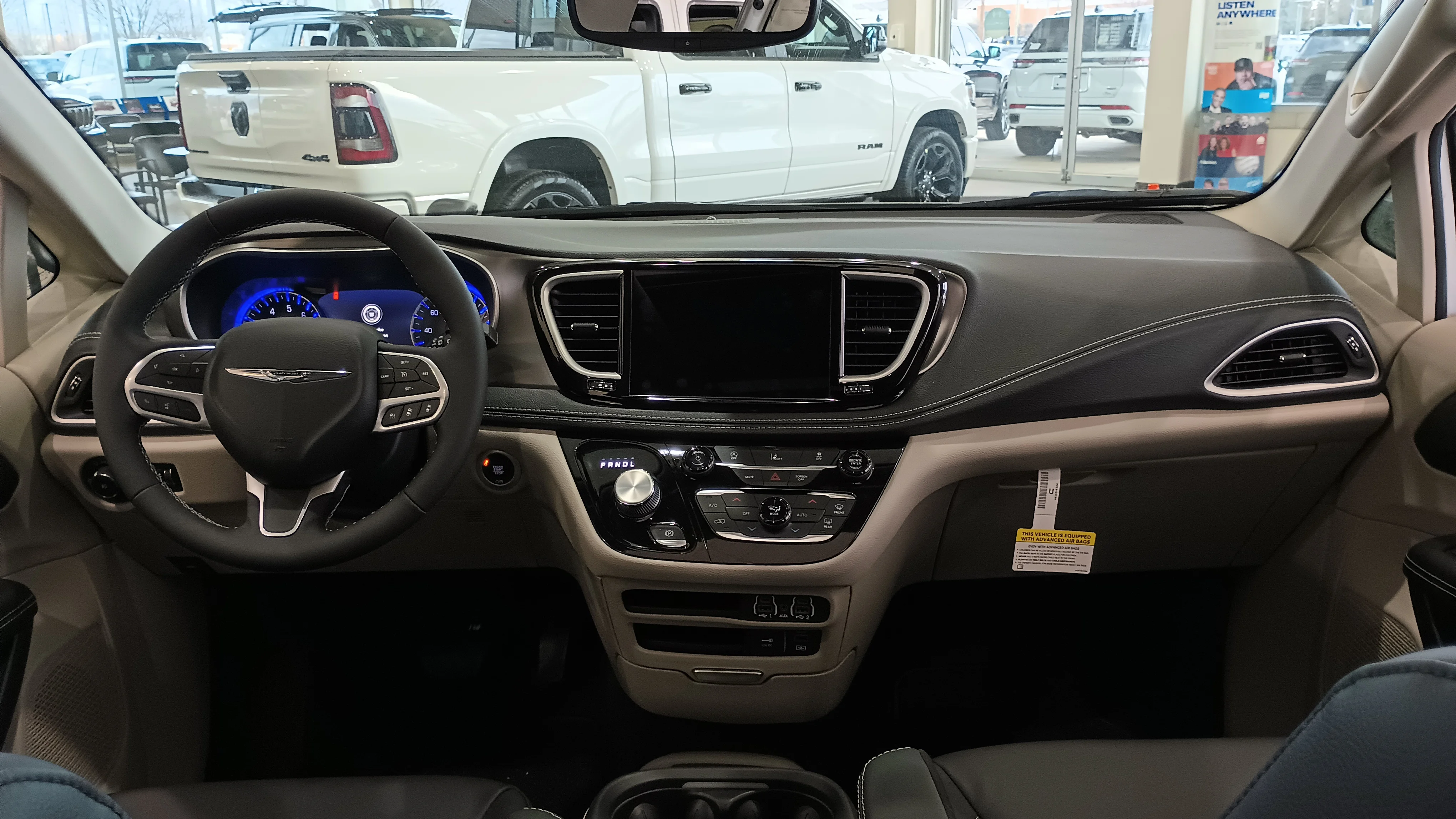
Does the plug-in hybrid give you more power to camp on?
Fair question, and the honest answer is: not in the way you'd hope. The Pacifica Hybrid carries a large traction battery for driving, but Chrysler doesn't expose that energy to you as a big household outlet - there's no vehicle-to-load system that lets you tap the drive battery to run camp gear. So the hybrid's household outlet is the same 150 watts as the gas van's.
Does the big battery help you camp? Only indirectly. You can't plug your campsite into it, so for powering gear the hybrid and gas Pacificas are effectively equal - both give you a 150-watt outlet and the same 12V sockets.
Where the hybrid does help is quieter, cleaner idling behavior and fuel economy on the road, not campsite power. If you're choosing a Pacifica for its camping outlets specifically, don't pay the hybrid premium expecting more usable power - you're paying for efficiency and drivetrain, not a bigger inverter. Worth understanding why: the hybrid still runs a conventional 12-volt accessory battery, kept topped by a DC-to-DC converter off the big pack, so the always-on cargo socket draws from that small starter-type battery on the hybrid too - not the traction pack - and the identical discharge warning applies. The high-voltage energy stays sealed behind the drive system where you can't reach it.
Where the 12V sockets live, and which one is special
Beyond the household outlet, the Pacifica has the usual scatter of 12-volt sockets - and one of them is the star. You'll find 12V outlets up front around the dash and console, and in the rear cabin and cargo area. Most are switched (they die with the key), but the right-rear cargo socket with the battery symbol is the always-live one.
- Front sockets: dash and console 12V outlets, switched - charging while you drive.
- Rear cabin sockets: for second- and third-row use, switched.
- Right-rear cargo (battery symbol): the always-on one - the socket that makes the Pacifica special for camping.
Chrysler doesn't publish a clean per-trim count of exactly how many sockets each Pacifica has, so walk your own van and, most important, confirm which cargo socket carries the battery symbol. That marking is the difference between a socket that runs your overnight light and one that's dead by bedtime. If the symbol has worn off or you're not sure, run the test yourself: plug a phone charger into the cargo socket, shut the van fully off, and check whether the phone keeps charging after the accessory delay lapses - the battery-symbol socket will hold it, the switched ones will drop it, and that five-minute check beats trusting a forum photo of a different trim.
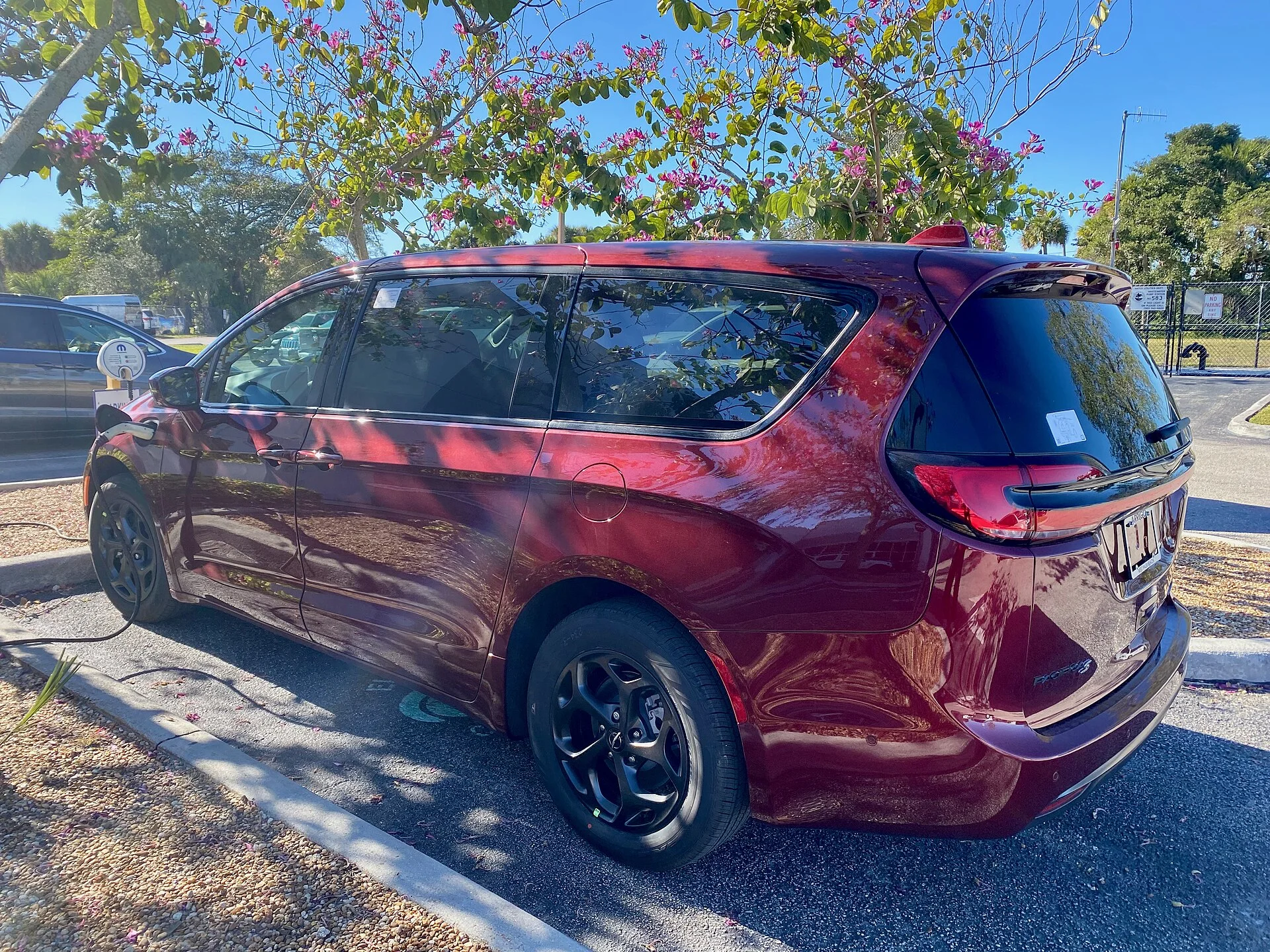
Using the always-hot cargo socket without killing your battery
The always-on socket is a real gift, but Chrysler's discharge warning is not boilerplate - it's the whole catch. That outlet is fed from the vehicle's 12-volt battery, and anything you run through it with the engine off is drawing down the same battery that starts the van. Run a big load overnight and you can wake up to a no-start.
- Good uses: a small LED light, a phone trickle-charge, a low-draw fan for a few hours - loads measured in single or low-double-digit watts.
- Bad uses: a 12V fridge running all night, or anything that pulls steadily for hours - that's how you flatten the starter battery.
- The safe habit: know your battery's capacity, keep key-off draws small and short, and if you need real overnight power, feed it from a separate battery, not the van's.
So the always-on socket is best thought of as a bonus for small, brief loads - genuinely handy, but not a license to run a campsite off your starter battery. Treat the discharge warning as the design limit it is. Do the watt-hours before you trust it overnight: a starter battery only holds a few hundred usable watt-hours before a no-start becomes a real risk, so a 5-watt light for six hours is about 30 watt-hours and trivial, while a 50-watt draw over the same stretch is 300 - a meaningful bite out of the same battery that has to crank the engine at dawn.
The 12V rating that changed between model years
Here's a spec that trips people up, and it's a real disagreement rather than a typo. The Pacifica's 12V socket rating appears to have changed across the generation: earlier (2017-era) references list it around 13 amps, while later (2021-era) references list 15 amps. Those are different limits, and which one applies depends on your model year.
When a rating shifts by model year, averaging the two numbers gives you one that's wrong for both. The right move is to read your own van's fuse-box lid, which lists the exact amperage for your specific vehicle.
Don't size a load to a number you pulled off a forum for a different model year. A 2018 Pacifica and a 2022 Pacifica can carry different socket protection, so treat the year as part of the spec. The lid legend settles it - and it's the only source I'd trust to size a wire against. The gap is real headroom, not trivia: 13 amps is about 156 watts at 12 volts and 15 amps about 180, so an accessory sized to the later van's ceiling can nuisance-blow the fuse in an earlier one - the difference is roughly two amps you don't have, and it shows up as a dead socket at the worst moment.
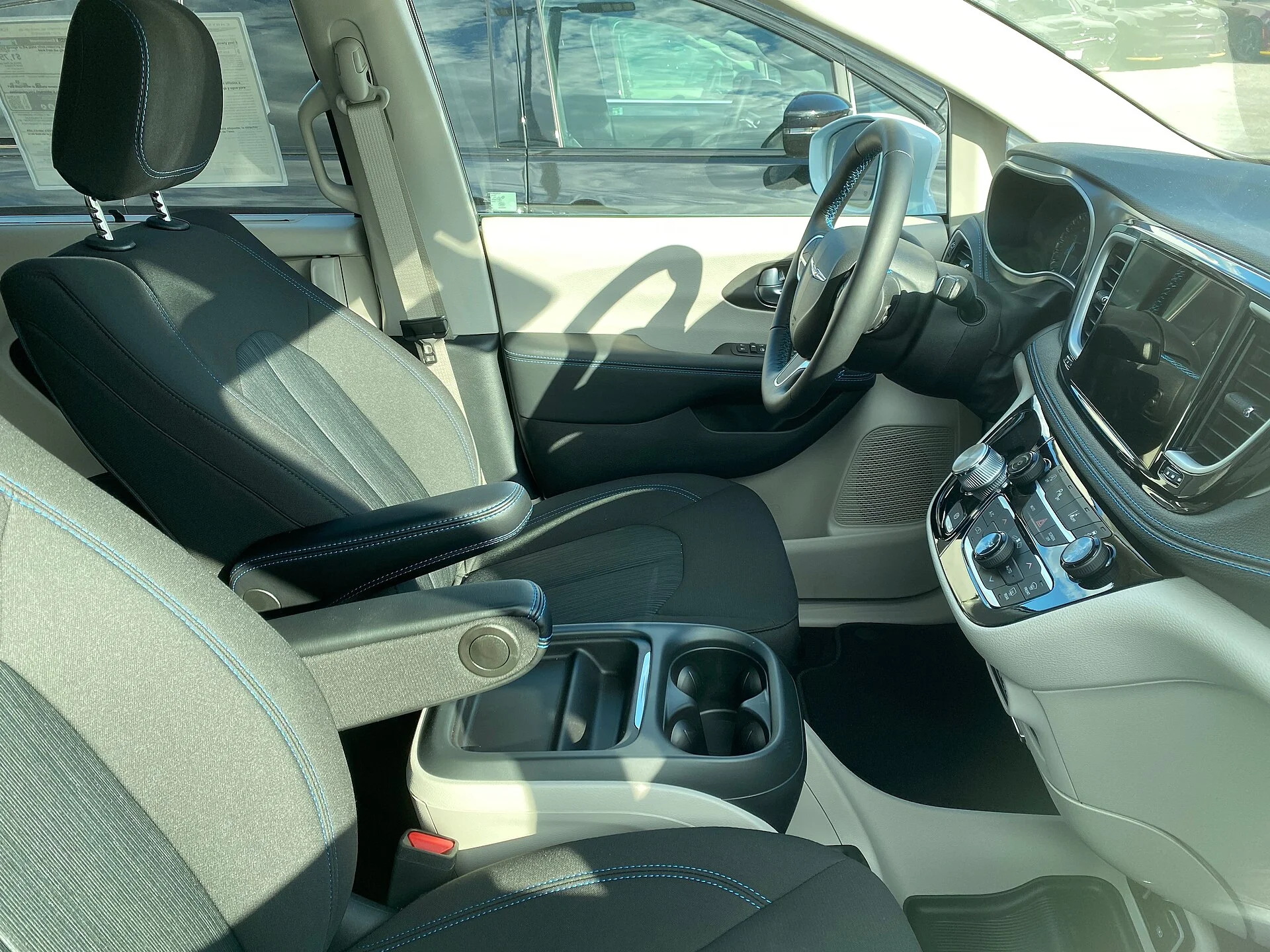
The fuse boxes and the amperage map Chrysler doesn't hand out
When you want to trace a socket or add a circuit, you go to the fuse boxes - and the Pacifica keeps them in the usual places, with a main power-distribution box under the hood. What Chrysler doesn't hand you cleanly is the amperage map that says which fuse protects which outlet, at what rating, for your exact vehicle.
- Under-hood box: the high-current power-distribution center.
- Cabin fusing: interior circuits, including the sockets, are protected through the cabin fusing - confirm the exact location on your van.
- The honest map: the legend printed inside your own fuse-box lid, specific to your VIN.
Aggregator fuse-diagram sites will offer a Pacifica map, but those are exactly the sources that cross-template one model-year's diagram onto another - and since the Pacifica's own socket rating changed across years, that's a real risk here. Read your own lid; it's the map that matches your van. If you actually have to trace a circuit, don't trust the diagram at all - pull fuses one at a time with the socket powered and a test light plugged into it, and watch for the moment the outlet goes dead; that empirically maps your van's real fusing in ten minutes and sidesteps every cross-templated diagram that guessed at a year it wasn't built for.
Gas versus hybrid for a Pacifica camper
Since the outlets are effectively equal, the gas-versus-hybrid choice for a camper comes down to other things. Both give you the 150-watt household outlet, the switched 12V sockets, and - importantly - the always-on cargo socket. So neither has a power advantage for running gear.
- Gas Pacifica: simpler, and its second-row seats fold completely into the floor (Stow 'n Go), which is a genuine flat-floor advantage for sleeping.
- Hybrid Pacifica: better fuel economy and quieter operation, but the traction battery fills the second-row wells, so it loses the in-floor second-row fold.
- For power: a wash - both have the same outlets, including the key-off cargo socket.
So choose on the bed and the drivetrain, not on a power difference that isn't there. There's a second gas-only perk hiding in that trade: with the second row folded flat, the empty in-floor Stow 'n Go wells become sealed storage bins, so the gas van hands you both a flat sleeping floor and hidden gear space that the hybrid's traction battery simply occupies - the hybrid doesn't just lose the fold, it loses the bins under it too. If a flat floor matters more than fuel economy, the gas van's Stow 'n Go is the bigger camping advantage - the full trade lives in our Pacifica cargo dimensions guide.
Powering a night: what the always-on socket does and doesn't cover
So how do you actually power a night in a Pacifica, given one always-on socket with a discharge warning and everything else switched? The answer is a two-tier system that uses the van's one advantage without abusing it.
- Small stuff on the always-on socket: a low-draw light or a phone trickle can ride the battery-symbol cargo socket for a few hours - convenient, and unique to the Pacifica.
- Real loads on a battery: a fridge or a fan all night belongs on a portable power station, not the starter battery.
- Recharge on the move: refill the station from a switched 12V socket as you drive.
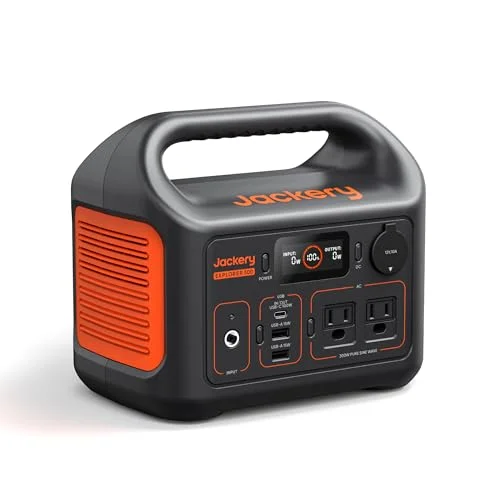
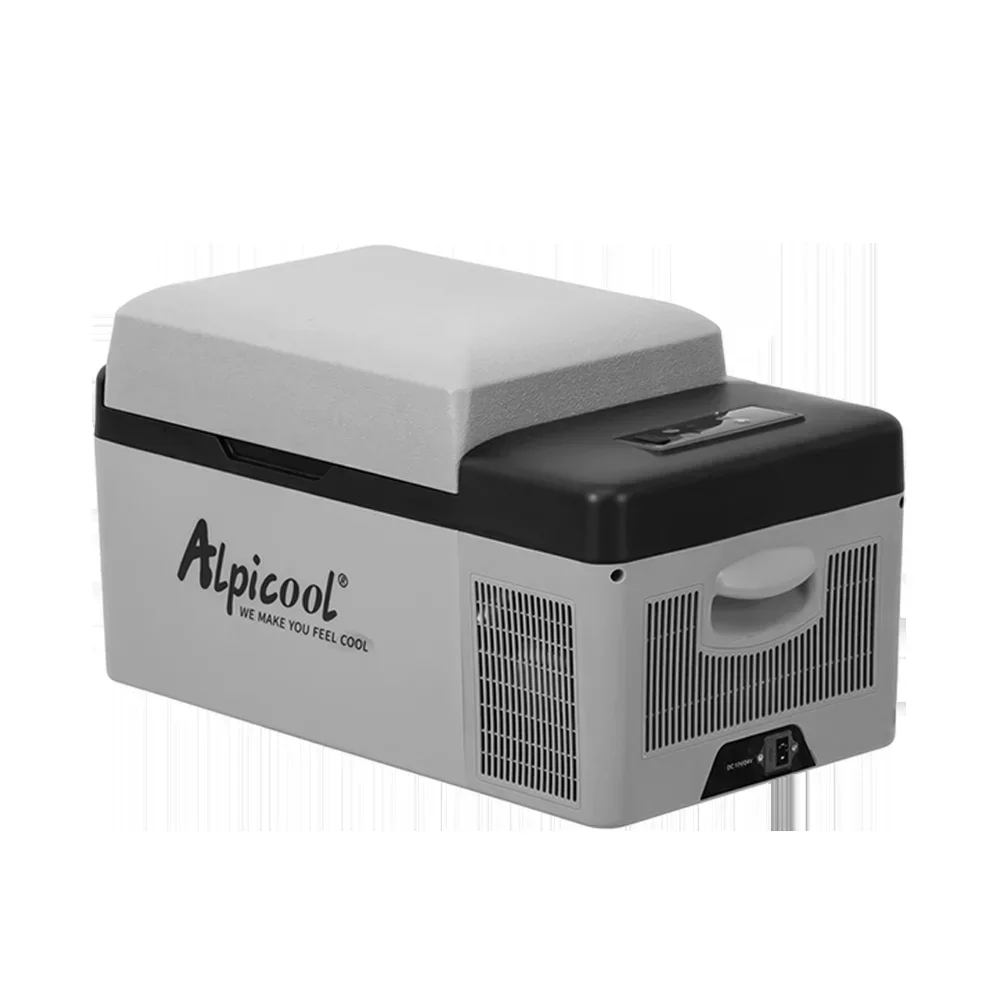
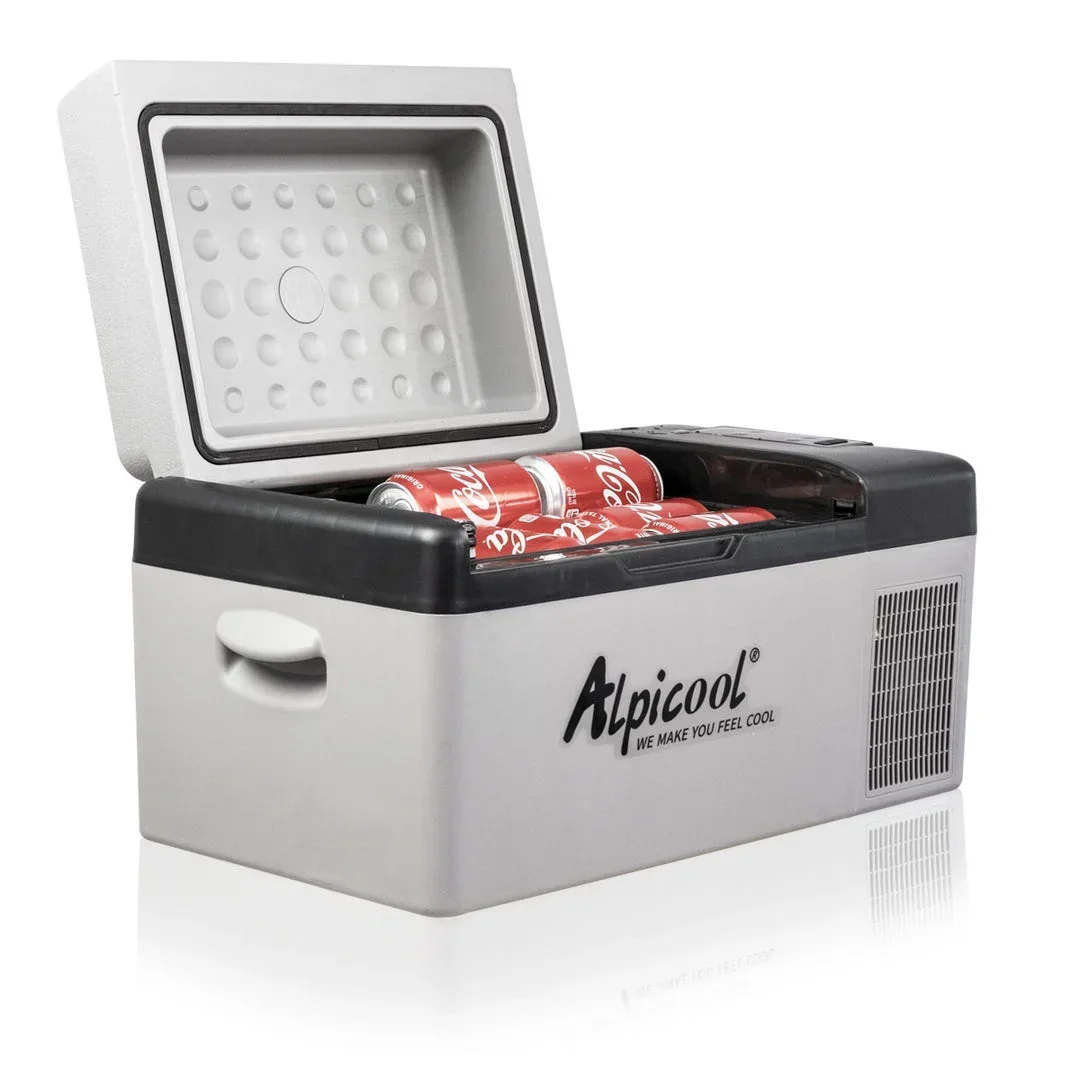
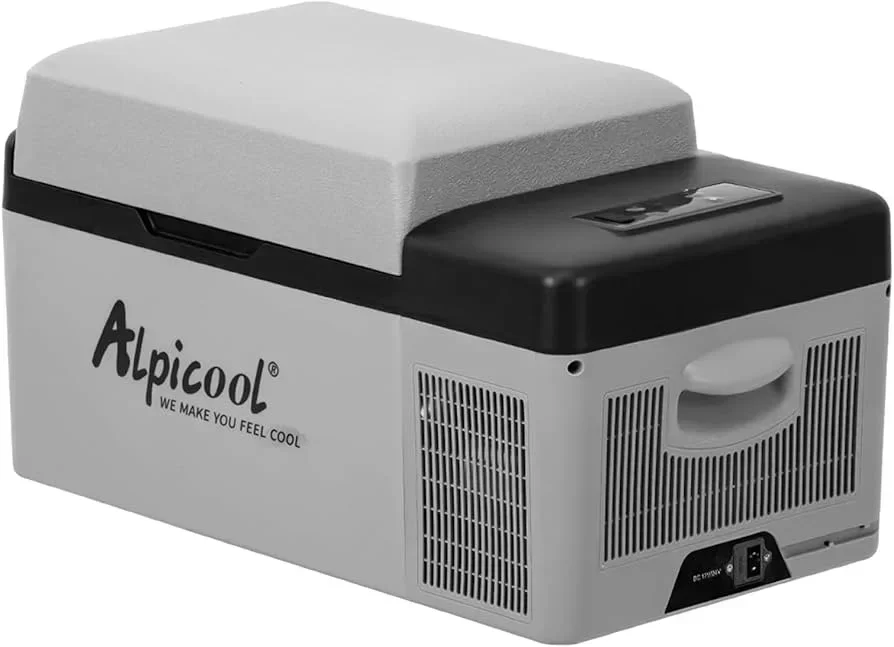
An Alpicool C20 12V fridge draws about 45 watts and cycles, which is far too much for the starter battery overnight but an easy load for a Jackery Explorer 300 power station. Use the always-on socket for the small stuff and the station for the fridge, and you get the Pacifica's key-off advantage without the no-start risk. Mind the recharge rate while you're at it: a switched 12V socket fused in the 13-to-15-amp range tops out near 150 to 180 watts, so refilling a 240-watt-hour station from it takes a couple of hours of actual driving, not a quick errand - plan top-ups around drive legs, and don't expect a grocery run to bring a drained station back.
The verdict: the only van here with real key-off power
Checked against the manual instead of the forums, the Chrysler Pacifica has a genuine, quiet camping advantage: a battery-symbol cargo socket that stays live with the key off - the only such factory outlet across the mainstream minivans. The famous 1800-watt hybrid inverter is a myth; the real household outlet is 150 watts, ignition-on, the same on gas and hybrid. Mind the discharge warning on the always-on socket, and note the 12V rating changed by model year, so read your own fuse lid.
Use the always-on cargo socket for small overnight loads, run the fridge off a power station, ignore the 1800-watt story, and check your own fuse-box lid for the amperage - and the Pacifica's real power advantage does genuine work. One last skeptic's rule of thumb: if a Pacifica feature shows up only in forum posts and never in the manual's index, price it at zero until you've seen the page - the always-on cargo socket survives that test, the 1800-watt inverter never does.
Buy it for the honest feature, not the mythical one. The full build lives in our Chrysler Pacifica camper conversion, the Pacifica cargo dimensions for sleeping covers the bed and the gas-versus-hybrid floor, and our Subaru Outback and Honda Pilot 12V maps apply the same skeptical method elsewhere.