
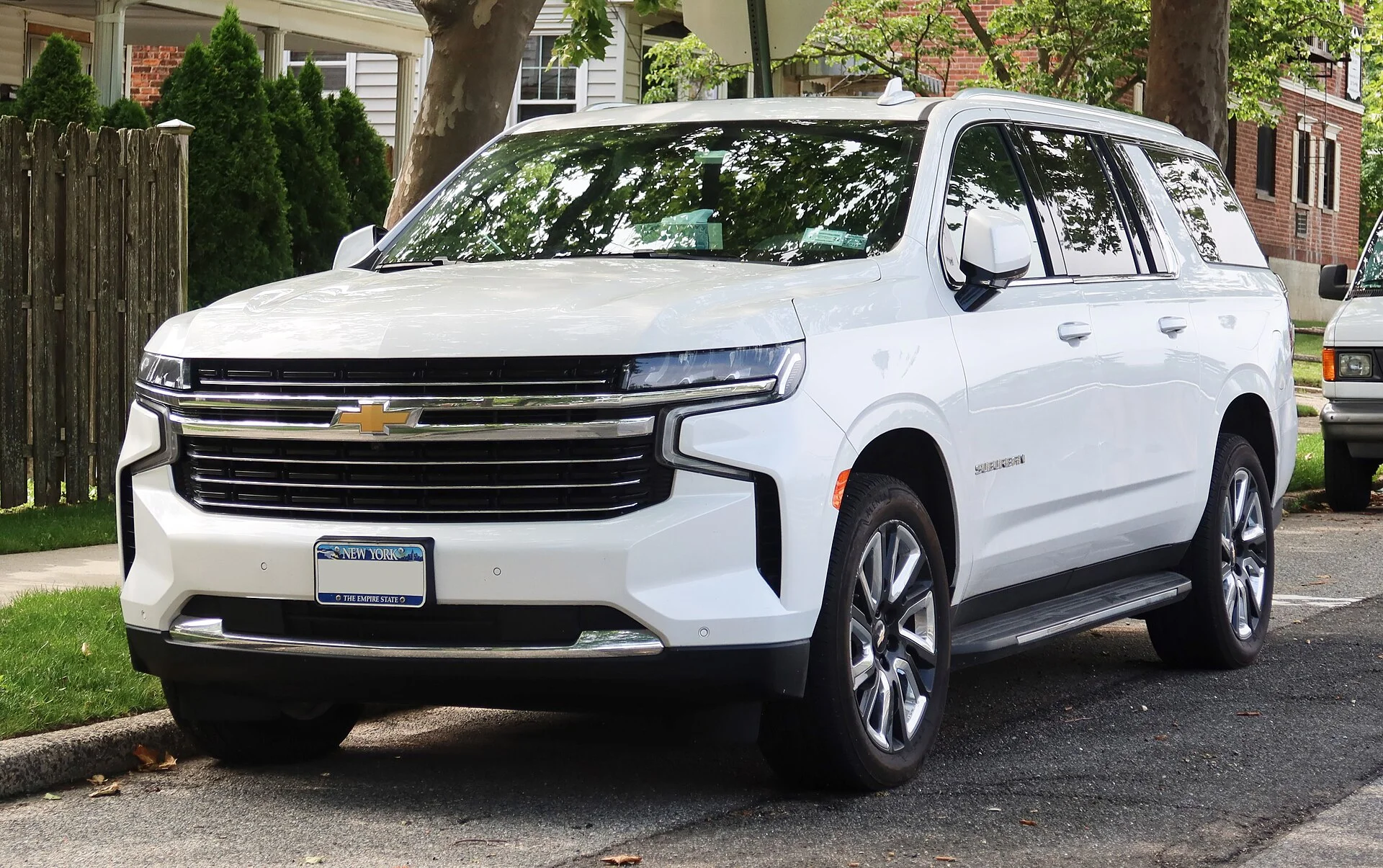
The 8,300-Pound Number Comes With an Asterisk
The Suburban advertises a tow rating that sounds like it can pull almost any camper: the 5.3L EcoTec3 V8 with the Max Trailering Package is rated to tow up to 8,300 lb. That is a genuinely strong number for a full-size SUV. But here is what the sales floor tends to skip: that 8,300-pound figure is only achievable in the lightest 2WD configuration plus the Max Trailering Package.
That asterisk matters because most buyers do not order the lightest possible truck. Add four-wheel drive, a heavier trim, or skip the trailering package, and the real tow rating drops below the headline. A camper who buys expecting 8,300 pounds and then loads a trailer to that number in a 4WD family-optioned Suburban is over the truck's actual limit, not under it.
The honest way to shop the Suburban's towing is to treat 8,300 as a best-case ceiling and find the specific truck's real rating, which lives on its own paperwork, not the brochure. The advertised number is the most any Suburban can do; the number that matters is the one for the exact configuration in the driveway.
This guide reads the Suburban's towing the way the fine print does: what the 8,300-pound rating actually requires, how the diesel and gas engines trade tow for other capability, the tongue-weight math that governs real-world loading, and why the single-wheelbase body makes the Suburban a specific kind of tow platform. The goal is to know the truck's real number, not the poster's.
What the Max Rating Actually Requires
Reaching the Suburban's headline tow rating takes a specific recipe, and every ingredient matters. The 8,300-pound figure requires the lightest 2WD configuration plus the Max Trailering Package, which means both a rear-drive truck and the option package that adds the trailering hardware. Miss either and the number falls.
The Max Trailering Package is the non-negotiable piece. It bundles the hitch, cooling, and gearing that let the truck reach its highest advertised numbers, so a Suburban ordered without it tows meaningfully less regardless of engine. This is the option that separates a truck built to tow from one that merely can.
The 8,300-pound rating is a package-and-configuration achievement, not a baseline. A Suburban without the Max Trailering Package, or with four-wheel drive, tows less than the headline, and the door-jamb and towing guide, not the ad, hold the real number.
Four-wheel drive is the other factor. A 4WD Suburban carries the extra weight of the transfer case and front driveline, which raises curb weight and lowers the tow rating from the 2WD maximum. For a camper who wants both four-wheel-drive traction to reach sites and maximum towing, that tension is real, and it means the 8,300-pound figure and 4WD are not available together. Choosing the configuration is choosing the tow rating.
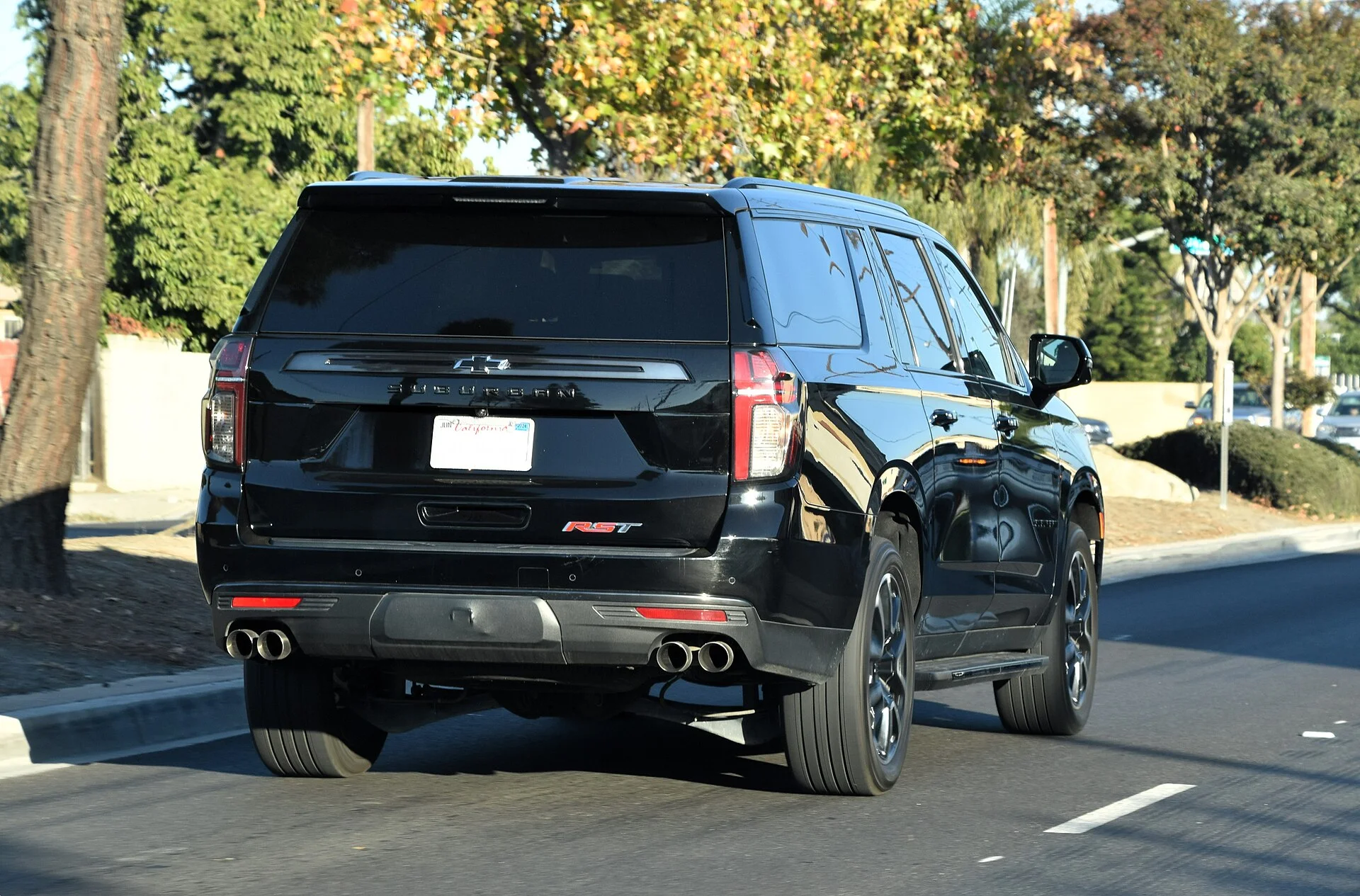
Gas vs Diesel: The Tow-and-Range Tradeoff
The Suburban's engine choice is really a choice about what kind of towing a camper does. The gas V8s reach the higher tow number, the 5.3L and the 6.2L EcoTec3 V8s are both rated to tow up to 8,300 lb when properly equipped, while the 3.0L Duramax turbo-diesel inline-six is rated to tow up to 8,000 lb, slightly less on paper.
On the raw tow number, then, the gas engines win by a slim margin. But that is not the whole story, because the diesel trades that small tow deficit for advantages that matter on a long haul. Diesel engines make their torque low in the rev range, which suits pulling a heavy trailer up grades at a relaxed effort, and they typically deliver better fuel economy, meaning more range between fill-ups when towing.
The payload numbers slightly favor the diesel too: the Suburban's maximum payload is up to 1,700 lb on Duramax diesel models versus 1,696 lb on gas V8 models. That near-parity means the diesel gives up almost nothing in payload for its towing and range benefits, making the tow deficit its only real downside on the spec sheet.
For a camper, the choice comes down to use. A buyer towing near the maximum occasionally may prefer the gas engine's 8,300-pound ceiling and lower purchase cost; one towing heavy loads over long distances and grades regularly benefits from the diesel's torque and range despite its 8,000-pound rating. That difference is small next to how the engines actually behave under a trailer.
Tongue Weight: The Number That Governs Real Loading
Tow rating gets the attention, but tongue weight is the number that actually governs how a camper loads a trailer, and it is where many well-meaning setups go wrong. Trailer tongue weight should equal 10% to 15% of a trailer's total loaded weight, up to 1,000 lb, per standard towing guidance, and it is the downward force the trailer places on the hitch.
That 10-to-15-percent range is not optional; it is what keeps a trailer stable. Too little tongue weight and the trailer sways dangerously at highway speed; too much and it overloads the rear axle and lightens the steering. Hitting the right tongue weight by loading the trailer with more weight ahead of its axle is the difference between a stable tow and a white-knuckle one.
The Suburban's own tongue-weight limit is the ceiling on this: the maximum tongue/hitch weight is 830 lb on gas V8 models and 800 lb on the Duramax diesel, with a Class 4 hitch across all configurations. That limit interacts with the tow rating, because a heavy trailer's correct tongue weight has to stay under the truck's 830-pound or 800-pound cap.
The practical math is straightforward: a trailer near the top of the Suburban's tow range, loaded to a proper 10-to-15-percent tongue weight, produces a tongue load that must fit under the 830-pound gas or 800-pound diesel limit. Checking that the trailer's tongue weight lands in the correct percentage band and under the truck's cap is the loading step that makes the tow rating usable rather than theoretical.
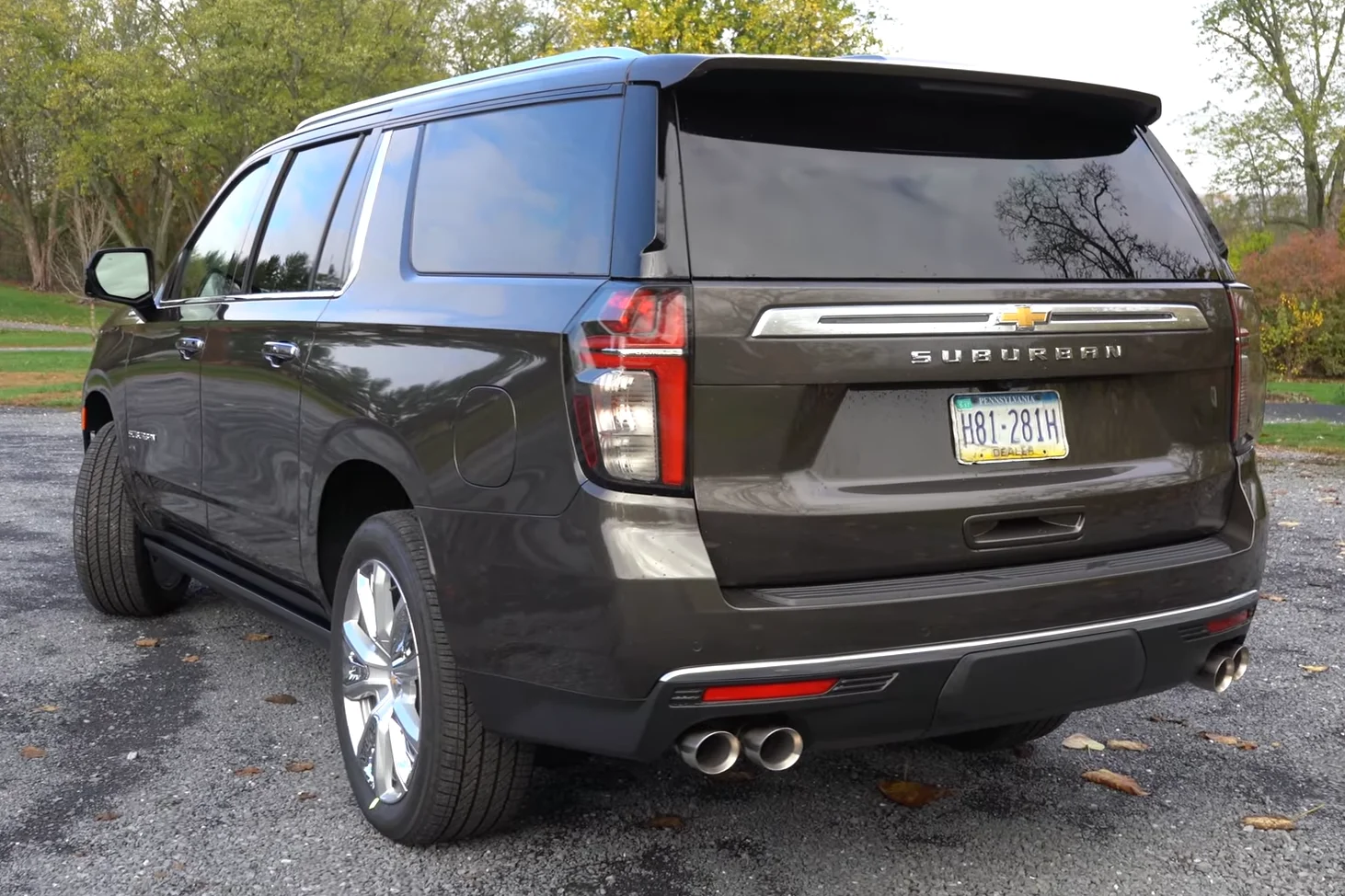
The Single Wheelbase: One Long Tow Platform
Unlike its Tahoe sibling, the Suburban comes in exactly one size, and that shapes how it tows. The Suburban rides on a single 134.1-inch wheelbase and measures 226.3 inches long overall, versus the shorter-wheelbase Tahoe's 120.9-inch wheelbase. There is no short-wheelbase Suburban; length is built in.
That long wheelbase is a genuine towing asset. The distance between the axles gives a trailer a stable platform to pull against, resisting the sway that a shorter vehicle transmits more readily. A long-wheelbase tow vehicle is inherently more composed behind a heavy trailer, which is part of why the Suburban is a favored family tow rig.
The tradeoff is maneuverability. At 226.3 inches long on a 134.1-inch wheelbase, the Suburban is a large vehicle to place at a campsite, back down a boat ramp, or thread through a tight forest road, and adding a trailer compounds that. The stability that helps at highway speed asks for care at low speed in tight quarters.
For a camper, the single-wheelbase reality means the Suburban is committed to being a big, stable tow platform rather than a compromise between towing and nimbleness. A buyer who wants the towing composure accepts the length; one who wants a shorter body chooses the Tahoe and its 120.9-inch wheelbase instead. The Suburban's size is not an option to configure, it is the vehicle's defining character as a tow rig.
Matching a Camper to the Real Rating
Putting the numbers together, matching a trailer to a Suburban starts with the specific truck's real tow rating, not the 8,300-pound headline. A 2WD, Max-Trailering-equipped Suburban reaches that ceiling; a 4WD family truck without the package tows less, and the trailer has to fit whatever that real number is.
The dry weight a trailer advertises is not the number to match against, either. A camper trailer loaded with water, gear, and supplies weighs considerably more than its dry weight, and it is the loaded weight that has to stay under the tow rating. Matching a trailer's dry weight to the Suburban's rating and then loading it is the classic way to end up overweight on the road.
The honest approach is to take the trailer's loaded weight, confirm it stays under the specific Suburban's real tow rating with margin, and check that its properly-set tongue weight lands in the 10-to-15-percent band and under the truck's 830-pound gas or 800-pound diesel hitch limit. All three conditions have to hold at once for the setup to be safe.
Done that way, the Suburban is a highly capable camper-tow vehicle for a broad range of trailers, with the space to carry a family and their gear inside while pulling the trailer behind. A quality weight-distribution hitch helps a heavy trailer ride level and tow stably within those limits, turning the Suburban's real rating into confident highway miles.

Payload and Towing Share One Budget
A subtle point that trips up camper-tow setups is that towing consumes payload, so the Suburban's two big numbers are linked. The maximum payload is up to 1,700 lb on the diesel and 1,696 lb on gas V8 models, and a trailer's tongue weight, up to 830 or 800 pounds, counts against that payload budget along with passengers and cargo.
The arithmetic gets tight fast on a family trip. A full Suburban carrying a family and their gear is already using a good share of its roughly 1,700-pound payload before a trailer is attached, and adding a trailer's tongue weight of several hundred pounds can push the total against the limit. The tow rating and the payload rating have to be satisfied together, not separately.
This is why a camper cannot just check the tow number and load up. A trailer at the top of the Suburban's tow range brings a large tongue weight into the payload column, and if the truck is also full of people and gear, the payload ceiling, not the tow ceiling, may become the binding limit. Both numbers govern at once.
The practical discipline is to budget payload as passengers plus cargo plus tongue weight, and confirm the total stays under the roughly 1,700-pound figure while the trailer stays under the tow rating. A Suburban loaded within both limits tows and hauls confidently; one that satisfies the tow number but blows the payload budget through tongue weight and a full cabin is overloaded despite being under its tow rating. Reading the two budgets as one is how the setup stays legal and safe.
Why the Suburban Suits the Long-Haul Tow
Stepping back, the Suburban's whole design points toward a specific towing mission: the long-haul family trip with a trailer. Its 8,300-pound gas or 8,000-pound diesel rating covers a broad range of travel trailers, its long 134.1-inch wheelbase tows them stably, and its three-row body carries the family and gear that a pickup would relegate to the bed or a second vehicle.
That combination is genuinely hard to match. A pickup tows more but seats fewer and carries gear exposed; a smaller SUV seats a family but tows far less. The Suburban's blend of full-size towing and full-size interior is why it endures as a family tow rig, and it is the capability a camper is really buying.
The diesel option sharpens that long-haul suitability. Its torque and range advantages, paired with near-identical payload to the gas engine, make it the choice for a family that regularly tows heavy trailers across long distances, accepting the small 8,000-pound tow deficit for the way it pulls and the miles between fuel stops.
The honest verdict on fit is that the Suburban is over-built for occasional light towing and ideally-built for regular family trailer hauling. A buyer whose towing is a small trailer a few times a year may not need all this truck; one who tows a real travel trailer with a family aboard, over distance, is exactly who the Suburban is designed for. Matching the truck to that mission is where its size and capability earn their keep.
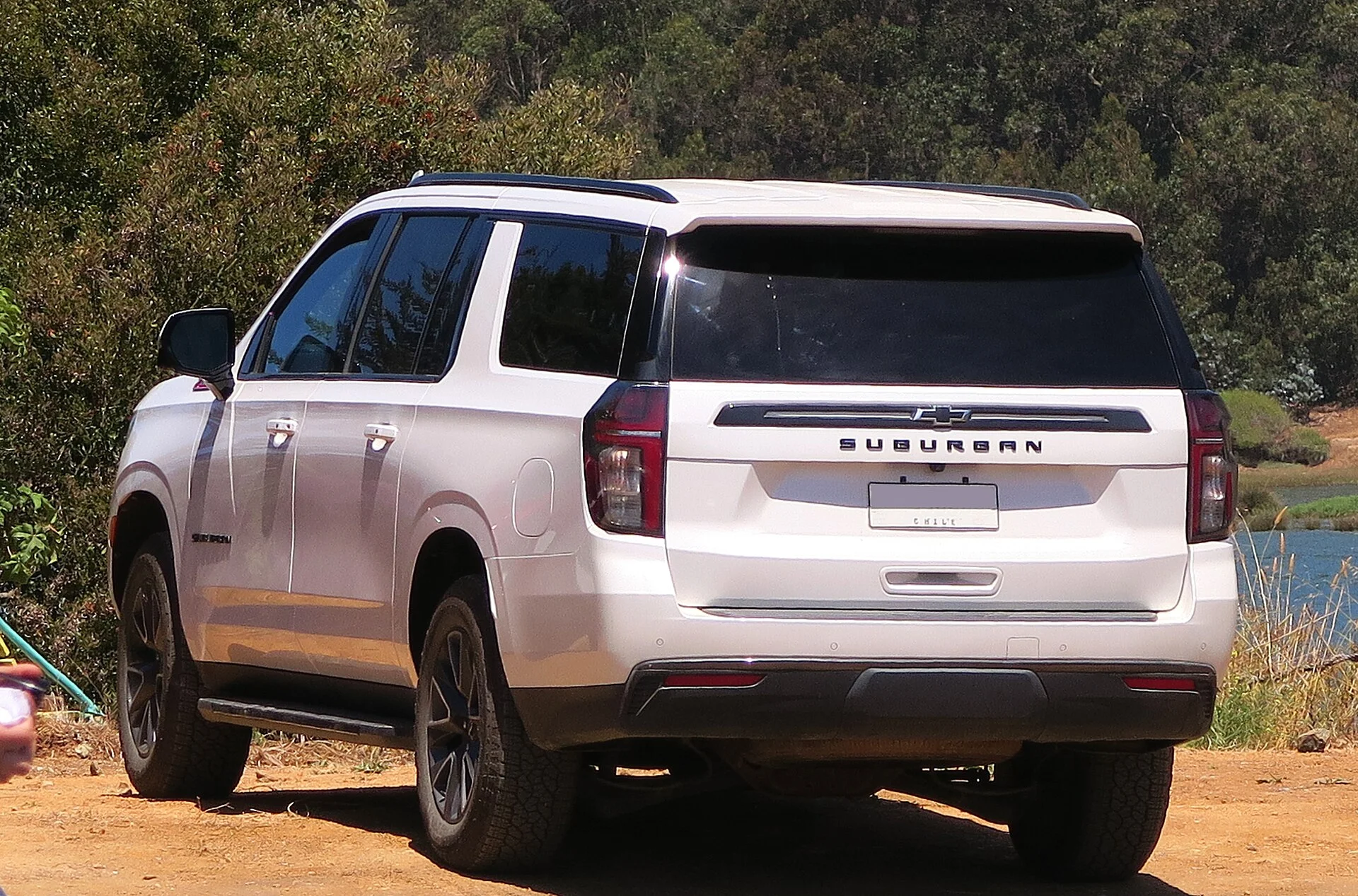
Brakes, Cooling, and What the Trailering Package Really Adds
Towing is not just about pulling weight; it is about controlling and cooling it, and this is where the Max Trailering Package earns its role beyond the tow-rating number. The package bundles the hardware, the hitch, upgraded cooling, and gearing, that lets the Suburban reach and sustain its ratings, and a mechanic's eye sees those as the parts that keep a heavy tow safe over a long day.
Cooling is the quiet hero of a big tow. Pulling a heavy trailer up a long grade generates serious heat in the engine and transmission, and the trailering package's cooling upgrades are what let the Suburban do it repeatedly without overheating. A truck without those upgrades may show the same tow rating on paper but struggle to sustain it on a hot climb, which is exactly the scenario a camper meets crossing a mountain pass.
Braking is the other half, and it points to hardware the trailer needs too. A trailer approaching the Suburban's 8,300-pound range should have its own brakes, and the truck's integrated trailer brake controller, part of a proper towing setup, coordinates them so the trailer helps stop the load rather than shoving the Suburban through intersections. The Class 4 hitch across all configurations is the mounting foundation, but the brake control is what makes stopping the load manageable.
The practical lesson is that the tow rating assumes the truck is properly equipped, and the Max Trailering Package is a large part of what properly equipped means. A camper shopping a used Suburban for towing should confirm the truck has the trailering hardware and a functioning brake controller, because the rating on the door is only trustworthy when the cooling and braking behind it are present. Towing is a system, not a single number.
The Verdict: Find the Real Number, Then Load to It
The Suburban is a capable, comfortable family tow rig, but using it safely means seeing past the 8,300-pound headline. That figure is a best-case, available only on the lightest 2WD truck with the Max Trailering Package, so the first job is finding the specific configuration's real rating rather than assuming the maximum.
The engine choice frames the towing character. The gas 5.3L and 6.2L V8s reach 8,300 pounds; the 3.0L Duramax diesel tows 8,000 but adds low-end torque, range, and near-identical payload, making it the long-haul choice. Neither is wrong, but they suit different towing patterns, occasional maximum tows versus regular heavy hauling over distance.
Tongue weight and payload are the numbers that actually govern loading. A trailer's tongue weight must land in the 10-to-15-percent band and under the 830-pound gas or 800-pound diesel hitch limit, and that tongue weight counts against the roughly 1,700-pound payload alongside passengers and cargo. Both budgets have to hold at once for the setup to be safe.
Find the real tow rating for the exact Suburban, choose the engine that matches the towing mission, and load the trailer to a proper tongue weight within both the tow and payload limits. Do that and the Suburban's single long wheelbase and full-size capability make it one of the best family camper-tow vehicles on the road; trust the poster's 8,300 and load blindly, and the fine print becomes an overloaded truck instead.