

The Suburban's edge: length you can't fake
Engineer a car-camping bed like a system and one variable dominates the Suburban's spec sheet: length. It carries the longest cabin of any mainstream SUV, and length is the one thing you can't add with a mattress.
The Chevy Suburban gives about 144.7 cubic feet with the rear seats folded and the longest cabin of any mainstream SUV - and that length is the whole case for sleeping in one, worth understanding before you get lost in cubic feet. Every other full-size SUV asks a six-footer to lie diagonally or run their feet against the tailgate; the Suburban's extra wheelbase over a Tahoe buys real fore-aft floor - the room to lie straight with gear still aboard. The trade you pay is a big vehicle to park and fuel, which is a fair deal if a flat night's sleep is the point. Reason about it the way you'd size any structure: the bed you can build is bounded by the shortest usable dimension, and in a full-size SUV that bound is almost always fore-aft length, not width or height. The Suburban is the rare case where the vehicle hands you the scarce dimension for free, so your build spends its effort on the easy variables - flatness and padding - instead of clawing for inches that were never in the box. That inversion is why we treat it as the length benchmark and measure every other SUV against it rather than the other way around.
Here's the trade the marketing skips: the Suburban's folded floor is low and nearly flat, not glass-flat, so length is the strength and a mild seam is the thing you level. This page gives you the published volumes, explains what the 2021 redesign actually changed underneath, and reasons out the bed the class-longest floor lets you build.
The numbers that matter: 41.5, 93.8, 144.7
Start with the volumes, because they're the honest floor. Chevrolet lists the current Suburban at about 41.5 cubic feet behind the third row, 93.8 with the third row folded, and 144.7 with both rear rows down - the last figure is class-leading among mainstream SUVs. These come from aggregators that mirror Chevrolet's configurator, because Chevy's own spec pages block automated reads.
- 41.5 cu ft (behind row three): huge for a seats-up number - the Suburban hauls a family's gear without folding anything.
- 93.8 cu ft (third row folded): a genuinely long partial bed; note one dealer blog prints 98.8 here, which is a transcription error - use 93.8.
- 144.7 cu ft (both rows folded): your working canvas, and the number that makes the Suburban the class benchmark for interior sleeping room.
Read the 144.7 as volume that finally comes with the length to use it. In most SUVs a big max number is width and height you can't sleep in; here a chunk of it is usable floor run. Watch the deltas, not just the totals: the step from 41.5 to 93.8 is the third row disappearing, and the step from 93.8 to 144.7 is the second row going down - roughly 51 cubic feet of it, and that second increment is the one that converts a partial bed into a full-length one. If you only ever drop the third row, you're sleeping in the 93.8 world, which is long enough for one adult but pinches two across the shoulders. Fold both rows and you get the class-leading run, which is the only configuration where the Suburban's headline length actually shows up under your body rather than in a brochure. Treat 144.7 as the ceiling you build toward and 93.8 as the honest floor for a quick solo overnight where you'd rather leave the second row up for a passenger.
Near-flat, not glass-flat - what the low floor really gives you
Now the honesty. Reviewers consistently describe the Suburban's folded floor as low and near-flat - a real improvement, but with a mild slope and a seam where the seatbacks meet, not a factory-perfect plane. As an engineer sizing the problem, treat it as 'level enough that a thin leveling layer finishes the job,' which is a much better starting point than most three-row SUVs give you.
The spec that matters isn't a flatness rating - Chevy doesn't publish one - it's how much the folded seats drop. On the Suburban they drop a lot, so the seam you have to swallow is small. Small seam plus big length is the recipe.
Practically: expect to run a straightedge across the floor, find a modest step at the seatback junction, and erase it with a shaped mattress or a low platform. That's a five-minute finish on a floor that already gives you the hard-to-get part - the length. One more engineer's habit: note where the seam lands relative to your body, not just how tall it stands. On the Suburban the seatback junction falls roughly under a sleeper's hips or lower back when you lie with your head at the tailgate, which is the worst place for a step to sit, so a leveling layer here earns its keep more than the raw height suggests. If you run a rigid deck instead, span the seam with a single continuous board rather than butting two panels at the junction, because a deck seam stacked on the floor seam doubles the ridge you were trying to erase. And take the measurement of that step with weight on the floor - kneel on it - because the seatbacks give a little under load and the seam you level for is the one that exists with a body on it, not the one you eyeball empty.
Why the 2021 redesign lowered the floor
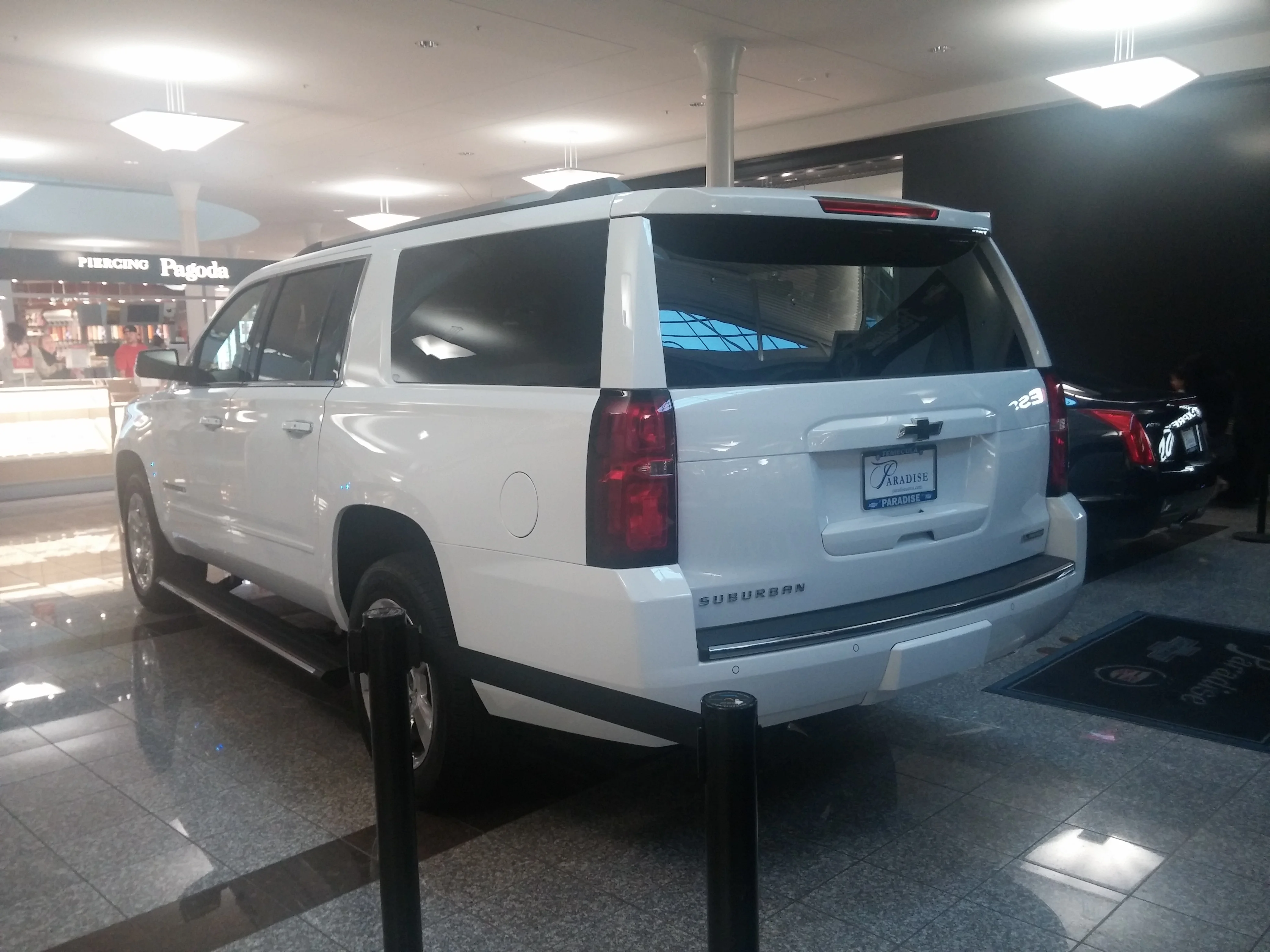
The reason today's Suburban sleeps so much better than the ones before it is a suspension change, not a seat trick. For 2021 the Suburban switched to an independent multilink rear suspension, which let engineers drop the load floor and let the seats fold down and 'squat' lower than the old solid-axle trucks could. Lower floor, lower folded seats, smaller seam - it's a structural win you can feel in a sleeping bag.
- What changed: the rear suspension moved to independent multilink, freeing up a lower cargo floor.
- Why it matters for sleeping: the folded seatbacks sit closer to the floor, so the step you level is smaller than in a pre-2021 Suburban.
- Buying note: if you're shopping used, a 2021-or-newer Suburban is the meaningfully better sleeper - the difference is real, not marketing.
This is the kind of under-the-skin change that never makes the brochure's big type but decides whether a bed is flat. Worth paying for the newer generation. Mechanically the logic is clean: a live rear axle has to arc up and down as a single beam, so the pre-2021 Suburban carried a floor raised to clear that travel, and the folded seats sat on top of that raised structure. The multilink setup lets each rear wheel move on its own links and packages the hardware lower and more compactly, which is what frees the floor to drop and the seatbacks to settle nearer to it. The two effects compound in your favor - a lower floor and lower-folding seats both shrink the same seam - which is why the near-flat result reads as a generational step rather than a trim box you could tick on a 2020 truck. It's also why we don't lump all 'Suburbans' together when we talk sleeping: the nameplate is old, but the floor under the current one is a different piece of engineering.
Power-folding versus the bench: which Suburban folds best
Not every Suburban folds the same, and the difference is trim and seat choice. The third row is a 60/40 split that's manual on lower trims and power-folding on the upper ones (Premier, High Country); the second row is a bench as standard, with power-release available, and there's an optional pair of captain's chairs that trade a seat for comfort.
- Best-folding combo: the second-row bench folds to the flattest, most continuous surface - the pick if sleeping is a priority.
- Captain's chairs: nicer to sit in, but they may not fold as flat as the bench and can leave a gap down the middle - check before you assume a flat floor.
- Power-fold: a convenience on upper trims; it doesn't change how flat the result is, just how easily you get there.
The engineering read: if you can choose, take the bench second row for sleeping. It's the configuration that turns the Suburban's length into one clean flat run. Two caveats worth designing around. First, the captain's-chair gap runs straight down the centerline - exactly where a single sleeper's spine wants to be - so if you've inherited a chair-equipped truck, plan to bridge that channel with a firm insert or to sleep offset toward one side rather than straddling it. Second, power-fold's real value isn't a flatter result but leverage: you drop the rows from switches at the cargo opening without climbing in, which matters when the bed is already half-loaded and you don't want to unpack to fold. Either way, confirm each seatback has latched fully flat before you trust the surface; a row that stops a few degrees shy of down reads as flat to the eye and as a wedge to your back at two in the morning. The 60/40 split on the third row is a bonus here - you can leave the 40 up for long gear and still sleep on the 60 side, trading a little width for a load you didn't have to leave home.
Length is the whole point (measure it anyway)
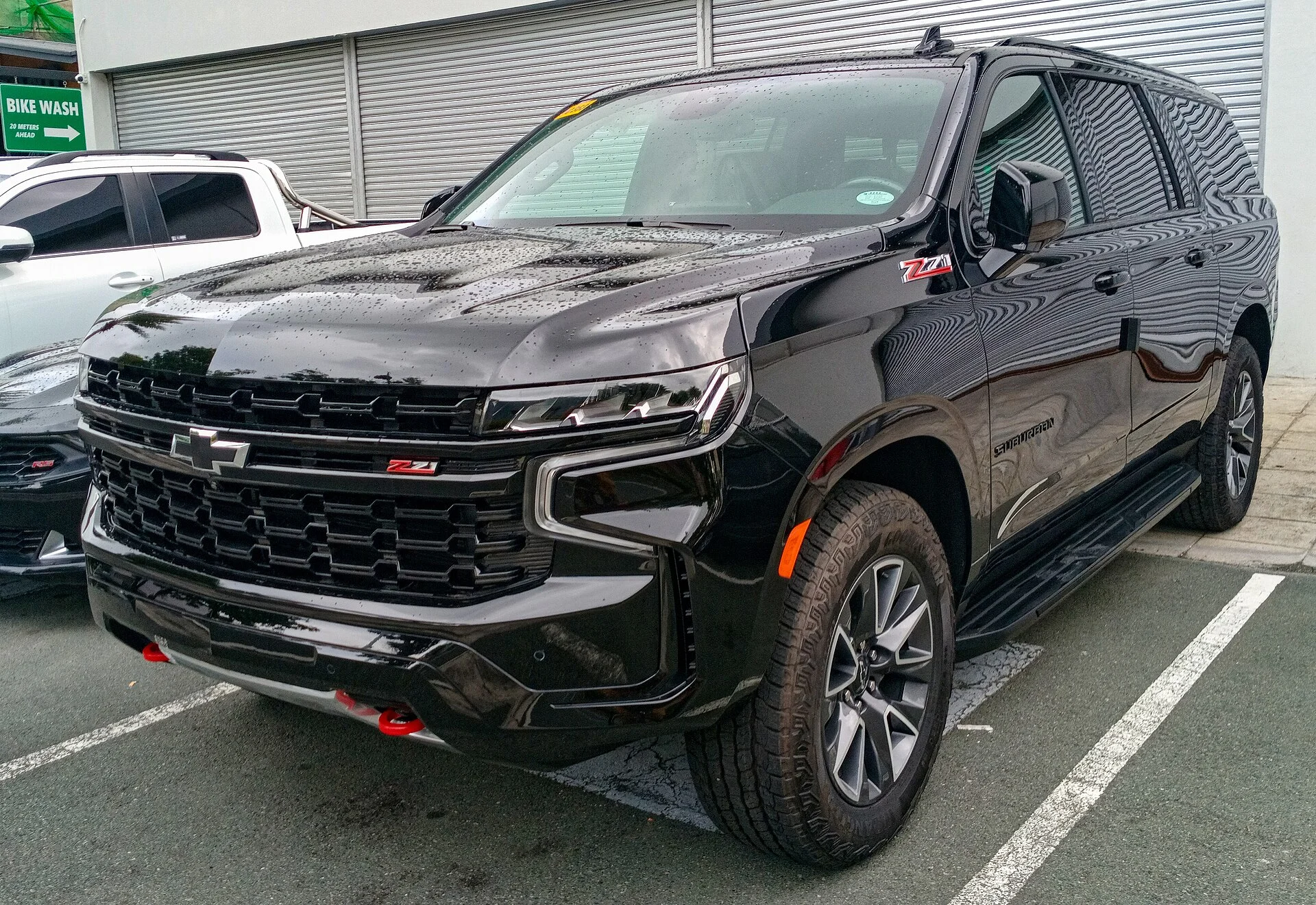
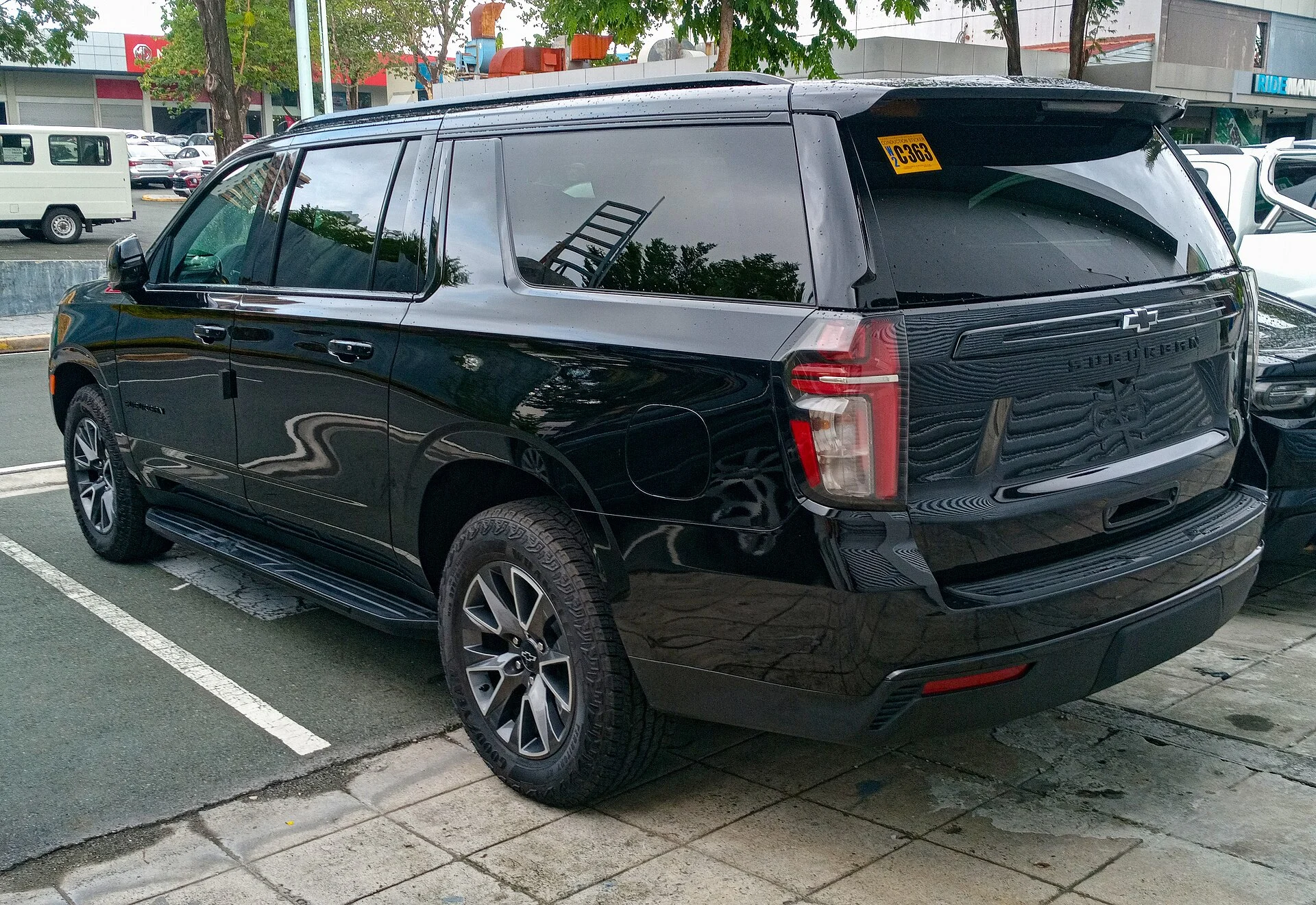
The Suburban's advantage is length, but Chevy doesn't publish a flat load-floor length in inches - only cargo volume. The overall vehicle length of around 225.7 inches is context, not a cargo spec, so don't confuse the two. The only number that decides whether you lie straight is the one you take yourself.
Measure from the tailgate to the folded front seatbacks with the front seats where you'll actually leave them. That single tape pull tells you more than any spec sheet, because the front-seat position moves the number by several inches.
What you can say honestly: the Suburban gives the longest such run in the mainstream SUV class, long enough that most adults lie flat without going diagonal. What you can't quote is the exact inch - so take the measurement before you buy a mattress, and buy the pad to the floor, not the floor to the pad. Two practical corrections when you take that tape pull. Sliding the front seats fully forward can add several inches of usable run, but only spend that room if nobody needs to ride up front on the trip - a bed sized to seats-forward becomes a wedge the moment you slide them back for a passenger. And measure to the closed liftgate's inner trim, not the rear bumper, because the glass and hatch trim eat into the length you can actually lie against. When in doubt, buy the pad a touch short and fill the head or foot gap with a stuff sack, because a mattress that fights the walls arcs upward at the ends and quietly undoes the flat floor you measured for. The overall 225.7-inch vehicle length is worth keeping in your head only as a parking-and-turning reality, never as a stand-in for the floor - a huge slice of those inches is hood, engine, and the seats you just folded, none of which you sleep on.
Leveling the seam and using the space under a platform
With length handled by the vehicle, your build is a small leveling job plus a decision about storage. Because the floor is already low, you have two clean options.
- The durable fix: a low platform sized to your measured floor, level with the top of the small step, giving you real under-bed bins - and the Suburban has the length to lose a few inches to a deck and still sleep flat.
- Keep it low: the Suburban's roof is tall, but every inch of deck is an inch of sitting height gone - build only as high as your storage needs.
The rule holds: level first, soften second. Get the seam flat, then add your pad. On a floor this long, that's all that stands between you and a genuinely comfortable night. If you go the platform route, size its deck height to the top of that folded-seat step and no higher - build to the tallest point of the floor and the whole surface comes out flat with the least headroom sacrificed. Leave the front edge open or slotted so air moves through the under-bed bins, because a sealed box beneath a sleeper traps condensation against your gear on a cold night. And keep the structure light: the Suburban will happily carry a heavy deck, but you're the one sliding it in and out at every trailhead, so a bolt-together frame you can lift in two pieces beats one welded slab you wrestle solo. Whichever way you go, remember the length is doing the hard work here - the Suburban can lose a couple inches of run to a deck and still leave most adults lying straight, a margin a shorter SUV simply doesn't have to spend.
Power: the 120-volt outlet and what GM won't print
The Suburban can carry a 120-volt household outlet, offered on upper trims (LT and above), but here's the honest gap: GM doesn't cleanly publish a Suburban-specific wattage for it. In these big SUVs the cabin outlet is a low-wattage, roughly 150-watt-class supply meant for a phone or a laptop, not a fridge, and its on/off behavior is configurable in the infotainment settings with a key-on default. Verify the rating at the outlet label before you plan around it.
- What it runs: charging and light electronics while the vehicle is on.
- What it won't do: power your camp overnight - it's not a house battery, and it's not a key-off supply by default.
- Don't trust a borrowed number: because GM doesn't rate it cleanly, ignore any confident wattage a random page quotes and read your own outlet.
The verdict: the most bed in the class, with a seam to level
The Chevy Suburban is the mainstream SUV to pick when interior sleeping length is the priority - about 41.5, 93.8 and 144.7 cubic feet, and crucially the longest cabin in the class, on a floor the 2021 redesign dropped low and nearly flat. The honest asterisk is the same as its rivals': near-flat means a mild seam you level, and Chevy prints no flat length in inches, so you confirm the fit with a tape.
Take the bench second row, fold both rows, measure your length and the small step, level it with a shaped mattress or a low platform, and the Suburban gives two adults the most room in the class - just bring your own overnight power.
Reduced to a buying rule: choose a 2021-or-newer truck for the lower floor, spec or seek the second-row bench for the flattest run, and treat a leveling layer and your own overnight power as fixed line items rather than surprises. Everything else about the Suburban - the thirst at the pump, the footprint in a parking structure - is a tax you already knew you were paying for the one thing no rival hands you, which is length under a flat back. Buy it for the length and finish the floor yourself. The full build lives in our Chevy Suburban car camping setup guide; if you want the shorter, easier-to-park sibling, our Yukon vs Suburban comparison weighs the length trade, and the Sequoia and Ascent cargo breakdowns cover the full-size and mid-size alternatives.