
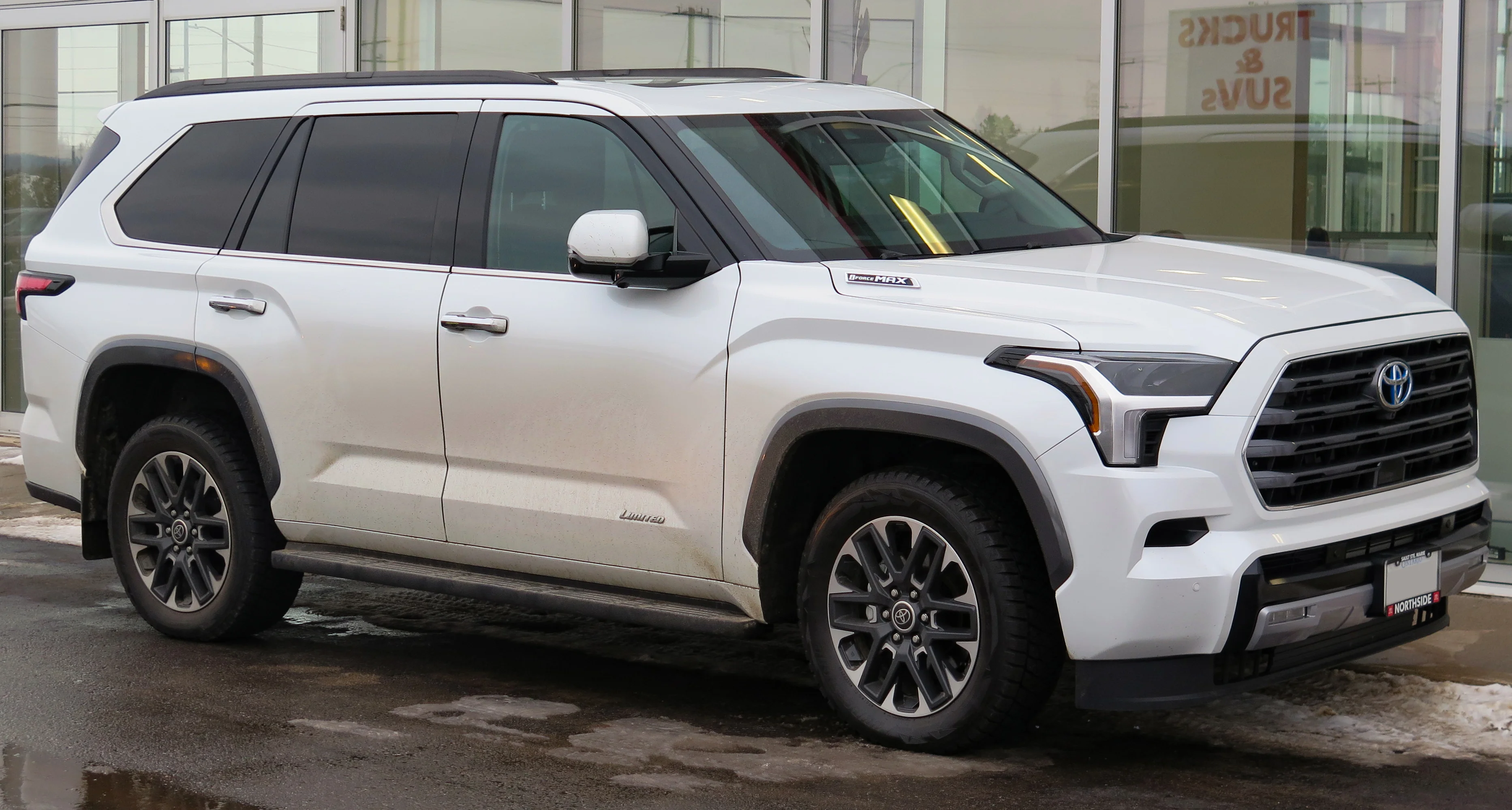
The Sequoia's cargo trap: 86.9 cubic feet that isn't flat
The install is where most Sequoia camping plans go wrong, and it starts with a number that looks perfect. Toyota's 2023-and-up Sequoia holds 86.9 cubic feet of cargo with the rear seats folded, per dealer dimension data and US News - a huge, full-size figure that beats almost everything on this list. If volume made a bed, the Sequoia would win outright.
Here's the step everyone skips over: that 86.9 cubic feet is not a flat box. The Sequoia's third row does not fold flush into the floor - it sits raised, leaving a terraced step between the main cargo floor and the folded seatbacks. So the honest version of this page isn't 'how big is the Sequoia' - it's 'how do you turn a terraced full-size cargo bay into a flat surface a body can lie on.' The good news: Toyota gives you a tool for it, the Adjustable Cargo Shelf, and a simple platform finishes the job. Get that right and the Sequoia becomes one of the biggest, most comfortable beds you can build in a factory SUV. Ignore it and you'll sleep on a ramp.
Volume vs flat floor: what Toyota publishes and what it hides
Toyota publishes the Sequoia's cargo space as volume and leaves the linear dimensions off the sheet, so let's read what we're given. Behind the first row - all rear seats folded - you get 86.9 cubic feet. Behind the second row, third folded, it's 49.0 cubic feet. Behind the third row, all up, it varies from 11.5 to 22.3 cubic feet because the third-row bench slides. Those are the dealer and US News figures.
What that maps to for sleeping:
- 86.9 cu ft folded is a genuinely huge box - the raw space for a full-size two-adult bed is there.
- 49.0 cu ft behind the second row is a solid base-camp layout, one sleeper plus gear.
- No published length, width, or height - Toyota gives you volume only, so you measure your own bay before you build.
The measurement that matters most isn't on the sheet at all: the height of the terrace step. That's the number that decides your whole build, and you'll take it yourself.
The step everyone hits: why the third row won't fold flat
Here's the fitment detail buyers miss, and it's the Sequoia's biggest camping weakness. On most three-row SUVs the third row drops into a well and disappears flush with the floor. The Sequoia's does not - the folded third-row seatbacks sit noticeably above the main cargo floor, leaving a terrace, a raised shelf at the back of the bay, per reviewer coverage of the current Sequoia.
The terrace is the Sequoia's defining cargo problem. The 86.9 cubic feet is real, but a chunk of it is up on a step - you cannot just throw a pad down and lie flat.
Why it's there: the Sequoia rides on a body-on-frame platform with the hybrid components and a live rear axle underneath, so Toyota couldn't sink the third row into a deep well the way a car-based crossover does. It's an engineering trade for towing and durability. For a camper, it just means one thing - you're going to level that step before you sleep, and the next two sections are exactly how.
It's worth being clear about scale, too: this isn't a half-inch lip you can ignore under a thick pad. The folded third-row surface stands well above the cargo floor - enough that lying across it untreated puts a hard ridge under your thighs and drops your head into the lower section. People who try the 'just throw a mattress in' approach in a Sequoia are the ones who report the worst nights of any SUV on this list, not because the truck is small but because they fought the terrace instead of building over it.
The Adjustable Cargo Shelf: Toyota's own fix
Toyota clearly knew about the terrace, because it engineered a part to beat it. The Sequoia offers an Adjustable Cargo Shelf System - a removable shelf that rides on rails in the cargo area and sets to multiple positions, per Toyota's own newsroom release. Set to its mid position, the shelf bridges the gap and creates a flat load floor level with the folded third-row seatbacks.
What the shelf does and doesn't do for a sleeper:
- Does: give you a flat surface across the whole bay without building anything - the fastest path to a level bed.
- Doesn't: come free on height. The flat floor it makes sits elevated at the third-row seatback level, so you lose some cargo height and headroom below the roof.
- Is removable: a reported ~6-inch-deep collapsible shelf, so you can pull it for tall gear and reinstall it for sleeping.
If your Sequoia has the shelf, it's the single easiest way to a flat bed. If it doesn't, you build the equivalent - that's next.
Building a flat bed over the terrace: the platform
When there's no cargo shelf, a platform is the clean, lasting fix, and the Sequoia's terrace actually makes the math friendly. You build a flat deck that rides at the height of the folded third-row seatbacks and spans forward over the lower main floor - the terrace becomes the rear support, so half your structure is already there.
How I approach the build:
- Measure the step height from the main cargo floor up to the folded seatback surface - that's your support-rail height at the front of the deck.
- Span a single deck from the seatback-height terrace forward to matching rails, so the whole surface sits level.
- Store underneath: the void below the platform over the lower floor swallows bins, a cookset, and a power station.
A clean platform lasts; a rushed one rattles loose by week three. Measure the step before you cut a single board, because that one number sets the whole build.
A few install details I've learned the hard way on tall, heavy tailgate platforms: use a full-width front rail, not just corner blocks, because a body's weight over the lower floor wants to flex an unsupported span; carpet or bed-line the top so a pad doesn't slide on the drive; and leave a finger gap at the tailgate edge so the deck lifts out without a fight when you need the raw cargo space back. On a full-size like the Sequoia the deck is big enough that a couple of pounds of extra bracing is cheap insurance against the midnight creak that wakes you every time you roll.
The sliding third row and your sleeping length
One Sequoia feature works in your favor here, and it's easy to miss: the third row slides. That slide is why the behind-third-row volume ranges from 11.5 to 22.3 cubic feet - all the way back for legroom, or forward for cargo. For sleeping, you generally fold it, but the slide still affects how the folded panel sits and how much flat length you net.
How to use it:
- Slide it forward before folding where the design allows, to push the terrace edge forward and lengthen your usable flat run behind it.
- Confirm the fold on your trim - power-fold and manual layouts sit slightly differently, so check how flush yours drops.
- Measure the resulting flat length - full-size means there's plenty of room, but Toyota won't hand you the inches, so you take them.
The payoff is a bed long enough for two tall adults - once the terrace is leveled, length is the Sequoia's easy win.
Width and height in a full-size box
Toyota doesn't publish the Sequoia's cargo width or height in inches either, but full-size body-on-frame gives you a generous starting point, so here's how to think about it and what to verify. Width between the wheel wells is wide enough for two adults side by side - the Sequoia is one of the few here that genuinely sleeps two without shoulders touching, once the floor is level.
What to measure on your own truck:
- Width at the wheel-well pinch - the real ceiling for two pads; on a full-size it's usually comfortably past the 48 inches two adults want.
- Height above the built floor - remember the platform or cargo shelf raises your bed, so measure headroom from the elevated surface, not the true floor.
- Roof-load clearance - the Sequoia is tall, but the elevated bed eats some of that; check you can still sit up.
Full-size width is the Sequoia's quiet advantage. The only catch is height, and that's a consequence of the fix, not the truck.
Power: 120 volts, but read the trim and the fine print
The Sequoia can run camp gear, but the power comes with conditions, so read them before you rely on it. Toyota's newsroom confirms 120-volt AC outlets in the cabin and cargo area - real household power - but they come with the SR5 Premium package and are standard higher up the range, so a base SR5 may not have them.
The fine print that matters overnight:
- Wattage: Toyota doesn't publish a Sequoia-specific figure; comparable Toyota 120V outlets are rated around 400 watts, so treat 400W as a cross-model reference, not a confirmed Sequoia number.
- Engine on: those outlets draw from the powertrain, so running them overnight means idling - noisy, thirsty, and not something you want beside a quiet campsite.
Confirm the exact wattage from your owner's manual before you plan a hard load. The safe assumption is small AC gear, engine running.
How the Sequoia compares as a place to sleep
Set the Sequoia next to the other big rigs and its case is clear: unmatched raw space and two-person width, with a floor that costs you a little build work its rivals don't. Volume-wise it's near the top of this whole list.
The honest positioning:
- Versus car-based three-rows: the Sequoia is bigger and wider but has the terraced floor they avoid - you trade a flat fold for full-size space and towing.
- Versus the wagons and compacts here: it sleeps two where they squeeze one, at the cost of fuel and size - our Outback cargo dimensions breakdown shows the small-flat-floor end of the spectrum for contrast.
- Versus an EV three-row: a V2L SUV beats it on silent camp power and a flatter fold; the Sequoia answers with towing and quick refueling.
The Sequoia's case is space and width: build the floor level once and you have a genuine full-size bed for two, which few vehicles here can say.
The full-size tax: what the big bed actually costs you
Before you commit to the Sequoia as a camper, price out the whole install honestly, because the flat bed you build sits inside a very large, very thirsty truck. The i-FORCE MAX hybrid helps the fuel numbers versus the old V8, but this is still a full-size body-on-frame SUV, and every trip pays that tax in fuel, in parking, and in where you can physically take it.
The trade-offs I'd weigh before building:
- Trailheads and tight campgrounds: the Sequoia's length and width close off narrow forest roads and small sites a compact shrugs at - scout access before you rely on a spot.
- Fuel range between fill-ups: budget more stops on a long trip; the payoff is towing capacity a crossover can't touch if you're pulling a trailer too.
- The bed you get for it: genuine two-adult width and length once leveled, plus the ability to tow and haul - that's the full-size value proposition in one sentence.
The Sequoia earns its place for people who need the size anyway - a family, a trailer, big gear. If you're a solo camper choosing it purely to sleep in, the terrace work and the fuel bill are a lot to pay for space you won't fill. Match the truck to the trip, not the trip to the truck.
The Sequoia platform checklist
Specs are only useful once they're a build, so here's the checklist I run turning the Sequoia's terraced bay into a flat bed. Do them in order and the huge volume finally becomes a place to sleep.
- Measure the terrace step first - floor to folded third-row seatback. Every other number depends on it.
- Use the Adjustable Cargo Shelf at its mid setting if you have it - instant flat floor - or build a platform to the same height.
- Span the deck level from the terrace forward, and store gear and power in the void below.
- Slide the third row forward before folding, where possible, to lengthen the flat run.
- Check sitting height from the elevated surface, not the true floor.
- Bring your own power for overnight, and sort the where and the whether - our guide to sleeping in your car safely and legally and our Sequoia camping guide cover the rest.
The verdict: huge, capable, and worth the platform work
The Toyota Sequoia's cargo dimensions make it one of the biggest beds you can build in a factory SUV - as long as you accept that you build it, not just unroll it. You get 86.9 cubic feet folded and full-size width, but the third row doesn't fold flat, so a terraced step stands between you and a flat surface. Toyota's Adjustable Cargo Shelf or a simple platform clears it.
The Sequoia sleeps two full-size adults once the terrace is leveled with the cargo shelf or a platform. The step is the only thing between its huge volume and a great bed - and it's a one-time fix.
Measure the step, level it with the shelf or a deck, use the sliding third row, and bring silent power, and the Sequoia turns full-size volume into a genuine two-person bed. And if the platform work or the fuel bill rules it out for you, that's the honest trade decided here - at the tape measure, not at a campsite with a ramp for a bed.