
One Tow Number for Every Trim
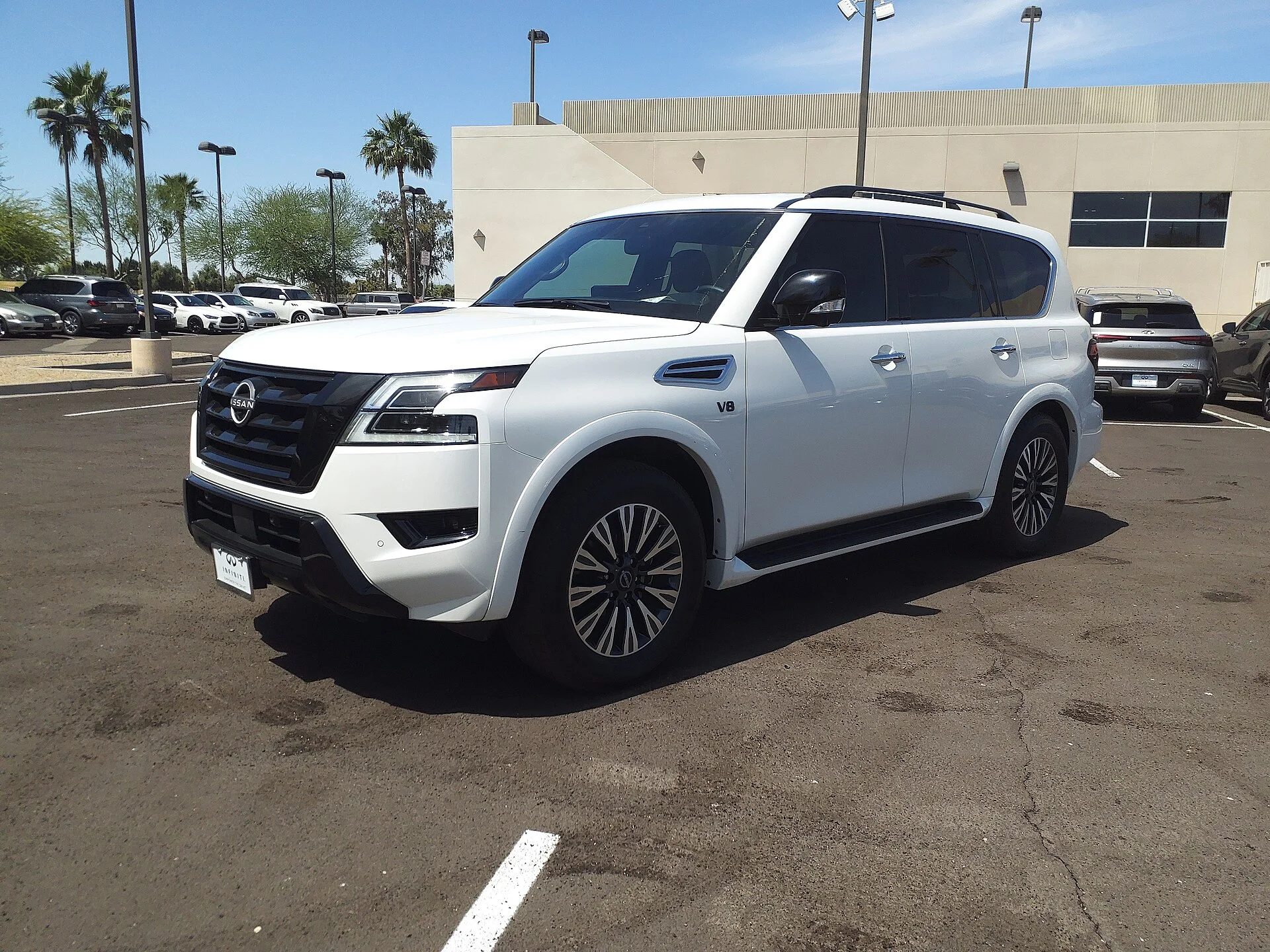
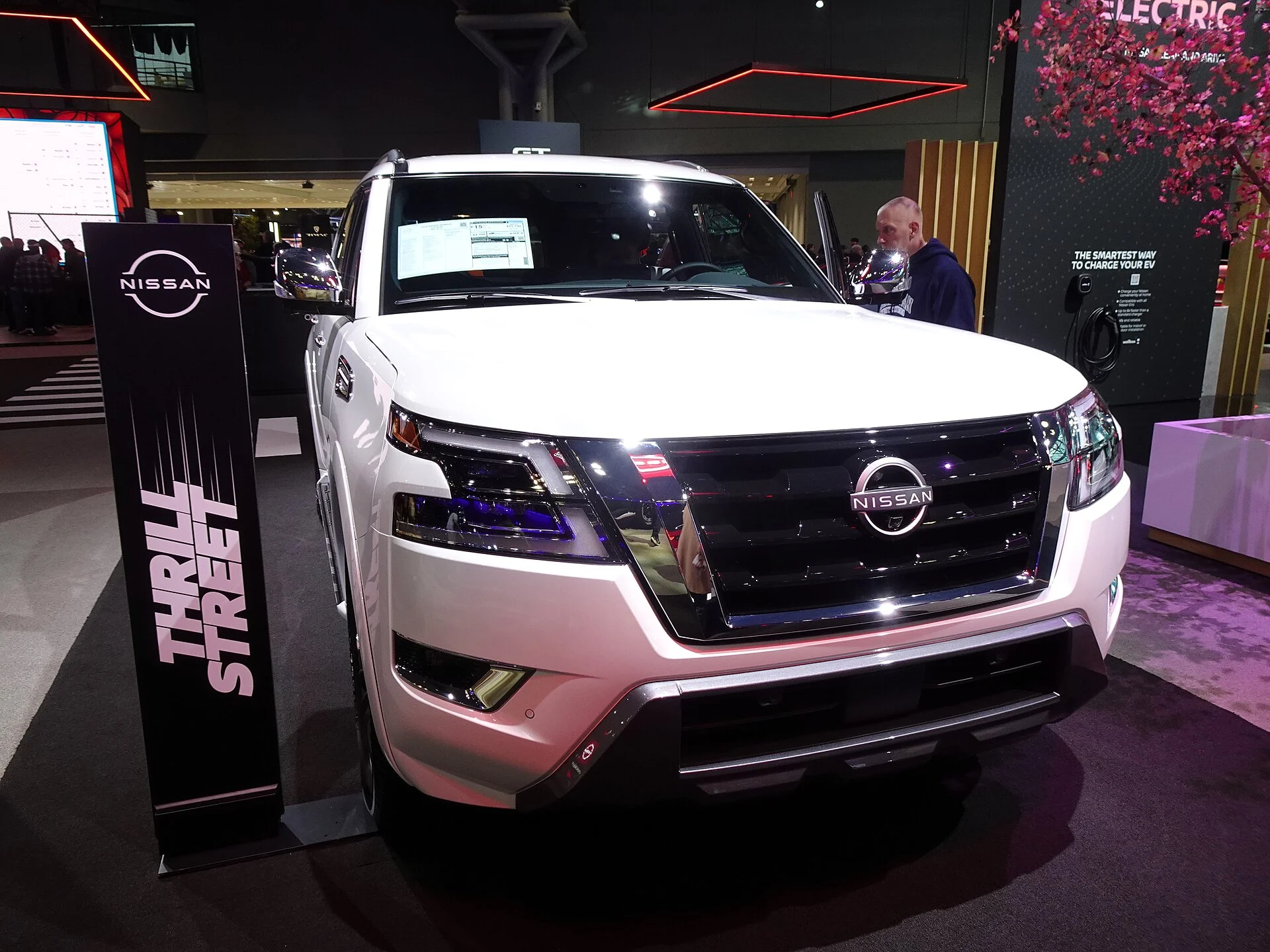
Shopping the Nissan Armada for towing is refreshingly simple, and that simplicity is itself the story. The 2025 Armada is rated to tow up to 8,500 lb when properly equipped, the same class-topping figure across all trims. There is no configuration hunting, no lightest-2WD asterisk to chase, no trim that quietly tows less. Every Armada targets the same strong number.
That matters more than it sounds. On many tow vehicles the advertised maximum applies only to a stripped, specific configuration, so a buyer who orders the truck they actually want ends up with a lower real rating. The Armada avoids that trap by carrying 8,500 pounds across the lineup, which means the trim chosen for comfort or features does not cost towing capability.
For a camper heading somewhere remote, a consistent rating is a genuine convenience. It means the decision about which Armada to buy can be made on interior, drivetrain, and price without a spreadsheet reconciling how each choice erodes the tow number. The towing capability comes along regardless of trim.
This guide reads the Armada's towing the way its design intends: the flat 8,500-pound rating and what backs it, the new twin-turbo V6 that replaced the V8 without losing the number, the stiffer frame that is the real foundation, and the tongue-weight and payload figures that govern real-world loading. The goal is to understand why the Armada tows the same strong number no matter which one you buy.
The V8 Is Gone, but the Tow Rating Stayed
The Armada's biggest recent change is under the hood, and it is the kind of transition that makes buyers nervous. The outgoing 2024 Armada was powered by a 5.6-liter Endurance V8 making 400 hp and 413 lb-ft of torque, and it was rated to tow up to 8,500 lb. The redesigned model drops that V8 entirely for a smaller engine.
In its place, the 2025 Armada's 3.5-liter twin-turbo V6 produces 425 hp at 5,600 rpm and 516 lb-ft of torque at 3,600 rpm. Despite being smaller in displacement, the twin-turbo V6 makes more horsepower and considerably more torque than the old V8, and it holds the same 8,500-pound tow rating. The downsizing did not cost capability.
Smaller engine, more torque, same tow rating. The Armada's move from a 5.6-liter V8 to a 3.5-liter twin-turbo V6 raised output to 516 lb-ft while holding 8,500 pounds, so the downsizing is a gain on paper, not a loss.
The torque figure is the one that matters most for towing, and the V6's 516 lb-ft comfortably exceeds the V8's 413. Torque is what pulls a heavy trailer up a grade, so the new engine is arguably better suited to towing than the one it replaced, not merely equal to it. A buyer wary of the V8's departure can be reassured: the twin-turbo V6 tows the same load with more muscle.
The Frame Is the Real Foundation
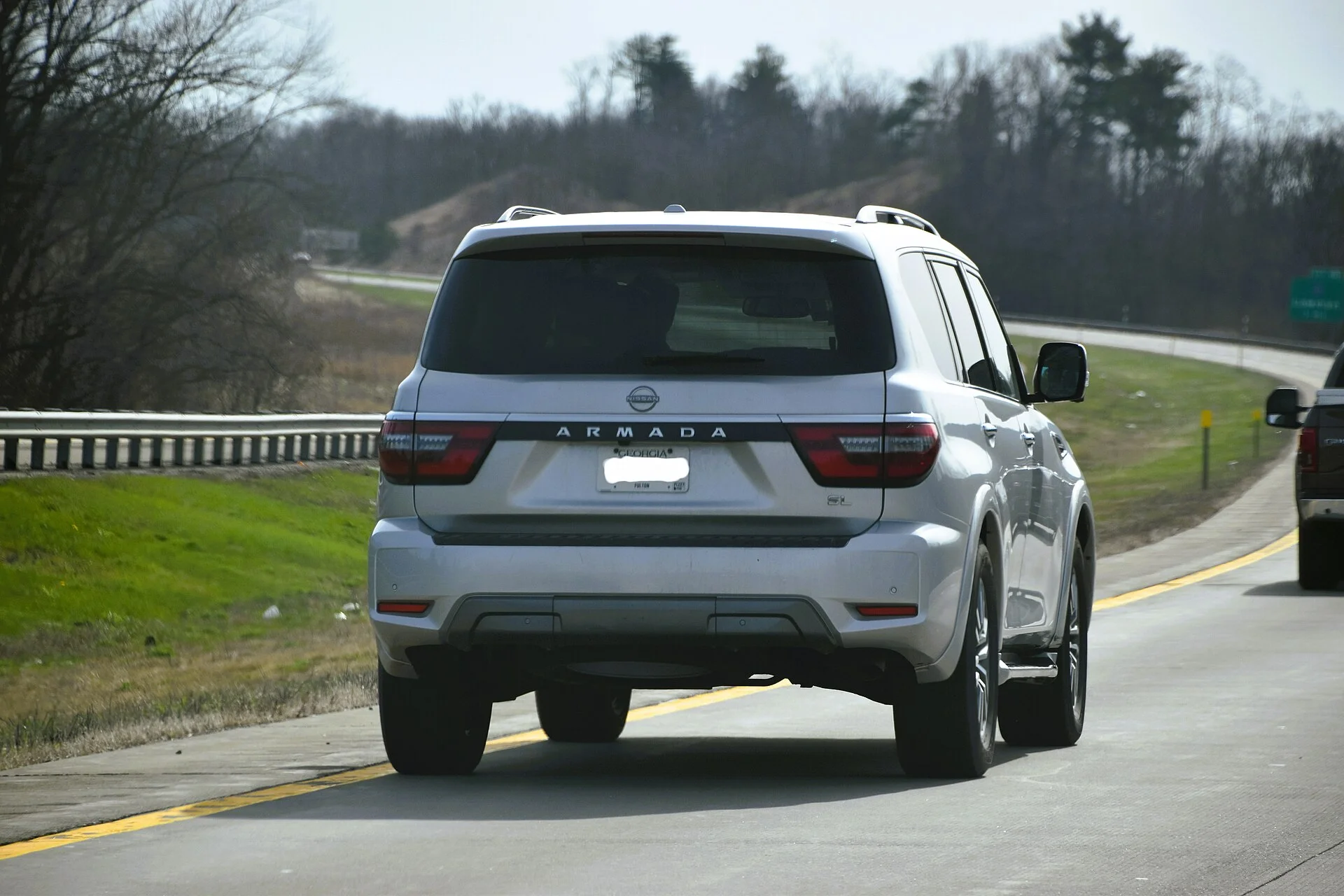
An 8,500-pound tow rating is only as trustworthy as the structure behind it, and the Armada's redesign strengthened exactly that. The redesigned Armada's body-on-frame platform features 25% greater torsional rigidity than the outgoing frame, and that stiffer frame is the genuine foundation for a stable, confident tow.
Torsional rigidity is a frame's resistance to twisting, and it matters under a trailer because the towing loads, tongue weight pressing down, the trailer tugging and pushing through turns and over bumps, try to flex the vehicle's structure. A 25-percent stiffer frame resists that flex, which translates to a more composed, planted feel behind a heavy trailer.
For an overlander or long-haul camper, frame stiffness is not an abstract spec. It is what keeps a loaded tow rig feeling controlled over rough surfaces and long distances, far from anywhere a problem could be fixed. A body-on-frame platform is chosen for exactly this kind of duty, and stiffening it 25 percent sharpens the Armada's suitability for heavy, remote towing.
The lesson is that the tow rating and the frame are the same story. The 8,500-pound number is backed by a structure engineered to handle it, and the redesign's investment in torsional rigidity is what makes that rating feel trustworthy rather than merely printed. For a camper trusting the vehicle with a heavy trailer in remote country, the stiffer frame is the reassurance behind the number.
Drivetrain: Rear-Wheel Drive With 4WD Available
The Armada's drivetrain layout suits its towing mission and gives a camper a meaningful choice. The 2025 Armada pairs its twin-turbo V6 with a 9-speed automatic transmission, standard rear-wheel drive, and available Intelligent 4WD. That rear-drive base is a towing-friendly starting point, and the 4WD option adds the traction to reach remote sites.
Rear-wheel drive is a natural fit for towing because the drive wheels sit under the load, and the 9-speed automatic gives closely spaced gears that help the engine stay in its torque band on grades. Together they make the base Armada a capable tow platform before any options are added, with the same 8,500-pound rating as the rest of the lineup.
The available Intelligent 4WD is the option a dispersed-camper weighs. It adds traction for snow, mud, and loose surfaces, the conditions that separate an accessible campground from a remote dispersed site, while keeping the tow rating intact. Unlike some vehicles where four-wheel drive lowers the tow number, the Armada's flat 8,500-pound rating holds across drivetrains.
For a camper, that means the drivetrain choice is about where the Armada will go, not how much it can tow. A buyer who tows to established campgrounds may be well served by rear-wheel drive; one who ventures onto loose or wintry access roads benefits from Intelligent 4WD, and neither choice costs towing capability. The drivetrain is a traction decision layered on a constant tow rating.
Tongue Weight and the Loading Math
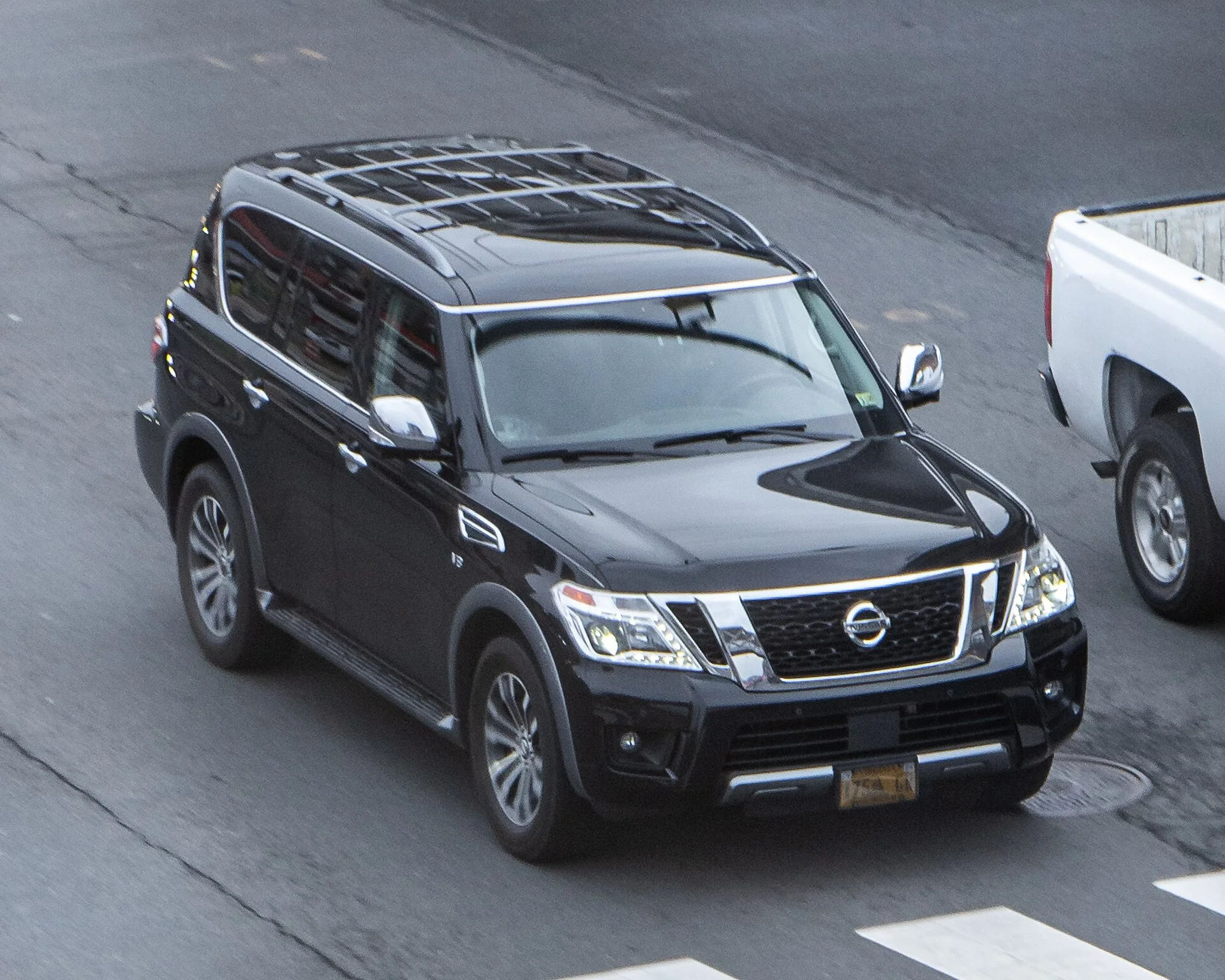
As with any tow vehicle, the tongue weight is the number that governs how a trailer actually gets loaded, and the Armada's limit sets the ceiling. The 2025 Armada's maximum tongue weight rating is 386 kg (850 lb), the downward force the trailer is allowed to place on the hitch. That figure interacts directly with the tow rating.
Proper trailer loading puts a portion of the trailer's weight on the tongue to keep it stable, and that tongue load has to stay under the Armada's 850-pound limit. A heavy trailer near the 8,500-pound tow rating, loaded correctly, produces a substantial tongue weight, and confirming that weight fits under the 386 kg (850 lb) cap is part of a safe setup.
Too little tongue weight lets a trailer sway dangerously; too much overloads the rear and lightens the steering. Hitting the right balance by positioning the trailer's load correctly, then checking the resulting tongue weight against the Armada's 850-pound ceiling, is what turns the tow rating into a stable real-world tow rather than a nervous one.
For a camper matching a trailer to the Armada, the practical sequence is to confirm the trailer's loaded weight stays under 8,500 pounds and its properly-set tongue weight stays under 850 pounds. Both conditions have to hold, and a weight-distribution hitch can help a heavy trailer manage that tongue load while keeping the vehicle level and composed. Reading tongue weight as a governing number, not an afterthought, is how the 8,500-pound rating becomes usable.
Payload: The Number That Shares the Load
Towing does not happen in isolation from the rest of what the Armada carries, and its payload figures show why. The 2025 Armada's payload capacity ranges from 1,444 lb to 1,486 lb depending on trim and drivetrain, and that payload has to cover passengers, cargo, and the trailer's tongue weight all at once.
The interaction is the same one that governs every tow vehicle: a trailer's tongue weight, up to 850 pounds, counts against the payload budget alongside people and gear. On an Armada with roughly 1,444 to 1,486 pounds of payload, a heavy trailer's tongue weight consumes a large share, leaving the rest for a family and their equipment.
This is where a fully-loaded family tow trip needs honest math. A full Armada carrying passengers and camping gear is already using part of its payload before the trailer is attached, and adding several hundred pounds of tongue weight can push the total toward the roughly 1,486-pound ceiling. The GVWR of up to 7,810 lb is the overall limit that both payload and the vehicle's own weight fit under.
The practical discipline is to budget payload as passengers plus cargo plus tongue weight, and confirm it stays under the specific Armada's figure while the trailer stays under 8,500 pounds. Curb weight ranges from 5,676 lb to 6,116 lb depending on trim and drivetrain, which is what leaves that 1,444-to-1,486-pound payload under the 7,810-pound GVWR. Reading towing and payload as one shared budget keeps a loaded Armada within its limits.
Weight and Composure on a Long Haul
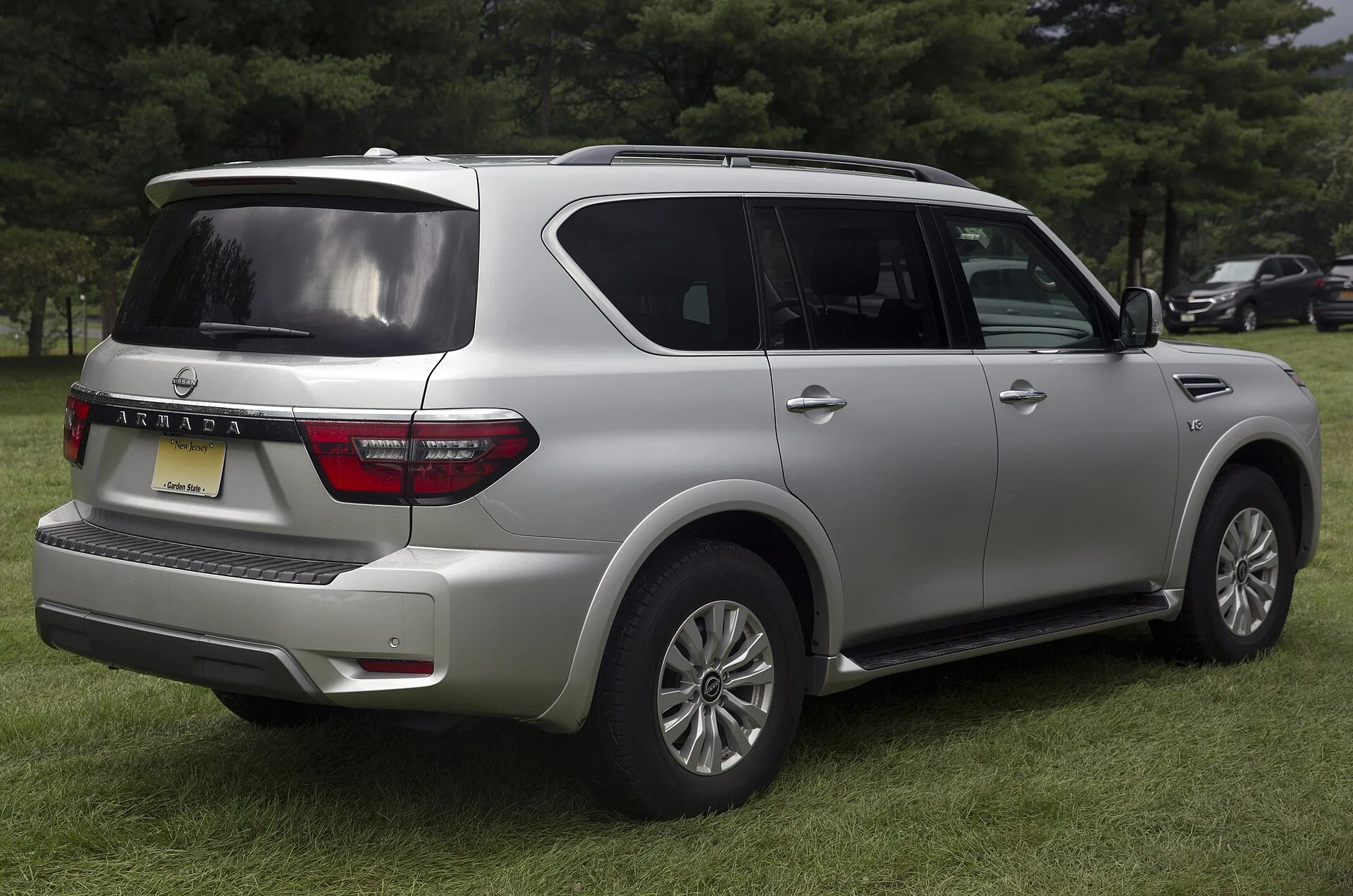
The Armada is a heavy vehicle, and for towing that weight is largely an asset. Curb weight ranges from 5,676 lb to 6,116 lb depending on trim and drivetrain, and that mass gives the Armada authority behind a trailer, resisting the push and sway a lighter tow vehicle would feel more sharply from the same load.
A heavy, body-on-frame tow vehicle plants a trailer in a way that matters most on a long haul. Over hundreds of highway miles, through crosswinds and passing trucks, the Armada's weight and its 25-percent-stiffer frame combine to keep a loaded trailer composed, which reduces the fatigue of a long towing day. This is the durability-and-composure profile a long-trip camper values.
The tradeoff of that weight is fuel consumption and the payload math already covered, since a heavier vehicle uses more of its GVWR on itself. But for the towing mission specifically, the Armada's mass is working in the driver's favor, and it is part of why full-size body-on-frame SUVs remain the choice for serious family towing over distance.
For a camper choosing the Armada, the weight, the frame, and the engine's 516 lb-ft of torque form a coherent long-haul tow package: enough mass to stay composed, a stiff frame to stay controlled, and enough torque to pull grades without strain. That combination is what makes the flat 8,500-pound rating feel like a relaxed capability rather than a stretched one, especially on the long, remote hauls that define serious camping travel.
Matching a Trailer to the Armada
Bringing the numbers together, matching a trailer to the Armada is straightforward precisely because the tow rating is constant. Any Armada targets 8,500 pounds, so the first check is simply that the trailer's fully-loaded weight, not its advertised dry weight, stays under that number with margin. Loaded weight is what matters, and it always exceeds dry weight once water, gear, and supplies are aboard.
The second check is tongue weight against the 386 kg (850 lb) limit, set by loading the trailer with the correct portion of its weight ahead of the axle. The third is confirming that tongue weight plus passengers and cargo stays under the specific Armada's payload of roughly 1,444 to 1,486 pounds. All three conditions define a safe tow.
Because the tow rating does not vary by trim, a camper can choose the Armada on its interior, its rear-drive or 4WD traction, and its price, then match a trailer to the same 8,500-pound number regardless. That decoupling of trim choice from towing capability is the Armada's quiet advantage over vehicles where every option erodes the tow rating.
Set up that way, the Armada is a strong, composed family camper-tow vehicle with the space to carry a family inside while pulling a substantial trailer. A quality weight-distribution hitch with sway control helps a heavy trailer ride level within the tongue-weight limit, letting the Armada's frame, weight, and torque deliver the relaxed long-haul tow they are built for.
The 9-Speed and How the Torque Reaches the Trailer
An engine's peak numbers only matter if the transmission delivers them to the wheels usefully, and the Armada's pairing is built for that. The twin-turbo V6's 516 lb-ft of torque arrives at 3,600 rpm, and the 9-speed automatic transmission has enough closely spaced ratios to keep the engine near that torque peak as the load and grade change. The gearing is what turns a torque figure into a relaxed pull.
The advantage of a 9-speed under a trailer is granularity. With nine ratios, the transmission can hold the engine in its strongest rev range on a climb rather than lugging between widely spaced gears, and it can find an efficient ratio on the flat to stretch fuel range. For a heavy tow, that means fewer harsh downshifts and a more settled cadence up a grade.
The twin-turbo design complements the gearing by delivering boost, and therefore torque, low and broadly rather than only at high rpm. That broad torque spread means the Armada does not have to be revved hard to pull, so the 9-speed can keep it in a comfortable, quiet band while still making the 516 lb-ft that moves the trailer. The engine and transmission are tuned to work together under load.
For a long-haul camper, this drivetrain behavior is what makes towing near the 8,500-pound rating feel unstrained. The torque arriving at a usable 3,600 rpm, spread by the turbos and managed by the 9-speed's ratios, lets the Armada pull grades without drama and cruise efficiently between them. It is the difference between a truck that merely meets its tow rating and one that carries it comfortably mile after mile, which is exactly what a remote, long-distance tow demands.
The Verdict: Simplicity Backed by Real Structure
The Armada's towing appeal is that its strong capability comes without the usual fine print. Every 2025 trim targets 8,500 pounds, so the tow rating does not shrink with the trim, drivetrain, or options a buyer actually wants. That consistency is a genuine advantage over tow vehicles whose headline number hides behind a specific stripped configuration.
The engine transition only strengthens the case. The new 3.5-liter twin-turbo V6, at 425 hp and 516 lb-ft, makes more torque than the departed 5.6-liter V8's 413 lb-ft while holding the same 8,500-pound rating, so the downsizing is an upgrade for towing, not a compromise. Buyers wary of losing the V8 gain capability, not lose it.
Underneath, the 25-percent-stiffer frame is the foundation that makes the rating trustworthy, and the Armada's 5,676-to-6,116-pound curb weight gives it the mass to stay composed behind a heavy trailer on a long haul. Tongue weight up to 850 pounds and payload of 1,444 to 1,486 pounds are the numbers that govern loading, both fitting under the 7,810-pound GVWR.
Choose the Armada on trim, traction, and price, match a trailer to the constant 8,500-pound rating with a proper tongue weight and payload budget, and the result is a composed, capable family tow rig for long, remote hauls. Its simplicity is not a lack of capability but a design that delivers the same strong towing no matter which Armada you drive home.