
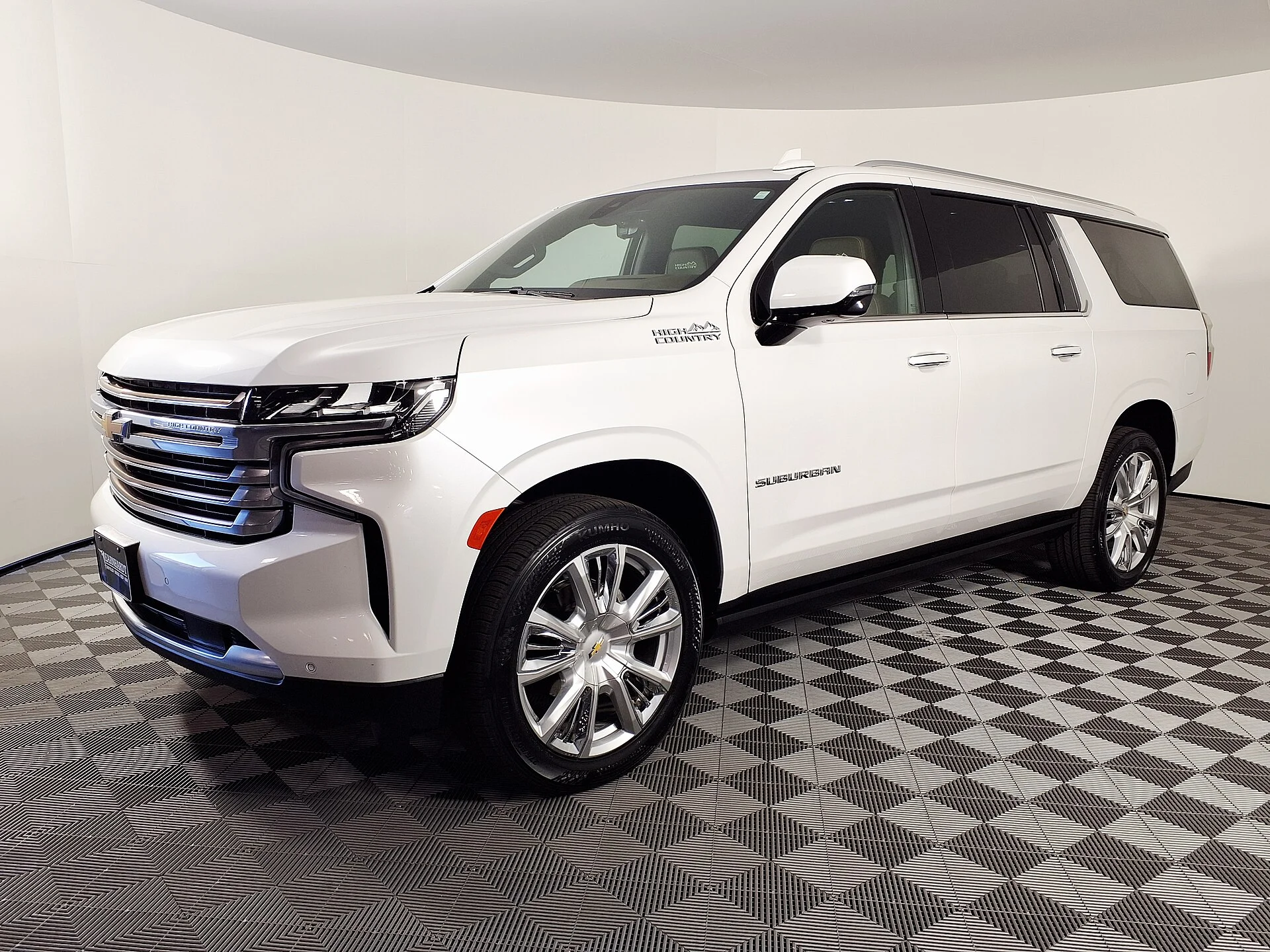
The Power Map Is the First Thing to Learn
Open up how a Suburban actually distributes power and the truth is right there: it is a genuinely well-equipped vehicle for camping, but its outlets are scattered across three zones and gated by a switch most owners never notice. For a sleep setup that runs a fan, a fridge, and device charging overnight, knowing exactly where each outlet lives and what it can deliver is the difference between a working system and a dead battery.
The full-size Suburban has one of the roomiest sleeping platforms of any factory vehicle, which makes it a natural car-camping choice. But that big cabin spreads its power points around, and the household-style outlet in particular hides behind an on/off switch that has to be armed before it does anything at all.
The layout is logical once mapped, and it rewards a few minutes spent locating each outlet before a trip rather than fumbling for them in the dark. The goal is a clear picture: where the 12V sockets are, where the 110V household outlet is, how to turn it on, and the hard ceiling on what it can power.
That ceiling is the detail that trips people up. The household outlet looks like the answer to running real appliances, but its wattage limit is modest, and understanding it up front prevents the frustration of a tripped outlet and a cold coffee maker.
The Front 12V Outlets: Under the Radio or in the Armrest
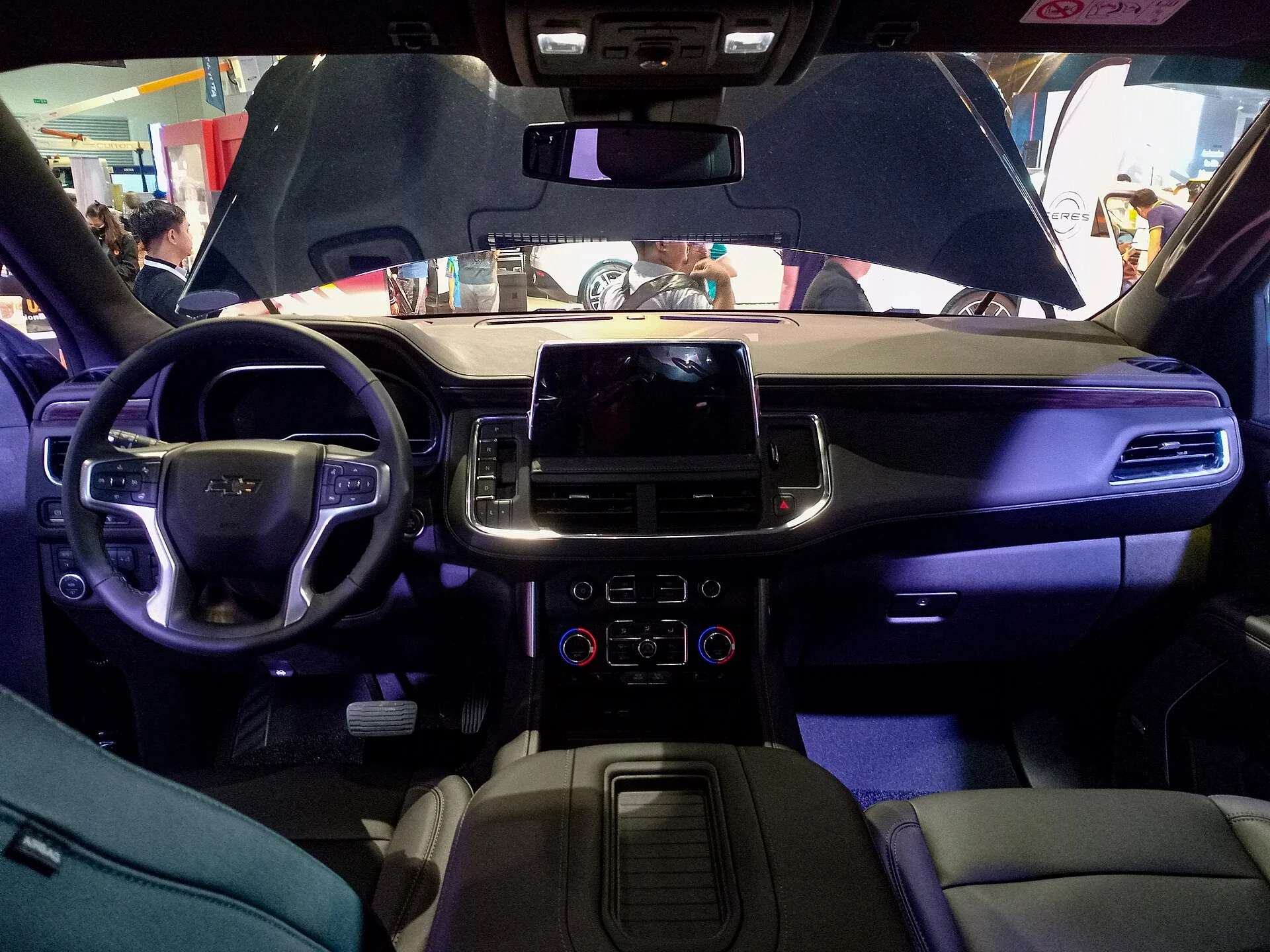
The front power cluster depends on the seat configuration, and that is the first thing to check. On bucket-seat Suburbans, the covered connections sit under the radio: USB ports on the left, two 12V cigarette-lighter-style outlets in the middle, and the 110V household outlet furthest to the right. It is a tidy row once the cover is open, but the cover is exactly why owners overlook it.
On bench-seat models, the layout differs — the outlets are reported to live in the front armrest instead. The practical lesson is that there is no single universal answer; the seat setup dictates the location, so the right move is to open the covers and confirm rather than assume the layout from a forum photo of a different trim.
Those two 12V outlets are the workhorses for camping. A 12V fridge, a fan, or a tire inflator all run off these sockets, and having two means a fridge can stay powered while a second device charges. The catch is that most factory 12V outlets are switched with the ignition on some circuits, so a fridge left running on an accessory socket with the engine off can drain the starting battery — the reason many campers add a dedicated power station rather than run everything off the vehicle.
The design choice that signals real usefulness here is having a pair of 12V sockets plus USB in one accessible cluster. It means the front of the cabin can run and charge several things at once, which is exactly what an overnight setup needs.
The Rear Cargo 12V Outlet
The detail that makes the Suburban genuinely camper-friendly is the rear 12V accessory outlet in the cargo area, in addition to the front outlets. For a vehicle where the sleeping platform is in the back, a power point back there is worth more than any number of front sockets, because it lets a fridge or fan run right where the bed is without cords snaking the length of the cabin.
A rear outlet changes the whole cable-management picture. Instead of running a fridge cord from the dash to the cargo area — a trip hazard and a tangle in a made bed — the appliance plugs in beside itself. That is the kind of design choice that reveals whether a vehicle was thought through for real use, and here it works in the camper's favor.
As with the front sockets, the honest caveat is battery draw. A rear 12V outlet wired to the starting battery will happily run a fridge until the battery is too flat to crank the engine, and that is the classic morning-after mistake. Whether the rear outlet is switched or constant, treating it as unlimited overnight power is the error to avoid.
The smart pattern most Suburban campers land on is to use the rear outlet for short runs and top-ups, and to carry a separate battery or power station for the sustained overnight loads. The factory outlet is a convenience, not a house battery, and respecting that line is what keeps the van startable in the morning.
The 110V Household Outlet and Its Hidden Switch
The Suburban's 110V household outlet is the feature that looks like it solves everything and quietly does not. On bucket-seat models it sits at the right end of the under-radio cluster; on some models it is instead just below the infotainment screen at the bottom of the dash, under a rectangular trim cover. Finding it is step one, and the trim cover is why people miss it.
Step two is the part that generates the most confusion: the outlet does nothing until it is switched on. Control is an on/off switch on the row of buttons at the lower left of the dash, and the switch has a green light that must be illuminated for the outlet to work. An owner who plugs in and gets nothing usually has not armed the switch, not a broken outlet.
This two-step design — locate it, then arm it — is worth rehearsing once so it is obvious later. Plug something in, flip the lower-left switch, confirm the green light, and the outlet comes alive. Skip the switch and the best appliance in the world stays dark.
The honest read is that the switch is a sensible feature, not a nuisance: it lets the inverter be shut off to avoid parasitic draw when not in use. But it is undocumented in most owners' memories, so it reads as a defect when it is really just an unarmed circuit.
The 150-Watt Ceiling That Decides What You Can Run
Here is the number that governs the whole household-outlet question: on older Suburban models, the 110V outlet has a 150 watt maximum capacity. That single figure decides what the outlet can and cannot power, and it is far lower than most people assume when they see a household socket.
What 150 watts covers: laptop chargers, phone and tablet chargers, a small fan, LED lighting, camera battery chargers, and similar low-draw electronics. The outlet is genuinely useful for keeping a modern camp's devices topped up without an inverter of your own. For its intended job — running electronics rather than appliances — it does the work.
What 150 watts does not cover: coffee makers, kettles, hair dryers, microwaves, induction burners, or space heaters, all of which draw many hundreds of watts and will simply trip the outlet's protection. Plugging a kettle into a 150-watt outlet is the classic disappointment, and no amount of switch-flipping changes the physics.
Understanding this ceiling up front reframes the outlet correctly: it is a device-charging convenience, not a kitchen. Campers who want to run real appliances carry a dedicated high-wattage power station sized for the job, and reserve the factory 110V outlet for the light electronic loads it was built to handle. Matching the load to the 150-watt limit is the whole trick.
Fuses and Troubleshooting a Dead Outlet
When an outlet goes dead, the cause is usually simple, and it pays to work from cheapest to most involved. For the 110V outlet, the first check is always the lower-left dash switch and its green light — an unarmed switch is the single most common reason the household outlet appears broken. Confirm the light before assuming a fault.
The next check is the load. If the outlet cut out under a heavy appliance, it has likely tripped its overload protection because the draw exceeded the 150-watt ceiling. Unplug the offending device, let it reset, and switch to a lower-draw load. This is not a failure; it is the protection doing its job, and the fix is a lighter appliance.
For a 12V socket that is dead, the usual culprit is a blown fuse in the vehicle's fuse block, and the owner's manual fuse diagram identifies which fuse feeds each outlet. Carrying a few spare fuses in the matching amperages is cheap insurance, since a blown accessory fuse is a two-minute fix if you have the part and a dead outlet all weekend if you do not.
Working the problem in that order — switch, then load, then fuse — resolves the vast majority of dead-outlet situations without a trip to a shop. The Suburban's power system is robust; most failures are a switch left off or a load too big for the socket, both of which the owner can fix on the spot.

Building an Overnight Power Plan Around the Outlets
The way to use the Suburban's outlets well is to match each load to the right source. Device charging — phones, tablets, cameras, a laptop — is exactly what the factory 12V and 150-watt 110V outlets are for, and running those loads off the vehicle is efficient and simple. For that tier, the built-in outlets are all most campers need.
Sustained overnight loads are a different story. A 12V fridge running all night, or any real appliance, should not lean on the starting battery through a factory socket, because the morning payoff is a van that will not crank. This is where a separate power station or a second battery earns its space, isolating the camp loads from the vehicle's ability to start.
The rear cargo 12V outlet is the bridge between the two worlds: ideal for short fridge runs and top-ups while parked, and perfectly placed beside the bed, but not a substitute for dedicated storage on a multi-day trip. Use it for convenience, not as the house supply.
Put together, the plan is straightforward: light electronics on the factory outlets, heavy and sustained loads on a power station, and the engine run occasionally to recharge if boondocking for days. That layered approach uses each of the Suburban's power points for what it is good at, and keeps the one outlet that matters most — the one that starts the engine — untouched.
Powering a Weekend Without Idling the Engine
The real test of a camping power setup is a multi-day trip with the engine off, and that is where the Suburban's factory outlets show both their value and their limit. For a weekend of device charging — phones, a tablet, camera batteries, a headlamp — the built-in 12V and 150-watt 110V outlets carry the load easily, and the always-useful rear cargo outlet keeps it all near the bed.
The problem appears when a fridge enters the picture. A 12V fridge is the single biggest sustained draw in most camps, and running it off the starting battery for two or three nights is the reliable way to wake up to a vehicle that will not crank. The factory outlets simply are not backed by enough reserve to run a fridge overnight and still start the engine, and no amount of switch-flipping changes that arithmetic.
The clean solution is to decouple the camp loads from the vehicle entirely with a separate battery bank. A midsize portable power station runs a fridge, a fan, and device charging for a night or two on its own cells, then recharges from the vehicle while driving or from a solar panel while parked. That keeps the Suburban's starting battery reserved for its one job.
Used this way, the factory outlets become the light-duty layer and the power station becomes the workhorse, and the two together deliver a genuinely comfortable multi-day setup. The mistake is asking the vehicle's battery to be both the starter and the house supply; the fix is giving the house loads their own power.
Why the Suburban Makes a Strong Power Platform
Step back from the individual outlets and the Suburban's overall case for camping power is genuinely strong. Few factory vehicles offer this combination: multiple 12V sockets, USB charging, a household-style 110V outlet, and — the detail that matters most — a power point in the cargo area where the bed actually is. That spread means a camper rarely has to run a cord the length of the cabin.
The vast interior is the second half of the story. The Suburban's sleeping platform is among the longest and widest available without any modification, and a big cabin means room to place a power station, route cords cleanly, and keep a fridge accessible without crowding the bed. Power is only useful if there is space to use it, and here there is plenty.
The honest limitation, repeated because it is the one that bites, is the 150-watt ceiling on the household outlet and the finite starting battery behind every factory socket. The Suburban gives a camper more outlets in better places than most vehicles, but it does not give them a house battery, and expecting one leads to the morning no-start.
Read correctly, the Suburban is a near-ideal base for a layered power system: excellent outlet placement and abundant space for the storage that does the heavy lifting. Add a power station sized to the loads, respect the wattage line, and the result is one of the more comfortable and capable factory camping platforms on the road.
The Verdict: Well-Equipped, If You Know the Layout
The Chevy Suburban is a strong camping platform with power points spread across three zones: two front 12V outlets plus USB under the radio or in the armrest, a rear cargo 12V outlet beside the bed, and a 110V household outlet that hides behind a lower-left dash switch with a green light. Knowing that map turns a scavenger hunt into a system.
The two details that catch owners out are the switch and the ceiling. The 110V outlet does nothing until it is armed at the dash, and even then it tops out at 150 watts — enough for electronics, not for appliances. Both are sensible design choices that only frustrate the people who did not know about them.
Used within those limits, the factory outlets handle a modern camp's device-charging needs cleanly, and the rear 12V outlet is a genuine convenience for running a fridge or fan where the bed actually is. The trick is matching each load to the right outlet rather than expecting a household socket to run a kettle.
For anything beyond light electronics, a dedicated power station is the honest addition, keeping the sustained loads off the starting battery. Learn the layout, respect the 150-watt line, and the Suburban delivers exactly the kind of livable, well-powered space its size promises — without any morning-after surprise at the ignition.