The Quick Answer: Best Trailer Brake Controller for Most Towing
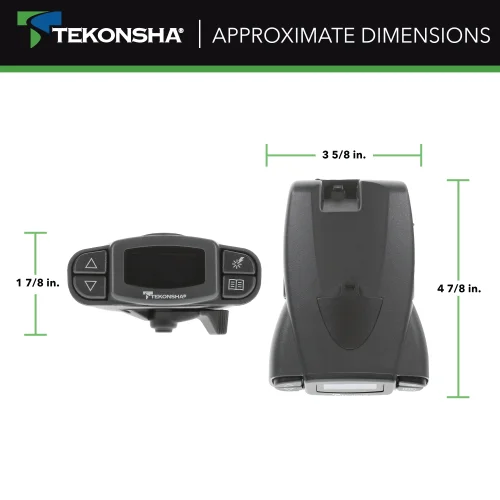
If you want one recommendation and the reasoning behind it, the Tekonsha Prodigy P3 is the best trailer brake controller for most people who tow. It is a proportional unit, meaning it reads your truck's actual deceleration with an inertia sensor and brakes the trailer to match. It is rated for 1 to 4 axles (up to 8 brakes) with a 30-amp output, which covers everything from a single-axle utility trailer to a heavy tandem-axle fifth wheel.
But "best" really depends on two questions that decide more than the brand printed on the box:
- Proportional or time-delayed? Proportional units feel smoother and stop shorter on grades and in hard stops; time-delayed units are cheaper and simpler but brake on a fixed timer.
- Does your truck have a factory tow port? If it does, a plug-and-play harness turns installation into a few-minute connection. If it does not, you are wiring the controller in by hand.
Short version: if you tow often, heavy, or in hills, buy proportional. If you tow a light trailer occasionally on flat ground, a well-set time-delayed unit is fine. Then match the axle rating to your heaviest trailer and check for a factory harness.
The rest of this guide walks each of those decisions in plain terms, then compares five real controllers, three proportional, one time-delayed, and one wireless, so you can see exactly where each fits. One honesty note up front: these recommendations are built from manufacturer specifications, published data, and owner reports, not from our own trials on the road.
What a Brake Controller Actually Does
A trailer brake controller is the small module that tells your trailer's electric brakes how hard to brake and exactly when. Without one, your tow vehicle carries the entire job of stopping both itself and the trailer. That lengthens your stopping distance, overheats the truck's brakes on long descents, and lets the trailer shove the hitch forward every time you stop hard.
The controller wires into your tow vehicle and into the 7-pin connector that feeds the trailer. When you press the brake pedal, it sends a metered voltage to the trailer's brake magnets, so both vehicles slow together and the rig behaves like one unit instead of two masses fighting each other.
Two facts decide when you legally and practically need one:
- Any trailer with electric drum or electric-over-hydraulic brakes needs a controller to function at all; the brakes simply will not actuate without it.
- Most states require a controller once a trailer's loaded weight passes roughly 3,000 pounds, though the exact threshold varies by state.
Everything else, from how the unit feels to what it costs to how hard it is to install, comes down to two design choices: how the controller senses your braking, and how much current it can push to the trailer.
Proportional vs. Time-Delayed: The Decision That Matters Most
This is the single most important spec, and it is worth understanding before you shop by brand. The two controller types behave very differently once you are actually on the road.
Proportional controllers contain an accelerometer, an inertia sensor, that measures how fast your tow vehicle is actually slowing down. They then apply trailer braking in proportion to that deceleration. A gentle stop produces gentle trailer braking; a hard, panic stop produces hard trailer braking, right when you need it. The result is smooth, matched stops with almost none of the lurch or push you feel when trailer braking arrives too early or too late.
Time-delayed controllers have no motion sensor. When you hit the brakes, they ramp trailer braking up to a level and at a rate you set in advance, on a fixed timer. They are simpler, cheaper, and mount in any orientation because there is no accelerometer to level.
If you tow regularly, tow heavy, or drive grades, a proportional controller is worth the extra money for smoother, more predictable, and shorter stops in an emergency. If you tow occasionally on flat ground with a light trailer, a well-set time-delayed unit does the job for less.
Here is the safety angle people miss: in a hard stop, a proportional unit ramps the trailer brakes up instantly to match your truck, while a time-delayed unit is still climbing its preset timer. That difference shows up exactly when it matters most.
Does Your Truck Have the Factory Port? Plug-and-Play vs. Universal Wiring
This is the question that decides whether installation takes ten minutes or an afternoon, and most buyers do not think about it until the box is already open.
A hardwired controller needs four connections: battery power, ground, the brake-light switch signal, and the trailer-brake output to the 7-pin connector. On many modern trucks and SUVs with a factory tow package, those four wires are already run to a dedicated plug tucked behind the dash. A vehicle-specific plug-and-play harness clicks into that factory port and into your controller, and you are done, with no cutting, no splicing, and no test light.
How to tell if you have the port:
- Check whether your vehicle was ordered with a factory tow package; the window sticker or build sheet will say so.
- Look under the dash, usually near the steering column or the kick panel, for a capped connector often labeled for trailer brakes.
- Cross-reference your exact year, make, and model against the harness maker's fit list before buying. Harnesses are sold per vehicle, not universal.
If there is no factory port, you are running and tapping wires yourself. It is completely doable with a test light and an afternoon, but it is the real reason one person's install is trivial and another's is a project, same controller, different truck.
Install style also varies by unit:
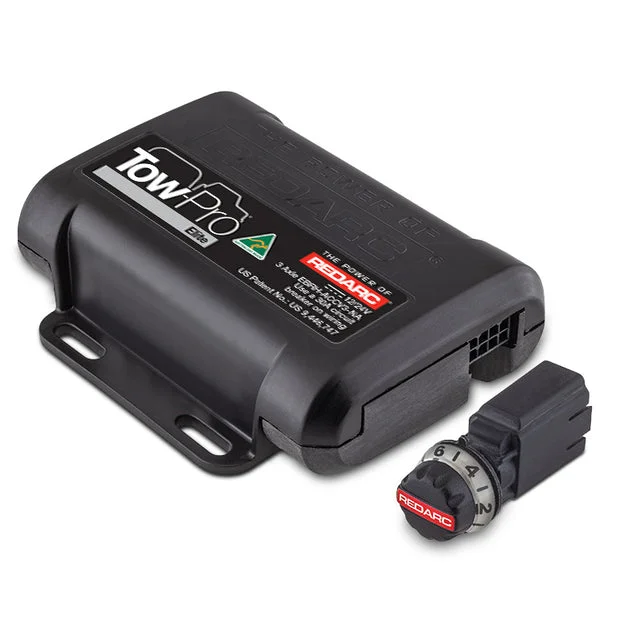
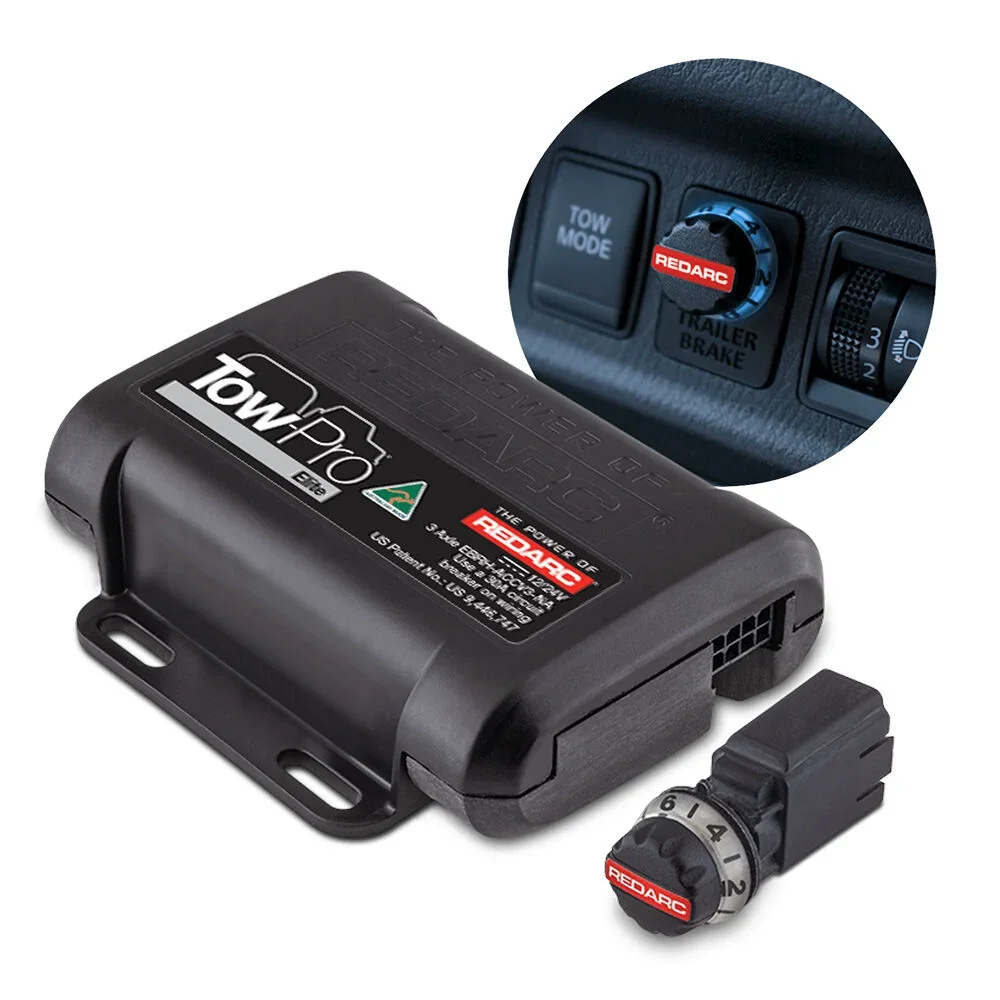
- Hidden module plus remote knob: the REDARC Tow-Pro Elite V3 tucks its main unit out of sight and puts only a small rotary knob on the dash, on a 1 m cable. You drill one hole for the knob.
Axles, Brakes, and Amperage: Matching Capacity to Your Trailer
A controller has to drive every brake magnet on the trailer, and magnets draw current. Each electric brake assembly pulls roughly 3 amps, so a tandem-axle trailer with brakes on both axles, four brakes total, can draw around 12 amps, and a triple-axle rig more still. If a controller's output rating is below what your brakes demand, braking is weak and the unit can overheat or shut down.
The easy way to read this is the axle rating printed on the box, which tells you how many brakes the unit can drive:
- The P3 pushes up to 30 amps.
- REDARC Tow-Pro Elite V3 is rated for trailers up to 3 axles, with a 25-amp maximum on 12-volt vehicles (30 amps on 24-volt systems).
The rule is simple: match the rating to your heaviest trailer, not your lightest. A unit rated for more axles than you have is fine; a unit rated for fewer is not. If you might upgrade to a bigger trailer later, buy for that trailer now rather than replacing the controller twice.
Computed headroom: every load this page states, against the 30-amp limit it states. Nothing here is a spec-sheet import — it is arithmetic on figures this page already states (30-amp, 12 amps, 3 amps). The formula is the plain one: headroom = 30-amp − the stated draw. Only figures the page itself calls a limit or a draw are used; a negative result is printed as an overage, not rounded away.
| What the page states | Figure | Against the 30-amp limit |
|---|---|---|
| …can draw around 12 amps… | 12 amps | 18 A spare |
| Each electric brake assembly pulls roughly 3 amps… | 3 amps | 27 A spare |
Read the last column first: 2 of the 2 fit under it (most headroom 27 A), measured against the 30-amp this page states as the limit.
The Five Controllers, Compared
These five cover the realistic range, from a simple time-delayed budget unit to premium proportional and wireless options. The notes below are drawn from each controller's published specifications and how its design type behaves, not from our own runs on the road. Confirm exact fit and current pricing before you buy.
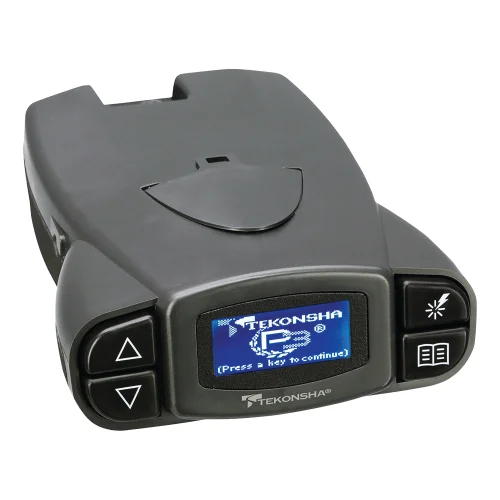
Tekonsha Prodigy P3 is the best overall (proportional). The long-standing proportional benchmark. A front-facing color LCD shows real-time output and wiring diagnostics, it stores up to 5 trailer or driver profiles, and a boost setting adds 3 levels of extra stopping power for heavy loads. Rated for 1 to 4 axles (up to 8 brakes) with a 30-amp output, and it pairs with vehicle-specific plug-and-play harnesses. A safe, capable pick for regular towing.
REDARC Tow-Pro Elite V3 has the cleanest install (proportional). Proportional braking with a hidden main unit and a single dash knob on a 1 m cable, plus a user-controlled off-road mode for steep descents alongside the automatic proportional mode. It uses a three-axis accelerometer, weighs just 7 oz (200 g), runs on 9-32 volts, and is rated up to 3 axles (25 amps on 12-volt trucks). Installation means drilling one hole for the knob.
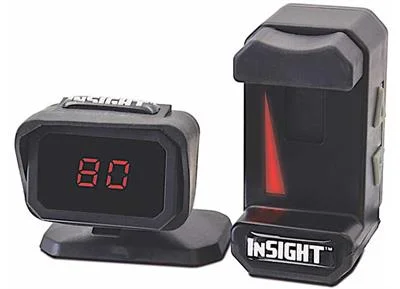
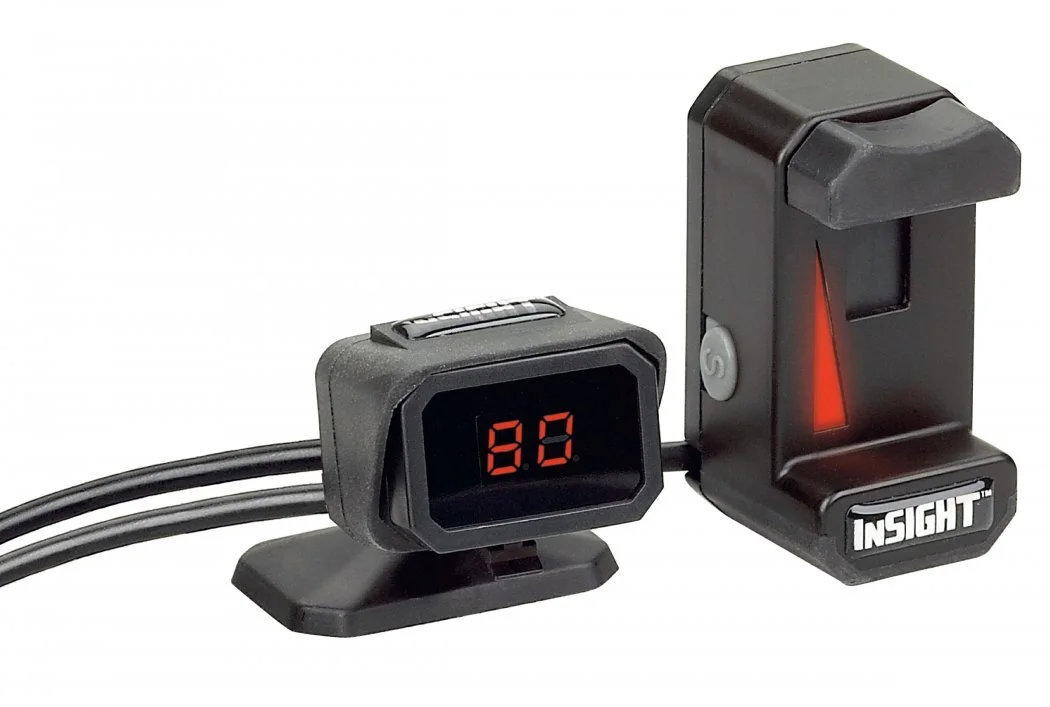
Hopkins InSIGHT offers flexible mounting (proportional). A proportional controller whose display separates from the main module, so you can put the readout where you can actually see it. Multiple sensitivity settings and a digital display; rated for 1 to 2 axles (up to 4 brakes). A solid mid-priced proportional option for single and tandem-axle trailers.
Wireless and App-Based Controllers: The New Category
The important detail, and the thing that makes it genuinely safe, is that the accelerometer doing the proportional braking lives inside the plugged-in unit itself, not in the phone. Braking does not depend on a live Bluetooth signal, and the unit keeps using its last settings if the connection drops. The phone is for adjustment, not for the braking itself.
The appeal is portability and a clutter-free cab. The honest trade-offs are real, though:
- You rely on a charged, connected phone to change settings on the fly.
- The app is one more thing that can glitch or need an update.
- A connector-mounted box sees more road grime, weather, and impact than a unit tucked under the dash.
For full-time towing, many people still prefer a hardwired, always-on control they can reach without unlocking a phone. For flexible or occasional towing, or moving one controller between several vehicles, the wireless approach is honestly convenient.
Mistakes That Undercut Even a Good Controller
The best controller in the wrong setup still stops badly. A few recurring errors do more damage than the choice of brand:
- Never calibrating the gain. Out of the box the gain is a guess. If the trailer brakes lock on a light stop or feel absent on a hard one, the number is wrong, not the unit.
- Setting gain empty, then towing loaded. A gain dialed in with an empty trailer will under-brake a loaded one. Set it at your normal towing weight.
- Ignoring the brake-light switch wire. On a hardwired install, a missed or wrong brake-signal tap means the controller never learns you are braking. It is the most common wiring mistake.
- Buying the wrong axle rating. A 1-to-2-axle unit on a heavy tri-axle trailer will be overworked. Match the rating to the trailer.
None of these are exotic. They are just the difference between a controller that quietly does its job and one that makes towing feel worse than no controller at all.
How to Choose for Your Setup
Work the decision in this order and the right unit usually falls out on its own:
- Match the axle rating to your heaviest trailer. Tandem and triple-axle rigs need a unit rated for enough brakes; a 1-to-4-axle controller like the Tekonsha Prodigy P3 is the safe default if you are unsure.
- Pick proportional if you tow often, heavy, or on grades. The smoother, matched, shorter stops are worth it. Time-delayed is fine for light, occasional, flat-ground towing.
- Check for a factory tow port. If your truck has one, a plug-and-play harness makes install trivial. If not, plan on wiring four connections yourself.
- Decide how you want it to live in the cab. Want a clean dash? The REDARC Tow-Pro Elite V3. Want no install at all? Comfortable wiring, or have the factory plug?
Whatever you choose, the last step is setup, and it matters as much as the unit itself. Load the trailer the way you normally tow, find an empty lot, drive about 25 mph, and adjust the gain until a moderate stop is firm but the trailer brakes do not lock up or skid. Re-check it whenever the load changes a lot. A controller is only as good as its setup.