
Dashcam Guides

How 4K Resolution Impacts Dashcam Footage Quality

Casey - The Weekend Warrior
4 min read
Includes Video

The resolution of your dashcam footage is a big deal, especially when you need to prove what happened in a fender bender. We're talking about how many tiny dots, or pixels, make up the picture. More pixels usually means a clearer image, but it's not always that simple.

The resolution of your dashcam footage is a big deal, especially when you need to prove what happened in a fender bender. We're talking about how many tiny dots, or pixels, make up the picture. More pixels usually means a clearer image, but it's not always that simple. My first dashcam was a cheap $50 thing that claimed 1080p, but trying to read a license plate at night was like looking through a sock.

It made me wonder if spending more would actually get me better proof. What Is Video Resolution?

The Core Answer

When we talk about 4K dashcams, we're generally looking at footage that's 3840x2160 pixels. That's a lot of pixels, four times as many as your standard 1080p camera four times the pixels. The idea is that all those extra pixels let you zoom in on details, like a license plate or a street sign, without the image turning into a blurry mess. I learned this the hard way at a campsite in Colorado. I was trying to get a clear shot of a deer eating my trail mix, but my cheap camera just gave me a brown smudge. The most common dash cam resolutions. The real move here is understanding that '4K' on the box doesn't always mean it's actually capturing native 4K. Some manufacturers will upscale a lower-resolution image to 4K. It's like taking a small photo and stretching it out until it's huge - it looks bigger, but it's still just a stretched-out small photo. Some manufacturers list 4k but the sensors are 2K. This upscaling means you don't get the actual detail you're paying for. You need a camera with a sensor that can actually capture that many pixels, typically an 8-megapixel sensor, to get true 4K footage. Any image sensors smaller than 8 MP are physically incapable of capturing 4K video. So, the '4K' label can be a bit of a bait-and-switch. It's a rookie mistake to just grab the cheapest one that says 4K. I spent $150 on one that claimed 4K and it was worse than my old 1080p camera in low light. The honest version: look for cameras that specify a true 4K sensor. A true 4K camera captures at a resolution of 3840x2160 pixels.
To fully understand the advantages of 4K, it's helpful to explore the differences in dashcam resolution.
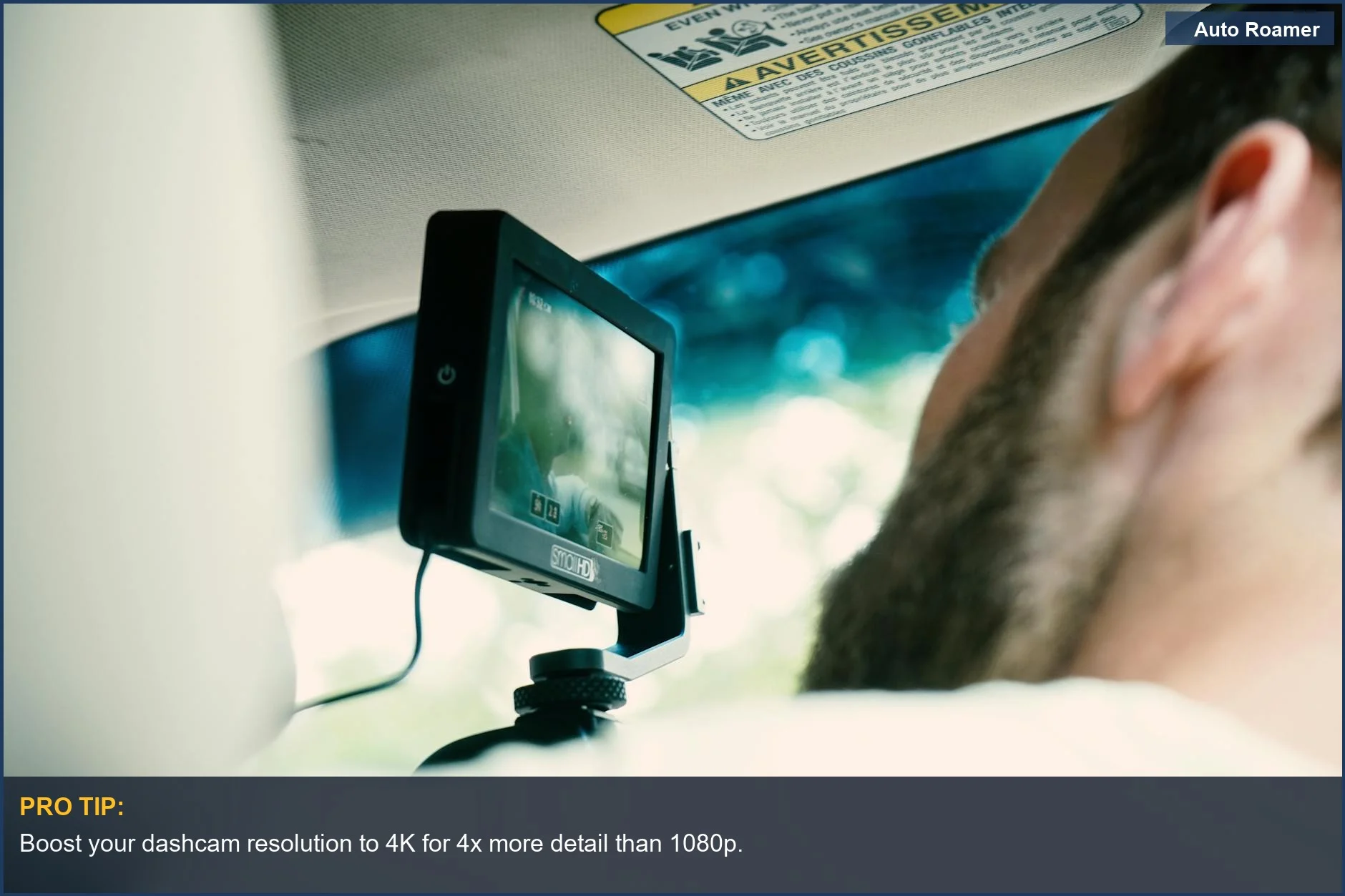
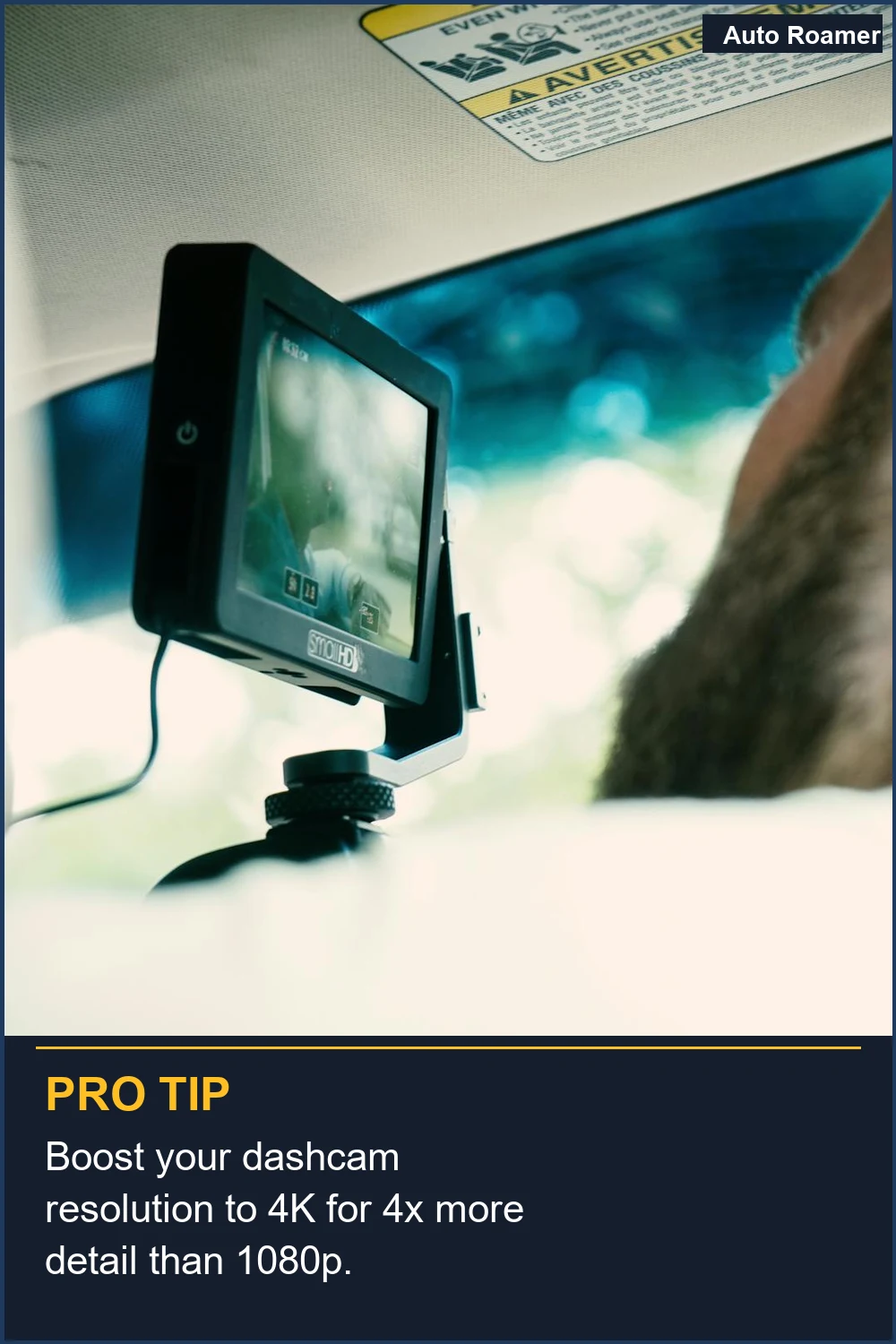
Boost your dashcam resolution to 4K for 4x more detail than 1080p.
Experience superior dashcam resolution with this 4K setup, offering four times the pixels of standard 1080p cameras for unparalleled clarity. | Photo by Kyle Loftus

Why This Matters for Your Setup

So, why does all this pixel talk matter for your car? It's all about evidence. If you're in an accident, you want that footage to be crystal clear, not a grainy mess. Think about trying to read a license plate from 50 feet away in the rain. A true 4K camera has a much better shot at capturing that detail than a lower-resolution one. Superior Video Quality.
  • Seeing Details: The biggest win for 4K is seeing small details like license plates, street signs, or even the model of a car that cut you off. 4K dash cams capture sharper images.
  • File Size: Here's the catch, and what nobody tells beginners: 4K footage takes up a lot more space. My first trip with a 4K dashcam, I filled up my 64GB card in about 8 hours.
  • You'll need a bigger SD card, probably 128GB or more, which adds to the cost. Because 4K video contains four times as much data as 1080p, the files are larger.
  • Heat and Power: These higher-resolution cameras can also run hotter and use more battery power. If you're in a really hot climate, or your car doesn't have great ventilation, this could be an issue.
  • I once left a cheap 4K dashcam running in my car parked in the Arizona sun, and it just died. Brilliant engineering. 4K dashcams consume more power and may run hotter.
  • Cost: The $50 version of a dashcam is rarely the answer. True 4K cameras are more expensive. You're looking at likely $200 or more for a decent one. A basic, affordable single-channel 4K unit... costs around $250 USD.
  • Understanding the differences in quality can help you choose the right setup, so consider our article on dash cam resolution.
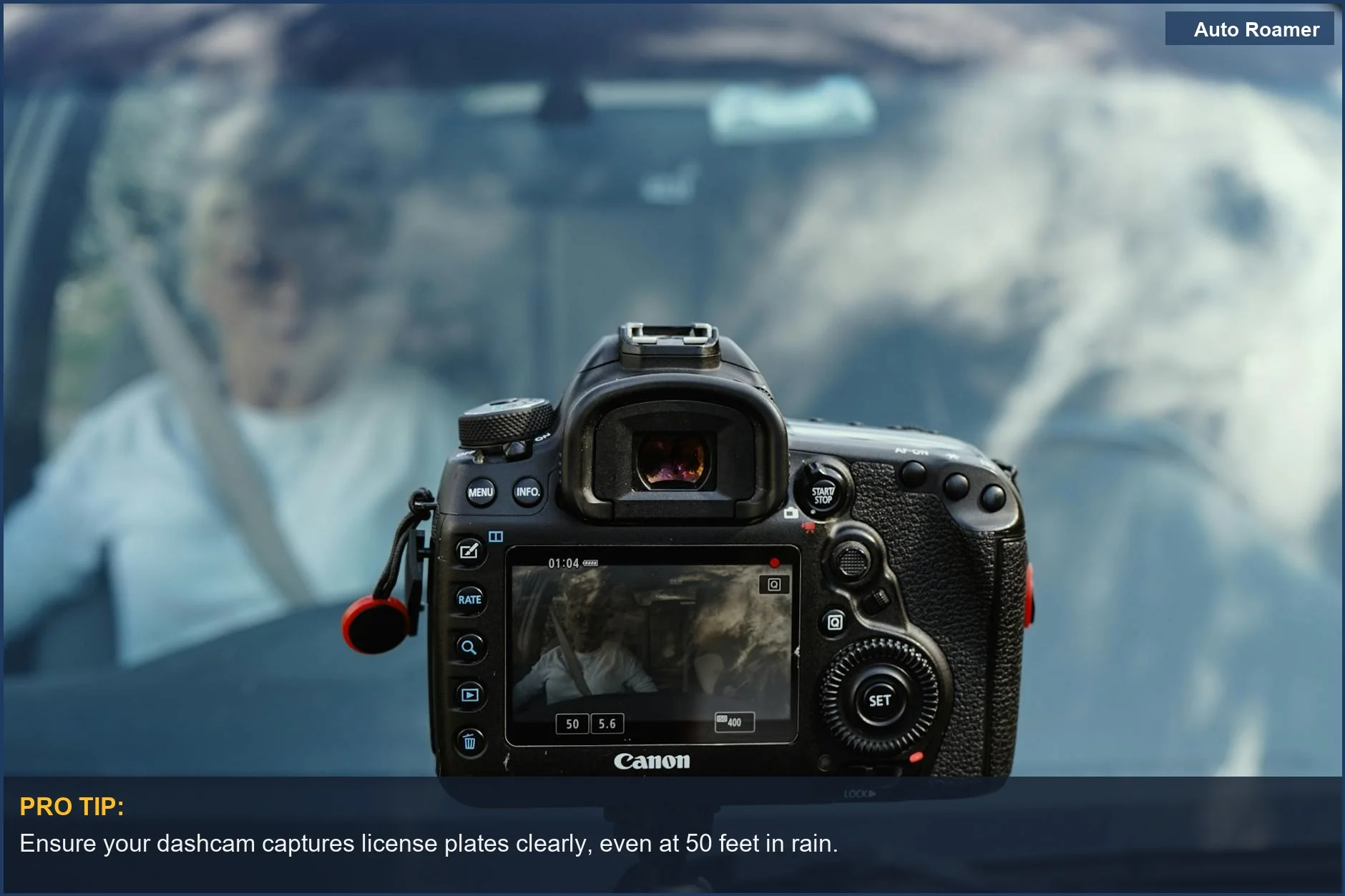
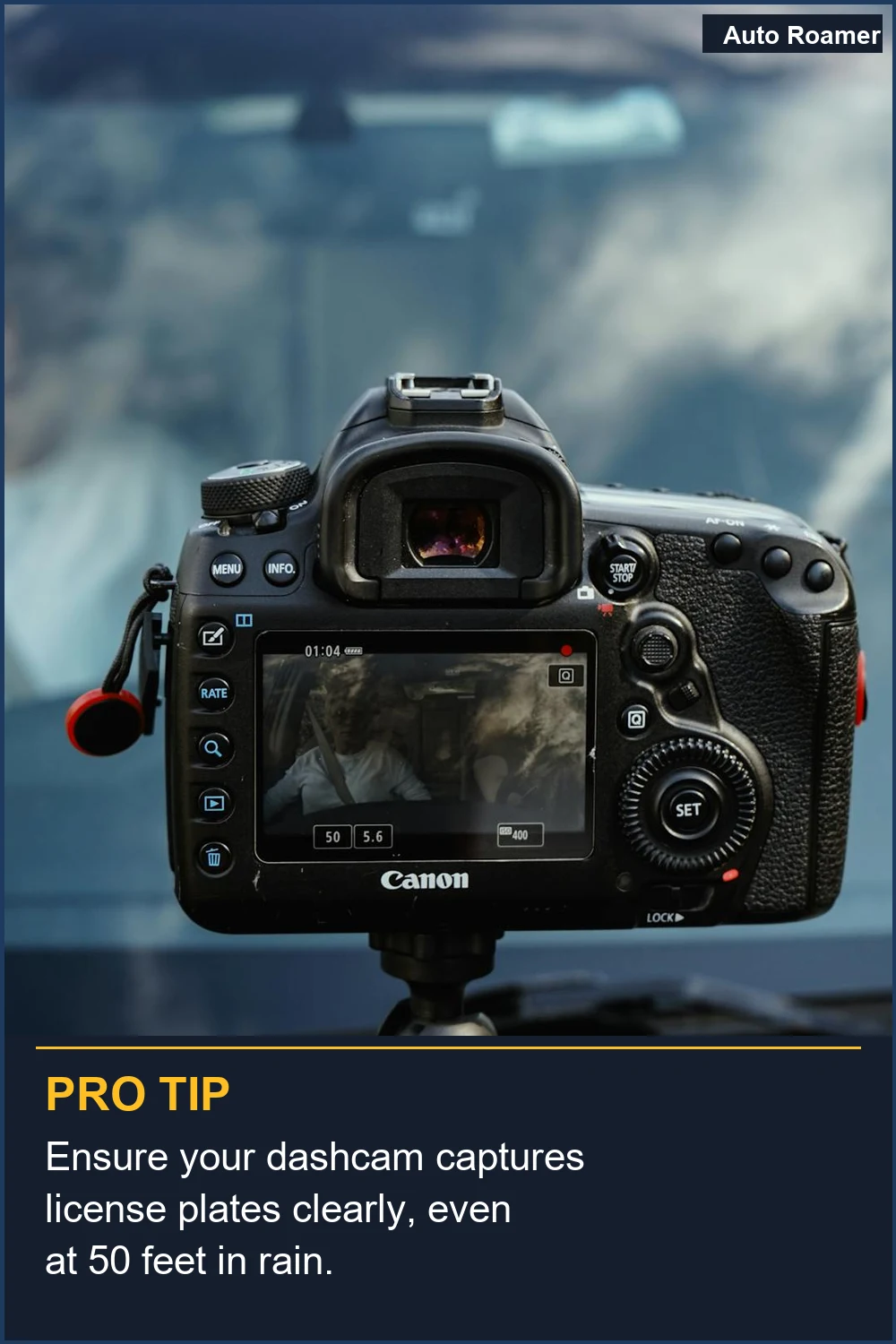
    Ensure your dashcam captures license plates clearly, even at 50 feet in rain.
    This dashcam rig emphasizes the critical video quality needed for evidence, especially for capturing crucial details like license plates in challenging conditions. | Photo by Kyle Loftus

    Making the Right Choice

    Deciding if 4K resolution is right for you comes down to your priorities and budget. If your main goal is to have the absolute clearest footage for potential legal situations, and you don't mind the extra cost for storage and a good quality camera, then native 4K is probably worth it. My buddy Dave spent $300 on a 4K dashcam, and he swears by it for catching every detail. Essentially, a 4K dash cam provides sharper, clearer, and more detailed video footage.
  • Know Your Needs: Are you trying to win a Nobel Prize for detecting microscopic road debris, or do you just need to see if the other guy ran that red light? For most people, a good 1080p or 2K camera is perfectly sufficient. I used a 1080p camera for two years and it served me fine. 1080p is the most widely used resolution.
  • Beware of Upscaled: Always check the specs. Does it have an 8MP sensor?
  • Is it advertised as 'real' 4K? If it sounds too good to be true for under $150, it probably is. The video is upscaled to 4k which defeats the purpose.
  • The $50 Version: That super cheap dashcam might record something, but don't expect it to be your golden ticket in court. It's better to spend a little more upfront for reliable footage. 4K resolution really makes a difference in everyday driving.
  • To help you weigh your options, consider our comparison of 4K vs 1080p dashcams.

    Frequently Asked Questions

    If I buy a 4K dashcam, do I need to buy a brand new car stereo system too?
    No, absolutely not. Your car's stereo system has zero to do with your dashcam's video resolution. The dashcam records video onto an SD card, and you can play that footage back on your phone, computer, or the dashcam's own screen. This question is like asking if you need a new fishing rod to use a bigger tackle box. Come on.
    What if my 4K dashcam footage is still blurry at night, even though it's supposed to be high resolution?
    That's a common issue, and it usually means the camera's sensor or lens isn't good enough for low light. Even 4K footage can look terrible if the camera can't capture enough light. My first '4K' camera was useless after sunset. You need to look for cameras with good low-light performance, often advertised with specific sensor types like 'STARVIS' or f-stop numbers below f/2.0. Some manufacturers list 4k but the sensors are 2K.
    Can constantly recording in 4K permanently damage my car's battery?
    Not usually permanently, but it will drain your battery faster than a 1080p camera. If your car is off and the dashcam is still recording, it's pulling power. Most dashcams have a voltage cutoff to prevent total battery drain, but it's still a good idea to check your dashcam's power management settings. If you have a car that sits for weeks without being driven, you might want to reconsider 4K recording when parked. 4K dashcams consume more power.
    Do I need a special kind of SD card for 4K footage, or will any old card work?
    You definitely need a special kind of SD card. 4K footage generates huge files, and you need a card that can write that data quickly enough without getting overloaded. Look for 'U3' or 'V30' speed ratings. A cheap, slow card will cause recording errors and you'll end up with broken files or the camera stopping mid-event. I learned this after a hit-and-run where my footage was corrupted because of a $5 card. Because 4K video contains four times as much data as 1080p, the files are larger.
    Is it true that 4K resolution is only useful if you're going to zoom in on the footage later?
    That's pretty much the honest version. While 4K footage might look slightly sharper on a big 4K TV, the real benefit comes when you need to zoom in to identify specific details like license plates or faces. If you're just watching the footage to see if you got rear-ended, 1080p is often perfectly fine. The extra pixels are for forensic-level analysis, not just casual viewing. 4K dash cam provides sharper, clearer, and more detailed video footage.

    🏅 Looking for Gear Recommendations?

    Check out our tested gear guides for products that work with this setup:

    C

    Casey - The Weekend Warrior

    Weekend car camper and road trip enthusiast. Focuses on practical, budget-friendly solutions for families and first-time campers.

    Sources

    Related Articles