Why Your Car Battery Dies on the Coldest Day of the Year (2026 Complete Guide)
Jake - The Dirtbag Engineer
9 min read
Prices verified March 2026
Includes Video
The dealer wanted $180 for a battery test and a jump start on a 2017 Honda Civic that just clicked. They blamed the cold, but the real issue was a 60Ah battery that finally hit its 3-year design life in sub-freezing conditions.
The dealer wanted $180 for a battery test and a jump start on a 2017 Honda Civic that just clicked. They blamed the cold, but the real issue was a 60Ah battery that finally hit its 3-year design life in sub-freezing conditions. Your car battery doesn't 'die' in the cold; it just stops performing when its internal chemistry slows to a crawl. The cold only exposes the weak link.
It's a fundamental principle of chemical reaction kinetics: lower temperature, slower reaction rate. This isn't magic, it's physics. Nothing more. You don't need a wizard, you need a multimeter and a basic understanding of lead-acid cells. I've seen too many perfectly good batteries tossed because some tech couldn't diagnose a parasitic draw pulling 200mA overnight. It's a scam.
Key specifications for Why Your Car Battery Dies on the Coldest Day of the Year
The Short Answer
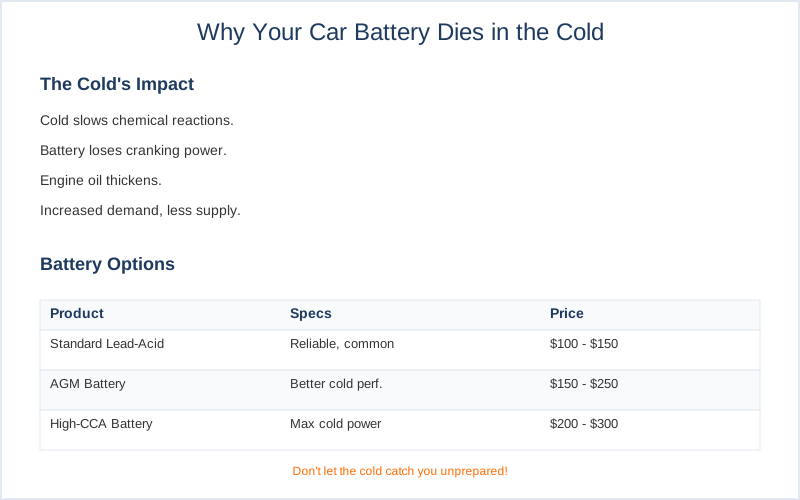
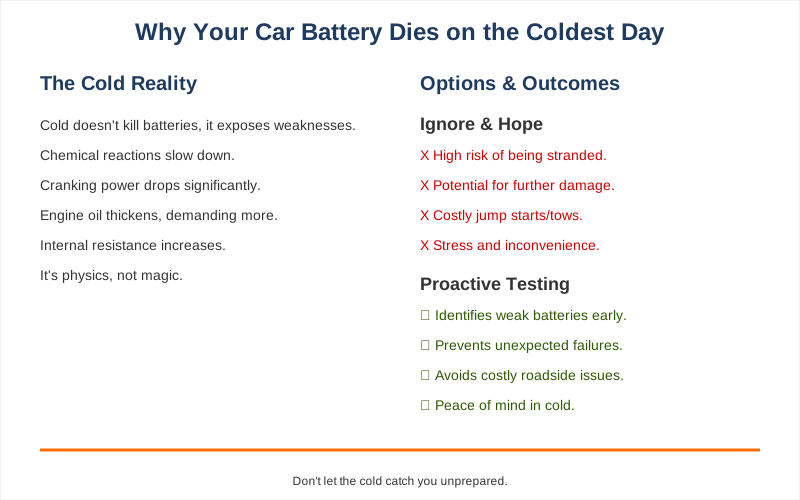
Your car battery loses up to 60% of its cranking power at 0 degrees F because the electrochemical reactions that produce current slow down dramatically. Meanwhile, the engine demands more power due to increased oil viscosity. It's a double whammy of reduced supply and increased demand.
Cold weather doesn't kill your battery in the sense of permanent damage, assuming it's fully charged. What it does is kneecap its ability to deliver current. Lead-acid batteries generate power through a chemical reaction between lead plates and sulfuric acid. This reaction's rate is directly proportional to temperature. At freezing temperatures or below, that chemical reaction becomes sluggish. Think of it as molasses in January. Less kinetic energy in the molecules means fewer electrons flowing.
Your battery's internal resistance also spikes.
Simultaneously, the engine oil in your crankcase thickens significantly. Engine oil viscosity increases inversely with temperature. A 5W-30 oil that flows like water at 200 degrees F turns into thick syrup at 0 degrees F. This increased viscous drag means the starter motor needs substantially more torque to turn the crankshaft. More torque means more current draw from a battery that's already struggling to deliver.
So, you have less power available from the battery and a higher demand from the engine. This is why a battery that cranks fine at 70 degrees F can barely click at 10 degrees F. It's not a mystery; it's basic thermal dynamics affecting fluid viscosity and chemical reaction rates. The alternator also struggles to fully recharge a weak battery in freezing conditions, compounding the problem. It's a vicious cycle of thermodynamic inefficiency.
To understand how extreme temperatures affect your battery, read about why your car battery dies on the coldest day of the year.
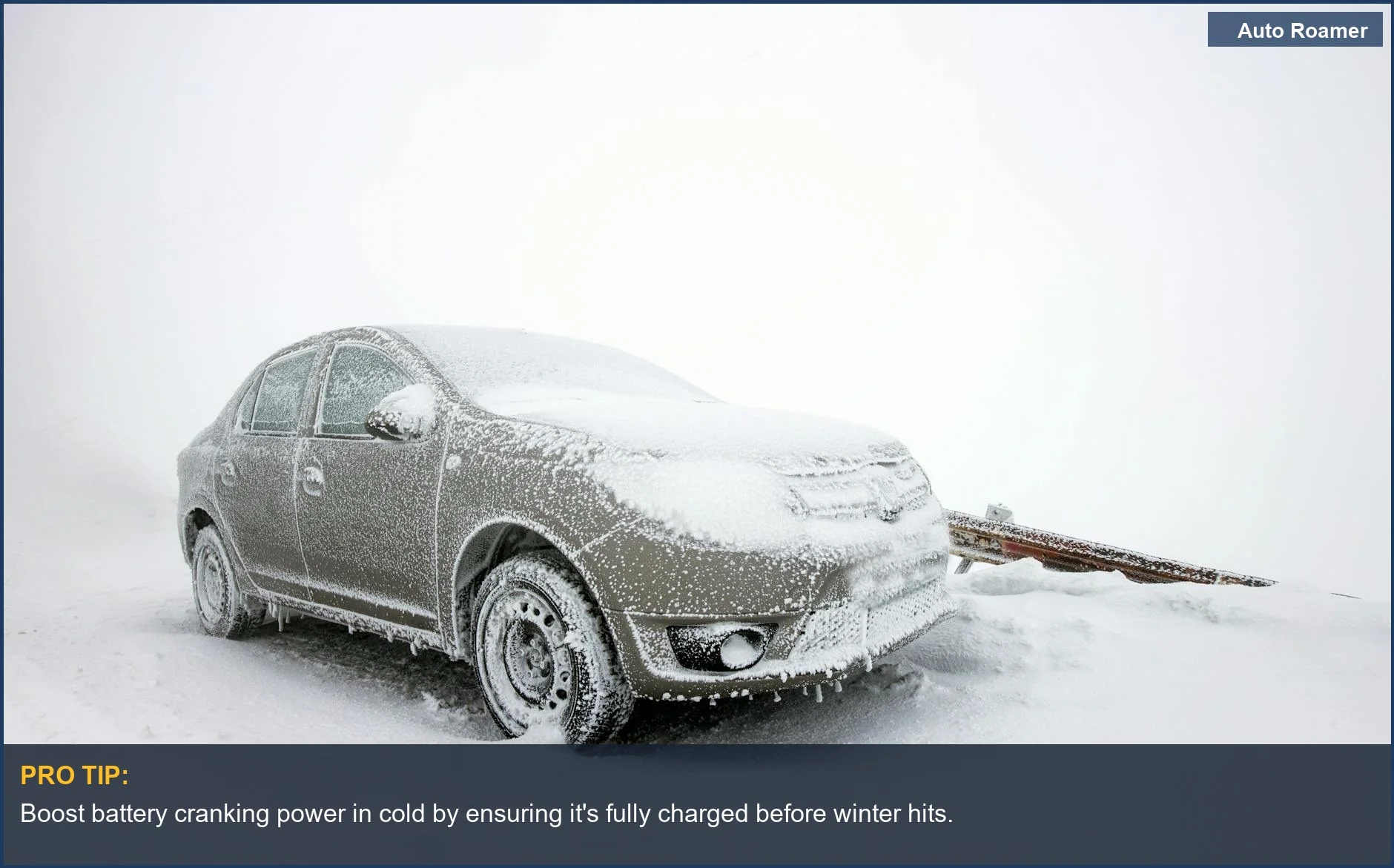
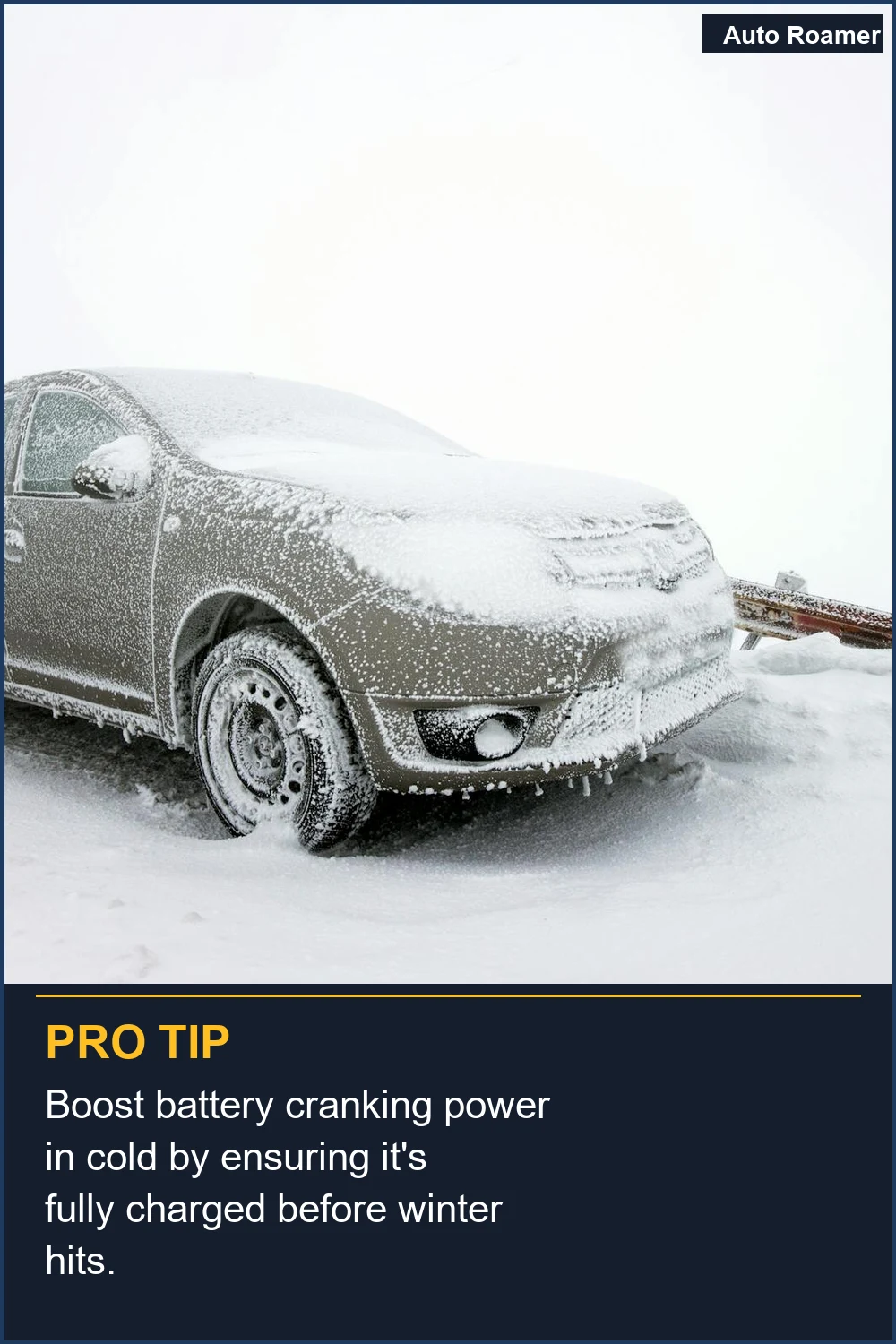
Even a car battery loses up to 60% of its power in extreme cold. This snow-covered sedan exemplifies the harsh winter conditions that can lead to a dead battery.
| Photo by Adrian Frentescu
Even a car battery loses up to 60% of its power in extreme cold. This snow-covered sedan exemplifies the harsh winter conditions that can lead to a dead battery.
| Photo by Adrian Frentescu
The Reality Check
My 2008 F-150's factory battery barely lasted 4 years, failing during a -10 degrees F cold snap. The electrolyte level was fine, but the internal resistance had climbed. That's just how the game works.
Car batteries are typically lead-acid cells, designed for a specific cycle life and temperature range. Cold temperatures reduce the ion mobility in the electrolyte, directly impacting the rate of electron transfer. This isn't just a slight dip; a fully charged battery can lose 60% of its power output at 0 degrees F. That's a massive degradation in performance.
Older batteries suffer more because their internal plate surface area is reduced by sulfation and active material shedding. This effectively reduces the total available reactant surface. A new battery can compensate for some of the cold's effects, but an old, sulfated one just gives up. The age of your battery is a critical factor here.
Component
How It Fails
Symptoms
Fix Cost
Battery (Lead-Acid)
Reduced chemical reaction rate and internal resistance increase due to low temperature; sulfation of plates.
Slow crank, clicking, dim lights, no start.
$120 - $300 (DIY), $250 - $450 (Shop)
Engine Oil
Viscosity increases significantly with temperature drop, increasing drag on crankshaft.
Slow crank, starter motor strain.
$0 (Use correct weight), $40 - $80 (Oil change)
Alternator
Reduced charging efficiency in extremely cold conditions, particularly with a struggling battery.
Battery not fully recharging, eventual no-start.
$200 - $600 (DIY), $400 - $1000 (Shop)
Battery Cables/Terminals
Corrosion increases electrical resistance; thermal contraction can loosen marginal connections.
Intermittent power, hot cables, no start.
$5 - $30 (DIY cleaning), $50 - $150 (Shop)
Some folks think a frozen battery is permanently dead. Not always. If a battery is fully charged, its electrolyte freezing point is around -76 degrees F. A discharged battery's electrolyte is mostly water, freezing around 32 degrees F. That's when the ice crystals can buckle plates and crack the case. That's permanent damage. That's why you keep it charged.
To better understand battery failures in frigid conditions, read our insights on car battery issues.
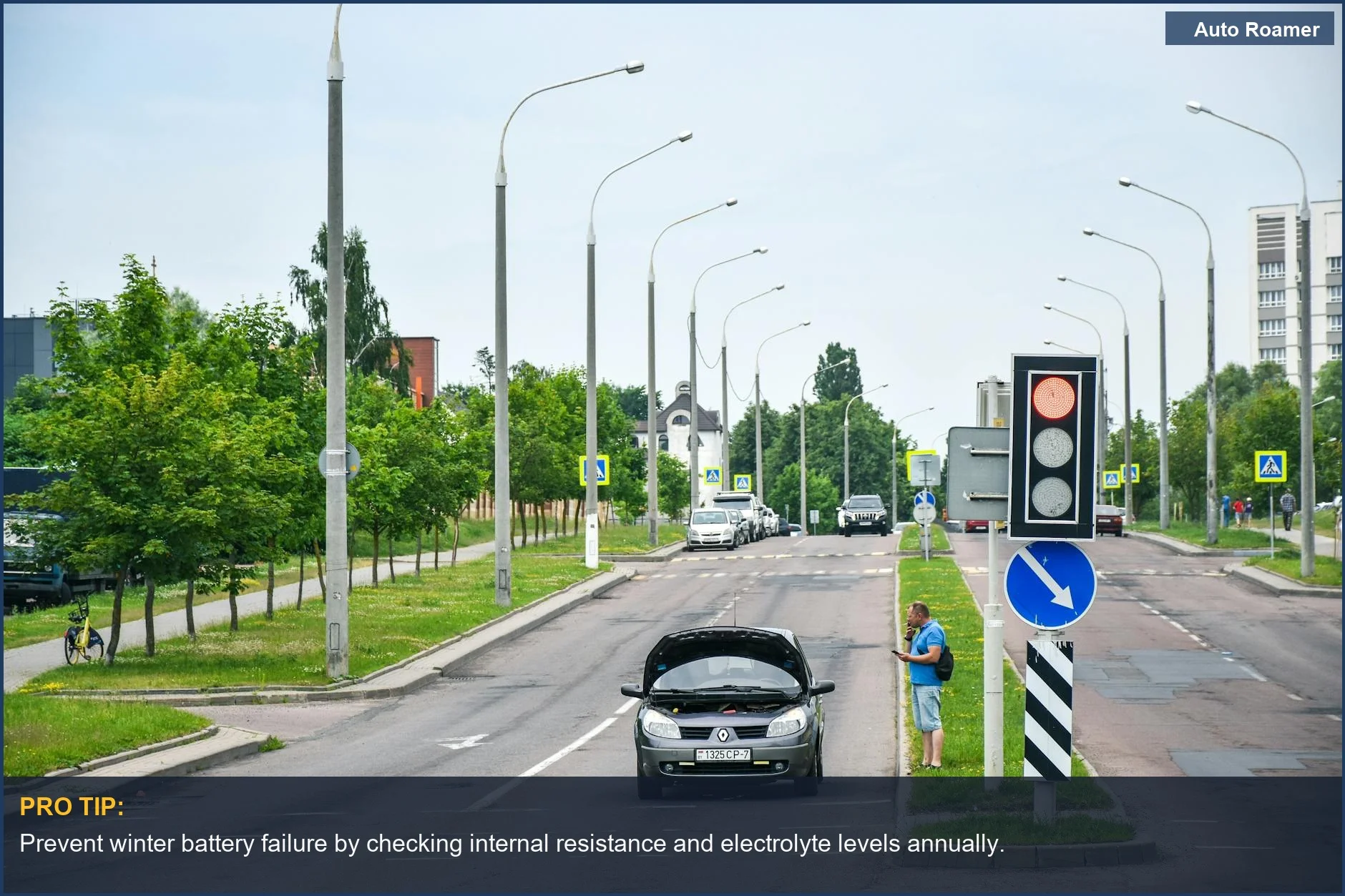
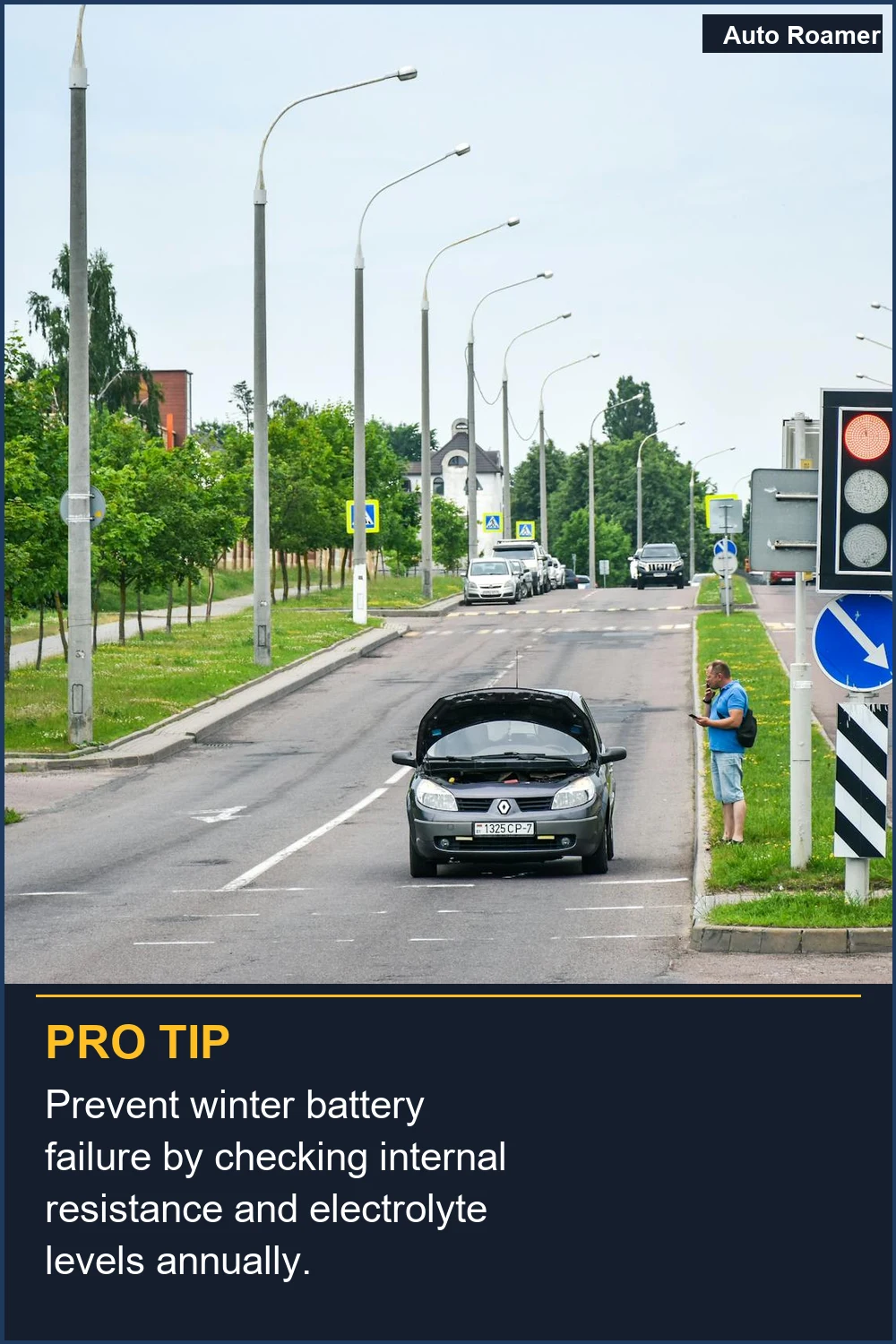
Facing a dead car in winter is frustrating. This man's situation highlights how a battery dies in winter, often due to increased internal resistance.
| Photo by Artem Makarov
Facing a dead car in winter is frustrating. This man's situation highlights how a battery dies in winter, often due to increased internal resistance.
| Photo by Artem Makarov
## How to Handle This
1. Check Battery Voltage (Static): Grab a $15 multimeter. With the engine off for at least 4 hours, measure across the battery terminals. A healthy, fully charged 12V lead-acid battery should read 12.6V or higher. If it's 12.4V, it's at 75% charge. Below 12.2V, it's half-dead. This simple check takes 30 seconds.
2. Inspect Terminals for Corrosion: Disconnect the negative terminal first, then positive. Use a wire brush and a baking soda/water paste to scrub off any white or blue-green crud. This reduces ohmic losses. Reconnect positive, then negative. Apply a thin layer of dielectric grease. This is a 5-minute fix that can restore several amps of available current.
3. Load Test (Optional, but Recommended): Most auto parts stores will load test your battery for free. This checks its ability to deliver high current under load, which is critical for cold starts. A good battery will maintain voltage above 9.6V for 15 seconds. If it sags below that, it's toast. This is more reliable than just a static voltage check.
4. Confirm Alternator Output: With the engine running, measure voltage across the battery terminals. It should be between 13.8V and 14.5V. If it's outside this range, your alternator isn't charging properly, which means your battery is slowly being starved. I've seen a faulty voltage regulator kill a brand new battery in weeks.
5. Use a Battery Maintainer for Stored Vehicles: If your car sits for more than a few days in cold weather, a smart charger (like a Battery Tender) will keep it topped off. This prevents deep discharge and sulfation. For $30, it's cheap insurance against a dead battery. This is especially true for vehicles with persistent parasitic draws.
6. Consider an Engine Block Heater: For extreme cold (below 0 degrees F), an engine block heater warms the engine oil and coolant. This dramatically reduces the starter's workload, making cold starts much easier. Less viscous oil means less friction. This saves your battery from extreme current demands during ignition.
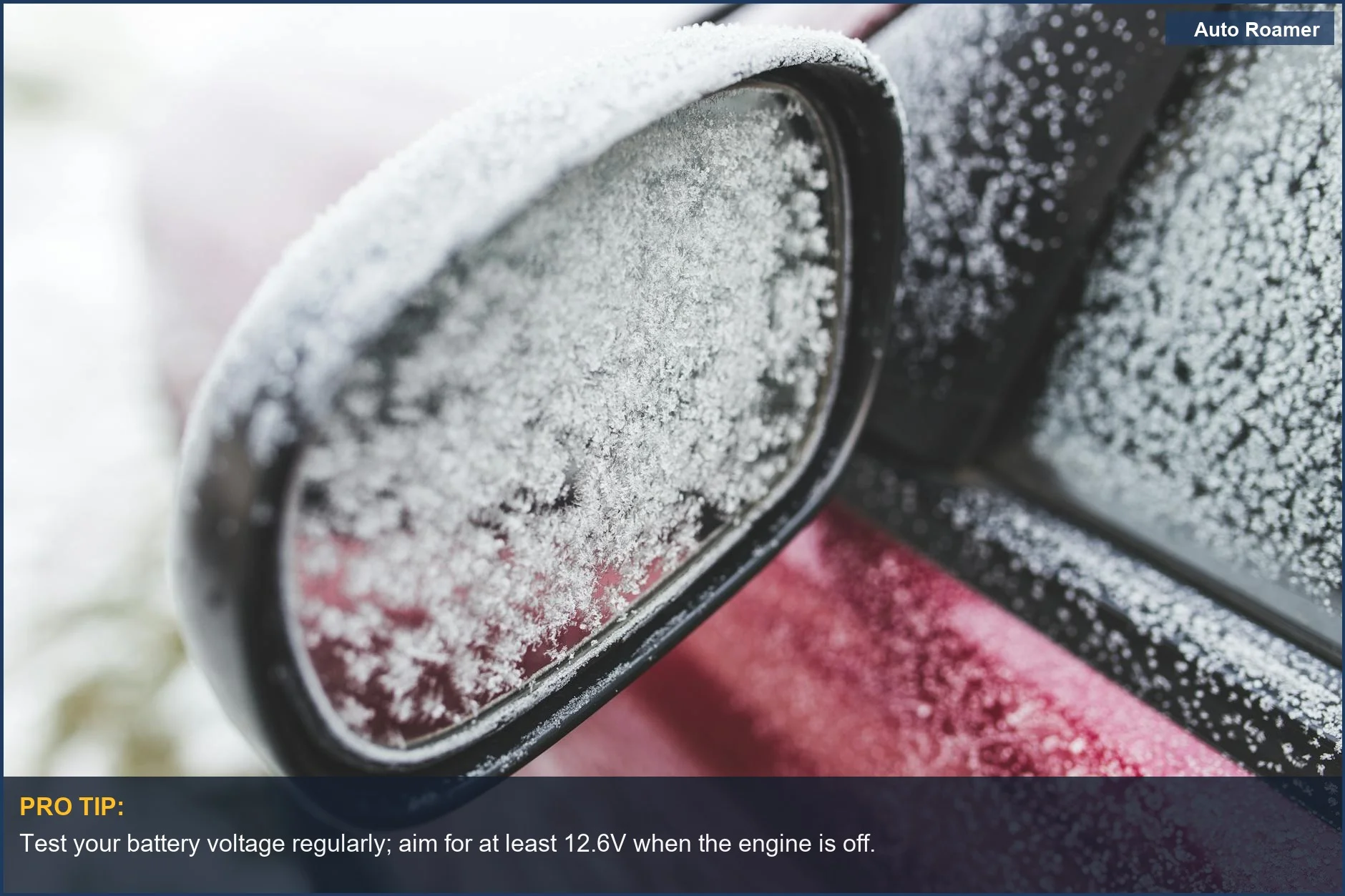
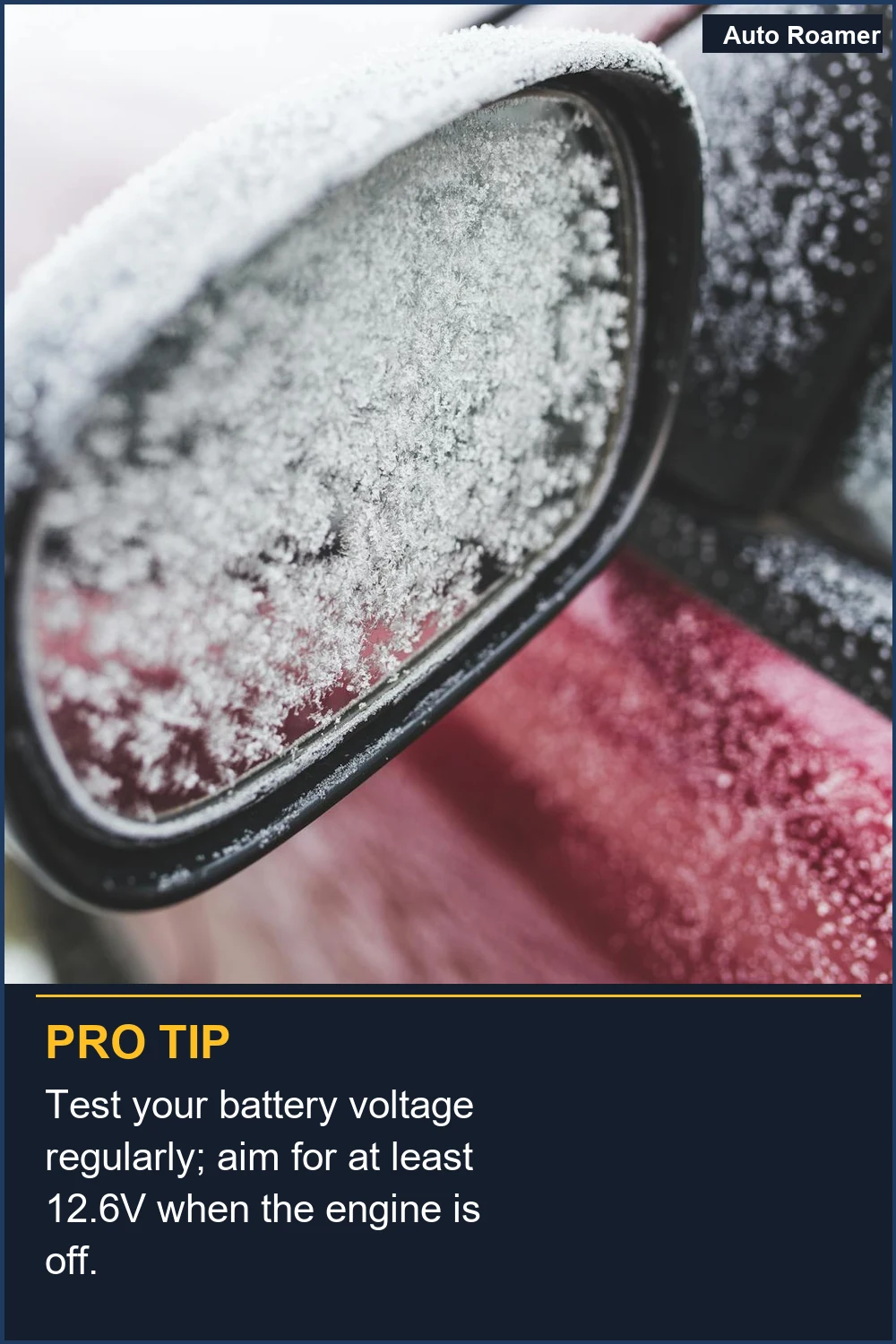
Frost on a car mirror signals frigid temperatures. This visual cue reminds us why battery fails cold, as cold weather significantly impacts performance.
| Photo by Karolina Grabowska www.kaboompics.com
Frost on a car mirror signals frigid temperatures. This visual cue reminds us why battery fails cold, as cold weather significantly impacts performance.
| Photo by Karolina Grabowska www.kaboompics.com
## What This Looks Like in Practice
* Scenario 1: The 'Click, Click, Click' at -5 degrees F. My neighbor's 2015 Camry, with its original 5-year-old battery, tried to start. The starter solenoid clicked, but the engine didn't turn. The static voltage was 12.0V, indicating a 25% charge. The battery just couldn't deliver the 400+ amps required to overcome the thickened oil and high cranking resistance. Jump-started it, but the battery was replaced soon after.
* Scenario 2: Dim Headlights and Slow Crank on a 2018 F-250. This truck had a 3-year-old battery. At 20 degrees F, the owner noticed the headlights were dim before starting, and the engine cranked for 4-5 seconds instead of the usual 1-2. A load test showed voltage dropping to 8.5V. The battery's internal resistance was too high; it was time for replacement. The cold just highlighted its weakness.
* Scenario 3: The Intermittent Start on a 2016 Mazda 3. Sometimes it would start fine, sometimes it wouldn't. This was at 10 degrees F. Turns out, the positive battery terminal had 3mm of green corrosion buildup, causing intermittent contact and voltage drop. Cleaning it with a wire brush fixed the issue. Cost: $0, plus 10 minutes of my time. Cold weather puts severe stress on every connection.
* Scenario 4: The Dead Hybrid at 15 degrees F. A 2019 Toyota Prius wouldn't power on. The 12V auxiliary battery, not the large traction battery, was dead. These small lead-acids often get overlooked. It was only 2 years old, but a persistent parasitic draw from an aftermarket alarm system drained it. The cold just sealed its fate. A $40 trickle charger could have prevented it.
In addition to understanding gap insurance, it's wise to prepare your vehicle by knowing what to keep in your car for winter emergencies, like in our guide on winter emergencies.
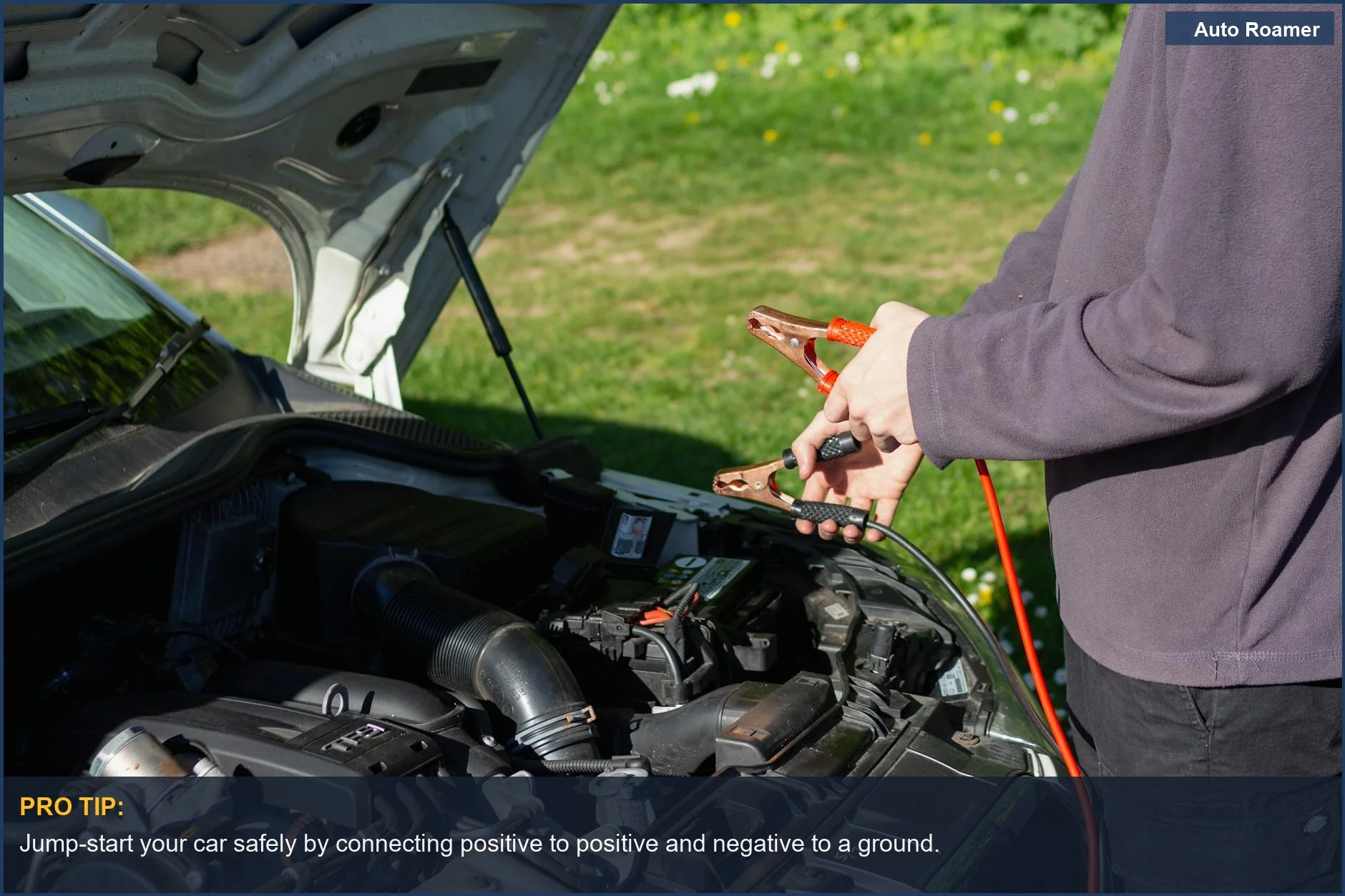
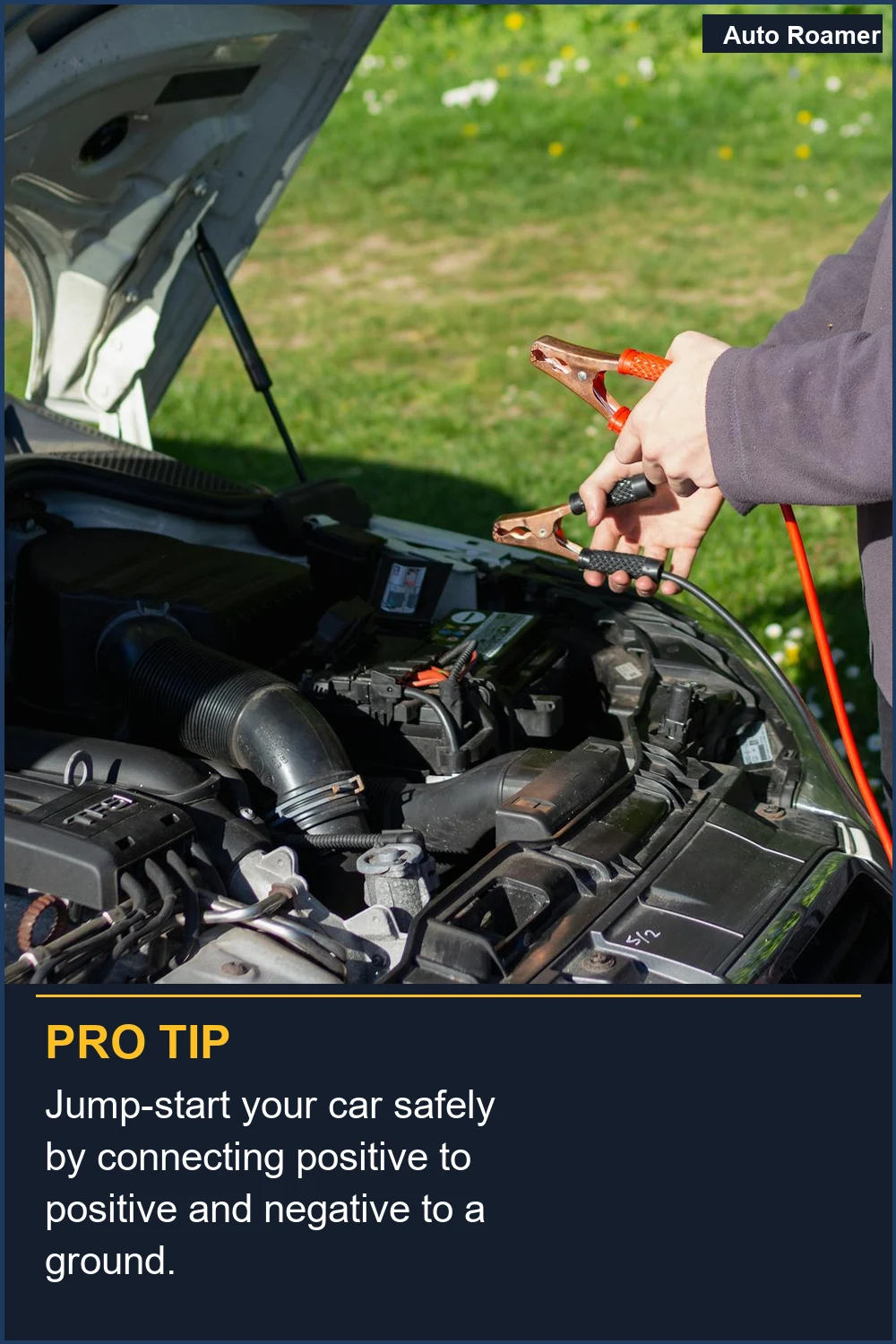
When a battery dies in winter, jumper cables are a common solution. This image shows a typical repair scenario for a car struggling to start in the cold.
| Photo by Daniel @ bestjumpstarterreview.com
When a battery dies in winter, jumper cables are a common solution. This image shows a typical repair scenario for a car struggling to start in the cold.
| Photo by Daniel @ bestjumpstarterreview.com
## Mistakes That Cost People
* Ignoring Slow Cranks: That 3-second crank when it's 10 degrees F isn't 'normal cold weather behavior.' It's your battery screaming for help. Ignoring it means you'll eventually be stranded, likely in worse weather. A new battery costs $150; a tow and jump start can hit $200.
* Assuming 'New' Means 'Good': I've seen a brand new battery from a discount store fail within a year because it sat on the shelf for 18 months, self-discharging and sulfating. Always check the manufacturing date stamp. A battery's life starts when it's made, not when you buy it.
* Not Checking Terminal Connections: Loose or corroded terminals are a huge source of resistance, especially when the starter pulls hundreds of amps. A dirty terminal can drop voltage by 1-2V under load. This simple visual check and 5-minute cleaning is free, but dealerships will charge you $80 for 'battery service.'
* Overlooking Parasitic Draws: Many people blame the cold when their battery drains overnight. The cold just makes it worse. A phantom draw of 100mA will kill a 60Ah battery in 25 days. In the cold, it'll die faster because the battery has less capacity. Always check for current draw with an amp meter.
* Using the Wrong Oil Weight: Running 10W-30 in sub-freezing temperatures when your car specs 5W-30 or 0W-20 makes the engine harder to turn over. This puts excessive strain on the battery and starter. Always use the manufacturer's recommended viscosity for your climate. It's on the oil cap, folks.
* Repeatedly Jump-Starting Without Diagnosis: Jump-starting gets you going, but it doesn't fix the underlying problem. If you need a jump more than once, you have a charging system issue, a bad battery, or a parasitic draw. Continuing to jump will eventually stress your alternator or other electrical components.
If your car struggles to start in frigid temperatures, knowing what to check can save you time and stress, so consider this cold weather guide.
Product comparison for Why Your Car Battery Dies on the Coldest Day of the Year
## Key Takeaways
Your car battery isn't a delicate flower that shrivels in the cold. It's a chemical power plant, and cold weather just slows down its internal reactions.
* Reduced Power Output: At 0 degrees F, a battery delivers significantly less current than at 70 degrees F. It's a fundamental thermal effect on chemical kinetics. Cold temperatures can drain a car battery 50-60%.
* Increased Engine Demand: Cold thickens engine oil, making the starter work harder and draw more current. More demand, less supply. Simple physics.
* Age and State of Charge: Older, sulfated batteries are more susceptible.
A discharged battery's electrolyte can freeze, causing permanent internal damage.
* Proactive Maintenance: Regular voltage checks, clean terminals, and addressing parasitic draws are your best defenses. Don't wait for the click.
* Don't Get Scammed: Most 'cold weather battery failures' are just old batteries hitting their end-of-life, exposed by the cold. A $15 multimeter and 20 minutes of your time can save you hundreds at the dealer. Don't let them upsell you.
If you're concerned about fuel consumption while idling, you might also wonder if running your car heater overnight will affect your battery.
Frequently Asked Questions
What's the real cost difference between DIY battery replacement and letting the dealer do it?
A decent replacement battery for a common sedan runs about $120-$180 at an auto parts store. Dealer markup can push that to $250 for the part, plus another $100-$150 for 'labor' to remove two bolts and two terminals. That's a $150 difference for 15 minutes of work. Absolute highway robbery.
Do I really need to buy a fancy battery load tester, or is a cheap multimeter enough?
You don't need to buy a load tester. A $15 multimeter is critical for checking static voltage and parasitic draw. For actual load testing, most auto parts stores will do it for free in their parking lot. They've got the $300 tool, so let them use it. You just need to know how to read the numbers.
What if my battery is fully charged, terminals are clean, and it still struggles in the cold?
If your battery is truly fully charged (12.6V+ static) and terminals are pristine, but you still have a slow crank at 10 degrees F, you're likely looking at a starter motor issue or excessively thick oil. The starter motor's internal resistance might be climbing, or its brushes are worn. Check the starter current draw with an inductive clamp meter – if it's way over spec, that's your culprit.
Can repeatedly trying to start my car with a weak battery in the cold permanently damage anything?
Repeatedly grinding the starter can overheat it, especially if it's already struggling against high engine drag. This can burn out the starter motor's windings or wear down the brushes prematurely. Also, continuously discharging a weak battery below 10.5V can accelerate sulfation, permanently reducing its capacity. So yeah, it's not great for anything involved.
I heard that putting a blanket over my battery helps in the cold. Is that true, or just old wives' tales?
A blanket is mostly useless. A battery's thermal mass is too high for a blanket to make a significant difference in preventing heat loss over several hours. What you need is an actual thermal blanket designed for batteries, which has insulation and sometimes a small heating element. Otherwise, you're just putting a RAG on a cold rock. Brilliant engineering, that.
J
Jake - The Dirtbag Engineer
Mechanical engineer turned car camper. Specializes in power systems, dashcam technology, and DIY vehicle modifications.